
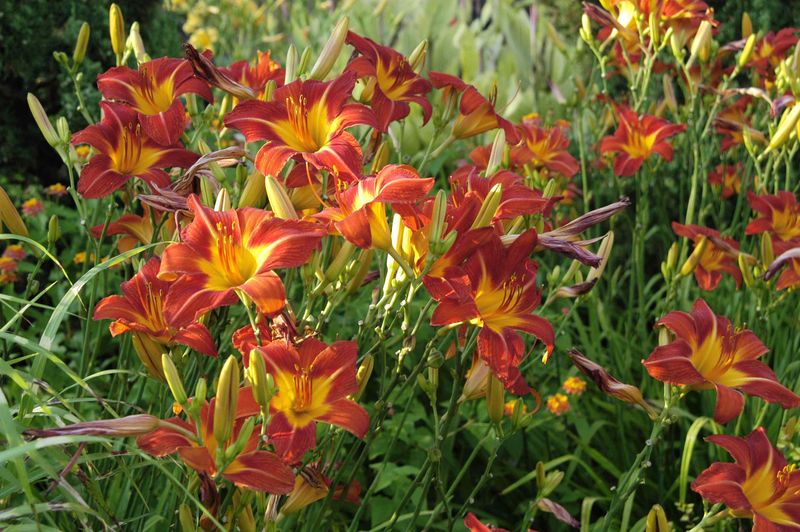
Daylilies look messy once the flowers fade, and it is tempting to grab the shears and clear everything out. But those leaves are still working for your plant, and a few simple clues can tell you when trimming makes sense.
In the South, where some daylilies stay green all winter, the right timing depends more on the plant than on the calendar. Here is how to read your daylilies and tidy up without guessing.
Green leaves still support the plant after flowering
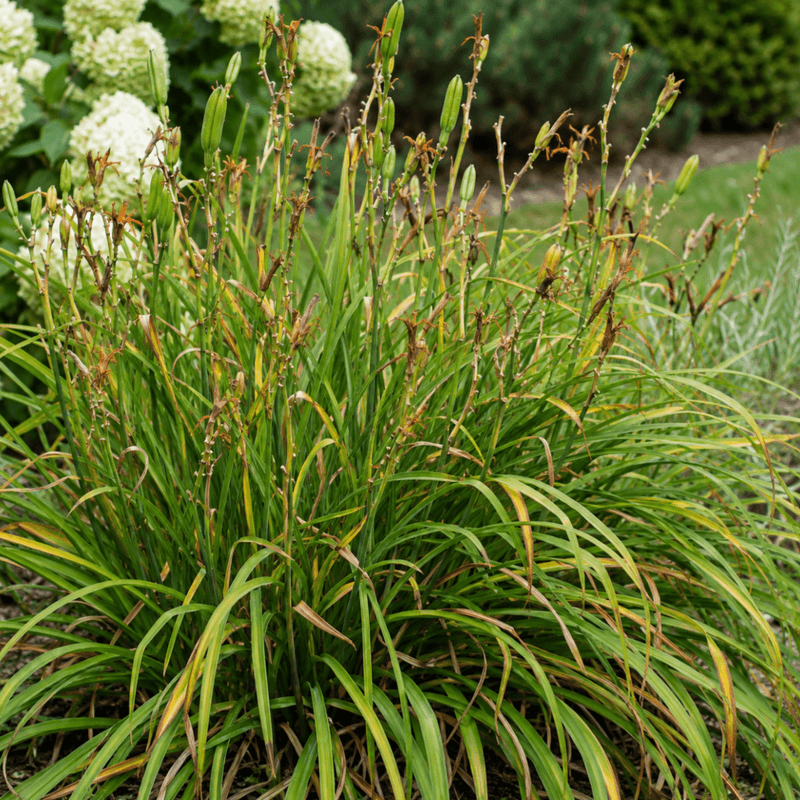
Once the last flower drops, the leafy fan of a daylily keeps on working. Healthy green leaves soak up sunlight and turn it into energy, and University of Illinois Extension explains that this energy supports growth and future flowering.
Dead outer leaves can be pulled off, but green ones are still on the job.
Think of the foliage as a solar panel that stays switched on after the show is over. A general Ask Extension explanation describes how plants make food in their leaves and move resources toward the roots as the season winds down.
Cutting green leaves removes active leaf area, which may reduce the resources available for future growth.
Here is the honest limit. Nobody has shown that a single early trim will necessarily shrink next summer’s flowers.
Bloom also depends on things like sunlight and how crowded the clump has become. So there is no need to panic if you already cut some leaves, but leaving healthy ones in place is the safer habit.
Foliage habit matters more than the calendar
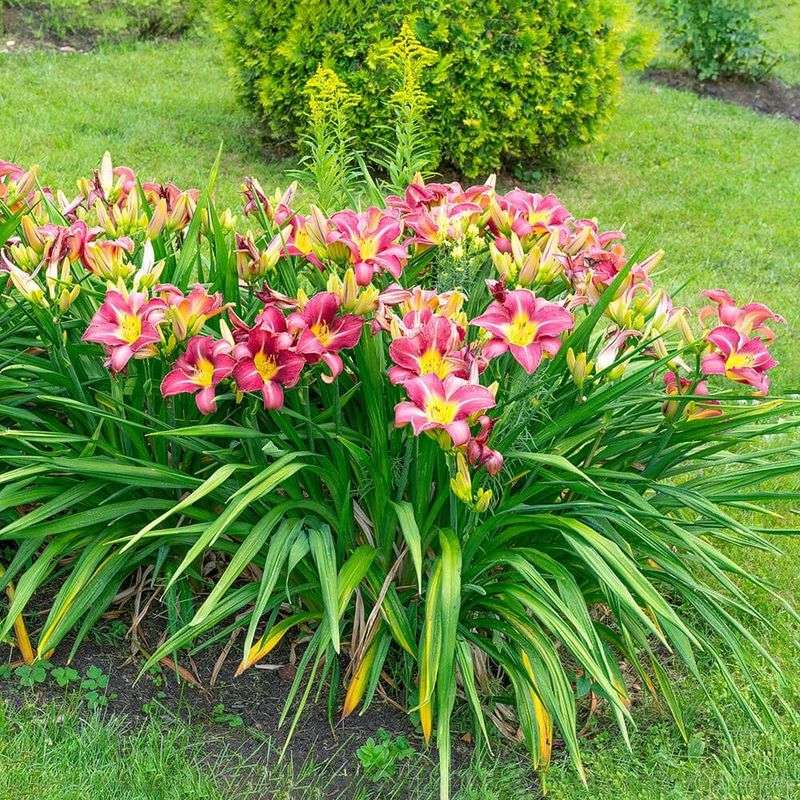
Not every daylily behaves the same way once the weather cools. Daylilies are grouped as dormant, evergreen, or semi-evergreen, and UF/IFAS Extension notes that evergreen types stay green year-round.
Semi-evergreen types can act like either one, depending on where they grow.
That is why a fixed fall date or a first frost rule can steer you wrong in Florida and Texas. The American Daylily Society points out that evergreens stay green in mild climates, while dormant types die back on their own.
Southern gardens often see semi-evergreen plants hold their leaves, as Iowa State Extension also describes.
So look at what your plant is actually doing. A clump that is still deep green in December may be an evergreen type, or it may simply not have gone dormant yet.
Pull off only the dead or damaged leaves and leave the healthy ones to carry on.
Wait for visible dieback before cutting dormant foliage
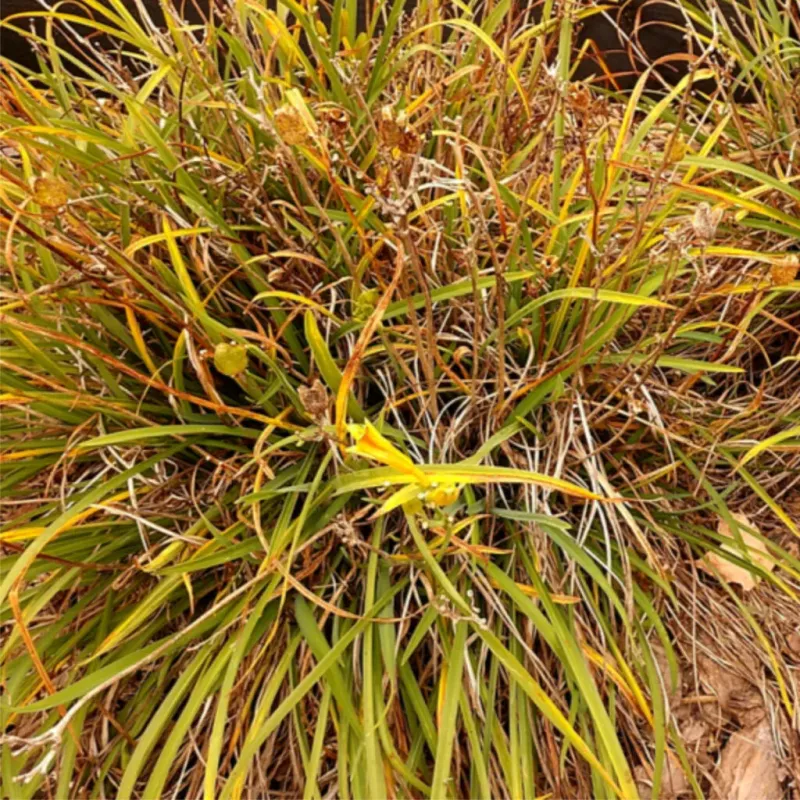
For dormant daylilies, the plant itself gives you the signal. Arkansas Extension says leaves can be cut back once they begin to yellow.
Browning leaves, or foliage flattened by a hard cold snap, tell you the same thing.
Frost can be a handy cue for dormant types, as the American Daylily Society describes their natural dieback. It is not a rule for every Southern yard, though.
In a mild winter, your daylilies may never see a killing freeze, and that is fine.
Take a closer look before you cut. Uniform yellowing across the whole clump as the season ends points to normal dieback.
Spots, streaks, or yellowing that starts at the leaf tips while other leaves stay vigorous may be a disease problem, which gets its own treatment in a later section.
Remove spent flower stalks without shearing the leafy fan
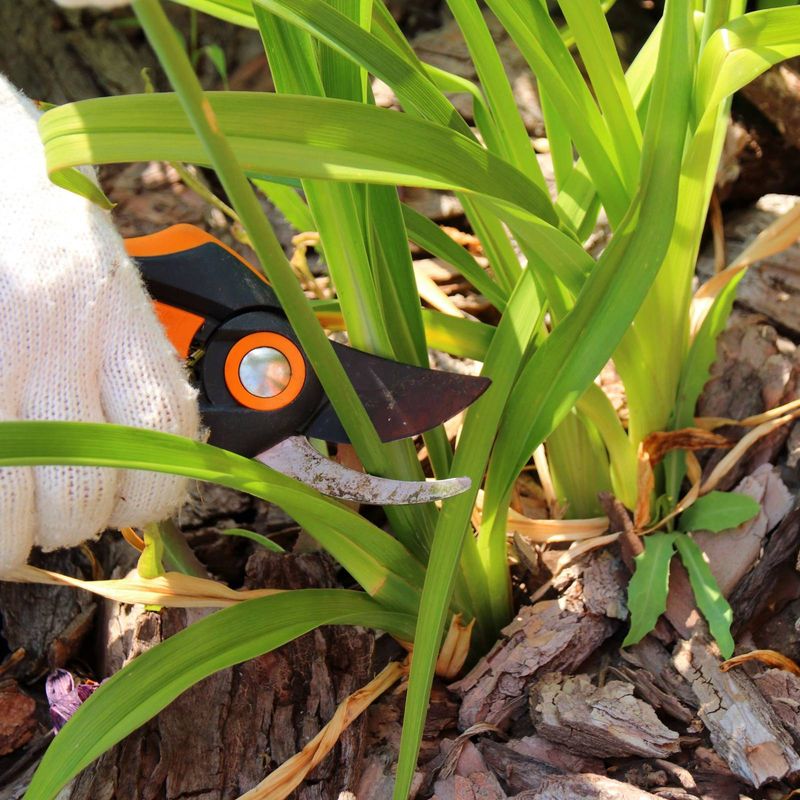
Two different parts of a daylily often get lumped together. The bare, branching stems that held the flowers are called scapes, and the arching strap-like leaves form the fan at the base.
Removing one does not mean removing the other.
The American Daylily Society recommends cutting spent bloom scapes after the bloom season. Snip each one down near the base of the plant, and the clump looks tidier right away.
The leaves stay put.
A quick example shows how this works. Say your clump has six faded stalks and a full fan of healthy green leaves.
Clip the six stalks, pull away any leaf that has already turned brown, and walk away. The garden looks cleaner, and the plant keeps its working foliage.
This also keeps seed pods from forming if you would rather not have them. It is a small, low-effort job that does not depend on the weather or the season.
Check yellowing leaves for signs of leaf streak
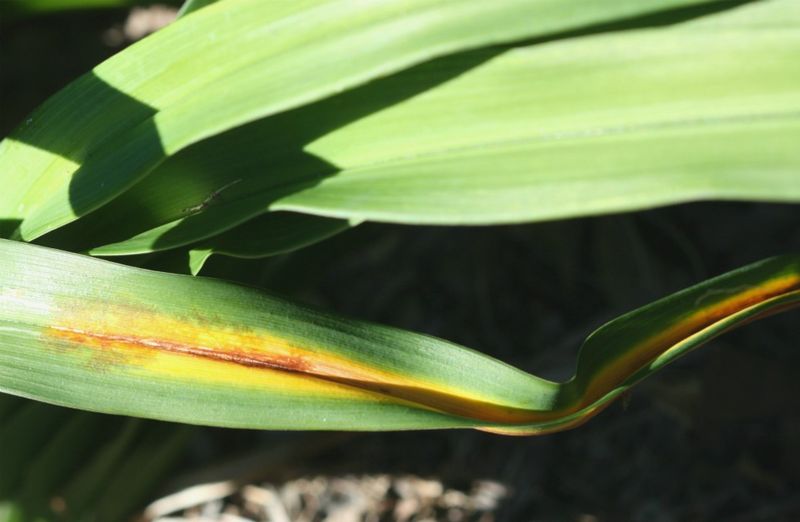
Yellow leaves are not always a sign that the season is ending. Daylily leaf streak is a fungal problem that can start with yellowing at the leaf tips and move into browning.
University of Wisconsin-Madison Extension advises removing infected leaves as they appear.
The fungus can overwinter in leaf debris, so what you do with the clippings matters. The same source suggests disposing of infected material by a locally permitted method, such as deep burial or hot composting.
Check your local rules before you pick one.
Here is the clue to watch for. If a few leaves show streaks or tip damage while the rest of the clump is deep green, suspect disease rather than dormancy.
Remove just those leaves.
Leaf streak is an exception to the wait-and-see approach, but it does not call for shearing the whole plant. Healthy green leaves can stay, and the infected ones can go.
Choose fall or spring cleanup based on the plant’s condition
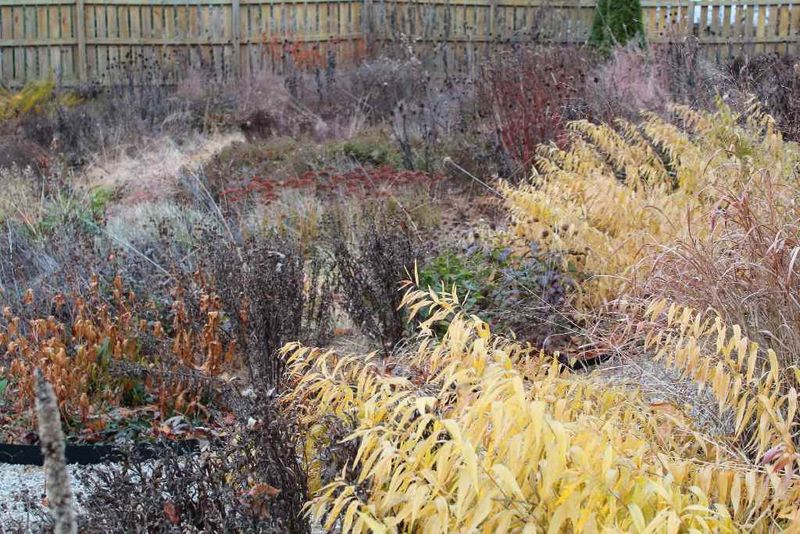
A full fall cutback is a choice, not a requirement. Iowa State Extension says naturally dead plant material can be removed in fall, but waiting until spring is also often beneficial.
Disease or pest problems are good reasons to clean up sooner.
If your daylilies are dormant types and the foliage has collapsed, trimming it in fall is perfectly fine. If you would rather leave the brown leaves until spring, that works too, and they can be pulled away as new shoots appear.
Evergreen clumps may need nothing more than a quick tug on dead leaves.
The simple rule runs like this: keep healthy green leaves, cut dormant foliage after you see it yellow, brown, or die from cold, and remove diseased leaves promptly. Frost is a helpful hint for some plants, not a signal for all of them.
Your daylilies will tell you when they are ready, if you let them.