
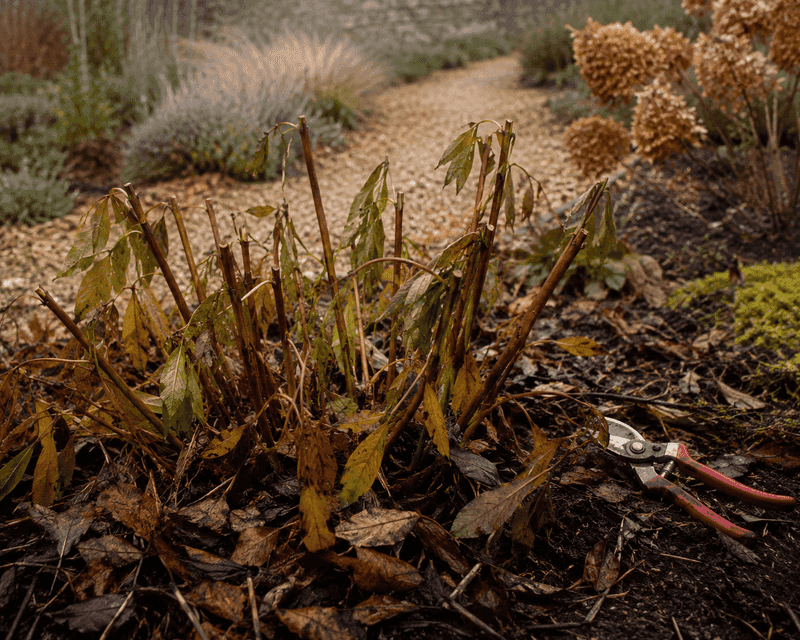
Peony leaves can look tired by late summer, and many gardeners reach for the shears too soon. Cutting at the wrong moment can take away healthy foliage the plant is still using.
Waiting for the right cue and cleaning up well is simple, low-cost care for herbaceous peonies. Here is how to time it, what to do with the debris, and which peonies need a different approach.
Let natural dieback set the cutting time
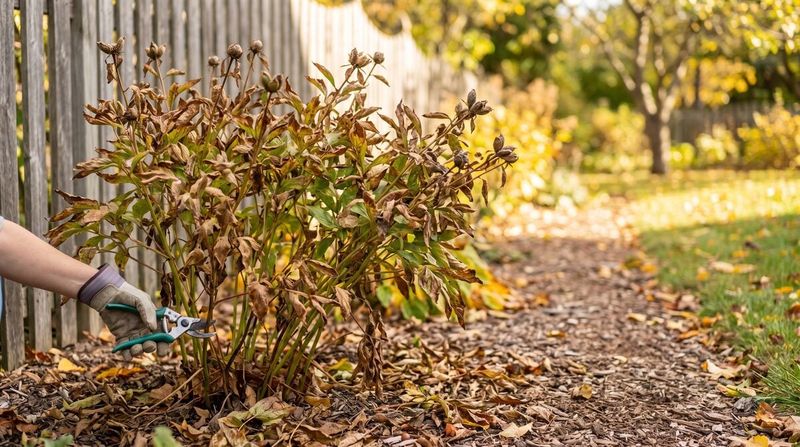
Your best signal for herbaceous peonies is the foliage itself. Wait until the leaves and stems have naturally yellowed, browned, or died back before you pick up the pruners.
In gardens with autumn frost, the American Peony Society frames cleanup around dormancy and says to cut after frost, if applicable. Frost often brings on that color change, so it can be a handy cue where it happens.
It is not a calendar date or a universal deadline, though. Where frost is rare or comes late, visible dieback is the more useful guide.
A plant in one yard may be ready in November while a neighbor’s clump a few counties away is still green.
So skip the fixed month and look at the plant. If the leaves are drooping, brown, and papery, it is time.
If they are still green and firm, give them more days.
Keep healthy leaves after flowering
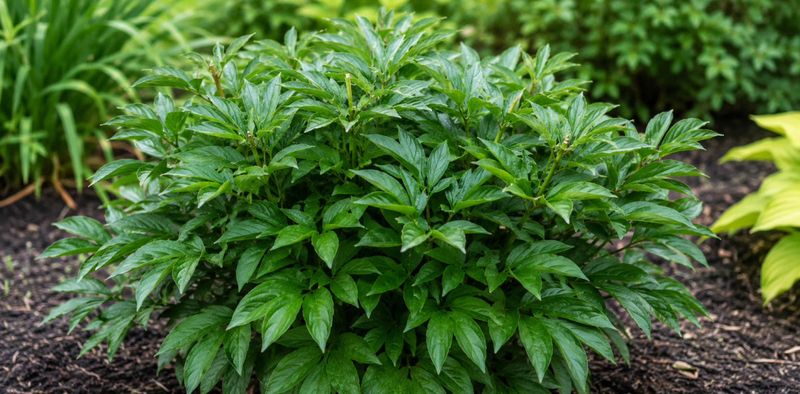
Once the blooms fade, the leaves still have work to do. Healthy green foliage keeps photosynthesizing, which means it keeps making food for the plant.
That is why advice to cut peonies right after flowering does not fit healthy herbaceous plants. The American Peony Society guidance points toward leaving green leaves in place while they remain active.
Picture a hot August afternoon in a Southern bed. The flowers are long gone, and the leaves look a little ragged but are still green.
Leave them. Snip off only spent flower heads if they bother you.
Keep expectations realistic. Letting leaves finish their season is sound care, but it does not promise extra flowers next spring.
It simply avoids taking away something the plant is still using.
Cut herbaceous stems near ground level
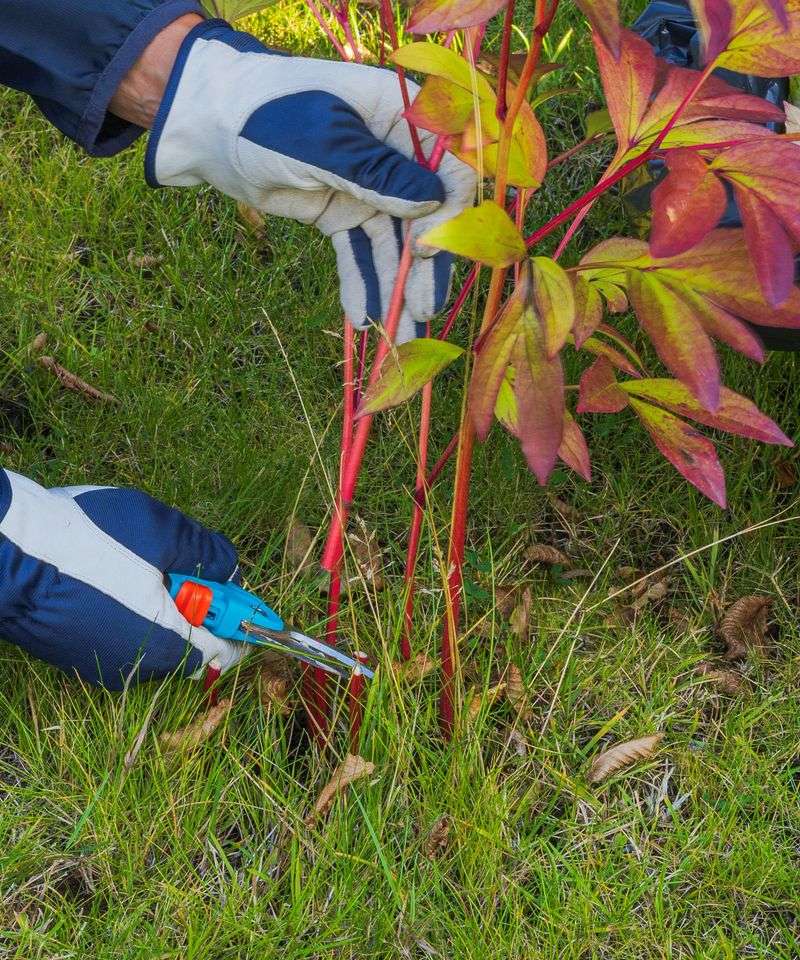
When the foliage has died back, grab clean, sharp pruners and cut the stems close to the ground. This step is for herbaceous peonies only.
Work through the clump one stem at a time. Leave just a short stub above the soil, and be careful not to damage the pink or red buds, called eyes, just at or below the surface.
Next, gather all the cut stems and fallen leaves from the bed. Iowa State Extension advises cutting the dead stems and removing the plant debris rather than leaving it around the crown.
Bag the material or send it to municipal yard waste. A quick rake around the base finishes the job and leaves the bed tidy for winter.
Use sanitation to reduce potential Botrytis carryover

Botrytis is a fungal disease that can affect peony leaves, stems, and buds. According to Iowa State, it can survive in garden debris over winter.
Clearing that debris reduces possible overwintering sites. It does not mean every old leaf is infected, and it cannot prevent every case of the disease.
Purdue Extension recommends removing old infected stems, leaves, and other debris in fall, and removing wilted or rotted shoots in spring.
If you spot clearly diseased material during the season, such as blackened buds or collapsing stems, cut it out right away instead of waiting for fall.
Where you can, water at the soil level instead of overhead, since wet foliage favors Botrytis. Give plants some airflow by spacing them and trimming back crowding neighbors.
Identify the peony type before pruning
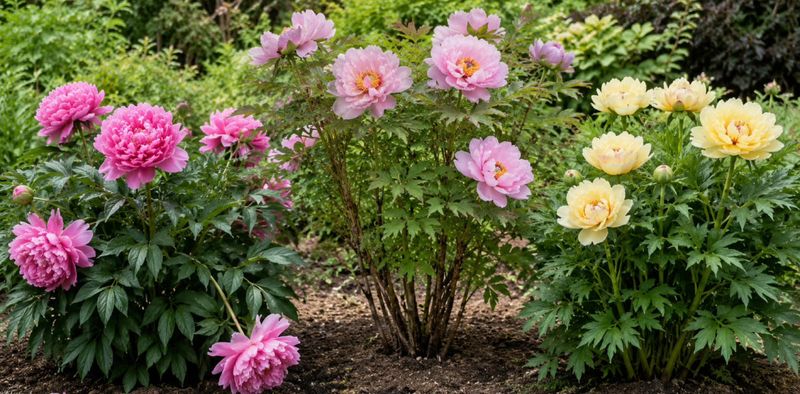
Not every peony follows the same rule. Herbaceous peonies die back to the ground each year, so they get the cut-to-ground treatment.
Tree peonies are different. They keep woody stems through winter, and the North Carolina Extension Gardener Plant Toolbox lists them as woody types.
Cutting them to the ground would remove the framework the plant carries into spring.
Itoh, or intersectional, peonies are their own group. N.C.
Cooperative Extension treats them separately, so do not assume the herbaceous rule fits them automatically.
Check the plant tag, your planting records, or the stems themselves. Hard, woody stems that persist mean you should not cut to the ground.
If you are unsure, hold off and look up the variety first.
Account for local conditions in the South
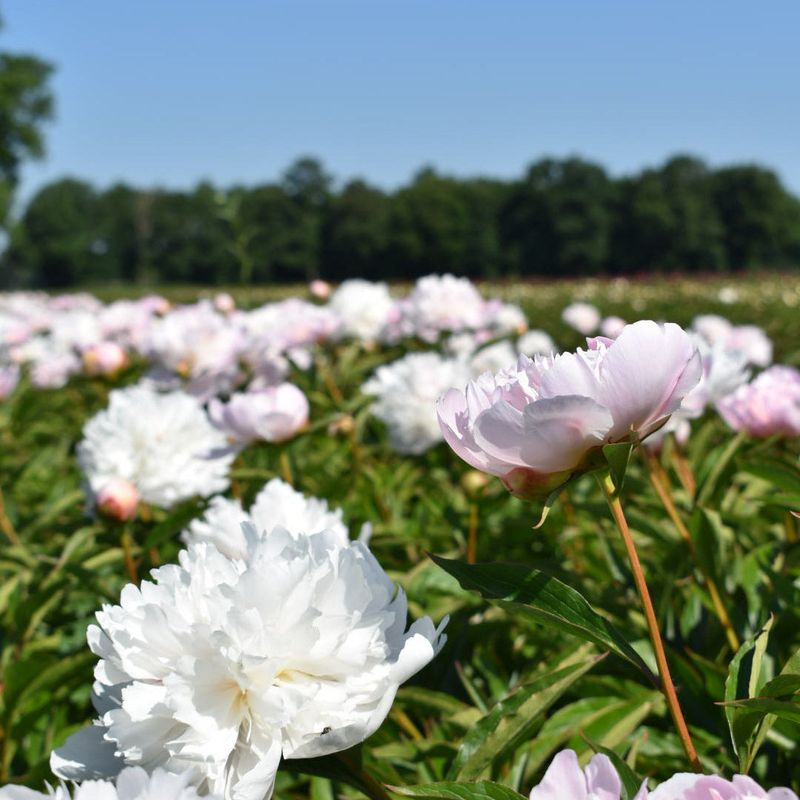
The South is a big place, and peonies do not behave the same everywhere. North Carolina Cooperative Extension says peonies prefer cooler climates, while noting that some varieties can perform in its Southern setting.
Winter chilling matters too. Virginia Cooperative Extension describes a cold-winter requirement for good growth and notes that mild winters in zones 7 to 8 may not provide enough chilling for production.
That means correct fall timing cannot fix an unsuitable site. If your winters are mild, a peony may sulk no matter how well you cut it back.
For gardeners in Florida and Texas, local conditions and variety matter a great deal. Ask your county extension office which peonies, if any, have done well nearby before you invest in plants.
Treat timely cutback as good care, not a bloom guarantee

Waiting for dieback lets healthy foliage finish its season, and cleanup can reduce disease carryover. Neither one guarantees more flowers next spring.
Poor bloom has other common causes. Purdue Extension points to issues like too little light, planting too deep, stress, and disease.
If your peony is not blooming, check those first. A sunnier spot or a shallower crown may matter more than the date on your calendar.
Time herbaceous peony cutback by how the foliage looks, as the American Peony Society suggests, and keep tree peonies out of that rule, as the NC Plant Toolbox makes clear.
Patience is the cheapest tool in the shed.