
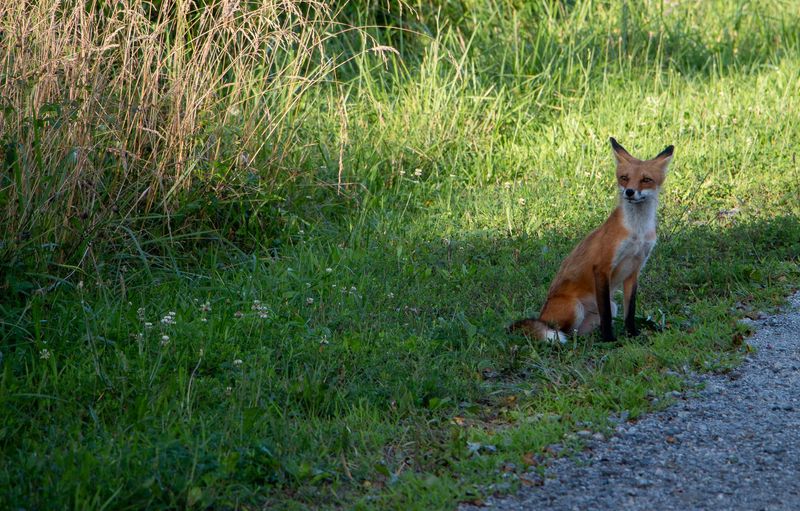
A fox trotting across your lawn as the light fades can make you stop and stare. It is natural to wonder what brings it there and whether you should do anything about it.
The clock gives fewer answers than you might expect, but your yard can tell you a lot. Here is how to think about possible reasons, shrink the temptations, and keep everyone safe.
Dusk is a pattern, not a clue to one meal
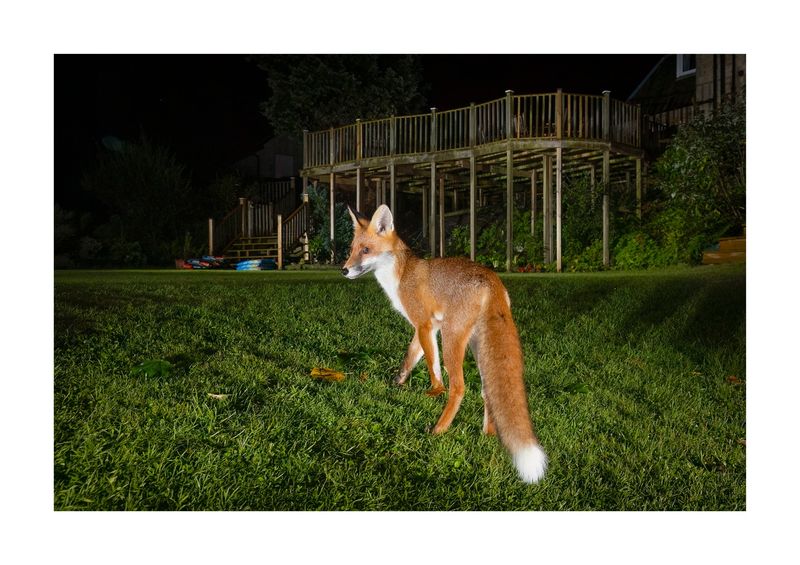
Seeing a fox at dusk feels like a message, but the hour mostly reflects how foxes live. Twilight is a normal time for them to be on the move.
NC Wildlife’s red fox profile describes the species as mainly nocturnal, though daytime sightings are not unusual.
Research backs up the dusk pattern in a limited way. A USGS-hosted study looked at activity patterns of seven meat-eating mammals and found red foxes were more active at dusk in more-developed areas.
It did not try to explain why one particular fox shows up in one particular yard.
So a visit around the same time does not tell you the fox wants mice, spilled seed, or anything else. It may also not be happening as often as it seems.
Memory tends to turn a few sightings into a routine.
Three broad possibilities are worth keeping in mind. Your yard may offer food, it may offer cover, or it may simply sit along a path the fox uses to get through the neighborhood.
Any one of these could be true, or a mix, and a single glimpse cannot sort them out.
The next sections walk through each possibility so you can look at your own property with clear eyes, without guessing at one fox’s motives.
A yard may offer several kinds of food

Foxes are not picky eaters, which is part of why yards can be useful to them. According to NC Wildlife, red foxes mainly eat small mammals such as mice, meadow voles, and rabbits.
They also eat insects, birds, eggs, fruit, and berries, and they may scavenge garbage.
Each of those foods is a possibility, not a diagnosis. A fox crossing your lawn could be after a vole in the grass, or it could be passing through on its way to somewhere else entirely.
Gray foxes have a similar menu. NC Wildlife’s gray fox profile notes they eat small mammals and may eat native fruits such as persimmons and grapes.
It also says small animals gathering around bird feeders and outdoor pet food can draw gray foxes.
That detail is a useful one for homeowners. Spilled birdseed can attract mice and other small animals, and those animals may in turn attract a fox.
Pet food left outside can do the same on its own.
Walk your yard and look for the easy pickings. Fallen fruit under a tree, an open trash can, a feeder with seed scattered below, and a food bowl on the porch are all things a fox could find worthwhile.
Finding one does not prove it is the draw, but it gives you something concrete to fix.
Food is not the only reason a fox may use a yard
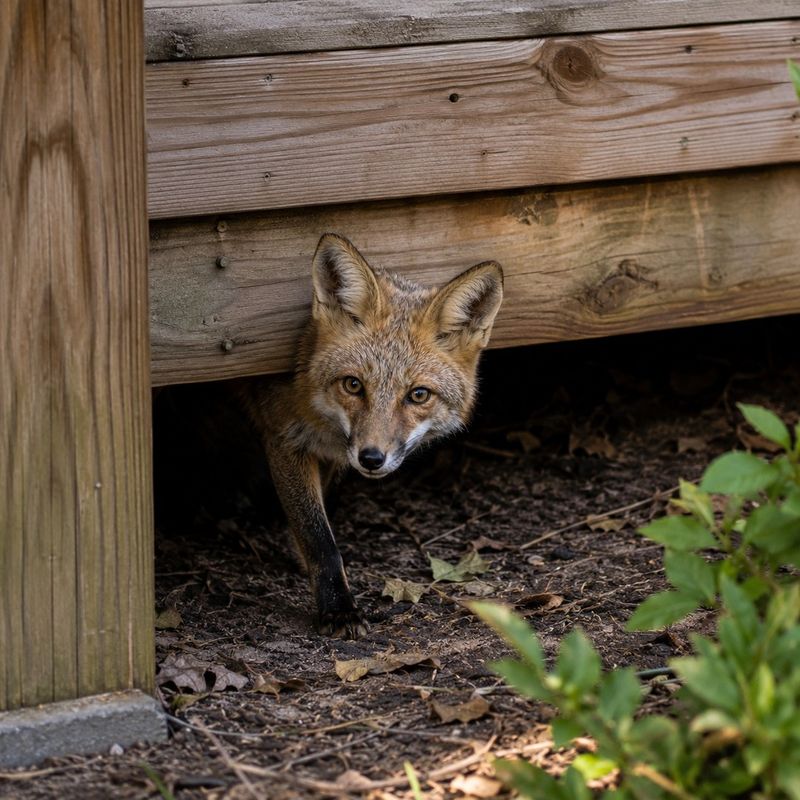
Picture your yard from a fox’s level. A shrub border, a woodpile, a gap under the shed, or a quiet space beneath the deck can all look like safe places to rest or hide.
NC Wildlife notes that red foxes can use residential areas for food and cover, including denning spots.
Movement matters too. Foxes travel through neighborhoods along edges like fence lines, greenways, creek corridors, and the back sides of lots.
A yard that sits along one of those routes may see the same animal pass again and again without offering it anything at all.
The USGS-hosted study mentioned earlier looked at when animals are active, not at which yards they choose or why. Even so, dusk fits with what we know about normal fox timing, so a regular crossing at that hour is consistent with an animal simply going about its night.
In the Piedmont, a lawn backing onto a wooded creek buffer may be on such a path. On the coastal plain, drainage ditches and field edges can serve the same purpose.
In the mountains, a slope behind a house might do it.
None of this proves anything about the fox you see. These are plausible explanations, and checking for cover near your home is a sensible step regardless.
Which North Carolina fox might you be seeing?
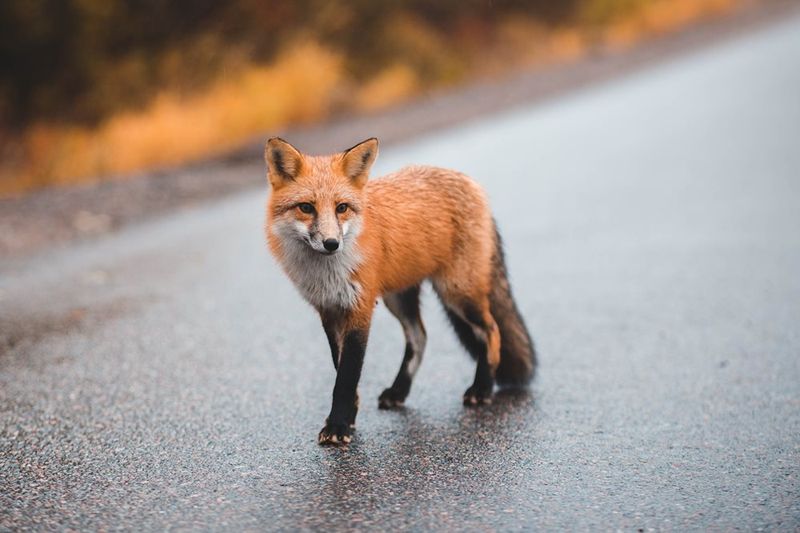
North Carolina has two fox species, red and gray, and they can look surprisingly alike in fading light. NC Wildlife’s coexistence guide says red foxes typically have black lower legs and a white-tipped tail.
Gray foxes look grayer overall, with a dark stripe running along the back and tail.
Gray foxes also have a trait that surprises many people. They can climb trees, so a fox in a low branch is a clue pointing toward gray.
Still, a quick glimpse at dusk may not be enough to settle it. Shadows, distance, and a fox in motion can hide the leg color and tail tip.
If you want to know more, a photo taken from a window or porch in better light can help.
Why does the species matter? Diet and habits differ somewhat.
The gray fox profile mentions native fruits and says gray foxes may forage in daylight, details that should not be assumed for a fox you have not identified.
Try not to attach one species’ food or behavior to the animal in your yard until you are fairly sure which one it is. Either way, the steps for reducing attractants are the same.
Remove easy food and close off sheltered spaces

If you would like foxes to find your yard less useful, start with the simple fixes. NC Wildlife recommends securing garbage, bringing pet food indoors, and clearing fallen fruit.
It also advises keeping feeder areas clean and seed off the ground.
If foxes are frequent visitors, the agency suggests removing bird feeders for a while. Seed draws small animals, and small animals can draw foxes.
A fall cleanup of persimmons, apples, or figs under trees fits right into the season.
Next, look at sheltered spaces. Crawl spaces and gaps under porches, sheds, and decks can look like handy hiding or denning spots.
NC Wildlife advises closing off access to them.
Do this at a time when you are sure nothing is inside. Check for signs of use first, and if you suspect an animal or young are present, hold off and call your local wildlife or animal control office for advice.
Think of these steps as ways to reduce possible attractions, not as a guarantee. A fox may still use your yard as part of its route, and that is fine.
You are simply making the property a less rewarding stop.
Give the fox space and know when to call for help

Seeing a fox is not, by itself, a reason to act. NC Wildlife describes foxes as generally shy, and the best response is usually to watch from a distance.
Do not feed, approach, touch, or chase a fox or its kits, and stay away from a den. The agency warns that feeding, even through garbage or pet bowls, can make foxes comfortable around people.
Keep pets secured, especially near a den. Small pets and backyard poultry should be supervised or locked up at night, since foxes are wild animals and not harmless to them.
A fox in daylight does not mean rabies. If one looks aggressive, stumbles, or foams at the mouth, call your local animal control.
Do not try to catch it.
If someone is bitten or scratched, wash the wound with soap and running water for 15 minutes. North Carolina DHHS advises then contacting a medical professional or your local health department, and CDC guidance on when to seek care points the same way.
Relocating a fox is illegal in North Carolina, according to NC Wildlife. Check with state or local authorities before considering any control measures.
The clock can tell you when a fox passes by, but never why.