
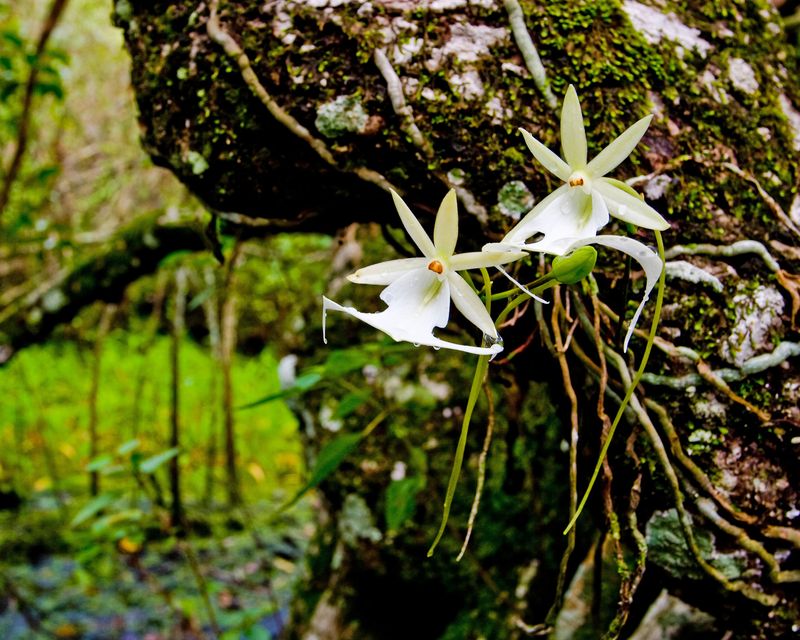
Deep in southwestern Florida’s freshwater swamps, a pale, leafless orchid clings to tree bark and waits. The ghost orchid is a real plant, and its flowers are rare, irregular, and easy to miss.
Why is it so hard to catch in bloom, and what can a curious Floridian do to experience its world without harming it? Here is what is documented, what is folklore, and where a public boardwalk fits in.
It survives without the familiar shape of a garden orchid
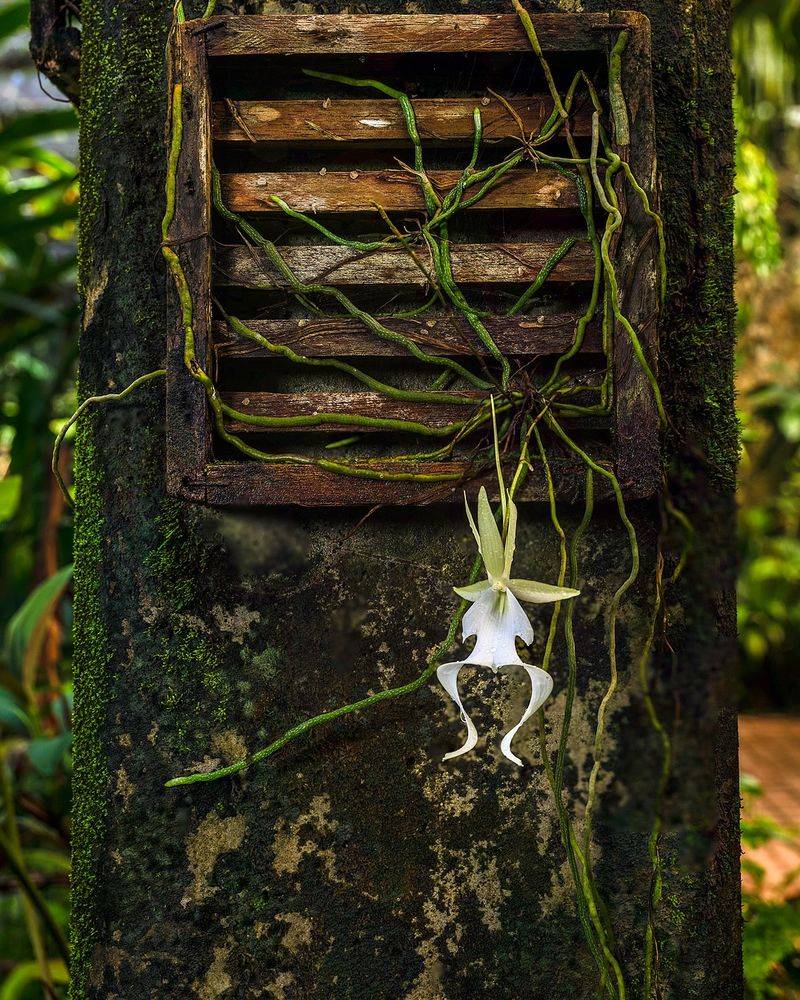
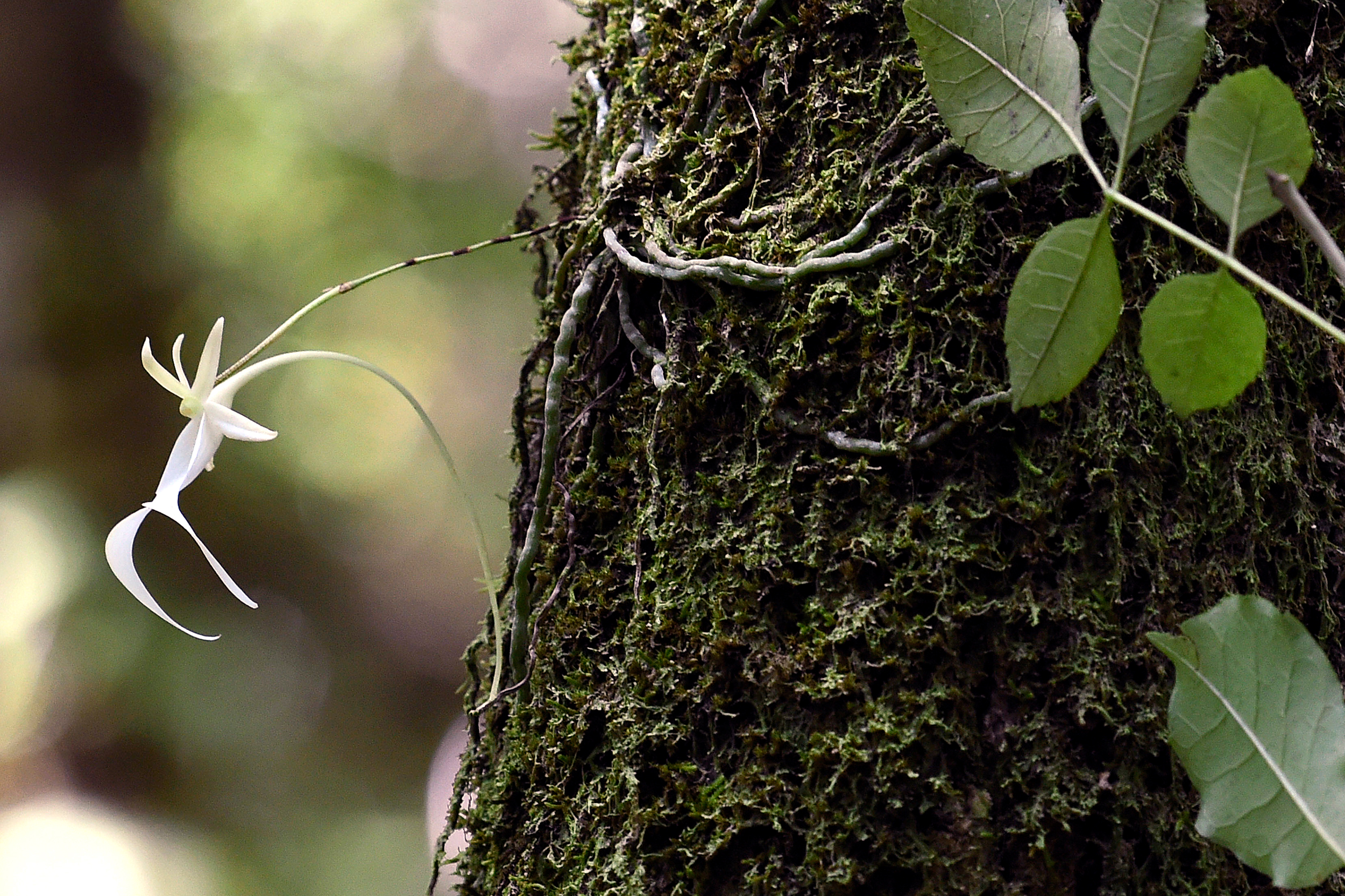
Forget the potted orchid on a sunny windowsill. The ghost orchid, Dendrophylax lindenii, has no showy leaves and does not root in soil.
It is an epiphyte, which means it anchors itself to a tree and lives on the bark.
Its roots do much of the work. According to the U.S.
Fish and Wildlife Service proposed rule, the roots attach to trees and also carry out photosynthesis, the process most plants handle with leaves. A plant built mostly from roots is a strange sight, and it is a big reason the species is not a conventional yard flower.
That root-heavy design also explains why the plant can fade into its surroundings. Gray-green roots pressed against bark, shadowed by swamp canopy, can look like part of the tree itself.
Until a flower appears, a ghost orchid can be easy to pass by.
For home gardeners, this is a useful reminder that Florida’s native plants do not all follow garden rules. Some live on trees, some in standing water, and some keep their secrets for years.
The ghost orchid is one of the most mysterious examples, and its odd shape is part of the story rather than a flaw.
Its Florida home is a world of freshwater swamp
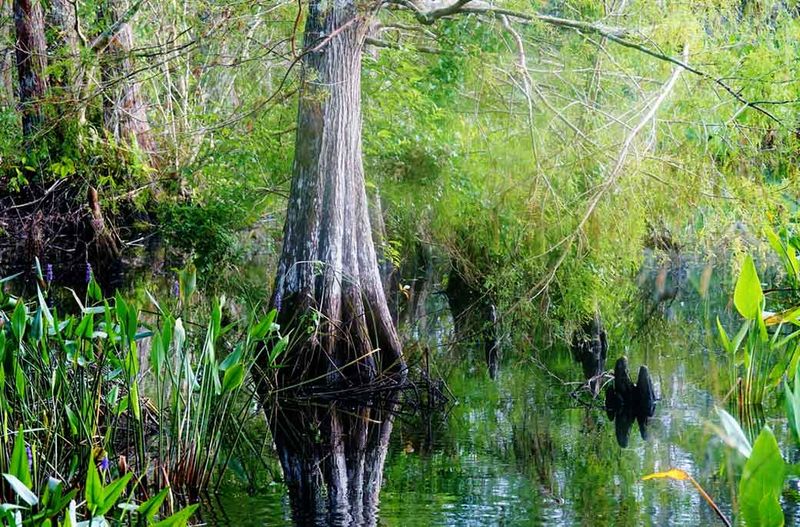
In the United States, the ghost orchid is found in southwestern Florida. The Fish and Wildlife Service describes its habitat as wet freshwater places, including strand swamps, sloughs, and dome swamps.
Picture a strand swamp: a long, shallow, forested channel where tall cypress trees rise from dark water. A slough is a slow, wide stretch of water moving gently across the land.
A dome swamp is a rounded stand of trees growing in a low, wet pocket. All of these hold the humidity and shade this tree-clinging orchid depends on.
Florida is not the whole story. The species also occurs in western Cuba, so it belongs to a wider range than our state alone.
Floridians can take pride in sheltering a share of it without claiming all of it.
This article keeps locations broad on purpose. Habitat descriptions are meant to help readers understand the plant, not to send anyone searching for it.
The swamps that shelter it are fragile, and the best way to honor them is to learn about them from the edge.
When does a ghost orchid actually bloom?
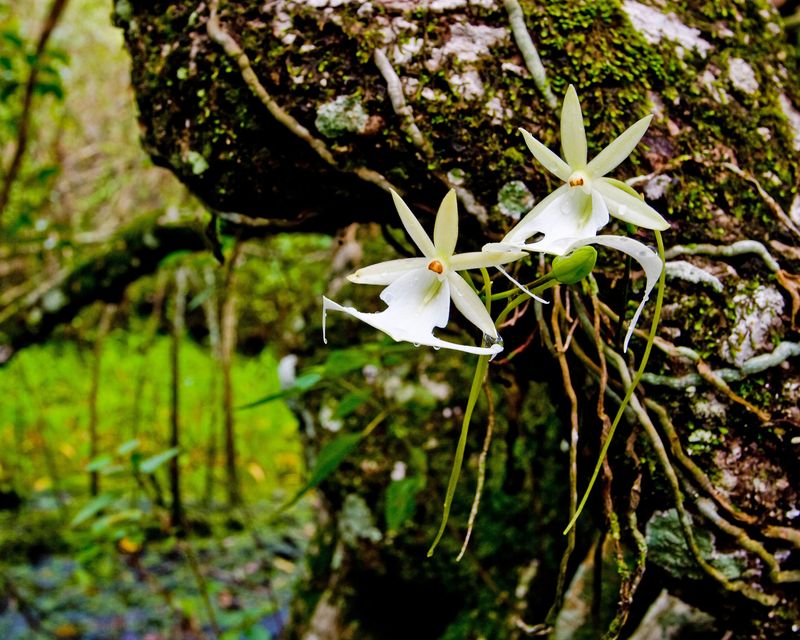
Florida blooms usually show up from May through August, according to the federal proposed rule. That is the usual window, not a strict calendar.
Flowers outside those months have been observed, and timing changes from plant to plant, site to site, and year to year.
A Florida State Parks fact sheet names June through August as the peak. It also estimates that only about 5 to 10 percent of plants bloom in a given year.
Treat that number as a rough estimate. It does not tell you what any one swamp will offer, or what you will see on any one day.
Wild plants can also be slow starters. They may take 15 years or more to flower for the first time.
That detail is a reminder that a plant can be healthy and alive for a long time without producing a single flower.
Then there are the outliers. One unusually prolific orchid at Corkscrew Swamp Sanctuary, nicknamed the super ghost, has drawn attention for how often it flowers.
It is an exception, not a model for the species, and it should not shape expectations about typical plants.
The practical takeaway is simple. Summer is the best time to hope, but hope is all it is.
A day in the swamp can be wonderful even when no flower is in sight.
The pollination story is more than one moth
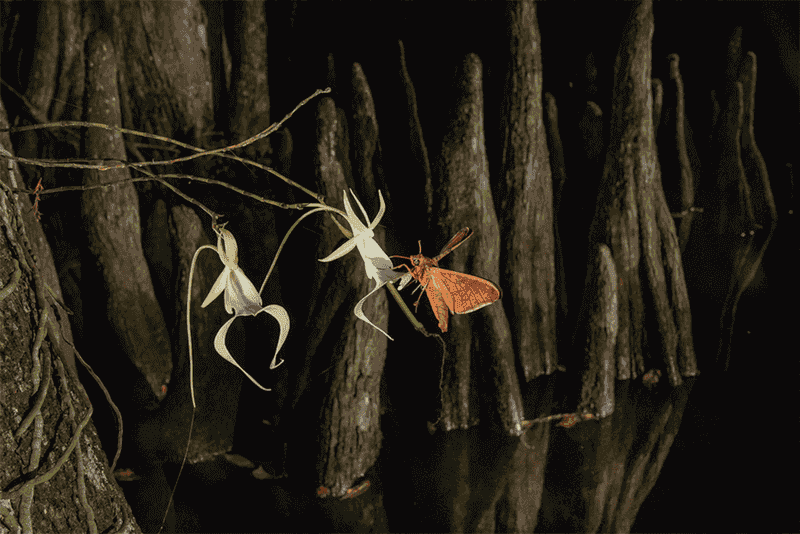
For years, the popular story said one insect did all the work: the giant sphinx moth. It made a tidy tale, with a long-tongued moth matched to a long-spurred flower.
But that version is out of date.
A 2019 paper in Scientific Reports, a peer-reviewed pollination study, documented pollination by the fig sphinx moth, Pachylia ficus. That finding overturned the long-held assumption that only the giant sphinx moth could do the job.
Later federal review points the same direction. In its proposed rule, the Fish and Wildlife Service identifies more than one pollinator.
What changed is the picture, not the mystery. Nobody has shown that a single moth explains why the orchid is rare or why its flowers appear so unevenly.
Those questions are still open.
For anyone who loves the old moth legend, there is still room for it. It just has company now, and the swamp turns out to hold more moving parts than the folklore suggested.
Fakahatchee opens a window onto the swamp, not a guaranteed sighting
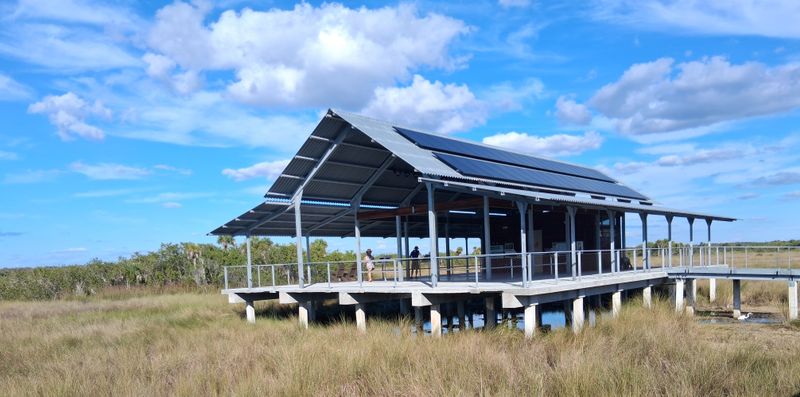
The Big Cypress Bend Boardwalk at Fakahatchee Strand Preserve State Park is a public way to step into strand-swamp habitat. Florida State Parks describes it as a boardwalk through old-growth cypress with wildlife viewing opportunities.
Notice what that description leaves out. It does not promise a ghost orchid bloom, and it does not say any particular plant can be seen from the route.
Go for the cypress, the water, the birds, and the quiet. If an orchid happens to be in flower, consider it a bonus.
Check current park conditions and rules before you travel, since access can change. Stay on public routes, and let the boardwalk be your boundary.
Safety matters here too. State Parks warns that alligators and venomous snakes can be present and camouflaged on trails.
Watch where you step, keep your distance from wildlife, and keep children close.
A swamp walk rewards patience. Bring a hat, bug protection, and binoculars, and treat every visit as a chance to learn how this wet forest works.
Protecting the orchid means leaving it where it grows
You will not find precise orchid locations in this article, and that is deliberate. In explaining why it did not propose critical habitat, the Fish and Wildlife Service cites poaching risk.
Pinpointing plants could invite disturbance and collection.
The same proposed rule reports fewer than 1,000 plants in the United States, with fewer than half mature enough to reproduce. That is the agency’s estimate, not a precise census, and it does not count plants in Cuba.
Conservation status has two layers. Florida lists the orchid as endangered at the state level.
Federally, the agency proposed an endangered listing in 2025, and its species status page still showed the orchid as Proposed Endangered when this was written. A proposal is not a final listing, so confirm the current status before relying on it.
The rule for visitors is plain. Do not collect, remove, climb to, or handle plants, and do not treat a bloom report as permission to enter restricted land.
According to the state agriculture department, collecting endangered plants or their parts requires landowner permission and a state permit.
The mystery is part of Florida’s wild inheritance
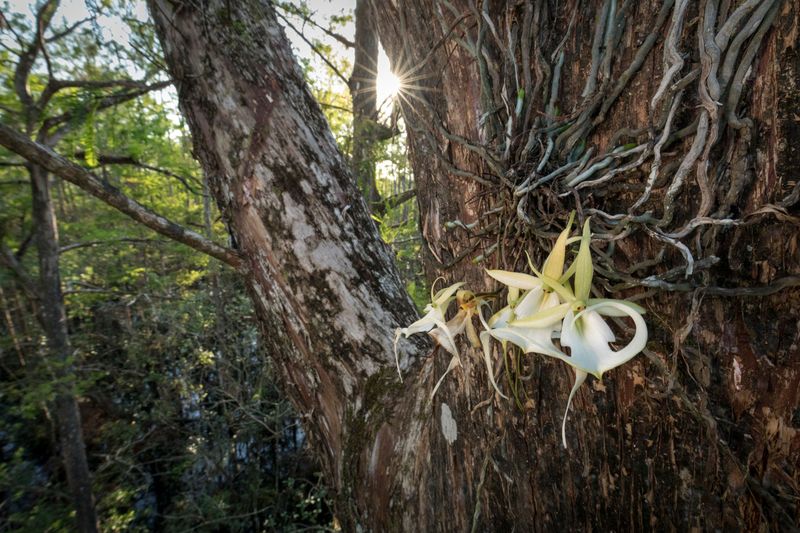
A boardwalk can carry you into the orchid’s world, but a bloom stays a matter of luck. That uncertainty is not a failure of the trip.
It is part of what keeps the plant wild.
Real Florida pride may look like restraint: learning the swamp, protecting what lives there, and walking away content when no flower appears. Some of the state’s best secrets only last because people leave them alone.