
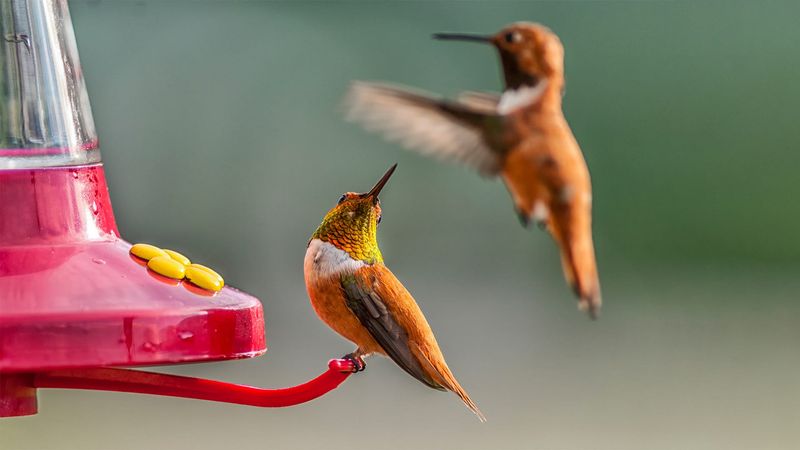
Watch a hummingbird feeder long enough in a North Carolina yard and you will almost certainly see one small bird launch itself like a missile at another, sending the newcomer spinning off into the trees. Many homeowners assume the feeder must be running low, but the sugar water is often perfectly full when these chases happen.
The real driver is territorial behavior, and understanding it gives you a practical way to help more birds get a turn at the feeder.
A full feeder does not stop a territorial chase
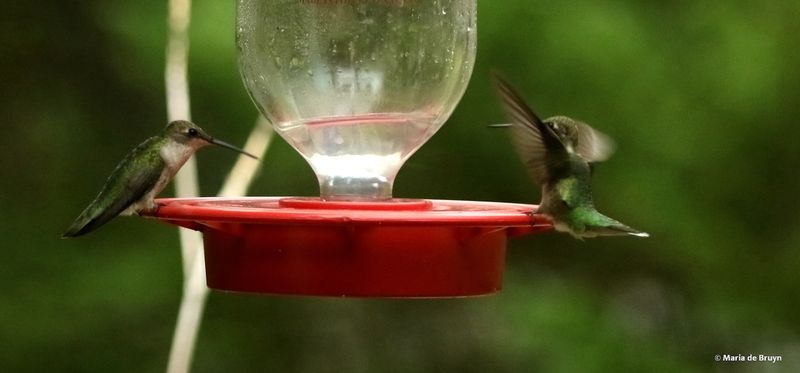
Plenty of sugar water in the reservoir does not guarantee a peaceful feeder. A dominant hummingbird may spend more energy chasing rivals away than actually drinking, and Cornell Lab of Ornithology notes that one bird may keep others away even when there is plenty to go around.
The feeder is full, but that does not mean the bird in charge sees the situation as low-stakes.
What is really happening is resource-territory defense. Hummingbirds evolved in environments where high-quality nectar sources were patchy and worth fighting over, so the instinct to hold and control a productive spot runs deep.
A feeder hanging from your porch railing is, from the bird’s perspective, an extremely reliable patch of concentrated food, and a reliable patch is worth defending hard.
The feeder may also be just one landmark inside a larger defended zone. The chasing bird could be protecting a nearby flower bed, a favorite perch, a clear flight path through the yard, or even space close to a nest site.
Research on marked ruby-throated hummingbird populations shows that resource quality, habitat visibility, feeder use patterns, and competition from other individuals all affect how intensely a bird defends an area. So the immediate behavior is territorial, but the factors shaping its intensity are broader than a simple full-or-empty reading of the feeder.
Describing the aggression as happening around feeders, rather than always caused by them, is a more accurate frame. Rearranging feeders can make a real difference, but the fights will not disappear entirely because the feeder is not always the only thing at stake.
The defended territory may extend beyond the feeder
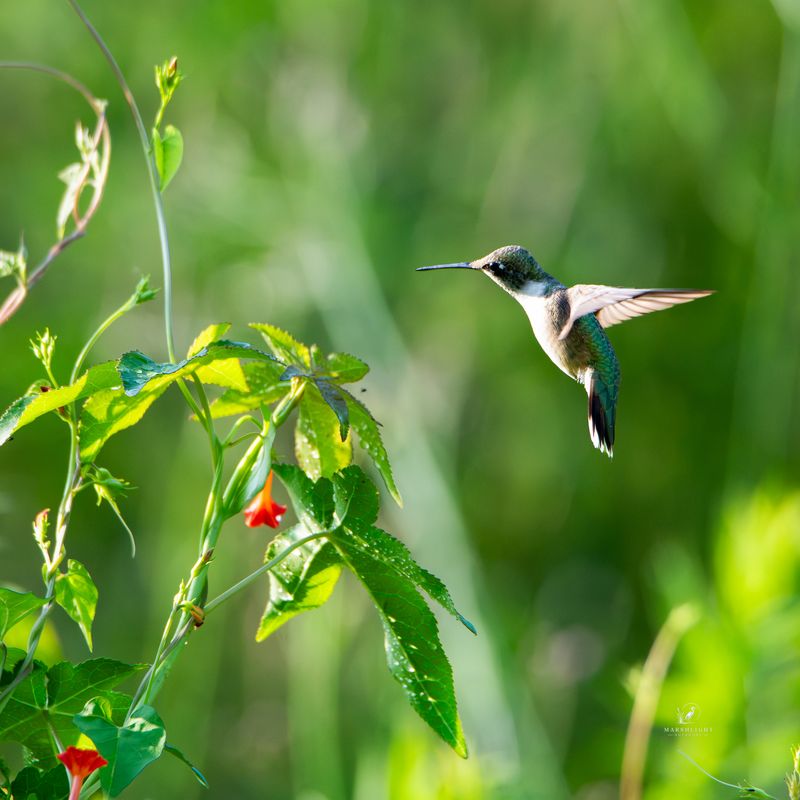
Ruby-throated hummingbirds are the only hummingbird species that breeds in North Carolina, making them the bird behind nearly every backyard chase you will witness. NC State Extension confirms that while unusual western species can occasionally turn up in the state, those sightings are uncommon.
For most North Carolina homeowners, the ruby-throated is the whole story.
Males tend to be the most aggressive defenders, and you may notice one perching conspicuously on a high branch or wire near the feeder so it can survey the whole yard. But females and juveniles are not passive.
Outside the breeding season, or when food sources are concentrated in one spot, they can chase competitors just as persistently. The bird doing the dive-bombing is not always the flashy male with the iridescent red throat patch.
The territory a hummingbird defends can include much more than the feeder itself. A patch of blooming coral honeysuckle along a fence, a particularly open flight lane through the yard, a perch with a clear view of the garden, or space near an active nest can all become part of what one bird tries to control.
Audubon points out that a feeder can function as one visible landmark within a broader defended area rather than the sole target of the bird’s attention. Recognizing that bigger picture helps explain why moving or adding feeders sometimes shifts the conflict rather than simply ending it.
Separate smaller feeders can make monopolization harder
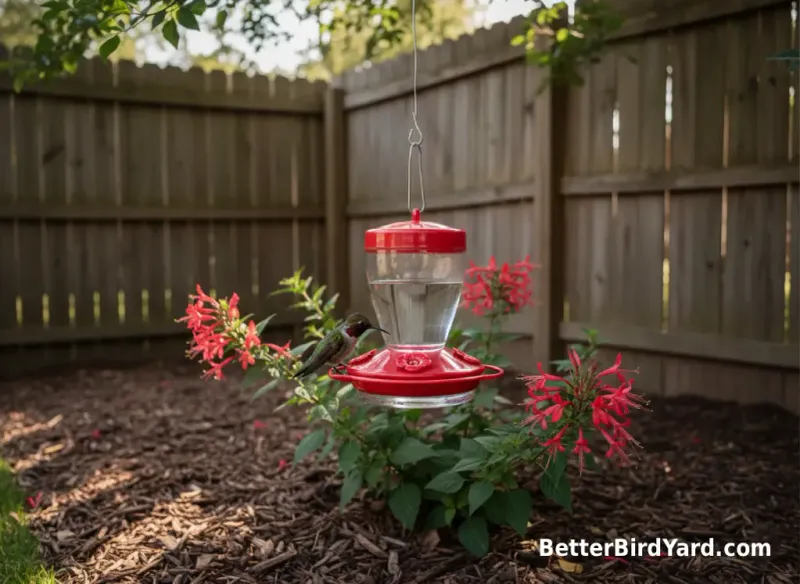
Adding a second port to an already busy feeder sounds helpful, but a dominant bird can still stand guard over a large multi-port station just as easily as a small one. The better move is to use several smaller feeders placed in genuinely separate locations around the yard.
Cornell Lab specifically recommends spreading feeders so that birds cannot easily see one another while feeding, and Audubon echoes that same advice.
The reason visual separation matters so much is simple: a territorial bird defends what it can monitor. If one station is around the corner of the house and another is tucked behind a dense shrub, the dominant bird has to choose which one to watch.
It cannot be in two places at once, which gives subordinate birds windows of opportunity to feed without getting chased off immediately.
Placing feeders around a building, behind a hedge row, or on opposite sides of a privacy fence are all practical ways to break the sightline. Research on hummingbird community structure and nectar resource distribution supports the general principle that how resources are distributed across a space affects competition and access.
Clustered stations that a single bird can survey from one perch may do little to reduce monopolization even if the total nectar volume increases.
Qualified language matters here. Placing feeders in separate, visually concealed spots can make it harder for one bird to control every station and may improve access for additional birds.
However, it cannot guarantee that territorial chases stop altogether, and it will not ensure that multiple hummingbirds feed at exactly the same time. The goal is to make monopolization harder, not to promise a perfectly peaceful yard.
Test the layout by changing the sightlines
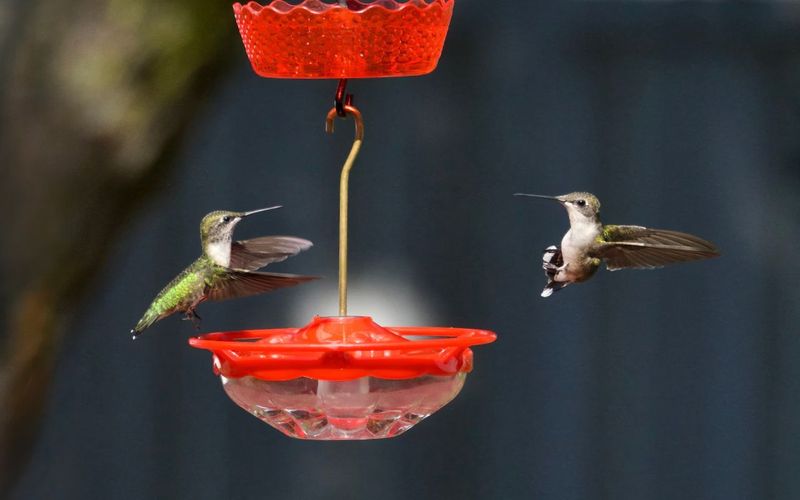
Turning the feeder-separation idea into a real experiment takes only a few minutes of setup and a few days of watching. Start by leaving your original feeder exactly where it is, then hang a second feeder somewhere the dominant bird cannot easily see from its usual guard perch.
Around the corner of the house, behind a tall shrub, or on the far side of a deck railing are all worth trying depending on your yard’s layout.
Audubon recommends thinking about sightlines first and distance second. A second feeder placed 10 feet away but in plain view of the guard perch may still be monopolized, while one placed 30 feet away but around a corner is far more useful.
Your buildings, fences, and mature plantings are the real variables; let those guide placement rather than a fixed measurement.
Watch for a shift in what you see over several days. More birds getting feeding time, fewer birds being chased immediately upon arrival, or the dominant bird flying back and forth between stations rather than calmly guarding one spot are all signs the layout is working in the right direction.
Cornell Lab notes that this kind of spatial arrangement is the most practical tool homeowners have for reducing one bird’s monopoly. Some extension guidance, including University of Georgia Extension, mentions at least 15 feet as a starting point, but treat that as one data point rather than a universal rule.
The sightline break matters far more than the exact number of feet between stations.
Support the birds without creating a surveillance perch
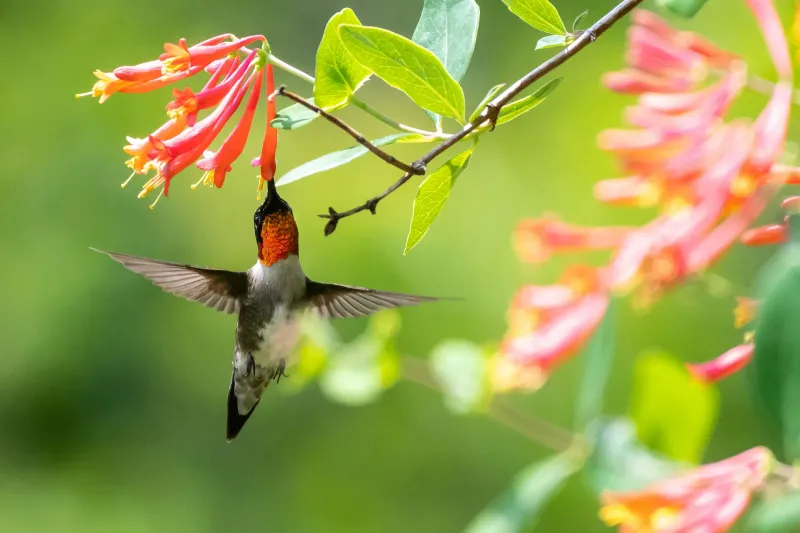
Hummingbirds need more than sugar water to thrive. They hunt small insects for protein, use dense vegetation for shelter and resting, and rely on natural flowers for nectar that a feeder alone cannot fully replicate.
NC State Extension notes that native plants, foliage, and pesticide-free habitat all help provide the insects and cover that hummingbirds need throughout the season. A yard with good habitat around the feeder supports the birds far better than a feeder hanging in an otherwise bare space.
For North Carolina yards, plants worth considering include coral honeysuckle, crossvine, cardinal flower, bee balm, jewelweed, trumpet vine, and wild columbine. These give hummingbirds natural nectar sources and attract the tiny insects the birds also depend on.
Plant them as habitat support, though, not as a guaranteed fix for territorial chasing. A well-planted yard changes how hummingbirds move through and use the space, but it will not switch off the territorial instinct.
Perches deserve some thought as part of the layout. Hummingbirds genuinely need places to rest and survey their surroundings, so removing all perches is not the answer.
Audubon recommends providing both open perches for territory surveying and sheltered resting spots within vegetation. The specific thing to avoid is placing a prominent, exposed perch directly above or immediately beside a feeder.
A branch or wire in that position becomes a watchtower that makes it easy for one bird to watch and defend the station below it. Move the perch opportunity a little further away, or let the surrounding shrubs provide natural resting cover at a slight distance from the feeder opening.
Use safe nectar and a concrete cleaning routine
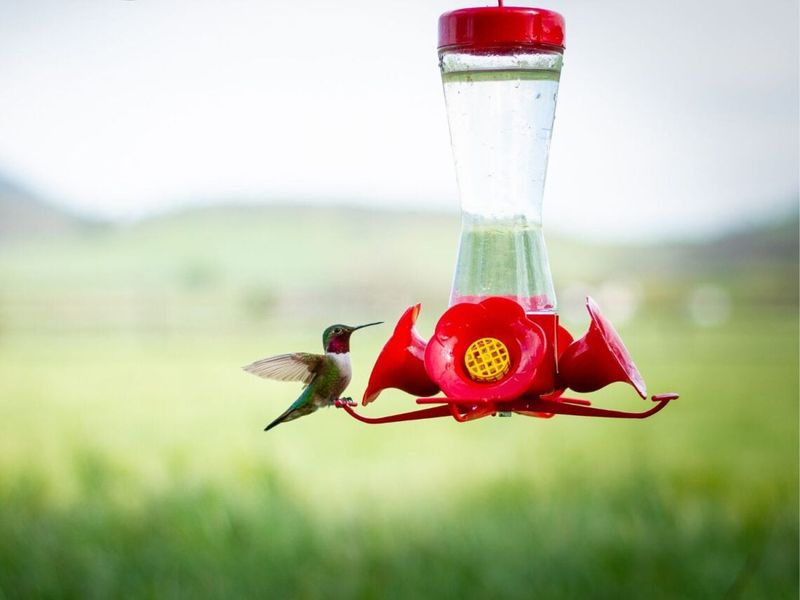
Getting the nectar recipe right is straightforward. Mix four parts plain water with one part plain white sugar, stir until dissolved, and fill the feeder.
NC State Extension advises against honey, artificial sweeteners, and red food coloring. Honey ferments faster than sugar and can introduce harmful mold; red dye is unnecessary because the red parts of the feeder itself are what attract hummingbirds.
Stick with plain white granulated sugar and water, and do not try to concentrate the mixture during hot weather. The standard 4:1 ratio is the right ratio year-round.
Nectar goes bad faster than many people expect, especially in a North Carolina summer. Replace the sugar water every two to three days in warm weather, and replace it sooner if it turns cloudy, smells off, or shows any sign of mold or fermentation.
Leaving spoiled nectar in the feeder is a genuine health risk for the birds, not just a cosmetic issue.
Cleaning needs to happen on a real schedule, not just when the feeder looks dirty. Audubon recommends cleaning every two to three days in warm weather and daily during particularly hot conditions.
At minimum, clean at least once a week. Follow the feeder manufacturer’s instructions, scrub all surfaces with hot water, and rinse thoroughly.
Never refill a feeder that still shows residue, cloudiness, or any trace of mold. Keeping feeders in a shaded spot slows nectar degradation and can stretch the time before it clouds over.
Ants, bees, and wasps at the feeder are a separate problem from hummingbird aggression and call for different responses. If insects are crowding the ports, Cornell Lab suggests moving the feeder to a new location, using an ant moat above the hanger, choosing a feeder with bee guards on the ports, and avoiding feeders with yellow parts, which tend to attract bees and wasps.
Applying sticky substances or oils near feeding ports can contaminate the nectar and harm feathers, so those approaches are best avoided entirely.
Improve access without expecting complete peace
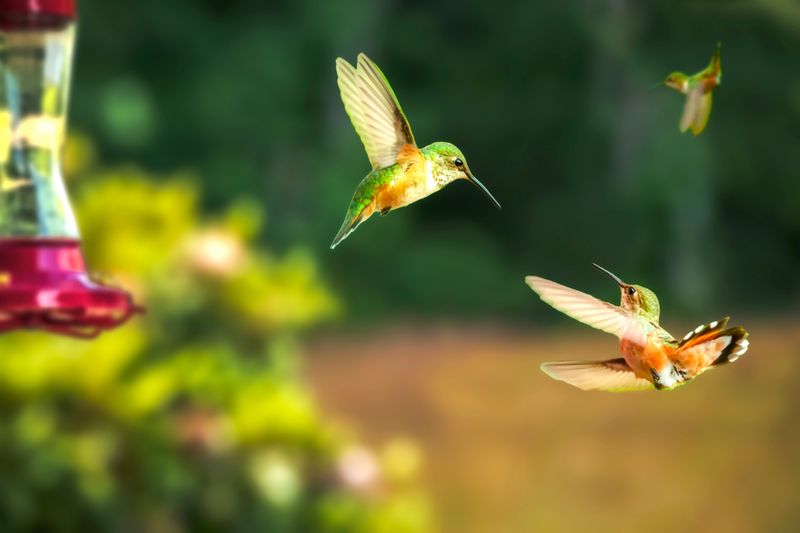
The most useful single move a North Carolina homeowner can make is to separate feeders so that a dominant bird has a harder time watching every station at once. Place them around corners, behind shrubs, or on different sides of the house, and then watch what actually happens over several days before deciding whether to adjust further.
The layout may need a few tweaks based on where the guard bird chooses to perch and which sightlines it uses.
Even after a well-planned rearrangement, expect some chasing to continue. Cornell Lab is clear that territorial behavior can persist around flowers, perches, and other resources beyond the feeder.
If visits to one station drop off, the cause may have nothing to do with aggression. Cornell also notes that natural flower abundance, migration timing, a neighbor adding feeders, or shifting local conditions can all reduce traffic to any single station.
None of those changes signal a problem that needs fixing.
A cleaner, more distributed feeding setup gives more birds a realistic shot at getting in without being immediately driven away. That is a meaningful improvement, even if a determined hummingbird still patrols the yard with obvious opinions about who belongs there.