
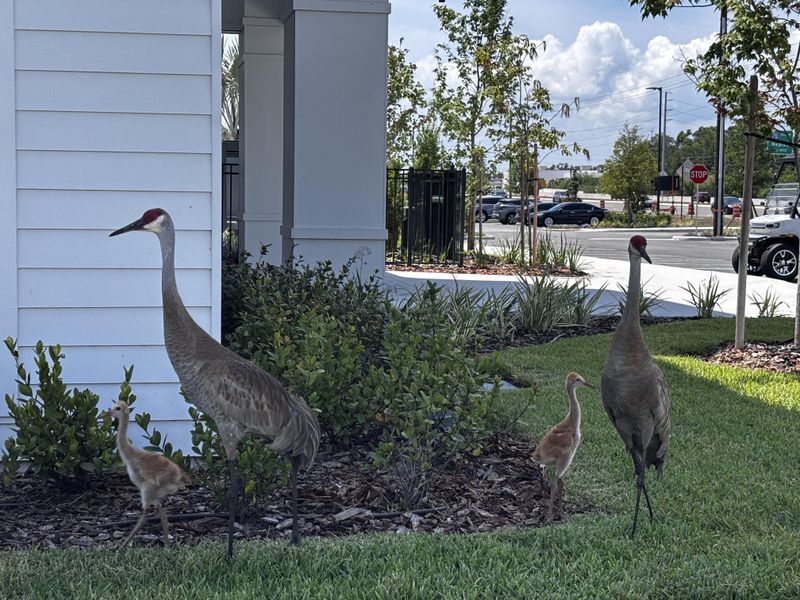
A pair of tall gray birds strolls across your lawn, probing the grass as if they own the place. Then, a few months later, cranes show up again.
Florida has more than one kind of sandhill crane, and yards can offer useful foraging ground. Here is what is known about these visits, what is still a guess, and how to share your neighborhood with cranes safely.
Florida’s fall crane sightings can include residents and migrants
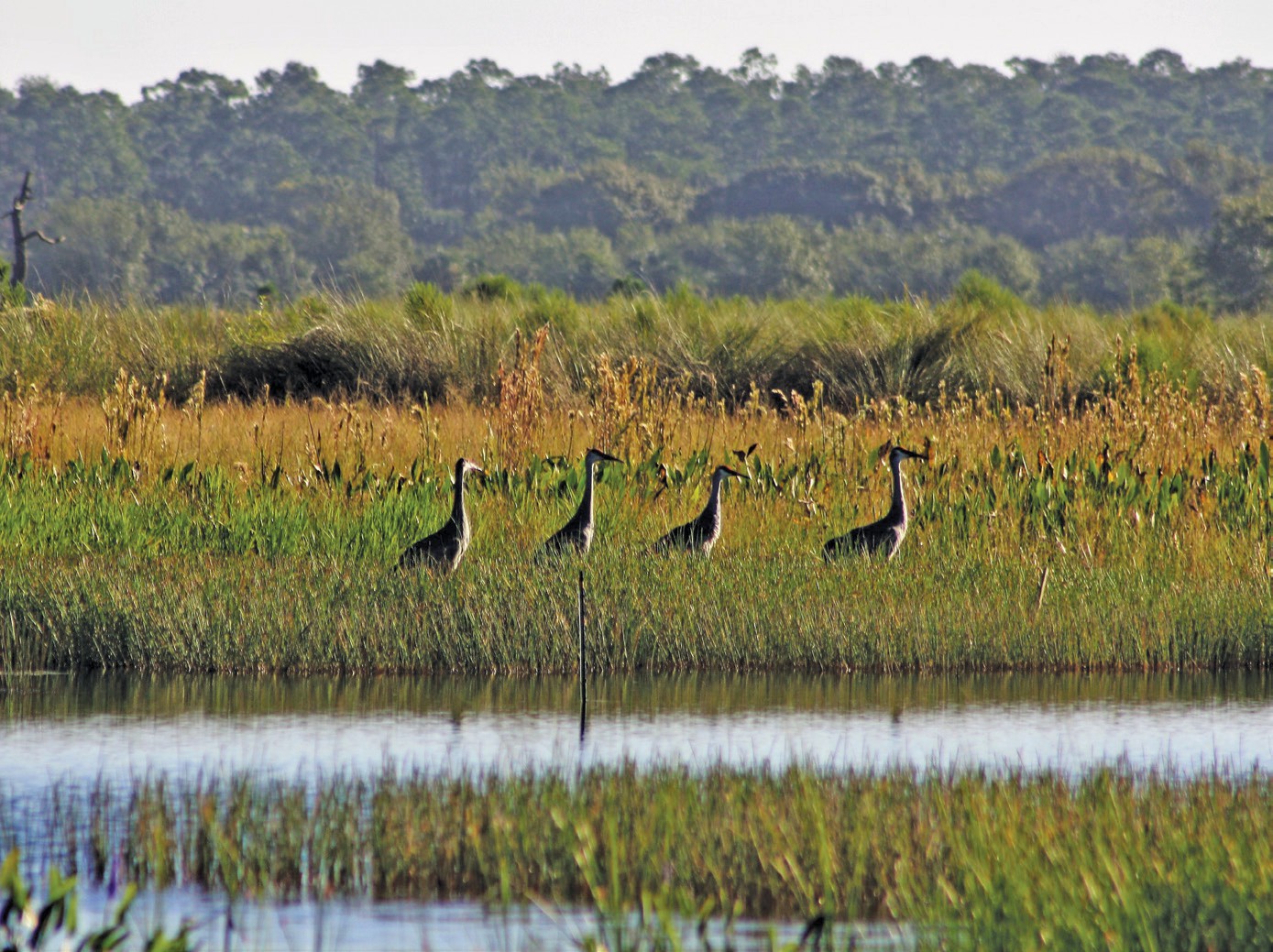
Not every crane you see in Florida is a visitor. Florida has its own nonmigratory sandhill cranes that live here all year, and each fall they share the state with migratory greater sandhill cranes that come south for winter.
According to the Florida Fish and Wildlife Conservation Commission, the main arrival of migratory cranes happens in November and December, and they head north again in March and April. That timing matters if you spot cranes in September or early October.
Birds seen then may well be residents you simply noticed more, or a few early migrants.
FWC estimates that Florida has roughly 4,000 to 5,000 nonmigratory cranes, and that about 25,000 migratory greater sandhill cranes spend the winter here. Those are agency estimates, not exact yearly counts, but they show why winter can feel like a crane boom.
Many more birds are spread across pastures, parks, golf courses, and neighborhoods.
So a rise in yard sightings after summer may involve migrants, residents, or both. Residents may also wander more as their young grow up and families range farther for food.
Telling the groups apart by eye is difficult for most homeowners, since the two look very much alike.
A practical clue is the calendar. A big jump in numbers during late November or December fits the migrant pattern well.
A pair that hangs around your street through spring and summer is probably a resident pair, and they may even be nesting nearby.
Open lawns can offer cranes a place to forage
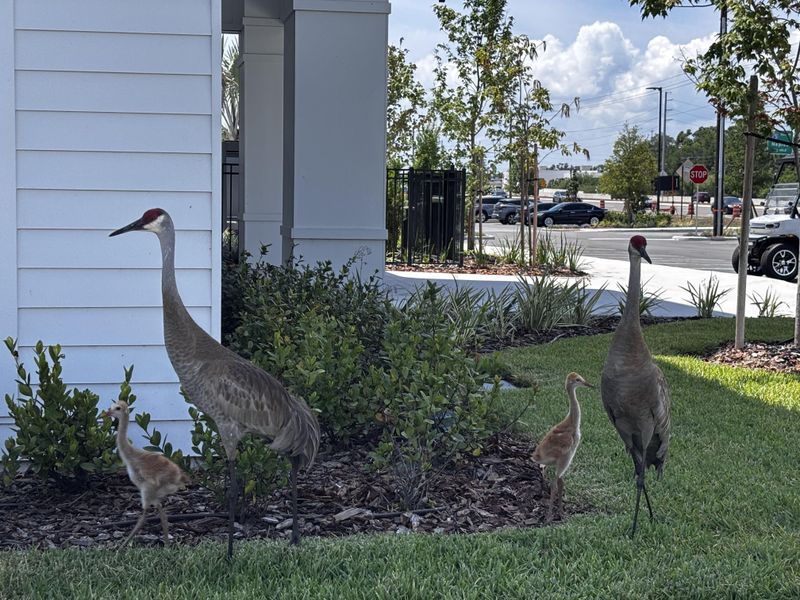
Cranes spend much of their day walking and probing for food, and a mowed lawn gives them room to do it. Open ground lets them see around while they work.
They are omnivores. FWC’s guidance on living with cranes lists foods such as earthworms, mole crickets, grubs, acorns, seeds, and other small animals.
The U.S. Fish and Wildlife Service also describes a mixed diet of plant material, grains, insects, and small animals, gathered by probing.
That probing explains the small holes some homeowners find. A crane jabbing its bill into turf may be after grubs or mole crickets, which are common turf pests.
FWC notes the damage can be a nuisance, though the birds are eating pests.
Still, a few cautions help keep expectations realistic. Cranes do not eat only pests, and not every patch of torn-up grass comes from a crane.
Armadillos, raccoons, and other wildlife dig too, so look for fresh bill-sized holes and a bird present in daylight before blaming cranes.
Knowing what cranes do on lawns in general does not tell you why they picked your lawn. Nobody has tested that for individual yards.
The foraging habit is well documented, but the reason behind any one visit stays a guess.
Yard features may make a stop useful, but not certain
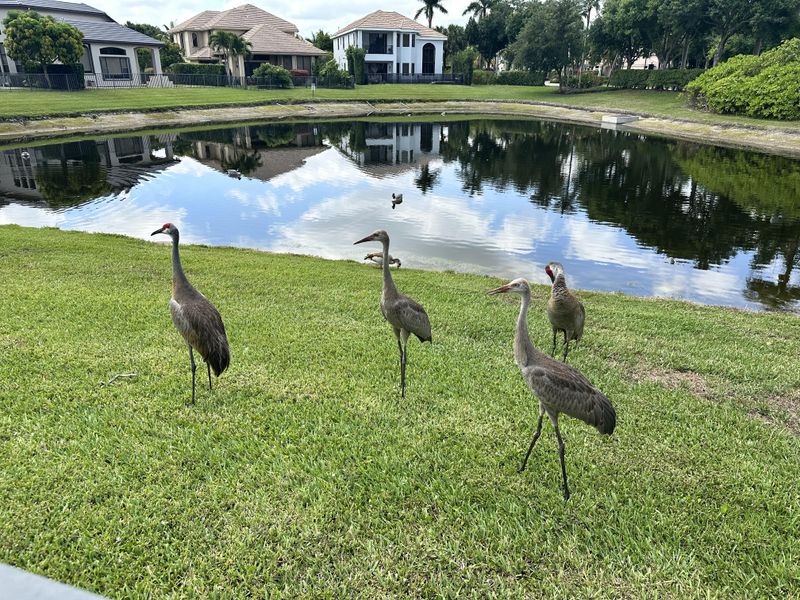
Three features come up again and again when wildlife agencies talk about cranes: open mowed space, natural food, and water. A yard that combines them may look like a decent foraging stop.
Short grass gives cranes a clear view and easy walking. Soil that holds earthworms and insects, plus oak trees dropping acorns, adds natural food.
FWC’s living-with-cranes page points to these foods, and it notes that water features may also draw cranes.
Florida golf courses give a clear example of why this matters. FWC’s golf course guidance describes cranes using the open turf and ponds found there.
A big residential lawn with a retention pond shares some of the same traits on a smaller scale.
None of this is a recipe. No controlled study has shown that a certain lawn, pond, or planting choice brings cranes back to a particular property.
Neighbors with similar yards may see very different numbers of birds.
The practical takeaway is simple. If cranes visit, you can reasonably say your yard has features cranes tend to use.
Treat that as a likely clue, not a proven cause, and do not redesign your landscape to chase a result nobody can promise.
Repeat visits do not identify the birds
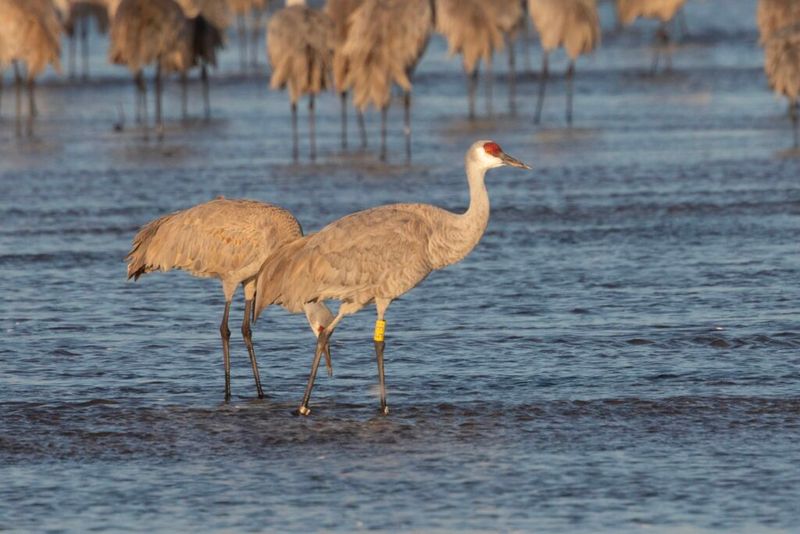
Seeing cranes in your yard again and again feels like a reunion. Without leg bands or tracking, though, you cannot say they are the same birds.
Residents may simply live in the area, so some repeat sightings could be the same local pair. Migrants arriving each winter could be different individuals, and the main influx runs from November to December, as FWC explains.
Research does show that some wintering cranes return to the same broader areas. A study in The Condor looked at wintering sandhill cranes, including body size, site fidelity, and movement patterns.
It found that Florida greater sandhill cranes have shifted their wintering areas as roost water and foraging habitat changed.
Notice the scale. Those findings describe regions and habitat, not single backyards.
A bird faithful to a wintering area might use dozens of lawns and pastures within it.
So the honest answer is that nobody can confirm the same cranes are coming back to your yard. What you can say is that cranes use the area and that your yard may be part of their winter routine.
Keep food attractants out of the yard
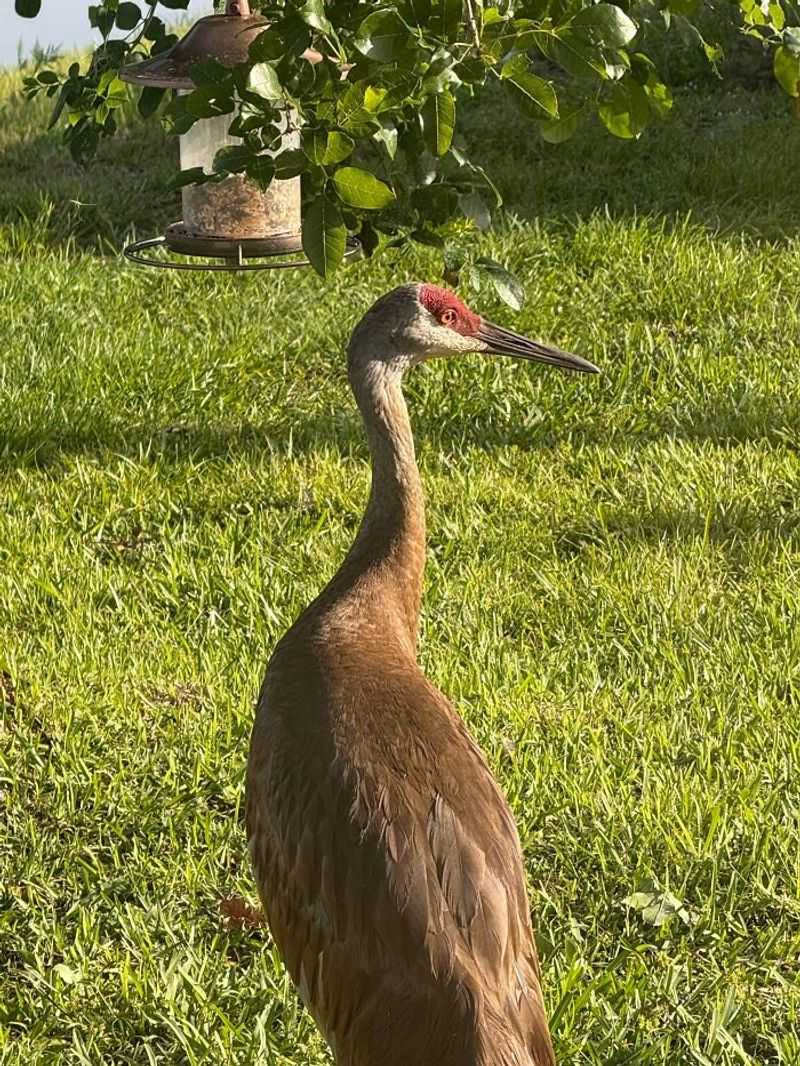
The first rule is simple: do not feed cranes. Florida’s wildlife rules, including Rule 68A-4.001, prohibit intentional feeding of wildlife.
Handouts also teach cranes to expect people, which can lead to bold behavior and trouble.
Accidental food counts too. FWC warns that spilled birdseed can attract cranes, so sweep up seed under feeders, use trays, or switch to feeders that drop less.
Keep pet food indoors and secure trash cans with tight lids so nothing spills onto the grass.
Walk your yard once a week and look for leftovers. Seed hulls under a feeder, a bowl on the porch, or a torn trash bag are common culprits.
Fixing them takes a few minutes.
Lawn digging deserves a calm response. As FWC’s guidance explains, cranes probing for grubs or mole crickets may be eating common turf pests.
Heavy pesticide use is a bigger worry, because FWC reports that young cranes have died from pesticide poisoning.
For that reason, do not reach for pesticides to chase cranes away. If turf pests are a problem, ask your local UF/IFAS Extension office about options that suit your lawn and the wildlife around it.
Follow specific guidance around nests and reflective surfaces
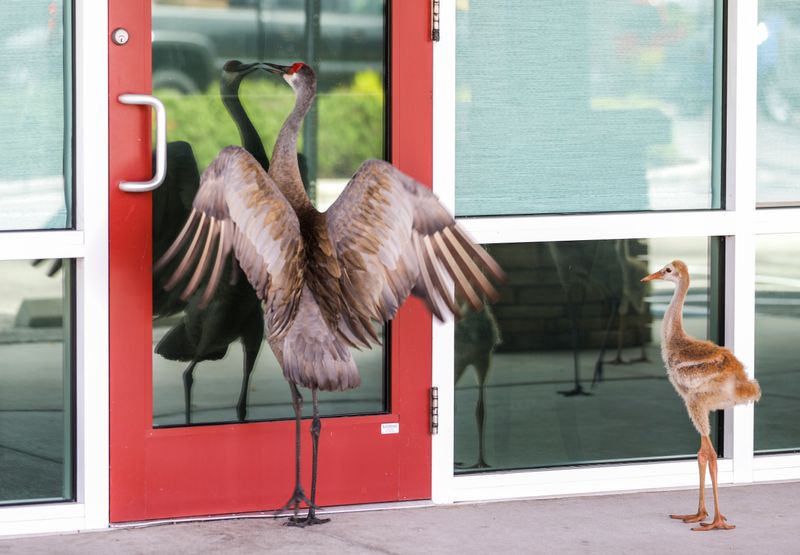
Two situations call for extra action, and most yard visits involve neither. One is an active nest.
The other is a crane that attacks its own reflection.
If cranes nest on or near your property, FWC advises avoiding mowing, landscaping, and tree trimming within 400 feet of the active nest. Nests are often built in shallow water or low wet spots, so look before starting a big yard project in spring and summer.
Reflections are a different matter. Sometimes a crane sees its mirror image in a window, screen, or car and treats it as a rival.
FWC suggests temporarily covering the reflective surface or moving the vehicle.
A sheet of paper or cardboard taped over the lower part of a window can do the job. Once the bird loses interest, you can usually remove the cover.
You do not need to cover every window just because cranes walk by. Act only if a bird is pecking, striking, or scratching reflective surfaces.
Treat repeat sightings as a habitat clue, not proof of identity
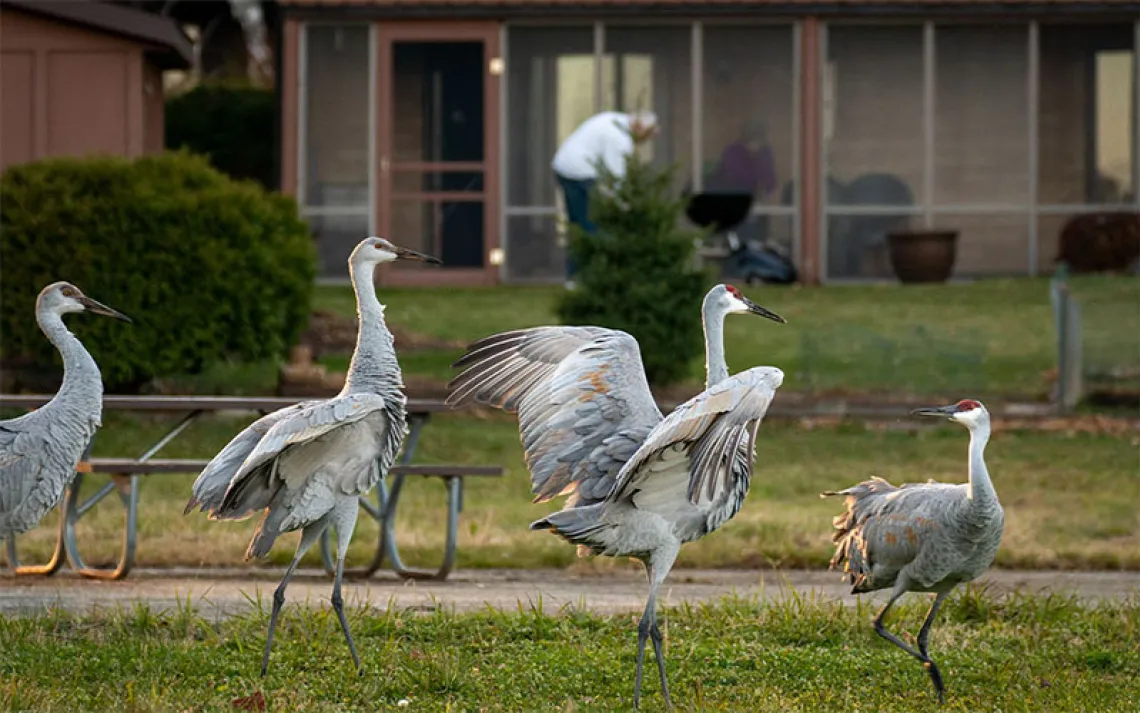
Cranes in a Florida yard likely reflect a mix of resident birds, winter arrivals, and a lawn that offers room to forage. Whether the same birds come back to your yard remains unknown.
Enjoy them from a distance, keep seed and scraps off the ground, and let wildlife stay wild. A crane stepping across your grass is a small clue about what your yard offers, not a reunion.