
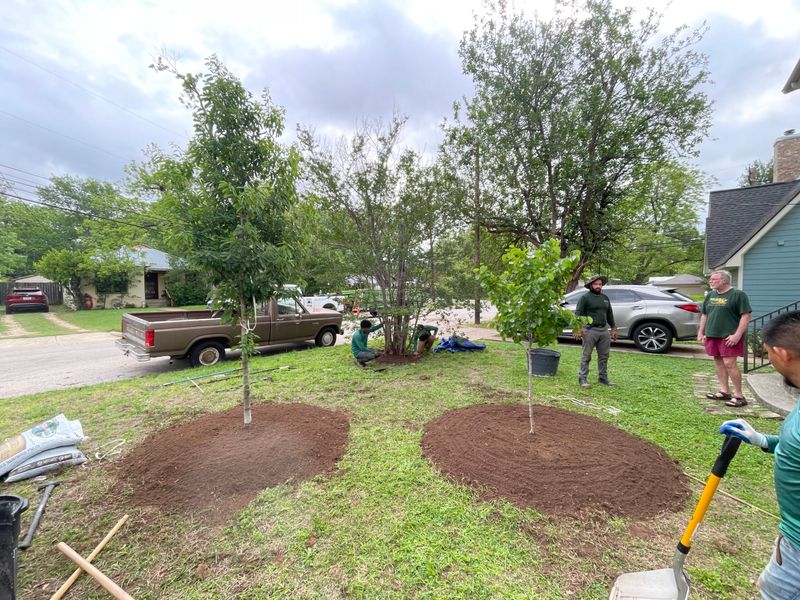
Triple-digit Texas summers are hard on any young tree, and the weeks before that heat arrives matter more than most people think. Late fall gives a new tree a cooler stretch to start settling into your soil.
It is not magic, and it does not replace good planting and care. Here is how to use the season well so your tree has a fair shot when the heat returns.
Austin’s planting window starts in fall and continues through March
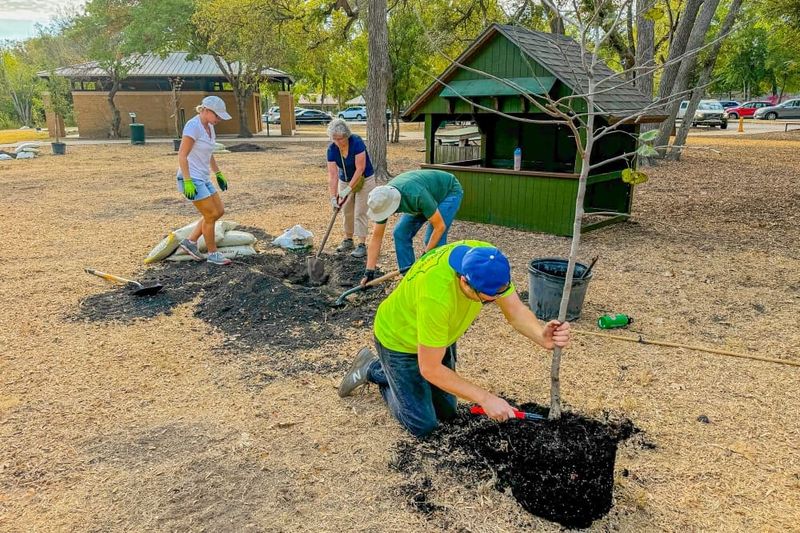
Anyone planning ahead for summer in Austin has a handy calendar to work from. The city calls October through March its tree-planting season, and Austin’s guide to planting a tree explains that a tree planted in this window can start sending roots into the soil before hot, dry weather returns.
Late fall sits near the front of that window. Planting in November means your tree has a few cooler months of lead time before the stress of summer begins.
For a gardener who likes to get chores done early, that is a real advantage.
Spring is not a mistake, though. The same recommended window runs through March, so late winter and early spring planting are also fine in Austin.
Fall simply offers the longest runway if you are ready to plant now.
One note on geography. This October-through-March window is Austin’s recommendation.
Texas covers very different soils and climates, so gardeners in other towns should check what their own city, county extension office, or local nursery advises before copying Austin’s dates.
If you have been eyeing a bare spot in the yard, this is a good moment to start. Pick the tree, mark the site, and get a plan in place while the weather is comfortable for digging.
A cooler-season head start can help before summer stress
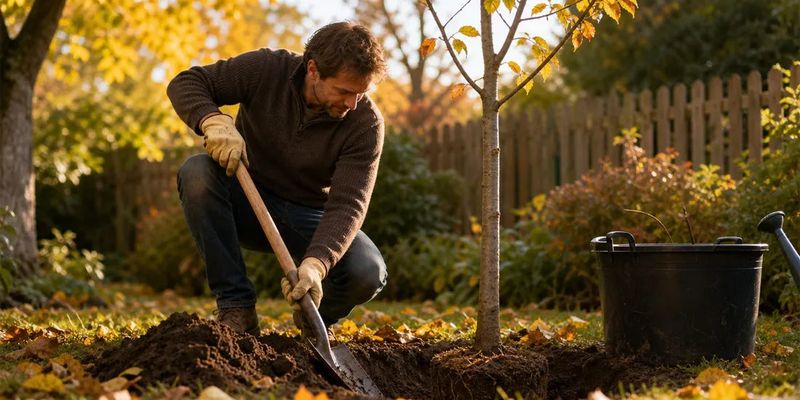
Think of fall planting as a warm-up lap. When a tree goes in before the hot, dry weather returns, its roots get time to begin growing out into the surrounding soil instead of facing a Texas July with only the roots that came in the pot.
That head start has limits. As University of Illinois Extension explains in its guide to autumn tree planting, root growth slows as soil cools.
Roots may grow while conditions allow, but a cold snap or midwinter dormancy can pause the process.
So skip the idea that roots grow nonstop all winter. A better way to picture it is a cooler-season window where growth happens in fits and starts, with less heat stress on the tree while it happens.
Central Texas weather also swings. Travis County AgriLife Extension guidance notes that winters here can be dry, which means a fall-planted tree is not on autopilot.
A practical example: after a few weeks without rain, press a finger a few inches into the soil near the root ball. If it feels dry, your tree needs attention no matter what the calendar says.
Planting date helps, but it does not decide the outcome alone. Site fit, planting depth, and watering matter just as much, and the next sections cover each one.
Choose a tree that fits the site
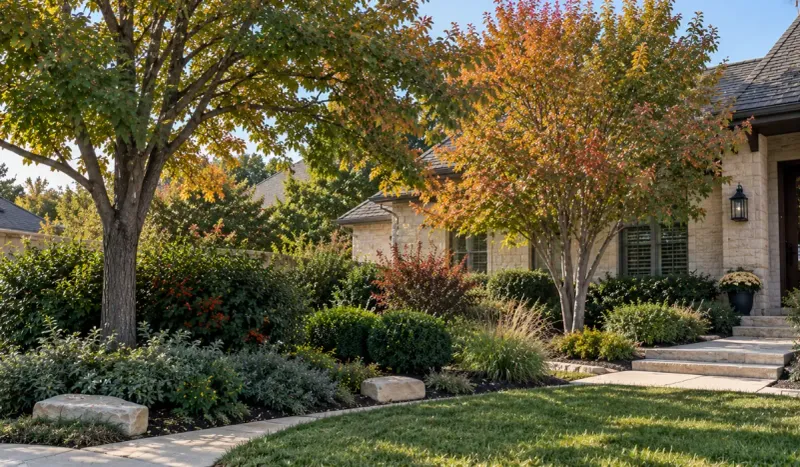
Before you buy anything, walk the yard. Look up for power lines and eaves, look around for fences, driveways, and the house foundation, and picture the tree at full size.
A sapling that looks tiny in a pot will eventually need room for both a wide canopy and spreading roots.
Soil matters too. Austin’s city guidance on planting a tree points out that local soils tend to be alkaline and that some popular tree types may not perform well here.
That is a good reason to avoid choosing a tree just because it looks great at a big-box store or thrived in a friend’s yard in another state. Species that do well in one part of Texas may struggle in another, so there is no single list that fits every yard.
Instead, check your own spot. Note how many hours of sun it gets, how fast water drains after rain, and how deep the soil is over rock.
Then ask a local nursery or review the city’s tree health resources for help matching trees to your conditions.
A tree that fits its site needs less rescuing later. That is the quiet advantage that no planting date can give you.
Dig wide, plant at the right depth
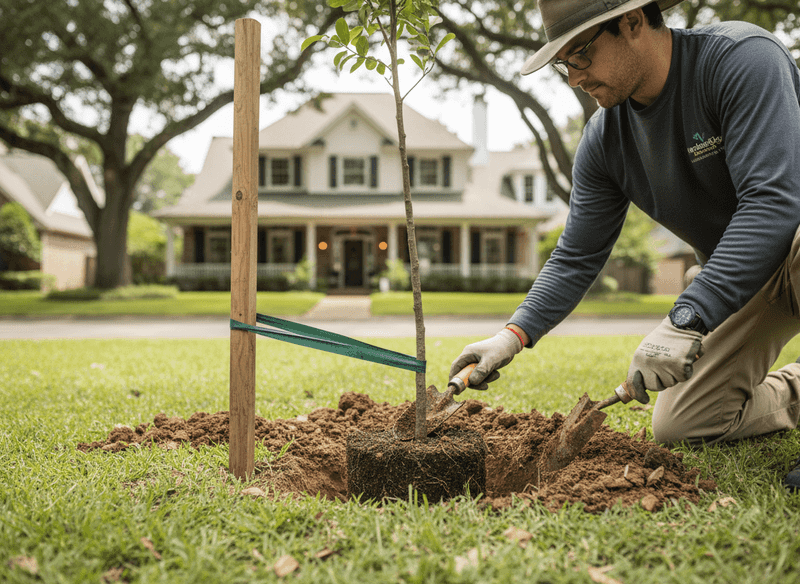
Planting day comes down to a few clear steps. Dig the hole at least twice as wide as the root ball, but no deeper.
Wide, loosened soil gives new roots an easy path outward, while a hole that is too deep encourages the tree to settle below where it should sit.
Next, find the root collar, the spot near the base where the trunk begins to flare out. Texas A&M Forest Service planting guidance says to set this collar flush with or slightly above natural grade.
Sometimes extra soil hides it in the pot, so brush it back until you can see it.
Set the tree in the hole and check from a few angles that it stands straight. Lift it by the root ball, not the trunk.
Then backfill with the soil you dug out. Skip the bags of amendments, since the tree needs to grow into the native soil it will live in for decades.
Fill gradually and firm the soil gently to remove big air pockets.
Why does depth matter so much? Planting too deeply is a common establishment problem.
Burying the root collar can stress the trunk base and the roots, so a tree can struggle even when everything else is done right.
If the tree sinks after settling, lift and reset it rather than hoping it works out. A few minutes of fixing now saves years of trouble.
Monitor moisture through dry spells
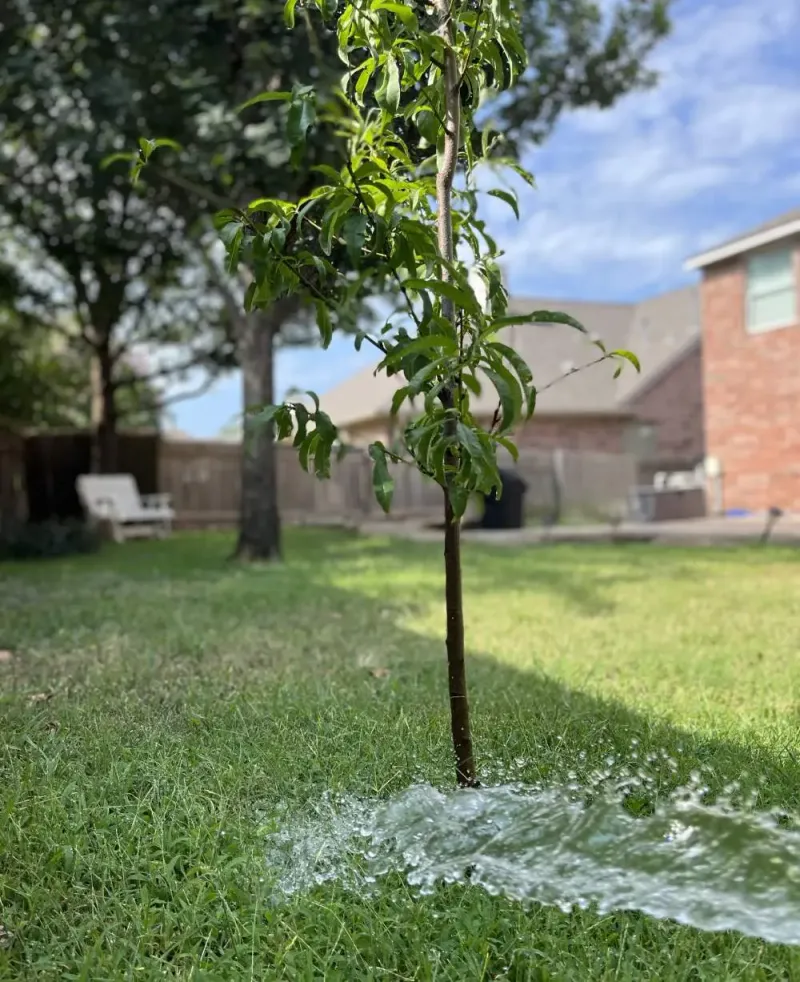
Cool weather can trick us into forgetting the tree. Central Texas winters can be dry, so a fall-planted tree still needs you to check on it, even when the days feel mild.
Start by watering thoroughly right after planting. Texas A&M Forest Service advises watering newly planted trees for at least two years, and favors a deep soaking over light, frequent sprinkles that wet only the surface.
After that, keep checking. Push a finger or a small trowel into the soil near the root ball.
If it is dry a few inches down, water. If it is soggy, hold off, because the goal is moist soil, not saturated soil.
There is no single amount or schedule that works for every tree. Needs shift with the tree’s size and species, your soil, recent weather, and rainfall.
The Forest Service’s drought and trees explainer stresses accounting for local conditions rather than following a rigid recipe.
Rain also does not automatically settle the question. A light shower may leave the root ball dry, so check the soil instead of trusting the forecast.
Travis County AgriLife guidance on Austin weather is a helpful reminder of how variable conditions can be.
Finally, follow your local watering restrictions. If your water utility limits days or methods, plan your deep soakings within those rules.
Use mulch and other care measures with restraint
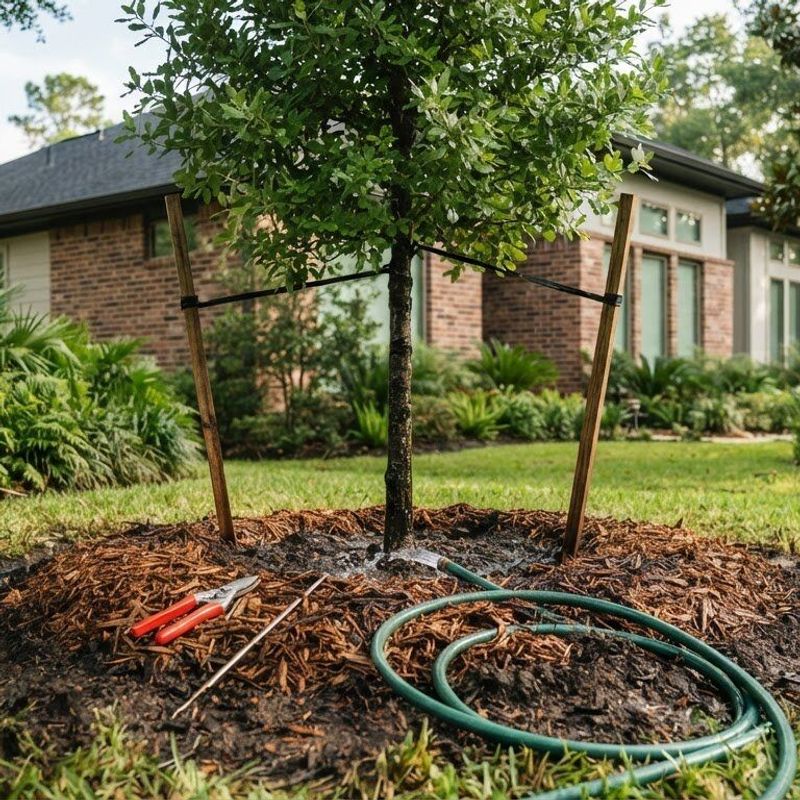
Mulch is the one extra worth adding. A layer about 2 to 3 inches deep over the planting area helps hold soil moisture and moderates soil temperature, according to the Texas A&M Forest Service’s planting guidance.
Spread it in a wide ring and pull it back so it does not touch the trunk. A small gap around the base keeps the bark drier and lets you see the root collar.
A mounded pile against the trunk is a habit worth skipping.
Staking is not automatic. Most young trees can stand on their own, and you only need supports if the tree cannot hold itself upright or the site is especially windy.
When you do stake, plan to remove the supports as soon as they are no longer needed. The Forest Service says stakes should not stay in place for more than a year.
Hold back on the pruning shears as well. Take off only broken or damaged branches at first, and avoid unnecessary cutting while the tree is getting established.
As for fertilizer, leave it in the shed during the first growing season. The tree is focused on building roots, and the Forest Service planting advice cautions against feeding it right away.
Good care here often means doing less. Mulch, a gentle hand, and patience cover most of what a new tree needs beyond water.
Treat fall as a head start, not a guarantee
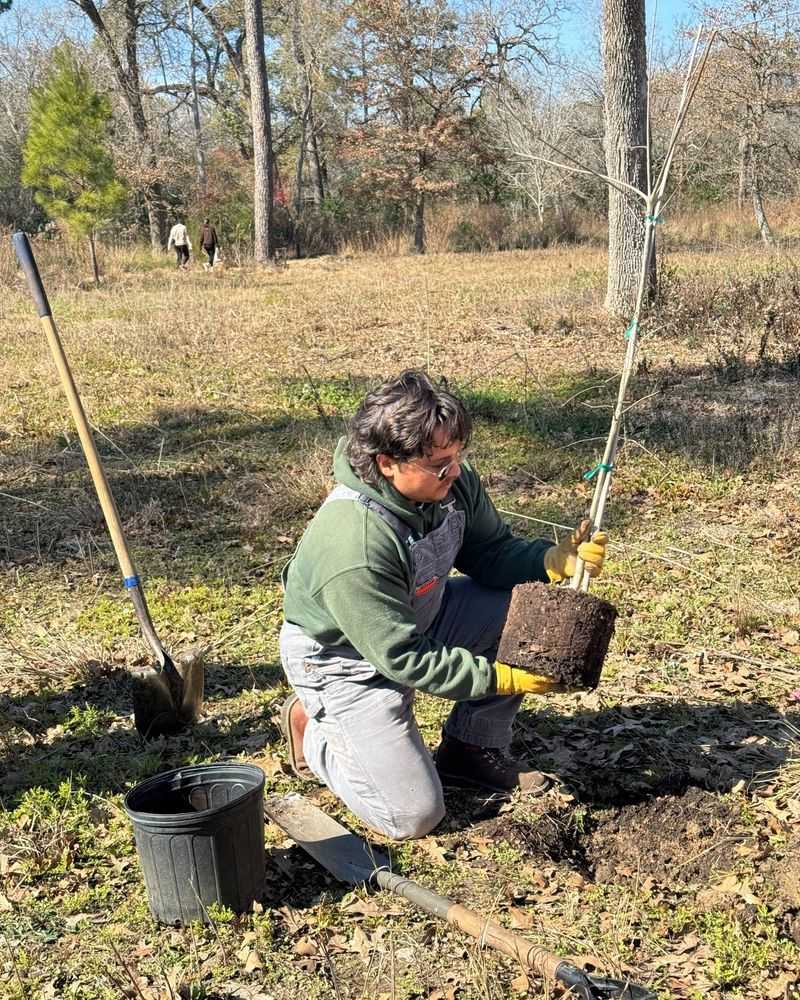
Late fall gives your tree a useful lead, and Austin’s planting season stretches from October through March, so there is room for spring planters too. What turns a head start into a healthy tree is the work around it: a species that fits the spot, careful planting, and steady attention to what the tree needs.
Fall can buy time before summer stress, but it never promises first-summer survival.
The calendar opens the door. Your care decides how far the tree walks through it.