
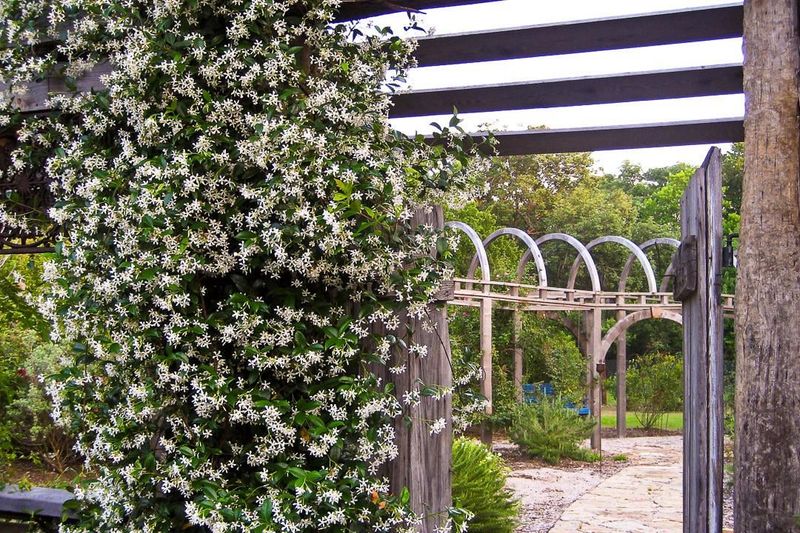
A bare chain-link fence is one of the least inspiring sights in a Texas yard, but star jasmine can quietly turn that eyesore into a glossy, fragrant screen. Known botanically as Trachelospermum jasminoides and often called Confederate jasmine, this twining evergreen vine covers fence wire with deep green foliage and fills the air with sweetly scented white flowers each spring.
Getting that transformation right in Central Texas takes honest expectations about bloom timing, freeze risk, and regular upkeep, and this guide walks through everything you need to know before you plant.
Star jasmine creates a fragrant evergreen screen, not a guaranteed flower wall
Bare chain-link fencing has a way of making even a well-kept yard feel unfinished, and star jasmine is one of the more practical solutions available to Central Texas gardeners. Botanically, the plant is Trachelospermum jasminoidesJasminum, a woody, twining vine in the dogbane family rather than a true jasmine in the genus .
That distinction matters less in conversation than in a nursery, where the plant is widely sold under both “star jasmine” and “Confederate jasmine” and recognized on sight by its glossy, deep green foliage.
North Carolina Extension’s plant profile describes it as a broadleaf evergreen vine with fragrant, creamy-white, pinwheel-like flowers, and that description gives you the two things it actually delivers on a fence: year-round foliage coverage and a powerful seasonal flower display. The foliage is the primary screening feature.
It stays on the vine through most Central Texas winters, filling in the chain-link with a solid panel of green that hides whatever is on the other side. Flowers are the seasonal highlight, not the constant feature.
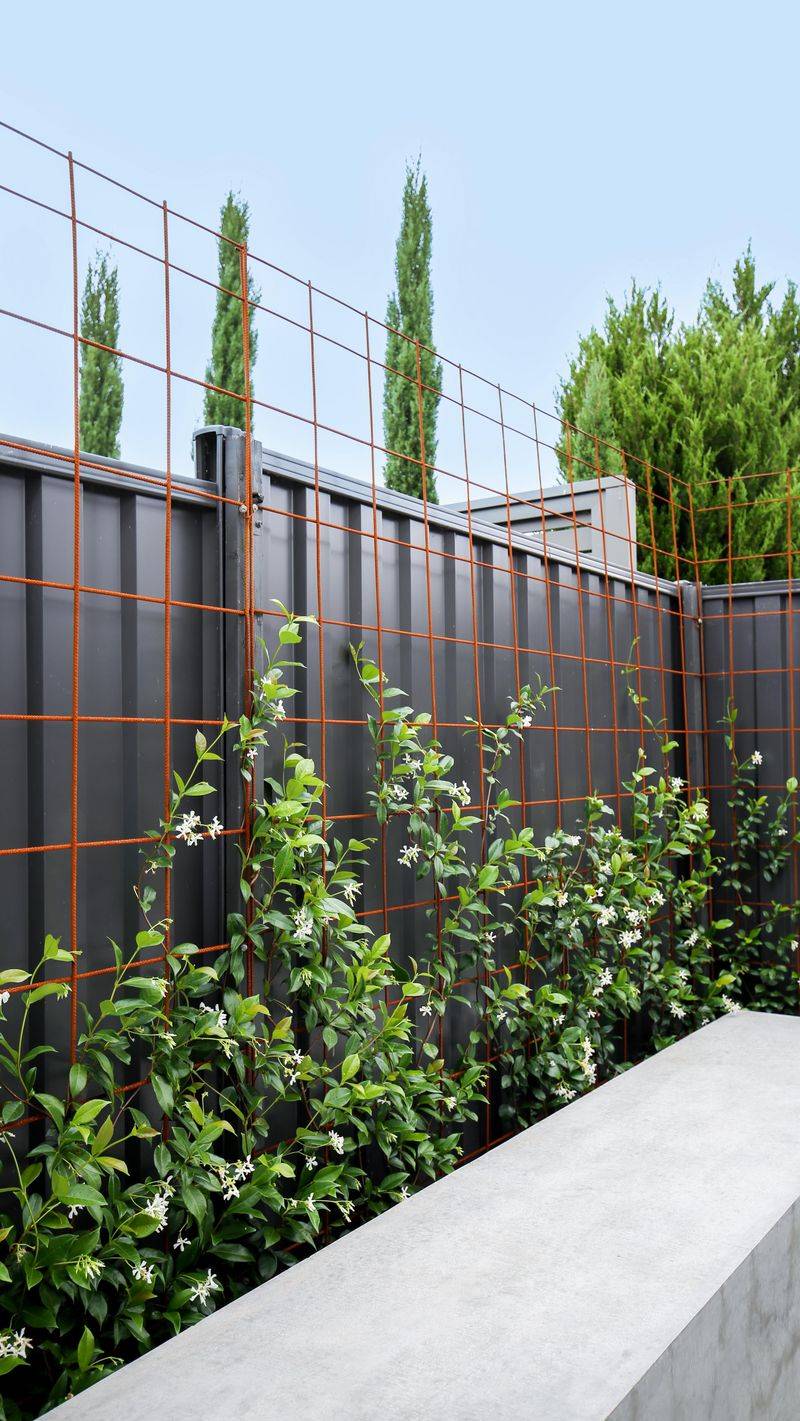
Star jasmine twines naturally, which makes chain-link fencing a logical support structure. The wire grid gives the vine countless anchor points to grip as it climbs, and a well-established plant can weave so thoroughly into the fence that the metal nearly disappears.
Young stems, however, are flexible and directional rather than aggressively self-climbing, so you may need to guide new growth into the fence openings and occasionally tie it in place while roots and stems develop. One plant will not automatically cover an entire fence regardless of its length.
Coverage depends on the vine’s age, the site conditions, how consistently it is watered during establishment, and how the fence is oriented relative to sun and wind. Austin’s plant guide gives a mature size of roughly 10 to 20 feet tall with a 12 to 16 foot spread, which tells you a single plant can eventually cover a meaningful length of fence but not necessarily every foot of a long run from day one.
Expect the strongest fragrance and bloom in late spring
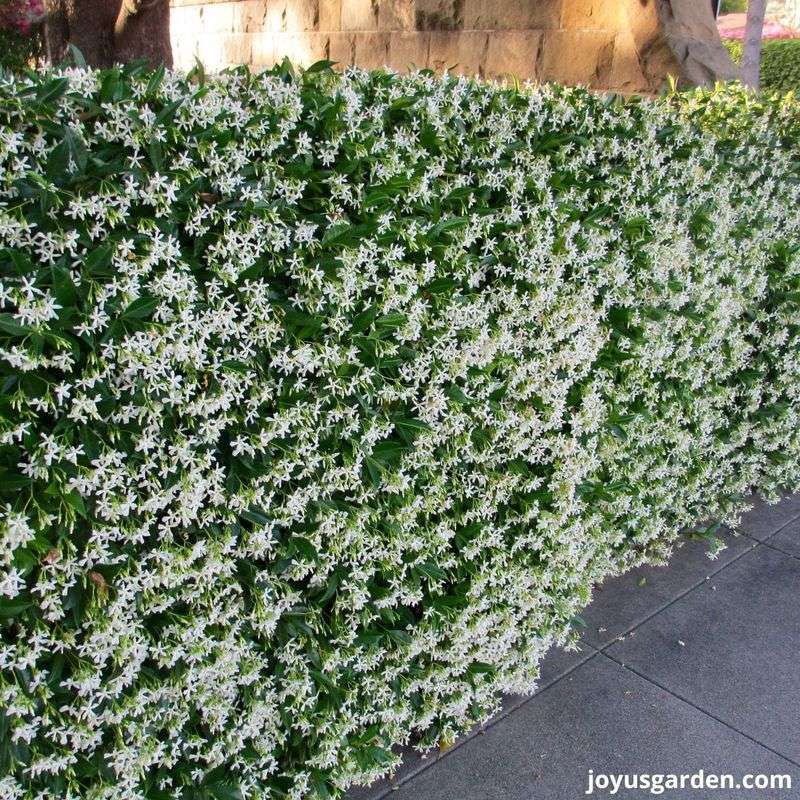
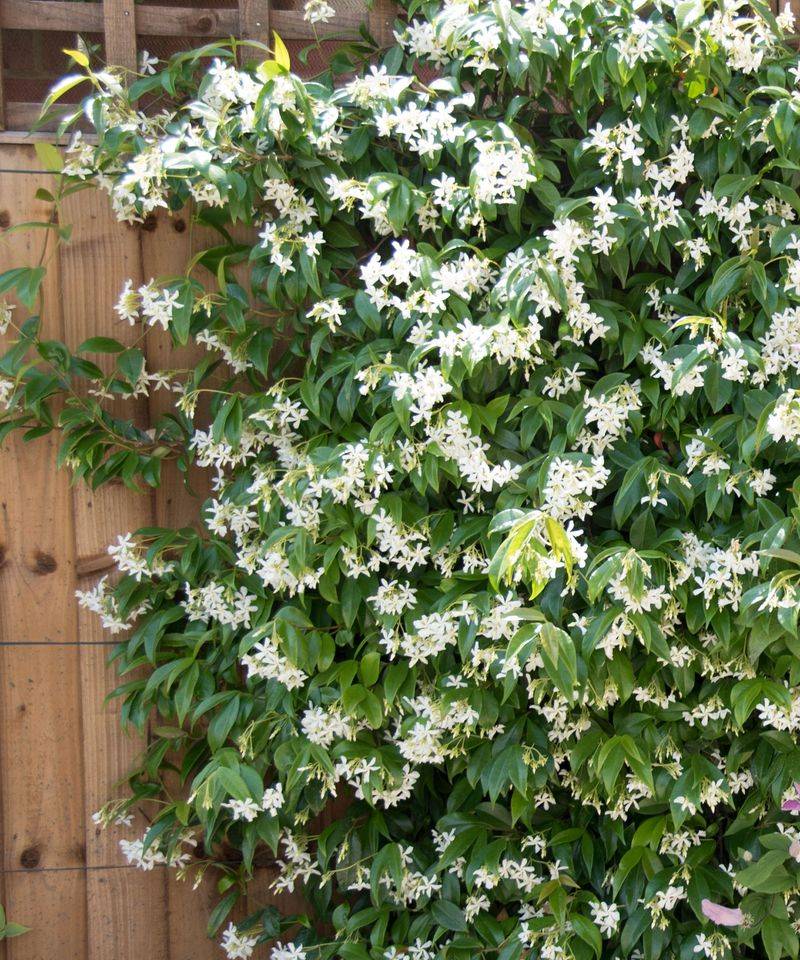
Walk past a star jasmine fence in late April or May and the fragrance hits you before you see the flowers. That late-spring bloom is the plant’s most reliable performance, and it is genuinely impressive: clusters of small, white, pinwheel-shaped flowers open across the vine’s surface and release a sweet scent that carries well beyond the fence line.
Extension gardening guidance on seasonal scents highlights star jasmine as one of the most recognizable spring fragrances in Southern landscapes, and that reputation is earned during this specific window.
Summer rebloom is possible but should not be counted on. Some gardeners in sheltered Austin yards notice a scattering of flowers in June or even into July, but the flush is nothing like the late-spring display, and it is inconsistent enough that planning around it would be a mistake.
The plant’s main design value through summer is its foliage, which stays glossy and dense when the vine is well sited and adequately watered during heat.
North Carolina Extension also notes that leaves can take on bronze or red tones during colder weather, which means the vine’s appearance shifts through the seasons even when it stays evergreen. A frost that does not kill the plant outright may still turn the foliage a burnished copper color for several weeks before new green growth returns.
Treating “fragrant wall of bloom” as a description of peak late-spring conditions rather than a promise of continuous flowering through the Texas summer keeps expectations honest and helps you appreciate the plant for what it genuinely delivers: a powerful seasonal scent event backed by year-round green structure.
Choose sun, shelter, and drainage before you plant
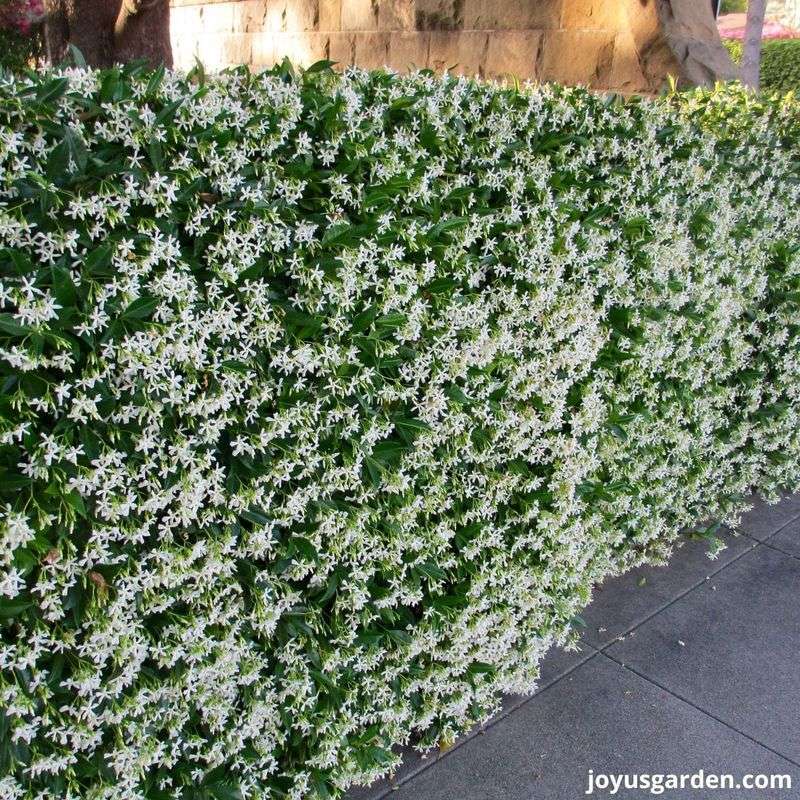
Where you put a star jasmine vine on your property matters as much as how you care for it after planting. Both full sun and partial shade are listed as workable conditions, but a sunny, sheltered position generally produces better flowering.
A south or southeast-facing fence that gets direct morning and midday light while a wall or structure blocks harsh north winds gives the vine the warmth it needs to flower well and the protection that reduces freeze injury in winter. Shaded north-facing fences can support the vine’s foliage, but flower production tends to be weaker and growth may be leggier as the plant reaches for light.
Soil preparation is the other variable that shapes long-term results. North Carolina Extension recommends fertile, well-drained soil for star jasmine, and that recommendation carries extra weight in Central Texas, where heavy clay is common in many neighborhoods.
Clay holds water around roots longer than the plant tolerates, and consistently wet soil invites root problems that no amount of fertilizer or pruning will fix. Before planting, work compost or organic matter into the planting area to improve both drainage and fertility, particularly if your fence line sits in low-lying ground that collects water after rain.
Drainage connects directly to freeze vulnerability as well. A vine grown in poorly drained soil enters cold weather with stressed roots and is more likely to suffer serious dieback when temperatures drop.
Texas A&M’s landscape watering guidance cautions that excessive or poorly timed irrigation wastes water and can damage landscape plants, so “moist soil” should be read as consistently available moisture, not a constantly saturated root zone. Getting the site right before you plant saves you from chasing problems that better drainage and smarter sun exposure would have prevented from the start.
Use the chain-link as a trellis, but plan for substantial growth
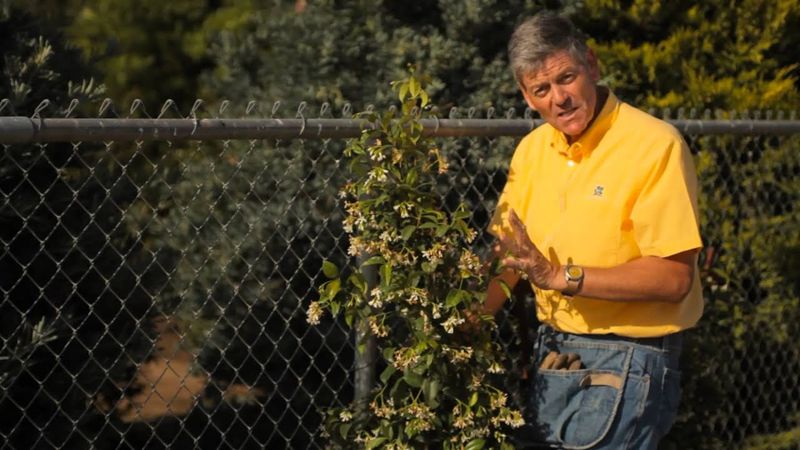
Chain-link fencing is genuinely well suited to star jasmine in a way that solid wood or vinyl privacy fencing is not. The open wire grid gives the vine’s twining stems dozens of attachment points at every height, and as the plant matures, it weaves itself into the structure so thoroughly that the fence becomes the skeleton inside a living green wall.
That integration is part of the appeal, but it also means the vine and the fence eventually become difficult to separate, so choose your planting location with permanence in mind.
Young plants need more help than mature ones. New stems are pliable and tend to grow outward rather than immediately threading through the fence wire on their own.
During the first season or two, spend a few minutes every few weeks guiding stems into the fence openings and securing loose growth with soft plant ties or garden twine. Austin’s plant guide lists mature star jasmine at roughly 10 to 20 feet tall with a spread of 12 to 16 feet, which is a substantial footprint for a single vine.
That size is a planning number, not a guarantee, and actual results vary with site conditions, soil quality, and how consistently the plant is managed.
Before you plant, measure the fence run you want to cover and think through what is nearby. A vine that eventually spreads 12 to 16 feet horizontally can reach into neighboring trees, cross a property line, or climb an adjacent structure if left unmanaged.
North Carolina Extension describes the plant’s growth as vigorous, which is another way of saying it rewards regular attention. Plan the planting spacing based on how many feet of fence you want to cover and how quickly you want coverage, knowing that closer spacing speeds up the screen but increases pruning demands sooner.
One plant is a reasonable start for a 10 to 15 foot fence section; longer runs benefit from multiple plants spaced 8 to 10 feet apart.
Water frequently during establishment, then reduce irrigation gradually
“Low water” and “no water” are not the same thing, and confusing them is one of the most common reasons newly planted star jasmine struggles through its first Central Texas summer. Austin’s plant guide rates mature star jasmine as a low-water plant, and North Carolina Extension describes it as drought-tolerant once established, but both of those descriptions apply to a vine with a developed root system anchored in suitable soil, not a plant that went into the ground last month.
Newly planted vines need frequent watering while roots are still developing. During the first growing season, water deeply two to three times per week in hot weather, making sure moisture reaches several inches into the soil rather than just wetting the surface.
As weeks pass and the vine shows active new growth, a sign that roots are beginning to establish, you can start stretching the interval between waterings. The goal is a gradual reduction, not an abrupt stop.
Cutting off irrigation too soon forces the plant to survive on an underdeveloped root system during the hottest part of the Texas year, which stresses the vine and often sets back establishment by months.
Texas A&M’s landscape watering guidance reinforces that irrigation frequency and volume should be matched to soil type, weather conditions, and plant development rather than applied on a fixed schedule. Heavy clay soil holds moisture longer than sandy loam, so a vine planted along a clay-heavy fence line may need less frequent watering than one in fast-draining amended soil.
During extreme heat or prolonged drought, even an established star jasmine benefits from supplemental irrigation, particularly if the summer has been drier than average. Watching the plant rather than the calendar is the most reliable way to judge when and how much to water through the establishment period and beyond.
Prune after flowering to keep the vine within its boundaries
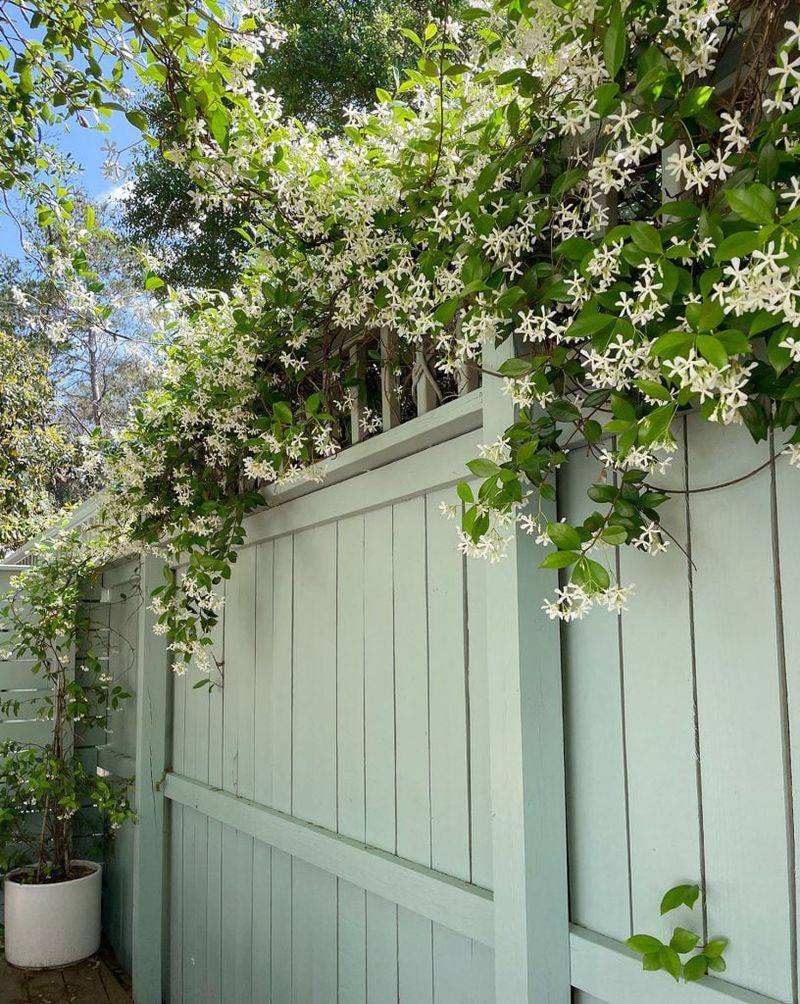
Pruning is not optional with star jasmine, and treating it as a set-and-forget plant is the fastest way to create a management problem. The vine’s vigorous growth habit means that without regular cutting back, stems will push well beyond the fence line, climb into nearby trees, and send runners across the ground toward areas where you do not want them.
Austin’s plant guide specifically recommends pruning to control growth, with particular emphasis on shadier areas where the vine can put on fast, floppy growth as it searches for more light.
Timing matters for both the vine’s appearance and its flowering the following year. The best window for significant pruning is right after the late-spring bloom finishes, typically in late May or June in Central Texas.
Cutting back at that point removes spent flower stems, redirects energy into the foliage, and gives the vine a full growing season to put on managed new growth before it sets next spring’s flower buds. Light tidying can happen any time during the growing season, but heavy cutting in late summer or fall risks removing the growth that carries next year’s flowers.
Austin’s cemetery and park plant guidance describes star jasmine as rapid-growing, and University of Georgia Extension’s vine management guidance notes that unmanaged vines can become difficult to control once they gain significant mass. Keep the fence line as your boundary and check growth every few weeks during the active growing season.
Redirect stems that are heading toward tree canopies or across property lines before they become established enough to require major intervention. A few minutes of steering and snipping through summer is far easier than a half-day of untangling a vine that has been left alone for two seasons.
Hard freezes can interrupt the evergreen screen
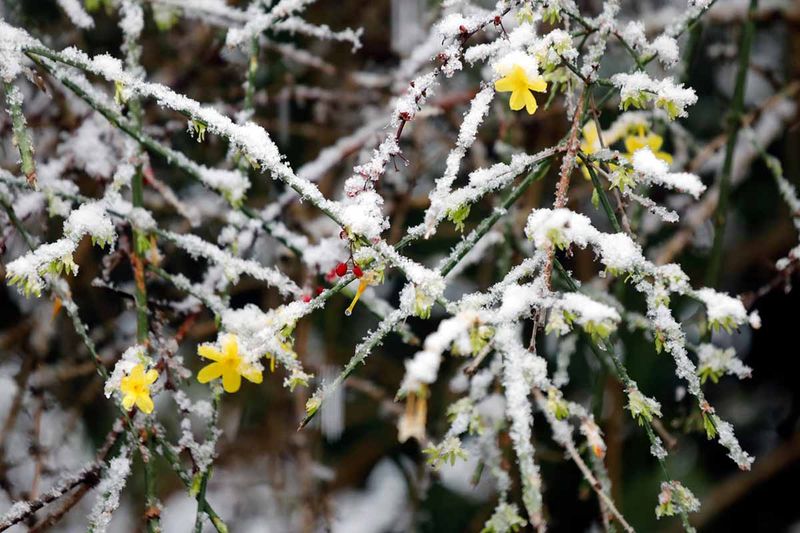
The “evergreen” label is accurate under normal Central Texas winters, but it comes with a condition that Austin’s own guidance acknowledges directly. Austin’s official plant documentation rates star jasmine as susceptible to hard freezes, and Central Texas delivers those often enough that the risk is real rather than theoretical.
The February 2021 freeze reminded the entire region that temperatures well below 20 degrees Fahrenheit are possible, and many star jasmine plantings that had been thriving for years were cut back severely or killed to the ground by that event.
What actually happens during a hard freeze depends on the site. A vine growing against a south-facing masonry wall in a sheltered Austin courtyard faces a very different cold event than the same plant on an exposed north-facing fence in a colder suburb farther north or west.
Austin’s plant guide acknowledges this variability, and the Texas A&M EarthKind plant selector is a useful tool for checking cold hardiness against your specific county and microclimate before committing to a planting.
North Carolina Extension notes that cold injury can cause bronzing of the foliage and dieback of stems, both of which temporarily compromise the screening effect you planted the vine to achieve. Bronzed leaves usually recover their green color as temperatures warm in late winter, but significant stem dieback means waiting for regrowth to fill back in, which can take most of a growing season.
If your fence line is exposed to north winds, sits in a low-lying frost pocket, or is located in a part of Central Texas that regularly sees temperatures below 15 degrees Fahrenheit, factor that freeze risk into your decision before planting star jasmine as your primary screen.
Consider the plant’s nonnative status, pollinator value, and safety
Star jasmine is native to Japan and China, not to Texas or anywhere else in North America. That fact belongs in any honest plant assessment, even for a vine that performs well in the landscape.
Gardeners who prioritize ecological function alongside aesthetics should know they are choosing a nonnative plant, and that choice has tradeoffs worth understanding before planting along a fence that borders a natural area, preserve, or creek corridor.
At the same time, nonnative status does not automatically mean invasive. The Texas Invasives plant database and the Texas Department of Agriculture’s noxious and invasive plant list do not include star jasmine as a listed invasive or noxious plant in Texas.
Vigorous growth in a cultivated setting is not the same as documented ecological spread, but the vine’s rapid growth habit still warrants monitoring, particularly near wooded edges where runners could escape the fence line and establish beyond the garden.
On the positive side, the flowers attract bees and other pollinators during the late-spring bloom period. Austin city horticultural documentation notes pollinator attraction as one of the vine’s landscape benefits, and gardeners who have grown it near vegetable beds or fruit trees often notice increased bee activity during flowering.
That pollinator benefit is real but seasonal and should not be framed as a substitute for native plants that support pollinators across a broader range of the year.
The safety issue is more serious and less discussed. North Carolina Extension identifies star jasmine as poisonous and notes that bruised twigs and petioles release a milky latex.
Austin’s plant guide also lists it as poisonous if ingested. Wear gloves when pruning, and keep cut stems and fallen leaves away from children and pets who may chew plant material.
The risk is not a reason to avoid the plant, but it is a reason to handle it deliberately and be aware of who or what has access to the fence line.
Choose star jasmine for evergreen structure and a late-spring scent display
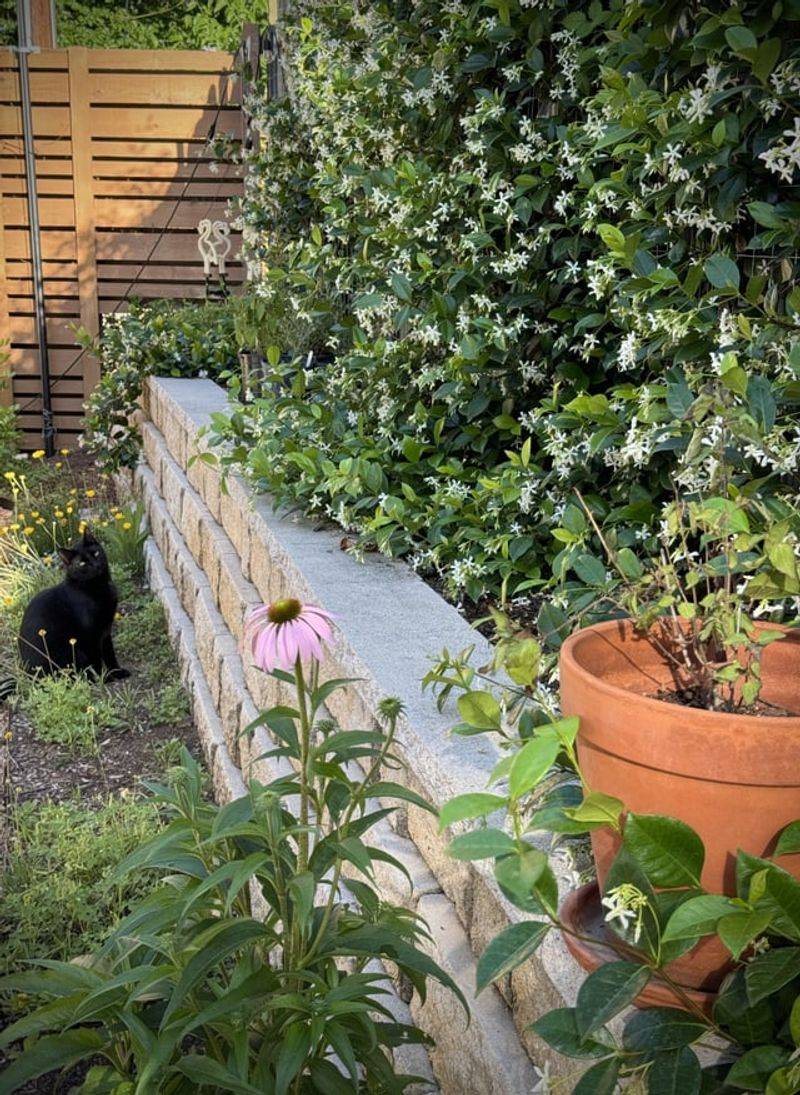
Star jasmine earns a place on a Central Texas chain-link fence when the conditions support it and the gardener goes in with clear expectations. Give it a sunny or partially shaded position with good drainage, prepare the soil with organic matter before planting, water consistently through the establishment period, and commit to pruning after flowering each year.
Under those conditions, the vine can build a glossy evergreen screen that hides the chain-link and rewards you with one of the most memorable fragrance events in the spring garden.
Choose it for the deep green foliage that stays on the fence through most winters and for the late-spring flower display that turns a utilitarian structure into something worth slowing down to smell. Austin’s plant guide and North Carolina Extension’s profile both support it as a viable landscape vine in this region when sited and managed appropriately.
Do not choose it expecting nonstop summer blooms, a perfectly green screen after every hard freeze, or a plant that manages itself without attention.
Central Texas gardeners who match the plant to a suitable microclimate and maintain it through the seasons tend to end up with exactly the kind of transformation the title describes, not a literal wall of continuous bloom, but a living fence that earns its place in the yard every time late spring arrives and the air fills with that unmistakable scent.