
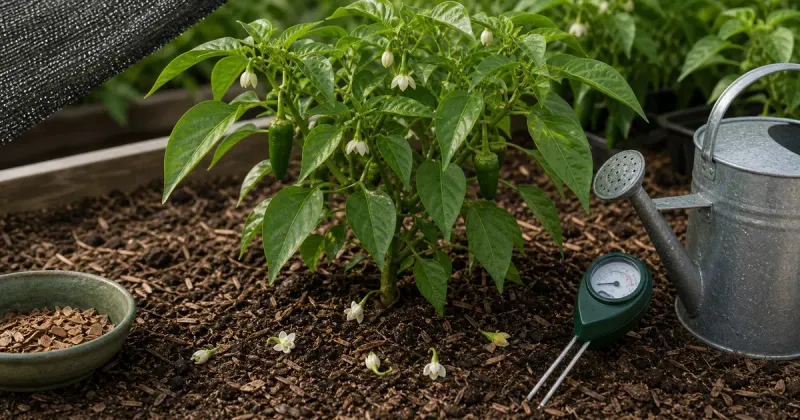
Your pepper plants were loaded with blooms last week, and now the ground under them is dotted with white petals. Cool fall nights may contribute to that mess, but they are only one of several possible causes.
A few quick checks can tell you whether the plant is in trouble or doing just fine. Here are practical ways to help your remaining crop, with no promises that every flower will turn into a pepper.
Check whether a pepper is forming
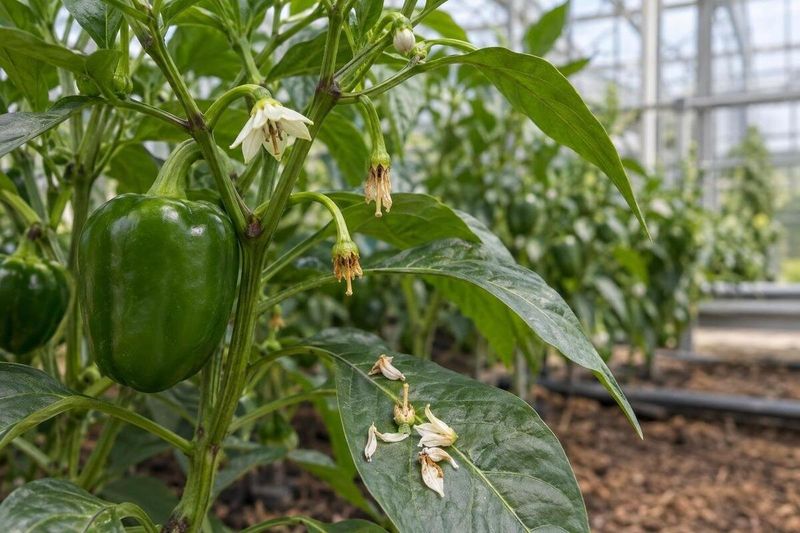
Before you change anything about your care routine, get down close to the plant and look at what actually fell. Pick up a dropped blossom or look at the spot where one used to sit.
Petals often drop as a flower finishes its job and a tiny green pepper begins to swell behind it.
That is a good sign, not a problem. UC Agriculture and Natural Resources points out that petals can fall as the fruit develops, so a bare stem is not always bad news.
The worrying version looks different. The whole flower drops, including its little base or stalk, and no pepper ever starts.
Check several spots on the plant, since one or two lost blooms do not tell you much. If you see tiny peppers forming at most nodes, relax and keep watching.
If whole flowers keep dropping with nothing behind them, move on to the next sections and look at temperature and other stresses.
Cool nights may contribute to poor fruit set
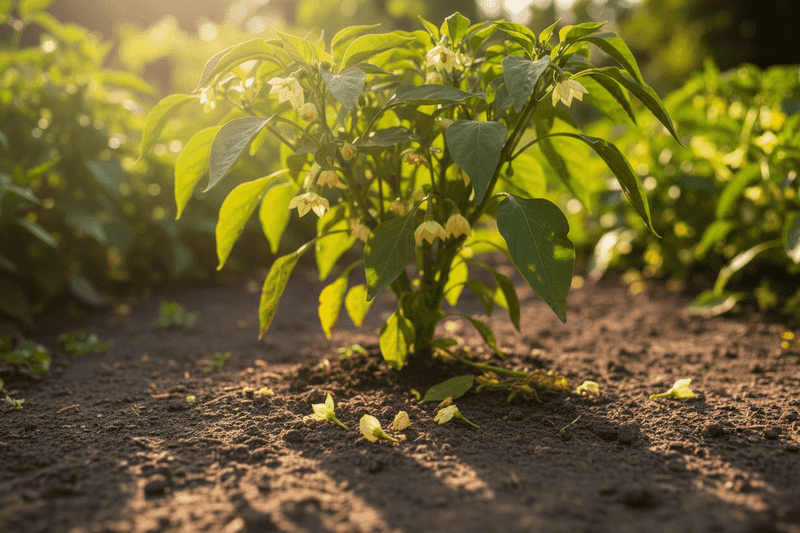
Pepper flowers like steady warmth, and fall nights can drift out of their comfort zone. NC State Extension lists cool nighttime temperatures among the conditions linked to blossom drop in peppers.
For bell peppers, extension guidance puts the risk zone around nights below roughly 55 to 60°F. Treat that as a rough guide, not a hard cutoff.
Iowa State Extension notes that the range varies by cultivar, and hot pepper types may not respond the same way as bells.
A controlled lab experiment backs up the general idea. A study on Capsicum annuum found that low day and night temperatures affected flower development and pollen viability.
That does not mean one chilly night will make every flower fall. Repeated cool nights are more likely to cause trouble than a single dip.
Keep a cheap thermometer near your plants and jot down overnight lows for a week. That record gives you something to compare against what you see on the plants.
Look for other possible stresses
Blaming the weather for every fallen flower can send you down the wrong path. Several other stresses cause the same symptom, so run through a short checklist first.
Heat is one. A warm spell in early fall, common in Florida and South Texas, can stress blooms just as cold can.
Uneven watering is another, and Utah State Extension lists irregular moisture among the reasons peppers shed flowers.
Wind can dry out and batter blooms, especially on exposed beds. Too much nitrogen can push leafy growth at the expense of flowers and fruit, a problem also covered in New Mexico State University guidance on environmental stress.
You may wonder about pollinators. Peppers are mostly self-pollinated, according to Texas A&M AgriLife Extension, so bringing in bees or hand-pollinating is rarely the fix.
Look at temperature, water, wind, and feeding habits first, then choose your response.
Use a row cover cautiously on chilly nights
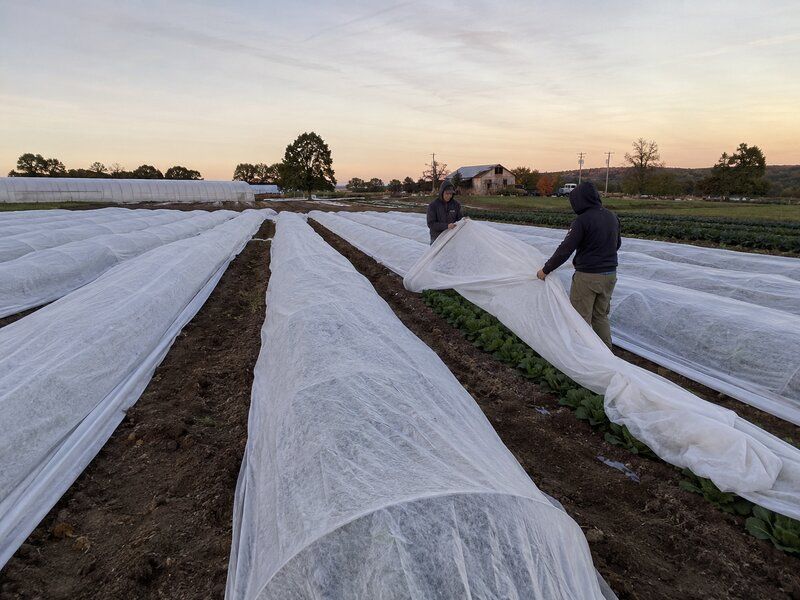
When a cool night is in the forecast, a lightweight fabric row cover can take the edge off. Drape it over the plants, secure the edges, and aim to trap a little of the heat the soil gave off during the day.
The catch comes in the morning. Covers can overheat plants once the sun is up, so remove them or open the ends as the day warms.
UF/IFAS row cover research warns that leaving covers on too long has reduced pepper yields in Florida trials.
Set realistic expectations. How much a cover helps depends on wind, humidity, and how clear the sky is.
It is not dependable protection from a severe freeze, and Texas A&M AgriLife guidance on frost and freeze protection stresses that protection has limits.
Think of a cover as a modest buffer for borderline nights, not a guarantee that blooms will hold and set fruit.
Keep moisture steady; skip the fertilizer rescue
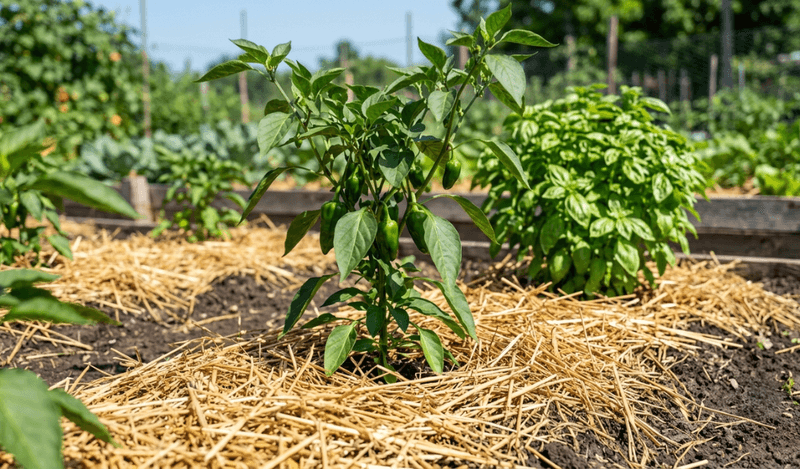
Wet-dry swings are hard on pepper plants. Aim for reasonably even soil moisture, not a soggy bed.
Stick a finger a couple of inches into the soil and water when it feels dry at that depth.
Mulch makes this easier. A layer of straw or shredded leaves helps conserve moisture and keeps the soil from drying out between waterings.
Utah State Extension ties irregular watering to flower drop, so steady habits may help.
Resist the urge to feed your way out of the problem. Extra fertilizer is not a quick fix, and too much nitrogen can favor leaves over fruit, as noted in UF/IFAS pepper guidance.
Blossom-set hormone sprays are also not a dependable cure for cool-night drop.
If your plants were already fed on schedule, simply hold steady. Good watering and mulch support the plant without pushing it in the wrong direction.
Harvest firm green peppers and plan for local timing
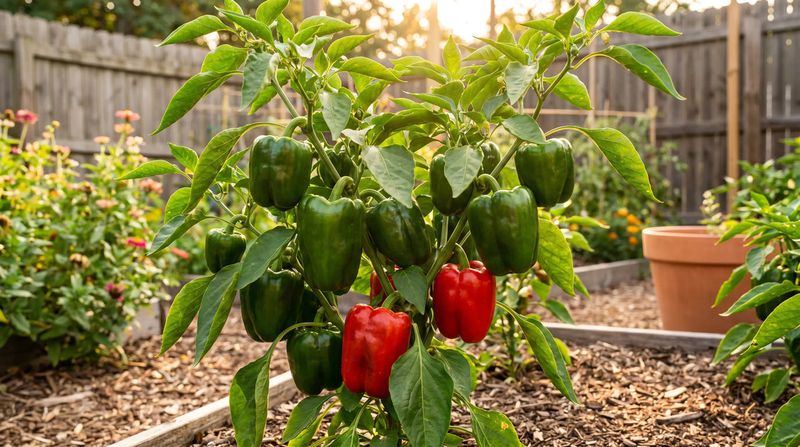
Peppers already hanging on the plant are your safest bet. Firm, full-sized green peppers can be picked before they reach their mature color.
UF/IFAS confirms that bell peppers can be harvested green or left to ripen further.
Picking green can also free the plant to put energy into other fruit, and it gets peppers into your kitchen before a cold snap does damage. Leave a few on the plant if you want red, yellow, or orange ones and your weather allows.
Timing varies a lot across the South. Planting windows differ across Texas, and Texas A&M AgriLife Extension classes peppers as frost-susceptible.
Florida gardeners often start fall plants in midsummer, so a North Florida bed and a South Florida bed run on different clocks.
Watch your own forecast, not a neighbor’s calendar. A late pepper is a bonus, and a green one in the basket beats a ripe one lost to frost.