
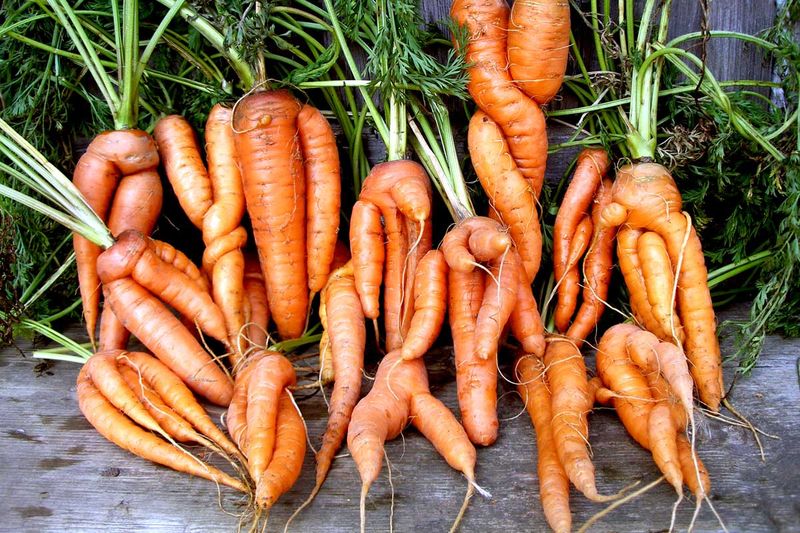
You tug on a leafy carrot top and out comes a root with legs, hairs, or a corkscrew bend. It looks strange, but it is a common garden surprise.
The shape of a carrot can point to what the root met underground, though it rarely tells the whole story. Here is how to read the clues and set up a better bed for your next sowing.
A carrot’s shape is a clue, not a diagnosis
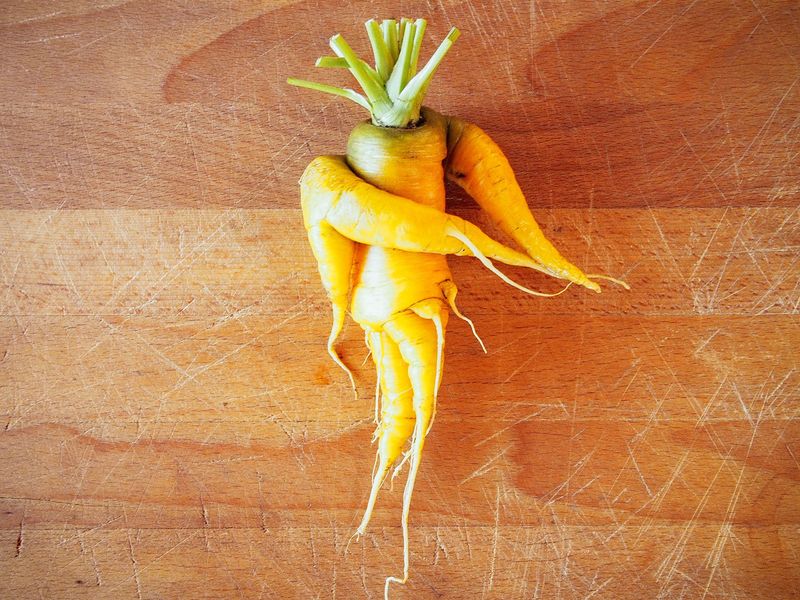
Few garden moments beat pulling up a carrot with two legs, a beard of fine hairs, or a lopsided twist. It is a letdown, and it raises the obvious question of what went wrong.
The honest answer is that several different conditions can deform a root, and the finished shape cannot tell you which one happened.
According to UC Statewide IPM Program guidance, hard, compacted, heavy, or rocky soil can produce hairy, forked, or otherwise misshapen roots. Nematodes, overwatering, and root dieback are other possible causes, and their symptoms can overlap.
So a forked carrot does not automatically mean rocks, and a hairy one does not automatically mean too much water.
It also helps to keep the words straight. Hairy, forked, twisted, and cracked are not the same problem.
Utah State University Extension ties soil obstruction and root injury to forking and misshaping, while uneven moisture is especially linked to cracking.
A strange shape is also not a food-safety verdict. The FDA advises washing produce under running water, not soap or detergent, and cutting away damaged or bruised areas.
Treat this harvest as a clue for the next sowing, not proof of any one mistake. If many roots look deformed, the later sections explain when to look further.
The taproot needs an open path through the soil
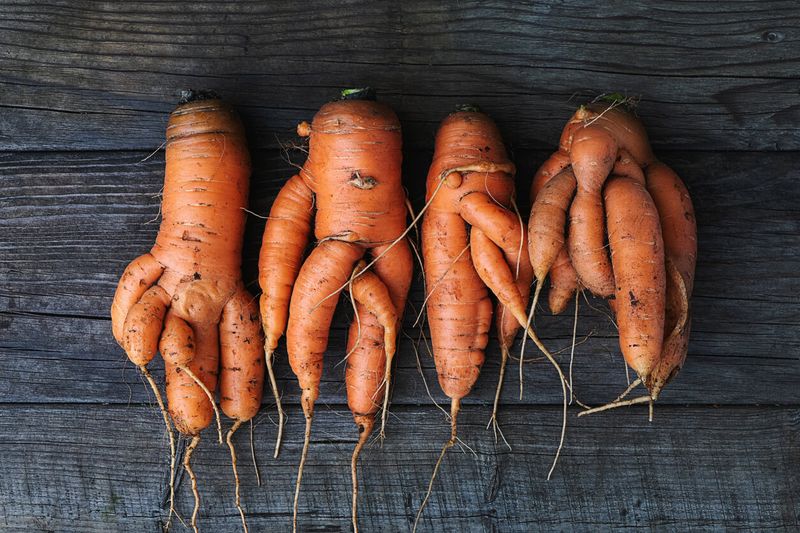
A carrot is basically one fat taproot that pushes straight down. When the tip hits something hard, such as a stone, a clod, or a packed layer, it can split or bend around the obstacle.
Injury to the young tip can do the same thing, and the root may send out extra branches.
That is why texture matters so much. UC IPM notes that dense or rocky soil is a common source of hairy, forked, and misshapen carrots.
Many North Carolina yards have heavy red clay in the Piedmont and mountains, so the physical challenge is real for lots of gardeners.
Roots do best in loose, well-drained ground. Clemson Cooperative Extension recommends this kind of soil, and Illinois Extension points out that heavy or compacted soil can impede root growth.
Keep in mind that soil is one common cause, not the only one. No single amendment will guarantee a straight carrot, and a clay bed with a few misshapen roots does not mean you did something wrong.
The goal is simply to give the taproot as clear a path as you reasonably can.
Water matters, but cracking is a different clue

Watering gets blamed for almost everything in the garden, and carrots are no exception. Moisture does play a role, but it plays different roles for different symptoms.
Treating water as a catch-all explanation can send you chasing the wrong fix.
Extension guidance from Utah State University links uneven moisture especially to cracking. Excess water, on the other hand, is one possible contributor to forked or stubby roots.
A split down the side of a carrot is a different clue than a root with two legs.
For healthy growth, aim for regular moisture rather than soggy soil. USU advises regular watering and notes that needs vary with soil and conditions.
A sandy bed in the coastal plain may dry out faster than a clay bed in the Piedmont, so the same schedule will not suit both.
Waterlogging matters too. UC IPM lists overwatering among the possible causes of misshapen roots.
Once a carrot is out of the ground, it cannot show its exact watering history. Use a finger test a few inches down, and adjust to your soil and weather rather than a fixed routine.
Prepare a loose bed before the next sowing
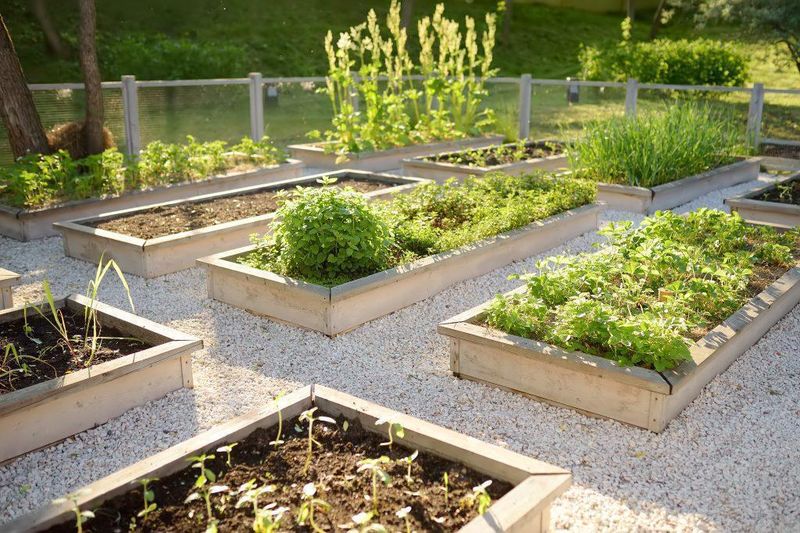
Bed preparation is where you can make the biggest difference for your next crop. Start by loosening the soil deeply enough that roots have room to grow.
A digging fork or broadfork works well, and the goal is a crumbly texture rather than packed lumps.
Next, pick out stones, sticks, and hard clods as you go. Clemson Cooperative Extension and Illinois Extension both favor loose, well-drained soil, and raised beds can help where yard soil is heavy.
Be careful with manure. Utah State University Extension warns that fresh manure can injure roots and contribute to branching, so keep it out of carrot beds.
That caution is specific to fresh manure. NC State Extension advises aging manure for at least six months or composting it before garden use, and it also recommends compost and well-rotted organic matter for improving garden soil.
Finished compost is not the villain here.
Finish by raking the surface smooth. Your aim is simple: fewer physical barriers and less chance of root injury.
Direct-sow carrots and keep the seed zone evenly moist
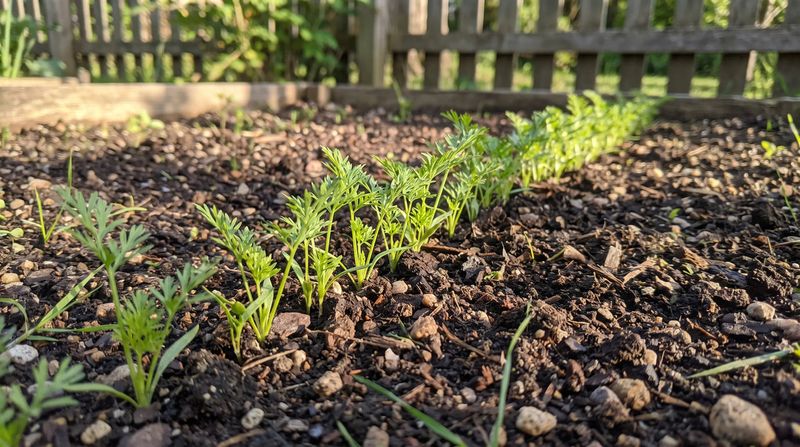
With the bed ready, sow carrot seed right where the plants will grow. Moving seedlings can hurt them.
The NC State Extension Gardener Plant Toolbox says transplanting can damage young taproots, and a damaged tip is a setup for forking.
The same source suggests sowing seed about one-quarter inch deep. Once seedlings are up, thin them to stand 2 to 3 inches apart so roots are not crowding each other.
Moisture matters most early. UC IPM recommends steady moisture at seed depth until seedlings emerge.
A light daily sprinkle, or a thin cover of burlap or board checked often, can help keep that thin top layer from drying out.
After emergence, switch to regular watering. Utah State University Extension notes that needs vary with soil and conditions, so check the bed instead of following a calendar.
Avoid puddles or waterlogged ground.
Even moisture helps seeds sprout and seedlings settle in, but it does not promise straight roots. Soil, injury, and pests still have a say.
North Carolina’s fall sowing dates vary by region

North Carolina stretches from the Outer Banks to the Smokies, so one planting date cannot fit every garden. Cooler mountain nights arrive earlier than coastal ones, and the calendar shifts with them.
The NC State planting guide lists fall carrot sowing dates through September 1 in Eastern and Piedmont North Carolina, and through August 1 in the western region.
The Plant Toolbox gives a broader range, from August to mid-September. The two sources do not match exactly, which is a good reason to check a local calendar and your current conditions before sowing.
It also means that late September or November is not a statewide fall sowing window for carrots. If you are reading this in November, treat these dates as planning notes for next year rather than a to-do list for this week.
Write your region’s dates on your calendar now, and note your last good soil-prep weekend a few weeks ahead of them.
A pattern of deformity may call for diagnosis
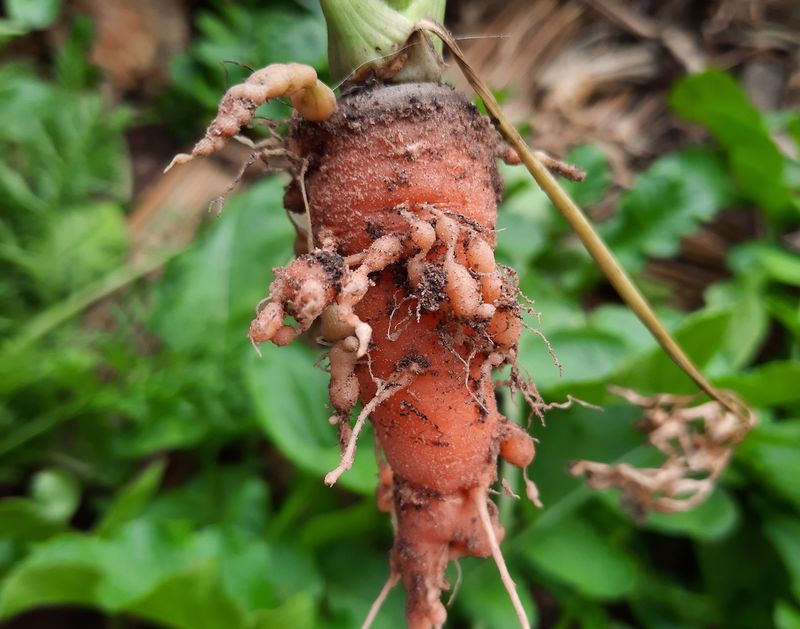
One odd carrot is usually just a carrot. A whole row of them is a different story.
If many roots are deformed, look beyond soil preparation and watering.
Watch for distinct galls or swellings on the roots, or plants that are stunted or yellowing. University of Minnesota Extension lists forked or misshapen roots among its diagnostic pages, and Texas A&M AgriLife Extension covers nematodes and diseases that can affect carrots.
Those signs call for a closer look rather than another round of compost or a new irrigation schedule. Your county Cooperative Extension office can help you sort out what is going on, and a brief description alone is not enough to name the problem.
When you plan the next sowing, check the NC State regional planting calendar for your area.
A twisted carrot is a note from the soil, not a verdict on your gardening.