
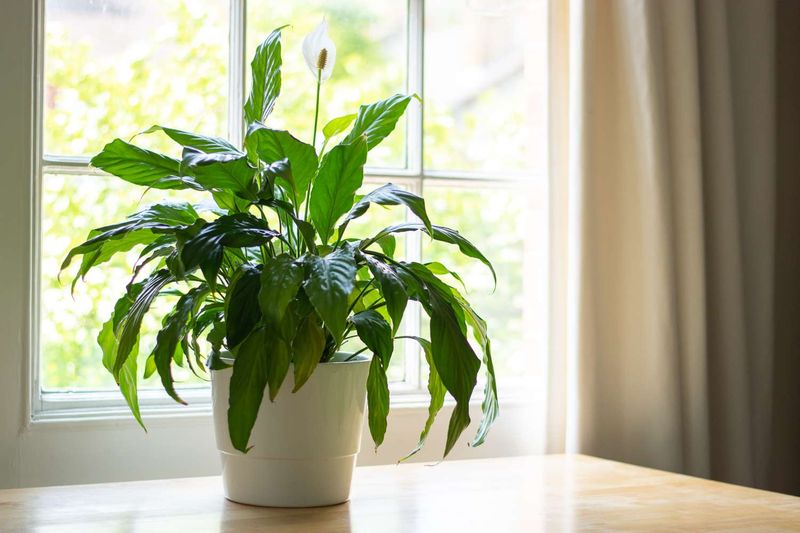
A peace lily that flops over can make any plant owner panic. Many of us grab the watering can right away, but a droop can mean the plant is thirsty or that its roots are sitting in too much water.
This is especially common in fall, when plants move indoors and the pot may dry out at a different pace. Here is how to check first, then water in a rhythm your plant can actually use.
A droop does not identify the problem
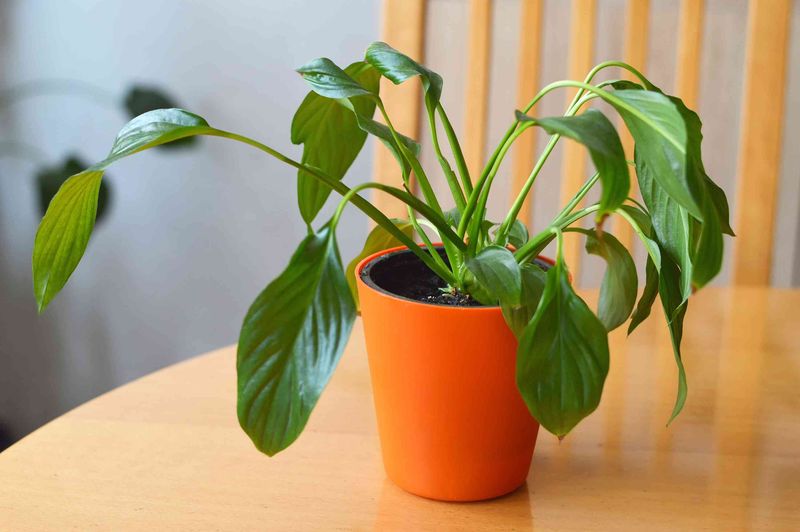
A limp peace lily looks like a cry for water, but the droop itself cannot tell you which problem you have. Maryland Extension notes that peace lilies may wilt when the soil is dry, but they can also wilt when they are overwatered.
Dry mix makes underwatering a real possibility. Mix that stays wet for days, or a pot that drains poorly, raises concern about overwatering and stressed roots.
Virginia Tech Extension also points out that saturated soil can hurt roots and cause wilting.
Yellowing leaves or soft, mushy foliage can be warning signs of too much moisture, but they do not prove it on their own. Think of them as clues to weigh alongside the soil.
Before you pick a fix, lift the pot, look at the drainage holes, and feel the mix. Nothing should be added until you know what the pot is telling you.
Check the mix before reaching for the watering can
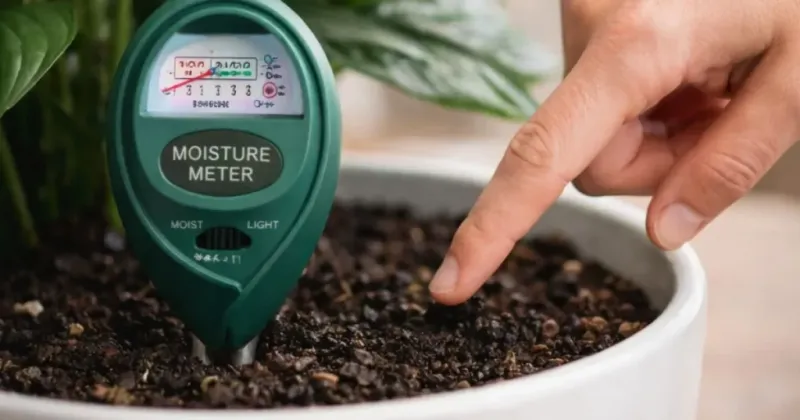
Your finger is the best tool for this job. Push it about 1 to 2 inches into the potting mix, away from the stem.
If that layer feels dry, it is a reasonable time to water. If it still feels cool and moist, wait and check again later.
Sources do not all agree on the exact point. North Carolina Extension describes soil that is moist but not soggy and allowed to dry between waterings, while South Dakota State Extension suggests letting it dry slightly.
Treat the 1 to 2 inch check as a practical guide, not a fixed line.
A slight dry-down is not the same as a bone-dry root ball. If the whole pot feels light and the mix has pulled away from the sides, the plant has gone too long.
Maryland Extension recommends checking moisture rather than guessing.
Use a soil-led rhythm, not a weekly rule
Calendars are tempting because they feel simple. Yet a plant in a small clay pot near a warm vent dries on a very different timeline than one in a large glazed pot in a cooler room.
Extension guidance, including Virginia Tech’s watering publication, favors checking the soil because pots and conditions vary.
Try a quick check every few days, such as when you pass the plant. Water when the mix has dried slightly, and skip it when the mix is still damp.
Pot size, pot material, the mix itself, and room conditions all change how fast that happens.
The goal sits between two extremes. North Carolina Extension and South Dakota State Extension both steer away from soggy soil.
A full wilt is a late warning, not the target, and repeated wilting is not something to treat as harmless.
Water the root ball, then let it drain
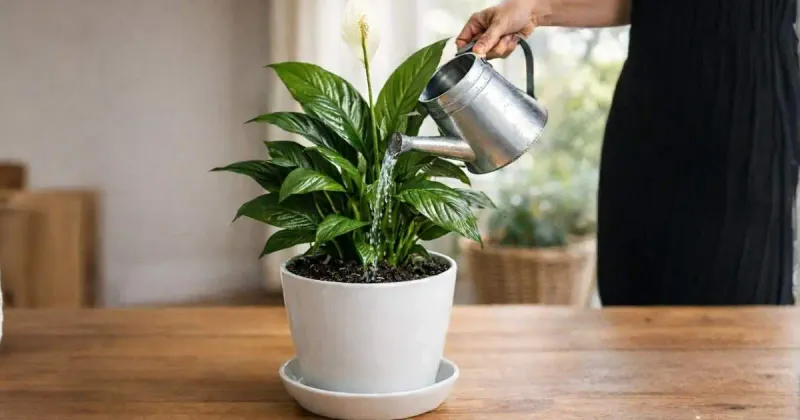
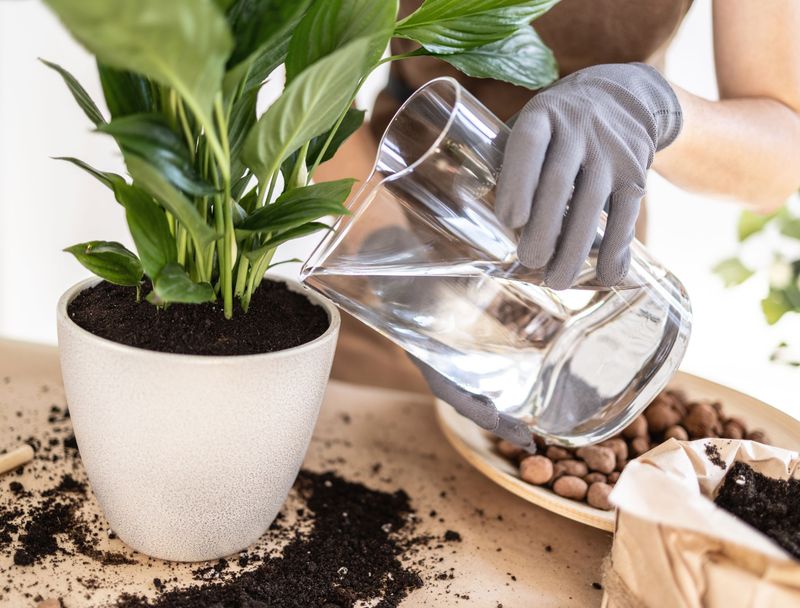
Once the soil check says it is time, water slowly until the whole root ball is wet. A good soak reaches the deeper roots instead of dampening only the top.
Keep going until water runs out of the drainage holes.
Then let the pot drip for a few minutes. A sink or tub works well for this.
Empty the saucer or decorative outer pot afterward so the roots are not left sitting in water.
UF/IFAS guidance says to keep peace lilies moist without letting them sit in water. Standing water can keep the mix saturated, and Virginia Tech Extension notes that waterlogged soil can damage roots.
This is why pouring more water on a drooping plant is not a cure for every case. If the mix was already wet, extra water adds to the problem.
Tap water is generally fine for most houseplants, so special water is not required.
Recheck watering after moving the lily indoors
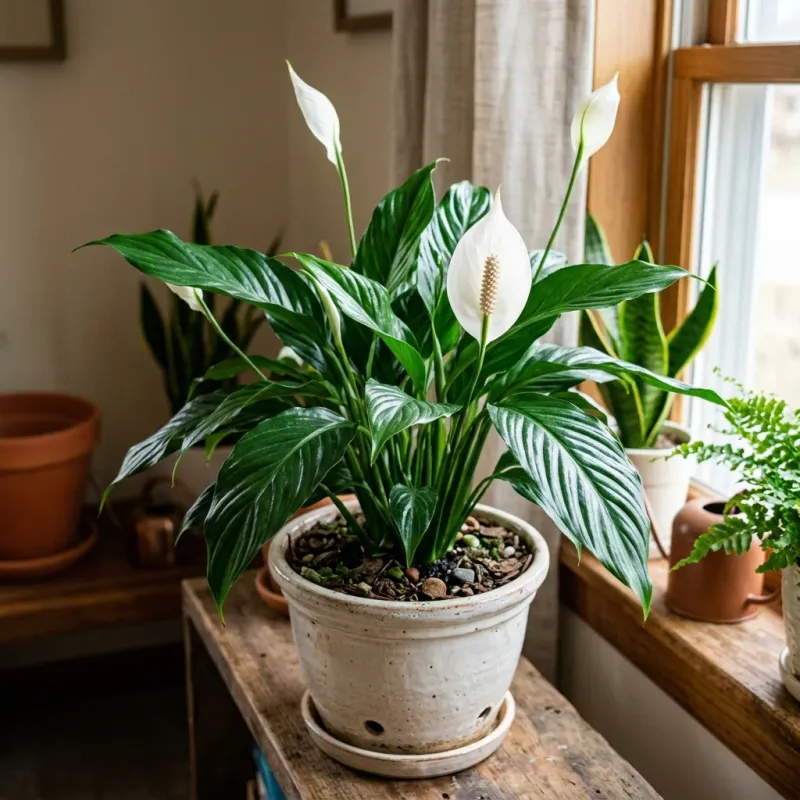
Bringing a peace lily inside for fall can change how the pot behaves. Lower light, cooler rooms, and a new spot may slow growth, and a slower plant often uses water more slowly.
Soil can also stay damp longer than it did outdoors.
Virginia Tech Extension lists light, temperature, and container conditions as factors in how often to water. University of Nebraska-Lincoln Extension also notes that indoor plants often need less water as light drops.
That does not mean every Southern home sees the same shift. A bright Florida sunroom and a shaded Texas hallway can behave very differently, and some homes run air conditioning well into fall.
Keep using the finger check, and stretch the time between waterings only if the mix is staying wet.
Check light and drafts, too
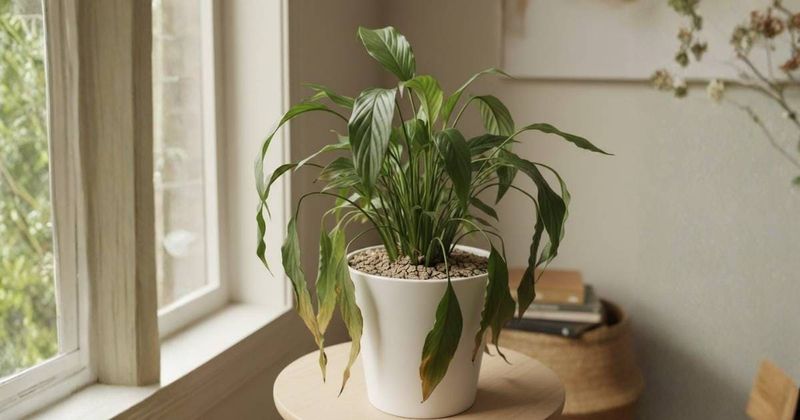
Water gets most of the blame, but light and temperature matter as well. Peace lilies do best in bright, indirect light.
UF/IFAS and North Carolina Extension both warn against direct sun, which can scorch leaves.
Cold air is another trouble spot. A spot near a drafty door or a chilly window can slow growth or damage the plant, so move it somewhere steadier.
South Dakota State Extension likewise points to avoiding cold conditions.
If the lily keeps struggling, work through the same order: feel the soil, water when it has dried slightly, and let the extra drain. No one can promise how fast a plant will bounce back.
A peace lily tends to answer steady care better than rescue attempts.