
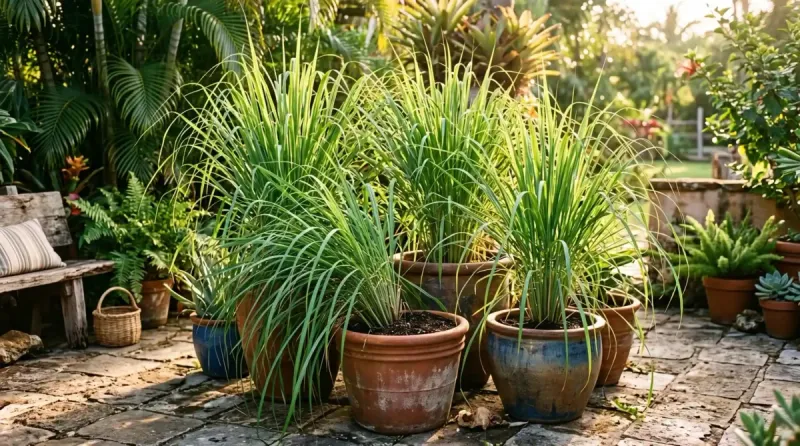
You bring in a pot of lemongrass that smelled amazing all summer, and a few weeks later the blades look limp and brown. It is a worrying sight, especially when you were counting on fresh stalks for spring cooking.
Winter trouble in a pot can come from cold, from soggy soil, or from both. Here is how to tell what you may be dealing with and how to give the plant its best shot at spring.
Brown foliage can have more than one cause
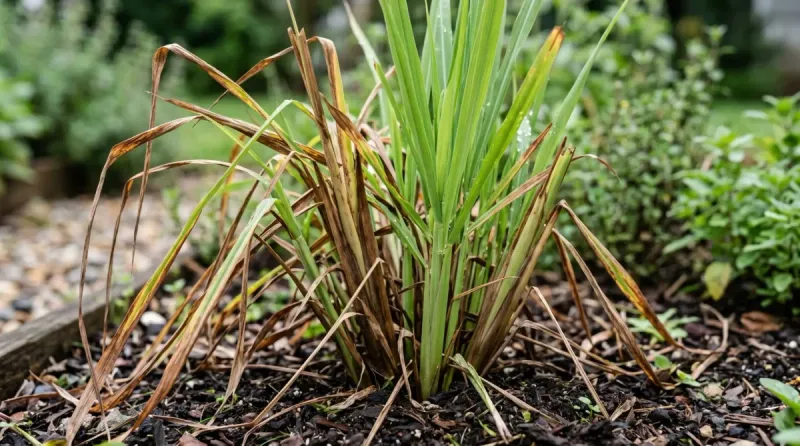
A brown, mushy clump looks like one problem, but it can come from a few. Texas A&M AgriLife guidance on freezes explains that cold-damaged herbaceous foliage can look withered and water-soaked after a freeze.
Soil is the other suspect. UC Master Gardeners in Sonoma County warn that overwatering and soggy conditions cause rot.
A pot that stays wet for days can go bad from the roots up, and a plant can also have cold injury and wet soil at the same time.
Color alone is not proof of rot, either. UF/IFAS Gardening Solutions reports that lemongrass foliage may turn scarlet or dark red in Florida during fall and winter.
So before you panic, think about what the pot has been through: recent cold nights, how wet the soil has stayed, and the season.
Container roots face greater cold exposure
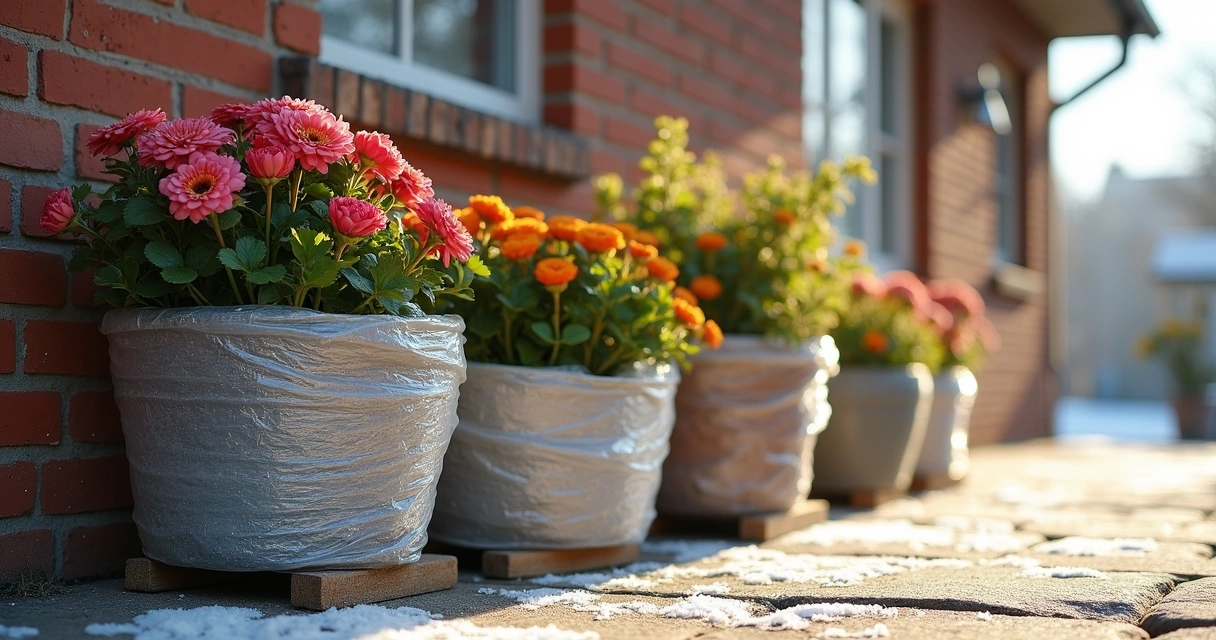
Roots in the ground have a big blanket of earth around them. Roots in a pot have only a thin wall of plastic or clay between them and the night air.
Texas A&M AgriLife Extension in Travis County notes that container soil can approach air temperature. That means a pot on an open patio may get much colder at the root level than the same plant growing in a garden bed.
This is why potted lemongrass may need winter protection even in places where in-ground plants do fine. It does not mean every chilly night will harm your plant.
Mild dips may pass with no trouble, but a hard freeze is a real risk for roots sitting in exposed soil. Knowing your local freeze pattern helps you decide when the pot needs to move.
Move the pot to a protected place before cold nights
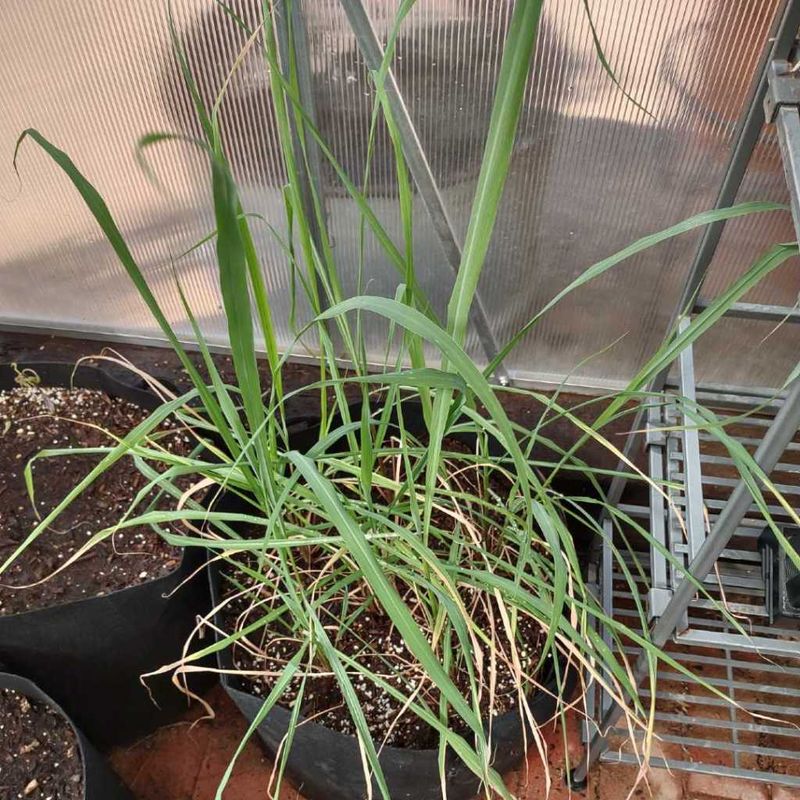
Cold nights are easier to dodge than to repair. The best plan for a pot you want to keep is a protected, frost-free spot, such as a bright room, a sunroom, or a garage during a freeze.
Temperature advice varies by source. The Royal Horticultural Society advises bringing lemongrass indoors before overnight temperatures fall below 45°F.
Oregon State Extension calls it very tender, reports survival problems below 40°F, and gives 50 to 60°F as an ideal overwintering range.
Treat those numbers as practical guidance rather than a single line where damage begins. If a killing freeze is forecast and you have no time to set up a sunny spot, Texas A&M AgriLife suggests moving valuable pots into a garage or another protected place for the night.
Water sparingly when indoor growth slows
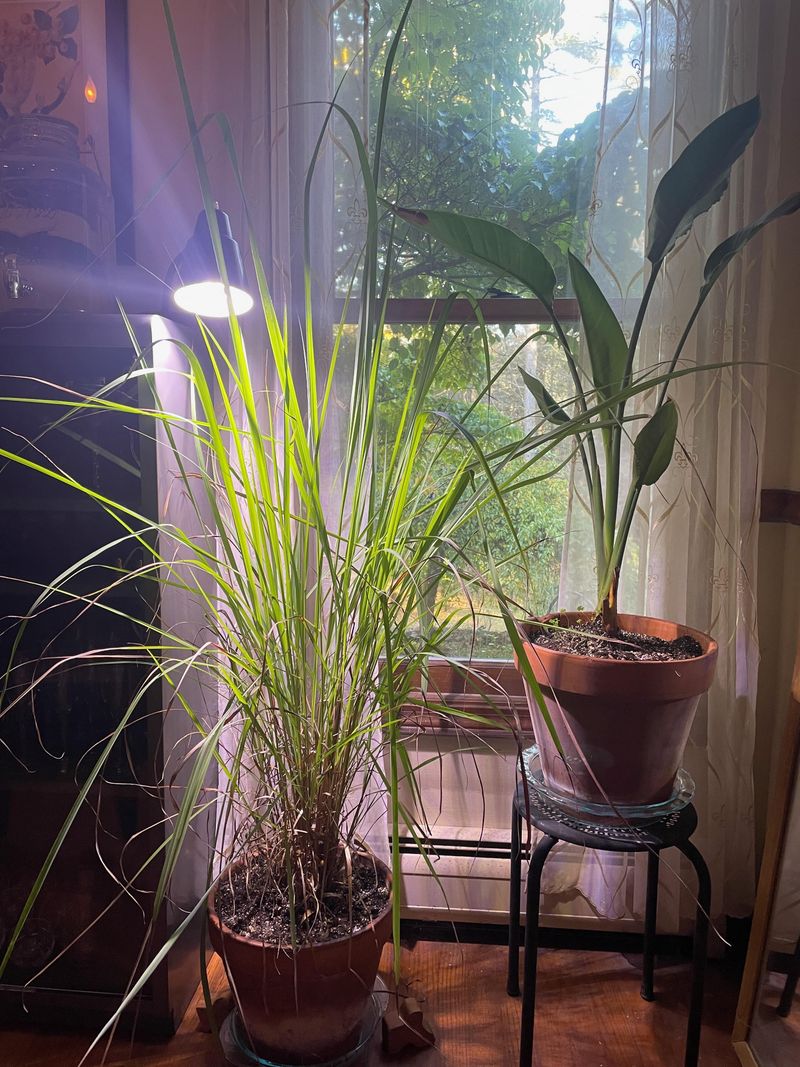
Lemongrass likes a drink, but it does not like to sit in a puddle. Utah State University Extension and UC Master Gardeners both point to moist but well-drained soil and warn against waterlogged conditions.
Indoors, growth slows down when light drops. The RHS advises watering sparingly over winter for that reason, since a slow plant uses far less water than a summer one.
Skip the fixed schedule. Check the pot before you water, make sure the drainage holes are clear, and empty any saucer so the roots are not standing in water.
Never keep the pot wet all winter, because that is how soggy-soil rot gets started.
Use a cutback to ease storage, not to guarantee survival
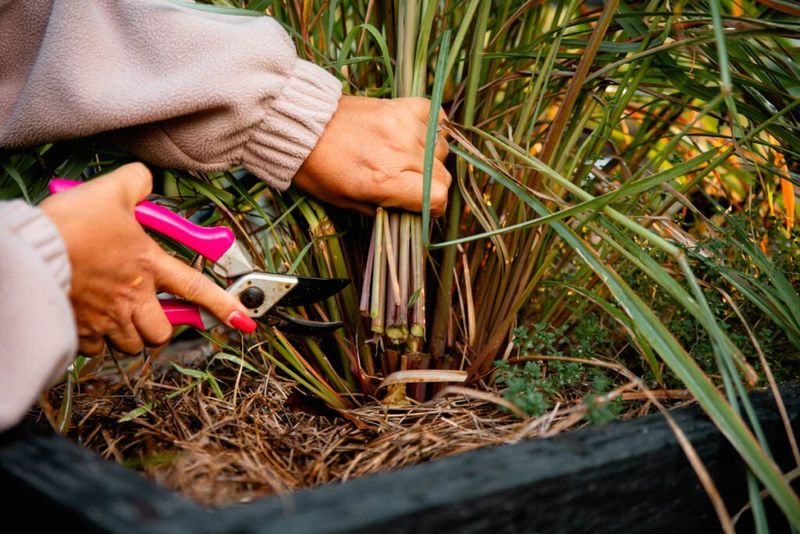
Trimming is a handy tool, not a rescue. A shorter plant is simply easier to tuck into a corner or windowsill.
Advice on height differs. UC Master Gardeners in Sonoma County suggest cutting dormant plants to about 6 inches.
The RHS gives 2 to 4 inches as an option when autumn pruning makes indoor storage easier, and it also allows pruning in early spring.
Neither source shows that a certain trim height keeps the crown from dying. Survival still depends on keeping the pot out of the cold and the soil from getting soggy.
Think of the cutback as a way to make those steps simpler.
Match pruning time to local freeze risk
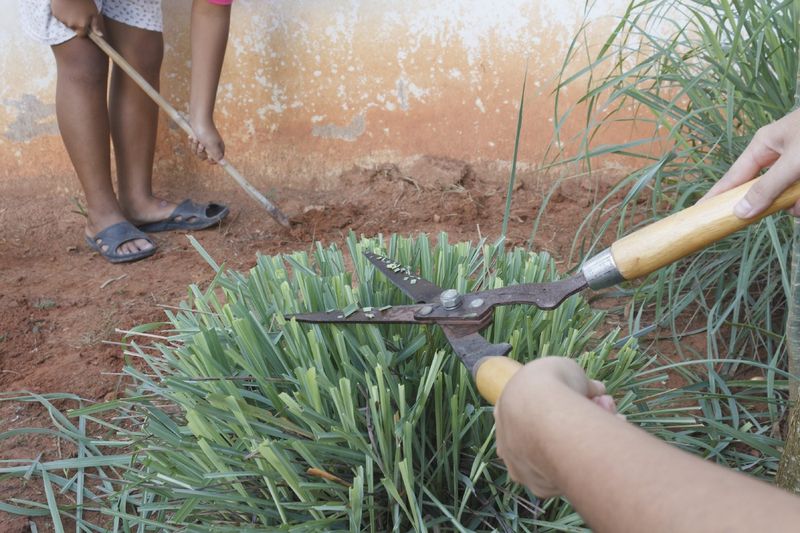
When you trim depends on your plan and your weather. The RHS autumn option fits a plant going indoors for storage, while plants left in place call for a different approach.
For north-central Florida, UF/IFAS says lemongrass turns brown after a hard freeze and recommends removing dead or damaged leaves toward the end of March, after typical freeze risk has passed. That date belongs to that region and should not be stretched across all of Florida or Texas.
Freeze timing swings a lot, as Texas A&M AgriLife notes for its state. Check your own last-frost pattern.
Also keep color in perspective. UF/IFAS Gardening Solutions says red tones can be seasonal, so a color shift alone is not a signal to cut.
Build a winter plan around protection, water, and timing
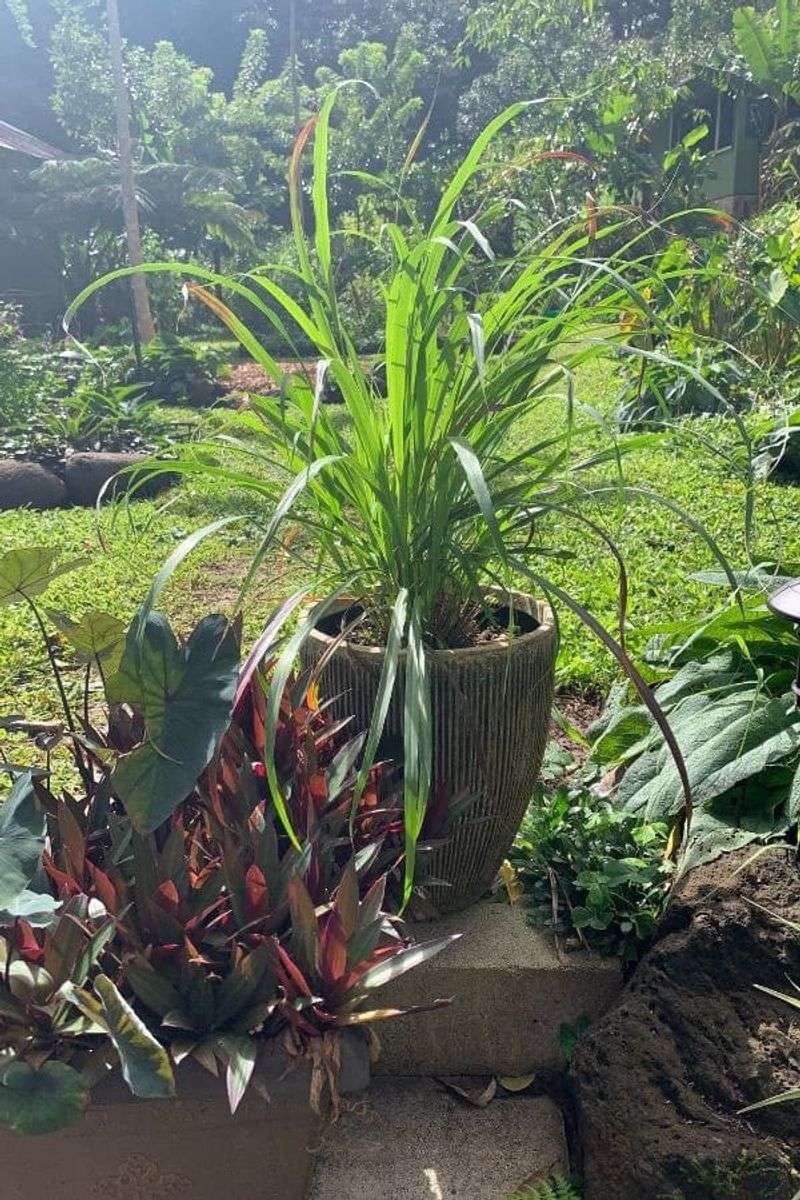
A good winter plan has three parts: keep the pot out of the cold, keep the soil well drained, and water lightly indoors once growth slows. The RHS and UC Master Gardeners back those basics.
Pick a cutback style that suits your storage space and local freeze timing, knowing it cannot promise survival on its own.
Lemongrass forgives a lot in summer, but in winter it rewards the gardener who does less with water and more with shelter.