
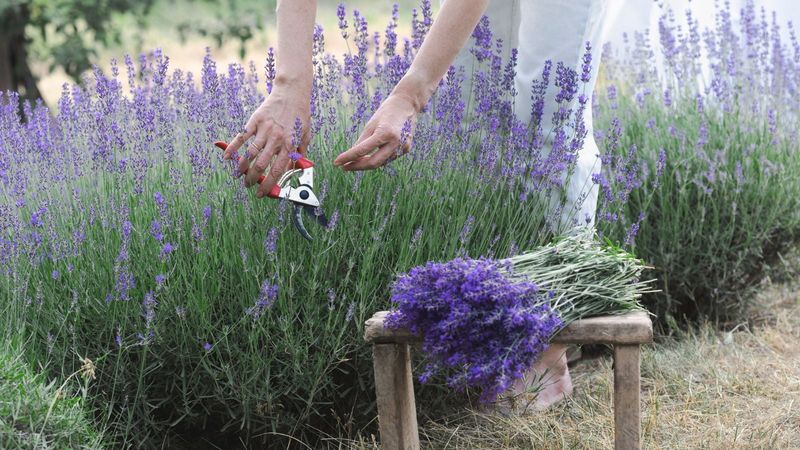
Lavender can look pretty rough after a few seasons, with sprawling bare stems and a base that seems more like a small shrub than the tidy, fragrant plant you remember planting. Before you pull it out and start over, check for one thing: green growth.
A woody base does not automatically mean a dead plant, and a careful, targeted cut may give a struggling lavender a real chance to recover.
Woody Stems Do Not Prove Lavender Is Dead
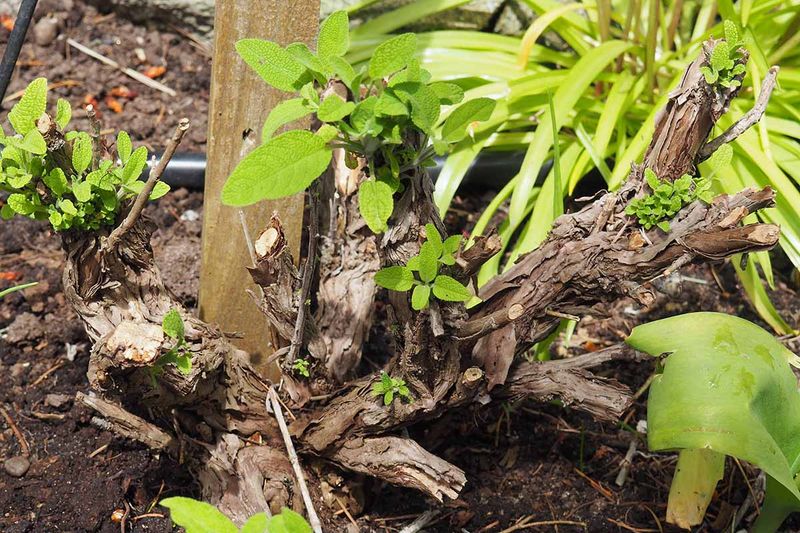
Lavender has a habit that surprises a lot of gardeners: as the plant ages, its lower stems naturally turn brown, hard, and bark-like. That woody base is a normal part of how lavender grows, not a sign that something has gone terribly wrong.
The question worth asking is not “why is the base woody?” but rather “does green, living growth still exist above it?”
University of Maine Cooperative Extension guidance draws a clear line between woody stems and dead tissue: completely brown, brittle stems that snap without any flexibility are genuinely dead, while a plant that still carries leafy green shoots above a bare framework can still be alive and capable of producing new growth. The two conditions look similar at a glance but call for very different responses.
A sprawling, bare-stemmed lavender sitting in a Southern garden bed may simply be showing its age rather than signaling failure. Judging the plant by its lowest, roughest section is like judging a tree by its trunk.
The diagnostic checkpoint that actually matters is the presence or absence of green, flexible growth somewhere above that woody base, because that living tissue is what the corrective cut will work with.
Check for Living Growth Before Pruning
Timing your inspection matters as much as knowing what to look for. After winter, a hard freeze, or an unusually dry spell, lavender can look completely lifeless for weeks before new growth appears.
Waiting until the season is actively warming gives the plant a fair chance to show whether it still has something left.
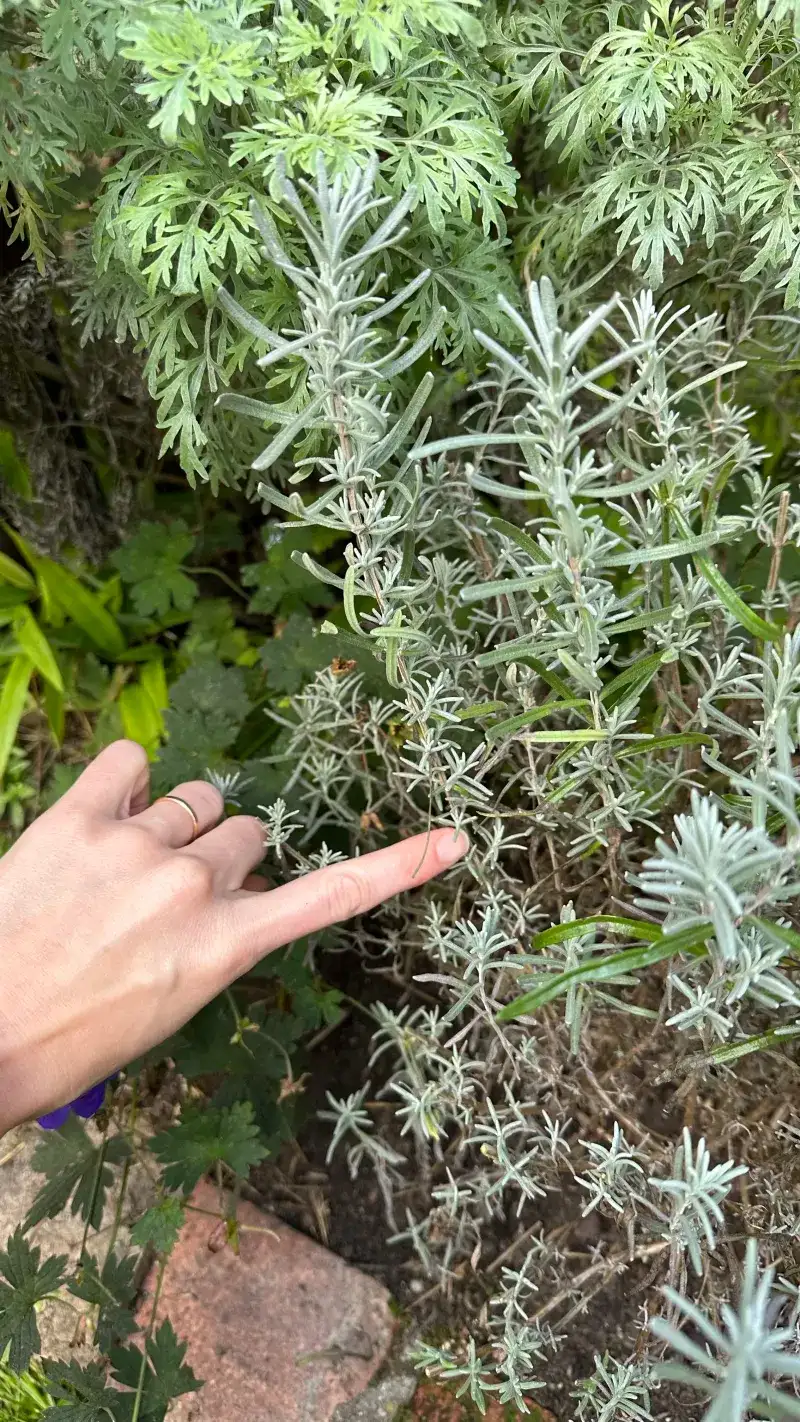
Run your fingers along the stems above the woody section and look for two things: green leaves and stems that bend without snapping. Maine Extension’s guidance on lavender dormancy notes that a plant with no new green growth as the season progresses may be dead rather than merely dormant.
If you scratch the surface of a stem lightly with a fingernail and see any green or white tissue beneath, that section is still alive.
Illinois Extension recommends pruning dead stems back to the first set of green leaves, which means green growth has to be present before that instruction even applies. If you find no green tissue anywhere on the plant after the growing season has started, a corrective cut is unlikely to help.
A hard cut into bare, leafless old wood is not a reliable way to test whether lavender is alive, and it can permanently damage or kill branches that might otherwise have recovered on their own.
Make the Rescue Cut in Green Tissue
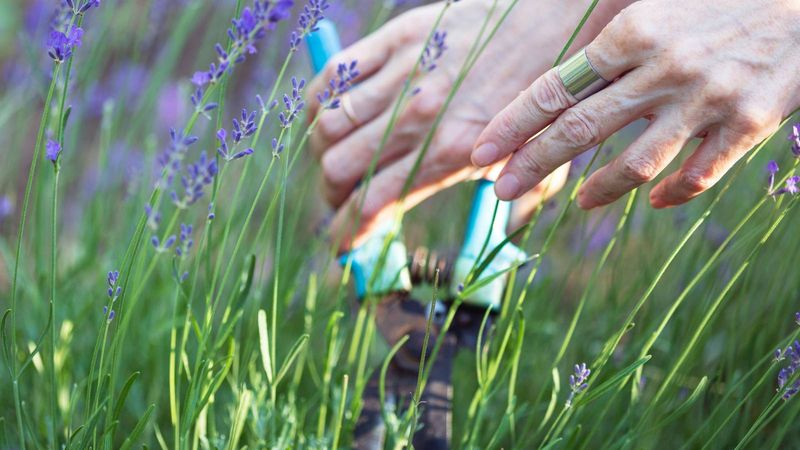
Once you have confirmed that green, leafy growth remains, you can make a targeted cut that may help the plant recover a more compact shape and encourage branching from living tissue. Start with sharp, clean shears, because ragged cuts from dull blades create entry points for disease and make the job harder than it needs to be.
The goal is to shorten the leafy stems and remove spent flower stalks while keeping green foliage below every single cut you make. Maine Extension recommends cutting a few inches above the woody section, stopping where leafy growth is still present rather than pushing down into the bare interior.
Place each cut just above a healthy leaf or a visible green side shoot so the remaining stem has something to grow from.
As a conservative general limit, remove no more than about one-third of the leafy growth at one time. UC Agriculture and Natural Resources guidance on woody lavender acknowledges that some appropriate varieties can tolerate more, but one-third is the safer starting point, especially for plants already under stress.
Avoid shearing indiscriminately into the center of the plant where stems are bare; that approach removes the photosynthesizing foliage the plant depends on and pushes cuts into old wood that lavender rarely regrows from reliably. UF/IFAS guidance also supports making cuts just above nodes where leafy growth is present, keeping the plant’s energy focused on viable tissue.
Choose a Pruning Window the Plant Can Handle
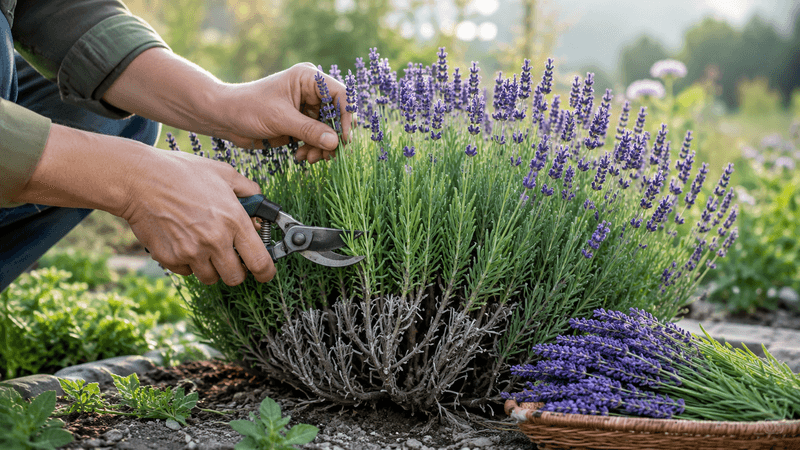
No single calendar date works for every lavender in every Southern yard. Pruning timing depends on when your plant blooms, what your local frost risk looks like, and which cultivar you are growing, so treating any one recommendation as universal can get you into trouble.
The Royal Horticultural Society recommends trimming lavender in late summer after flowering, which works well in climates where the growing season extends long enough for the plant to harden off before cold arrives. Many U.S. extension programs, however, favor waiting until spring when new growth has become visible, particularly in areas where winter damage or frost is a real possibility.
Both approaches have legitimate backing, and the difference comes down to local conditions rather than one being right and the other wrong.
For Southern gardeners in Florida and Texas, a practical working rule is to prune after the plant has finished flowering or after the danger of damaging cold has clearly passed. Maine Extension also cautions against late-season cuts that leave tender new regrowth exposed to cold snaps, which applies equally to any Southern garden that sees occasional hard freezes.
The broader point is to let your local climate and the plant’s own flowering cycle guide your timing rather than following a fixed date from a different region.
Know When Replacement Beats Renovation
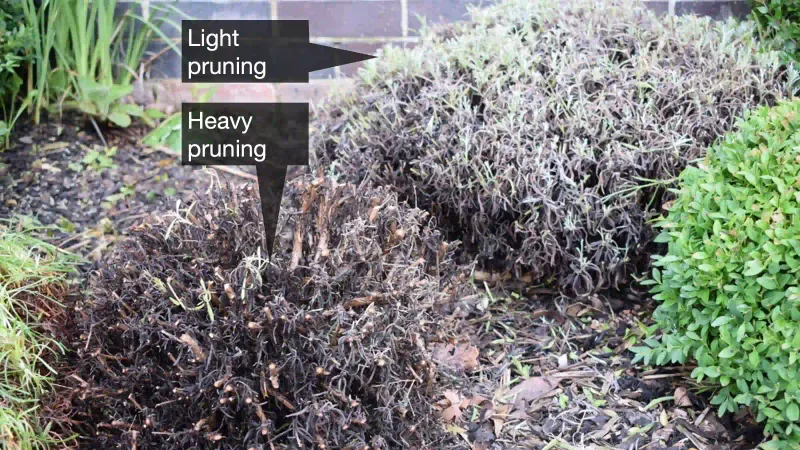
A corrective cut can give a plant with viable green tissue a better chance at recovery, but that same cut offers very little to a lavender that has mostly lost its living growth. A plant that is heavily woody throughout, with only a trace of green near the tips or none at all, is a poor candidate for rescue pruning, and pushing a hard cut into old, leafless wood is more likely to kill remaining branches than to revive them.
RHS guidance on lavender is direct about this: once a plant has become very woody and misshapen, replacement is often more reliable than renovation. Some sources, including WSU Extension Master Gardener articles, mention a staged approach of removing a portion of old stems over multiple seasons as a cautious experiment, but this is not a standardized method with a guaranteed schedule, and other authoritative sources do not endorse it as a reliable fix.
Maine Extension is equally clear that lavender often fails to resprout from old, leafless wood, which means a gamble on a hard cut can cost you whatever living tissue remains. If your plant has gone largely bare and a season of careful waiting has not produced meaningful new green growth, starting fresh with a young, well-chosen plant on a properly prepared site is likely to give you a better result than repeated rescue attempts on a plant that has already declined past the point where pruning can help.
Fix the Site That Keeps Lavender Declining
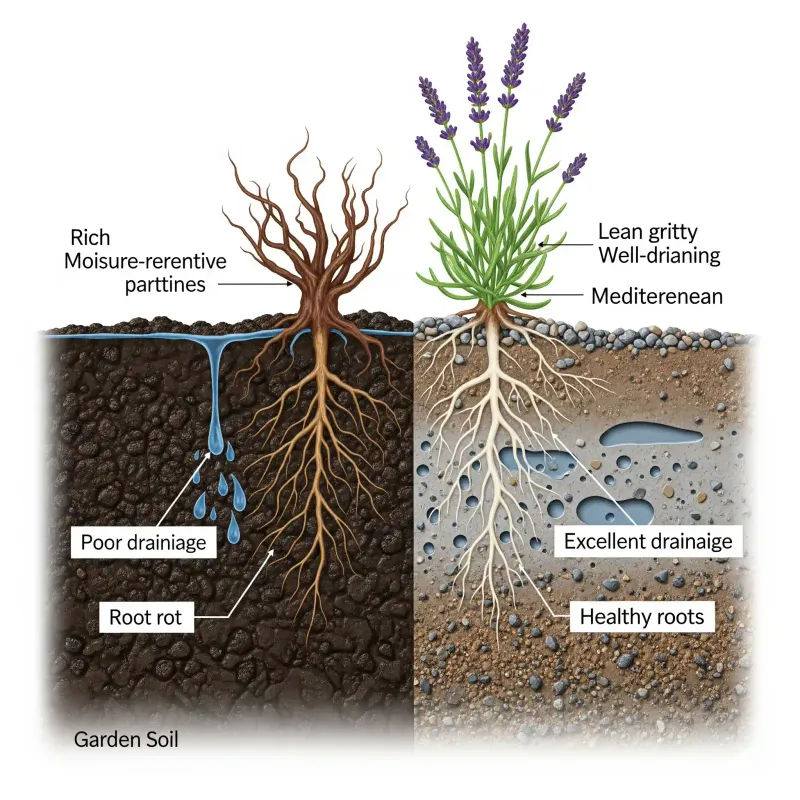
Lavender that keeps declining season after season despite correct pruning is often dealing with a site problem that no amount of cutting can fix. The plant’s three non-negotiable requirements are full sun, sharply draining soil, and good air circulation around its stems and foliage.
When any of those conditions are missing, the plant gradually weakens regardless of how carefully it is trimmed.
Illinois Extension explains that overwatering and heavy, poorly drained soil are among the most common reasons lavender fails in home gardens. Wet roots encourage root rot, and overhead irrigation adds moisture directly to the foliage, which raises the risk of fungal disease.
Established lavender generally needs far less supplemental water than newly planted specimens, and many plants in Southern gardens get too much rather than too little.
UF/IFAS Extension Manatee County guidance notes that persistent site stress, including compacted or clay-heavy soils and poor air movement, can keep lavender in a cycle of decline even when pruning technique is sound. If your lavender sits in a low spot that stays damp after rain, receives overhead spray from a sprinkler head, or is crowded by other plants that restrict airflow, those conditions are likely contributing more to its bare, struggling appearance than any pruning mistake.
Correcting drainage, switching to drip or hand watering at the base, and opening up space around the plant are changes worth making before reaching for the shears again.
Match the Cultivar to Florida or Texas Conditions
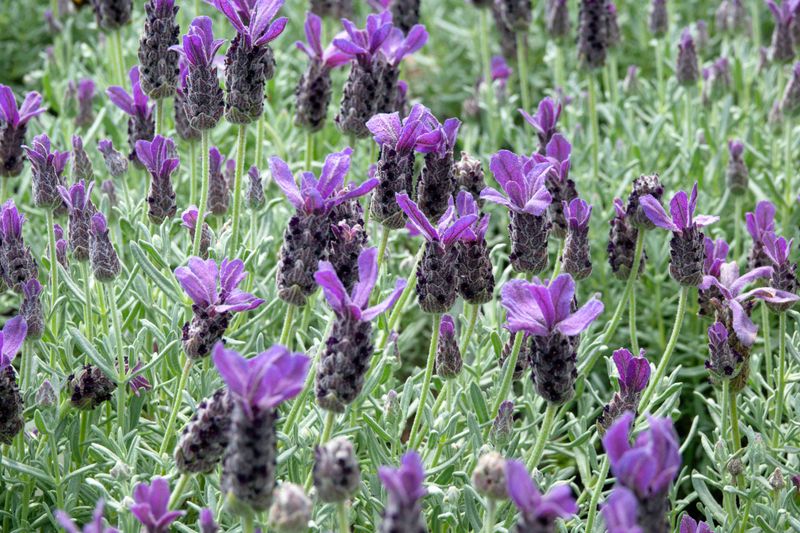
Choosing the wrong lavender for your region can make every other effort, including careful pruning, a losing battle. Florida and Texas present genuinely different challenges from the Pacific Northwest or New England, and a cultivar that thrives in one climate may decline steadily in another no matter how well it is maintained.
Florida’s combination of summer heat, high humidity, heavy seasonal rainfall, and often wet soils makes lavender one of the harder herbs to establish in a landscape bed. UF/IFAS Extension in Pasco County identifies French, Spanish, and selected lavandin types such as ‘Phenomenal,’ ‘Grosso,’ and ‘Provence’ as more promising choices for many Florida settings than standard English lavender.
Growing in containers or sharply drained raised beds can improve the odds considerably by giving you direct control over soil moisture and drainage.
UF/IFAS also notes that English lavender specifically can struggle under Florida’s summer conditions even when site preparation is good, pointing to cultivar mismatch rather than gardener error as a likely cause of decline. In Texas, the picture is similar but with different specifics: Texas A&M AgriLife Extension identifies fernleaf, French, Goodwin Creek Gray, Provence, and Spanish lavender as better-adapted local choices and cautions that pruning woody lavender nearly always kills it when the plant is already in poor condition.
If your lavender keeps declining despite correct technique and a well-prepared site, the cultivar itself may simply not be a good regional fit, and switching to a better-matched type will do more than any pruning strategy.
Use Light Pruning to Help Lavender Stay Compact
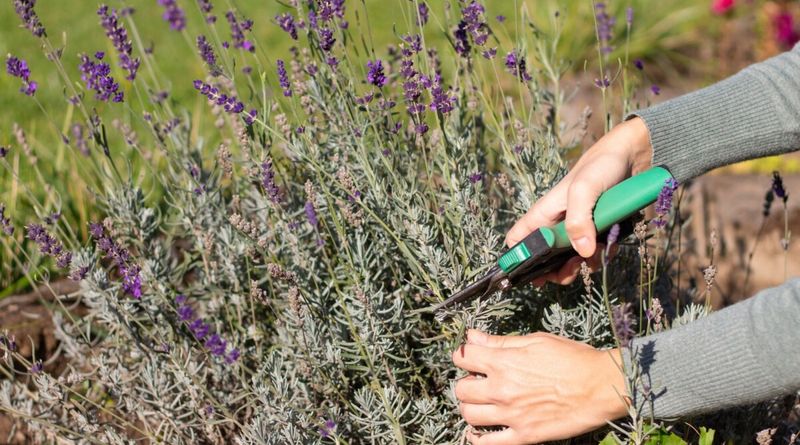
The best time to start managing lavender’s tendency toward woodiness is before it becomes a problem. Regular light pruning while plants are young helps keep growth compact and reduces the buildup of bare, sprawling stems that become so difficult to work with later on.
RHS guidance emphasizes that annual shaping, begun early, is far more effective than trying to renovate a plant that has been left unpruned for years. UC Agriculture and Natural Resources similarly notes that regular pruning begun while plants are young helps slow the development of the open, sprawling habit that makes older lavender so hard to manage.
At each session, stay in the green leafy growth, preserve foliage below every cut, and avoid pushing into bare old wood.
Annual light pruning can help maintain a compact form and reduce the rate at which bare stems accumulate, but it cannot prevent decline caused by a poor site, an unsuitable cultivar, disease, or severe weather. Maine Extension’s guidance reinforces the central decision rule: green growth supports a careful, targeted cut, while a plant showing no green growth calls for honest diagnosis or replacement rather than a risky hard cut.
Lavender rewards consistency more than heroics.