
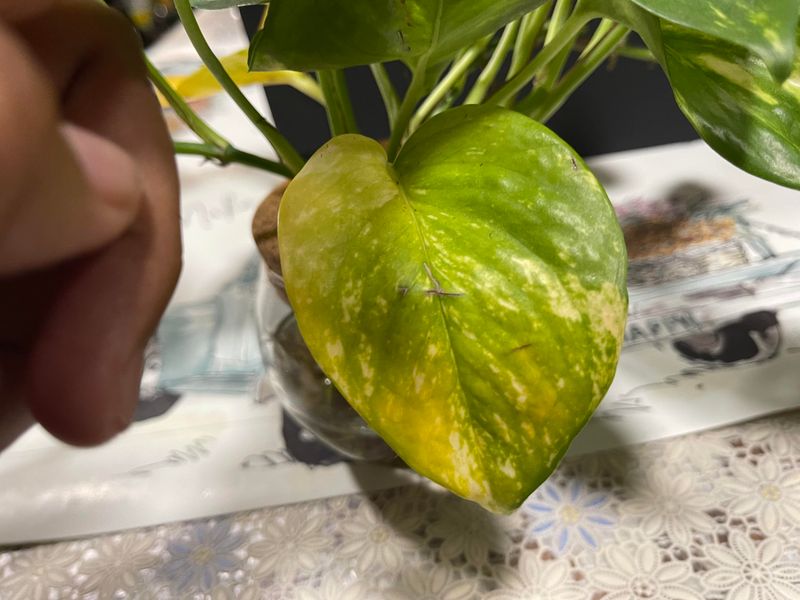
A yellow leaf on your pothos can make your stomach drop, especially when you are not sure what caused it. Wet soil and stressed roots are one common reason, but they are far from the only one.
Before you snip, water, or repot, a few simple checks can point you toward the real cause. Here is how to work through them in order.
Yellow leaves are a symptom, not a diagnosis
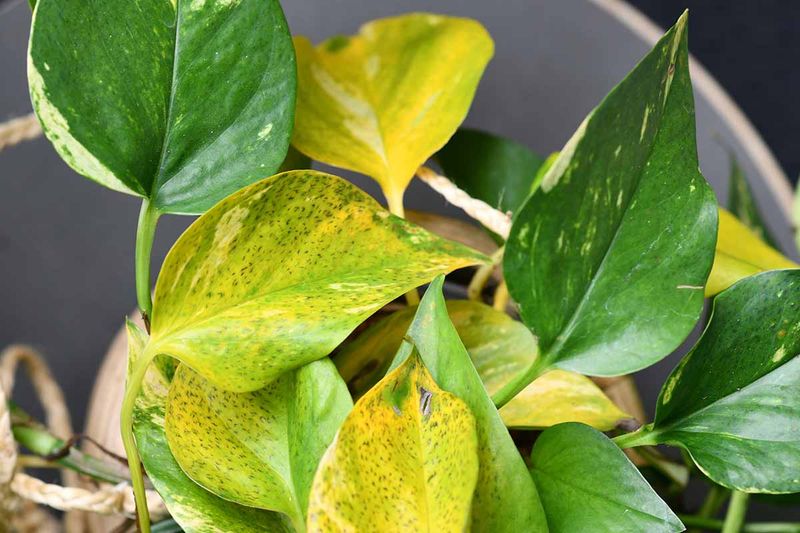
A yellow leaf tells you something changed, but not what. UF/IFAS plant experts point out that overwatering can look a lot like disease, and that yellowing is a general sign that could come from several sources.
Start by looking at the whole plant. If one or two older leaves turn yellow and drop while the rest of the vine looks full and green, that can be normal aging, as University of Wisconsin Extension notes.
Also remember that some pothos cultivars naturally have yellow or yellow-green foliage, so compare new leaves with the coloring the plant came with.
New yellowing that keeps showing up, or that appears on many leaves at once, deserves a closer look. Direct sun, dry soil, pests, and fertilizer problems can all cause it, and so can roots sitting in soggy mix.
The next steps help you sort through these possibilities without jumping to a conclusion.
Check whether the pot stays wet
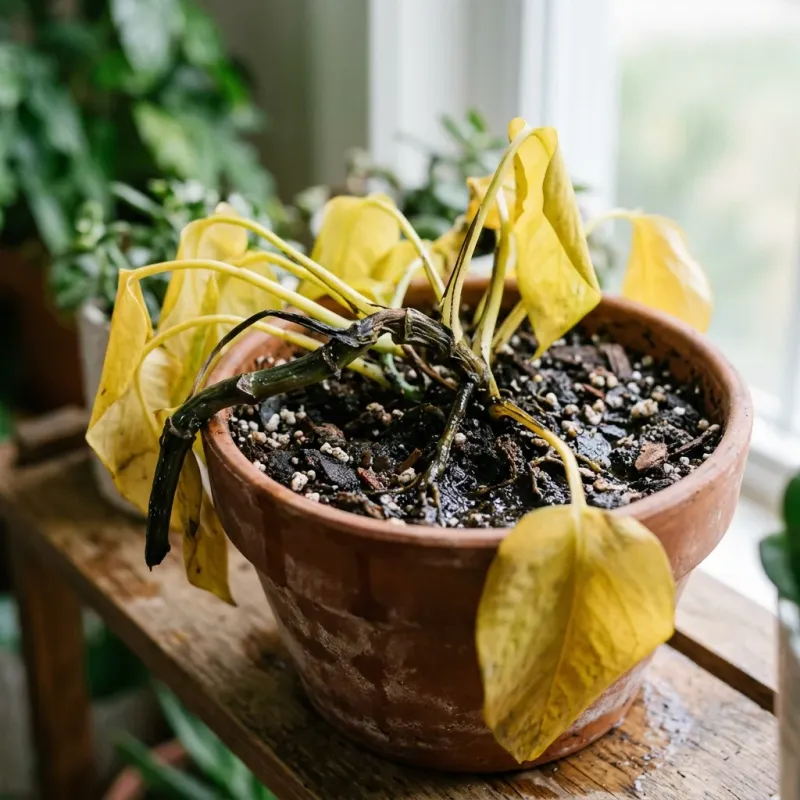
Your finger is the best first tool. Push it a couple of inches into the potting mix and feel whether it is soggy, damp, or dry.
Pothos generally do best when the mix dries somewhat between waterings, according to Penn State Extension, and a home that is warm and humid, as many Southern homes are, will not dry a pot at the same pace as a cool, dry one.
That is why a set weekly schedule can mislead you. Let the soil tell you when to water, not the calendar.
Next, lift the pot and look at the bottom. Confirm it has drainage holes, and empty any water sitting in the saucer or decorative outer pot.
Water that never drains keeps roots wet, and Clemson Extension stresses good drainage for pothos.
If the mix stays wet for long stretches, or the plant wilts even though the soil is wet, root stress becomes worth investigating.
Inspect roots when the evidence points belowground
You do not need to unpot a plant every time a leaf changes color. A root check makes sense when the soil has stayed wet, the plant looks limp or is declining overall, or the simpler fixes have not helped.
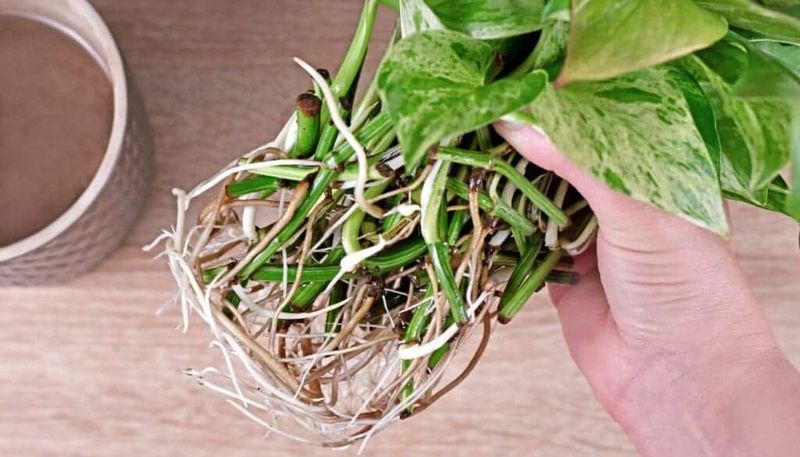
To look, slide the plant out of its pot gently and shake away loose mix. Healthy roots are generally firm and light-colored.
Rotted roots tend to be soft and brown or black, and they may fall apart when touched, as described by University of Maryland Extension.
What you see here, not the yellow leaves, is what supports a root rot diagnosis. Keep in mind that rot is not always a contagious infection.
UF/IFAS describes it as root deterioration that can come from a pathogen or from prolonged standing water.
If the roots look mostly firm and pale, you can tuck the plant back in and move on to other explanations.
Respond to confirmed rot without discarding healthy tissue
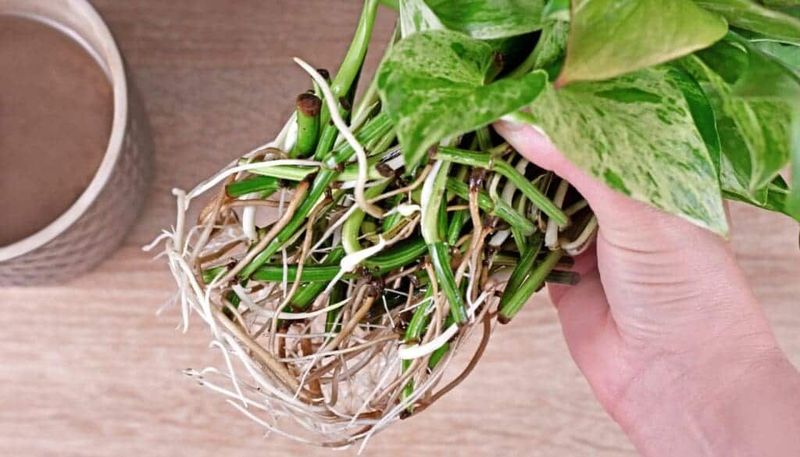
Once you have confirmed rot, the response depends on how much damage there is. When it is limited, University of Maryland Extension advises removing the rotten portions and replanting the healthy sections in sterile potting mix.
Use clean scissors, cut away only the soft, dark roots, and keep every firm, light root and healthy stem. Choose a clean pot with drainage holes, and water in with care rather than drenching the plant again.
Sometimes the damage is too far along. If most of the root system is mushy, University of Wisconsin Extension notes that discarding the plant can be the most practical choice.
Healthy vine tips may still be worth saving as cuttings, though results are not guaranteed.
None of this means every yellowing pothos needs repotting. This step is for plants where the roots have shown you a problem.
Prevent persistently wet conditions
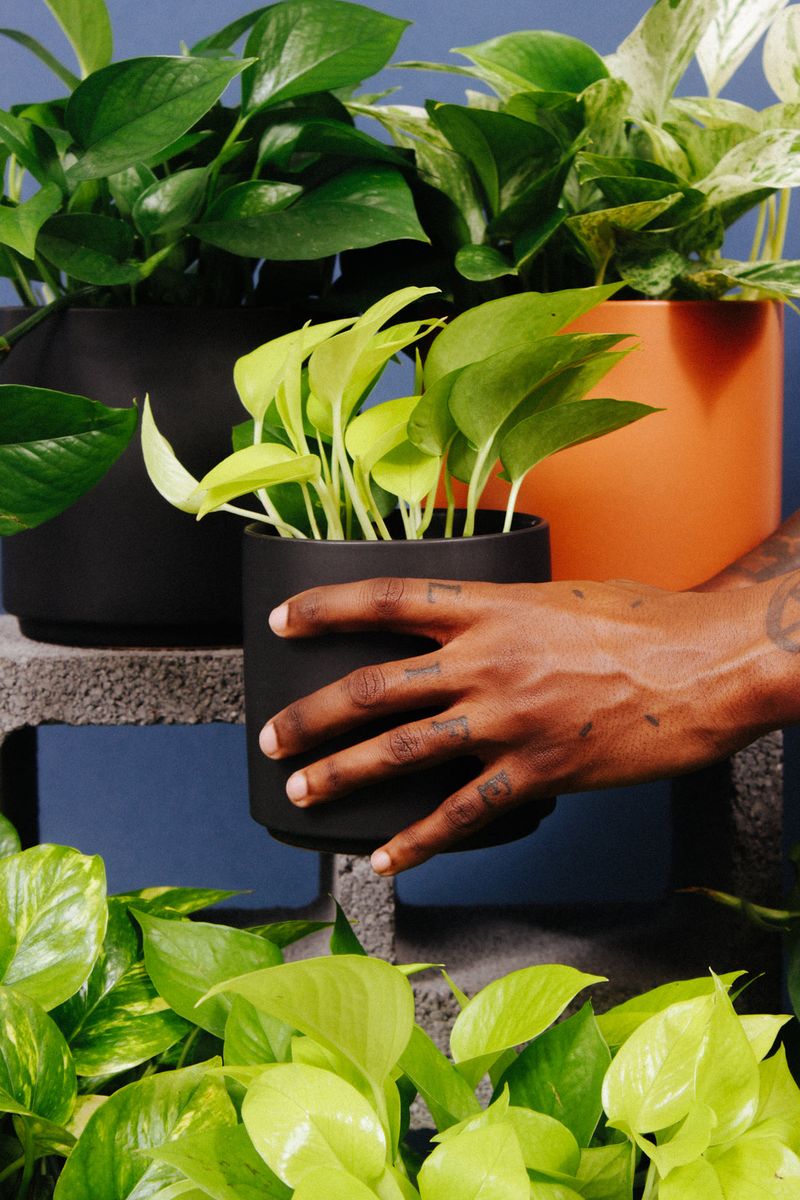
Prevention comes down to letting excess water leave the pot. Choose an airy, well-draining houseplant mix, which Clemson Extension recommends for pothos, and plant it in a pot with drainage holes.
When you water, do it thoroughly, then let the extra drain away. Empty saucers and decorative outer pots so the roots are not sitting in a puddle.
Wait until the top layer of mix has dried before you water again, using the feel of the soil rather than a fixed schedule.
One popular trick to skip is a layer of gravel in the bottom of the pot. Wisconsin Extension warns that gravel can actually inhibit drainage.
These habits may lower the odds of root trouble, though no routine can promise a problem-free plant.
If roots look healthy, reconsider other causes
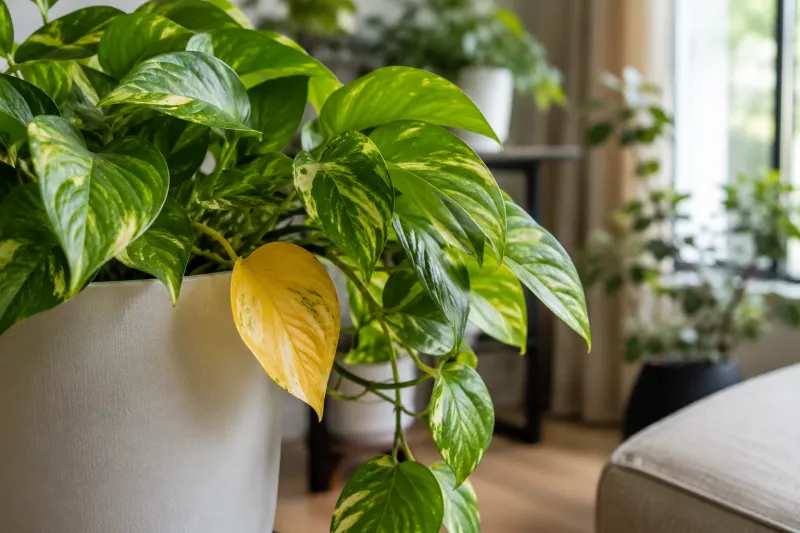
Firm, pale roots are good news, and they are a cue to stop treating for rot. Turn your attention to the other usual suspects: dry soil, light, temperature swings, pests, and fertilizer.
Light is a big one. Penn State Extension notes that direct sun can yellow pothos leaves, while low light can dull or reduce variegation.
A pot near a sunny Texas or Florida window may need to move back a bit.
Also check the undersides of leaves for pests, and think about whether the plant went too long between drinks or sat near a cold draft or vent. Fertilizer that is too heavy or too scarce can play a part as well, according to Iowa State University Extension.
Finally, a few yellow older leaves may simply be normal aging. Change one thing at a time so you can tell what helped.
Pruning tidies the plant but does not treat stress
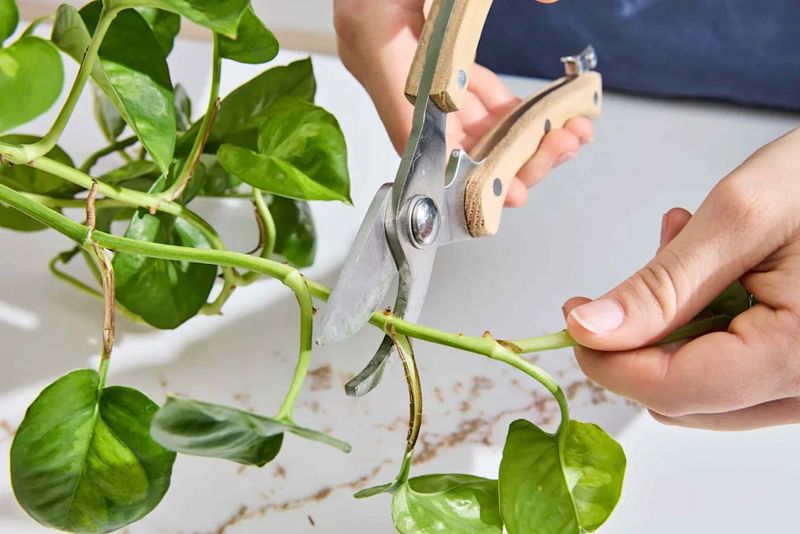
Go ahead and remove yellow leaves if they bother you. Trimming makes the plant look better, but it does nothing about what caused the yellowing, as Iowa State University Extension explains.
Whether more leaves yellow depends on whether the stress is still there. If you fix a soggy pot or move the plant out of harsh sun, new growth may stay green.
If the cause remains, you may see more yellowing, and University of Maryland Extension encourages looking at growing conditions.
Watch the plant for a few weeks after any change. Check the soil, the drainage, and the light before you reach for the shears.