
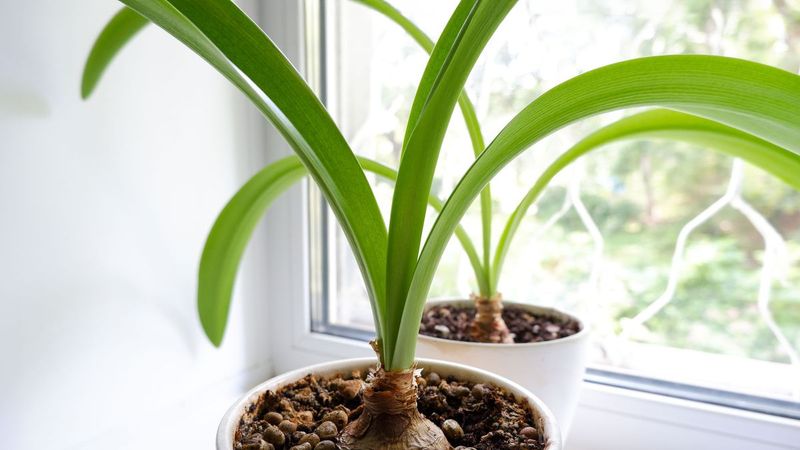
Watching your amaryllis push up a flush of green leaves while the flower stalk never appears can feel like a real disappointment, especially when you were counting on those bold blooms for the holidays. The good news is that leaves are actually a sign of life, not failure, and the bulb may simply be missing a few key conditions before it can shift into flowering mode.
For Southern gardeners in Florida and Texas, where warm interiors and mild winters complicate the picture, understanding what your bulb actually needs makes the difference between another season of green and a pot full of color.
Leaves First Do Not Mean the Bulb Has Failed
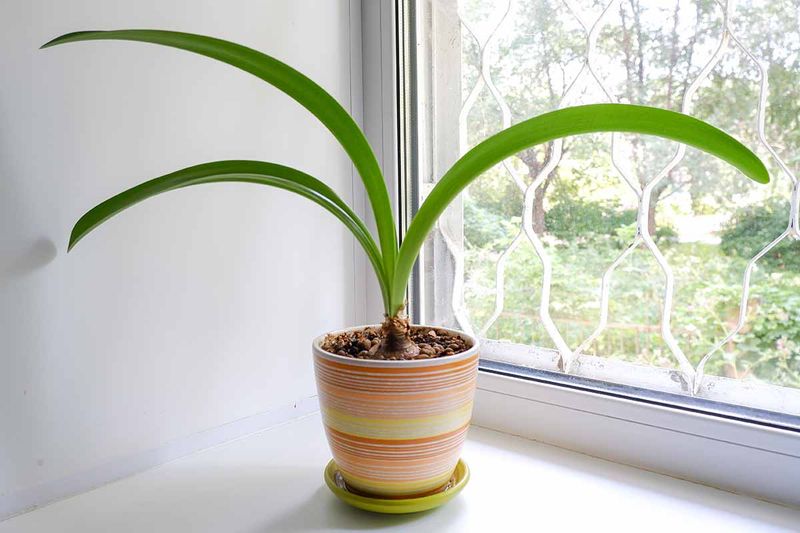
Green leaves pushing out of a potted bulb while the flower stalk stays hidden is one of the most common concerns among indoor amaryllis growers, and it is easier to misread than most people expect. University of Maryland Extension notes that flower stalks usually emerge before leaves, but leaves can appear first depending on the cultivar and growing conditions.
That sequence alone is not a sign that something has gone wrong.
Most plants sold at garden centers and grocery stores under the name “amaryllis” are actually Hippeastrum hybrids rather than the true botanical genus Amaryllis. North Carolina Extension’s plant profile makes this distinction clear, and it matters because Hippeastrum care advice, seasonal behavior, and flowering triggers can differ from older references written about the true Amaryllis genus.
Persistent foliage with no stalk across multiple seasons is worth investigating, but a single round of leaves-before-stalk growth is not automatic proof of a problem. The bulb may need stronger reserve-building, better light, or a seasonal cue to shift into flowering mode.
A missing rest period is one possible factor, but it is rarely the only explanation.
The Bulb Must Build Reserves Before It Can Flower
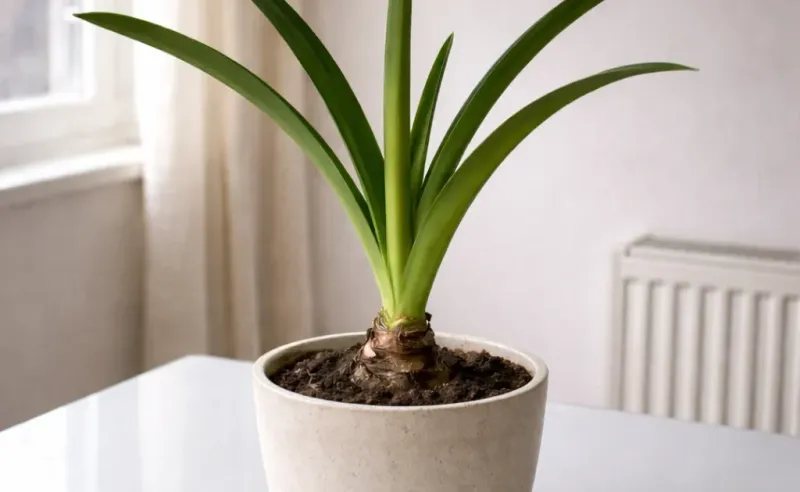
Flowering takes stored energy, and the bulb can only gather that energy through healthy green leaves. University of Illinois Extension explains that gardeners should never cut off green foliage after the flowers finish, because those leaves are actively replenishing the carbohydrates the bulb will draw on during the next flowering cycle.
Removing healthy leaves early is one of the most common ways to set a bulb back by an entire season.
Bright light is equally important during the growing period. University of Minnesota Extension recommends giving actively growing plants as much bright light as possible, noting that weak or indirect light produces floppy foliage and limits the bulb’s ability to build the reserves it needs.
Moving plants outdoors for the summer can be helpful, though gradual acclimation to stronger sun prevents leaf scorch.
Watering and feeding habits during active growth also shape what happens at flowering time. Water when the top of the soil has dried out, use a container with drainage holes, and avoid letting the pot sit in standing water, since consistently wet soil encourages root and bulb rot.
UF/IFAS cautions that excessive nitrogen, overly rich soil, and overwatering can push the plant toward lush leaf production at the expense of bulb development. Follow fertilizer label rates rather than guessing, and keep in mind that a rest period cannot compensate for reserves the bulb never had a chance to build.
What a Cool, Dry Rest Actually Does
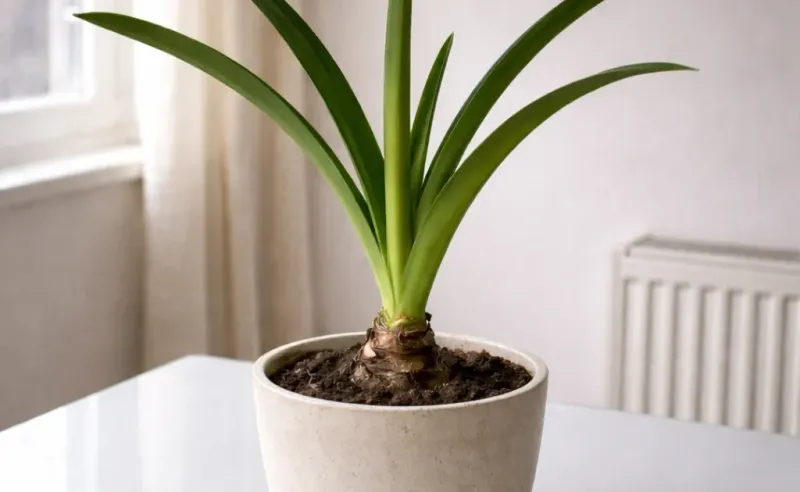
A cool, dry rest period works more as a scheduling tool than a biological on-switch. Illinois Extension describes the practice as a way to encourage or time flowering rather than as a mandatory step that every healthy Hippeastrum requires.
Some bulbs kept in active growth will rebloom on their own schedule, while others respond well to a controlled rest that helps the gardener aim for a specific window, such as winter holidays.
This type of rest is meaningfully different from the cold-chilling treatment that tulips, daffodils, and hyacinths need before they can flower. University of Wisconsin Extension’s forcing-bulbs guide consistently lists amaryllis as a bulb that requires no formal cold period, distinguishing it from spring-blooming bulbs that need weeks of refrigerator-level chilling.
For Hippeastrum, the useful cue is a reduction in warmth and moisture, not vernalization.
Flower structures inside the bulb may already have begun forming before any temperature reduction takes place. A 2026 plant physiology study found that low-temperature treatment accelerated scape emergence and flowering in Hippeastrum, but floral bud differentiation had already occurred before the treatment began.
That finding supports treating rest as a developmental timing cue rather than the moment the flower bud is first created, which means a well-prepared bulb carries the flowering potential into the rest period rather than gaining it there.
How to Give the Bulb a Safe Indoor Rest
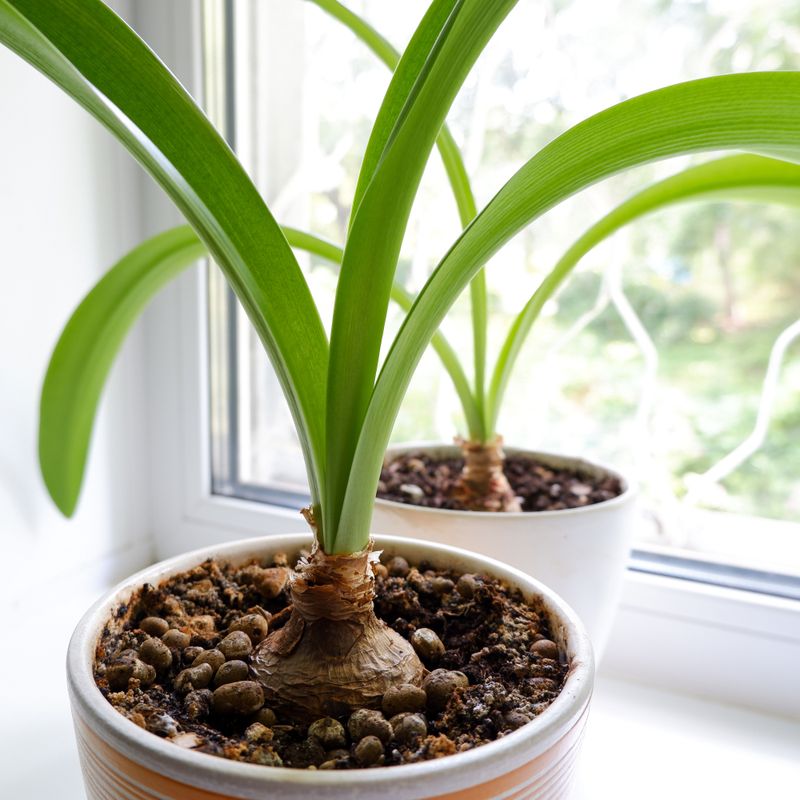
Timing the rest period starts with watching the foliage rather than the calendar. After the growing season winds down, reduce watering gradually and allow the leaves to yellow and brown on their own before removing them.
Cutting healthy green foliage short-circuits the reserve-building process, so patience at this stage pays off when the stalk eventually appears.
Illinois Extension recommends moving the plant to a cool, dry, dark or semi-dark location once the foliage has died back, stopping watering entirely during this period. A temperature range of roughly 40 to 60 degrees Fahrenheit is commonly cited, with many sources concentrating around 45 to 55 degrees.
University of Maryland Extension suggests a rest of about six to twelve weeks, with the specific duration depending on when the gardener wants blooms to appear.
Southern gardeners face a particular challenge here. A warm living room, a Florida garage that rarely dips below 65 degrees, or a Texas interior that stays comfortable year-round may not provide a meaningful temperature reduction at all.
UF/IFAS notes that Florida amaryllis plants often retain their foliage through much of the year rather than showing the dramatic dieback common in colder climates, making a natural dormancy signal harder to read. If the environment stays too warm, the rest period may need to be created deliberately by finding the coolest available spot in the home, such as a north-facing room or an air-conditioned closet, rather than relying on outdoor conditions to trigger it.
Restart Growth Gradually and Watch for the Stalk
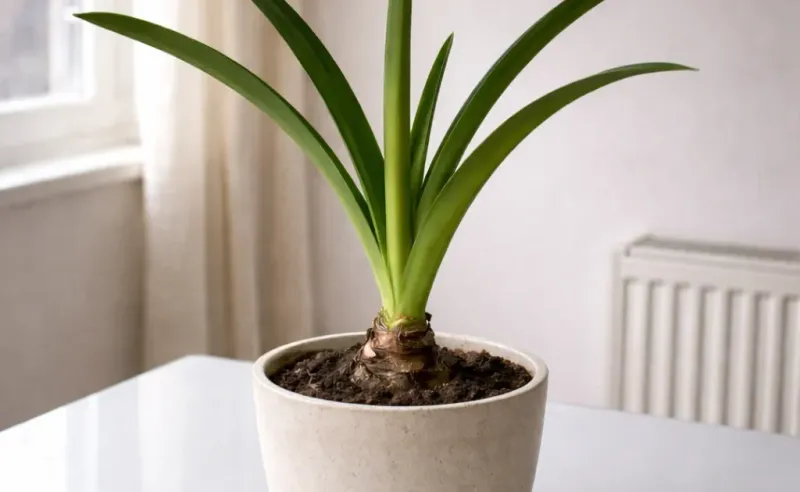
Bringing a rested bulb back into active growth calls for a measured approach rather than an immediate soaking. University of Maryland Extension recommends keeping the upper portion of the bulb exposed above the soil line, leaving roughly one-third to one-half of the bulb above the surface in a well-drained mix and a pot only modestly wider than the bulb itself.
Begin with cautious watering and increase frequency only as the soil dries and growth becomes visible.
Minnesota Extension advises returning the plant to bright light and warmer conditions after the rest, which helps signal the bulb that the growing season has resumed. A flower stalk may emerge before any leaves appear, but leaves-first growth can still happen even after a proper rest, depending on the cultivar and how much energy the bulb stored going into dormancy.
Neither sequence should cause alarm on its own.
University of New Hampshire Extension places the window from restarting growth to actual flowering at roughly four to eight weeks, but emphasizes that cultivar, bulb size, prior care, temperature, and whether the bulb was preconditioned before purchase all affect that timeline. Treat the range as a general guide rather than a firm deadline, and avoid the temptation to overwater or move the plant into stronger heat in hopes of speeding things up.
Consistent bright light and patience are more reliable than forcing the pace.
If There Is Still No Stalk, Check the Bulb and Its Season
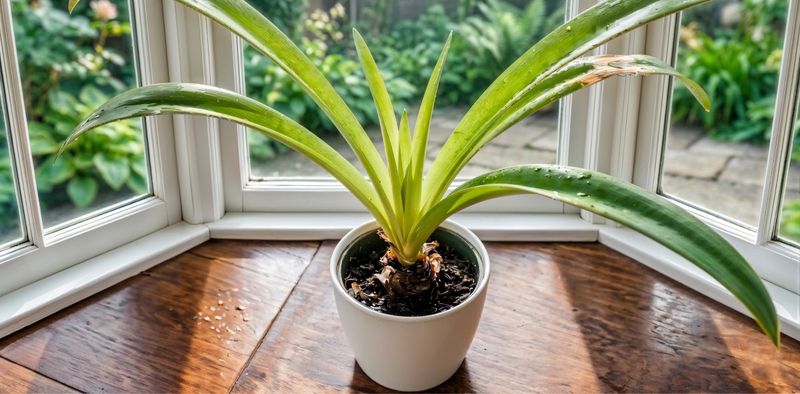
Repeating the rest period without addressing the underlying cause rarely produces a different result. Before cycling through dormancy again, run through a practical checklist of common reasons a bulb stays in leaf-only mode.
Bulb size and condition matter more than most gardeners realize. Iowa State University Extension explains that small, recently propagated, or heavily depleted bulbs may produce leaves for a season or longer before they carry enough stored energy to support a flower stalk.
Waxed bulbs sold without soil or roots are especially vulnerable because they bloom using whatever reserves were present at packaging time and often struggle to recover afterward without sustained feeding and light.
Warm growing conditions are a specific concern for Southern gardeners. Research summarized by North Carolina State found that very warm temperatures, such as days above 83 degrees Fahrenheit and nights above 73 degrees, promote leaf and bulb growth but reduce the number of flowering scapes initiated.
A bulb growing through a hot Florida or Texas summer indoors near a warm window may be accumulating leaves precisely because conditions favor vegetative growth over flowering readiness.
UF/IFAS Extension Duval County notes that a bulb forced into bloom for the winter holidays can take a full year to return to a normal seasonal rhythm. Other factors worth reviewing include insufficient light, premature removal of healthy leaves in a previous season, excess nitrogen fertilizer, overwatering, and signs of rot or disease at the base of the bulb.
UNH Extension is direct on this point: not every foliage-only bulb will flower on the next schedule, and some need an additional growing season to rebuild before they are capable of blooming again.
A Complete Growing Cycle Can Improve the Odds
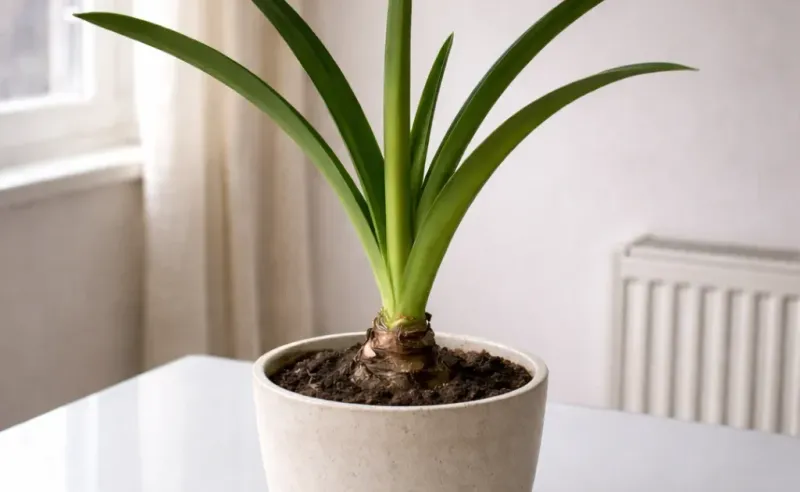
Pulling a foliage-only bulb back toward flowering is less about finding a single missing step and more about giving it a complete, well-supported season. Preserve the green leaves after blooming, place the plant where it gets genuine bright light, water carefully in a draining container, and feed according to label directions during active growth.
Those habits build the reserves that make everything else possible.
A cool, dry rest can then help direct that stored energy toward a flower stalk and give you some control over timing, particularly for winter or holiday blooms. Illinois Extension is clear that dormancy is a useful cue rather than a hard requirement, and that some healthy bulbs rebloom without it.
Think of rest as one tool in a broader strategy, not a guaranteed fix on its own.
Iowa State Extension reminds gardeners that a depleted or recently stressed bulb may simply need more time. A bulb that grows well for a full season, even without producing a stalk, is often in better shape heading into the next cycle than one that was pushed too hard too soon.