
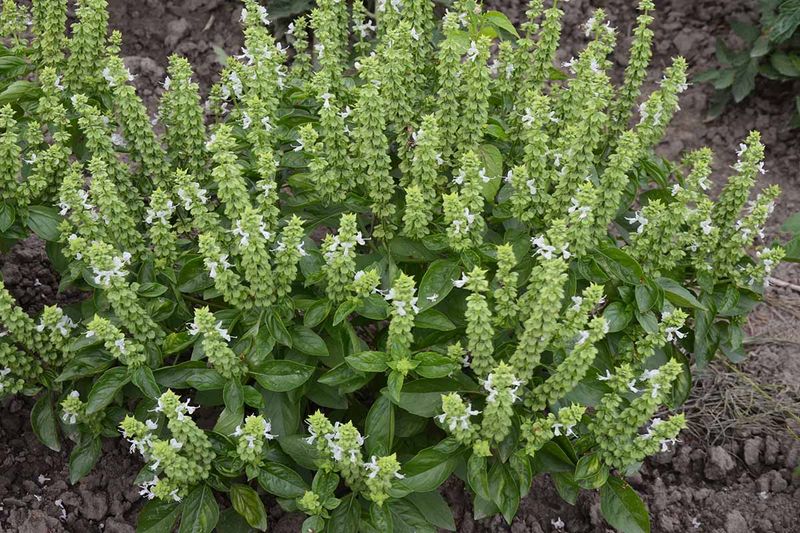
Basil is one of summer’s most rewarding herbs until the day you walk outside and find it covered in flower spikes instead of the lush, fragrant leaves you were counting on. Many gardeners blame the July heat, but the full story is more complicated and more fixable than that. Heat can push basil toward flowering, but your harvesting routine plays a bigger role than most people realize. Understanding what’s really happening gives you a practical path to more leaves and fewer surprises.
Why many basil plants flower in midsummer
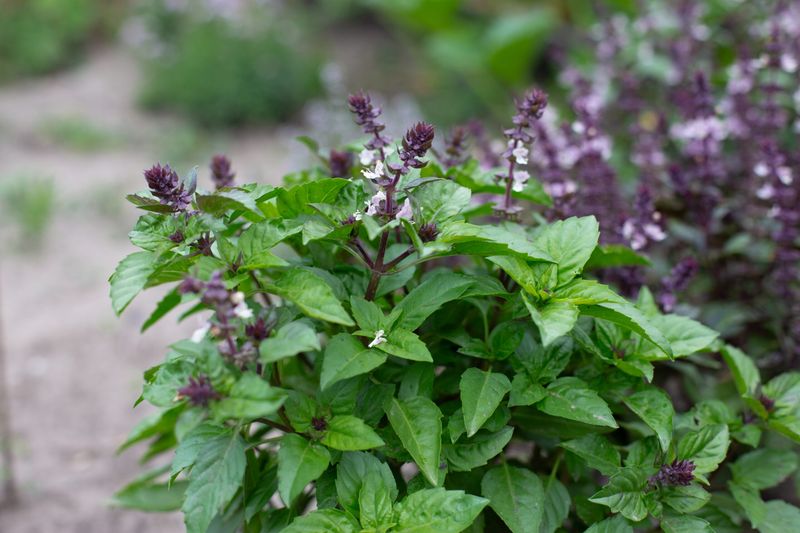
Basil is a warm-season annual, and flowering is simply part of its life cycle. Penn State Extension lists July through August as a typical bloom period for many common types, and Clemson Cooperative Extension notes that many cultivars begin producing flower spikes by mid-summer. That said, the timing is not the same for every plant in every garden.
Several factors push basil toward flowering earlier or later. As plants mature, they shift energy toward reproduction – that shift is natural and does not require any particular trigger. High temperatures, long summer days, and water stress can all accelerate the process, and UC IPM identifies heat and extended daylight as recognized bolting factors for many plants, including herbs. Cultivar choice also matters considerably.
Some basil varieties flower later than others, and a few, like Greek Columnar or Pesto Perpetua, tend to stay leafier longer than standard sweet basil. Illinois Extension highlights several cultivars that remain attractive and productive well past the point when common types have already bolted. Regular stem harvesting is one management practice that can redirect growth toward leaves, but it works alongside these other factors rather than replacing them.
How regular stem harvests can delay flowering
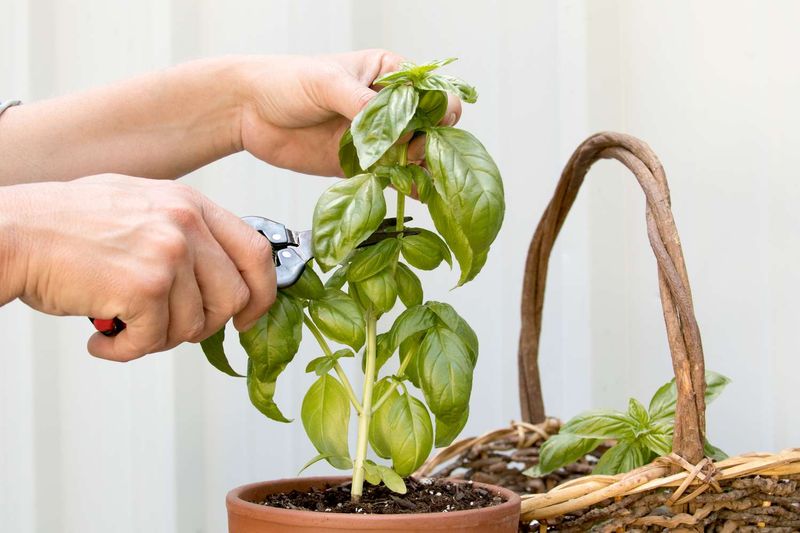
Harvesting matters more than most gardeners expect, but the type of harvest makes all the difference. Plucking individual leaves from the middle of a stem does almost nothing to redirect the plant’s energy. Waiting until the end of summer for one large harvest is even less effective, because by then the plant has already committed to flowering. What actually helps is cutting whole stems regularly, before flower buds have a chance to develop and harden.
When you cut a stem just above a pair of leaves or a leaf node, the plant responds by pushing out new branches from that node. Utah State University Extension recommends cutting stems just above a leaf node while always leaving foliage behind to support continued growth. That branching response is what keeps the plant bushy and productive instead of sending one tall stem straight up to flower.
Illinois Extension advises pinching flower buds as soon as they form, and Penn State Extension notes that pinching growing tips can retard flowering and promote branching. These practices can encourage continued leaf production, but they cannot guarantee a larger total yield. Cultivar, sunlight, water, and plant age all affect the outcome, so think of regular harvesting as a tool that improves your odds rather than a guaranteed fix.
Make the rescue cut above a healthy leaf node
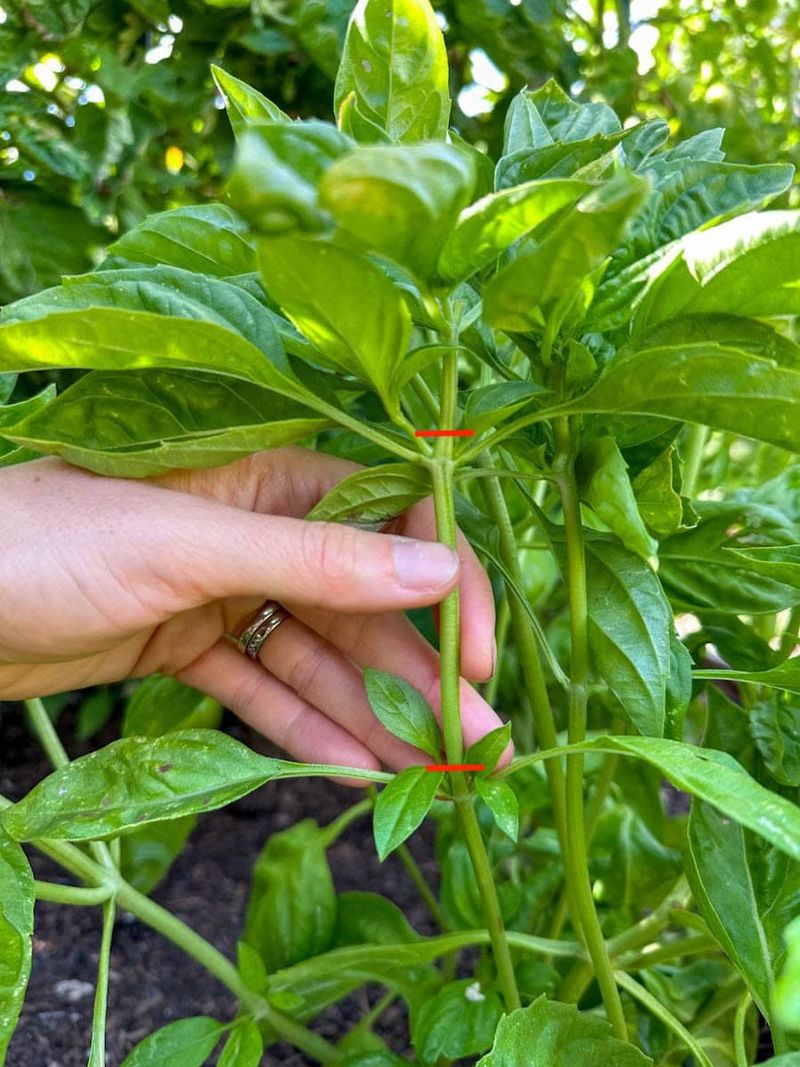
Finding a flowering stem on your basil does not mean the plant is lost. The key is where you make your cut. Start by tracing the flowering stem downward from the tip until you find a healthy pair of leaves growing from the stem – that junction is a leaf node, and it is your target. Use clean scissors or snips to cut just above that node, leaving the leaves and the node itself intact on the plant.
Skipping straight to the flower tip and snapping it off may feel like enough, but it usually is not. The long flowering stem below the tip often produces another flower spike within days, because the plant’s energy is already channeled into that stem. A deeper cut changes that equation. University of California Cooperative Extension recommends cutting the budding stalk at least four leaf nodes down from the tip as a way to push the plant back toward leafy growth.
That specific figure is their guidance, and individual plants may respond differently, but the principle holds: cutting deeper into healthy stem tissue gives new branches a better starting point.
Utah State University Extension and Illinois Extension both reinforce cutting above a healthy node rather than simply removing the visible bud. After the cut, check the plant for any other stems forming buds and address those the same way while the plant still has plenty of foliage to support recovery.
Leave enough foliage for regrowth
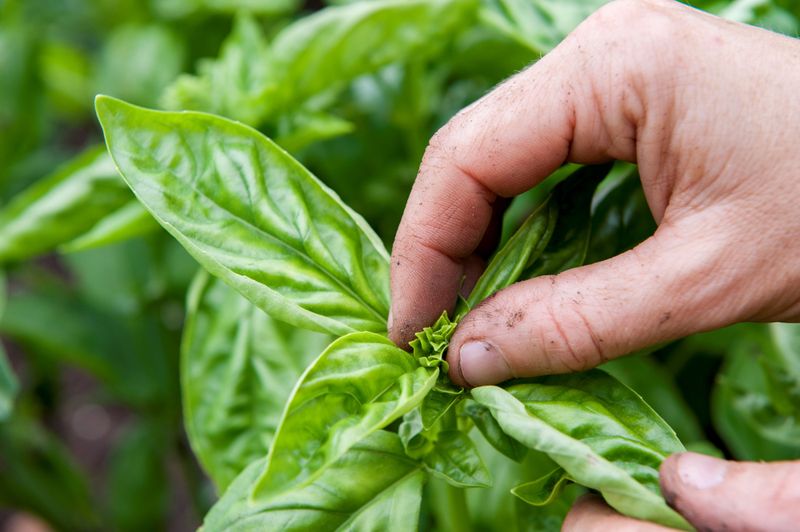
One of the most common mistakes after finding a flowering basil plant is cutting back too hard. The instinct to remove everything that looks spent is understandable, but basil needs its remaining leaves to keep photosynthesizing and fuel new growth. Strip too much away and the plant stalls instead of bouncing back.
Rutgers Cooperative Extension recommends leaving at least four sets of true leaves on the plant after any harvest. Clemson Extension takes a similar position, cautioning gardeners to preserve enough foliage so that overall growth is not significantly reduced. Both recommendations point to the same practical boundary: the plant needs a working canopy to recover.
When you make the rescue cut described in the previous section, stop as soon as you have removed the flowering portion and reached a healthy node with leaves. Resist the urge to keep going downward just to tidy the plant up. The leaves you leave behind are not cosmetic – they are the engine that drives new branch growth. Think of each remaining set of leaves as a source of energy that the plant will redirect into the fresh shoots you want to see over the coming weeks.
Build a repeatable midsummer maintenance routine
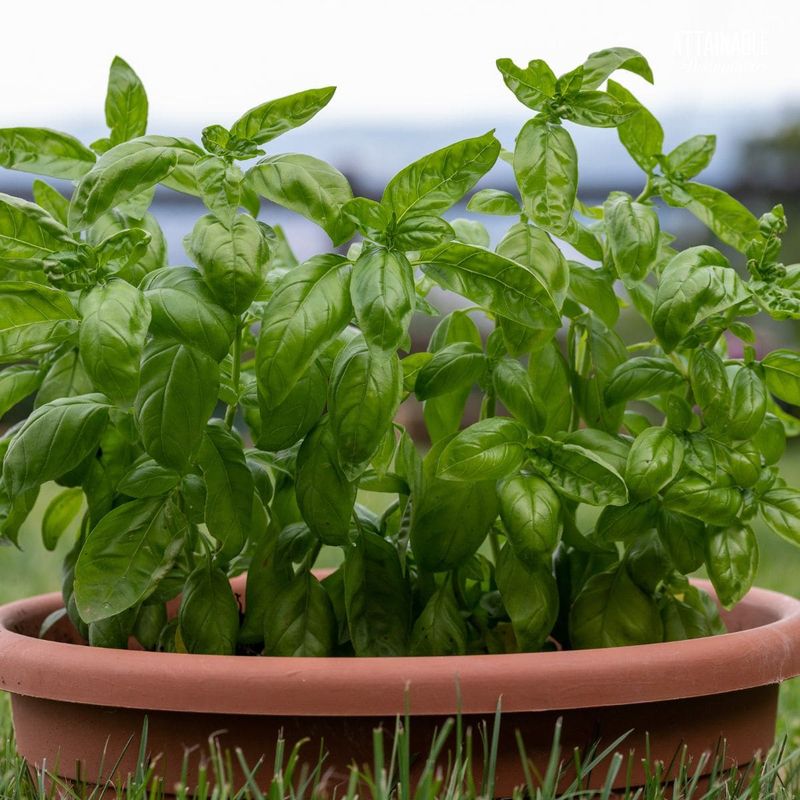
A single rescue cut buys you time, but a repeatable routine is what keeps basil productive through the rest of summer. The goal is to stay ahead of the plant rather than reacting after it has fully flowered. Check your basil every few days and remove new flower buds as soon as they appear – small buds are much easier to manage than open flower clusters, and catching them early reduces how often you need to make deep cuts.
Penn State Extension recommends harvesting basil stems regularly rather than waiting for a single large end-of-season cut. Illinois Extension reinforces pinching buds consistently as part of the same approach. Pairing that harvesting habit with good soil moisture gives the plant the resources it needs to keep branching. UC Marin Master Gardeners note that consistent moisture is important for basil health, and Penn State advises keeping soil well-watered throughout the season.
Aim for consistently moist but well-drained soil, water at the soil line rather than wetting the foliage, and consider a light layer of mulch around the base to slow moisture loss on hot days.
If you prioritize leaf flavor or essential-oil concentration, the Herb Society of America and Penn State both suggest harvesting in the morning after dew has dried. That timing is optional and works best for cooks who want peak aroma, not as a strategy for preventing flowering.
Decide whether every flower needs to come off
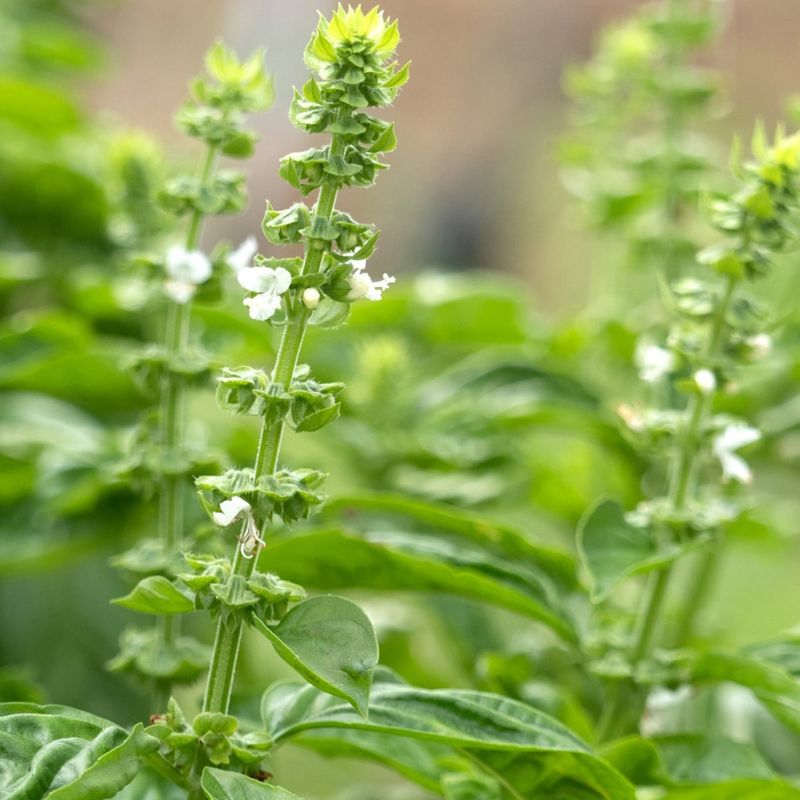
Removing every flower from every basil plant is not always the right call, and the choice depends on what you want from each plant. Illinois Extension points out that flowering basil plants remain harvestable, even after buds open – leaf flavor and aroma may become less desirable, but the leaves are not ruined or unusable. Flowers and seeds also have real value in the kitchen and the garden.
UC Marin Master Gardeners note that basil flowers and seeds are edible and can be used as a garnish or flavoring. Basil flowers also attract bees and other beneficial pollinators, and UC Master Gardeners of Placer County highlight basil as a useful pollinator plant in a mixed herb garden. A practical middle ground is to keep one or two plants pinched for cooking while letting a separate plant bloom freely for wildlife.
Cultivar selection shifts this decision too. Illinois Extension identifies cultivars like Greek Columnar and Pesto Perpetua as varieties that stay leafy and attractive longer than standard sweet basil, while Penn State notes that some ornamental types are grown specifically for their flowers. Even with diligent pinching, research on Ocimum species confirms that basil is genetically programmed to reproduce and will attempt to flower again on new stems. The realistic goal is extended foliage production, not a permanent halt to flowering.
Separate ordinary flowering from possible downy mildew
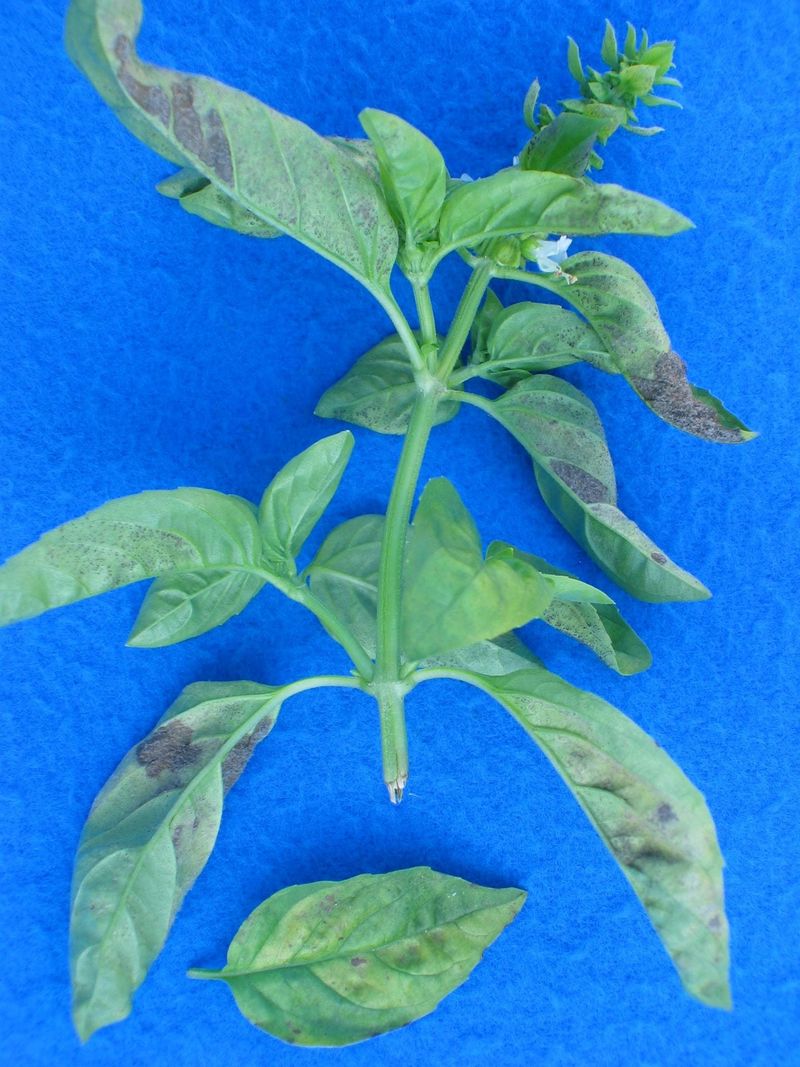
Not every struggling basil plant in July is simply flowering on schedule. Some symptoms that look like flowering-related decline are actually signs of a disease that needs a different response. Knowing the difference can save you from treating the wrong problem.
Flower spikes emerge from the top of healthy green stems and have a recognizable bud-and-bloom structure. Basil downy mildew looks different: watch for yellowing leaves that curl or drop, combined with gray or purplish downy growth on the undersides of those leaves. Penn State Extension recommends removing and discarding infected plant material rather than composting it, improving airflow around plants, and watering at the soil line to keep foliage dry. Those steps address the disease’s spread rather than its appearance.
If your basil has healthy green stems with visible flower spikes at the tips, ordinary flowering is the likely explanation and the harvest techniques described in this article apply. If you see widespread yellowing paired with fuzzy gray growth beneath the leaves, stop and assess for disease before making any cuts. Pruning a diseased plant without addressing the underlying problem can spread pathogens to other plants nearby. When in doubt, consult your local cooperative extension office for a proper identification before taking action.
Use the harvest cut to buy more leafy time
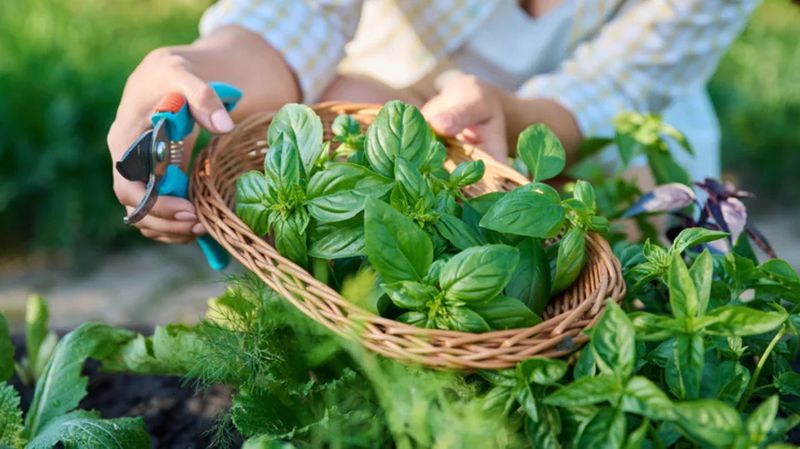
Basil will eventually flower – that is not a failure, it is biology. What you can control is how long the plant stays in productive leaf mode before that happens. Heat and long summer days may hasten the shift toward reproduction, as UC IPM notes for bolting plants generally, but your harvesting routine is the variable most directly in your hands.
Cut each flowering stem above a healthy leaf node, leave at least four sets of true leaves on the plant, pinch any new buds as they appear, and keep the soil consistently moist. Penn State Extension, Utah State University Extension, and Illinois Extension all support this approach as a way to encourage branching and maintain leafy growth. Repeat the process regularly rather than waiting for the plant to become heavily flowered again.
The honest outcome is more weeks of harvestable leaves, not an indefinite pause on flowering. Every cut you make in the right place is a small vote for leaves over flowers – and over a whole summer, those votes add up to a considerably better harvest than waiting and watching would ever produce.