
Knowing when to pull beets out of the ground is one of those skills that separates a good harvest from a disappointing one. Pull too early and you miss out on size and flavor; wait too long and you risk tough, fibrous roots that no amount of cooking will fix.
For Southern gardeners working through warm falls and mild winters, the timing window can be tricky but very manageable once you know what to look for.
The Exposed Shoulder Starts the Inspection
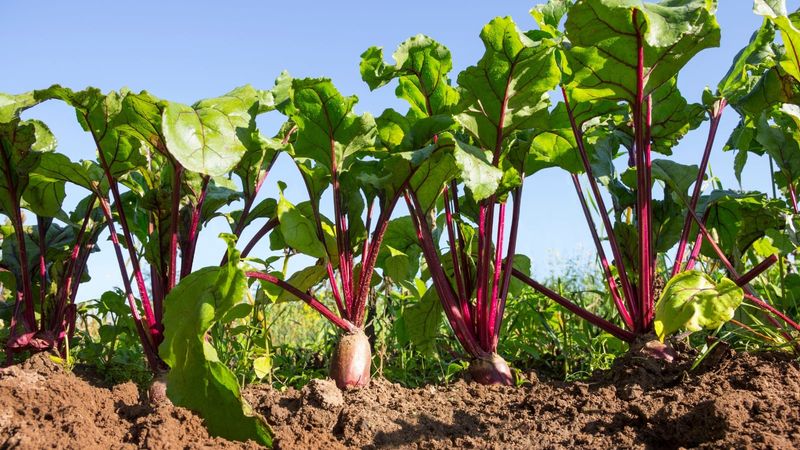
Walk down a row of beets that have been in the ground for several weeks and you will likely notice something poking above the soil line: a rounded, reddish-purple dome sitting right at the surface. That rounded top is called the shoulder, and spotting it is a practical first step in figuring out whether your beets are getting close to harvest size.
The shoulder appears because beet roots naturally expand upward as they grow, pushing the top of the root above the surrounding soil. UC Cooperative Extension notes that this is completely normal, and gardeners can begin checking roots once they see at least an inch of shoulder showing.
Seeing the shoulder does not mean the beet is finished growing or that it will taste a certain way; it simply tells you where to look.
Brush a little soil away from the base of the shoulder and get a sense of how wide the root actually is. The shoulder gives you a rough visual estimate, but soil shape, variety, and growing conditions can make that estimate misleading.
Using the root’s actual diameter, along with your variety’s recommended size and your intended use, gives you a far more reliable decision than the shoulder alone ever could.
Choose a Size That Balances Tenderness and Flavor
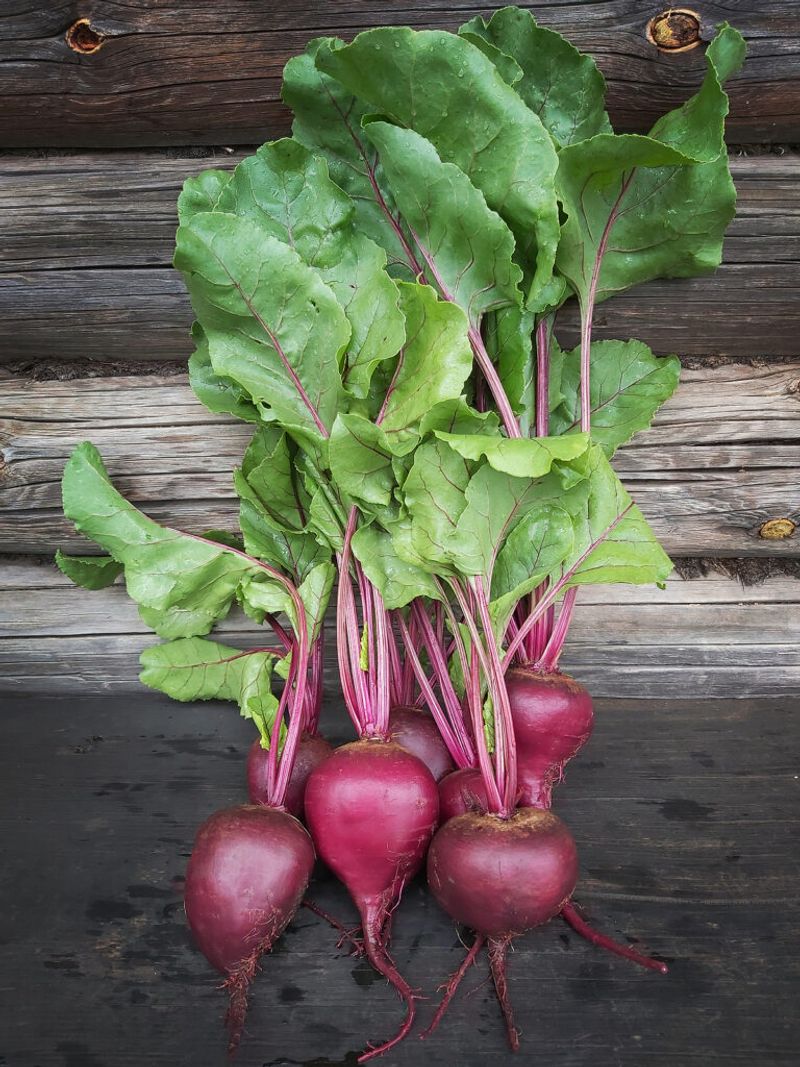
A practical target for most table beets grown for fresh eating is roughly 1.5 to 2.5 inches across. Roots in that range tend to offer a good balance of tender texture and satisfying flavor without the risk of becoming woody inside.
South Dakota State University Extension makes an important distinction here: sweetness and tenderness are not the same thing. A larger root may develop more sugar under certain conditions, but it also faces a greater chance of fibrous or tough texture that undermines the eating experience.
University of Illinois Extension warns that roots exceeding about 3 inches in diameter are often tough or fibrous and less pleasant to eat. On the other end of the scale, beets can absolutely be harvested small.
Baby beets pulled at around an inch wide are tender and work well for roasting whole or tossing into salads.
The University of Georgia Extension harvest guide recommends pulling roots at 1.5 to 2 inches in diameter for best results. When your seed packet or variety description specifies a different mature size, follow that guidance.
Specialty varieties bred for larger roots or specific culinary uses may perform differently than standard table beets, so variety-specific recommendations should always take priority over a one-size-fits-all number.
Use Days to Maturity as a Planning Tool
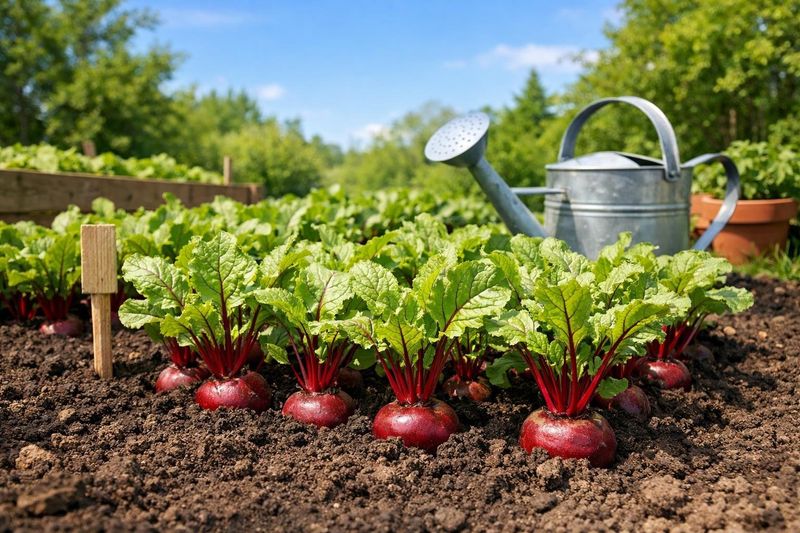
Seed packets and variety descriptions commonly list a days-to-maturity figure, and for beets that number often falls somewhere in a 50-to-70-day range. Iowa State University Extension places the home-garden harvest window at approximately 50 to 70 days, with roots ideally between 2 and 3 inches in diameter.
That range is a useful planning tool, not a precise countdown that ends with every beet being ready on the same morning.
Cultivar, soil temperature, spacing, moisture availability, and even how the seed company counts its days can all shift the actual schedule. A beet planted in warm soil that then experiences a cool stretch may mature more slowly than expected.
One planted during ideal conditions might be ready slightly ahead of schedule. Use the calendar to know when to start checking your bed, then confirm readiness with the shoulder inspection and a test pull.
Southern growing conditions add another layer of regional nuance. UF/IFAS guidance places Florida beet planting windows from September through March in the north and October through January in the south, with roughly 50 to 70 days to harvest within those cool-season windows.
Texas A&M AgriLife Extension describes both spring and late-summer-to-fall beet production across Texas, with timing varying considerably by region. A national harvest calendar simply does not account for those differences, so combine the days-to-maturity estimate with local conditions and your own bed observations for the most reliable results.
Pull One Test Beet Before Harvesting the Row
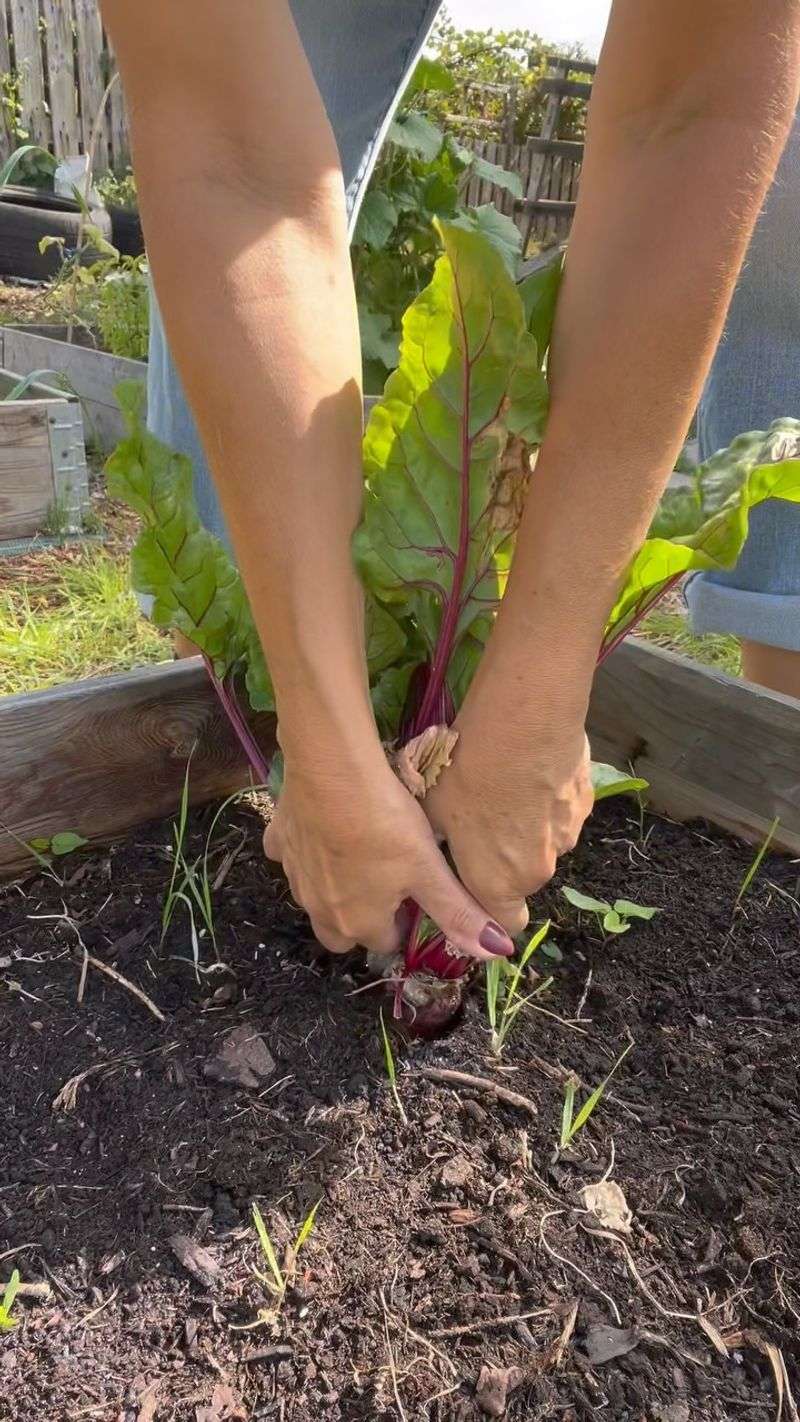
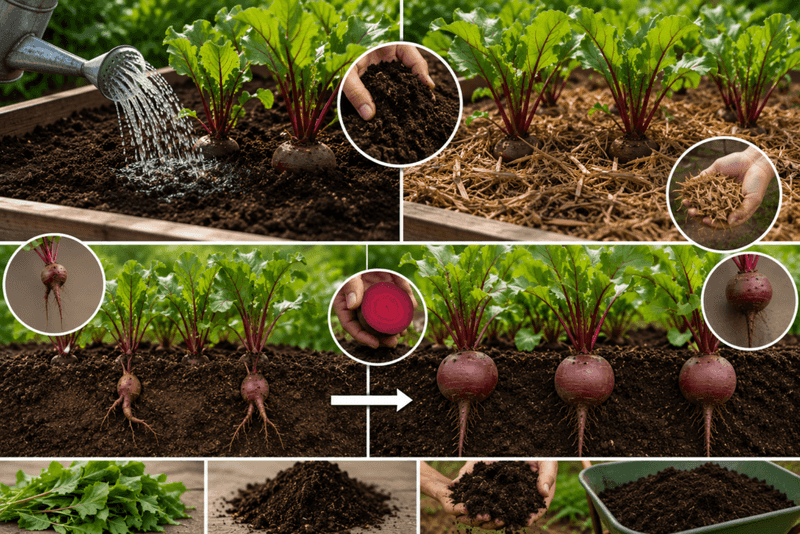
Rather than guessing from above the soil, the most reliable way to know whether your beets are ready is to pull one and look at it. Choose a plant near the center of the row where conditions are most representative, brush away soil around the shoulder, and use a hand trowel or garden fork to loosen the surrounding soil before lifting.
Yanking the foliage hard when soil is compacted risks breaking the root or snapping the stem, neither of which helps the beets still waiting in the ground.
UC Cooperative Extension notes that gardeners can begin harvesting once roots reach at least about 1 inch wide, leaving smaller ones to continue sizing up. That selective approach works perfectly with a test-pull strategy: lift one beet, measure or estimate its diameter, and decide whether the row is ready for a full harvest or needs another week or two.
Once you have lifted the test beet, check its diameter and give it a gentle squeeze to feel for firmness. University of Illinois Extension and Utah State University Extension both recommend leaving roughly 1 inch of stem attached when topping harvested roots.
Cutting the stem too close increases moisture loss during storage, which can lead to shriveling. A single test beet gives you real information that no amount of looking at shoulders or counting days can fully replace.
Let Weather Inform the Decision Without Chasing Frost
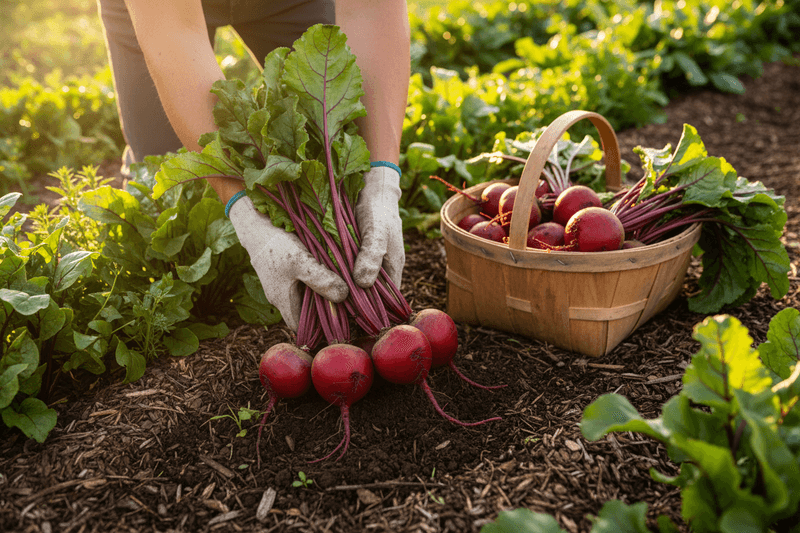
Cool weather genuinely can improve the eating quality of some cool-season root crops. Penn State Extension includes beets among the roots that may develop sweeter flavor after exposure to frost.
That is a real possibility worth knowing about, but it does not mean every Southern gardener should leave beets in the ground until a hard freeze rolls through.
Georgia Extension guidance specifically says fall-planted beets should be harvested before the first moderate freeze, recognizing that regional freeze risk and timing differ considerably across the South. Frost is not required for a good harvest, and waiting for it can mean leaving beets exposed to conditions that damage quality rather than improve it.
Heat and moisture stress are the more pressing concerns for many Southern gardeners. South Dakota State University Extension identifies hot weather and inadequate moisture as contributors to tough roots and internal color problems.
Simply leaving beets in the ground longer during a heat spell is not a sweetness strategy; it is a gamble on texture and quality. Bolting, where the plant sends up a flower stalk, signals that seasonal stress or poor timing may be working against the crop.
UC Cooperative Extension and Texas A&M AgriLife both treat bolting as a warning sign about conditions rather than a reliable cue about root size or readiness. When you see a flower stalk forming, check your roots promptly rather than waiting to see what happens next.
Handle Roots and Greens Correctly After Lifting
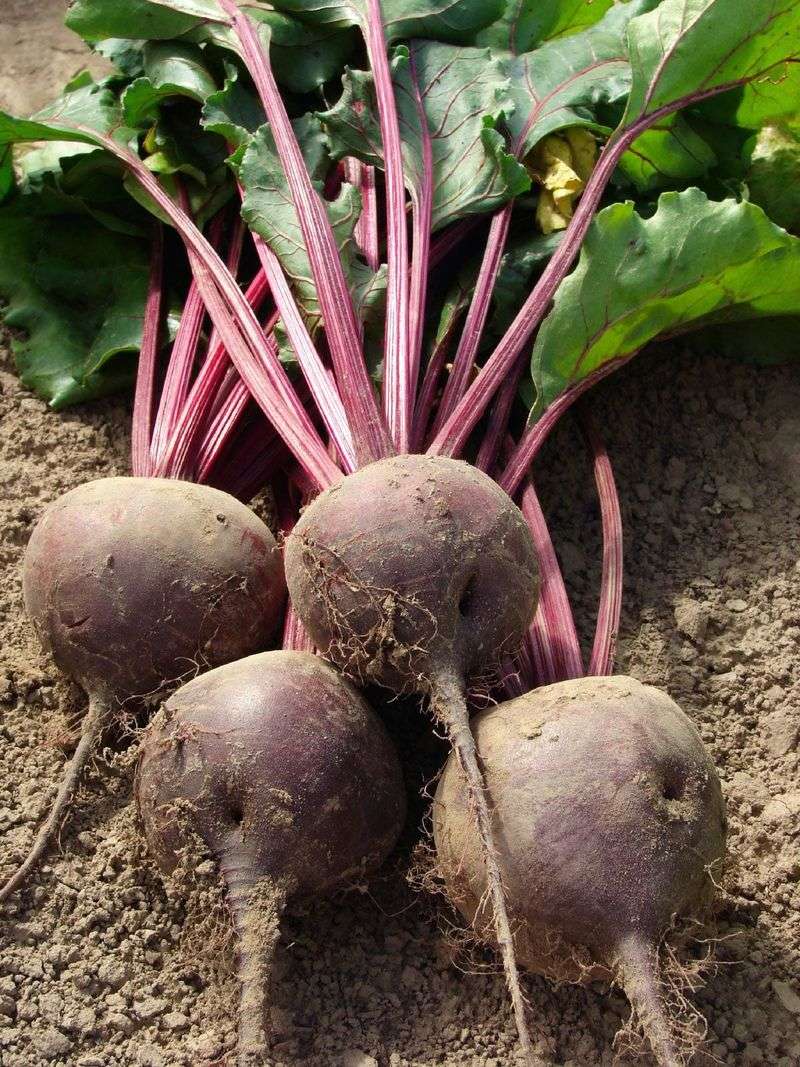
Getting the harvest right only matters if you handle the roots well once they come out of the ground. The first step after lifting is removing the greens.
Beet leaves actively draw moisture from the root after harvest, and leaving them attached accelerates shriveling during storage. Cut or twist the tops off, leaving roughly 1 inch of stem attached to the root.
That short stub protects the root from moisture loss without the full draw of intact foliage.
University of Illinois Extension and Utah State University Extension both recommend keeping roots unwashed until you are ready to use them. Rinsing beets before storage introduces surface moisture that can encourage deterioration.
Store them in a cool location, and wash only when you are ready to cook or eat.
The greens are worth saving rather than composting. Utah State University Extension nutrition guidance confirms that beet greens are edible and nutritious.
Young, tender leaves work well raw in salads or wilted quickly in a pan. Larger, more mature leaves are generally best treated like other cooking greens, such as chard or spinach, and hold up well to heat.
The Georgia Extension guide recommends harvesting tender greens when they reach about 6 to 8 inches long, which makes early thinning of crowded rows a practical two-for-one opportunity.
Apply the Shoulder, Size, and Weather Check
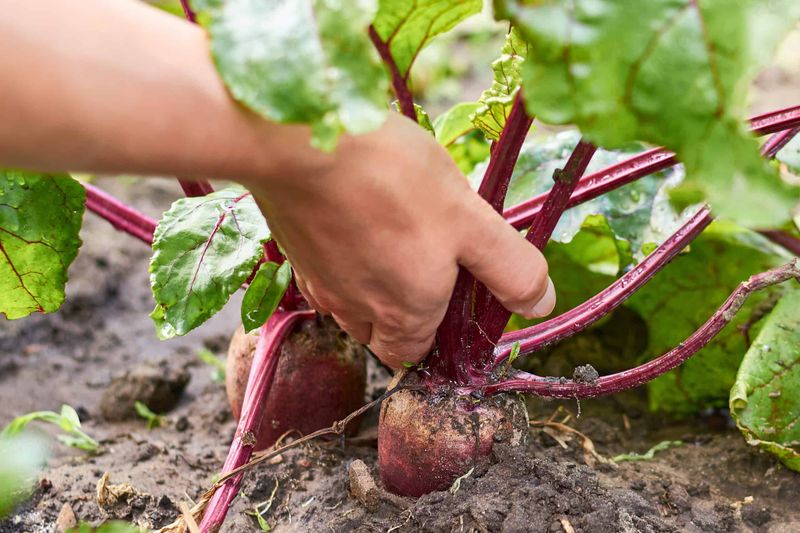
Putting the whole process together takes less than a few minutes per visit to the garden. Check the exposed shoulder to locate the root and get a rough sense of size.
Brush away a little soil and confirm the diameter looks close to your target range. Factor in how long the beets have been in the ground, what the weather has been doing, and what your variety’s description recommends.
Harvesting most table beets around 1.5 to 2.5 inches across, as supported by South Dakota State University Extension and Georgia Extension, gives you a practical balance of tenderness and eating quality. Smaller roots pulled earlier are valid baby-beet harvests, not failures.
Waiting longer is not automatically better, particularly when heat, drought, or the risk of bolting enters the picture.
When the visual signs, the calendar, and the weather conditions seem to disagree, the answer is always the same: pull one test beet and let the root itself settle the question. Utah State University Extension is clear that root-crop harvest timing depends on growth rate, root size, quality criteria, and conditions rather than a single defined moment.
No single cue guarantees sweetness, but a careful look at the actual root in your hand comes closer than anything else.