
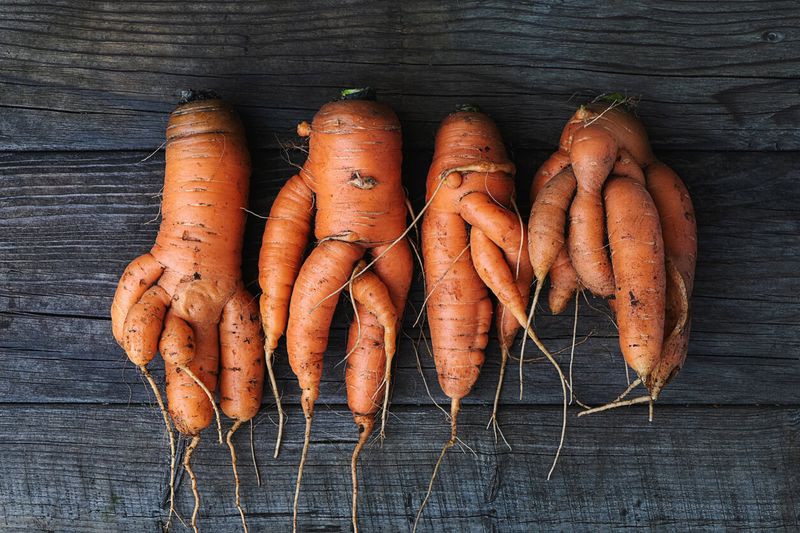
Pull up a batch of carrots and find a tangle of forked, twisted, or stubby roots, and the seed packet is usually the first thing that gets blamed. Most of the time, though, the seed did its job just fine. The real story starts underground, in the soil the roots had to push through to grow. Understanding what actually went wrong is the first step toward a better harvest next time.
Forked mature carrots usually point to the root zone, not the seed packet
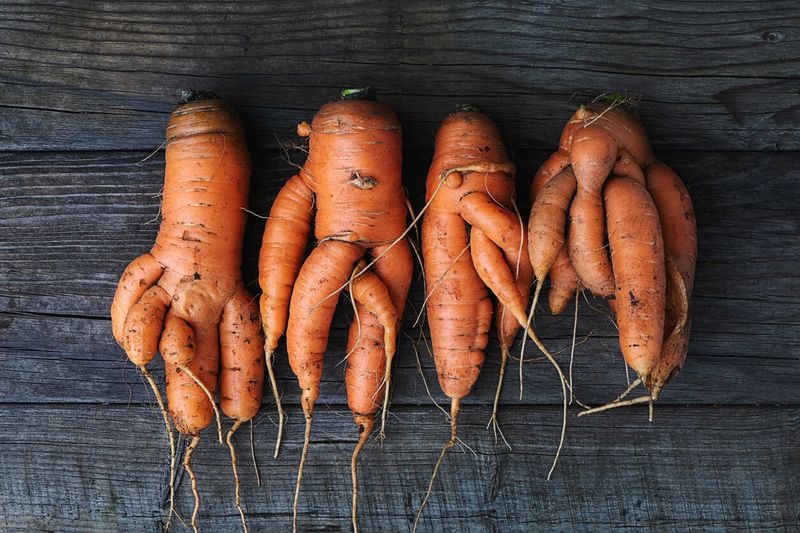
Blame lands on the seed packet almost by reflex, but a carrot that sprouted normally and then grew into a forked or twisted root almost certainly ran into trouble after it was already in the ground. University of Minnesota Extension’s diagnostic guide on forked carrot roots identifies physical obstruction and root injury as the leading explanations for mature-root distortion, not problems with the seed itself.
Old or low-quality seed does cause real problems, but those problems tend to show up earlier. Poor germination, patchy stands, slow emergence, and weak seedlings are the usual signs that seed quality is the limiting factor. UMN Extension’s guide on saving vegetable seeds notes that older seed generally produces lower germination rates and reduced seedling vigor. A crop that came up thick and healthy but produced forked roots at harvest is telling a different story entirely.
Short carrots deserve their own diagnosis before soil gets the blame. A carrot may be short because that is exactly what the variety produces, because it was harvested before it finished sizing up, or because it was grown in a shallow container or compacted bed. Royal Horticultural Society guidance on growing carrots and Oregon State University Extension’s carrot publication both emphasize matching variety to growing conditions. A short root is not automatically a defective root, and diagnosing it as a soil problem without checking cultivar type or harvest timing can send you chasing the wrong fix.
A blocked or injured taproot creates the fork
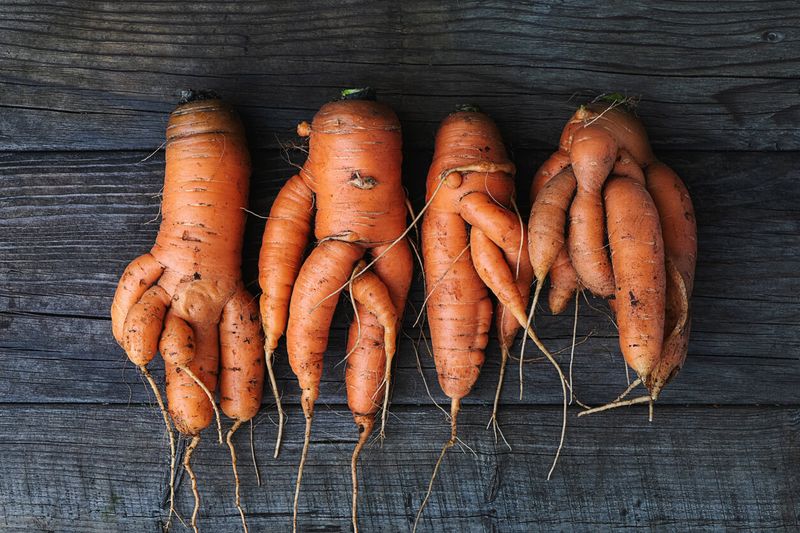
Soil sits at the top of the suspect list for forked mature roots for a straightforward reason: the developing carrot taproot needs a clear, unobstructed path to grow straight downward. When it encounters a stone, a hard clod, or a dense compacted layer, it cannot push through. Instead, it deflects sideways. If the main root is injured or pinched off, secondary lateral roots take over and the result is the classic two- or three-pronged fork that gardeners find at harvest.
Minnesota Extension’s forked-root diagnostic resource and Utah State University Extension’s overview of physiological root-crop problems both identify compacted, stony, or cloddy soil as primary contributors to this kind of distortion. The mechanism is physical, not chemical: the root encounters resistance it cannot overcome and branches around the obstacle.
Soil texture alone does not determine success or failure. Heavy clay can produce acceptable carrots when it is kept loose, well-drained, and free of hard layers. Sandy soil is not automatically a safe choice either, because it can dry out rapidly and lose the consistent moisture that roots need during development. UMN Extension’s guide on growing carrots and parsnips describes the practical target as loose, well-drained soil that holds consistent moisture, not simply a particular texture.
The goal is a root zone that stays open, moist, and obstacle-free from the surface down through the full depth the chosen variety needs to mature.
Match the symptom before choosing a remedy
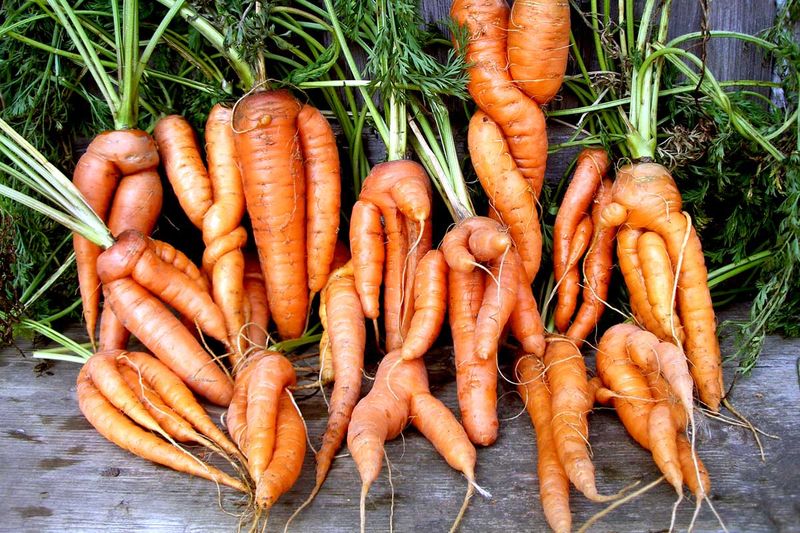
Reaching for a fix before identifying the actual problem is one of the most common mistakes in vegetable troubleshooting. A short carrot is not the same problem as a forked one, and a forked carrot is not the same problem as a cracked one. Each symptom has its own most likely cause, and treating them interchangeably wastes time and effort.
Longitudinal cracking along the length of a root is a different symptom from classic forking and usually has a different trigger. RHS guidance on root vegetable splitting and USU Extension’s physiological problems resource both associate cracking and splitting more closely with irregular water supply, rapid uptake after a dry period, or very large roots than with the taproot obstruction that produces forking. If your carrots are splitting lengthwise rather than branching into multiple points, look at your watering pattern first.
Some symptoms point beyond ordinary soil problems to pests or disease that require a different response. Root-knot nematodes can stunt roots, cause yellowing and wilting aboveground, and leave galls or masses of fine feeder roots on the surface of the carrot. USU Extension’s nematode resource describes these signs in detail. Pythium root damage is associated with wet or heavy soils and may produce lesions or rotted areas rather than clean forks.
Carrot-fly larvae tunnel into the root itself, leaving visible channels. Illinois Extension’s carrot growing guide also notes that deep, close cultivation after seedlings are established can physically injure roots and contribute to branching, a cause that is easy to overlook when the damage appears weeks later at harvest.
Prepare a root zone that suits the carrot variety
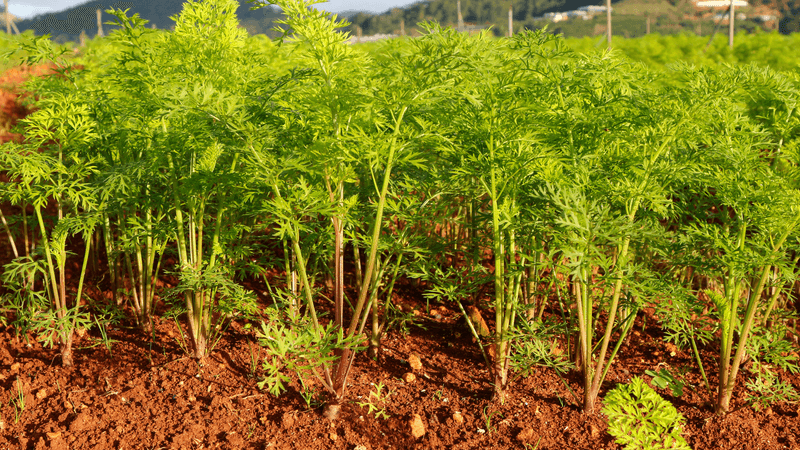
Good carrot beds are made before the seed ever goes in. Loosening the soil, removing stones and hard clods, and creating a root zone that matches the depth your chosen variety actually needs will do more to prevent forked roots than almost any other single step.
Illinois Extension recommends preparing soil 8 to 9 inches deep and thoroughly breaking up clods as a useful target for many standard or longer carrot varieties. That depth figure is a practical guideline for common Imperator or Danvers types, not a universal minimum that applies to every carrot. A short-rooted or ball-type variety may perform well in a shallower bed, while a long-rooted Imperator needs that full depth of loose, obstacle-free soil to avoid deflection. The variety you choose determines the root-zone depth you need to provide.
Avoid working the soil when it is wet. Tilling or digging saturated ground can smear and compact soil particles rather than loosening them, creating the kind of dense layers that deflect taproots. Penn State Extension’s guidance on reducing soil compaction explains how working wet ground worsens structure rather than improving it. RHS carrot-growing guidance and Oregon State University Extension’s carrot publication both advise against compacted or stony beds and support the value of thorough preparation.
If your native soil is heavy clay or full of rocks, raised beds or deep containers filled with a loose, well-drained mix can give long-rooted varieties the clear path they need. USU Extension’s soil fertility guidance for root crops also notes the importance of good soil structure alongside appropriate fertility for root development.
Direct-sow, thin, and protect early root growth
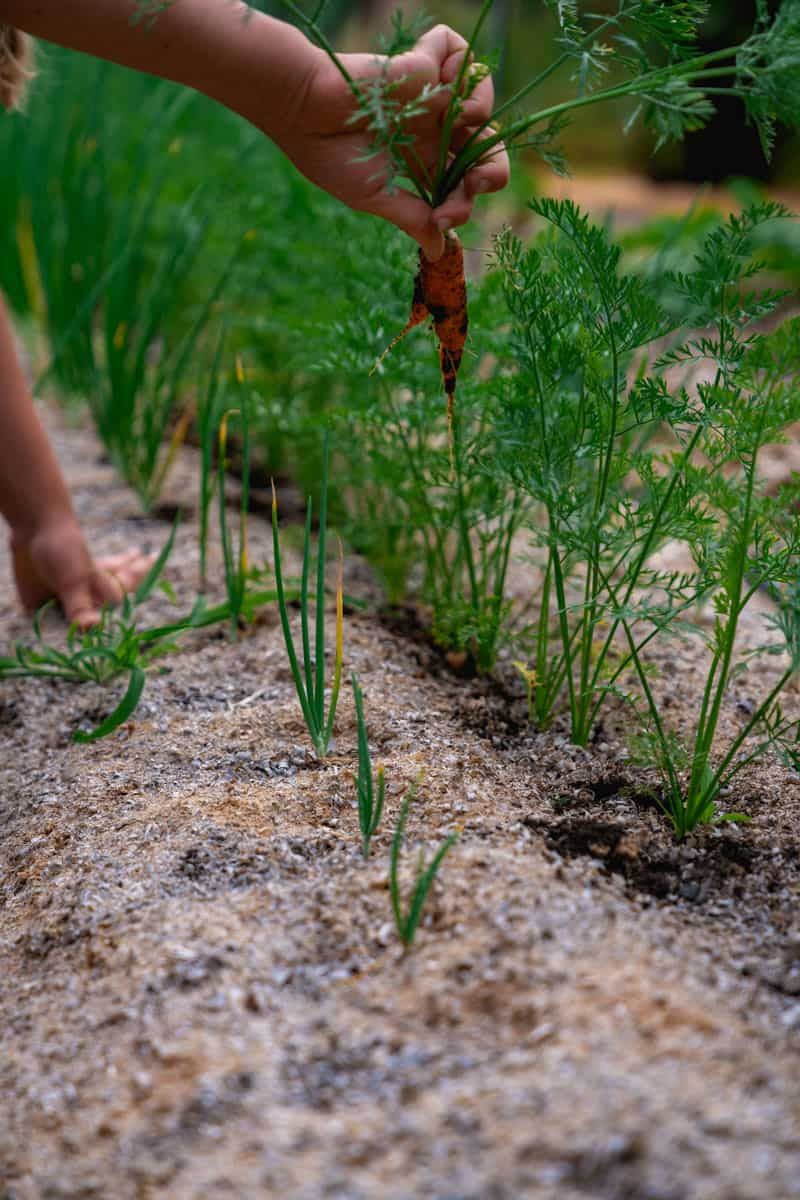
Carrots are one of the few vegetables where starting seeds indoors and transplanting them later can actually create the problem you are trying to prevent. The taproot begins developing very early, and moving a seedling disturbs that root before it has a chance to establish a straight downward path. Direct sowing into the prepared bed gives the root the best possible start.
UMN Extension’s carrot and parsnip guide specifically recommends direct sowing rather than transplanting for this reason. Planting seeds directly where they will grow reduces the risk of transplant-induced taproot misdirection or injury, though it does not prevent other causes of forking. A well-prepared bed, consistent moisture, and correct spacing still matter after the seeds are in the ground.
Keeping the seed zone consistently moist during germination is especially important because carrot seeds are small and slow to sprout. A dry crust forming over the soil surface can prevent emergence entirely. Oregon State University Extension’s carrot publication and Illinois Extension’s carrot guide both emphasize keeping the seedbed moist until germination is complete. Once seedlings are up, thinning is the next critical step.
Crowded carrots compete for space, and roots that grow too close together can twist, intertwine, and push against each other as they enlarge. Minnesota Extension’s diagnostic guide lists overcrowding as a contributing factor to root distortion. Thinning to roughly 2 to 4 inches apart, adjusted for your specific variety’s mature size, gives each root enough room to develop without mechanical interference from its neighbors.
Use steady moisture and restrained fertility
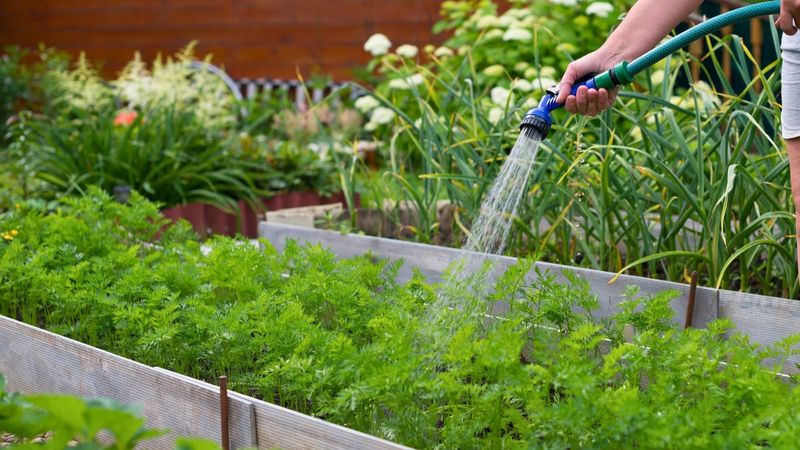
Water and fertilizer both affect carrot root development, but neither one is a lever you can simply push harder to fix a shape problem. The goal with irrigation is consistency, not volume. Carrot roots need steady, moderate soil moisture from germination through harvest, not alternating cycles of drought and heavy watering.
Irregular moisture is more closely linked to cracking and splitting than to classic taproot forking. UMN Extension’s irrigation guide for vegetables supports maintaining even soil moisture rather than saturating the bed. Letting the soil dry out and then compensating with a heavy soak can cause roots to take up water rapidly and split lengthwise. RHS guidance on root vegetable splitting identifies this boom-and-bust watering pattern as a key contributor to that specific problem.
Fertility requires just as much care as water. Fresh manure applied immediately before planting can physically injure developing roots and contribute to branching, and it also creates food-safety concerns for crops whose edible parts grow in contact with the soil. USU Extension’s physiological problems resource and USU Extension’s soil fertility guide for root crops both caution against fresh manure and excess nitrogen. Use well-rotted or properly composted organic material incorporated well before planting.
Concentrated fertilizer placed directly against the seed or young root can burn the developing taproot and contribute to branching. Illinois Extension’s fertilization guidance advises careful placement and soil-appropriate rates. Adding extra nitrogen simply because your roots came up short is not a reliable fix and can make root problems worse rather than better.
Salvage sound carrots and improve the next sowing
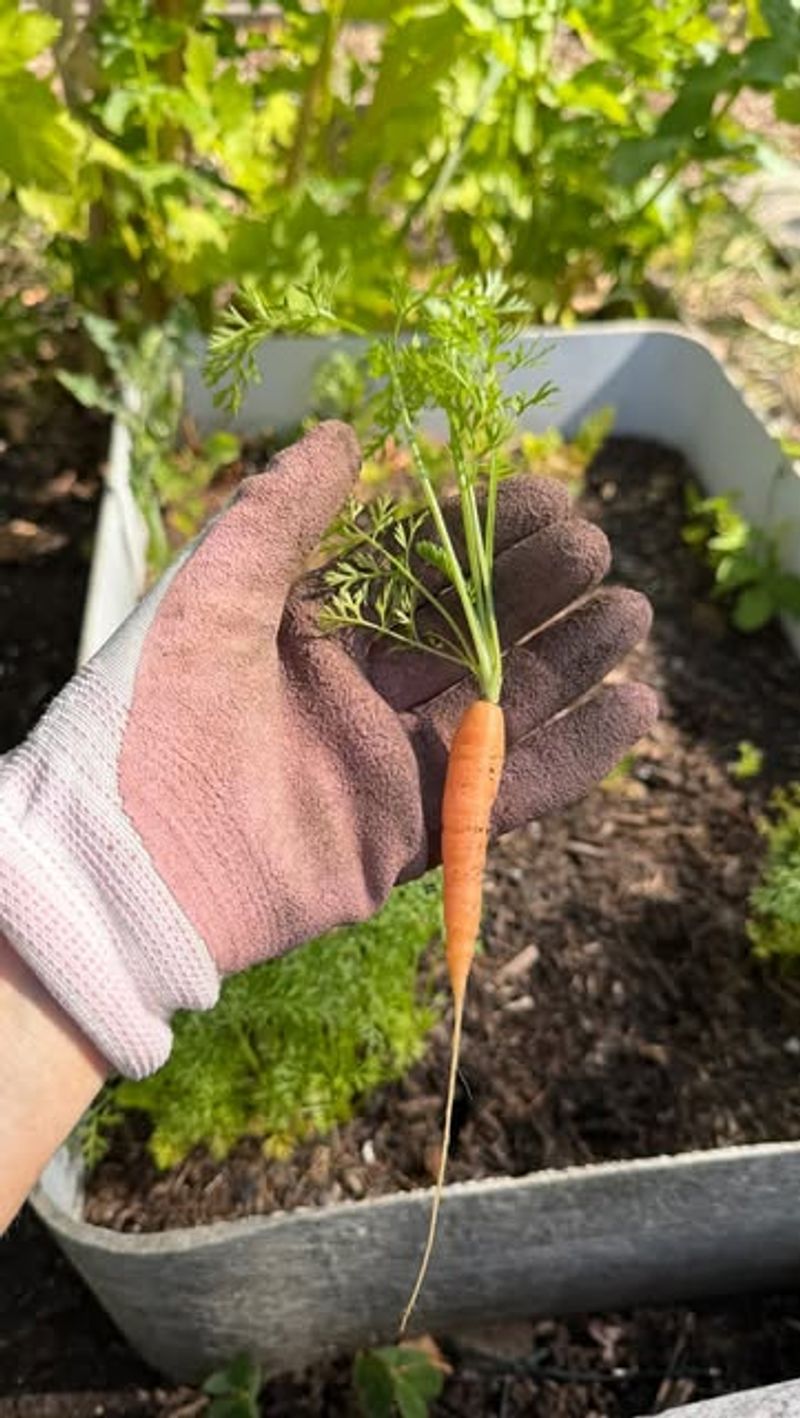
Once a taproot has been deflected, injured, or branched, that shape is permanent. No amount of changed watering, loosened soil, or added fertilizer will straighten a root that has already formed. The practical response for the current crop is to assess what you have and harvest the carrots whose tissue is still sound.
A forked or oddly shaped carrot is not automatically unsafe to eat. Forking is a shape and quality issue, not a food-safety one. Penn State Extension’s guide to preserving root vegetables and RHS guidance on root vegetable splitting make clear that the safety concern is different: carrots with decay, severe rot, or soil contamination lodged in cracks or crevices should be cleaned carefully, trimmed appropriately, or discarded if the damage is extensive. A clean fork with firm, sound flesh is perfectly usable in the kitchen.
Before the next sowing, work through a short checklist informed by what went wrong. Confirm that your chosen variety matches the depth and structure of your available root zone. USU Extension’s physiological problems resource and Illinois Extension’s carrot guide both support preparing the bed thoroughly and removing obstructions before planting. Inspect the harvested roots for galls, tunnels, or lesions that point to pests or disease rather than purely physical obstruction, since those conditions call for different management.
Thin seedlings to the appropriate spacing, maintain steady moisture, apply fertility based on your actual soil conditions, and avoid deep cultivation close to established roots. Minnesota Extension’s diagnostic guide reinforces that correcting the growing environment before the next sowing is the most reliable path forward. A carrot bed that is loose, obstacle-free, and well-matched to the variety you chose gives straight roots their best honest chance.