
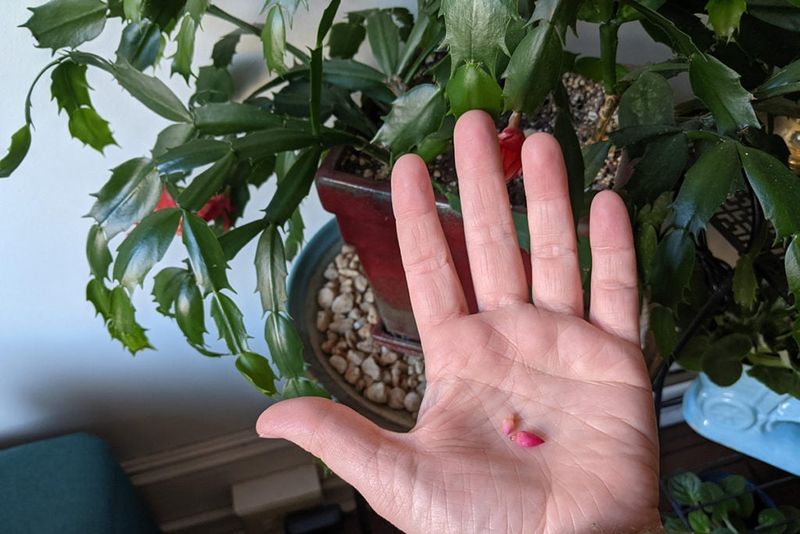
Finding flat green pieces of your Christmas cactus scattered on the windowsill can feel like a five-alarm emergency. Before you grab a bigger pot or change everything about how you care for it, know this: segment loss has more than one cause, and repotting is not always the answer.
A little detective work on the plant itself will tell you far more than any single rule ever could.
Dropping segments signal stress, not a repotting verdict
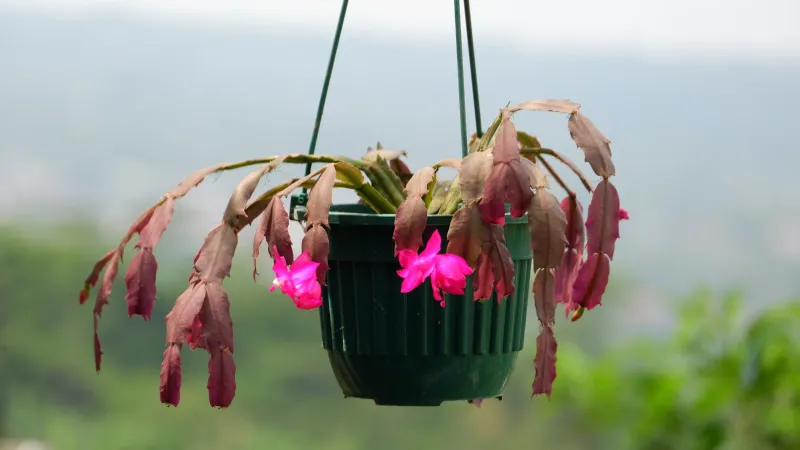
Those flat, jointed pieces falling off your plant are not true leaves. They are flattened stem segments called phylloclades, and the difference matters because a few of them coming loose is not automatically a sign of catastrophic failure.
A cutting dropped during handling, a segment removed during pruning, or a piece that detaches during repotting is a far cry from a plant that is steadily shedding younger, healthier growth from the inside out.
The situation that deserves attention is repeated or widespread loss, especially when younger segments near the base or middle of a stem are the ones falling. University of Wisconsin Extension describes this pattern as self-pruning and lists it alongside shriveling, poor growth, and persistently wet soil as signs of possible stress or root loss.
That framing is useful: segment drop is a symptom, not a diagnosis.
No single established cause accounts for every case. Prolonged wet soil, poor drainage, underwatering followed by a heavy drink, temperature shocks, drafts, unsuitable light, physical disturbance, and disease are all plausible contributors depending on the plant’s history and conditions.
UConn Extension reinforces that holiday cacti can live for decades when their actual conditions are addressed. The central decision rule: inspect the plant before choosing a larger pot.
Check moisture and drainage before changing the pot
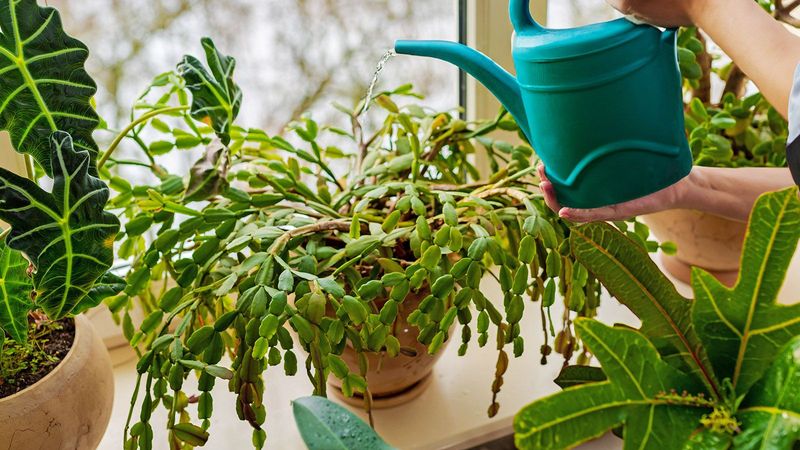
Push a finger about an inch into the potting mix. What you feel right now tells you more than any calendar reminder ever will.
Holiday cacti are tropical epiphytes, not desert cacti, and they have genuinely different needs from the succulents that thrive on neglect and bone-dry soil.
According to UF/IFAS Extension, the right approach is to water when the top inch of mix feels dry, then let all excess drain away completely. The mix should stay moderately moist during active growth, but the plant should never sit in standing water.
Check the drainage hole: if it is blocked, packed with roots, or sitting in a saucer full of water, that container is holding moisture far longer than the roots can tolerate.
Chronic saturation is one pathway to root damage, but it is not the only one. UConn Extension specifically warns that letting the mix dry out severely and then watering heavily can be just as damaging.
A root system that has partially dried out cannot absorb a sudden large volume of water efficiently, and waterlogged conditions can follow. Water use also shifts with pot size, light levels, temperature, humidity, and how actively the plant is growing, so a fixed weekly schedule is rarely a reliable guide.
Let the soil’s condition drive the decision every time.
Inspect the roots and stems for evidence of a real problem
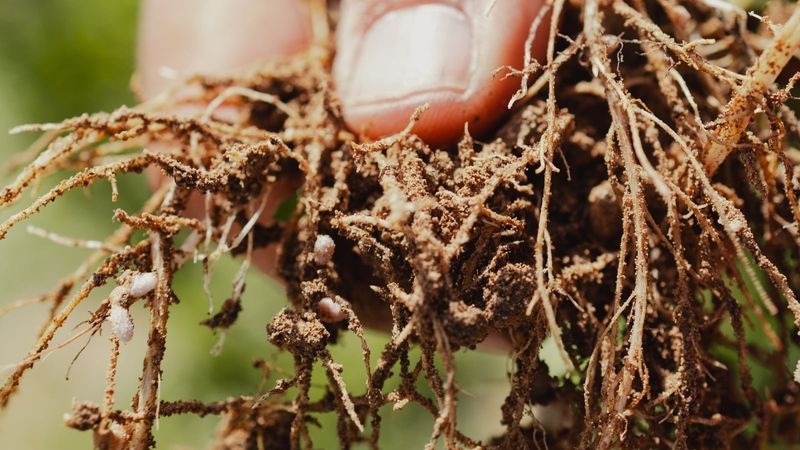
When the potting mix stays persistently wet, the cactus shrivels even though the soil feels damp, the base of the plant softens, or decline continues despite adjusting your watering, it is time to move beyond a moisture check. Removing the plant from its pot and looking at the roots directly is the only way to know whether damage has already occurred.
Healthy roots are firm and light-colored. Brown, soft, slimy, or discolored roots are a different story.
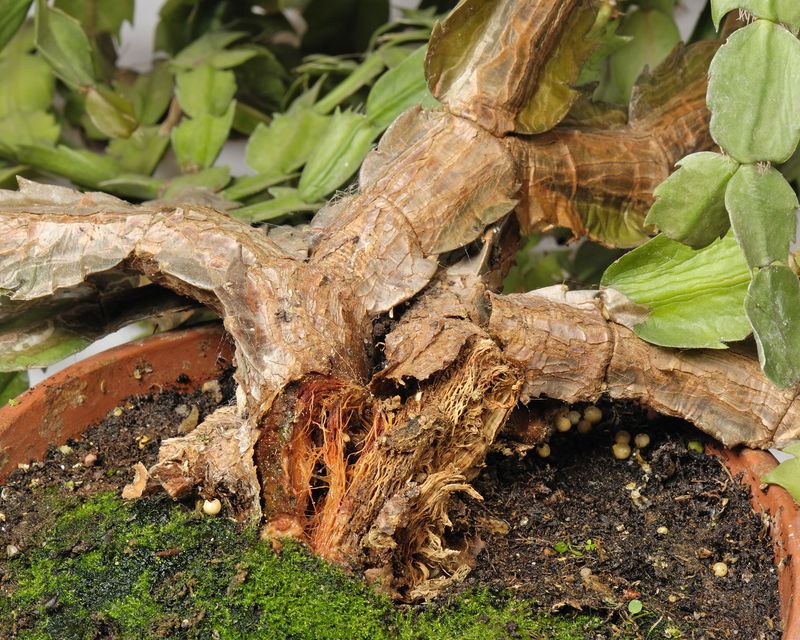
UMass Amherst’s greenhouse floriculture guidance identifies several root and stem rots that can cause gray-green discoloration, sunken lesions, collapse, and segment abscission. On the stems, look for wet or mushy tissue, darkened areas near the base, or sections that have lost their firmness entirely.
Those findings, not the segment loss alone, are what determine whether repotting or intervention is actually warranted.
If you find damaged roots, use clean scissors or pruners to cut away the dead or diseased tissue. Allow the cut surfaces to dry briefly before placing the plant in fresh, porous potting mix in a container that has drainage holes.
Wisconsin Extension recommends saving healthy stem cuttings when root loss is severe, framing propagation as a backup strategy rather than proof that the original plant will fully recover. Not every case of advanced rot can be reversed, so honest assessment of remaining healthy tissue matters before committing to a rescue attempt.
When the roots look firm and healthy and the mix is not saturated, repotting is unlikely to help and may add unnecessary stress. Let the inspection guide the decision rather than the symptom alone.
Evaluate the windowsill without blaming every environmental change
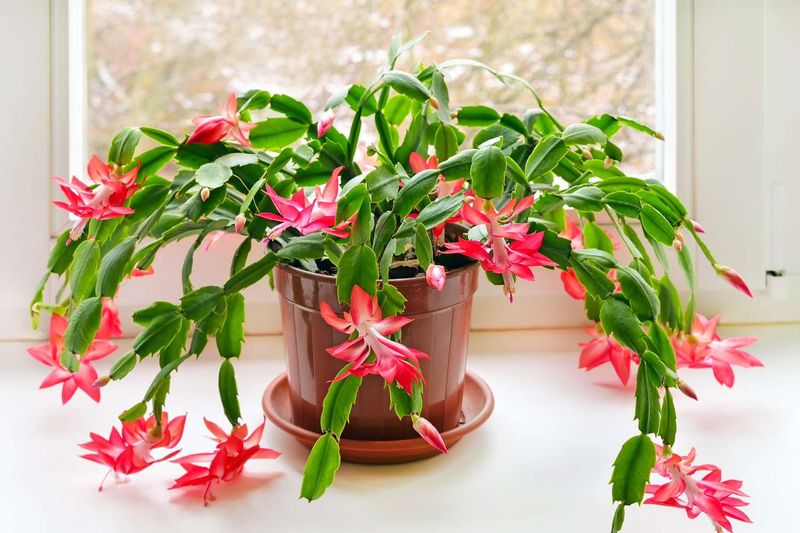
A windowsill feels like a natural home for a houseplant, but it can expose a Christmas cactus to conditions that accumulate into real stress. Cold window glass, sudden drafts from opening windows or nearby air vents, heat from a fireplace or baseboard heater, and abrupt swings in temperature can all push the plant toward decline over time.
One distinction worth making carefully: the advice most commonly repeated about moving plants gently, maintaining cool nights, and keeping humidity stable is especially relevant to flower buds, not mature stem segments. UNH Extension’s guidance on flowering gift plants focuses bud-drop prevention on stable conditions and careful handling during the blooming period.
Those same principles can support overall plant health, but they are not established as a complete explanation for why mature phylloclades detach. Low humidity and shifting light are general environmental concerns worth addressing, and the strongest evidence for mature segment loss still points toward moisture and root problems, disease, or physical disturbance.
Light quality matters in its own right. NC State Extension’s plant profile notes that direct sun can scorch stems, while inadequate light can weaken growth and flowering.
Bright, indirect light is the practical target. For readers in Florida and Texas, a plant spending warm months on a shaded porch or under a tree canopy is getting suitable outdoor light, but direct afternoon sun in summer is too intense.
UConn Extension recommends bringing outdoor plants inside before temperatures fall below 50 degrees Fahrenheit, which in most of the South means watching nighttime lows from late October onward.
A healthy, budding cactus usually needs stability, not a bigger pot
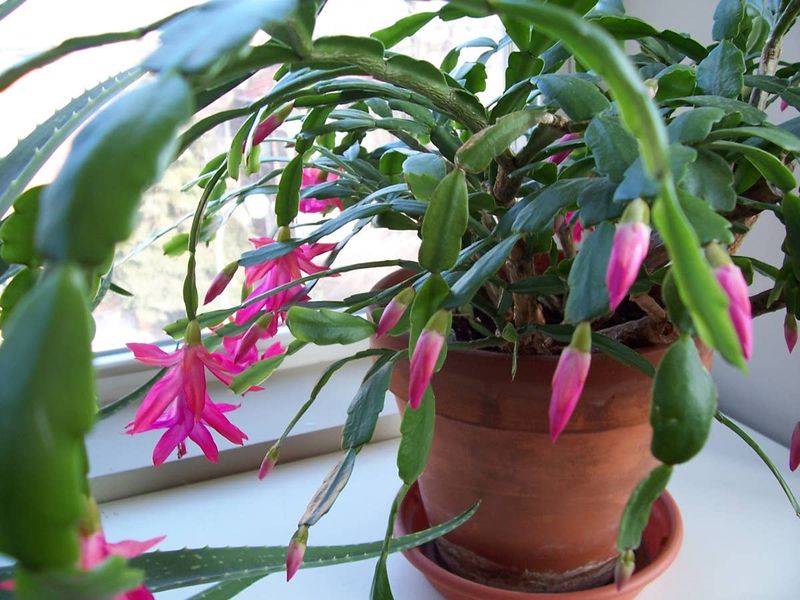
Reaching for a larger pot the moment segments start dropping is one of the most common missteps with this plant. Holiday cacti are comfortable being somewhat pot-bound, and unnecessary root disturbance, particularly when the plant is actively budding or flowering, can create the very stress you are trying to relieve.
UConn Extension recommends repotting approximately every three years and notes that these plants can live for decades with consistent, appropriate care. Vermont Extension puts the interval at every three to five years, depending on the plant’s condition.
Both sources frame repotting as a periodic need rather than an emergency response to any single symptom.
The decision to repot should connect directly to what the earlier checks revealed. Drainage failure, persistently wet soil that the mix cannot shed, brown or decayed roots, a cracked or waterlogged container, or severe overall decline are the conditions that justify moving a plant into a new pot.
A healthy cactus sitting in a snug but functional container with good drainage, firm roots, and moderately moist soil is not asking to be repotted. When the plant is budding or blooming, stability matters more than a size upgrade, and disturbing the roots at that stage can trigger bud drop and additional segment loss.
If the checks come back clean, hold off and focus instead on correcting any moisture, light, or temperature issues you identified.
Serious rot or disease requires a different rescue plan
Sometimes the problem goes beyond a watering adjustment or a location change. Certain symptoms point to fungal or bacterial disease that needs a more direct response than simply letting the soil dry out.
Pay attention to reddish-orange sunken lesions on the stems, black or fuzzy spots on the surface, gray-green or water-soaked tissue that seems to be collapsing inward, or wet and slimy black areas near the base. UMass Amherst’s commercial production fact sheet describes these as signs of distinct rot and disease problems that do not all respond to the same treatment.
Fungal rots and bacterial soft rot are different conditions, and the UMass guidance specifically notes that fungicides do not control bacterial soft rot. Reaching for a general fungicide without knowing what you are dealing with is unlikely to help and may delay the actions that actually matter.
Household additives such as Epsom salt, hydrogen peroxide, or cinnamon are not established cures for serious rot or disease based on the extension and university sources reviewed here. They should not replace a proper inspection, drainage correction, or removal of diseased tissue.
When root loss is extensive and the main plant cannot be reliably saved, healthy stem cuttings become the priority. UConn Extension and University of Missouri IPM both describe propagation from two-to-five-segment cuttings: let them dry overnight to callous the cut end, then place them in lightly moist vermiculite or perlite under bright, indirect light.
This approach preserves genetics from the original plant without requiring that a severely damaged root system recover on its own.
Use the symptom pattern to choose the next step
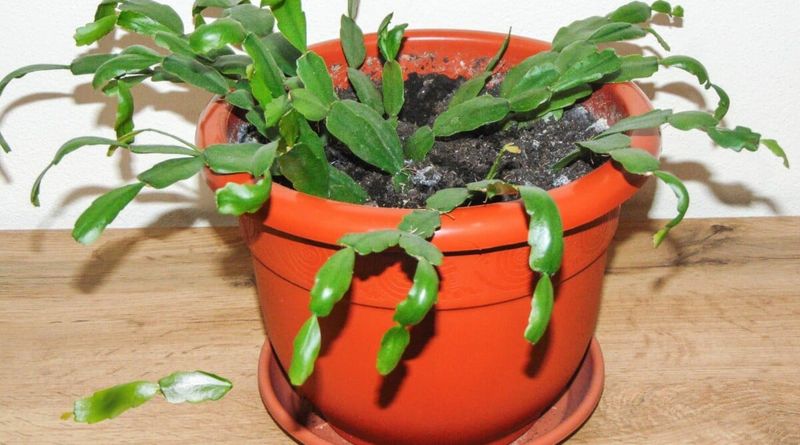
A few segments that detach easily during handling or fall from an outer stem tip are not a call to action on their own. Watch for what comes next rather than immediately overhauling the plant’s care or container.
Repeated loss paired with wet, slow-draining soil, shriveling tissue despite adequate moisture, softening at the base, or visible discoloration on the stems is a different pattern. That combination calls for the physical inspection described earlier: remove the plant, examine the roots, cut away damaged tissue, and repot only if the container, mix, or root condition actually justifies it.
Wisconsin Extension’s self-pruning description supports treating widespread segment loss as a stress signal that warrants investigation, not a universal prescription for a bigger pot.
When the roots and soil check out fine but the plant sits next to a drafty window, a heat vent, or in direct afternoon sun, the path forward is environmental correction: steadier light, stable temperatures, and consistent moisture. Vermont Extension and UConn Extension both emphasize that these plants reward consistent conditions over reactive changes.
No single cause accounts for every case of segment loss, and no single remedy fixes them all. Match the response to the demonstrated problem and you will make better decisions for this plant, whatever season it happens to be sitting on your windowsill.
A Christmas cactus that has lived for decades in the same household is often proof that benign stability beats anxious intervention.