
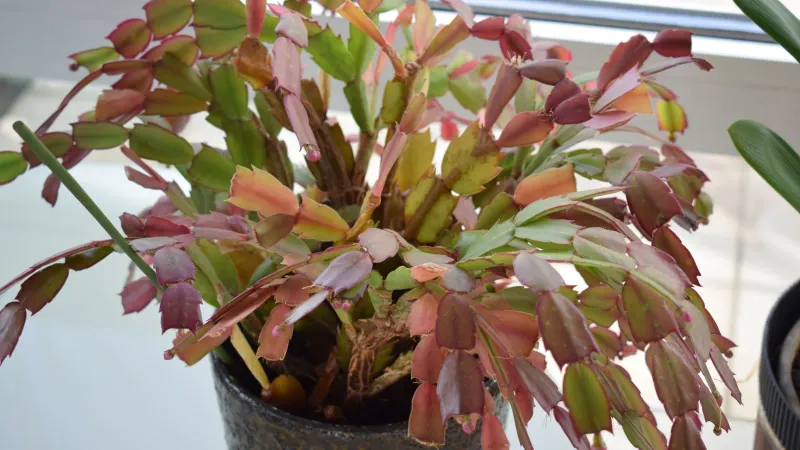
A wrinkled, tired-looking Christmas cactus in early fall can send any gardener into a panic, but the plant is not necessarily dying. Before you grab the watering can, the smartest move is to stop and check what is actually going on in the pot.
The one change your plant is asking for is not more water on a schedule – it is a quick inspection of the soil, drainage, and roots before you do anything else.
Wrinkled stems call for a check, not an automatic drink
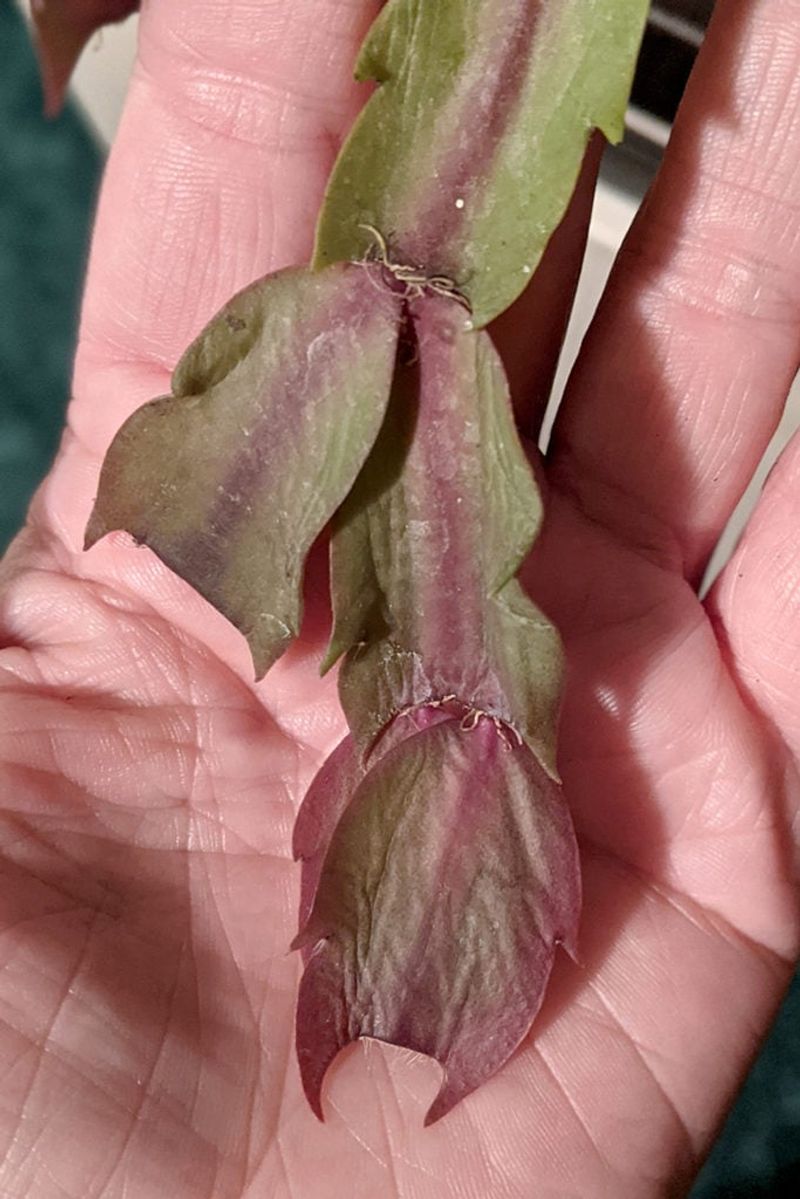
Reaching for the watering can the moment a Christmas cactus looks wrinkled is the most common mistake home gardeners make in early fall. Wrinkled or limp stem segments do not reliably point to one specific problem.
University of Illinois Extension guidance on holiday cacti confirms that overwatering and the root loss it causes are common culprits – including situations where the potting mix is still wet and the plant looks wilted anyway.
The reason wet-soil wrinkling happens comes down to root function. Dead or damaged roots cannot move water up into the stems, so adding more water does not help and can make things considerably worse.
Temperature stress, pests, and disease can also produce overlapping symptoms, which is why the appearance of the stems alone cannot tell you what the plant actually needs.
Holiday cacti are tropical or subtropical epiphytes, not desert cacti. Cornell University’s plant care overview notes they prefer bright indirect light, porous soil, and consistent but unsaturated moisture – a very different profile from a saguaro or prickly pear.
The one change that helps most is replacing calendar-based watering with a simple three-part check: feel the upper inch of potting mix, confirm the container has open drainage, and notice whether the plant is wilted while the soil remains wet. That check is where the rescue starts.
If the mix is dry, rehydrate the plant completely
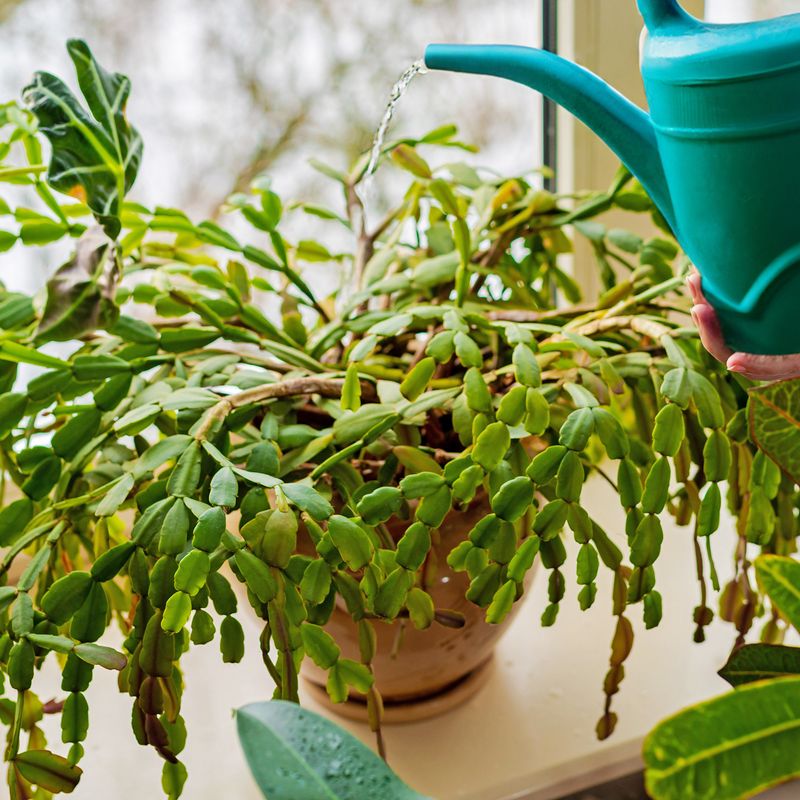
When you press the upper inch of the potting mix and it feels dry, and the pot has clear drainage holes that work, a thorough watering is the right move. Resist giving the plant a small splash and walking away.
UF/IFAS guidance on Christmas cactus preparation recommends watering until water flows freely from the drainage holes, then emptying the saucer or decorative cachepot completely so the roots are not sitting in standing water.
A mix that has dried out severely can become hydrophobic, meaning it initially sheds water rather than absorbing it. If you pour water in and it rushes straight through without the soil visibly darkening and softening, the mix may need repeated slow applications at short intervals until it begins accepting moisture again.
Patience here matters more than volume.
After rehydrating, keep an eye on the plant over the next few days rather than expecting an instant fix. Stem segments that have been dry for an extended period may stay wrinkled for a while even after the roots start taking up water again.
University of Minnesota Extension’s holiday cactus care page supports monitoring after watering rather than repeating the cycle before checking whether the first watering was absorbed. The goal is steady, managed moisture – not a saturated pot.
When wet soil demands a root and drainage inspection
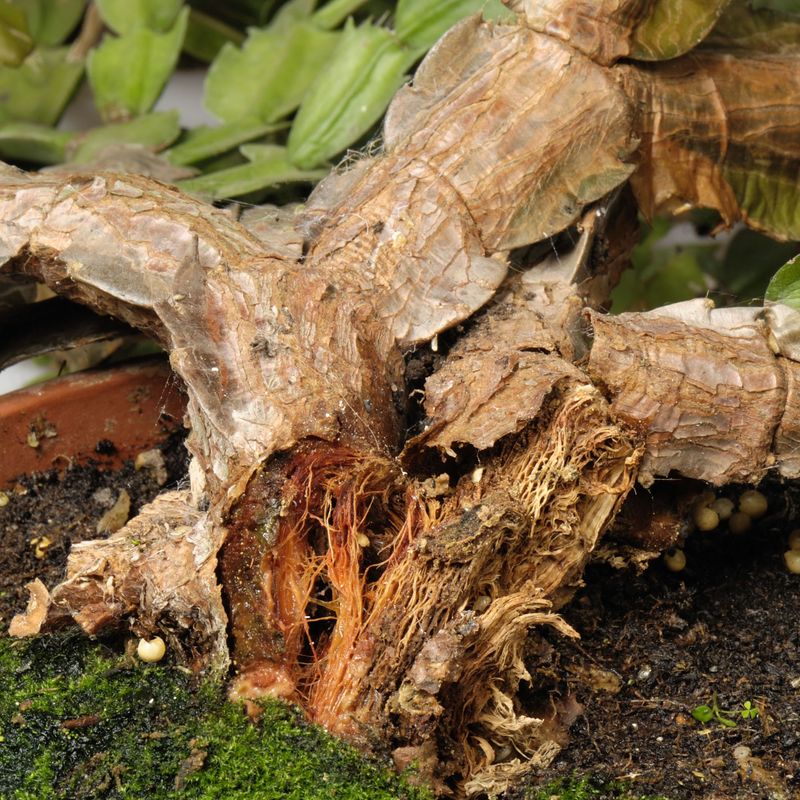
Finding wet soil under a wrinkled, limp Christmas cactus is more alarming than finding dry soil, because it points toward a root problem rather than simple thirst. Pause watering temporarily and start with the drainage holes.
If water cannot exit the pot freely, the mix stays soggy regardless of how carefully you water, and that sustained wetness creates conditions where roots deteriorate.
If drainage looks fine but the mix still smells sour or the plant stays limp after several days without additional water, the next step is to check the roots directly. Slide the plant out of its container and look at what you find.
University of Minnesota Extension and University of Wisconsin-Madison Extension’s holiday cactus article both associate root rot with overly wet growing media, describing affected roots as dark and mushy rather than firm and light-colored.
Dark, mushy roots combined with a sour smell and persistent wilting are findings that support concern about root damage, but wet soil by itself does not confirm root rot has occurred. If inspection does turn up damaged roots alongside some that still look viable, moving the plant into fresh, well-drained mix and trimming away clearly dead root tissue gives the remaining roots a better environment to recover.
UConn’s holiday cacti fact sheet supports addressing the drainage and mix conditions before adding any more water.
The container and potting mix can decide whether the rescue holds
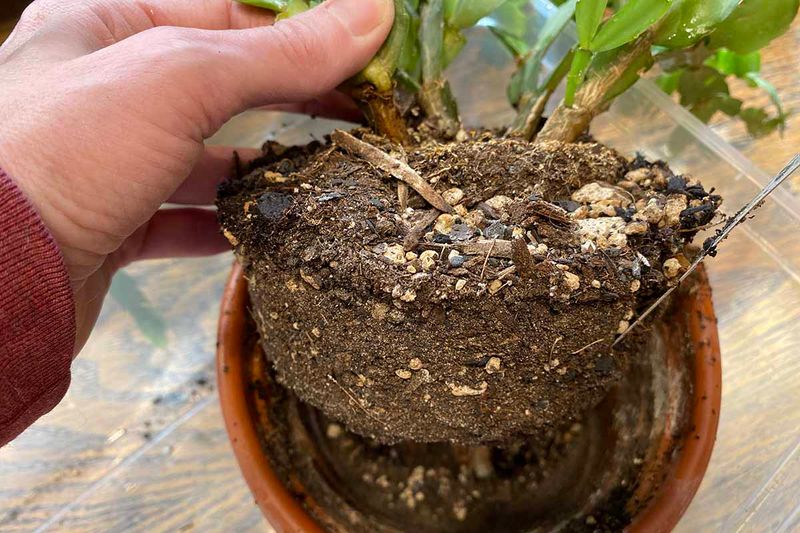
Even a perfectly timed watering routine can fail if the container and potting mix are working against the plant. Drainage holes are non-negotiable.
A pot without them, or one whose holes are blocked by compacted roots or debris, keeps the lower mix saturated no matter how carefully you water at the top. Check that water actually exits the holes after each watering, and always empty saucers and cachepots so the roots are not wicking water back up from below.
The potting mix itself should be porous and well-aerated. Iowa State University Extension’s holiday cactus guide notes that a specialized cactus mix is not essential as long as the medium drains well – the key properties are drainage and aeration, not a particular brand or label.
A standard potting mix amended with perlite or coarse sand can work well.
Upgrading to a much larger container is not a default solution for a wrinkled plant. Penn State Extension’s holiday cacti care page and UConn’s holiday cacti fact sheet both note that holiday cacti tend to bloom well when somewhat pot-bound, and excess soil volume can hold more moisture than the roots can use.
Repotting generally belongs in spring or when urgent drainage failure or confirmed root damage makes it necessary before then.
Healthy fall plants need long nights to set buds
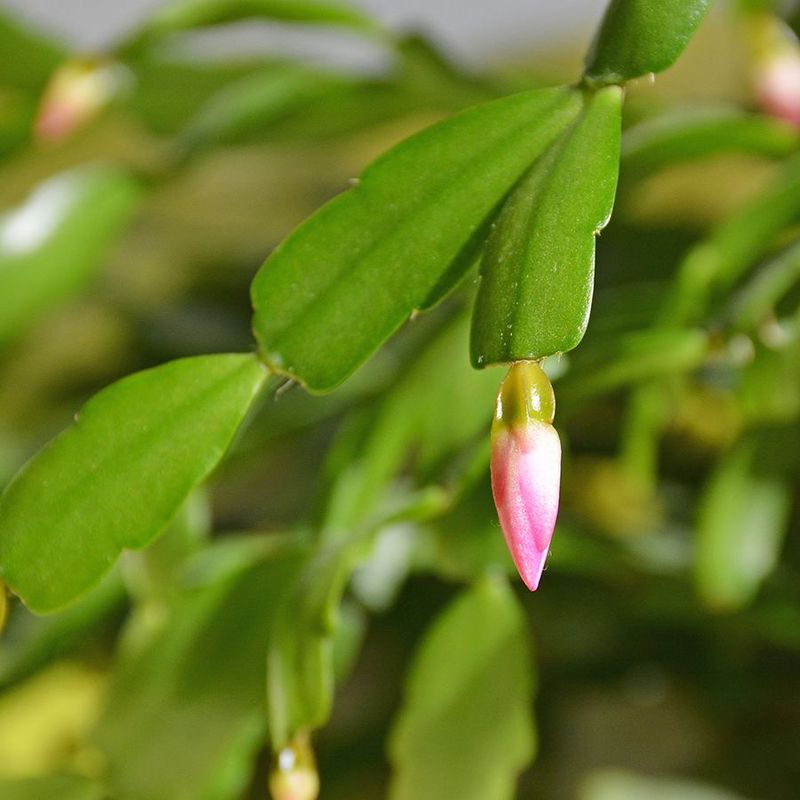
Once a wrinkled plant has been stabilized, bud formation becomes the next goal – but the two are separate jobs. A plant that is still recovering from root stress or severe dehydration is not ready to channel energy into blooms.
Address the moisture and root situation first, then think about flowering conditions.
Bud initiation in holiday cacti responds primarily to two environmental signals: long, uninterrupted periods of darkness and cooler nighttime temperatures sustained over several weeks. Iowa State University Extension and University of Illinois Extension both describe darkness requirements that vary by cultivar, commonly ranging from at least 12 hours up to approximately 14-16 hours of uninterrupted darkness each night for roughly five to six weeks.
Even brief light interruptions from a lamp, streetlight, or passing headlights can reset the process.
Withholding water sharply to force flowering is not a dependable strategy. UMass Extension’s commercial holiday cactus production guidance states specifically that research has not supported water withholding as a reliable bud-induction method.
UF/IFAS Christmas cactus preparation guidance reinforces that keeping the plant moderately moist while providing long nights and suitable cooler temperatures is a more consistent approach. Also keep in mind that many plants sold as Christmas cactus are actually Thanksgiving cactus, with slightly different segment shapes and earlier bloom timing.
Southern conditions change where fall care happens
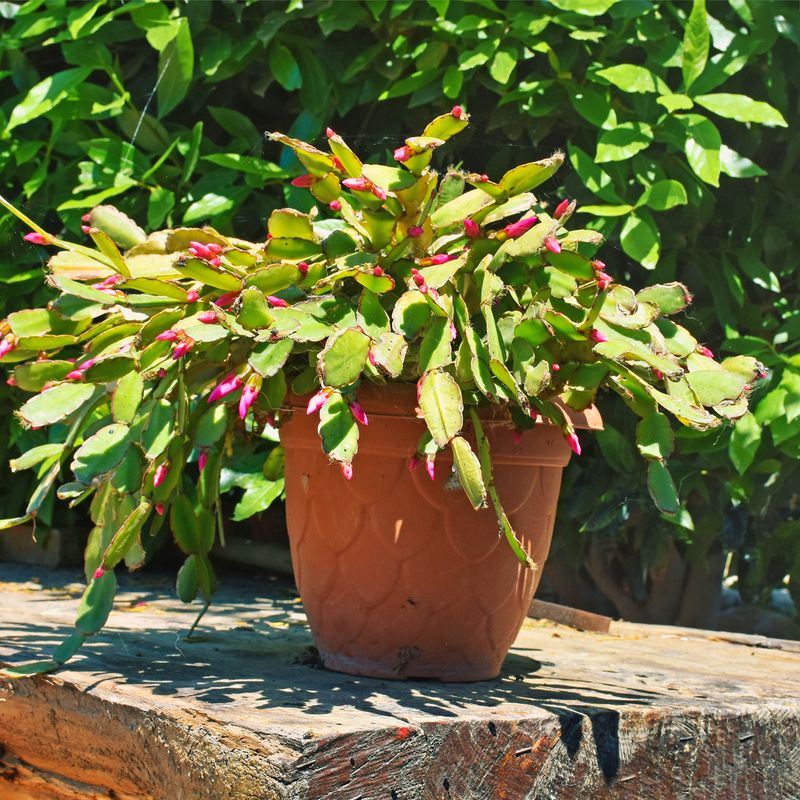
Fall care looks different depending on where you garden, and Southern conditions add a layer of complexity that general houseplant advice does not always cover. Florida gardeners have the option of keeping a holiday cactus outdoors through mild weather, but location and temperature matter.
UF/IFAS Bay County Extension recommends bright shade rather than full sun for outdoor placement, and protection or an indoor move as temperatures approach 50 degrees F. Full summer sun, freezes, heavy rain, and abrupt environmental changes can all set the plant back.
UF/IFAS Osceola County Extension echoes the importance of watching nighttime lows closely as fall progresses in Florida. UF/IFAS Nassau County Extension adds that bud drop often traces back to temperature swings, drafts, or exposure to heating and cooling vents once buds have formed – a concern that applies indoors and out.
Texas gardeners face a different early-fall challenge: late-summer heat can make it tempting to water more often. Texas A&M AgriLife Extension guidance for Bexar County recommends reducing water and fertilizer in August as bud development approaches, without allowing the plant to wilt or become bone-dry.
Hot weather alone is not a reason to increase watering frequency without first checking the soil. University of Minnesota Extension reinforces that protecting budding plants from vents, fireplaces, drafts, and sudden temperature swings applies everywhere, including Southern homes where air conditioning creates its own sharp indoor-outdoor temperature differences.
Use the moisture check as your fall decision rule
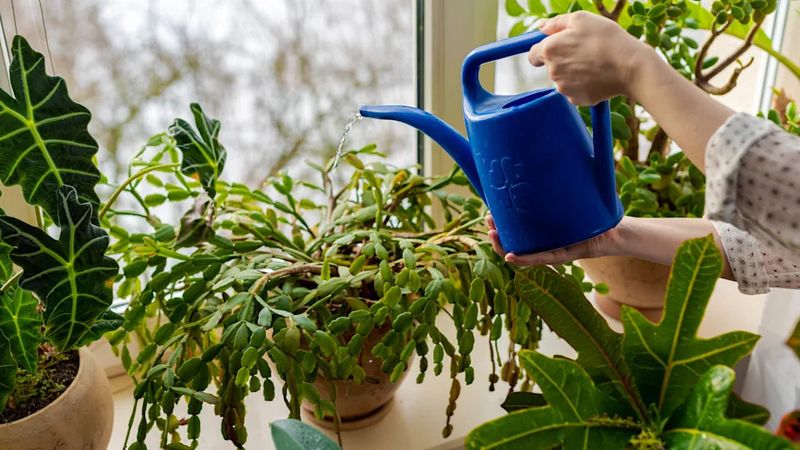
Three findings, three responses. Dry upper mix plus free-draining pot means water thoroughly and empty the saucer.
Wet mix that stays wet means pause watering, check the drainage holes, and inspect the roots before adding anything. Dark, mushy roots with a sour-smelling mix mean address the root problem directly rather than continuing to water.
UF/IFAS Christmas cactus preparation guidance supports this sequence as the practical safety boundary between drought stress and saturation damage.
Recovery comes before bloom preparation. A plant still dealing with root stress or severe dehydration cannot reliably be pushed into flowering by withholding water or adding fertilizer.
Neither a larger pot nor extra nutrients are emergency fixes for wrinkled stems. If the root system is too far gone to save, healthy stem cuttings taken from firm, undamaged segments offer a backup path.
Iowa State University Extension’s Christmas cactus propagation guidance notes that cuttings typically root in approximately six to eight weeks in a porous medium.
Not every stressed plant will recover in time to bloom this season, and that is worth accepting honestly. The moisture check cannot guarantee flowers, but it gives the plant a realistic chance to regain firmness and move into bud season with stable roots – which is the only foundation that matters.
A plant you rescued with a two-minute soil check is already ahead of one that got watered by habit.