
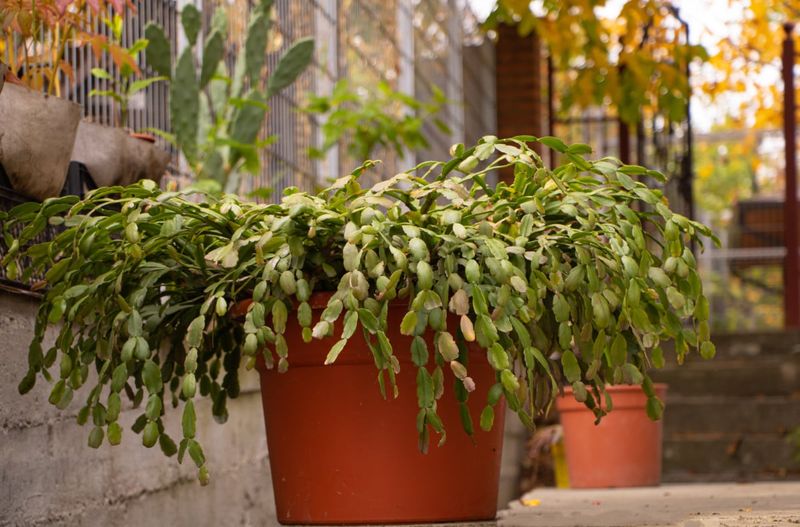
A wrinkled Christmas cactus in fall is one of the most confusing sights a home gardener can face, because the plant looks thirsty even when the pot feels heavy and damp. The trouble is that wrinkling does not automatically mean the soil is dry – it means the plant’s tissues are losing firmness, which can happen whether the roots are parched or waterlogged.
Getting the diagnosis right before you reach for the watering can could be the difference between a plant covered in holiday blooms and one that drops every bud it has set.
Fall wrinkling does not identify one mistake
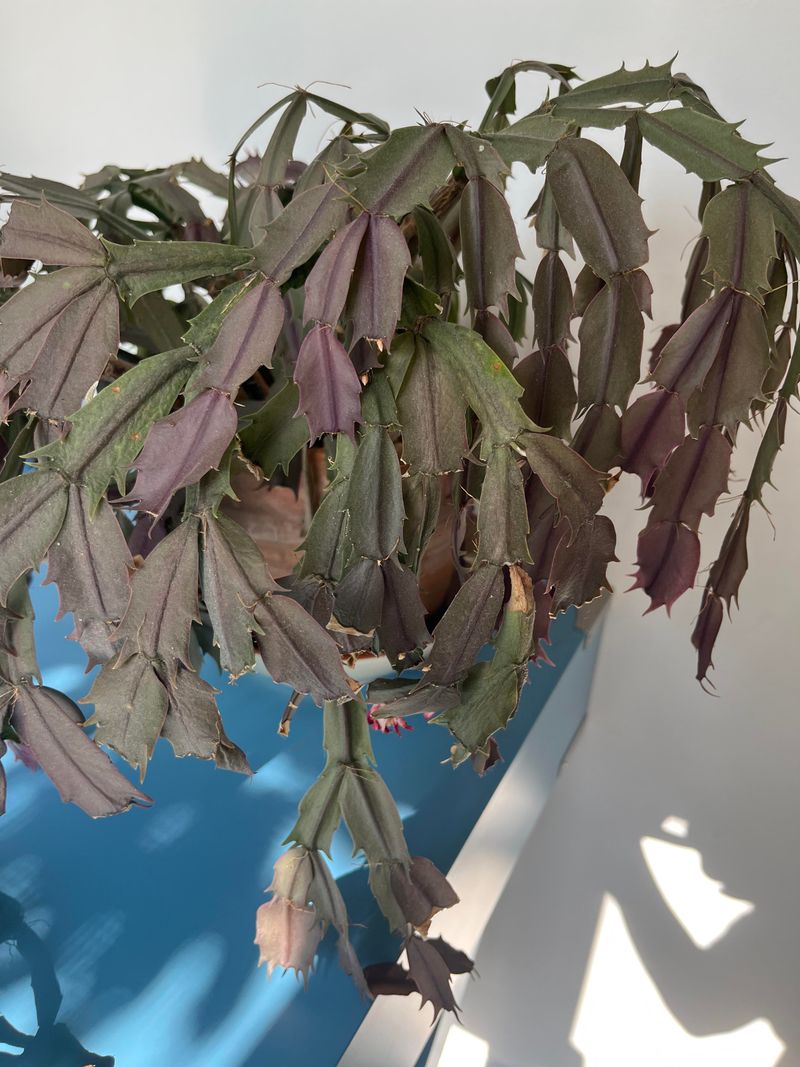
Wrinkled stem segments on a holiday cactus are a signal worth paying attention to, but they do not point to a single, obvious cause. The symptom means the plant’s tissues have lost firmness – either because the potting mix has gone too dry, or because damaged roots can no longer move water into the stems even when the soil around them remains wet.
Desert Botanical Garden horticulture staff note that a cactus can appear severely thirsty while sitting in damp soil if its root system has been compromised, making soil condition a critical first check before taking any action.
Fall adds a layer of urgency because this is when most holiday cacti are setting buds for their seasonal bloom. A plant under stress during bud formation is more likely to abort those buds than one that is stable and comfortable.
University of Wisconsin Horticulture identifies both drought stress and root rot as conditions that can cause wilting, segment drop, and poor growth – which means the fix for one situation is the wrong move for the other.
One more thing worth knowing before you start troubleshooting: the plant on your shelf may not be a true Christmas cactus. University of Connecticut Extension explains that Thanksgiving cactus, Christmas cactus, and Easter cactus are often sold interchangeably and share nearly identical moisture and drainage needs.
The practical care steps in this article apply to all of them.
Check the mix before you reach for the watering can
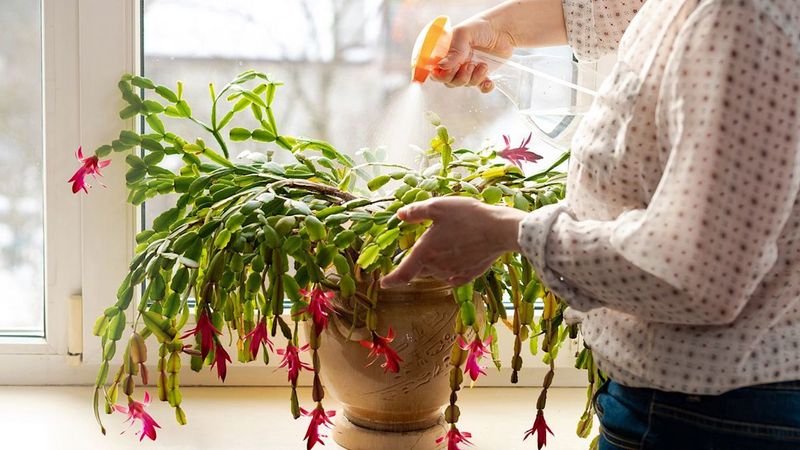
Before adding any water, push a finger or a wooden skewer about two inches into the potting mix and hold it there for a few seconds. What you find below the surface matters far more than how the top of the soil looks.
The surface can feel dry while the mix below is still holding significant moisture, especially in a dense or compacted medium.
Three different findings call for three different responses. If the mix feels dry at depth and the pot feels noticeably light when lifted, the plant is likely dehydrated and needs a thorough watering.
If the mix feels slightly damp but not wet and the pot has reasonable weight, give it another day or two before watering and recheck. If the mix feels saturated or smells musty and the pot feels heavy, adding more water is the wrong move – even if the stems are visibly wrinkled.
Desert Botanical Garden cautions that continuing to water a plant with compromised roots can accelerate the damage rather than reverse it.
While you have the pot in your hands, confirm that water can actually escape. Chicago Botanic Garden recommends watering thoroughly and allowing excess to drain freely – but that only helps if the drainage holes are open and the saucer or cachepot is not trapping water underneath.
Blocked drainage turns any watering effort into a slow root-rot setup.
Water genuinely dry soil thoroughly, then reassess
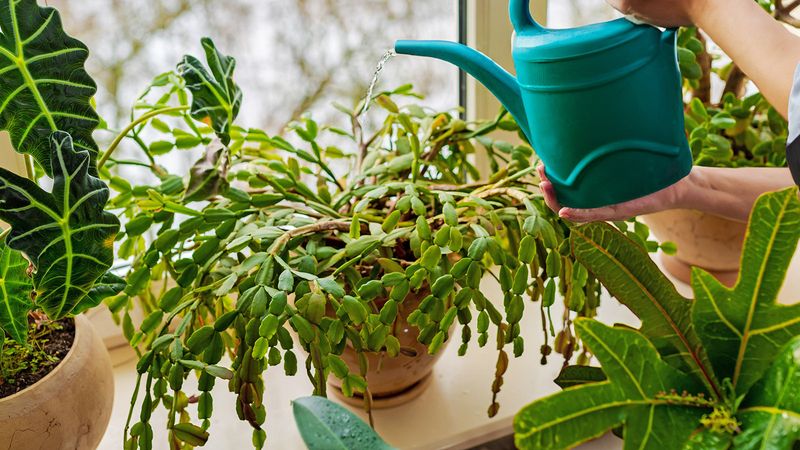
When the mix is genuinely dry below the surface, water the plant slowly and steadily until water runs freely from the drainage holes. That runoff confirms the entire root zone has been reached, not just the top inch or two.
After watering, empty the saucer or cachepot completely so the pot is not sitting in standing water – Chicago Botanic Garden guidance is clear that holiday cacti need drainage and should never be left in pooled water.
Holiday cacti are tropical forest plants, not desert plants, so the goal after watering is not to return to bone-dry conditions as quickly as possible. They need the mix to dry out somewhat between waterings, but prolonged severe dryness causes real stress and can make stems limp, reduce flowering, and weaken the plant’s overall condition.
Base the next watering on what the mix actually feels like below the surface, not on a fixed calendar schedule.
A plant that has been dry for a long time may not bounce back immediately after one watering. University of Connecticut Extension notes that drought-damaged roots can lose their ability to absorb large volumes of water efficiently, so a severely wilted plant may respond better to smaller, more frequent recovery waterings than to repeated heavy flooding.
Give the plant a few days after the first watering and reassess before deciding whether more water or a different approach is needed.
Wet soil calls for a root investigation
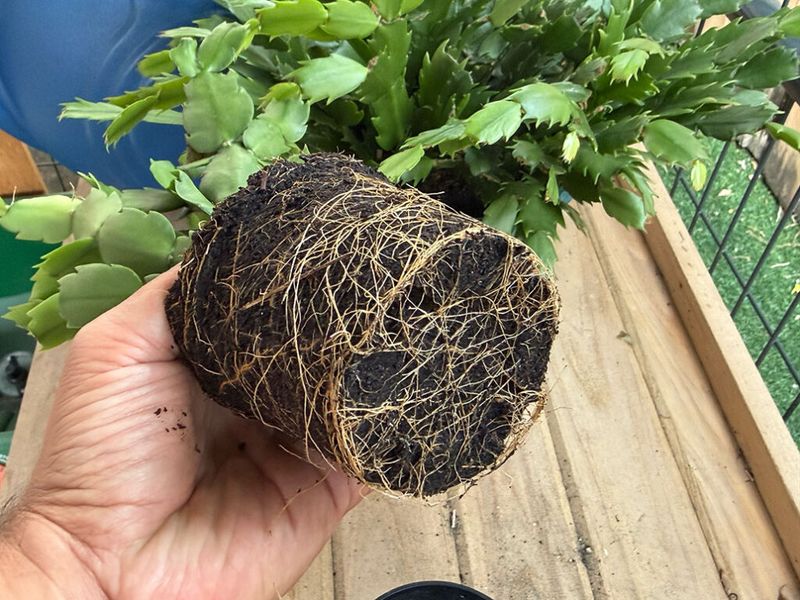
Finding wet or soggy soil in a pot with a wrinkled holiday cactus is a sign to stop and investigate rather than water. When roots sit in saturated soil for extended periods, the oxygen they need gets pushed out of the mix.
Without adequate air, roots begin to break down – and a plant with failing roots cannot move water into its stems no matter how wet the surrounding soil is. The result looks exactly like drought stress: limp, shriveled, or dropping segments even though the pot feels heavy.
University of Wisconsin Horticulture identifies Phytophthora and Pythium as root rot pathogens that can cause wilting and plant death in holiday cacti, with symptoms that include gray-green growth, persistently wet soil, and younger segments shriveling despite regular watering. Penn State Extension similarly documents root and stem rot as serious problems that can progress quickly when drainage is poor.
To get a clear picture of what is happening, slide the plant out of its container and look at the roots directly. Healthy roots are white or tan and feel firm.
Dead or rotting roots are brown, black, or gray, feel mushy, and may smell sour. Desert Botanical Garden recommends confirming both soil condition and root health before deciding on a next step – wet soil with wrinkled stems is not a definitive diagnosis of root rot, but it is a strong enough warning to justify a closer look before adding any more water.
Protect developing buds with steady conditions
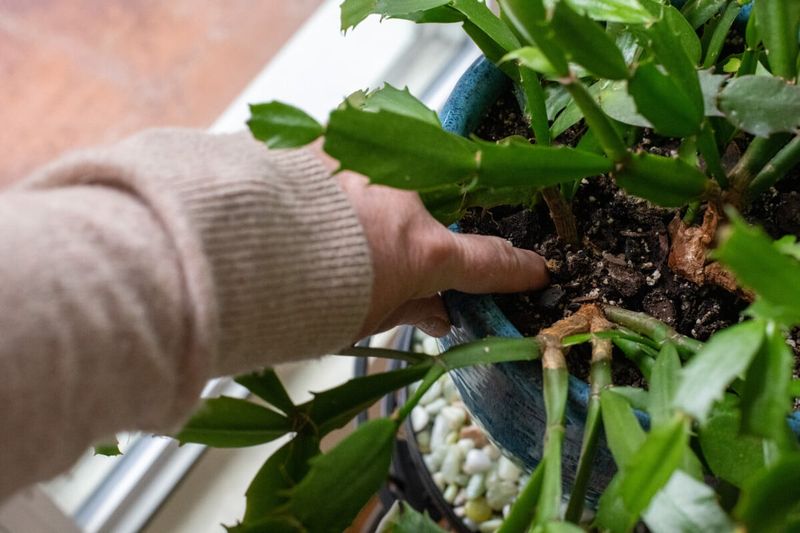
Fall bud formation is the most sensitive period in a holiday cactus’s year, and the biggest threat during this stretch is not a single missed watering – it is instability. Sudden swings in watering frequency, light exposure, temperature, humidity, or physical location can all trigger bud drop, sometimes within days of the change.
University of Minnesota Extension lists excessive dryness and excessive moisture together as contributors to bud loss, reinforcing that neither extreme is safe once buds are present.
Some gardeners have heard that cutting back on water in fall helps trigger blooming, and there is truth to that – a modest reduction in watering during bud initiation can support the process. The key word is modest.
University of Missouri Extension is specific that “less water in fall” does not mean intentional severe drought; the plant should not be allowed to stay limp or bone-dry. A slightly drier mix between waterings is fine, but a visibly wilted plant needs attention.
Iowa State University Extension advises keeping the plant in a consistent location away from heating vents, drafts, and cold window glass once buds have set. Moving a budding plant from a warm room to a cold porch, or shifting it from a bright spot to a dim corner, can be enough to trigger bud abort even if the watering is otherwise perfect.
Fix the container conditions that sustain the problem
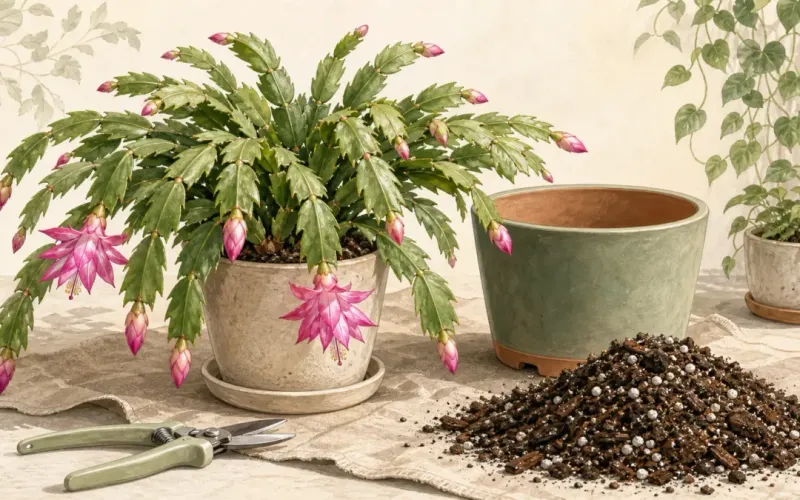
Recurring moisture stress usually traces back to the container setup rather than watering habits alone. A pot without adequate drainage holes, a mix that compacts and holds water, or an oversized container that stays wet for too long can undermine even careful watering.
Fixing those structural problems reduces the chance of the same wrinkling issue returning next fall.
For the potting mix, the reliable requirement is a porous, well-draining, aerated medium. Iowa State University Extension notes that a specialty cactus mix is not essential if the selected medium drains well – a standard mix amended with perlite or coarse sand can work.
What to avoid is a dense, moisture-retaining mix that stays wet for days after watering.
Container size matters more than many gardeners expect. Holiday cacti actually tolerate being somewhat pot-bound and do not need to be moved into a much larger container at the first sign of stress.
Penn State Extension advises that oversized containers hold more moisture for longer, which raises the risk of root problems rather than reducing them. Routine repotting generally belongs after flowering or in spring, when the plant is not actively forming or holding buds.
An urgent root problem – such as confirmed rot with no viable roots remaining – may justify earlier intervention, but that is a rescue decision, not a routine one.
Salvage healthy growth when roots have failed
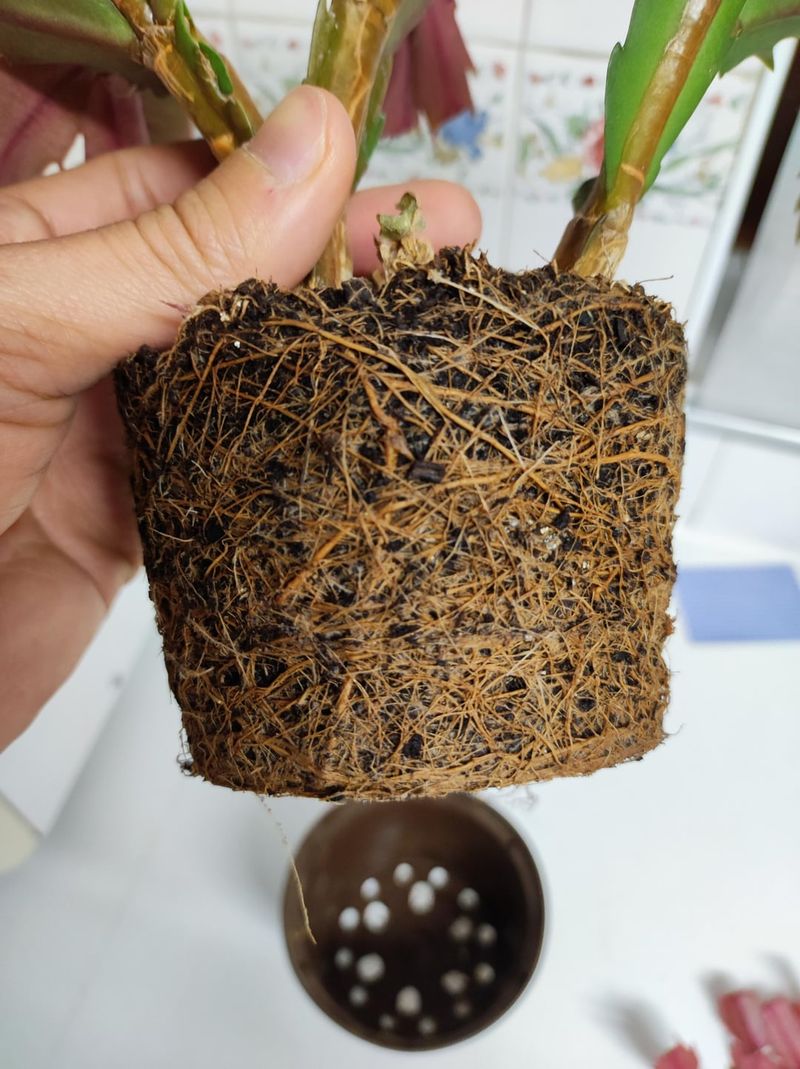
After removing a holiday cactus from its pot and examining the roots, the path forward depends on what you find. If some roots are firm, white, and intact, there is reason for optimism.
Trim away the dead or mushy material with clean scissors or pruners, let the cuts dry for an hour or two, and repot into fresh, well-draining mix. Keep the mix lightly moist – not wet – while the plant stabilizes, and hold off on fertilizing until you see signs of recovery.
When the root system is entirely gone or the remaining roots are too few and too damaged to support recovery, the honest assessment is that the plant itself may not survive. University of Wisconsin Horticulture acknowledges that recovery becomes very difficult once the entire root system has died, and recommends propagation from healthy stem segments as a sensible backup.
Select segments that are firm and show no discoloration, allow the cut end to callous for a day, then place them in a lightly moist, well-draining mix.
Penn State Extension notes that serious root and stem rot diseases may require discarding heavily infected material rather than relying on a treatment to reverse the damage. Routine fungicide is not a reliable first rescue step and should not replace the more practical actions: accurate diagnosis, corrected drainage, removal of rotted material, and propagation from whatever healthy growth remains.
Keep Southern plants sheltered while they recover
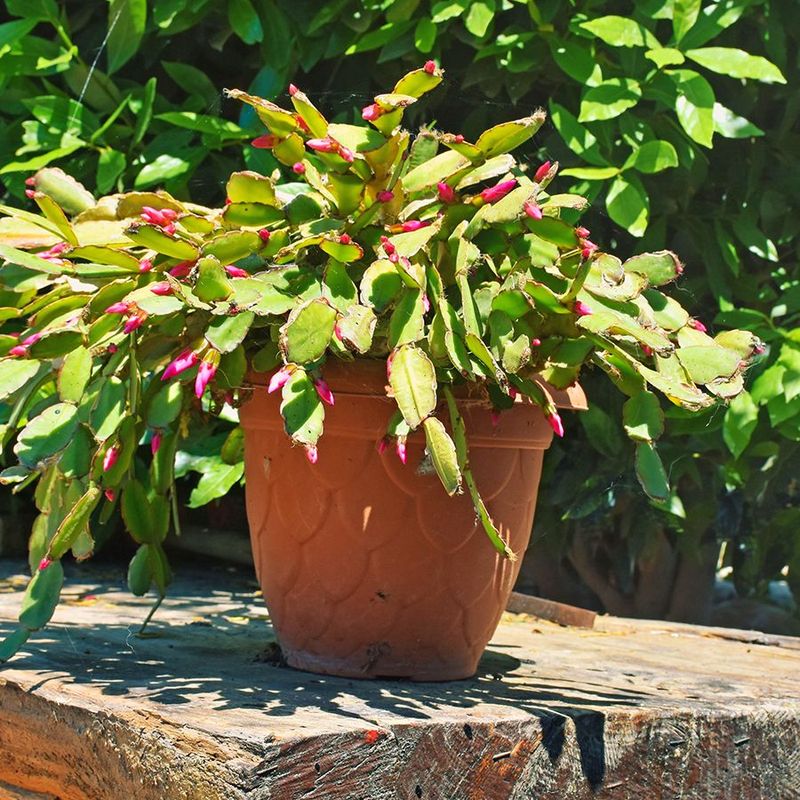
For gardeners in Florida and Texas, outdoor and porch-grown holiday cacti face weather that indoor-only care guides rarely address. Heavy fall rain can saturate a container faster than the plant can tolerate, while intense afternoon sun can scorch stems and drive up soil temperature to levels that stress roots even in an otherwise well-draining setup.
UF/IFAS Extension describes Christmas cactus as a rainforest plant that responds poorly to sudden temperature changes and cold exposure, so any container left outdoors needs to come in or move to shelter before a cold front arrives.
Bright shade or filtered light is the right placement for an outdoor plant in the South. Keep the container off the ground during rainy stretches so it cannot sit in pooled water, and do not rely on a watering calendar when the weather is doing unpredictable things.
University of Minnesota Extension guidance reinforces that watering based on the actual mix condition is always safer than a fixed schedule, and that applies especially when outdoor humidity and rainfall are already adding moisture you cannot control.
The full action sequence comes down to this: check the mix, follow the dry-soil or wet-soil response, confirm drainage is working, and keep conditions as steady as possible while buds develop. Wrinkling is a signal to diagnose – the plant asking you to look more carefully before acting.