
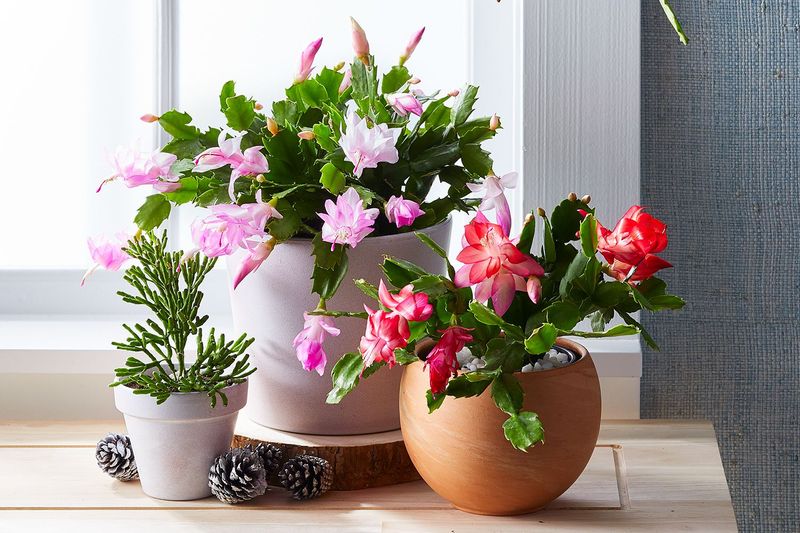
If your holiday cactus sits quietly all summer without a single flower, you might worry something has gone wrong. The good news is that a calm, flowerless summer is completely normal for these plants.
What actually matters is keeping the plant healthy now so it can respond to the light and temperature changes that trigger blooms in fall. Getting that preparation right is the real key to a colorful holiday display.
A quiet summer does not mean your holiday cactus has failed
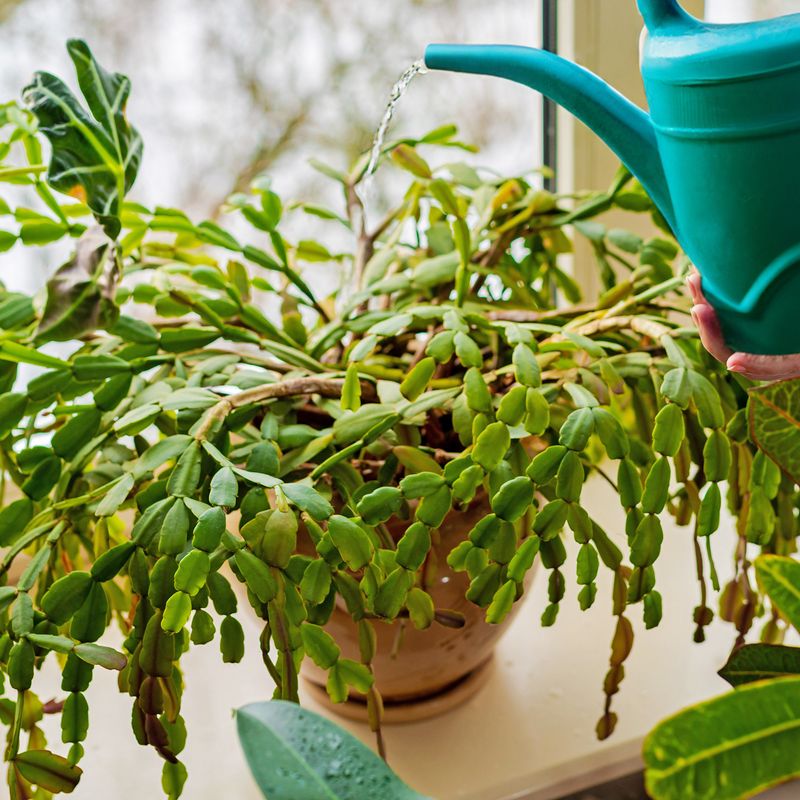
Many gardeners check on their holiday cactus in July and feel a knot of worry form when they see no buds, no flowers, and seemingly no change at all. That stillness is not a warning sign.
Holiday cacti are naturally vegetative during the long days of summer, quietly building new stem segments and storing energy rather than pushing out blooms.
Flower bud initiation is driven primarily by the shortening days and cooling nights of late summer and fall, not by anything the plant does in June or July. Iowa State University Extension guidance confirms that holiday cacti need long, uninterrupted nights and cooler temperatures to begin forming buds, conditions that simply do not exist during the long, warm days of a Southern summer.
What summer care does is maintain the plant’s overall health so it arrives at fall in good condition. A plant weakened by harsh sun, poor drainage, or severe dryness may struggle to respond well when those fall cues arrive.
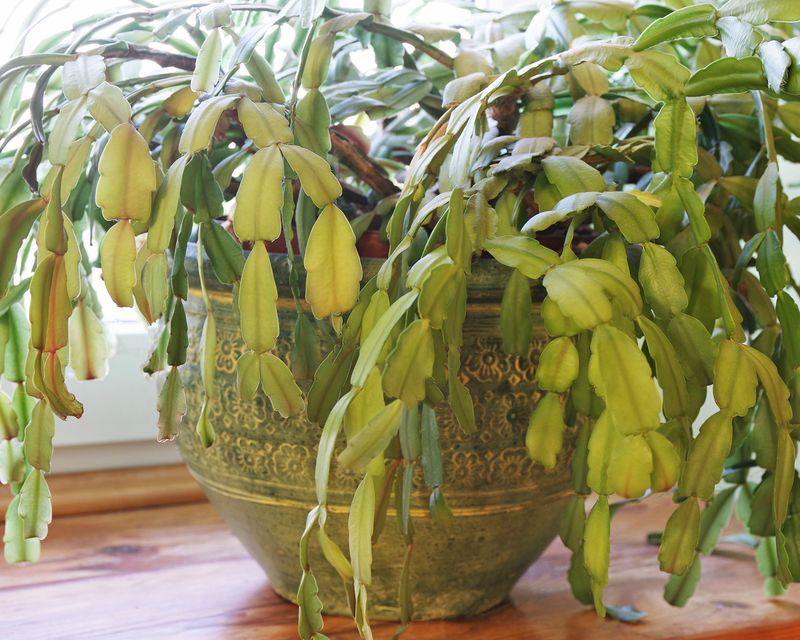
Warning signs worth acting on include pale or yellowed stem segments, soft or mushy tissue near the base, persistent wilting that does not improve after watering, or a general loss of firmness across the plant.
Normal summer growth may look subtle. New segments may appear, or the existing ones may simply hold steady and stay green.
Either outcome means the plant is on track, not stalling.
Avoid the group of summer mistakes that weakens the plant
The title of this article suggests one bad habit is responsible for every summer slump, but the reality is messier and more useful. A cluster of desert-cactus habits can quietly drain a holiday cactus of the vigor it needs for fall flowering, and any one of them or a combination can cause trouble.
Holiday cacti are rainforest-adapted epiphytes, plants that grow anchored to tree branches in humid, dappled shade. Clemson Cooperative Extension notes that direct summer sun can cause pale, yellowed, or sunburned stem segments, which is essentially the opposite of the lush, green growth the plant needs before fall.
Outdoor summer placement can work well in the South, but only in part shade or full shade with good air circulation.
Extreme dryness and poorly draining soil create a separate set of problems. A plant sitting in compacted, waterlogged soil or one that has gone bone dry in a hot garage is already under stress before the critical fall bud-formation window even opens.
That stress can show up later as weak bud set or bud drop, even if fall conditions are otherwise good.
Gradual acclimation matters when moving a plant outdoors in spring or early summer. A plant that has spent winter on an indoor windowsill needs a week or two of sheltered outdoor exposure before it can handle even filtered outdoor light without showing stress.
Filtered light does not mean constantly wet soil, so drainage and light adjustments go hand in hand.
Water by soil moisture instead of following a calendar
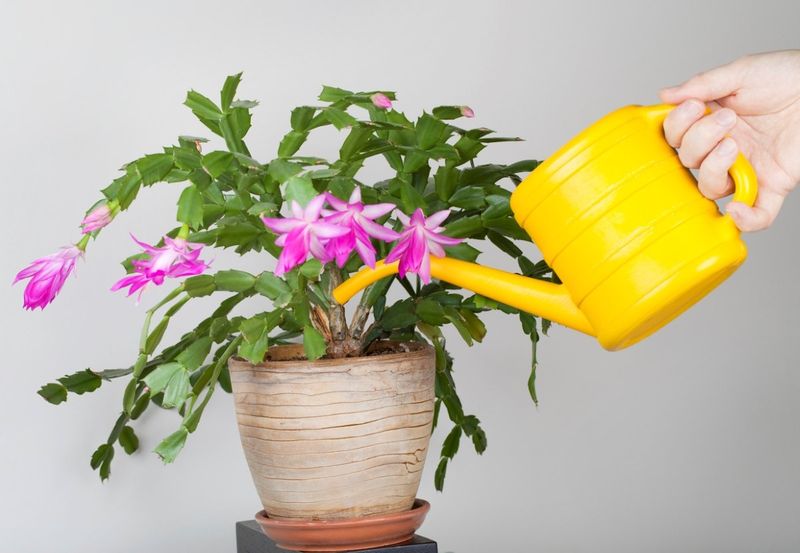
Watering a holiday cactus on a fixed weekly schedule is one of the most common ways gardeners accidentally damage the roots. Soil dries at different rates depending on pot size, soil composition, heat, humidity, rainfall, and whether the plant is indoors or sitting on a covered porch.
A schedule that works in April can lead to chronic saturation by August.
A more reliable approach is to check the upper inch or two of soil before reaching for the watering can. When that layer has begun to dry, water thoroughly until excess runs freely from the drainage holes, then let it drain completely.
UF/IFAS Gardening Solutions specifically cautions against leaving the pot sitting in a saucer or decorative cover filled with standing water, because chronic saturation around the roots can lead to rot.
Severe dryness carries its own risks. A plant that wilts from heat and prolonged drought may show that stress later in the season, and severe dryness is one of several factors that may contribute to bud drop once buds have formed.
That said, wilting and bud drop have multiple possible causes, so a dropped bud is not always a watering diagnosis.
University of Minnesota Extension notes that established holiday cacti tolerate mild underwatering better than chronic overwatering. Southern summers add extra heat-load variables, so checking soil moisture more frequently during heat waves makes practical sense rather than sticking to any fixed watering day.
Support summer growth without overfertilizing
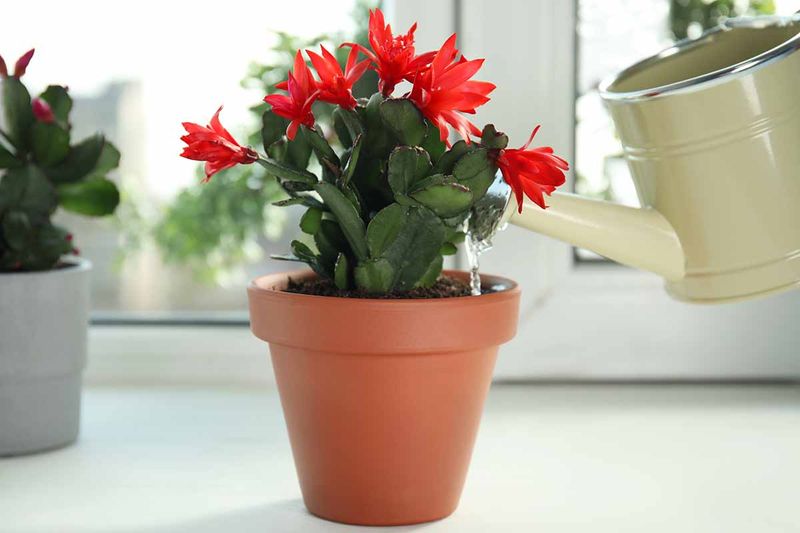
Feeding a holiday cactus during summer supports the vegetative growth the plant is already trying to accomplish. New stem segments need nutrients to develop properly, and a plant that goes unfed through an entire growing season may arrive at fall with less stored energy than one that received moderate, consistent support.
University of Minnesota Extension recommends a balanced houseplant fertilizer applied at half strength roughly once a month during active spring and summer growth. As late summer approaches and bud formation begins, reducing or stopping fertilizer is the right move.
Excess fertilizer salts can accumulate in the soil and damage roots, which undermines the very health the feeding was meant to support.
Epsom salt comes up frequently in holiday cactus advice online, but it deserves a clear-eyed look before anyone adds it to a routine. Extension guidance on Epsom salt use in gardens cautions that magnesium sulfate should only be applied when a magnesium deficiency has actually been established.
Routine use without a confirmed deficiency can create nutrient imbalances or cause plant injury rather than producing more flowers.
University of Georgia Extension echoes this caution, noting that unnecessary supplements can do more harm than good. Moderate, balanced feeding during active growth is a foundation, not a bloom guarantee.
Late summer brings the flowering cues that summer growth cannot provide
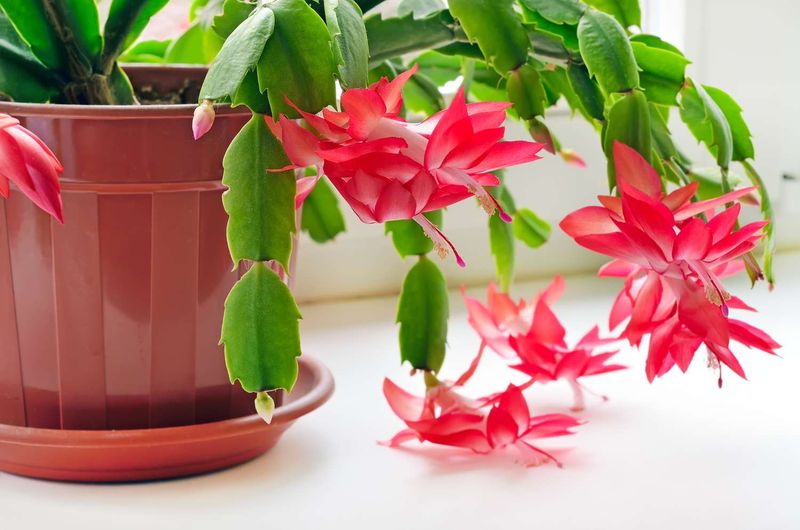
All the healthy summer growth in the world will not push a holiday cactus into bloom on its own. The signals that actually flip the switch from vegetative mode to flowering mode are environmental, and they arrive in late summer and fall when days shorten and nights grow longer and cooler.
Holiday cacti are short-day plants, meaning they respond to long, uninterrupted periods of darkness. Iowa State University Extension explains that both reduced day length and cooler temperatures promote bud initiation, and that artificial light at night, including lamps, kitchen lighting, grow lights, and nearby streetlights, can interfere with that process if the exposure is repeated or prolonged.
University of Minnesota Extension describes a practical target of roughly 12 to 14 or more hours of darkness per night for approximately four to six weeks. That range is guidance rather than a guaranteed formula because cultivar, temperature, timing, and growing conditions all affect how a specific plant responds.
A plant in a consistently warm room may need longer or cooler conditions to initiate buds compared to one that gets cool fall nights naturally.
Nighttime temperature targets commonly cited by extension programs fall around 55 to 65 degrees Fahrenheit. UMass Amherst greenhouse floriculture research notes that commercial growers use carefully controlled temperature and photoperiod schedules, but home gardeners can work with practical ranges rather than laboratory precision.
The key is avoiding repeated nighttime light interruptions and keeping temperatures from staying too warm for too long during the induction period.
Southern gardeners should adjust placement and timing
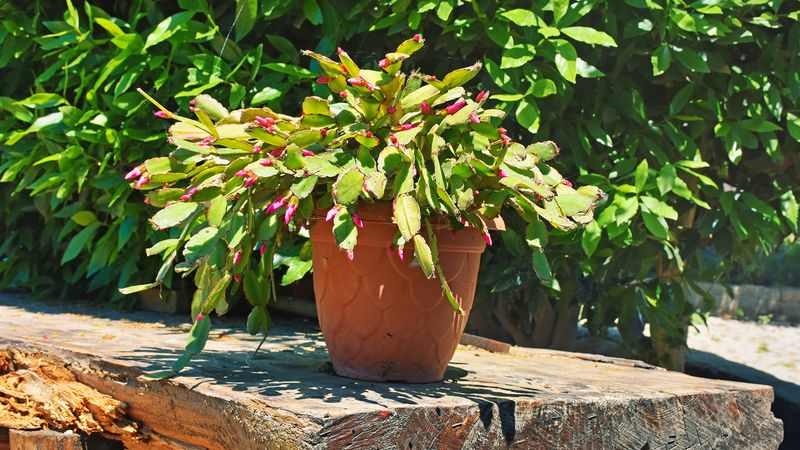
Advice written for gardeners in Minnesota or Pennsylvania does not always translate cleanly to a backyard in Houston or Gainesville. Southern gardeners deal with heat that can persist well into October, artificial lighting from nearby homes and streets, unpredictable heavy rain, and nights that stay too warm for bud initiation long after northern plants have already set buds.
Texas A&M AgriLife Extension recommends summer shade for holiday cacti and notes that high Texas temperatures may slow growth and inhibit bud development when nights remain too warm. A covered porch or shaded side of the house generally offers better conditions than an exposed south-facing patio baking in full afternoon sun.
UF/IFAS Gardening Solutions advises protecting plants from full sun in Florida and bringing them indoors before temperatures fall below approximately 50 degrees Fahrenheit. Cold exposure below that threshold can damage the plant, so Southern gardeners need to watch both the heat ceiling and the cold floor as seasons shift.
UF/IFAS Extension Bay County points out that outdoor conditions can actually provide useful natural darkness and cooling in some Southern locations, but this depends heavily on local lighting, temperature patterns, and rainfall. A covered porch away from porch lights may work well; a spot near a brightly lit driveway almost certainly will not.
Knowing your specific outdoor environment is more useful than following a one-size rule about moving the plant indoors at summer’s end.
Protect buds once the plant begins its holiday display
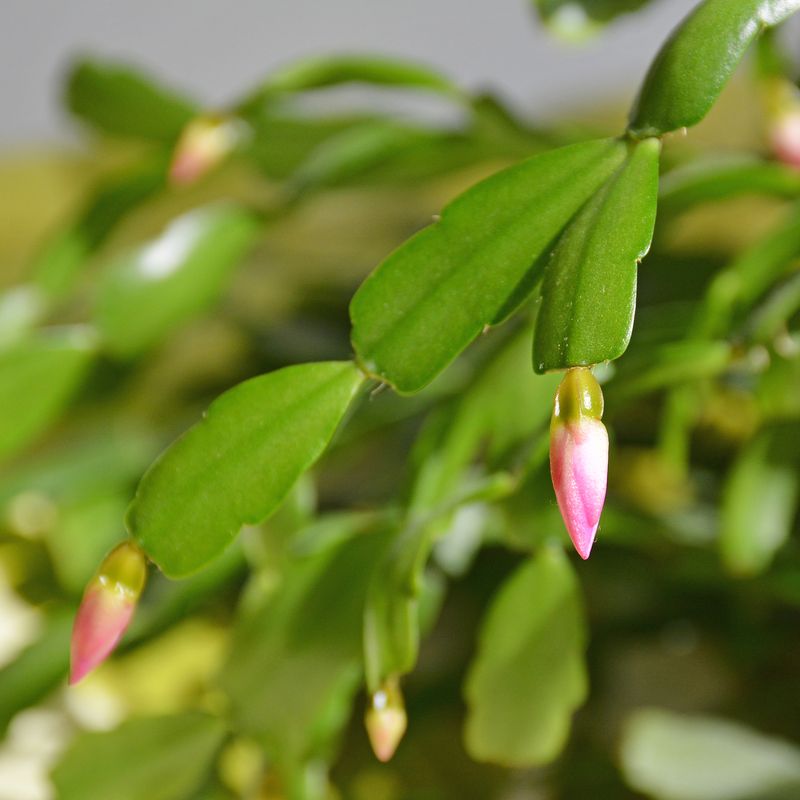
Getting buds to form is only part of the challenge. Keeping them attached long enough to open is where many gardeners run into frustration, often without understanding why the buds dropped in the first place.
University of Wisconsin Horticulture Extension recommends moving a plant for display once flowers are beginning to open rather than during early bud development. Abrupt moves, cold drafts from air conditioning vents or exterior doors, sharp temperature swings, and major changes in watering can all trigger bud drop before the flowers have a chance to open fully.
Bud drop has several possible causes, and pinning it on one factor is rarely accurate. Heat, low humidity, overwatering, severe dryness, environmental disturbances, and even a heavy bud load can all contribute.
University of Minnesota Extension lists multiple possible triggers, which is a useful reminder that a single dropped bud is not necessarily a sign of summer neglect or a watering mistake made months earlier.
One more thing worth knowing before the holidays arrive: many plants sold as Christmas cactus are actually Thanksgiving cacti or hybrids. Iowa State University Extension explains that Thanksgiving cactus typically has more pointed, claw-like stem projections and often blooms earlier than a true Christmas cactus.
If your plant reliably blooms in November rather than December, it may simply be a different species, not a plant that needs fixing.
Use the seasonal fix, not a single summer trick
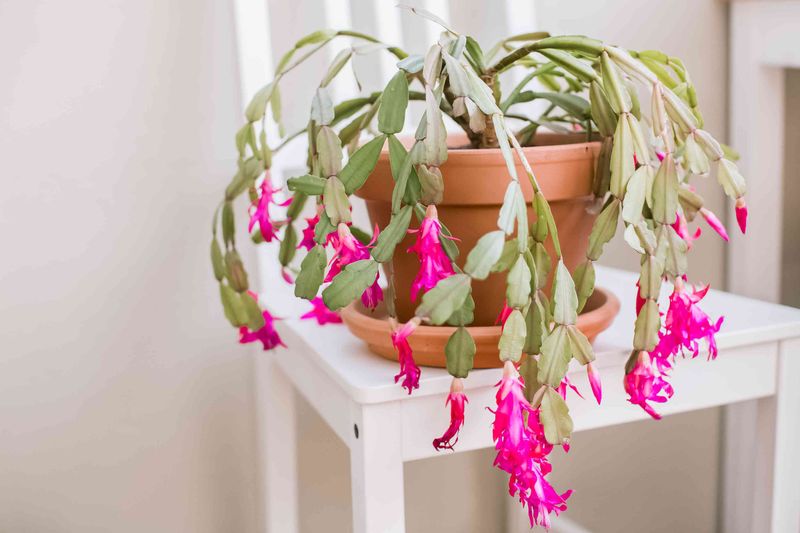
The real fix is a seasonal sequence, not one magic habit. Keep the plant in bright filtered light through summer, water based on actual soil moisture rather than a calendar, make sure every pot drains completely, and feed with a balanced fertilizer at half strength monthly during active growth, then ease off as fall approaches.
When late summer arrives, shift focus to the conditions that actually trigger buds: long, uninterrupted dark nights, limited artificial light exposure, and cooler nighttime temperatures. Iowa State University Extension and University of Minnesota Extension both point to photoperiod and temperature as the primary flowering cues, which means summer care sets the stage while fall conditions run the show.
A plant that sat quietly through July is likely right on schedule. A plant showing pale segments, mushy stems, or persistent wilting needs correction now, before the bud-formation window opens.
The holiday bloom you want in December is built across several months, and no single shortcut in October can fully replace a healthy growing season.