
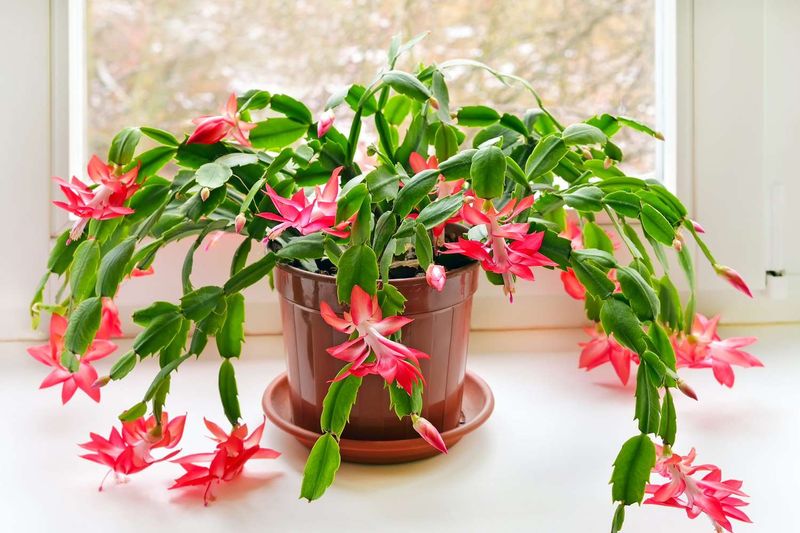
That quiet, green plant sitting on your windowsill may look like it has given up, but it could be working on something big. Holiday cacti are secretive bloomers that need specific signals before they reveal their flowers, and most home gardeners never realize those signals have already started.
Understanding what your plant is actually doing right now – and what it still needs from you – can be the difference between a spectacular holiday bloom and a pot full of dropped buds.
Visible buds change the job
Many gardeners assume that moving their holiday cactus into a colder room is the step that makes it bloom. That idea is partly right but gets the timing wrong in a way that can actually damage the plant.
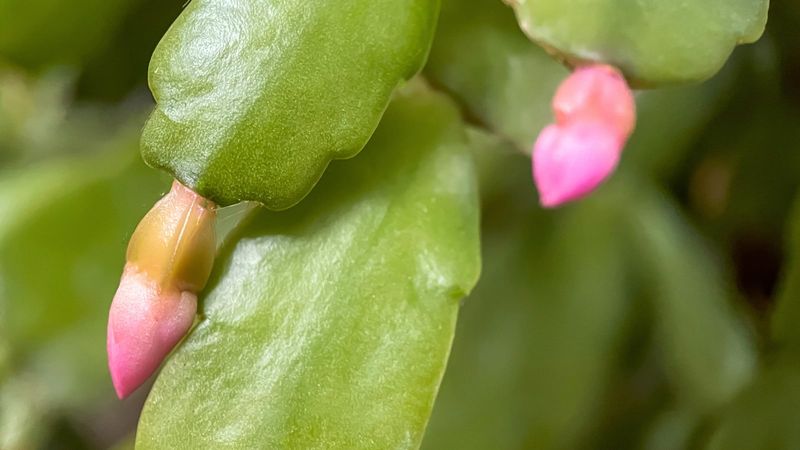
Once you can see tiny flower buds forming at the tips of the stem segments, the plant has already completed the first stage of flowering – flower initiation is done, and your job shifts from encouraging buds to protecting them.
Before any buds are visible, cool nights combined with long, uninterrupted darkness are the conditions that nudge a holiday cactus toward flowering. After buds appear, the priority changes entirely.
Iowa State University Extension notes that moving or significantly changing the environment of a budded plant is a common reason buds fall off before they ever open.
The practical rule is straightforward: if no buds are visible, use cool nights and long darkness to encourage them. If buds are already there, stop experimenting and keep conditions steady.
NC State Extension confirms that holiday cacti are sensitive to environmental changes, and stability is the most reliable way to carry visible buds through to open flowers.
Uninterrupted darkness supplies the main signal
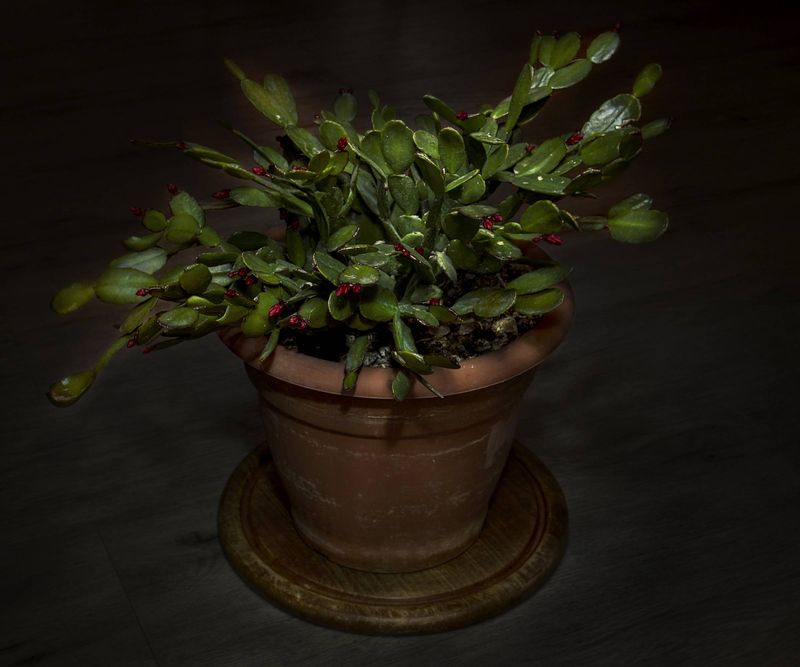
Holiday cacti are sometimes called short-day plants, but that label is a little misleading. What actually matters is not simply fewer hours of sunlight – it is the length of uninterrupted darkness each night.
A plant sitting in a room where someone turns on a lamp at 10 p.m., or near a window where a streetlight shines in, may never receive the unbroken dark period it needs to begin forming buds.
UMass Amherst greenhouse floriculture guidance places the effective dark period broadly around 12.5 to 14 hours per night, with temperature modifying how well the plant responds. Cooler fall temperatures support the process, but darkness is the primary driver.
A room that stays dark for only eight or nine hours because of indoor lighting or outside sources will not give the plant what it needs.
One unusually cold evening also does not do the job. The plant needs the same pattern of long dark nights and bright days repeated over several weeks before flower buds begin to form.
UF/IFAS Gardening Solutions emphasizes that even brief artificial light during the dark period can interfere with the plant’s response, so the darkness needs to be genuine and consistent, not approximate.
Combine cool nights with darkness before buds appear
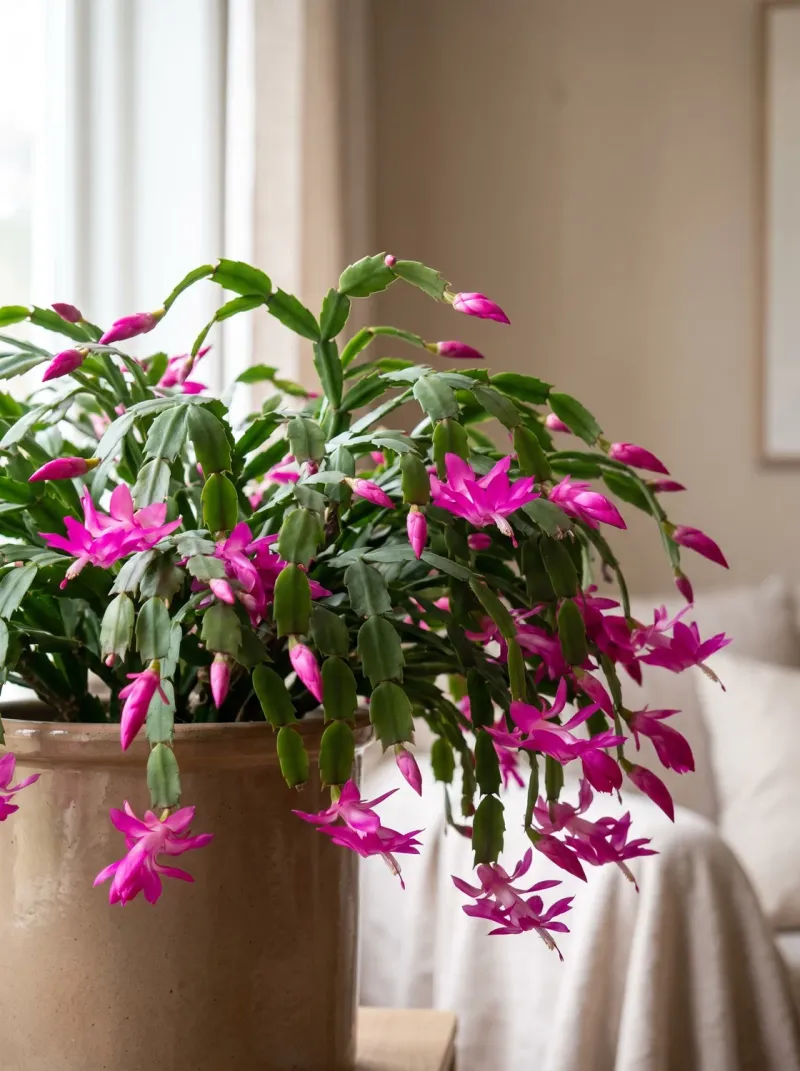
For a holiday cactus that has no visible buds yet, a consistent at-home routine can encourage the plant to start forming them. The approach combines two conditions every day for roughly four to six weeks: bright, indirect light during the daytime and about 12 to 14 hours of complete, uninterrupted darkness each night in a cool space.
UF/IFAS Gardening Solutions recommends placing the plant in a genuinely dark location each evening – a closet with no light leaks, or covered with a breathable cloth – and returning it to a bright window each morning. Nighttime temperatures in the range of roughly 55 to 65 degrees Fahrenheit support the process.
UMass Amherst notes that temperatures around 50 degrees can also stimulate bud formation, but temperatures near that lower threshold can slow growth or add stress, so staying in the mid-to-upper part of the range is safer for most home situations.
An unheated garage, a cold porch, or an outdoor spot where temperatures can drop near or below 50 degrees is not a safe alternative. Holiday cacti are tropical plants and frost-sensitive; UF/IFAS Bay County Extension advises protecting them when temperatures threaten to fall that low.
Cooling alone, without the sustained dark period, is also not a reliable substitute for the full routine.
Protect visible buds with stable conditions
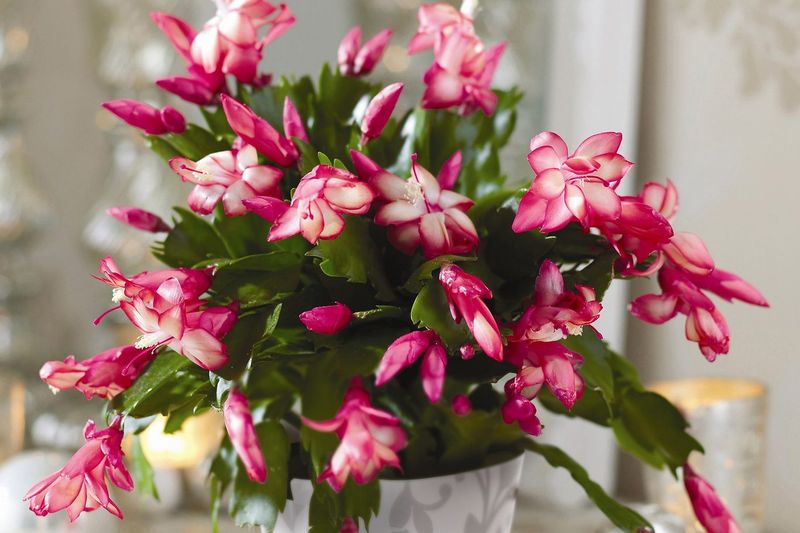
Once flower buds appear on your holiday cactus, the plant’s needs shift completely. Stability becomes the most important thing you can offer.
Buds that have just formed are surprisingly easy to lose, and the most common cause is a sudden change in the plant’s environment rather than any single dramatic mistake.
Keep the plant in bright, indirect light and away from heating vents, air-conditioning vents, fireplaces, and cold drafts from windows or exterior doors. Iowa State University Extension and UF/IFAS both identify drafts, temperature swings, changes in light exposure, and relocation as frequent contributors to bud drop.
Moving the plant into a substantially colder room at this stage is not a helpful finishing touch – it is one of the things most likely to cost you the buds you worked to produce.
University of Minnesota Extension also notes that low humidity, insufficient light, and even an unusually heavy bud load can contribute to drop. If a bud or two falls, that does not necessarily mean the routine failed.
Pick a stable spot, leave the plant there, and let it finish what it started.
Keep moisture steady without creating drought
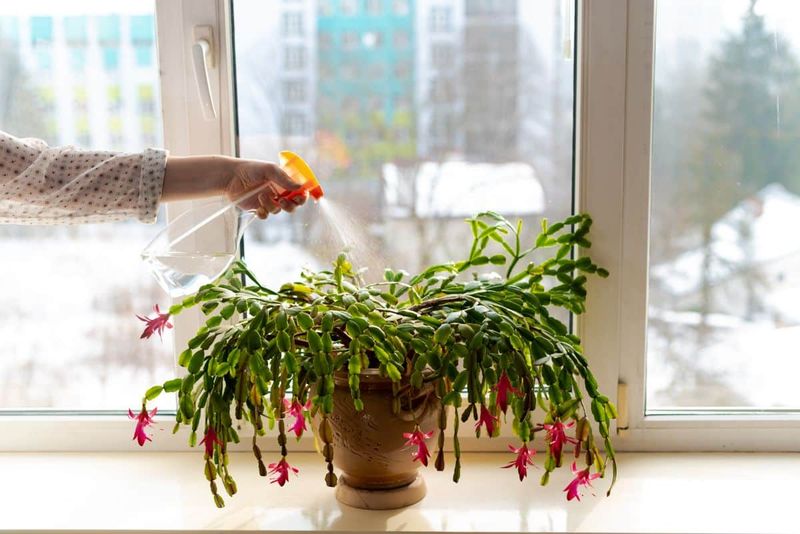
Holiday cacti are tropical epiphytes – plants that grow anchored to tree branches in humid rainforest environments, not in dry desert sand. That distinction matters when it comes to watering during the budding and blooming period.
Treating the plant like a desert cactus and withholding water to force flowers is not a reliable technique and can work against you.
UMass Amherst greenhouse research specifically reports that water stress can reduce bud set, and that withholding water has not been shown to reliably induce bud formation. UF/IFAS Gardening Solutions recommends watering thoroughly when the upper portion of the potting mix has dried, then allowing all excess water to drain completely before returning the pot to its saucer.
Never leave the pot sitting in standing water, as waterlogged roots can rot and cause stems to go limp or buds to drop. At the same time, University of Minnesota Extension and University of Georgia Extension both caution that prolonged severe dryness while buds are developing can also cause them to fall.
Check the mix with your finger and water based on what you find, not on a fixed calendar schedule.
Use controlled indoor conditions in warm Southern areas
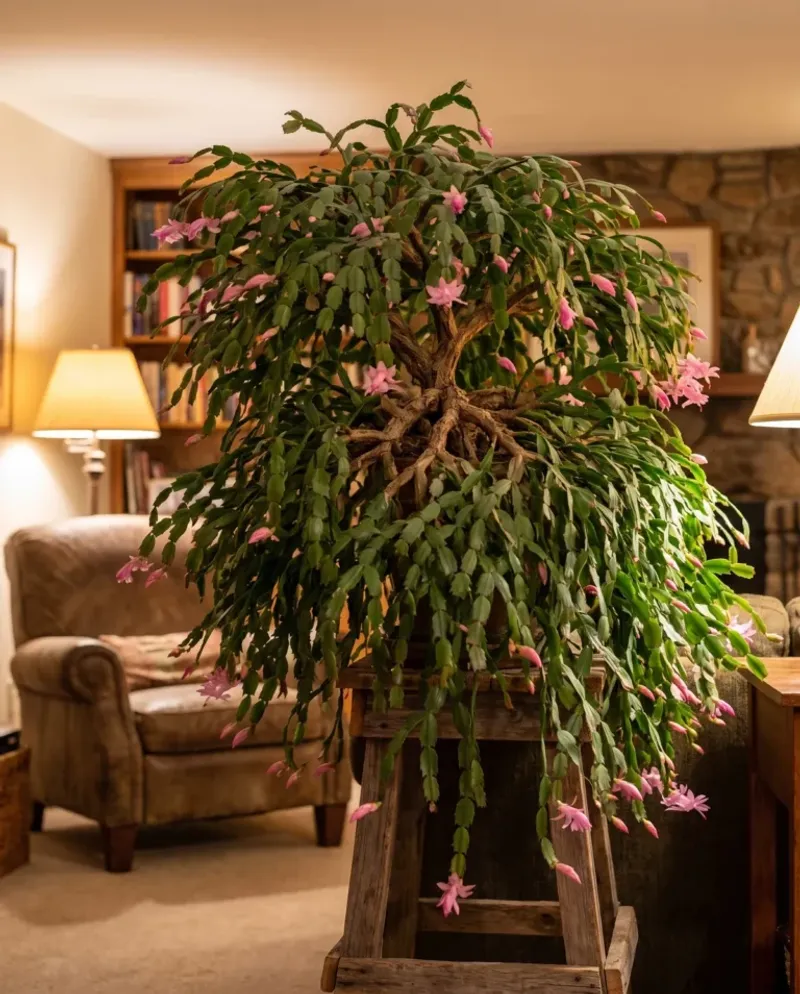
Southern gardeners face a real challenge that gardeners in cooler climates rarely think about: fall nights in Florida can stay warm well into October and even November, which means the natural cooling that helps trigger bud initiation may never arrive on its own. An air-conditioned room that stays in the mid-50s to mid-60s Fahrenheit range at night can serve as a practical substitute for outdoor autumn conditions, as long as the plant also receives the required dark period.
UF/IFAS Bay County Extension advises Florida gardeners to bring holiday cacti indoors before outdoor temperatures approach about 50 degrees Fahrenheit, and to protect the plants from both freezing conditions and harsh full sun. A shaded porch that stays genuinely cool at night without dropping too far could work for an unbudded plant, but only if artificial lighting from nearby sources does not interrupt the dark period.
For gardeners elsewhere in the South, the same general thresholds apply: protect the plant from temperatures near or below 50 degrees, avoid outdoor locations where a cold snap could arrive without warning, and rely on indoor temperature control rather than seasonal luck. UF/IFAS Gardening Solutions supports the indoor-control approach as more predictable than hoping outdoor fall conditions will cooperate.
Texas readers should assess their own local nighttime temperatures against the same safety thresholds rather than assuming regional fall conditions are automatically suitable.
The plant’s label may not predict its bloom date
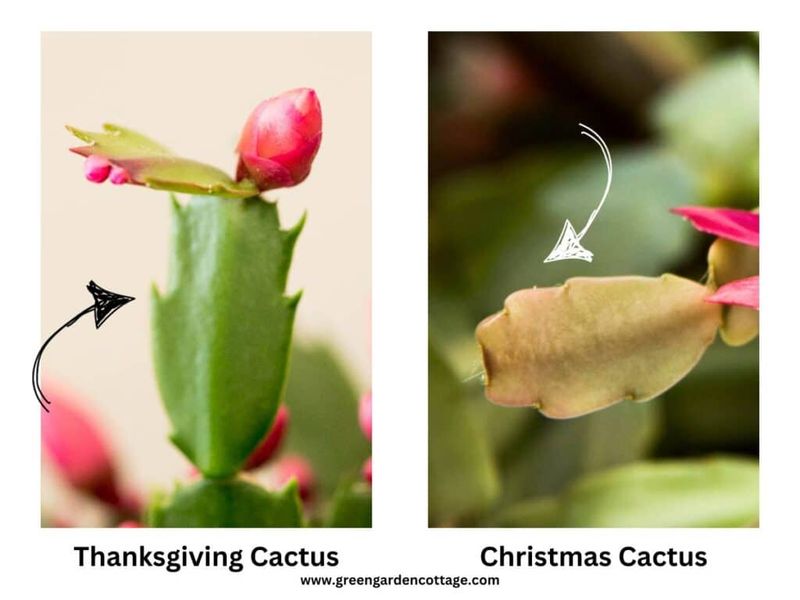
A plant sold at a garden center under the name Christmas cactus may actually be a Thanksgiving cactus, a hybrid, or any number of cultivars that bloom on their own schedule. The name on the tag reflects marketing more than botanical identity, and the difference matters when you are trying to plan for a specific holiday.
The quickest way to tell them apart is to look at the edges of the flat stem segments. NC State Extension’s plant toolbox describes true Christmas cactus as having rounded or gently scalloped margins, while Thanksgiving cactus carries more pointed, claw-like projections along the edges.
Thanksgiving cactus is widely sold under the Christmas-cactus label and typically blooms several weeks earlier than its holiday name suggests.
Even within a correctly identified species, cultivar differences, plant maturity, prior growing conditions, and the exact schedule used for forcing all affect when flowers open. University of Wisconsin Extension explicitly notes that no single forcing schedule works identically for every cultivar or hybrid.
The cool-night and long-darkness routine can encourage buds to form, but it cannot guarantee that flowers will open on Christmas morning or any other specific date.
Follow the plant’s stage-by-stage rule
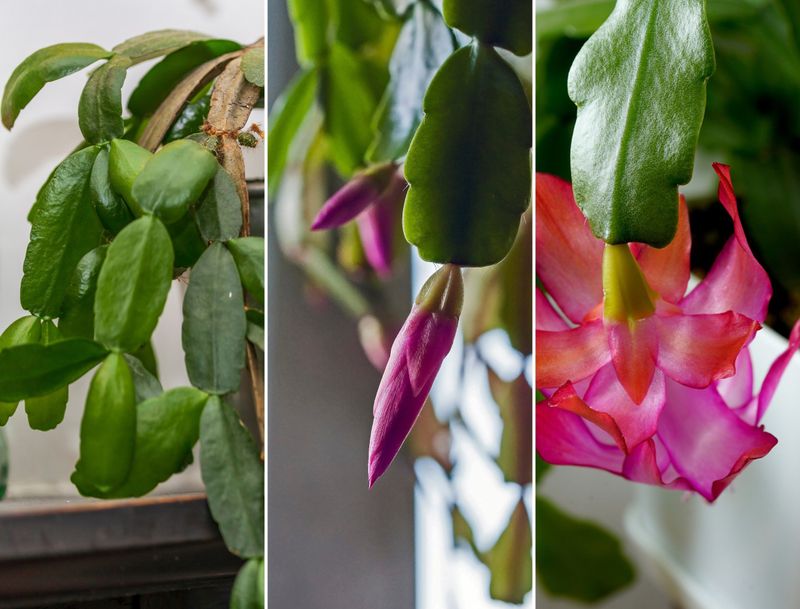
The clearest way to approach a holiday cactus is to let the plant’s stage tell you what to do next. No visible buds means the plant has not yet started flower initiation, so your job is to provide the conditions that encourage it: bright daytime light, cool nights in the 55 to 65 degree range, and about 12 to 14 hours of genuine, uninterrupted darkness every night for roughly four to six weeks.
Keep that routine consistent and avoid letting any artificial light reach the plant during the dark period.
Visible buds mean initiation is complete and your job changes to protection. UF/IFAS Gardening Solutions and Iowa State University Extension both support keeping a budded plant in a stable spot with bright indirect light, appropriate moisture, and protection from drafts, heat sources, cold windows, and unnecessary moves.
Cold shocks, interrupted dark periods, severe dryness, and waterlogged soil are the main things to avoid at both stages.
This routine works with the plant’s natural response rather than overriding it, so results depend on the cultivar, the conditions, and how consistently the treatment is applied. A holiday cactus that finally opens its flowers – even if it arrives a week or two off schedule – is doing exactly what it was built to do.