
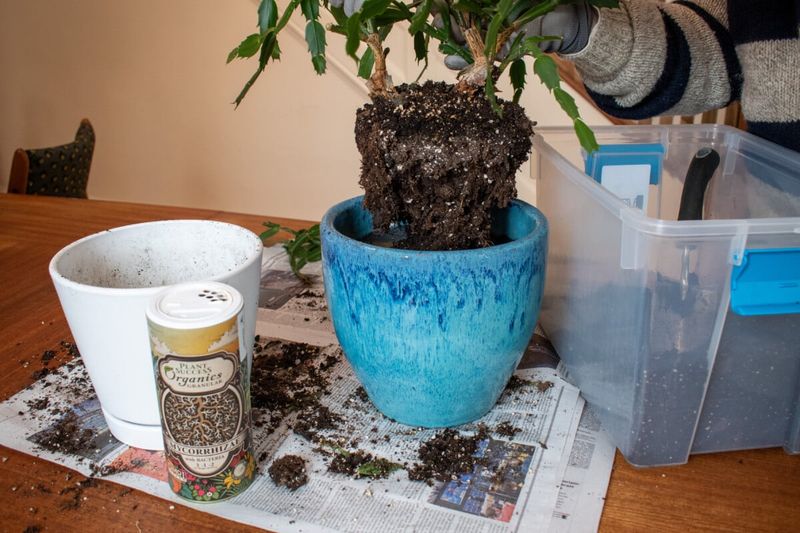
Many holiday cacti sit quietly in the same pot for years, and when they stop flowering, the first instinct is to blame crowded roots. Before you reach for a new pot, though, it helps to know that a slightly snug container is actually normal for these plants and rarely the reason blooms disappear.
Getting the diagnosis right first saves you from disturbing a healthy root system at the wrong time. This guide walks you through spotting a genuine soil or root problem, moving the plant safely when it truly needs more room, and setting up the conditions that actually bring flowers back.
A nonblooming holiday cactus may not need repotting
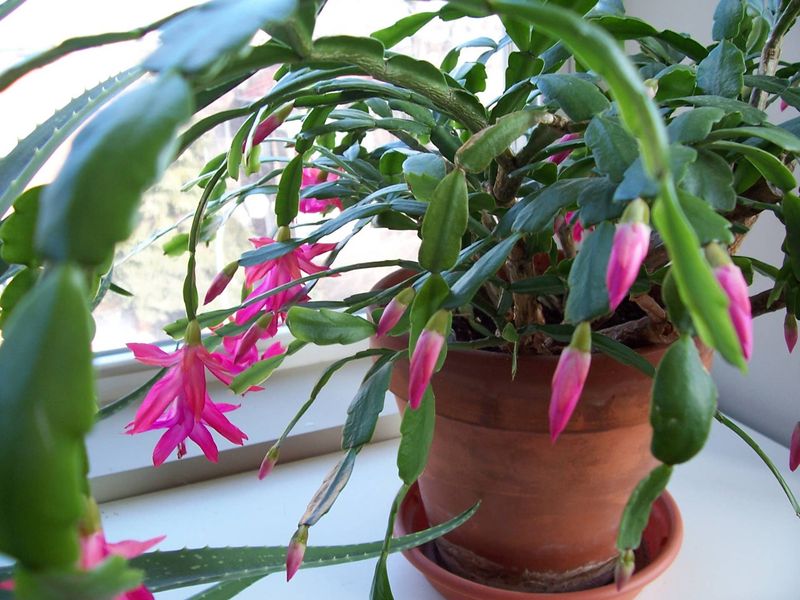
Crowded roots are not automatically a red flag. Iowa State University Extension guidance on holiday cacti notes that these plants actually tend to flower well when slightly pot-bound, and a healthy specimen may stay comfortably in the same container for several years without any trouble.
Repotting makes sense when the situation is clearly beyond snug. Look for roots that have completely packed the container, pushed through drainage holes, or are sitting in a mix that has become compacted, broken down, or drains so slowly that water pools on the surface for minutes.
Any of those signs points to a genuine root or soil problem worth fixing.
If the roots look fine, the real culprit behind missing flowers is almost always something else. University of Illinois Extension lists insufficient darkness, artificial light at night, warm nighttime temperatures, low light during the day, overwatering, underwatering, cold drafts, and recent relocation as documented causes of poor flowering or bud drop.
One more thing worth knowing before you dig: University of Minnesota Extension points out that many plants sold as Christmas cactus are actually Thanksgiving cacti or hybrids, which bloom earlier in fall. If your plant flowered in November instead of December, it may simply be doing exactly what its genetics call for, not failing at all.
Wait until flowering ends before you repot
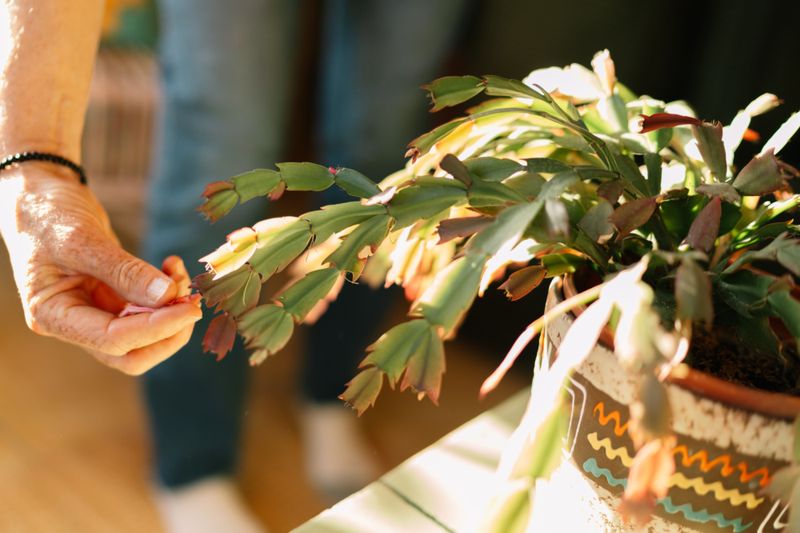
Timing matters as much as technique. Moving a holiday cactus while buds are swelling or flowers are open is one of the fastest ways to lose both, because even a small change in position, light angle, or temperature can cause the plant to drop its buds entirely.
Hold off until the last flower has faded before you touch the pot.
Penn State Extension’s holiday cacti care guide recommends repotting after flowering, and the practical window most extension sources point to is spring or early summer, when the plant is actively growing and has no buds forming. That timing gives roots several months to settle into fresh mix before the next fall bloom preparation begins.
A commonly cited general guideline is roughly every three years, but the calendar should play a supporting role, not the lead one. University of Minnesota Extension emphasizes that visible evidence of overgrowth or deteriorating mix matters more than how long the plant has been in the current pot.
The end of flowering is not an automatic signal to repot right away, either. If flowers finish in December or January, let the plant rest for a few weeks, then assess the roots and mix in spring before deciding whether to move it.
Choose a modestly larger pot and an airy mix
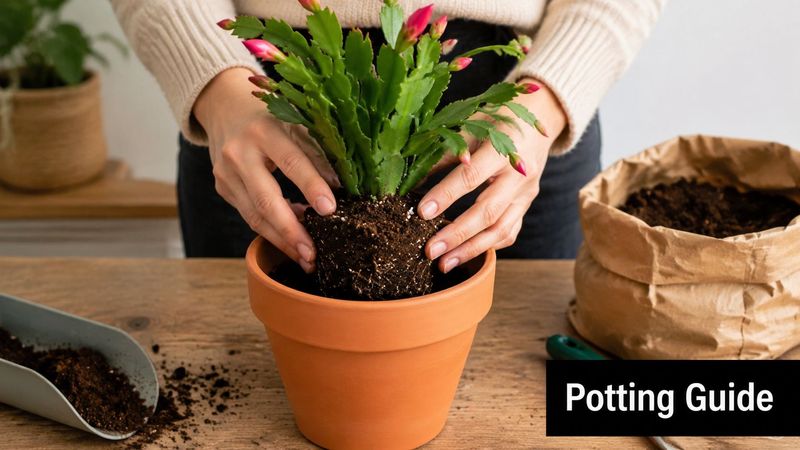
Pot size is one of the most common repotting mistakes, and going too big causes more problems than staying small. A container roughly 1 to 2 inches wider than the current one is the right target.
Penn State Extension and Ask Extension both caution that a much larger pot leaves excess moist mix surrounding the roots, which stays wet longer and raises the risk of root rot.
Open drainage holes are not optional. Without them, water collects at the bottom of the pot regardless of what mix you use, and the roots eventually sit in standing moisture.
Check that the holes are clear before you add any soil.
For the potting medium, the consistent requirement across extension sources is a mix that is light, porous, well-aerated, and quick-draining. University of Minnesota Extension and University of Illinois Extension describe recipes that include combinations of potting soil, perlite, peat, and coarse sand, but the recipes vary and none is the only acceptable formula.
University of Florida IFAS Extension also supports a well-draining, airy mix for holiday cacti. What all sources agree on is avoiding dense garden soil or heavy moisture-retaining mixes, which compact over time and deprive roots of the air circulation these rainforest plants need.
Move the root ball gently and keep the planting depth steady
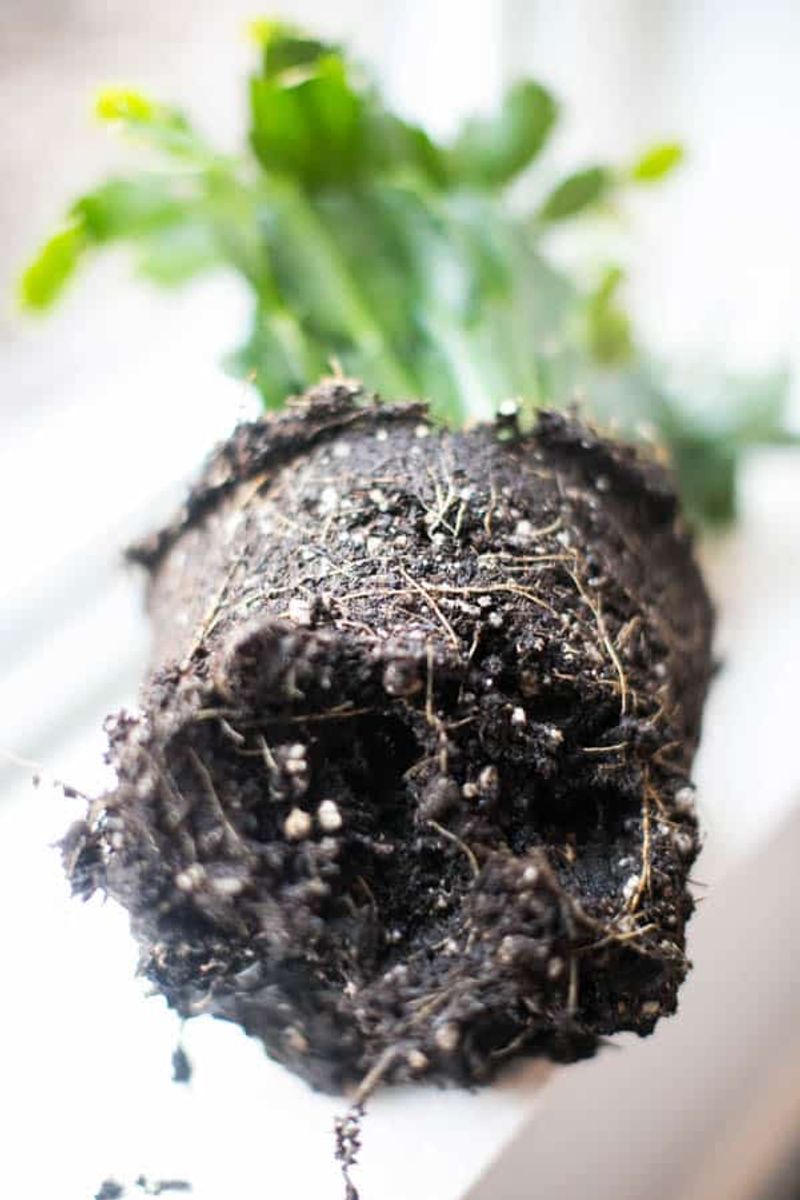
Before you start, set out your new pot, fresh mix, and a watering can so everything is within reach. Tip the old pot sideways and ease the root ball out with a gentle squeeze or a light tap on the bottom.
Avoid yanking the stems.
Once the root ball is free, take a moment to look at the roots. If the outer layer is densely matted or the mix has hardened into a solid mass, use your fingers to loosen the outer roots gently.
The goal is to help roots make contact with the fresh mix, not to strip them bare or cut away healthy tissue. Aggressive root pruning is not part of this process.
Penn State Extension outlines a clear repotting sequence: set the root ball into the new container so the top of the ball sits about 1 inch below the rim, then fill around it with fresh mix. Firm the medium lightly so there are no large air pockets, but avoid packing it tightly, which would defeat the purpose of a porous mix.
Keeping the original planting depth steady is important. Burying the stem deeper than it was before can invite rot at the base, while setting it too high leaves roots exposed and dries out quickly.
Water moderately after settling the plant, enough to moisten the new mix but not to drench it, and let the excess drain completely before moving the pot to its recovery spot.
Protect the roots from standing water
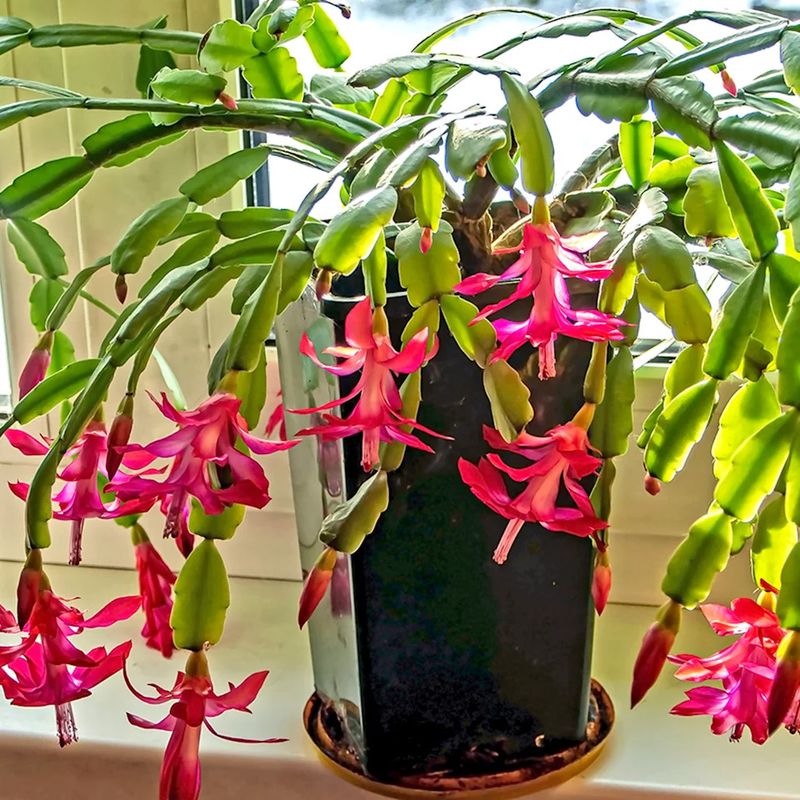
A layer of gravel or stones at the bottom of the pot is a popular idea that does not hold up in practice. Penn State Extension’s review of garden myths explains that coarse material at the base can actually hinder water movement through the potting medium and takes up space that roots could use.
Skip it entirely and rely on a well-draining mix and clear drainage holes instead.
Watering after repotting follows a straightforward rhythm: wait until the top inch or two of the mix has begun to dry, then water thoroughly until it runs freely from the drainage holes. Empty the saucer after each watering so the pot is never sitting in pooled water.
Roots that stay wet for extended periods are vulnerable to rot, and a freshly repotted plant is especially sensitive.
Iowa State University Extension and University of Florida IFAS Extension both caution against keeping the soil saturated, but they also note that letting the plant become bone-dry during budding and active flowering can contribute to bud drop.
University of Minnesota Extension reinforces the middle path: avoid both extremes. Keep the mix from staying soggy, but do not treat this plant like a desert cactus that thrives on prolonged drought.
Holiday cacti are tropical epiphytes that need consistent, moderate moisture to stay healthy.
Give the repotted plant a brief, lower-stress transition
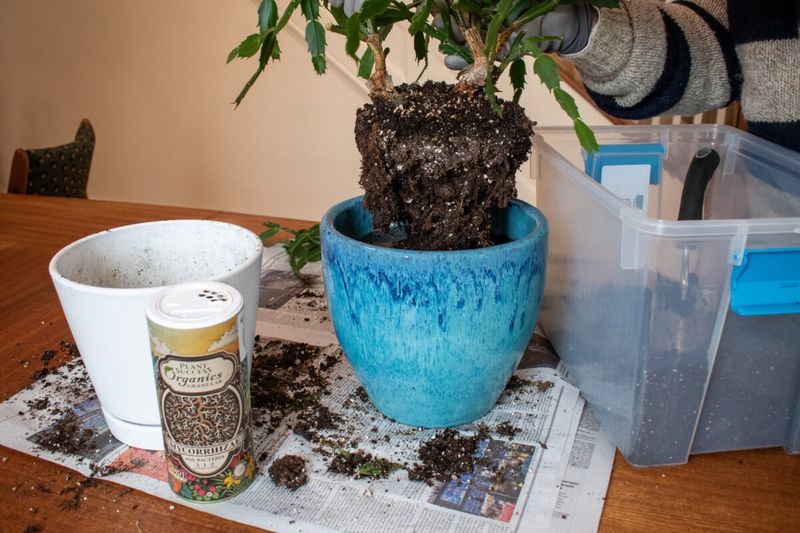
Right after repotting, the plant needs a few days of reduced demands while its roots adjust to the new environment. Penn State Extension recommends keeping the newly repotted plant in a shaded location for two or three days before returning it to its normal spot.
This brief rest lowers the chance of stress wilting while the roots are re-establishing contact with fresh mix.
After those two or three days, move it back to bright, indirect light. Holiday cacti are not desert plants.
University of Illinois Extension describes them as rainforest epiphytes that evolved under a canopy, so intense direct summer sun can scorch the flattened stem segments and leave pale or reddish patches that do not recover.
University of Minnesota Extension confirms that bright, indirect light supports healthy growth and sets the plant up for the next bloom cycle. The shade during the transition period is a short-term recovery measure, not a long-term placement strategy, and it will not by itself trigger flowering.
Use uninterrupted darkness and cool nights to prepare the next bloom
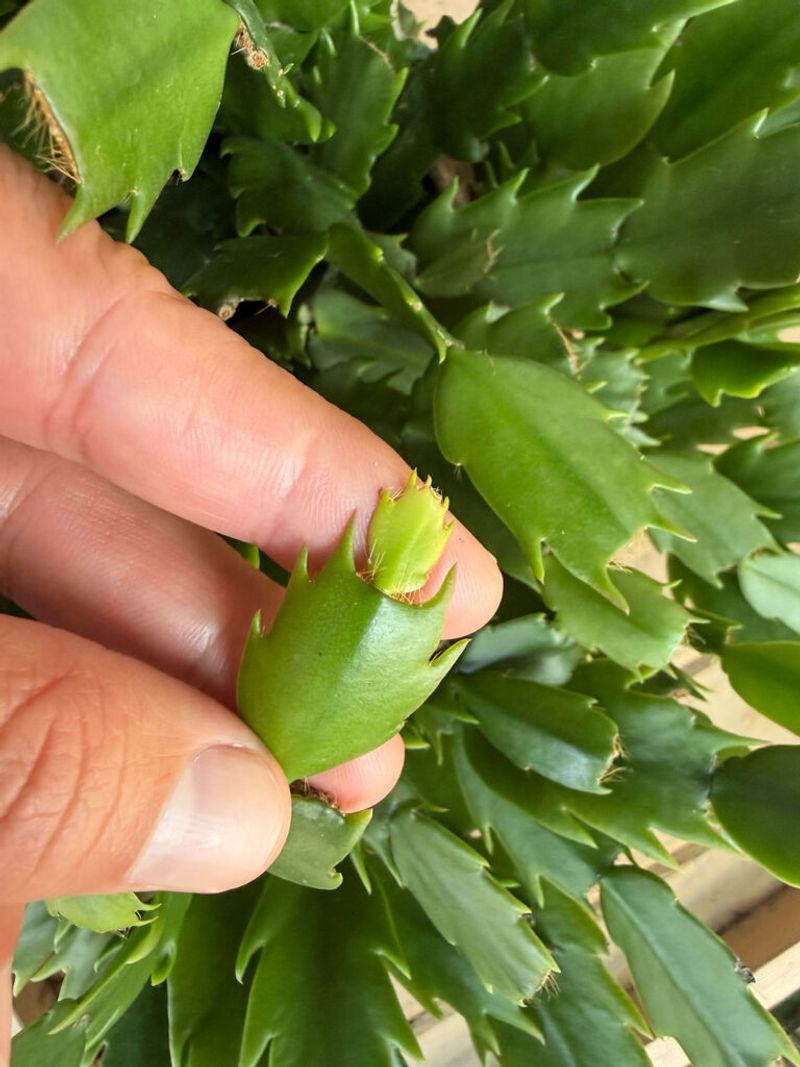
Once the repotted plant has settled in and is growing steadily through spring and summer, the focus shifts to what actually controls whether it flowers. Repotting can correct a root or soil problem, but it cannot replace the environmental cues that tell a holiday cactus to set buds.
The two most important cues are uninterrupted darkness and cool nighttime temperatures. Iowa State University Extension and University of Minnesota Extension describe a general program of roughly 12 to 14 hours of continuous darkness each night for about five to six weeks in fall, combined with cool nights around 55 to 65 degrees F.
These figures are a reasonable working range, but University of Wisconsin Horticulture Extension and UMass Amherst’s commercial holiday cactus production guidance note that exact requirements vary by cultivar, so treat any specific schedule as a starting point rather than a guaranteed formula.
The darkness must be truly uninterrupted. Even a brief exposure to artificial light from a lamp, a streetlight through a window, or a phone screen during the dark period can reset the plant’s response and delay or prevent bud formation.
A closet, a spare room with blackout curtains, or simply moving the plant away from any nighttime light source each evening can all work.
Warm nighttime temperatures, sudden drafts, and abrupt changes in position once buds have formed are also known to cause bud drop. Keep the plant in a stable spot with consistent conditions once the darkness program is underway and small buds begin to appear.
Adjust summer placement for Florida and Texas
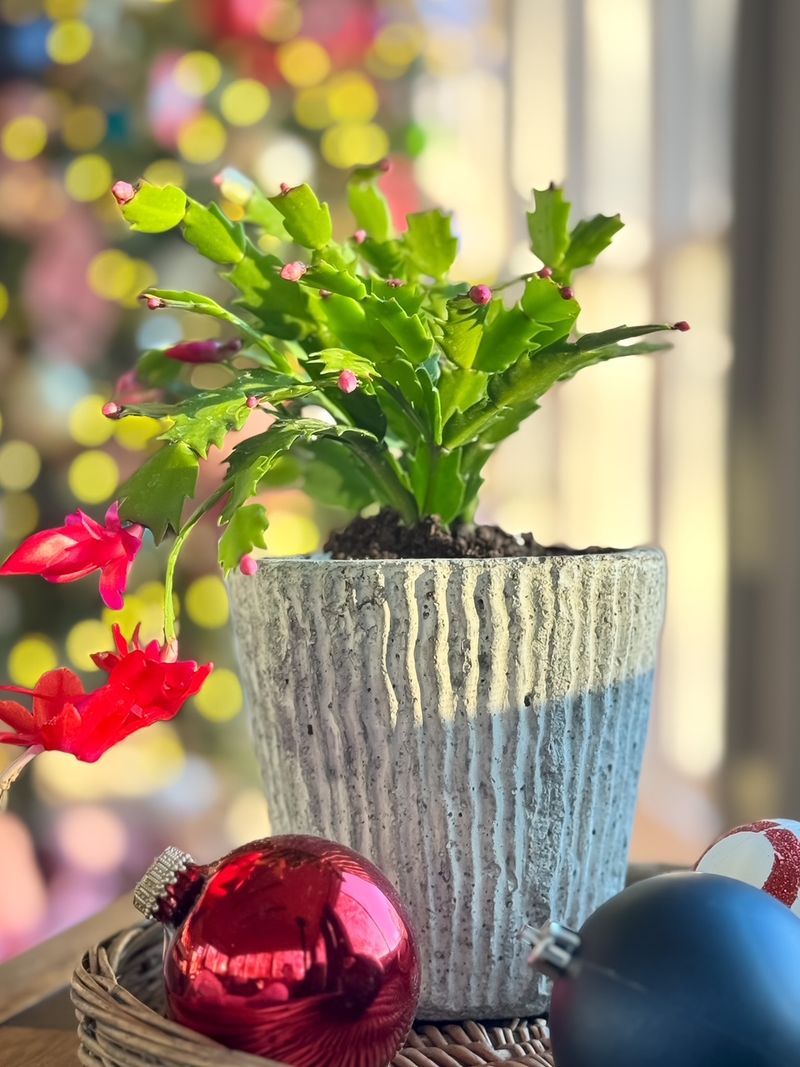
Gardeners in Florida and Texas have a long warm season that can actually benefit a holiday cactus, as long as placement is chosen carefully. University of Florida IFAS Extension supports moving holiday cacti outdoors during warm months into bright shade or filtered light, where the plant can benefit from good air circulation and natural humidity without being exposed to harsh sun.
Intense direct sun is the main outdoor hazard. Even in a partly shaded spot, midday summer sun in Florida or Texas can be strong enough to bleach or scorch stem segments.
A north-facing porch, the shade of a large tree canopy, or a spot that gets morning light and afternoon shade are all safer choices than an exposed south- or west-facing position.
Texas A&M AgriLife Extension notes the importance of protecting holiday cacti from temperature stress. Bring the plant back indoors before nighttime temperatures approach 50 degrees F, because chilling below that threshold can damage tissue and disrupt the plant’s health going into fall.
That indoor move also sets the stage for starting controlled cool nights and the darkness program that prepares the next bloom cycle.
Use repotting to fix root problems, not to force a holiday bloom
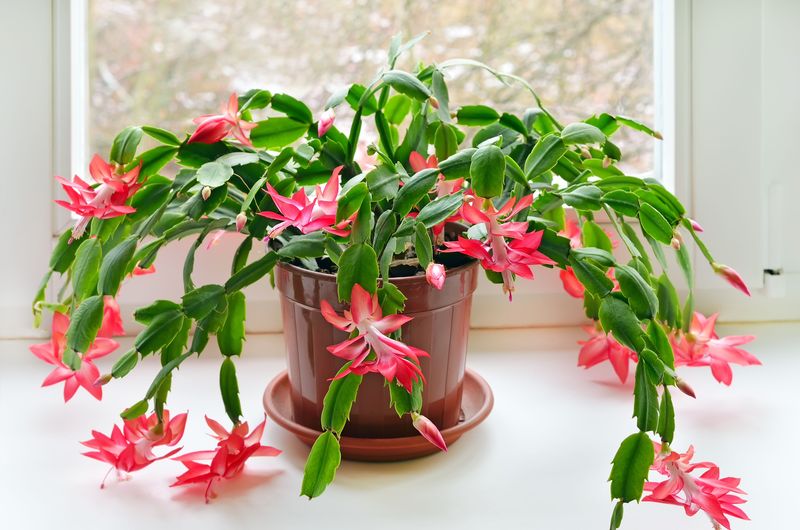
The clearest decision rule for repotting is this: move the plant only when roots have genuinely outgrown the container, grown through drainage holes, or sit in a mix that has compacted or stopped draining well. A modest upgrade of 1 to 2 inches in pot diameter, combined with a light and porous mix and clear drainage holes, corrects the soil problem without creating new moisture risks.
From there, Iowa State University Extension, Penn State Extension, and University of Illinois Extension all point to the same essentials for future flowering: bright indirect light, cool nights, uninterrupted darkness for roughly five to six weeks in fall, and steady but not excessive moisture. Also keep in mind that many plants sold as Christmas cactus are Thanksgiving cacti or hybrids, meaning flowers may arrive in November rather than December, and no specific holiday date can be promised.
A plant that blooms reliably, whenever it blooms, is a plant that has been understood on its own terms.