
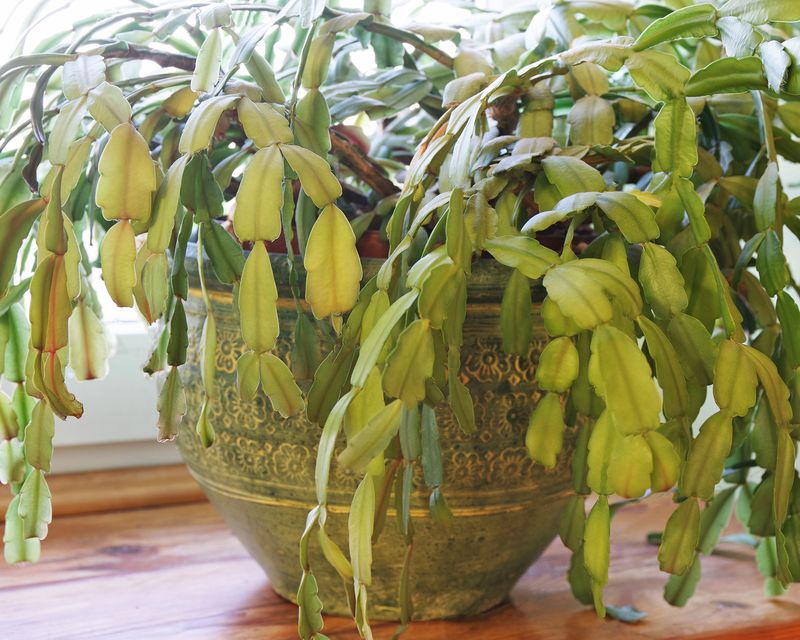
A drooping Christmas cactus can send a gardener straight for the watering can, but reaching for water without checking the soil first is exactly where things can go wrong. Limp, wrinkled, or gray-green stem segments may signal thirst, or they may signal the opposite problem entirely.
Learning to read the pot before you water can mean the difference between a recovering plant and one that quietly declines past the point of rescue.
Wilting does not tell you whether the plant is thirsty
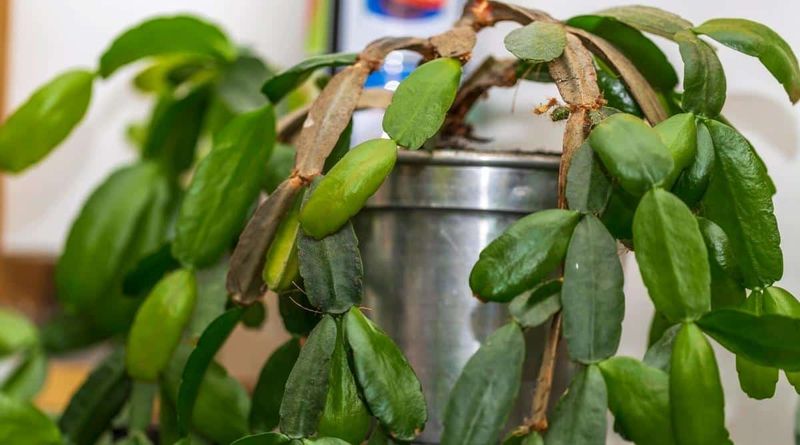
Limp, puckered, or gray-green stem segments on a Christmas cactus are easy to misread. The plant looks distressed, and the instinct is to water it.
However, University of Illinois Extension guidance makes clear that wilting and shriveling can result from either too little water or too much – meaning the drooping appearance alone cannot tell you which problem you are dealing with.
Before you do anything else, press a finger into the potting mix near the center of the pot. Dry, crumbly mix that pulls away from the pot’s sides, paired with wrinkled or puckered stems, points toward water stress from drought.
Wet or damp mix that has stayed that way for several days, paired with the same drooping appearance, points somewhere else entirely.
Adding water to a plant that already has wet roots can accelerate damage rather than relieve it. University of Minnesota Extension notes that root rot is a significant cause of holiday cactus decline, and a plant with damaged roots cannot absorb water even when the soil is moist.
The soil-moisture check is the first step, not the last one.
Prolonged wetness can quietly damage the roots
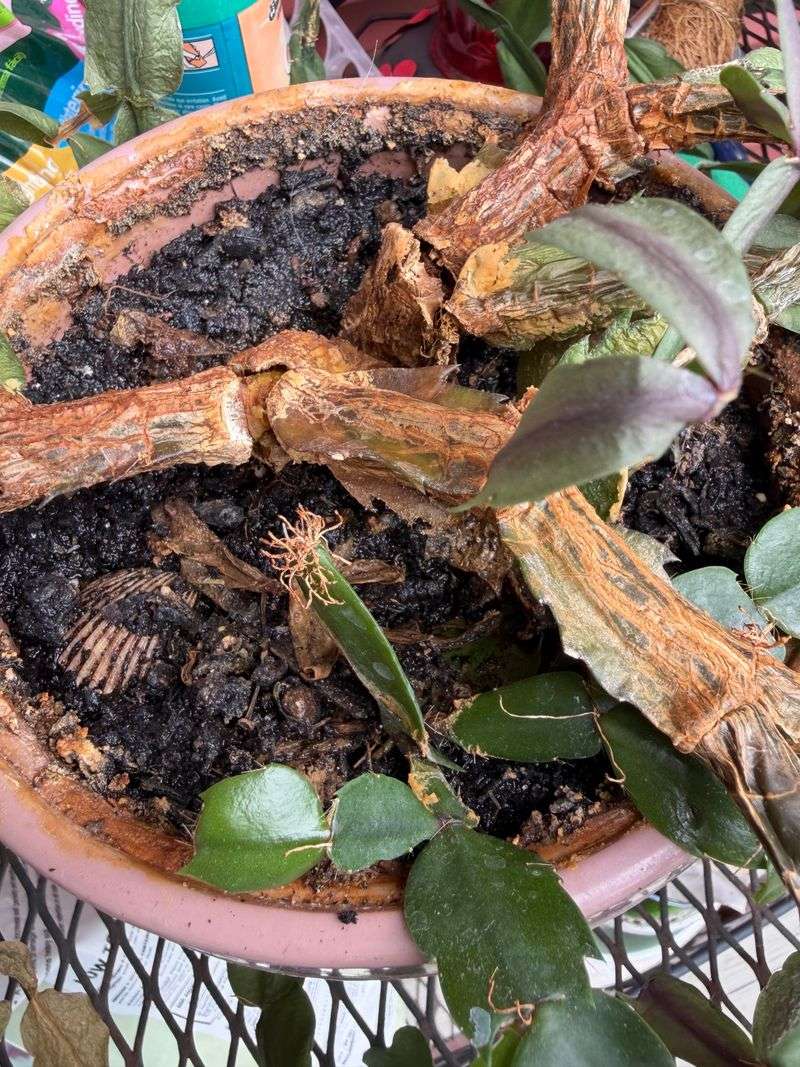
The watering habit most likely to cause hidden root trouble is not necessarily watering too often on the calendar. The real risk is adding water before the previous watering has drained and the mix has had a chance to partially dry.
Roots that sit in saturated, poorly aerated media for extended periods can suffocate and begin to break down, leaving the plant unable to pull moisture upward even when the soil feels wet.
University of Wisconsin-Madison Horticulture Extension points out that prolonged saturation, not simply the frequency of watering events, is what creates the problem. A gardener who waters only once every ten days can still overwater if the pot has no drainage hole, the mix is dense and slow-draining, or the pot sits inside a decorative cachepot that traps drained water beneath it.
A full saucer left under the pot works the same way. North Carolina State Extension recommends emptying the saucer after each watering so the roots are never resting in pooled water.
Root rot in Christmas cactus can involve soil pathogens such as Pythium, Phytophthora, and Fusarium, as noted by the Pacific Northwest Plant Disease Management Handbook, and excess moisture creates the conditions where those organisms thrive.
Use the pot to separate thirst from root trouble
Before deciding on any action, run a quick check of three things: the feel of the potting mix, the condition of the drainage hole, and whether any water is sitting in the saucer or decorative outer container. Push a finger or a wooden skewer about an inch into the mix.
If it comes out dry and the stems look puckered, the plant is likely thirsty. If the mix feels consistently damp and the stems are still drooping, that combination deserves closer attention.
Check the drainage hole next. A blocked or absent hole means water has nowhere to go, and the mix can stay saturated long after you think it has drained.
A musty or sour smell rising from the pot is another warning sign that roots may have been sitting in stagnant moisture for too long.
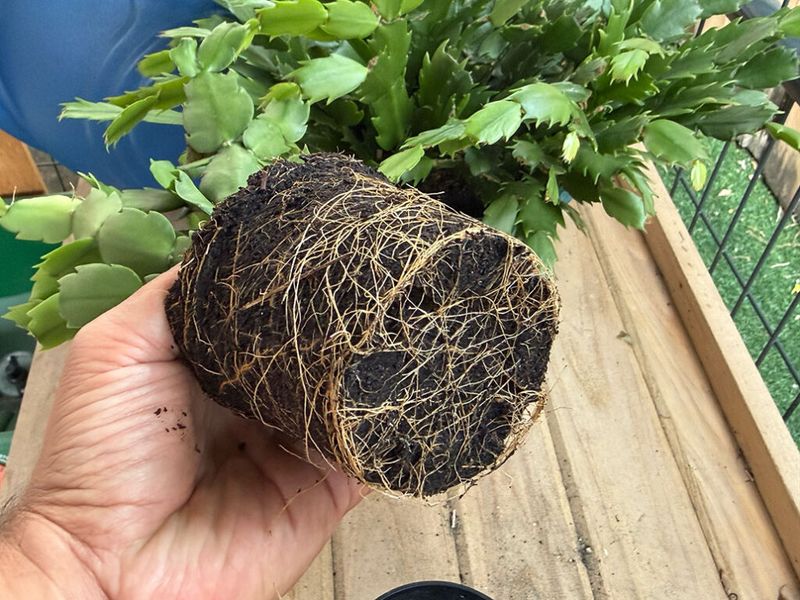
If the plant continues to decline after you have stopped adding water and emptied the saucer, gently slide the root ball out of the pot for a closer look. Penn State Extension’s disease guidance and the Pacific Northwest Plant Disease Management Handbook both describe dark, soft, or disintegrating roots as signs of root disease rather than simple thirst.
These observations are useful warning signs, but a home inspection is not a laboratory diagnosis. Use them to guide your next step, not to reach a firm conclusion.
A wet, wilted cactus needs drainage first
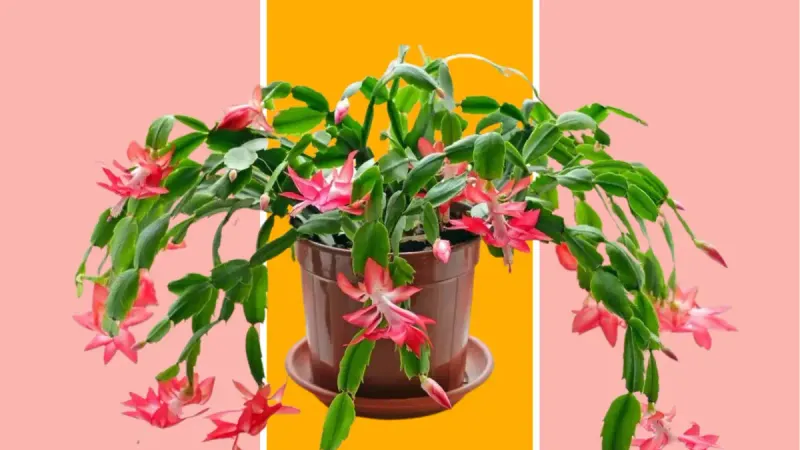
When the potting mix is already wet and the plant is still drooping, the right move is to stop watering entirely and deal with what is already in the pot. Start by removing any water sitting in the saucer or decorative cachepot.
Then confirm that the drainage hole at the bottom of the growing container is open and unblocked. A hole that is partially sealed by compacted mix or a pot foot can trap moisture even in a container that appears to have drainage.
University of Minnesota Extension identifies root rot as a significant cause of holiday cactus decline, and the appropriate response when wet soil and wilting appear together is to reduce moisture exposure, not increase it. Move the plant to a spot with good air circulation if possible, and allow the mix to begin drying before making any further decisions.
If the plant does not improve after several days of dry conditions, inspect the roots as described in the previous section. Healthy roots are firm and light-colored.
Dark, soft, or foul-smelling roots suggest disease that may not be reversible. Ask Extension guidance and the Pacific Northwest handbook on stem and root rots both note that severe root or stem rot may require discarding the plant.
Before doing so, check for healthy stem segments, which can be taken as cuttings and propagated as a safety measure.
Dry soil calls for a thorough drink, not tiny sips
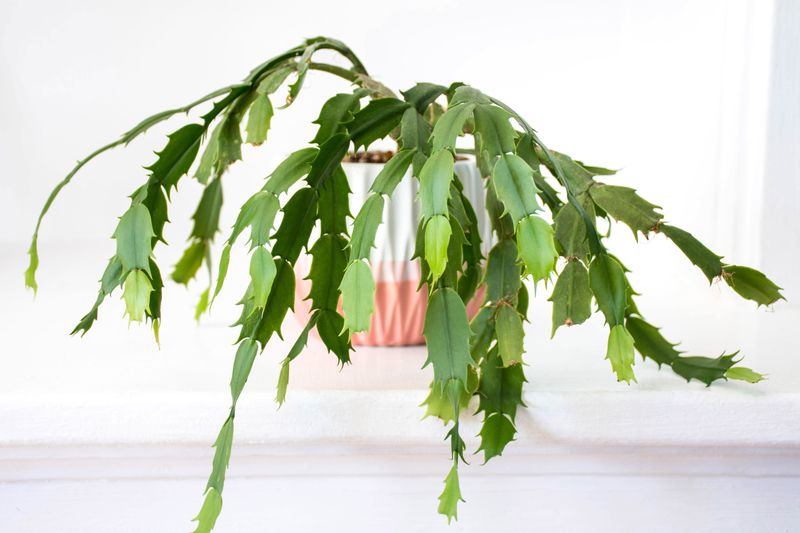
Not every wilted Christmas cactus is sitting in wet soil. If the finger check reveals dry, crumbly mix and the stems look puckered or shrunken, the plant needs water, and it needs enough to actually reach the roots.
Repeated light sprinkles that wet only the top layer of mix are not sufficient. The goal is to wet the entire root zone until water flows freely from the drainage hole.
UF/IFAS guidance notes that potting mix that has dried out completely can become water-repellent, causing water to run down the sides of the pot and out the drainage hole before it has actually soaked into the root zone. For very dry mix, water in stages: apply some water, wait several minutes for it to absorb, then apply more.
Repeating this process two or three times helps the mix rehydrate evenly.
After a thorough watering, empty the saucer within about thirty minutes so the roots are not sitting in pooled water. The drooping appearance should begin to ease within a day or two as stems rehydrate.
If the mix was dry and the plant does not respond within a couple of days, revisit the drainage setup and consider whether light, heat, or drafts may also be contributing to the stress.
Build a drainage-based watering routine
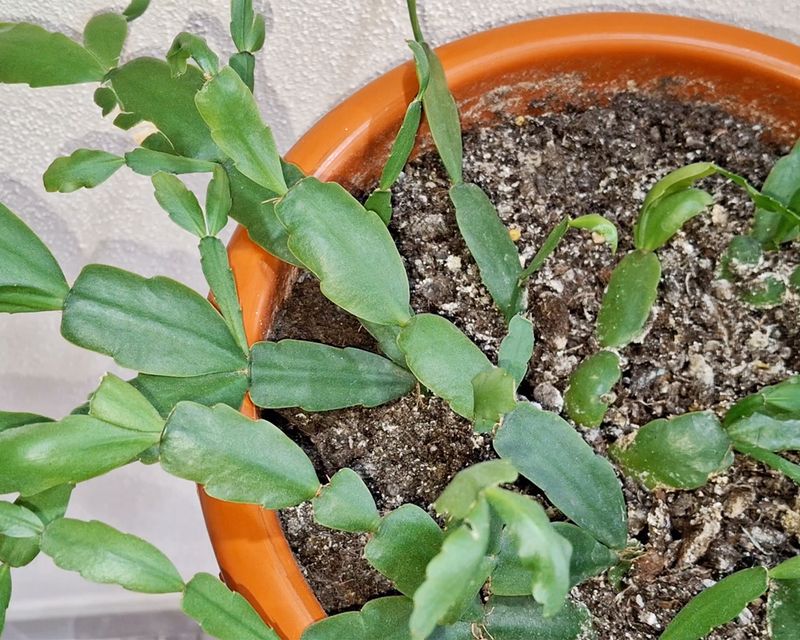
Preventing a repeat of either problem comes down to three basics: a pot with a clear drainage hole, a light and well-aerated potting mix, and a saucer that gets emptied after every watering. Penn State Extension’s holiday cactus care guide recommends a mix that drains quickly, commonly achieved by combining standard potting mix with perlite, coarse sand, or another aerating material.
No particular brand is required; the goal is a medium that does not hold water around the roots for days at a time.
Timing each watering by soil feel rather than by the calendar is safer than following a fixed schedule. A common practical threshold is to water when roughly the top inch of mix feels dry.
UF/IFAS and NC State’s plant profile for Schlumbergera both support checking the mix before watering rather than relying on a set interval. Outside of the blooming period, some guidance recommends allowing the mix to dry more substantially between waterings, reflecting the fact that drying rates vary with pot size, light levels, indoor temperature, humidity, and whether the plant is actively growing or resting.
Pot size also matters. Christmas cactus tends to perform well when it is moderately pot-bound, and an oversized container holds more moisture than the roots can use, increasing the risk of prolonged saturation.
If repotting is needed, move up only slightly in container size and use fresh, well-draining mix.
Southern light and holiday conditions can mimic watering stress
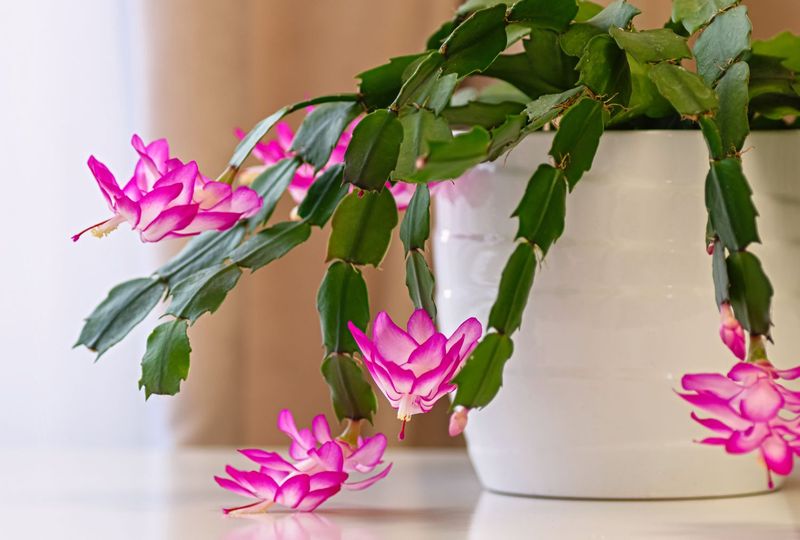
Gardeners in Florida and Texas sometimes see their Christmas cactus droop or drop buds without any obvious watering problem, and the explanation often comes from the environment rather than the pot. Intense direct sun and high heat can stress these plants quickly.
Christmas cactus is a rainforest epiphyte that grows in filtered light under tree canopies, not in open sun, and outdoor plants placed in full Florida or Texas summer exposure can wilt from heat and sun damage that looks nearly identical to water stress.
UF/IFAS and Texas A&M AgriLife Extension both recommend bright, filtered or indirect light for outdoor plants in warm climates, along with protection from extreme heat. Bring plants indoors before temperatures approach freezing, as these tropical plants have little cold tolerance.
During the budding and blooming period, a separate set of stressors can cause bud drop without any root trouble at all. Penn State Extension and University of Illinois Extension both list sudden temperature changes, cold or hot drafts, and direct sun as independent triggers for bud drop.
The soil should not dry out completely during flowering, but keeping it soggy is equally risky. Stable, draft-free conditions with consistent indirect light give flowering plants the best chance of holding their buds.
Let soil and drainage guide the next watering
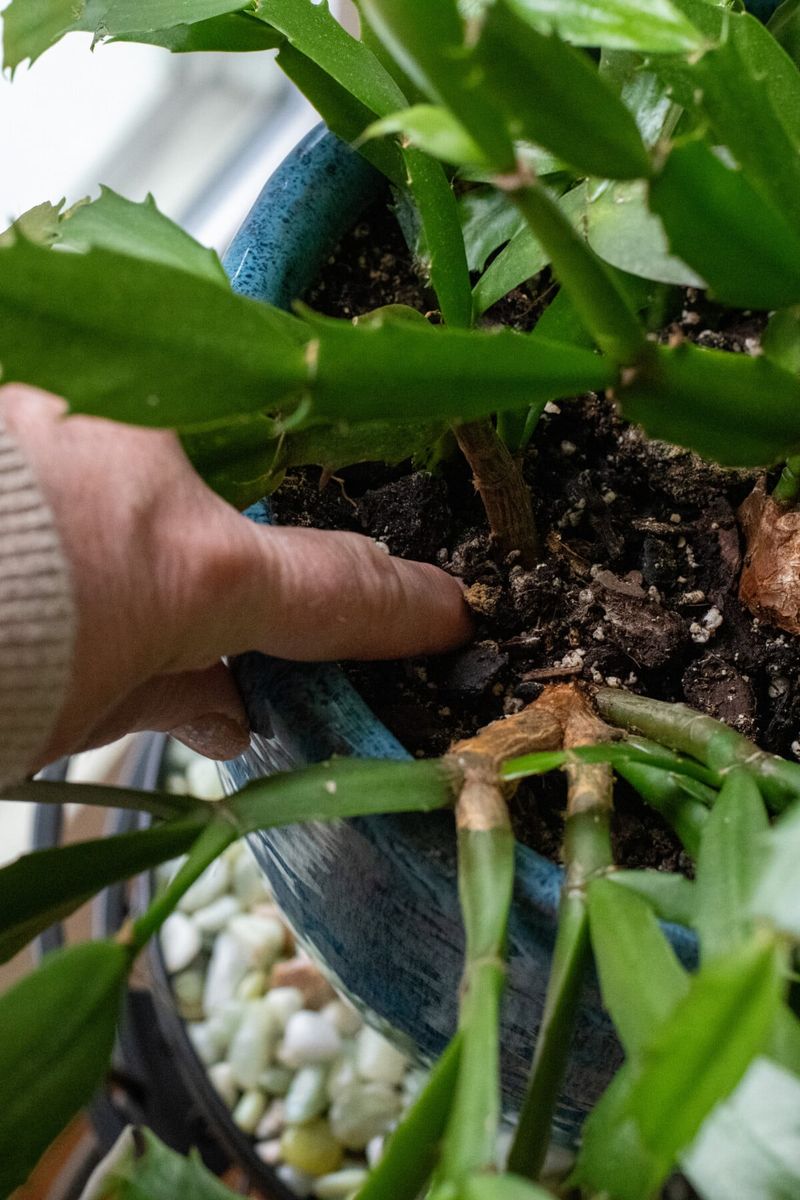
Every time a Christmas cactus looks off, the most useful first move is the same: check the soil and confirm that drainage is working. Dry mix with wrinkled stems calls for a thorough watering until water exits the drainage hole, followed by emptying the saucer.
Wet mix with drooping stems calls for no additional water, removal of any pooled water, and patience while the roots recover, or an inspection if the decline continues.
University of Minnesota Extension and UF/IFAS both support the same underlying principle: this plant needs moisture without prolonged saturation, and no fixed schedule can substitute for a quick feel of the mix. A Christmas cactus that gets good drainage and a soil check before every watering is far less likely to leave you guessing.