

Clematis can fill a fence with lush green growth all season long and still disappoint you with barely a bloom. When that happens, a lot of gardeners assume they did something wrong in fall, but the real answer is usually more specific than that.
Before you reach for the shears this season, knowing which pruning group your plant belongs to can protect next year’s flowers, and that one piece of information changes everything about how and when you cut.
Blind fall pruning can cost next season’s flowers
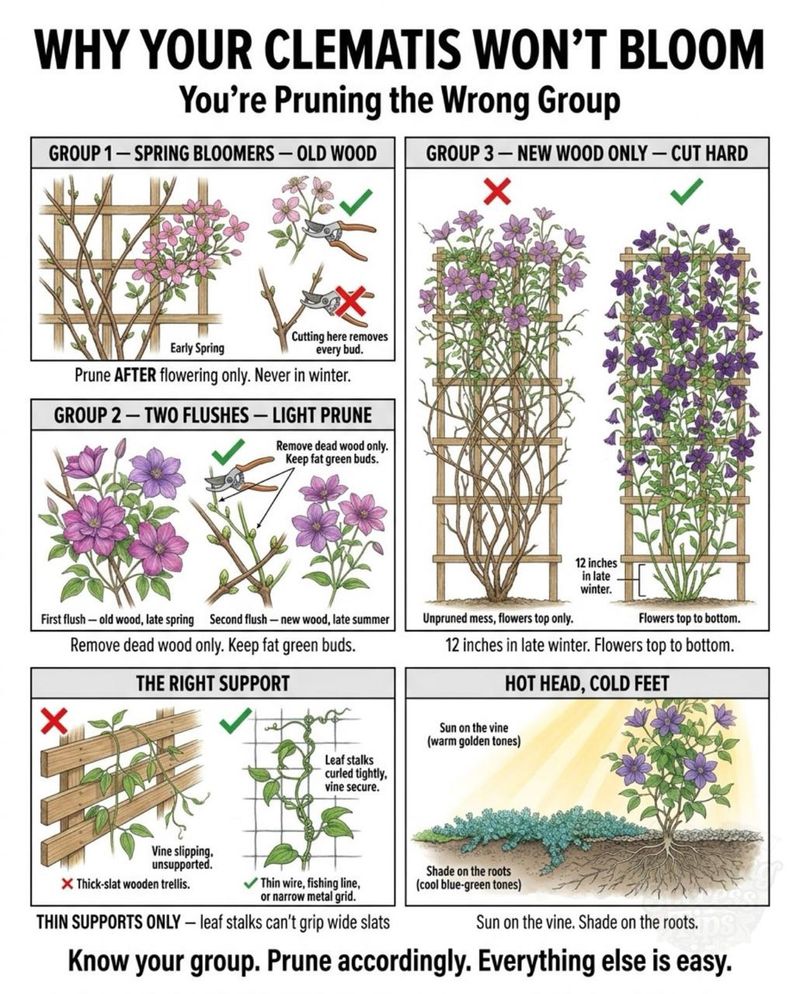
Reaching for the shears on a healthy-looking clematis vine without knowing its pruning group is one of the most preventable ways to reduce or delay next year’s bloom. The same hard cut that cleans up one plant without any consequence can strip away the very stems another plant needs to flower in spring.
That gap in outcome comes down to one fact: clematis do not all produce flowers on the same age of wood, so there is no universal fall pruning rule that applies safely to every vine in your yard.
RHS pruning guidance confirms the three-group system that determines where each plant sets its buds. Group 1 plants bloom on previous-season growth, so a fall hard cut can remove the stems that would carry spring flowers.
Group 2 large-flowered hybrids depend mainly on old wood for their primary display and may produce some later flowers on new growth. Group 3 plants flower on current-season stems and are generally more forgiving of hard cutting, though their pruning window is best placed in late winter or early spring rather than fall.
Mistimed hard pruning is a real, fixable risk worth taking seriously before you cut. At the same time, Iowa State Extension’s clematis guide lists light levels, excess nitrogen, drought, winter injury, and plant age alongside improper pruning as common reasons a clematis grows well but flowers poorly.
Fall is a good moment to pause and identify your plant, not a universal treatment deadline.
Identify the pruning group before reaching for shears
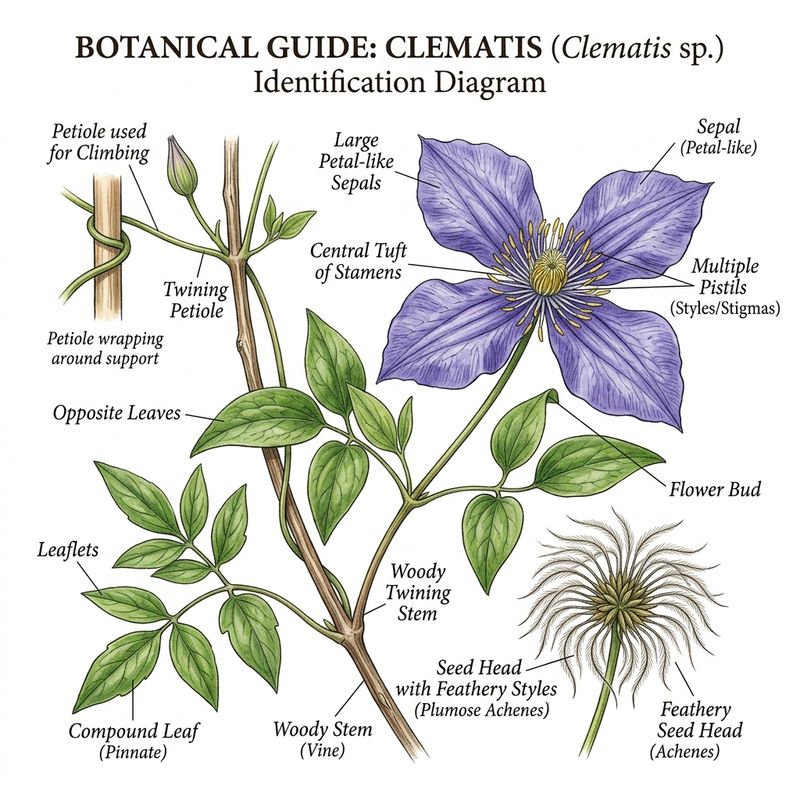
The safest starting point is the plant tag, the cultivar name on your receipt, or the nursery description you saved when you bought the vine. Those sources will often name the pruning group directly, and that label beats any seasonal observation you can make from one year of watching the plant bloom.
If you no longer have that information, a reliable cultivar database or a call to the nursery where you purchased it can fill the gap before you make a cut you cannot take back for the coming season.
Flowering time works as a backup clue when the cultivar name is unavailable. RHS growing guidance for clematis explains that early-spring bloomers generally flower on old wood, pointing toward Group 1, while late-summer and fall bloomers more often flower on new growth, pointing toward Group 3.
The catch is that this pattern is imperfect, and guessing from bloom timing alone can mislead you on Group 2 cultivars in particular.
Group 2 plants can flower on both old and new wood, and the RHS International Clematis Register supplement makes clear that cultivar classifications within this group can be complicated. A vine that bloomed in late spring and again in late summer could belong to Group 2, and treating it as a Group 3 plant based on a second flush of late-season color could cost you most of the primary spring display.
One season of bloom timing is not enough information to make a confident group assignment on its own.
Protect old wood on Groups 1 and 2
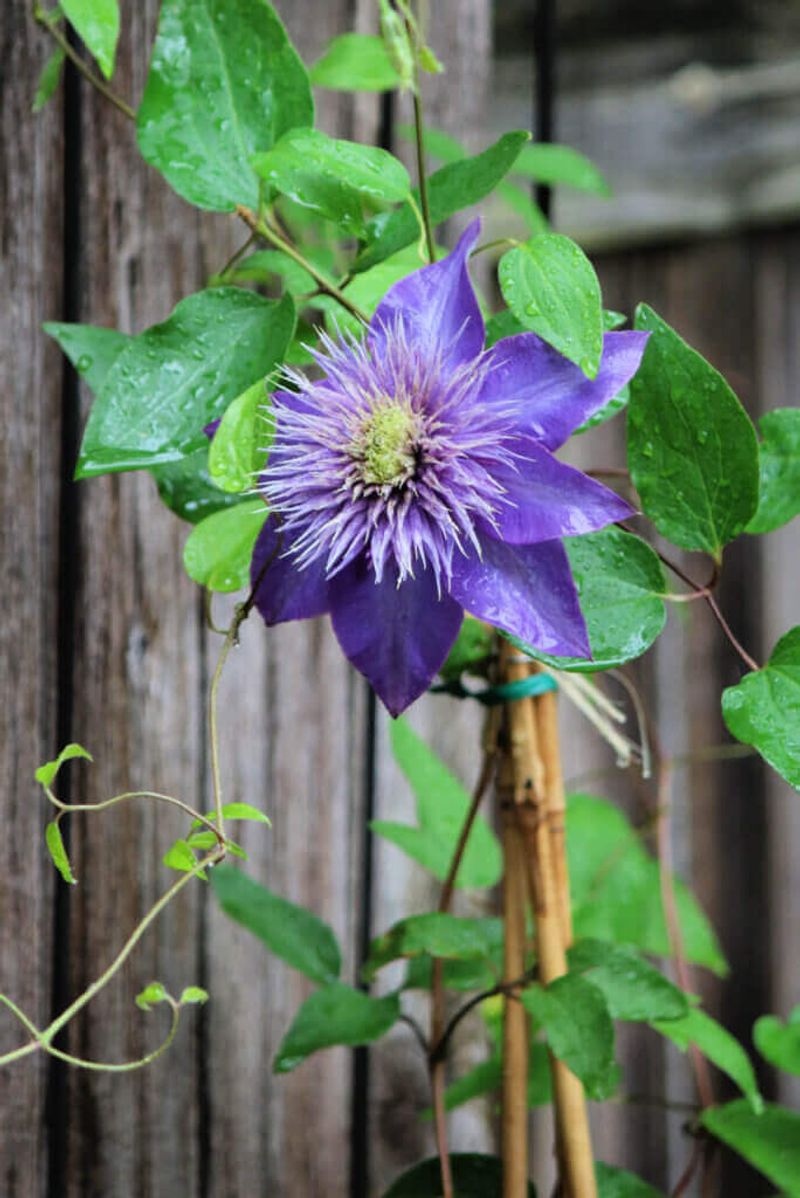
Group 1 clematis are among the earliest to flower each year, and that timing is a direct result of how they store their energy. Plants in this group, including Clematis alpina, C. macropetala, C. armandii, and C. montana, set their flower buds on the previous season’s stems.
Cutting those stems hard in fall or early spring removes the buds before they ever open. RHS pruning guidance recommends pruning Group 1 plants only after they finish flowering, and only to remove dead, damaged, or genuinely unwanted growth rather than as a routine size-reduction exercise.
Group 2 large-flowered hybrids work differently from Group 1, but they share the same dependence on older wood for their showiest flowers. The main spring display comes from short shoots that emerge from stems the plant grew the previous season.
A second, lighter flush of flowers may appear later on new growth, but that secondary bloom rarely matches the primary display in size or quantity. Severe pruning in fall can eliminate most of the old-wood stems that carry the spring show, leaving the plant to start over from scratch.
Light pruning in late winter or early spring suits Group 2 plants best. The practical approach is to remove stems that are clearly dead or weak and shorten living stems to a pair of strong, visible buds.
A light trim after the first bloom can encourage the later flush without sacrificing the wood the plant needs for the following year’s main display. Indiscriminate hard cutting on either of these groups trades a season of flowers for the appearance of a tidy vine.
Give Group 3 its late-winter reset
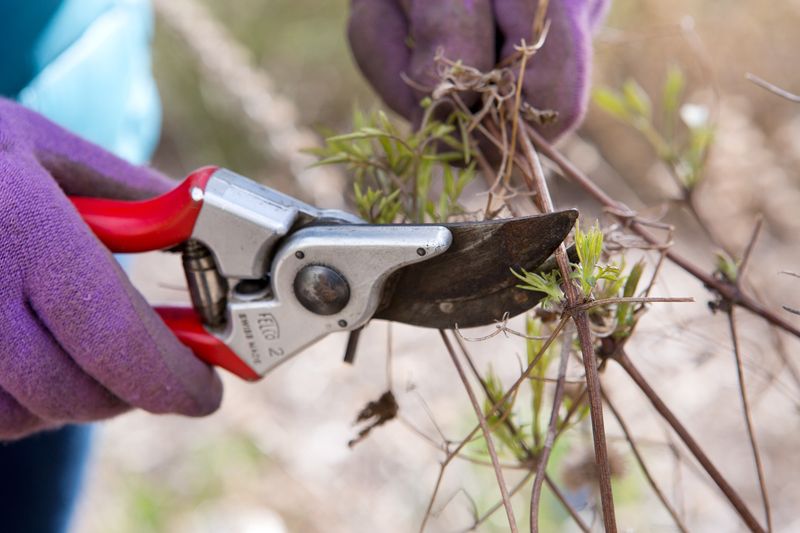
Late-flowering clematis in Group 3 operate on an entirely different schedule from the old-wood groups, and that difference means they can handle a harder cut without losing next season’s bloom. Cultivars like Clematis viticella varieties, C. texensis, and late-flowering hybrids including ‘Jackmanii’ produce all of their flowers on stems that grow during the current season.
Removing last year’s growth does not remove the buds for the coming year because those buds have not formed yet.
The timing that works best for Group 3 is late winter or early spring, once the worst cold has passed but before vigorous new growth begins. Mississippi State Extension’s Southern gardening guidance confirms the same three-group system and recommends hard pruning of Group 3 plants in early spring.
Illinois Extension notes that cutting Group 3 plants back to roughly 6 to 18 inches is a common approach, though the right height depends on the specific cultivar and the grower’s own guidance rather than a single fixed number.
Fall is not the required moment for this work. Leaving Group 3 stems standing through winter can provide some protection for the crown in colder parts of the South and gives you a clearer picture of which stems survived before you make the final cut.
RHS pruning guidance places this hard reset in late winter or early spring for exactly that reason, treating fall as a time to assess the plant rather than a mandatory cutting deadline.
A bad cut may reduce blooms without ruining the vine
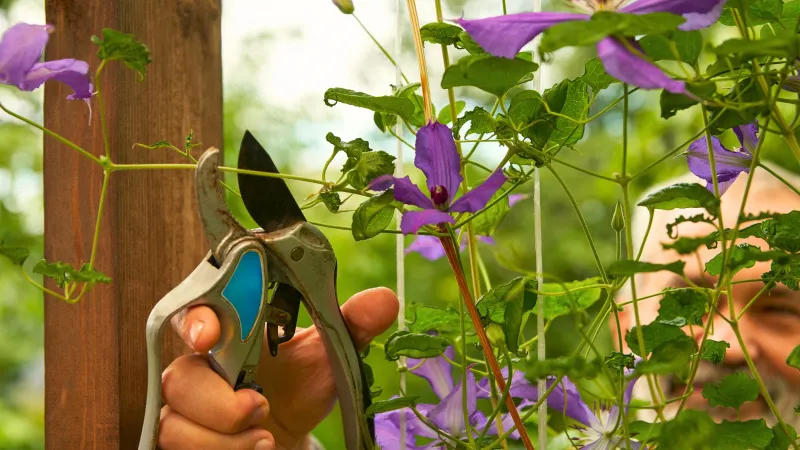
Gardeners who already cut back a Group 1 or Group 2 clematis harder than they should have can take some comfort in knowing that an established vine usually survives the mistake. Washington State University Extension’s clematis guide notes that a well-established plant may regrow after an incorrect cut, though flowering may shift or be reduced for the coming season.
The cut cannot be undone for the bloom cycle that is already approaching, but it does not end the plant’s life or permanently damage its potential.
The practical consequence of removing old wood at the wrong time is that the plant may produce fewer flowers, smaller flowers, or flowers later than expected during the next season. On a Group 1 plant that blooms in spring, an untimely hard fall cut can mean a very sparse or entirely skipped spring display while the plant rebuilds its framework.
A Group 2 plant in the same situation may still produce some flowers on whatever new growth it develops, but the main spring show will likely be much reduced.
Winter damage can cause a similar outcome and is easy to confuse with pruning loss. Iowa State Extension’s pruning FAQ points out that cold can kill flower-bearing stems on Groups 1 and 2, producing the same result as an untimely cut even when pruning was done correctly.
If your plant looks sparse after a cold winter, wait to see where new growth emerges before making any additional cuts, and give the vine a full season to tell you what it can do before you change your approach.
Check growing conditions before blaming pruning
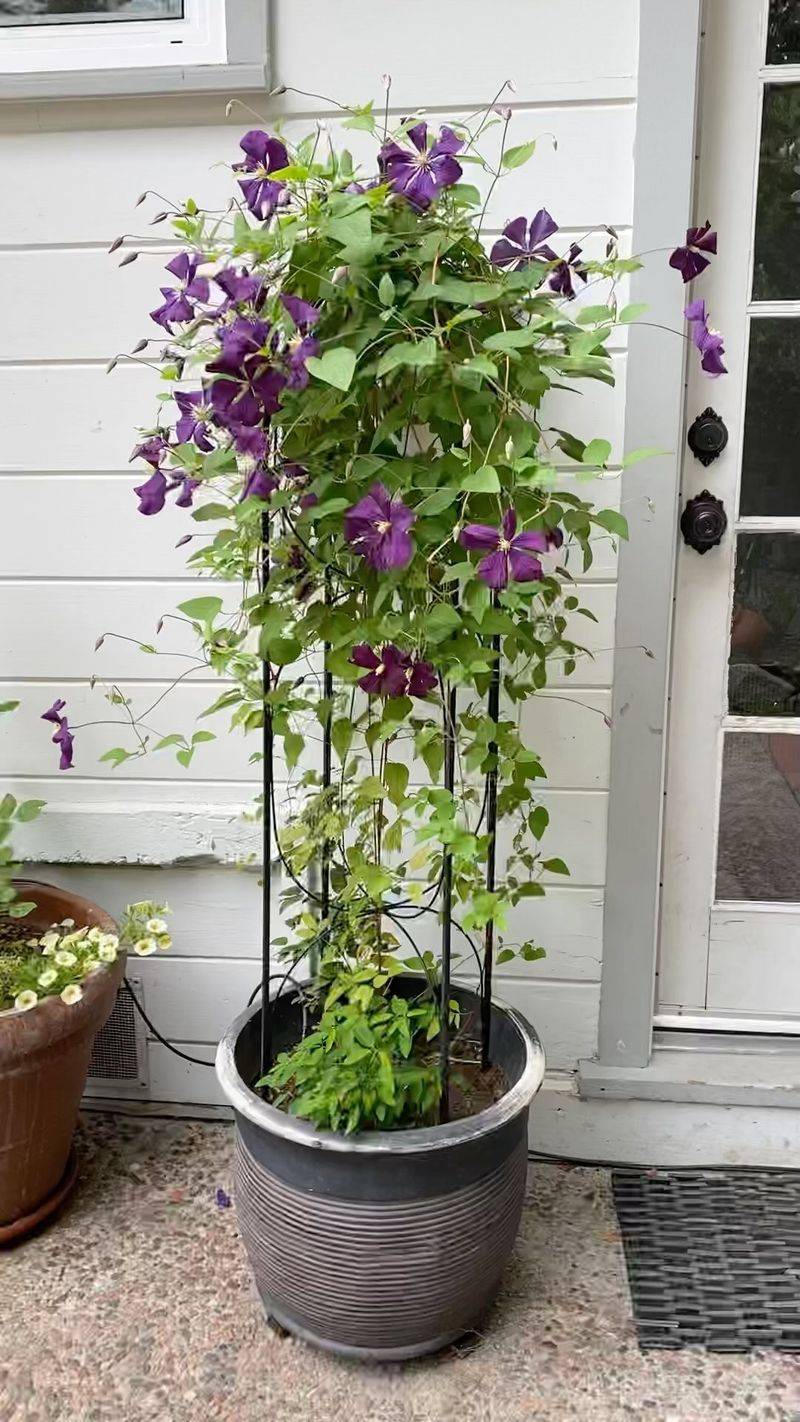
A vigorous clematis that refuses to flower is not always a pruning problem. Several growing conditions can produce the same result, and correcting the wrong one will not bring the blooms back.
Running through a short checklist of the most common factors can help you find the real obstacle before spending another season on trial and error.
Light is often the first place to look. Iowa State Extension’s growing guide recommends at least about six hours of direct sun for strong flowering, and notes that low light is one of the primary reasons a healthy-looking clematis fails to bloom.
Southern gardeners with afternoon heat may want to provide some shade during the hottest hours, but that protection should not come at the expense of the overall light the vine receives during the day.
Water and drainage matter just as much as light. Clemson Cooperative Extension recommends about an inch of water per week during dry conditions and a mulch layer over the root zone to keep soil temperatures even and moisture consistent.
Roots that stay waterlogged in poorly drained soil can stress the plant enough to suppress flowering even when the vine looks outwardly healthy.
Nutrition is a factor that often gets mishandled in the effort to fix a flowerless vine. Excess nitrogen encourages leafy growth at the expense of flowers and can also produce soft stems that are more vulnerable to disease.
A soil test is the most reliable way to know what the plant actually needs, and a low-nitrogen or balanced fertilizer used according to label directions is safer than heavy feeding. Young clematis may also need several years to establish before flowering heavily, so a vigorous first- or second-year plant with few blooms is not necessarily suffering from any fixable mistake.
Use Southern conditions to refine the schedule
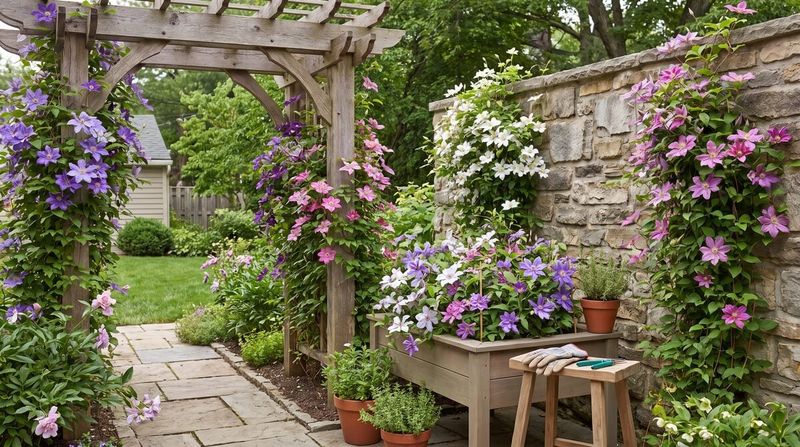
Southern gardeners work with a climate that does not always match the timing assumptions built into national gardening calendars. The three-group pruning system is the same regardless of region, but the right moment to act within each group depends on the local freeze pattern and the specific cultivar rather than a single date that applies from Florida to Virginia.
In areas with mild winters and early springs, late winter arrives sooner than it does farther north, and the window for Group 3’s hard reset may open weeks earlier than a national guide would suggest.
Mississippi State Extension confirms the three-group approach for Southern gardens and recommends early spring as the time for Group 3 hard pruning, while Georgia Extension guidance on pruning ornamental plants in the landscape supports pruning old-wood bloomers after flowering rather than on a fixed seasonal schedule. Heat, drought, poor drainage, and intense afternoon exposure can all limit flowering in Florida and Texas independently of pruning, so addressing those conditions is part of the regional picture.
Florida gardeners need one additional piece of information before planting or propagating any clematis. UF/IFAS identifies Clematis terniflora, Japanese clematis, as invasive in Florida and does not recommend it as an ornamental there.
Check the species before planting a vine from a neighbor’s yard or relocating an unidentified plant. The USDA Plant Hardiness Zone Map can help you assess whether a cultivar is perennial in your area, but zone information does not identify pruning group or predict bloom performance on its own.
Make the fall decision by plant, not by headline
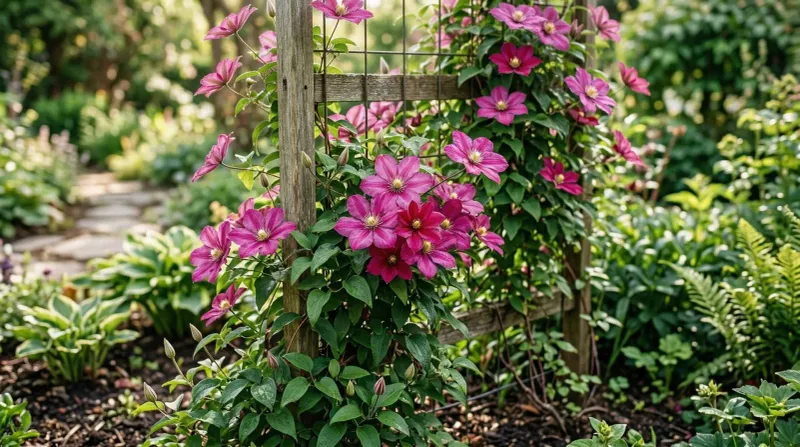
Fall is a useful time to assess your clematis, not a universal cutting deadline. The practical sequence starts with identification: find the cultivar name, check the plant tag, or consult a reliable reference before making any cut.
If the plant belongs to Group 1 or Group 2, protect the old wood and hold off on anything more than light cleanup of dead or damaged stems. If it belongs to Group 3, plan the hard reset for late winter or early spring rather than acting now based on a general seasonal prompt.
When flowering remains poor after correct pruning, work through the conditions checklist. RHS pruning guidance and Iowa State Extension both point to light, moisture, nutrition, plant age, winter injury, and disease as factors that can suppress blooms regardless of how well the pruning was timed.
Getting the pruning group right improves the odds of protecting next season’s flowers, but it cannot eliminate every cause of a flowerless vine. The plant is always more specific than any headline.