
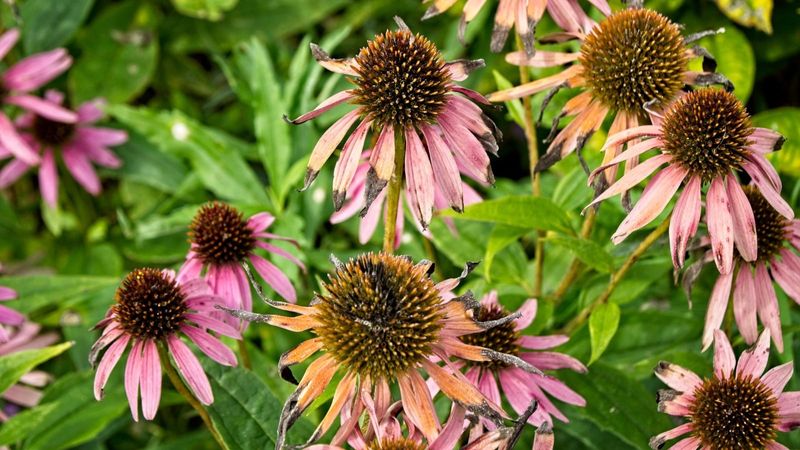
Purple coneflowers are supposed to be tough, but plenty of gardeners watch them struggle season after season despite regular feeding and watering. Before you buy another bag of fertilizer or swap out the plants entirely, the real problem may be where they are growing, not what you are giving them.
Checking the planting site first – sunlight, drainage, crown depth, and moisture – can save you time, money, and a lot of frustration.
Treat the planting site as the first suspect, not the final diagnosis
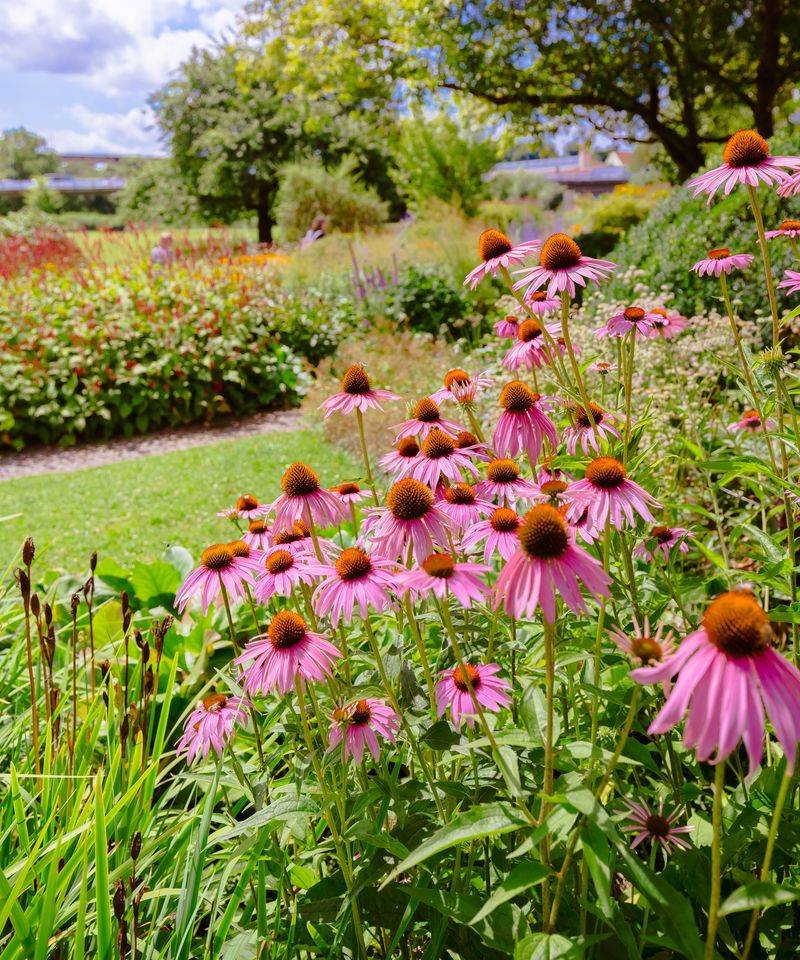
Purple coneflowers that look pale, floppy, or stubbornly bloom-free are frustrating to deal with, especially when you have already tried feeding them. The honest first step is not another application of fertilizer – it is a close look at where the plants are actually growing.
A site with too little direct sun, soil that stays wet, a buried crown, or persistently saturated roots can quietly undermine a plant that would otherwise thrive.
According to North Carolina Extension’s purple coneflower profile, the plant performs best in full sun with well-drained soil – conditions that directly affect whether it grows vigorously or limps along. Mississippi State Extension adds that poor drainage and buried crowns are specific site problems worth correcting before anything else.
Heavy fertilization, meanwhile, can push tall, weak growth that falls over rather than improving flowering, though genuine nutrient deficiencies are possible and worth ruling out with a soil test if you have addressed light and drainage and still see no improvement.
Site problems are the most productive first check, but they are not the only explanation. A five-year Chicago Botanic Garden cultivar trial found wide differences among coneflower varieties in health, persistence, and disease resistance.
Disease, cultivar limitations, transplant stress, pests, winter wet, and normal plant longevity can all produce symptoms that look like a site problem, so keep those possibilities in mind as you work through the checklist.
Count the hours of direct sunlight
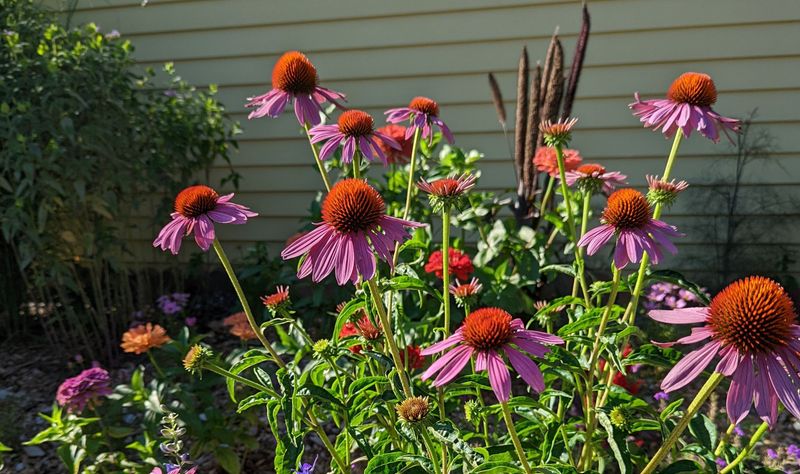
One of the simplest things to check is also one of the most commonly overlooked: how many hours of direct sunlight actually reach your coneflower bed each day. North Carolina Extension defines full sun as at least six hours of direct sunlight daily, and purple coneflower is consistently listed as a full-sun plant.
When that threshold is not met, plants tend to produce fewer flowers, develop weaker stems, and stretch toward available light in ways that make them look leggy and unhealthy.
Walk your bed at different times of day – morning, midday, and late afternoon – and note when shadows from trees, fences, walls, or neighboring shrubs fall across the plants. A spot that looks bright in the morning can spend most of the afternoon in shade, which matters more than it seems.
Mississippi State’s Southern Gardening coverage notes that partial shade may reduce blooms and produce weaker, leggier plants compared to those grown in fuller sun.
Full sun is the right default target for reliable flowering, but that does not mean forcing every plant into brutal afternoon exposure with no consideration for regional heat or cultivar differences. Some varieties and some climates allow a degree of flexibility.
The practical goal is meeting the six-hour benchmark while avoiding sites that stay soggy, because shade and poor drainage together create a much harder problem to solve than either one alone.
Poor drainage can undermine crown health
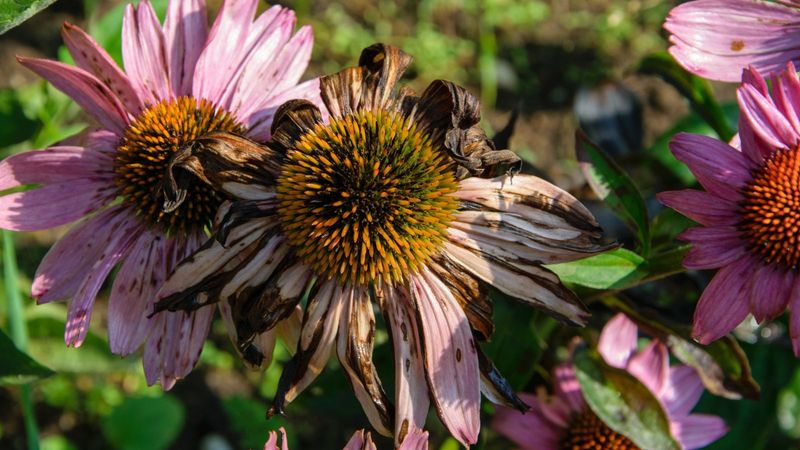
After sunlight, drainage is the next site condition worth examining carefully. Soil that stays wet for extended periods after rain or irrigation, low spots in the bed, and compacted ground that prevents water from moving through can all contribute to crown and root problems in purple coneflower.
Mississippi State Extension specifically recommends raised beds or berms when drainage is poor and warns that burying the crown – planting it below the surrounding soil grade – can lead to crown rot over time.
Check the base of each plant after a heavy rain and again a day or two later. If the soil around the crown still feels saturated, that is a meaningful signal.
Mulch piled directly against the stem can trap moisture at the crown and create the same effect even in beds that otherwise drain adequately, so pull any mulch back from the plant’s base and leave a few inches of breathing room. Oklahoma State Extension describes the plant’s preference for well-drained soil as a consistent requirement across its native range.
Persistent saturation and wet winter conditions can undermine crown health over a single season, but poor drainage alone does not explain every case of decline. The Chicago Botanic Garden trial noted that some winter losses were linked to weakened plant health or wet soil conditions, which reinforces drainage as a real concern without making it a guaranteed explanation for every struggling plant.
Drought tolerance after establishment does not mean coneflowers prefer severely dry soil; the practical target is soil that drains well and stays moderately moist rather than alternating between bone-dry and waterlogged.
Review watering and fertilizer before adding more
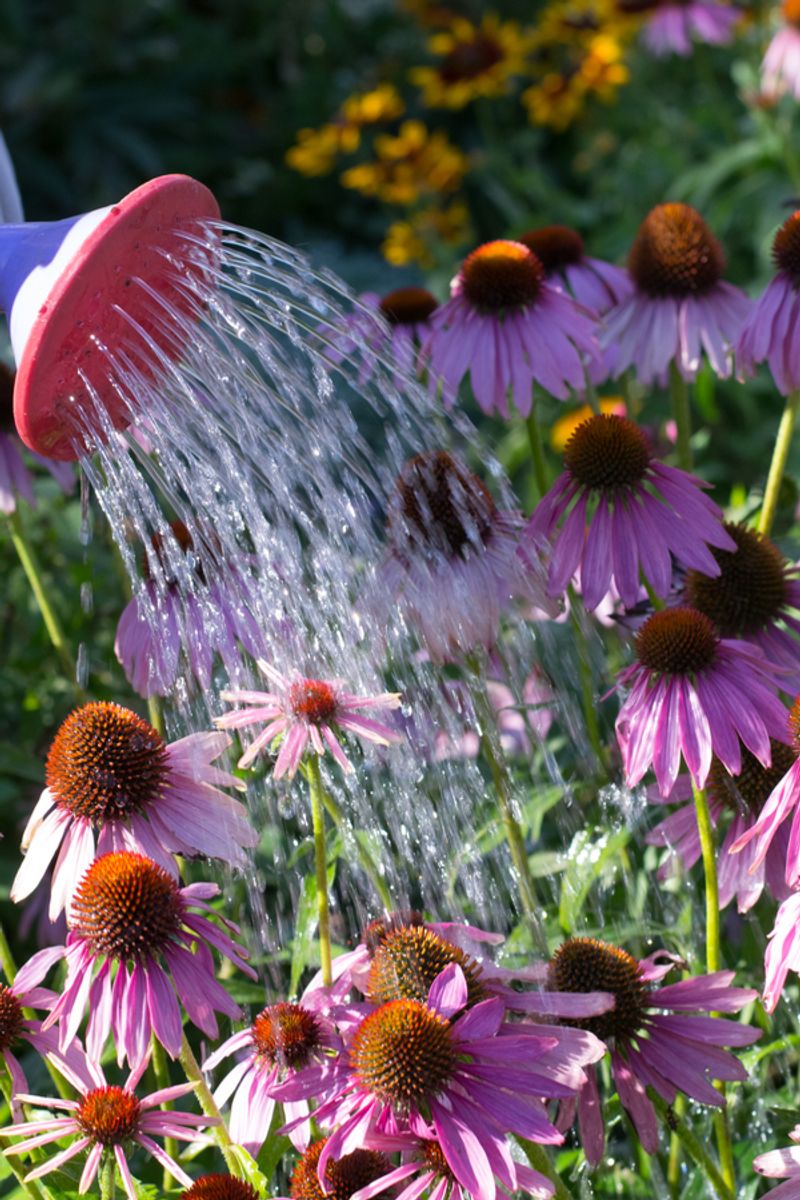
Watering needs change significantly depending on how long your coneflowers have been in the ground. Newly planted divisions or nursery transplants need consistent moisture while their roots are getting established, and skipping that establishment period can stress plants in ways that look like disease or nutrient problems.
North Carolina Extension notes that established purple coneflower is drought tolerant, but that description applies to plants with a developed root system, not freshly planted specimens still working to anchor themselves.
Once plants are established, the priority shifts to avoiding excess moisture rather than maintaining regular irrigation. If the crown or surrounding soil is already wet, adding more water will not help and can actively make things worse.
Check soil moisture before irrigating rather than watering on a fixed schedule, and address any drainage or mulch problems first. Mississippi State Extension reinforces well-drained soil as a baseline requirement that watering habits cannot substitute for.
Fertilizer deserves the same skeptical review. Illinois Extension warns that heavy fertilization can produce tall, leggy plants that flop over, which looks like vigor but actually signals excess nitrogen pushing vegetative growth at the expense of flowers and stem strength.
If you genuinely suspect a nutrient deficiency after correcting light and drainage, a soil test through Texas A&M’s soil testing program or your local extension lab can tell you what, if anything, actually needs to be added. Feeding or watering more cannot compensate for inadequate sunlight, saturated soil, or a crown planted below grade.
Read the symptoms before you relocate the plant
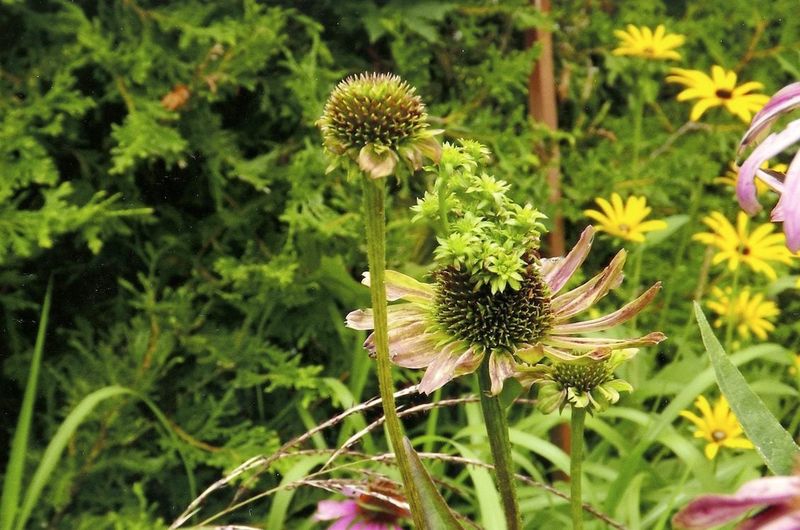
Not every struggling coneflower has a site problem. Some symptoms point clearly toward a disease or pest issue that a better location will not fix, and recognizing those differences before you start digging saves effort and prevents spreading the problem.
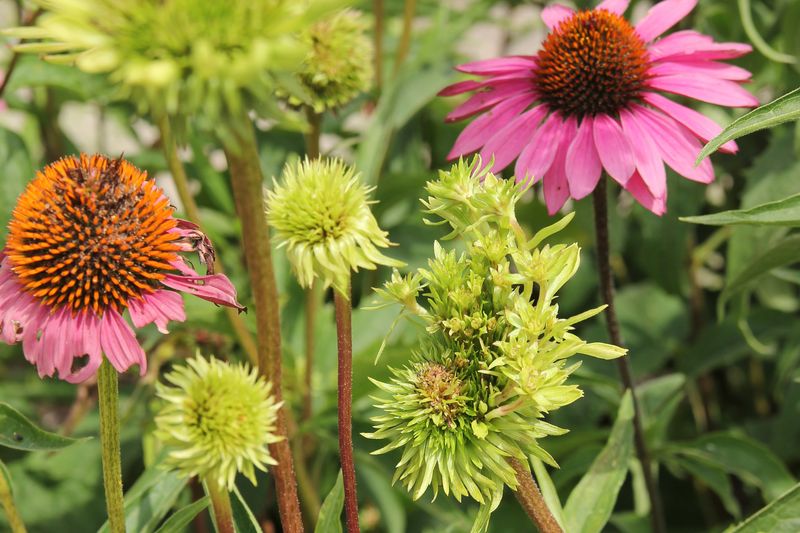
Green, distorted, or leafy growth pushing through the flower head is a characteristic sign of aster yellows, a phytoplasma disease carried by leafhoppers. Penn State Extension recommends removing infected plants rather than treating or relocating them, because there is no cure and the disease can spread to nearby plants.
Illinois Extension’s aster yellows guide describes the leafy, distorted flower heads in detail and confirms that affected plants should be pulled and disposed of rather than composted. Powdery mildew is a separate and more common foliar problem, and University of Georgia Extension identifies shady, humid, and poorly ventilated sites as conditions where mildew risk increases.
Improving air circulation and avoiding prolonged leaf wetness are safer first responses than reaching for a fungicide before you know what you are dealing with.
Cultivar variation is another factor worth considering when a plant in a seemingly correct site still performs poorly. The Chicago Botanic Garden trial documented substantial differences among coneflower cultivars in disease resistance, persistence, and overall health under the same growing conditions.
A modern hybrid that looked appealing at the garden center may simply not be as durable as the straight species or a more regionally suited selection. Identify the specific symptom before applying any treatment, and keep cultivar performance in mind as a possible explanation when the site checks out but the plant continues to struggle.
Correct the site when the symptoms do not require removal
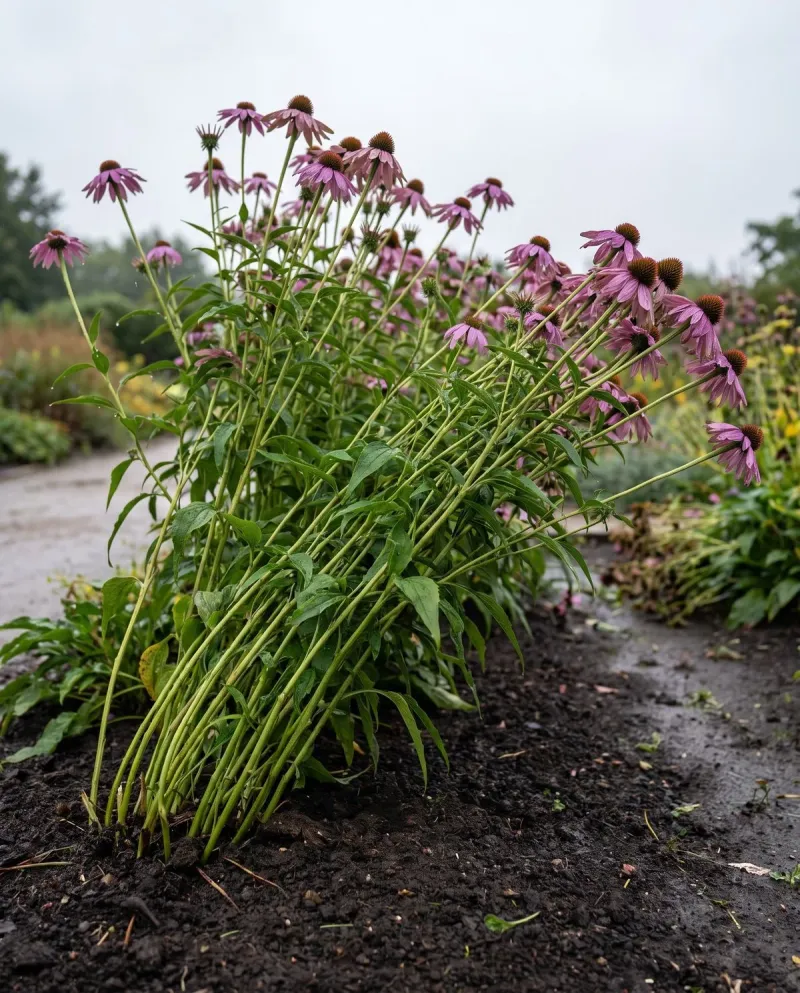
Once you have ruled out aster yellows and other conditions that call for plant removal, you can shift to practical fixes. Start by measuring actual sunlight hours at the bed, not estimating from memory.
If the site receives fewer than six hours of direct sun, that is the most fundamental change to address, whether by pruning overhanging branches, moving the plants, or choosing a different location for future plantings.
Next, check whether water drains away from the crown within a reasonable time after irrigation or rain. Low spots and compacted soil can be improved with organic matter, and Mississippi State Extension recommends raised beds or berms when the native soil drains poorly.
Make sure the crown sits at or slightly above the surrounding soil grade, not buried below it, and pull any mulch back from the base of the plant to allow the crown to stay drier. Adjust your irrigation schedule based on actual soil moisture rather than a fixed routine, and stop adding fertilizer until you have corrected the light and drainage conditions first.
For plants that are correctly placed but look tired, selective deadheading can improve appearance and encourage a second flush of blooms. North Carolina Extension and Illinois Extension both describe deadheading as useful for appearance and reblooming, while leaving some seed heads standing benefits birds and allows natural reseeding into the bed.
If correcting the site does not produce improvement after a full growing season, relocation to a better-drained, sunnier spot is a reasonable next step for plants without disease symptoms.
Match the cultivar and site to the Southern region
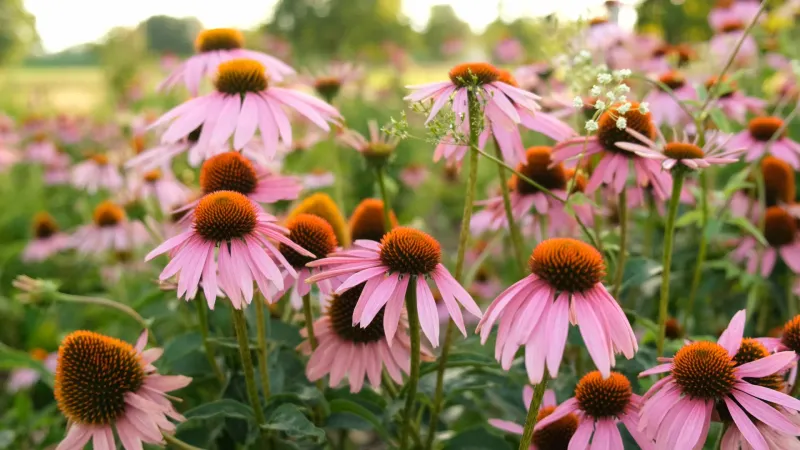
General coneflower advice travels well up to a point, but Texas and Florida gardeners face conditions that differ enough from the Midwest or Mid-Atlantic to matter. Heat intensity, humidity, soil type, rainfall patterns, and the length of the growing season all affect how a cultivar performs, and a recommendation proven under Illinois conditions does not automatically translate to South Texas or South Florida.
The Texas A&M Earth-Kind plant selector evaluates plants specifically for Texas growing conditions, including heat, drought, soil, and pest tolerance, and is a more regionally reliable starting point than a national plant tag.
Florida requires its own regional qualification. Florida IFAS documentation on Echinacea purpurea lists the plant in Florida resources but distinguishes between North Florida and South Florida in terms of suitability and cultural requirements.
A separate Florida IFAS butterfly gardening guide identifies Echinacea as a North Florida nectar plant rather than a plant suited to all parts of the state. Treating all of Florida as one growing zone will lead to mismatched expectations, especially in the southern part of the state.
Cultivar differences compound the regional question. The Chicago Botanic Garden trial evaluated 52 taxa and found meaningful variation in health, persistence, and disease response under one Illinois site’s conditions – useful evidence of how much cultivars differ, but not a universal ranking for the South.
Straight species tend to be more durable than some modern hybrids, and verifying a cultivar’s track record in your specific region is worth doing before assuming that any coneflower will perform reliably.
Use this decision sequence before spending more
Before buying more fertilizer, pesticides, or replacement plants, run through this sequence. Count the direct-sun hours the bed actually receives and compare that number to the six-hour benchmark from North Carolina Extension.
Check whether water drains from the area within a reasonable time or pools around the crown. Confirm that the crown sits at or above grade and that mulch is not packed against the stem.
Review whether your watering schedule matches the plant’s actual stage – establishment or mature – rather than a fixed routine.
Stop adding fertilizer until the site conditions are right. Illinois Extension’s guidance is clear that heavy feeding can produce weak, floppy growth rather than better flowering, and Mississippi State Extension points to light and drainage as the foundational conditions that feeding cannot replace.
Examine the flower heads and foliage for signs of aster yellows – green, leafy, or distorted growth in the cone – and if those symptoms are present, follow Penn State Extension’s recommendation to remove infected plants rather than attempt to correct the site.
A better location often deserves attention before a new round of products, but site correction is not a cure for every decline. Some problems come down to cultivar choice, regional fit, or a disease that has already taken hold.
The most useful thing you can do is look carefully before you spend.