
Crabgrass has a way of showing up uninvited and refusing to leave, creeping across bermudagrass, St. Augustinegrass, and centipedegrass until bare patches disappear under a tangled mat of wide-bladed weeds. Many Southern homeowners reach for something already in the pantry, hoping a quick pour of household vinegar will end the problem for good.
That fix sounds satisfying, but the reality is more complicated, and using the wrong remedy can hurt the lawn you are trying to protect.
Household vinegar is not a lawn-safe crabgrass solution
Household vinegar is almost certainly the product the headline has in mind, and the appeal makes sense. Most homes have a bottle under the sink, it feels natural, and the idea of a cheap pantry fix for a spreading weed is genuinely attractive.
The problem is that University of Maryland Extension guidance on lawn weed herbicides makes clear that acetic acid is a nonselective contact treatment, meaning it scorches whatever foliage it touches without distinguishing crabgrass from the bermudagrass or St. Augustinegrass growing alongside it.
Food-grade vinegar typically contains about 4 to 6 percent acetic acid. That concentration can burn leaf tissue on contact, but it does not move through the plant into the roots or rhizomes.
Because it stays on the surface, established crabgrass can regrow after the treated foliage dies back, and the lawn grass next to it may show the same scorch damage.
Some readers wonder whether horticultural vinegar, which runs 10 to 30 percent acetic acid, might do the job better. Oregon State University Extension explains that stronger concentrations increase the risk of serious eye and skin injury and still offer no selectivity in a lawn setting.
Acetic acid products may have a limited place in spots where every plant is intended to be removed, such as a gravel path or a sidewalk crack, but only when using a product labeled for that specific site. Pantry vinegar is not an approved or risk-free herbicide for any outdoor use.
Crabgrass returns because it leaves seed behind
Scorching visible crabgrass plants with vinegar or any other contact treatment misses the real reason the weed keeps coming back. Crabgrass is a warm-season annual, which means each plant completes its life cycle in a single growing season and then dies when cold weather arrives.
The weed does not survive winter as a perennial root system; instead, it leaves behind an enormous number of seeds that wait in the soil until conditions are right the following spring.
A single crabgrass plant can produce thousands of seeds before it dies, and those seeds can remain viable in the soil for years. UF/IFAS Gardening Solutions describes this cycle and notes that killing current foliage does nothing to reduce next year’s emergence from seeds already in the ground.
Mowing before seedheads fully develop or pulling isolated plants by hand can slow new seed additions to the soil, but neither action clears the seedbank that has built up over previous seasons.
Understanding this cycle changes the goal. University of Wisconsin Horticulture notes that when crabgrass is already large and producing seedheads, herbicide applications may deliver incomplete results and a poor return on effort.
The more productive focus is interrupting the annual cycle before seeds germinate, which shifts the strategy from one-time eradication toward consistent, season-by-season prevention.
Identify the turf before choosing a crabgrass product
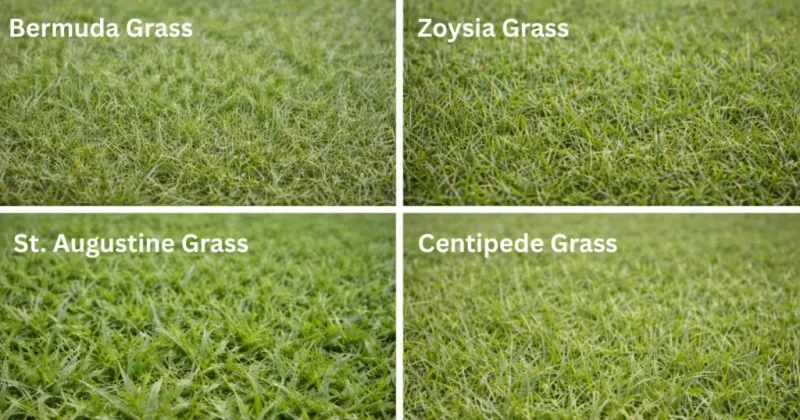
Turf identification is the first decision, not an afterthought. Southern lawns are not interchangeable, and the active ingredient that poses little risk to one grass species can seriously damage another.
Bermudagrass, St. Augustinegrass, centipedegrass, zoysiagrass, and other warm-season grasses each have different tolerances, and a product marketed broadly as a crabgrass killer does not override those limitations.
Texas A&M AgriLife Extension provides a clear example of why this matters. The bermudagrass management calendar from Texas A&M notes that quinclorac may be used for postemergence crabgrass control in some bermudagrass lawns, but it also warns specifically against applying quinclorac where St. Augustinegrass is present because of the potential for serious injury to that turf.
Temporary discoloration of bermudagrass is also possible, and control results can be inconsistent.
Florida homeowners face an additional layer of complexity. The UF/IFAS Florida Homeowner Herbicide Guide reinforces that turf species is a decisive factor in every product decision, with some active ingredients appropriate for certain grasses and damaging to others.
Before buying or applying anything, confirm which grass is growing in the lawn, read the current product label in full, and treat the label’s turf restrictions as firm limits rather than suggestions.
Treat young crabgrass or adjust your expectations
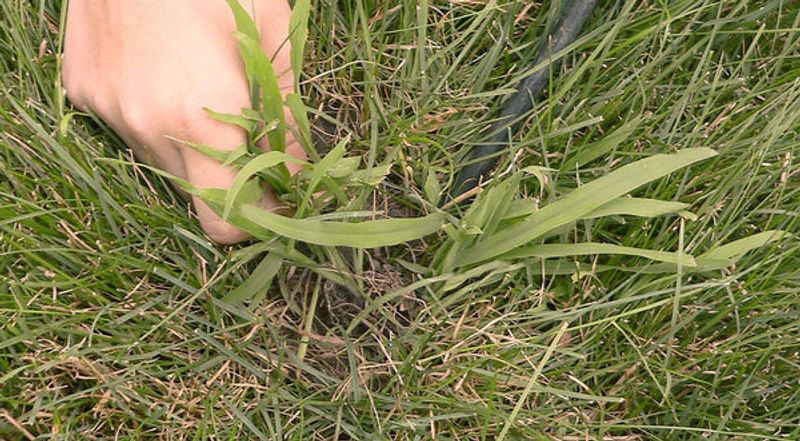
Timing matters more than product choice when crabgrass has already emerged. Postemergence herbicides work best on small, actively growing plants that have not yet begun to tiller, which is the stage when the plant spreads outward and develops multiple stems branching from the base.
Iowa State University Extension explains that active ingredients discussed for postemergence use include quinclorac, fenoxaprop, mesotrione, and topramezone, but suitability depends entirely on the turf species, the specific product formulation, and what the current label permits.
Once crabgrass has matured and started producing seedheads, chemical control becomes less reliable. UC Statewide IPM Program notes that even labeled products can deliver partial or inconsistent results against established plants, and resistance concerns exist in some populations.
Applying a postemergence herbicide to large, seed-producing crabgrass often wastes product and money without solving the problem.
Florida homeowners should take that limitation seriously. UF/IFAS Gardening Solutions states that once crabgrass has germinated, there may be few or no homeowner herbicide options capable of killing it without also harming common Florida turfgrasses.
In those situations, hand removal of isolated plants or mowing to prevent further seed production is often the more realistic choice. For Texas bermudagrass, Texas A&M AgriLife Extension points to quinclorac as a postemergence option, while reinforcing that label restrictions and turf type must guide every application decision.
Prevent the next wave with correctly timed preemergence control
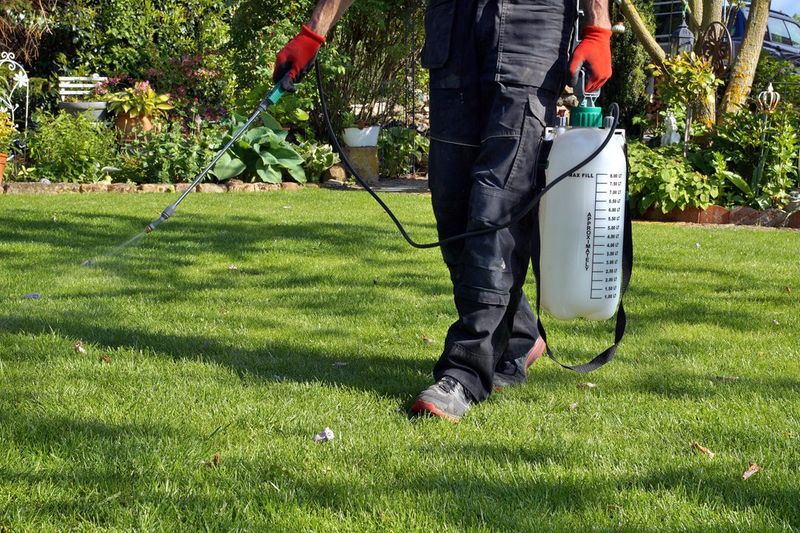
Preemergence herbicides stop crabgrass before it becomes a visible problem, which is a fundamentally different job than treating weeds that have already emerged. These products create a chemical barrier in the soil that prevents germinating seeds from establishing, but they have no effect on plants that are already up and growing.
Applying a preemergence product to an existing crabgrass infestation will not eliminate it.
UF/IFAS guidance on crabgrass prevention recommends getting ahead of germination with a properly timed preemergence application matched to the turf species. Active ingredients discussed by extension sources as examples include dithiopyr, pendimethalin, prodiamine, and benefin.
Each product has its own label requirements for watering in, repeat applications, and approved turf types, and those instructions are not optional.
Timing is region-specific and weather-dependent. For Florida, typical guidance runs from early February in South Florida to mid-February in Central Florida and early March in North Florida, applied before soil temperatures consistently exceed roughly 65 to 70 degrees Fahrenheit.
Iowa State University Extension reinforces that local germination conditions should guide timing rather than calendar dates alone. For Texas, Texas A&M AgriLife Extension’s preemergence herbicide guidance points to mid-February in South Texas, early March in North and Central Texas, and mid-March in the Panhandle as typical application windows, again subject to local conditions.
One more consideration: preemergence products can interfere with reseeding, overseeding, or new sod installation. Check the product label for the required waiting interval before any of those activities, and plan accordingly.
A dense, properly maintained lawn limits crabgrass openings
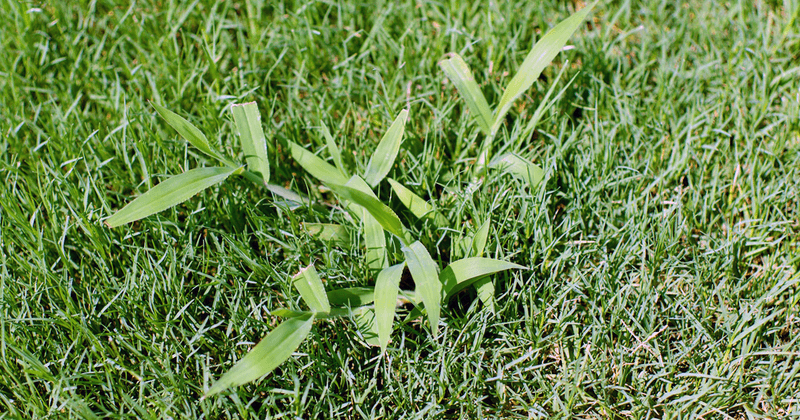
Chemical prevention works better when the lawn itself is not handing crabgrass easy entry points. Thin turf, bare soil, drought stress, and excessively short mowing all create the kind of open, weakened conditions where crabgrass seedlings establish most readily.
A lawn that is already dense and growing at the right height gives crabgrass less room to compete.
Iowa State University Extension includes mowing at the appropriate height for the turf species as a key cultural practice, along with the familiar one-third rule: never remove more than one-third of the leaf blade in a single mowing. Scalping the lawn by cutting too short weakens the turf canopy and opens the soil to light, which crabgrass seeds need to germinate.
University of Wisconsin Horticulture also connects lawn density to crabgrass pressure, noting that correcting the conditions thinning the turf, whether compaction, irrigation problems, shade, or nutrient deficiency, reduces the bare patches crabgrass exploits. Cultural practices are not a substitute for correctly timed preemergence control, but they make that prevention more effective by closing the gaps before seeds have a chance to settle in.
Let the label—not the pantry—make the final decision
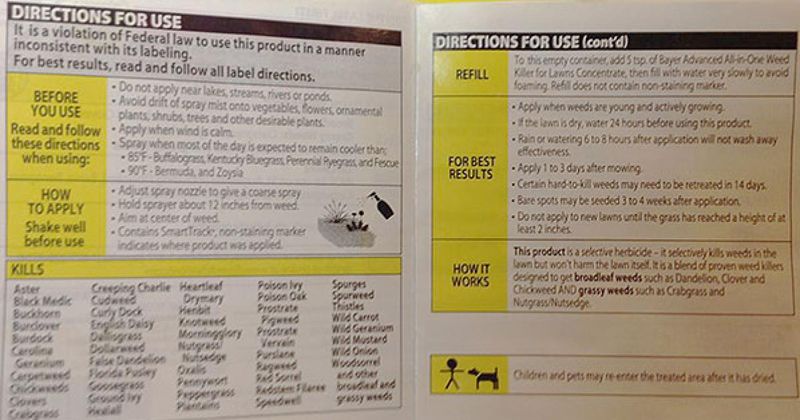
Skipping the vinegar in desirable turf is the right call. The practical path forward starts with identifying the grass species, then assessing whether any crabgrass present is young enough to respond to a postemergence treatment or already mature enough that hand removal and seedhead prevention are the better options.
Every product choice has to match both the turf and the weed’s current growth stage.
The EPA explains that pesticide labels are legally enforceable documents that specify where, how, how much, and how often a product may be used. Reading the label is not optional, and applying a product outside its labeled instructions is illegal.
One more safety note: never mix vinegar with bleach or other household cleaners. CDC guidance on cleaning with bleach warns that mixing an acid like vinegar with chlorine bleach can release irritating chlorine gas.
UF/IFAS Gardening Solutions frames the larger lesson well: turf-specific preemergence control combined with a dense, properly maintained lawn is more dependable than any one-bottle shortcut. No single treatment guarantees a crabgrass-free yard, but a consistent, species-aware strategy gets closer than anything under the kitchen sink.