
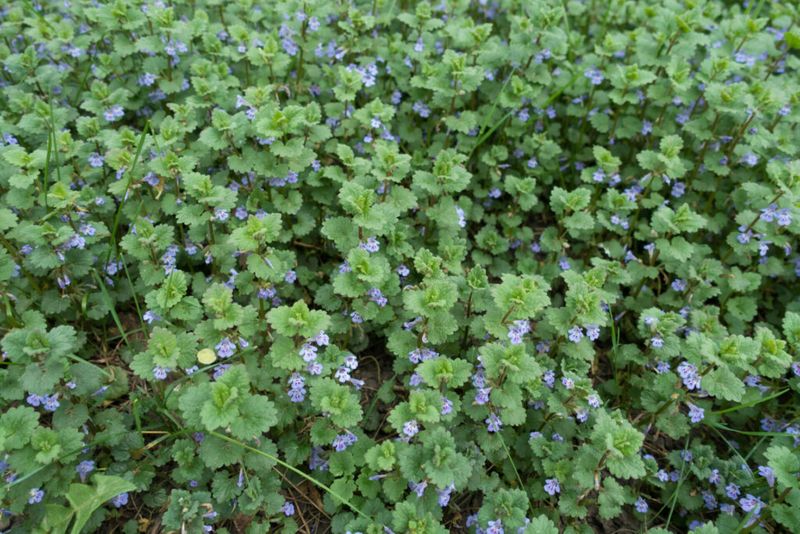
Creeping Charlie is one of those weeds that makes you feel like you’re losing your mind. You pull it out, toss it aside, and within a few weeks the mat is back as thick as ever.
The problem isn’t bad luck or a tough neighborhood soil. It comes down to how this plant is built and what parts of it survive a cleanup that looks thorough but leaves viable roots and runners behind.
First, make sure the comeback is actually creeping Charlie
Before pulling a single stem or reaching for any product, take a close look at what you’re actually dealing with. Misidentifying a weed can send you after the wrong target entirely, and some desirable groundcovers share a similar low, spreading habit that makes them easy to confuse with creeping Charlie at a glance.
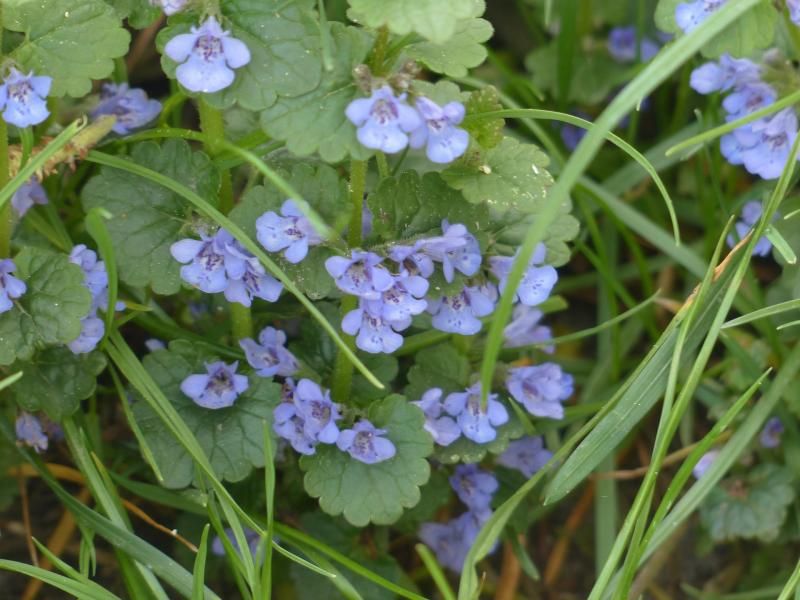
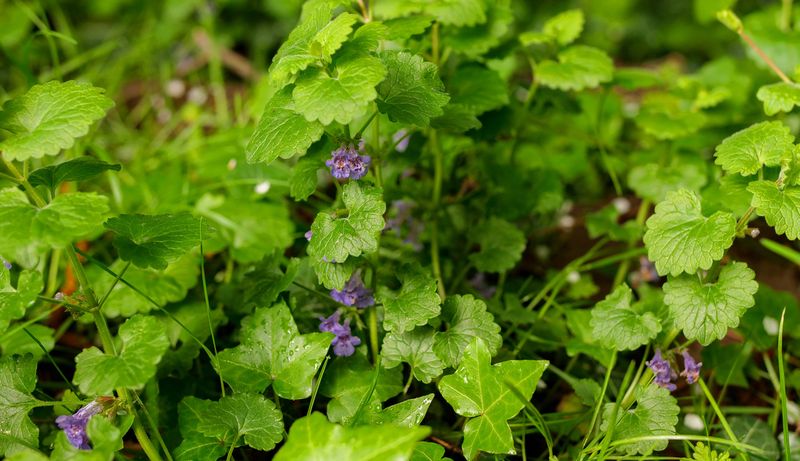
Creeping Charlie, also known as ground ivy (Glechoma hederacea), has a reliable set of identification clues you can check in under a minute. The leaves are rounded to kidney-shaped with scalloped or toothed edges, and they grow in opposite pairs along the stem.
Pick up a stem and roll it between your fingers: it will have a distinctly square cross-section, a trait shared by plants in the mint family. Crush a leaf and you’ll notice a minty or faintly musky odor that sets it apart from most other lawn weeds.
In spring, the plant produces small blue-purple tubular flowers along the stems, which can help confirm the ID if you catch it at the right time. NC State Extension’s plant profile for Glechoma hederacea describes the flowers and leaf shape in detail.
The plant grows in a low mat, sending stems outward along the soil surface rather than climbing or standing upright.
If the plant in your yard matches all of these clues, you’re dealing with ground ivy. University of Minnesota Extension’s ground ivy page confirms these same identification features.
Getting the ID right before you start removal keeps you from disturbing plants you actually want to keep.
A viable runner can restart the mat
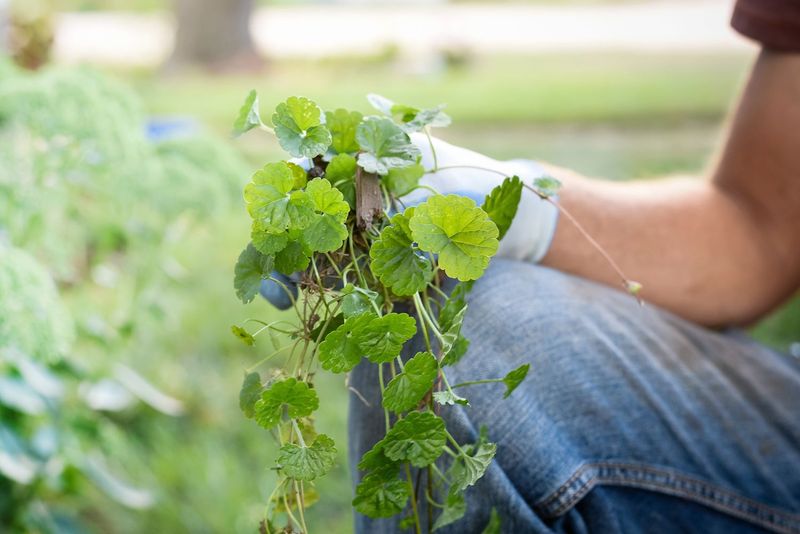
Creeping Charlie doesn’t just sit where you plant it. Its stems, called stolons, travel horizontally across the soil surface, and wherever a node on that stem makes contact with moist ground, it can put down roots and anchor itself.
That rooted node becomes a new growth point, capable of sending out its own runners in every direction.
According to University of Minnesota Extension, ground ivy is a perennial that spreads through stolons with node-rooting and also develops underground rhizomatic roots. Those below-ground roots are the part most cleanups miss entirely.
You can remove every visible stem and still leave a network of roots and rhizomes sitting just under the surface, ready to push up new growth.
Illinois Extension notes that ground ivy can root wherever the stem touches soil, which explains why a runner left on damp mulch or disturbed soil after pulling isn’t necessarily dead. The biologically meaningful surviving piece isn’t every detached leaf or random stem fragment.
What actually regrows is a viable rooted node, a stolon section that still carries a node, a root fragment, or an underground rhizome.
The plant can also reproduce by seed, though vegetative spread through stolons and roots is the main reason incomplete hand removal is so frustrating. Texas A&M AgriLife Extension classifies ground ivy as a creeping perennial that reproduces through both above-ground and below-ground stems as well as seeds.
The visible mat you’re pulling is only part of the picture; the structure that restarts growth is often the part you can’t see.
Small patches require removing the network, not just the leaves
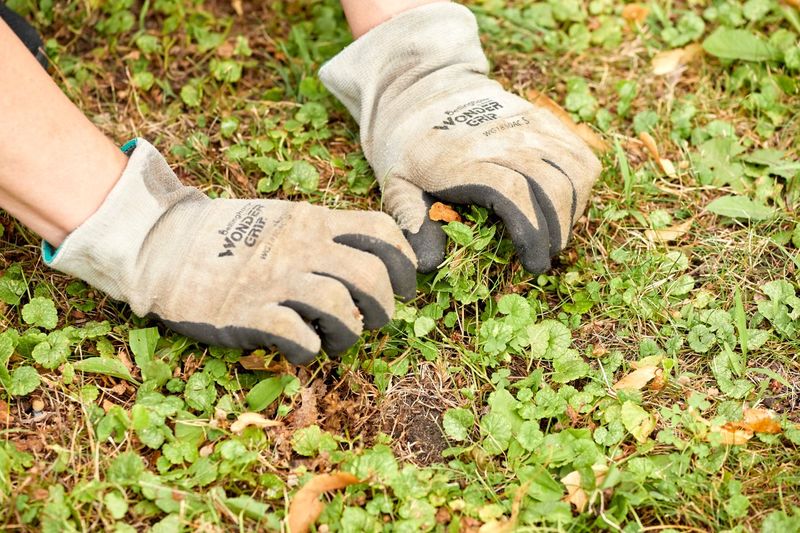
Grabbing the leafy tops of a creeping Charlie patch and yanking feels satisfying, but it usually leaves the underground portion behind. A more effective approach for small patches in beds starts with loosening the soil around the plant before pulling anything.
Use a hand fork or trowel to gently break up the soil along the length of each visible runner. Then follow the stem rather than just pulling from the tip.
Trace it back toward the crown and feel for where it connects to roots or rooted nodes. Lift those anchored sections out along with as much of the surrounding root material as you can.
University of Minnesota Extension specifically recommends removing all roots and shoots rather than just the visible top growth.
Once you’ve worked through the patch, look over the disturbed soil carefully. Small root fragments or broken stolon pieces can stay behind even after a thorough effort.
Collect every runner you’ve detached and bag them for disposal rather than leaving them on the soil surface or in moist mulch. Illinois Extension and Illinois Extension’s lawn-specific guide both emphasize removing the full root-and-shoot network and disposing of pulled material so rooted nodes don’t stay in contact with moist ground.
Even a careful session won’t recover every viable piece. The goal of tracing the network is to remove substantially more of the plant than surface pulling does, not to guarantee a single-pass cure.
Expect that a few overlooked structures may still push up new growth, which is why the next step matters as much as the pulling itself.
Treat follow-up inspection as part of removal
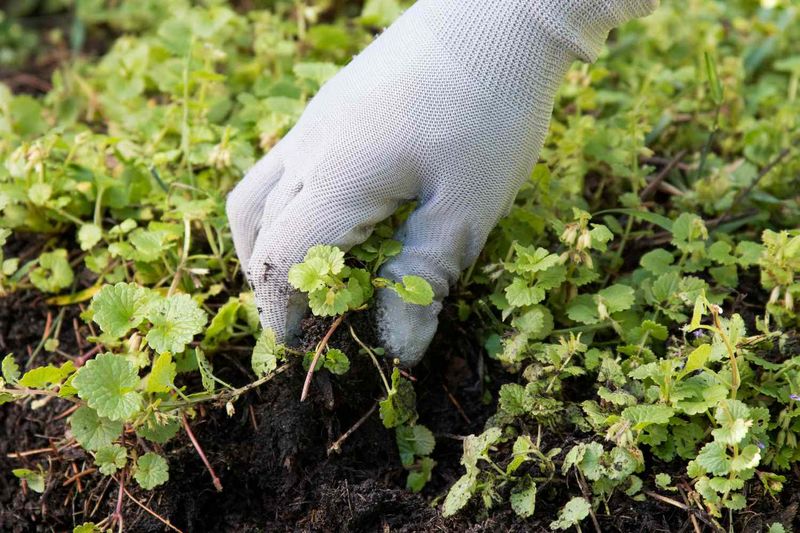
Returning to the cleared area a few weeks after removal isn’t a sign that you did something wrong. Repeated inspection is a built-in part of managing a plant that stores energy in roots and underground rhizomes you may not have fully recovered on the first pass.
New shoots emerging from the cleared zone are actually useful information. They mark the spots where an overlooked rooted node, root fragment, or rhizome survived beneath the soil.
Catching those sprouts early, before they send out new runners and anchor additional nodes, keeps the regrowth from rebuilding a mat. University of Minnesota Extension explicitly states that hand removal may need to be repeated because overlooked roots and rooted nodes can regenerate.
When you revisit the area, use the same tracing approach from the first session. Pull the new shoot and follow it back to its anchor point in the soil.
Remove the root or node and check the surrounding soil for additional fragments. The regrowth patches are usually smaller and easier to address than the original infestation was, so follow-up sessions tend to go faster.
There’s no universal schedule that applies to every yard or climate. In warm, moist Southern conditions, growth can resume quickly, so checking the cleared area every two to three weeks for a full growing season is a reasonable starting point.
The process winds down naturally as fewer and fewer viable structures remain below the surface.
Weak, shaded turf gives creeping Charlie room to compete
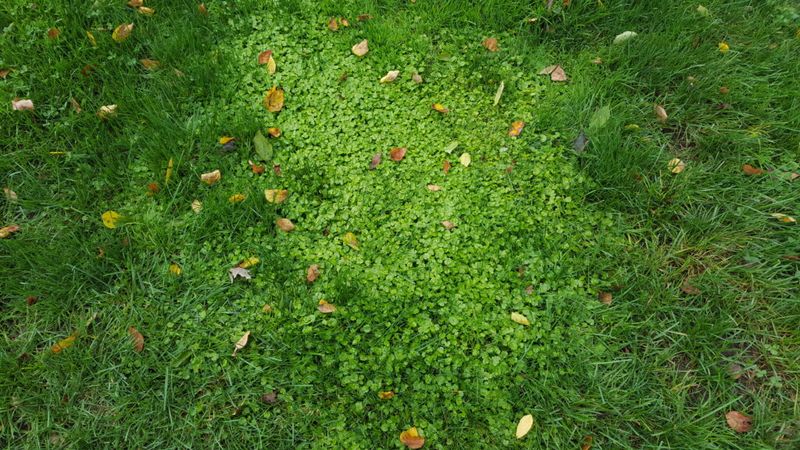
Creeping Charlie doesn’t need an invitation, but it does take advantage of turf that’s already struggling. Thin, stressed, or poorly lit grass leaves open soil and reduced competition, and ground ivy is well suited to move into those gaps.
The weed is commonly associated with shaded, damp sites where turf grows thin, but that’s not the whole picture. University of Minnesota Extension notes that ground ivy can grow in most environments and isn’t limited to deep shade, and Illinois Extension points out it can move from shaded areas into sunnier lawn sections as well.
Shade and moisture make conditions easier for the weed, but they don’t explain every case.
In Florida and other parts of the South, UF/IFAS Extension guidance establishes that most turfgrasses need roughly six hours of sunlight daily to grow optimally. When a lawn area consistently gets less than that, the grass gradually thins and loses its ability to crowd out weeds.
Improving light levels by trimming low branches can help, but only where that’s practical.
A 2023 peer-reviewed turf study found that dense turf can reduce opportunities for ground ivy to establish, though cultural practices alone may not eliminate an existing infestation. For persistently shady spots where grass repeatedly fails, switching to a shade-tolerant groundcover or a better-suited plant material is often more realistic than continuing to treat struggling turf.
Forcing the wrong grass into a low-light situation creates the exact thin, stressed conditions that make creeping Charlie’s job easier.
Lawn herbicides are a conditional option, not a universal shortcut
Postemergence broadleaf herbicides can be part of a ground ivy management plan for lawn areas, but they work within a set of conditions that don’t apply to every yard or every region. Understanding those conditions before you buy or apply anything is the difference between useful control and wasted effort or unintended plant damage.
Extension sources identify active ingredients such as triclopyr, fluroxypyr, 2,4-D, mecoprop (MCPP), and dicamba as examples found in products used against ground ivy in lawn settings. Illinois Extension’s lawn guide and University of Minnesota Extension both reference these ingredient categories.
These are examples, not a recipe. The specific product label determines which turf species are safe to treat, what rates to use, what sites are approved, and when to apply.
Timing matters and it varies by region. The northern and cool-season turf research, including a 2023 study conducted in Kentucky bluegrass, found fall applications more likely to move into perennial weed roots as the plant shifts resources downward.
That finding applies most clearly to cool-season turf in northern climates. For Florida or Texas warm-season grasses like St. Augustine, zoysia, or bermudagrass, timing depends on the turf’s active growth period, local weather, and what the specific product label permits for that grass type.
Keep herbicides intended for lawns completely separate from vegetable and flower beds. Illinois Extension warns that lawn herbicides can injure sensitive garden plants, and drift from even a light breeze can carry product onto desirable broadleaf plants nearby.
EPA pesticide safety guidance requires using only approved sites and rates, avoiding application on windy or rainy days, preventing runoff toward waterways, and keeping children and pets away from treated areas as the label directs. Read the current label each time, since formulations and approved uses can change.
Manage the surviving roots and runners over time
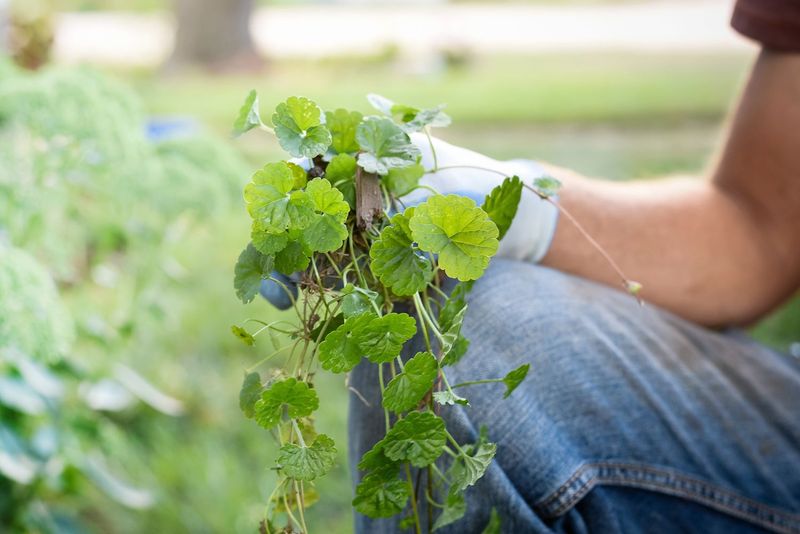
Getting ahead of creeping Charlie is a process rather than a single event. Start by confirming the ID, then trace and remove the root-and-runner network in small patches as thoroughly as you can.
Collect every detached piece and dispose of it rather than leaving pulled runners on moist soil where rooted nodes could reconnect.
Return to the cleared area regularly and pull any new shoots before they send out additional runners. Each follow-up session removes surviving underground structures that the first pass missed.
Over time, fewer viable pieces remain and regrowth becomes less frequent. University of Minnesota Extension confirms that hand removal may need to be repeated, and that expectation should be built into your plan from the start.
Where persistent shade or thin turf keeps giving the weed room to reestablish, address the underlying condition. Improve light where you can, or replace struggling grass with a plant better suited to the available conditions.
UF/IFAS Extension recommends choosing plant material matched to the light levels in each area rather than forcing a poor fit. Herbicide decisions belong in the lawn-and-label context, matched to your specific turf type, region, and timing.
No single cleanup guarantees a permanent result, but managing what remains below and along the soil surface steadily improves control. The more completely you remove viable structures and the more consistently you follow up, the less ground this weed has to work with.