
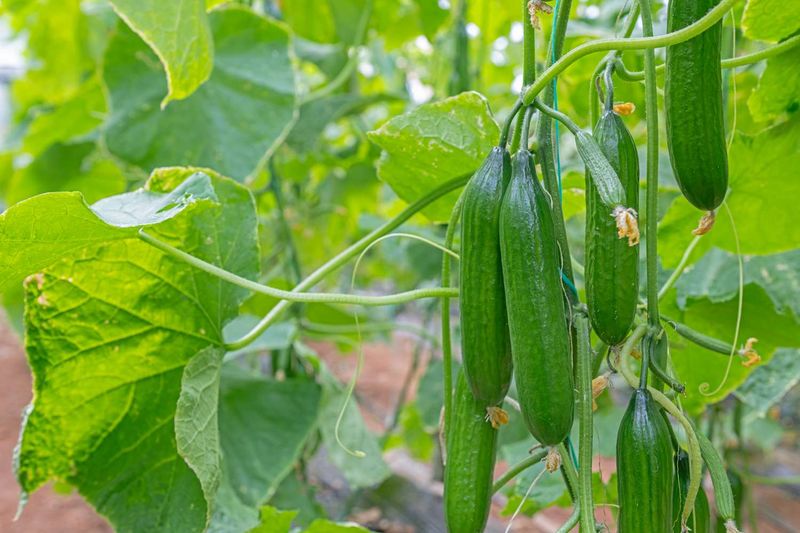
Cucumber vines can go from pumping out fruit to barely setting any in a matter of days once summer heat peaks, and it is easy to assume something is missing from the soil. Social media and gardening forums are full of tips about pantry fixes that promise to get things moving again, but most of them skip the real diagnosis. The truth is that a heat-slowed vine usually needs environmental corrections first, not a kitchen remedy.
Heat can pause fruit set without starving the vine
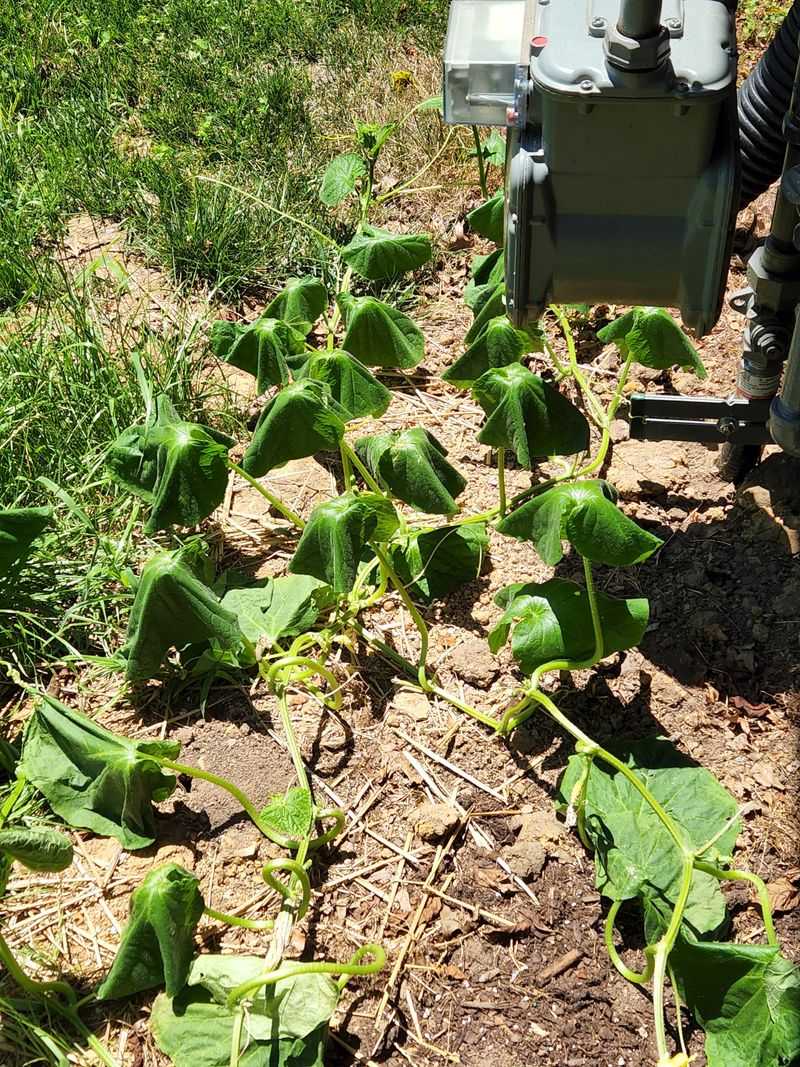
A cucumber vine covered in flowers but producing little fruit on a scorching afternoon is not necessarily hungry. Penn State Extension research on cucumber production in high tunnels reports that temperatures above about 90 degrees F can cause reproductive failure in cucumbers, with fruit set declining until conditions moderate, and that temperatures above 95 degrees F can slow growth and maturity. The vine may look healthy and even vigorous while quietly aborting flowers before any fruit has a chance to form.
This matters because the typical response to poor production is to reach for a fertilizer or a home remedy. Fertilizer cannot override the plant’s own heat-triggered shutdown of its reproductive cycle. Adding more nutrients to a vine that is already shutting down flower development due to temperature stress does not address the actual cause and may create new problems.
The right starting point is a diagnostic question, not a shopping list. Extension specialists responding to stalled August cucumber crops consistently point back to environmental conditions rather than nutrient deficiencies when vines look otherwise healthy. Check the daytime high temperatures in your garden over the past week before assuming the vine needs anything from your pantry or garden center.
Start with the root zone, not the pantry
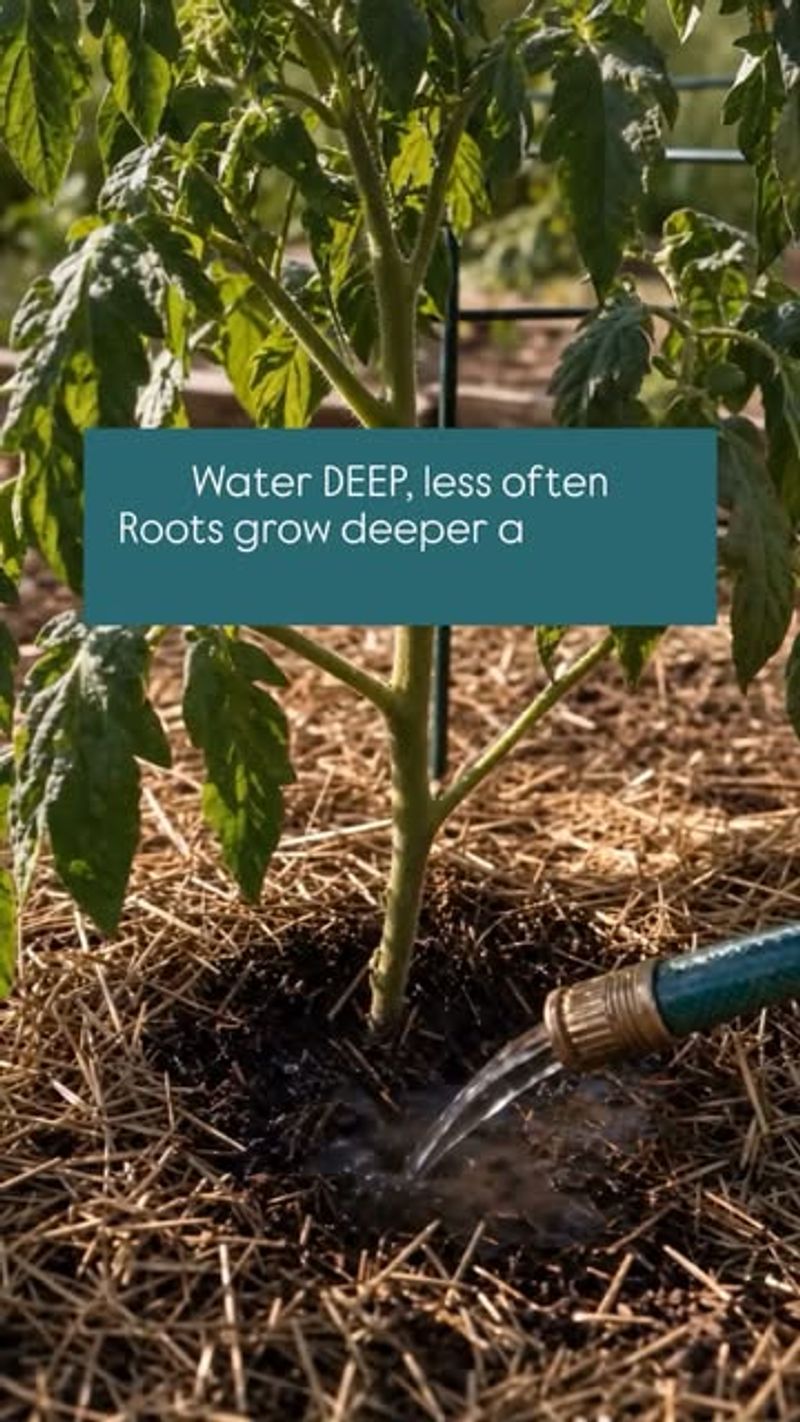
Before adjusting anything else, push a finger or a trowel several inches below the soil surface near your cucumber roots. Surface soil can look and feel dry within hours of watering while the root zone remains adequately moist, and the reverse is also true: a dry top inch can hide a waterlogged root zone below. Extension guidance on heat-stressed cucumbers specifically recommends checking several inches down rather than relying on surface appearance or leaf wilt alone.
Cucumbers need a steady, consistent moisture supply. Penn State’s cucumber production guide explains that moisture depletion and fluctuations can cause misshapen fruit, reduced yield, increased bitterness, and lower overall quality. The commonly cited target of roughly 1 to 2 inches of water per week is a starting point, but actual needs vary with plant size, soil type, drainage, and current temperatures.
Deep, infrequent watering reaches the root zone more reliably than frequent shallow passes. Mulching around the base of the plant, while keeping mulch a few inches back from the stem, slows evaporation and buffers soil temperature swings. Wilting leaves during the hottest part of the afternoon do not automatically signal that the plant needs more water right now. Heat load alone can cause midday wilt even when soil moisture is adequate, so always confirm what is actually happening below the surface before increasing irrigation.
Which flowers are failing to become cucumbers?
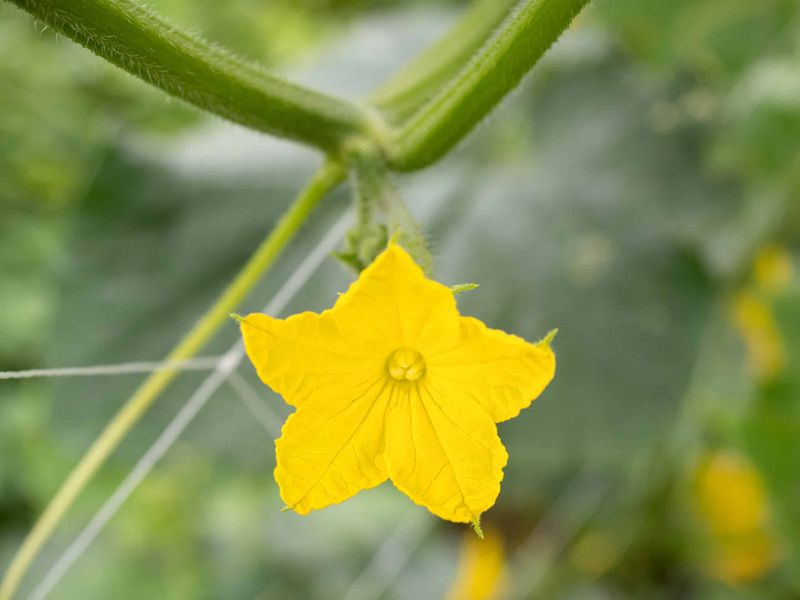
Not all cucumber flowers are the same, and identifying which type is present can save a lot of unnecessary troubleshooting. Female flowers carry a small, cucumber-shaped swelling at their base, which is the immature ovary that develops into fruit when pollination succeeds. Male flowers, which appear first and in greater numbers early in the season, have only a plain stem. Iowa State Extension’s guide on cucumbers that flower but do not produce notes that a flush of early male flowers with no fruit set is completely normal and not a sign of a nutrient problem.
When female flowers are present but fruit is not developing, pollination is often the culprit. Standard cucumber varieties depend on bees and other insects to transfer pollen from male to female flowers. Hot weather can reduce bee foraging activity during the hottest parts of the day, meaning fewer visits to open flowers. Insecticide applications during bloom can also harm pollinators and reduce fruit set significantly.
Penn State’s cucumber pollination resource explains that poor pollination produces aborted, undersized, or misshapen fruit rather than healthy cucumbers.
If treatment for pests is genuinely necessary, avoid spraying while pollinators are actively foraging, choose the least-harmful label-compliant option available, and follow the product label and any local requirements. Parthenocarpic varieties, which are bred to set fruit without pollination, behave differently and do not depend on bee activity, so knowing your variety type matters before drawing conclusions about what is going wrong.
Regular harvesting keeps the plant working
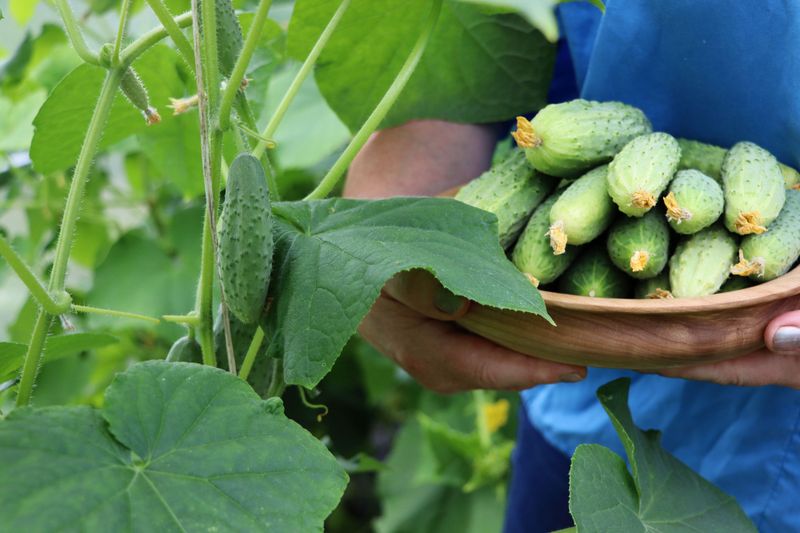
Leaving a cucumber on the vine past its prime does more damage than most gardeners expect. An overmature or yellowing cucumber signals the plant to slow down or stop producing new fruit, redirecting its energy toward seed development instead of new flowers and young cucumbers. University of Minnesota Extension recommends harvesting cucumbers often to keep the plant in active production mode throughout the season.
Bigger does not mean better here. Large, seed-filled cucumbers tend to have softer flesh, a tougher skin, and a more bitter flavor than fruit picked at the variety’s intended size. Georgia Extension similarly notes that delayed harvest reduces both quality and the plant’s continued productivity. The goal is not to grow the largest possible cucumber but to harvest frequently at the right size so the vine keeps setting new fruit.
Check your vines every day or two during peak season. Remove any yellowing, oversized, or damaged fruit immediately, even if you do not plan to eat it. This single habit can produce a noticeable uptick in new fruit set over the following week. Harvesting cannot solve a heat-driven reproductive pause, a pollination problem, or an active disease, but it removes one real obstacle to continued production and costs nothing to try right now.
Why Epsom salt is not a dependable rescue
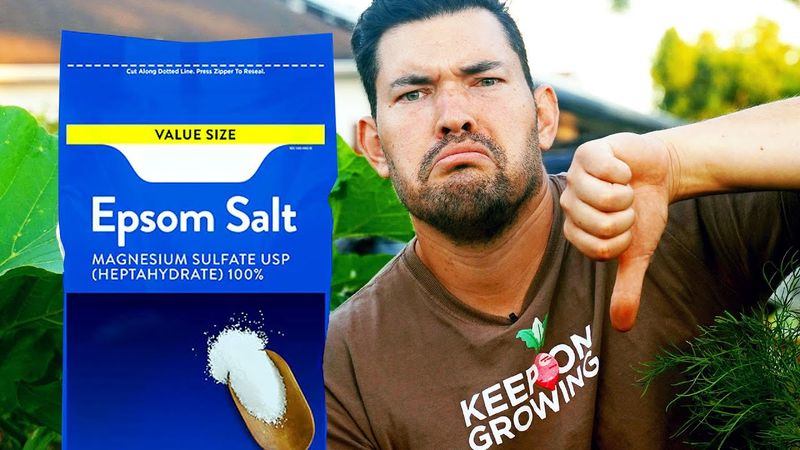
Epsom salt is the pantry ingredient most often cited as a quick fix for stalled cucumber vines, and it deserves a direct response. Epsom salt is magnesium sulfate. It supplies magnesium and sulfur, two secondary nutrients, and contains no nitrogen, phosphorus, or potassium. University of Minnesota Extension states plainly that there is no evidence of increased productivity from Epsom salt applications unless a soil test has confirmed a magnesium deficiency, and warns that excess magnesium can interfere with calcium uptake.
North Dakota State University’s review of the Epsom salt myth reinforces that unnecessary applications can raise salt levels in the soil, injure foliage, and contribute to water quality problems. Spraying Epsom salt solutions directly onto leaves is particularly risky because homemade concentrations are difficult to control and can cause leaf scorch. The claim that Epsom salt fixes heat damage or blossom-end rot is also misleading: it contains no calcium, and heat-related flower abortion is an environmental and pollination issue, not a magnesium shortage.
Other popular kitchen remedies share similar problems. UF/IFAS Extension describes banana-peel water as supplying an uncertain, unmeasured amount of potassium and recommends composting food scraps rather than relying on homemade liquid fertilizer. UC ANR’s review of common gardening myths similarly treats uncomposted coffee grounds as a compost ingredient rather than a quick fertilizer, noting that direct use can temporarily affect nitrogen availability or inhibit growth when applied in excess.
Container gardeners face extra risk. Extension guidance on container cucumbers notes that pots dry faster and accumulate soluble salts more readily than garden beds, making homemade salt-based remedies particularly likely to impair water uptake and damage roots when used without a confirmed deficiency.
Fertilizer belongs after a diagnosis
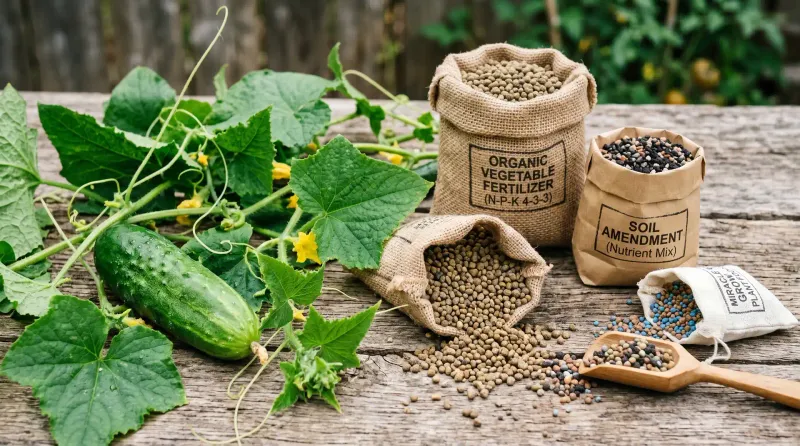
Feeding a struggling vine feels productive, but fertilizer applied at the wrong time or in the wrong amount can make a heat stall worse rather than better. Excess nitrogen in particular tends to push lush, leafy vine growth at the direct expense of flowers and fruit. University of Minnesota Extension cautions that over-fertilization during heat stress can further reduce production by channeling plant energy into foliage rather than reproductive development.
Potassium is a real and important plant nutrient. It supports water regulation, root growth, disease resistance, fruit quality, and the movement of sugars within the plant. Deficiency symptoms can include browned leaf margins, weak stems, small fruit, and slow growth. Utah State University Extension explains that potassium should be applied when soil testing indicates low levels, because adding it without evidence of deficiency can create imbalances with other nutrients.
Iowa State Extension’s fertilizing guide for home gardens recommends basing any fertilizer application on a soil test or a clearly observed deficiency, then following the product label for rate and timing. A labeled vegetable fertilizer applied according to directions is far safer than improvising with kitchen scraps or unmeasured salt solutions. If you have not tested your soil this season and the vine otherwise looks healthy, hold off on fertilizing until you have a reason to act.
Inspect for pests, disease, and heat damage
General wilting, poor fruiting, and slow growth can look identical whether the cause is heat, water stress, a pest infestation, or disease. Assuming it is a nutrient problem without looking at the plant closely means treating the wrong thing. Work through the vine systematically before drawing any conclusions.
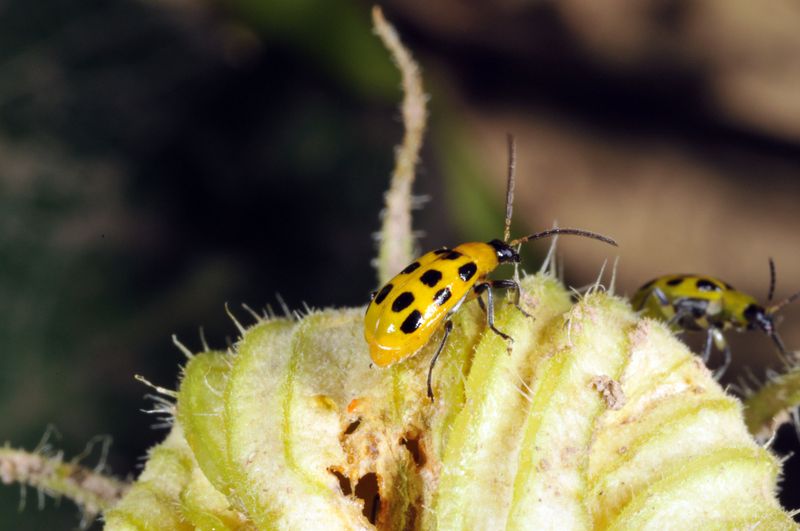
Flip leaves over and check the undersides for cucumber beetles, aphids, and spider mites. Cucumber beetles chew foliage and spread bacterial wilt, a disease that can collapse vines quickly. Aphids and mites cluster on new growth and on the undersides of leaves, causing distorted tissue and reducing the plant’s ability to photosynthesize effectively. Oregon State University Extension’s cucumber growing guide identifies these pests as common causes of reduced production that can be mistaken for environmental stress.
Also check for powdery mildew, a white coating on leaf surfaces that reduces photosynthesis and accelerates vine decline in hot, dry conditions. Look at stems and the base of the plant for soft tissue, discoloration, or root problems that might indicate drainage issues or soil-borne disease. UMN Extension notes that heat, water stress, pests, and disease frequently overlap in summer gardens, making visual inspection essential before choosing any treatment. Match whatever you find to a labeled, appropriate control, and treat only what you can actually observe on the plant.
A one-week checkup covers the likely causes
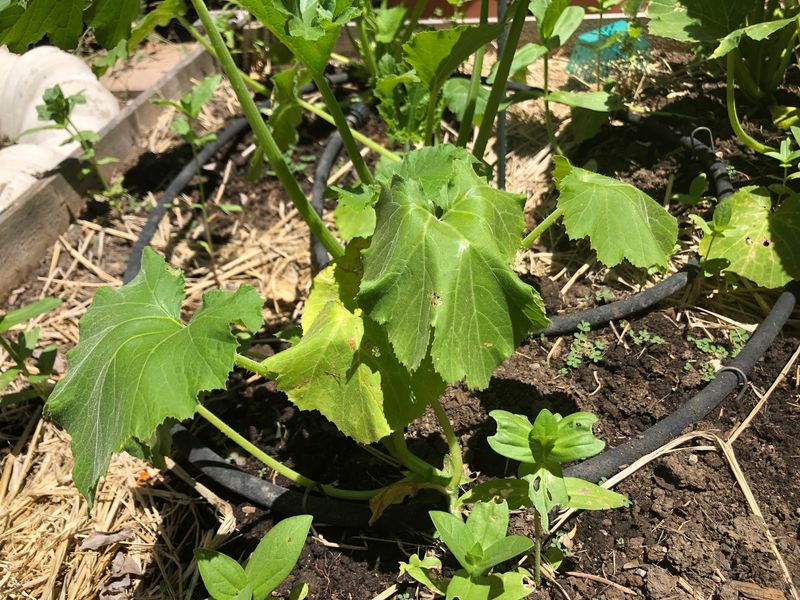
Running through a short, ordered checklist this week covers most of the realistic causes behind a cucumber production slowdown. Start below the surface. Check soil moisture several inches down and water deeply enough to wet the full root zone if it is dry. Extension guidance on heat and water stress in cucumbers emphasizes that surface appearance is unreliable and that deep irrigation combined with mulch gives the most consistent results during hot weather.
Once moisture is confirmed, look at the flowers. Iowa State Extension’s pollination troubleshooting resource suggests checking whether female flowers are present and whether bees are visiting during cooler morning hours. If fruit set has stopped and temperatures are consistently above 90 degrees F with plants wilting, temporary afternoon shade cloth can reduce heat load on flowers during the most critical hours. Penn State’s cucumber production guidance supports shade and air movement as practical responses to heat stress.
Next, walk the vine and remove every oversized, yellowing, or damaged cucumber. University of Minnesota Extension connects frequent harvesting directly to continued plant productivity. After clearing old fruit, inspect leaves, stems, and the soil surface for the pests and disease signs described in the previous section. Treat only what you find.
Save fertilizer for last. UMN Extension’s heat-stress guidance warns against feeding during active stress periods. If the vine recovers after addressing moisture, heat, pollination, harvest, and pests, you may never need to fertilize at all this season. If deficiency signs persist after conditions improve, get a soil test and follow a labeled product’s directions.
Fix the stress before you feed the vine
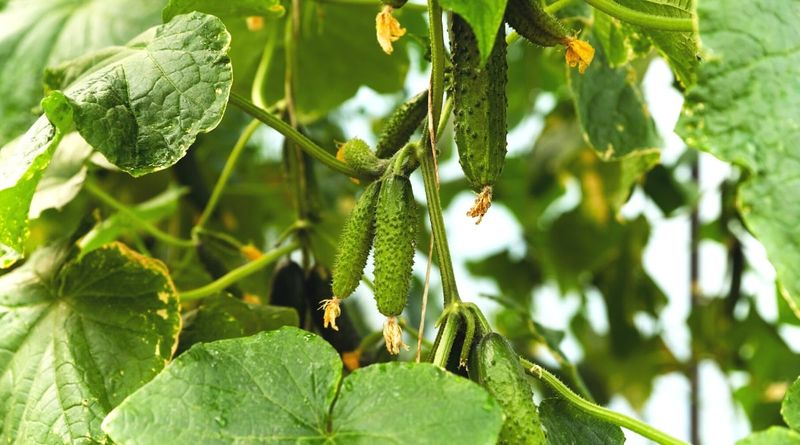
A clear decision sequence matters more than any single remedy. Stabilize root-zone moisture, reduce heat load where possible, confirm that female flowers are present and that pollinators are reaching them, harvest any overripe fruit, and inspect for pests or disease. Run through those steps before considering fertilizer. Penn State’s high-tunnel cucumber research makes clear that environmental conditions drive fruit set far more directly than nutrient inputs during a heat event.
A temporary slowdown during a heat wave does not mean the vine is deficient in anything. University of Minnesota Extension’s review of common home remedies confirms that no pantry ingredient reliably restarts production, and applying unmeasured kitchen fixes can introduce new problems rather than solve existing ones. The practical target is a vine that sets fruit steadily at the right size and gets harvested often. Frequent, properly timed harvests are the clearest signal that the vine is healthy, and that outcome comes from fixing the growing conditions, not from the pantry shelf.