
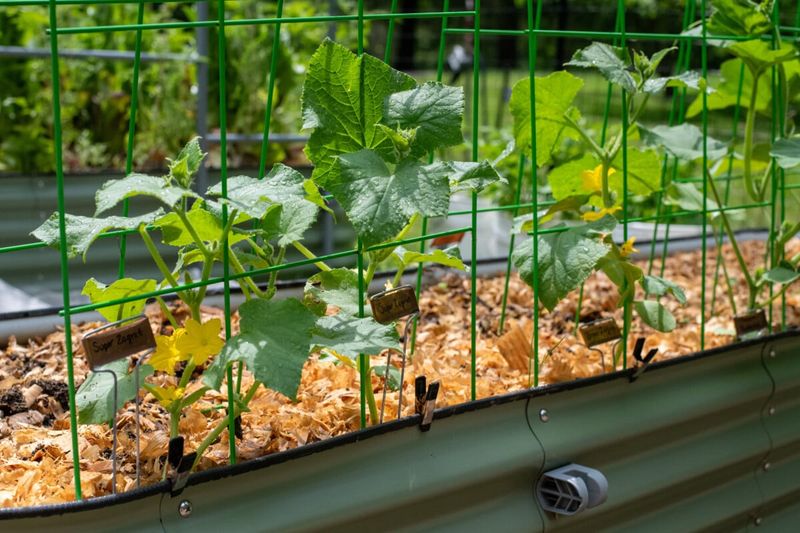
Watching your cucumber vines explode with lush, dark-green growth while the fruit count stays near zero is one of the more frustrating puzzles in a summer garden. The good news is that a clear set of causes explains this pattern, and most of them are fixable once you know what to look for. Excess nitrogen is one real possibility, but it is not the only one, and rushing to add a different fertilizer before checking the plant carefully can make things worse. A short investigation of your flowers, feeding history, weather, and watering habits will point you toward the right response.
Lush growth can signal excess nitrogen—but it does not prove it
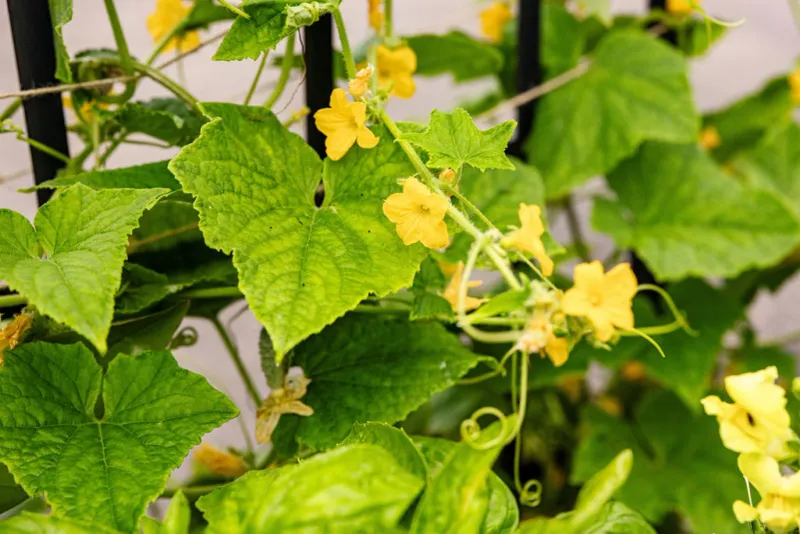
Picture a cucumber vine running three or four feet in every direction, its leaves deep green and overlapping, its tendrils wrapping confidently around every nearby stake – yet barely a cucumber in sight. That pattern is genuinely worth investigating, and nitrogen is a reasonable first suspect.
University of Minnesota Extension and University of Georgia Extension both note that too much nitrogen can push cucurbits toward producing more vines and leaves while delaying the transition to flowering and fruiting. When a plant has more nitrogen than it needs, vegetative growth can stay dominant well past the point when fruit should be forming. University of Minnesota Extension guidance on cucurbit flower and fruit set describes exactly this dynamic.
What appearance alone cannot tell you is whether excess nitrogen is truly the cause. A cucumber plant can look identical whether it is overfed, growing in naturally fertile soil, getting plenty of water in warm weather, or simply at a young stage before female flowers have appeared. Vigorous growth is not a diagnosis by itself.
The reasonable first move is to pause any nitrogen-heavy fertilizer or amendments while you look more carefully at the plant. Think of that pause as limiting potential further excess, not as a guaranteed turnaround. The sections that follow will help you work through the other likely causes before you decide whether feeding is the real problem.
Use the flowers to locate the fruit-set problem
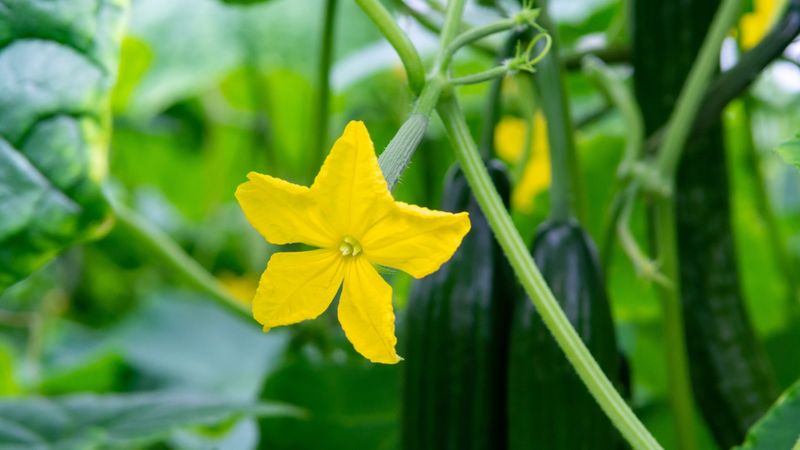
Before touching the fertilizer bag, spend a few minutes looking at the flowers. What you find on the vine will tell you far more than the label on your last bag of plant food.
Cucumber plants produce two distinct flower types on the same vine. Male flowers grow on a plain stem and produce pollen, but they never develop into cucumbers. Female flowers carry a small, swollen, cucumber-shaped bump right at their base – that bump is the ovary that will become fruit if conditions are right. Penn State Extension’s cucumber production guide describes this distinction clearly and explains why it matters for diagnosing poor fruit set.
Male flowers commonly appear first and in much larger numbers than female flowers, especially early in the season. A young plant producing nothing but male flowers may simply be following a normal developmental pattern rather than signaling a nutrition problem. Give it another week or two before drawing conclusions.
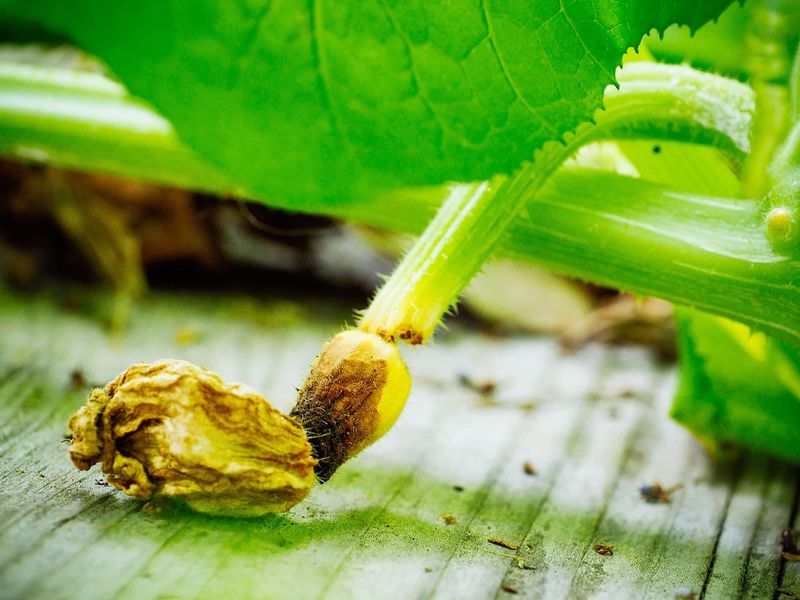
If female flowers are present, note what happens after they open. A healthy female flower that receives adequate pollen will start swelling at the base within a day or two. University of Minnesota Extension’s home cucumber guide points out that tiny fruits that form and then yellow and drop are a sign that something interrupted fruit development – and that something is often pollination or weather rather than fertilizer.
Knowing which type of flower is present, and what happens to female flowers after they open, gives you a much clearer picture of where in the process things are going wrong.
Pause nitrogen-heavy fertilizer and amendments for now
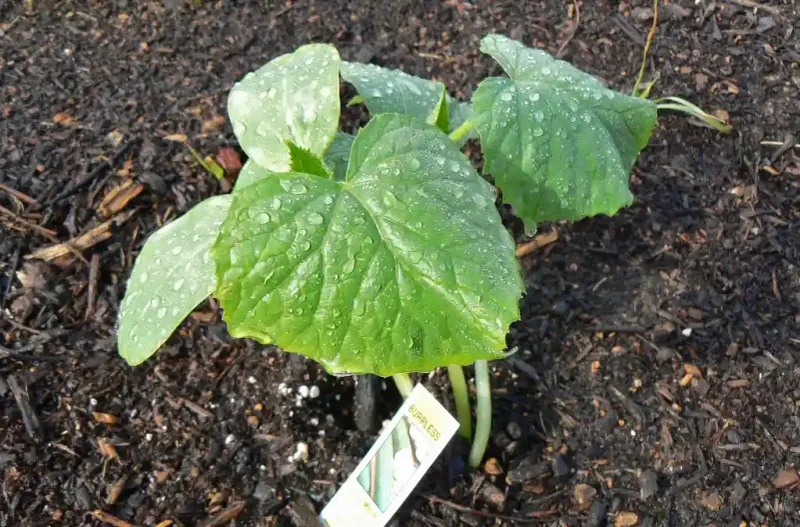
If your vine is unusually lush and you have been adding nitrogen-rich inputs, the practical first step is to stop adding more while you assess the situation. This is a conditional response to a suspected problem, not a permanent rule for every cucumber plant.
Nitrogen-heavy sources to pause include synthetic fertilizers with a high first number on the N-P-K label, liquid feeds like fish emulsion, manure, and composted poultry products. All of these can be useful in the right amounts, but when a plant is already producing excessive leafy growth, adding more nitrogen is unlikely to help and may extend the delay before fruiting begins. Extension guidance on cucurbit fruit set links excess nitrogen specifically to this kind of prolonged vegetative dominance.
One important note on manure: fresh manure should never be applied around vegetables because of pathogen and weed-seed risks. Even finished compost and aged manure contribute real amounts of nitrogen and phosphorus, and overapplying them can create the same excess that synthetic fertilizer does.
Pausing fertilizer is not the same as starving the plant. Cucumbers are heavy feeders over a full season, and Penn State Extension’s cucumber production guidance makes clear that nitrogen applications are appropriate when crop needs and soil conditions support them. The goal right now is to stop adding to a potential excess, not to eliminate nitrogen from the garden permanently.
Resist the urge to add a different fertilizer just because fruiting is disappointing. Swapping one product for another without understanding the cause can create a new imbalance. A soil test, covered in the next section, is the most reliable way to know whether any nutrient change is actually warranted.
Let a soil test decide whether any nutrient belongs
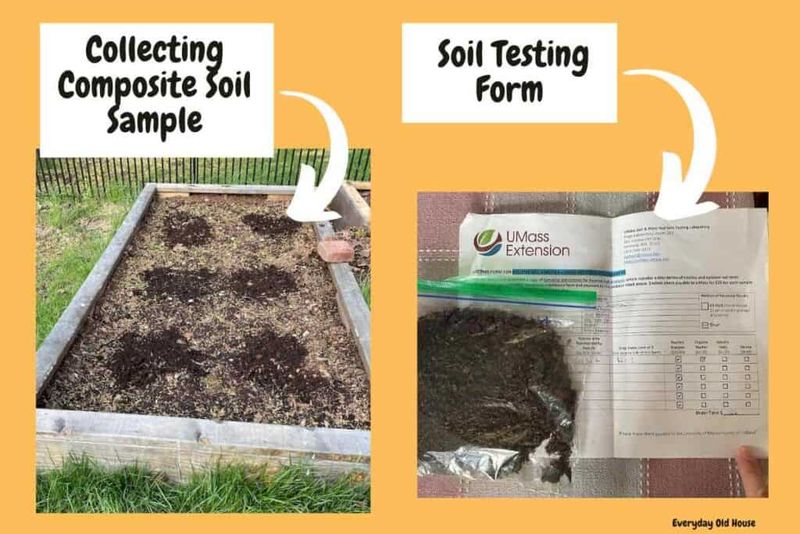
Switching from a nitrogen-heavy fertilizer to a high-phosphorus bloom booster is a common instinct when cucumbers refuse to fruit – and it is usually the wrong move. Phosphorus supports reproductive growth in plants, but adding it to soil that already has adequate phosphorus is unlikely to trigger a harvest and can contribute to water-quality problems if it runs off into nearby drains or waterways.
Penn State Extension’s soil testing guidance is direct on this point: when a soil test shows that phosphorus and potassium levels are already sufficient, those nutrients should not be added simply because a plant is not performing as expected. The same guidance explains that fertilizer recommendations vary by region, soil type, and extraction method, so a rate that works on one property may be inappropriate on another.
A basic soil test from your local cooperative extension office or a certified lab costs a few dollars and tells you what is actually in your soil. If the test shows a genuine deficiency, you have a specific target. If it shows adequate levels, the safest feeding change may be no additional fertilizer at all.
When a test does support fertilizer use, follow its recommendation and read the product label carefully. Apply only the amount indicated, keep granular fertilizer away from the plant stem to avoid burning, and time applications so they do not coincide with heavy rain. EPA guidance on agricultural nutrient pollution explains how excess nitrogen and phosphorus move in runoff and contribute to algal problems in local waterways – a real concern even in backyard gardens near storm drains.
Penn State’s fertilizer-matching guide and Oregon State Extension’s nutrient management publication both reinforce that matching fertilizer type and amount to actual soil needs produces better results than guessing based on product marketing.
Female flowers can fail when pollination falls short
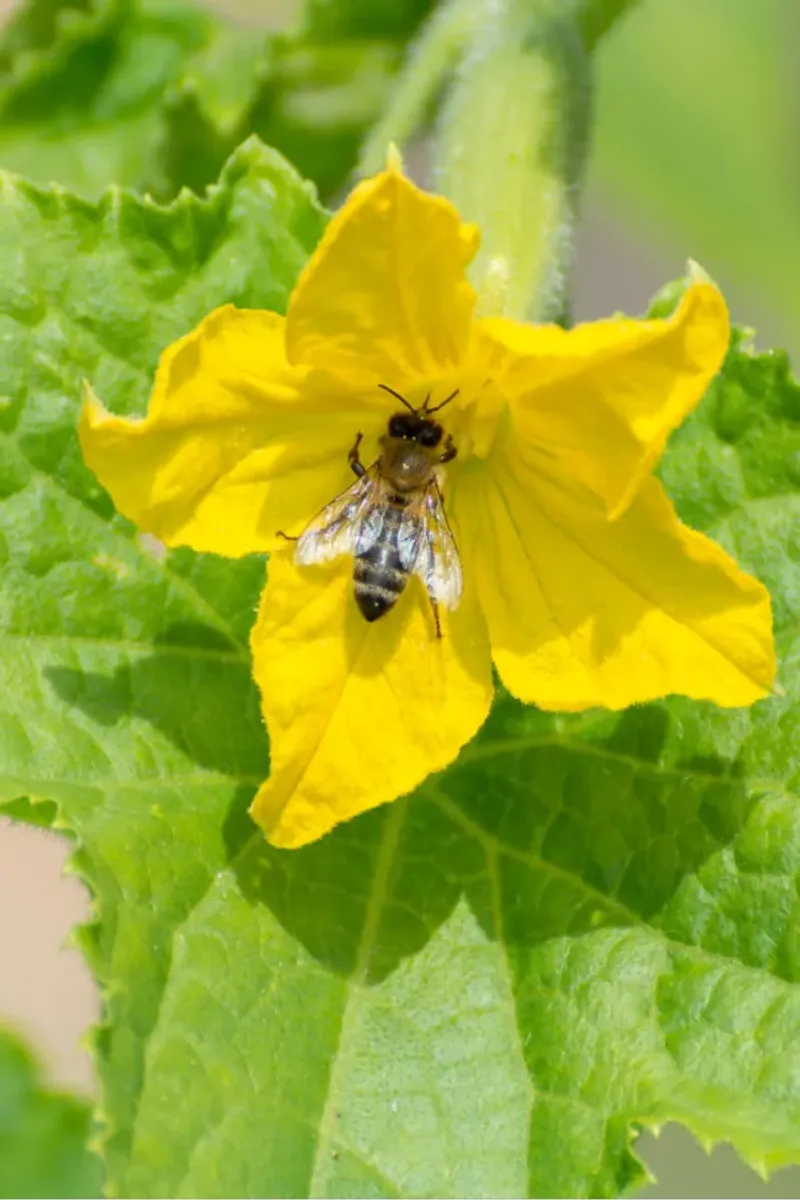
Suppose female flowers are opening on your vine and tiny cucumbers are forming at their bases – but within a few days those small fruits turn yellow, shrivel, and drop. Fertilizer is not the likely culprit here. Poor pollination is.
Most standard outdoor cucumber varieties depend on insects, primarily bees, to carry pollen from male flowers to female flowers. A female flower that does not receive adequate pollen will abort its tiny fruit rather than develop it. Penn State Extension’s cucumber pollination resource explains that inadequate pollination can also produce misshapen or undersized cucumbers even when some fruit does develop.
Timing adds another layer of difficulty. Cucumber flowers are open and receptive for only a short window, generally a few hours in the morning. Cold temperatures, rain, strong wind, or low bee activity during that window can mean a female flower opens and closes without receiving pollen. A stretch of cloudy, wet mornings can quietly end a season’s pollination without any obvious visible sign.
Protecting pollinators is one of the most practical steps a gardener can take. University of Minnesota Extension recommends avoiding insecticide applications on open blooms whenever possible and following any product’s bee-safety directions carefully. Spraying in the evening after flowers close is a better choice than spraying during morning hours when pollinators are active.
Hand-pollination, which involves transferring pollen manually with a small brush or cotton swab, is documented mainly as a technique for greenhouse production and enclosed spaces where pollinators cannot reach plants. For most backyard gardens with open access to bees and other insects, it is not a standard requirement. If you have strong reason to believe pollinator activity is genuinely low on your property, it can serve as a site-specific fallback, but supporting a healthy pollinator population is the more sustainable approach.
Heat and uneven moisture can interrupt fruit set
A fertilizer change cannot fix a weather problem, and weather is one of the most overlooked reasons cucumbers stop setting fruit in midsummer. When temperatures climb into the 90s during the day or stay in the 70s at night, cucumber plants can drop flowers and abort small fruits before they have a chance to develop.
University of Minnesota Extension specifically identifies high daytime and nighttime temperatures as causes of flower and small-fruit abortion in cucurbits. A vine that was setting fruit steadily in June may go quiet in July not because of a nutrient change but because the heat crossed a threshold the plant cannot tolerate for fruiting.
Moisture stress compounds the problem. Drought can cause flowers to drop and fruit to develop poorly. Flooding or consistently waterlogged soil damages roots and interferes with the plant’s ability to take up whatever nutrients are present, making even well-fed plants behave as if they are starving. Inconsistent watering – soaking the plant one day and letting it dry out the next – can produce misshapen fruit and stressed flowers even when the total water volume looks adequate on paper.
Utah State University Extension recommends aiming for even soil moisture and uses roughly 1 to 2 inches of deep irrigation per week as a practical starting point. That figure is meant to be adjusted for plant size, current rainfall, and local conditions rather than applied as a rigid formula. Mulching around the base of the plant helps retain moisture between waterings and moderates soil temperature, giving the roots a more stable environment during hot spells.
Variety, pests, and disease may change the diagnosis
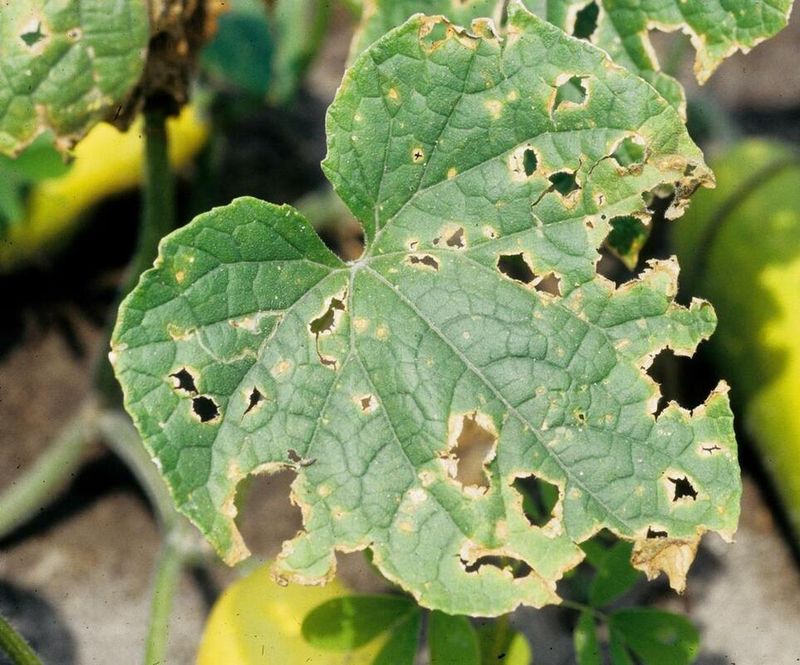
Not every lush, unproductive cucumber vine fits the excess-nitrogen story, and recognizing when a different explanation applies can save a lot of wasted effort. Variety selection, pest pressure, and disease can all produce symptoms that look similar but require completely different responses.
Two variety categories deserve special attention. Gynoecious cucumbers produce mostly or entirely female flowers, which sounds ideal until you realize they may need a separate pollenizer variety planted nearby to supply pollen. Without a compatible pollenizer, a gynoecious plant can have plenty of female flowers and still set almost no fruit. Parthenocarpic varieties are different: they can develop fruit without pollination at all and are common in greenhouse and high-tunnel production.
Penn State Extension’s pollination guide and their high-tunnel cucumber resource both clarify that gynoecious and parthenocarpic are not interchangeable terms – a gynoecious variety still needs pollen unless it is also parthenocarpic.
Fertilizer will not fix a pest or disease problem, full stop. Cucumber beetles are a common backyard pest that can transmit bacterial wilt, a disease that causes rapid, irreversible wilting and plant collapse. University of Illinois Extension notes that once bacterial wilt takes hold, no nutrient application will reverse it. Viruses, severe root damage, and heavy insect infestations all fall into the same category: they require their own diagnosis and targeted management, not a change in the fertilizer program.
If your plant shows wilting, mottled or distorted leaves, sticky residue, visible insects, or stem damage at the base, look into pest and disease identification before adjusting any inputs. Your local cooperative extension office can help identify specific problems and recommend appropriate responses for your region.
Match the symptom pattern to the next step
Running through a short checklist makes the path forward much clearer. Lush foliage with no female flowers at all points toward plant age, variety, or a history of nitrogen-heavy inputs. Pausing those inputs, reviewing your variety’s characteristics, and requesting a soil test are the right moves in that situation. University of Minnesota Extension’s cucurbit guide and Penn State’s soil testing resource are both practical starting points.
Female flowers present but fruit aborting or developing poorly shifts the focus to pollination and weather. Check morning pollinator activity, recent temperatures, and moisture consistency before changing anything else. Penn State’s pollination guide covers what to look for. Yellowing or shriveling fruit that gets past the tiny stage calls for a closer look at watering habits and possible stress factors rather than more fertilizer.
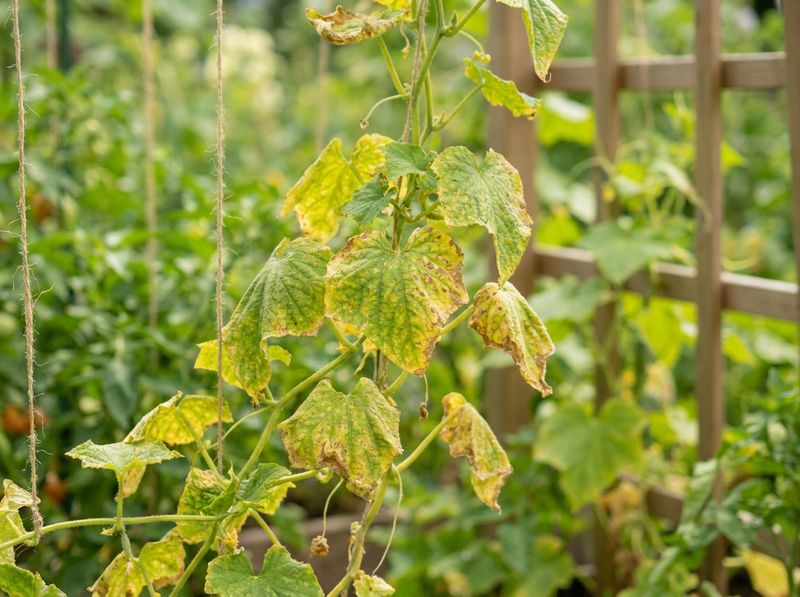
Wilting, distorted leaves, or visible insects point away from nutrition entirely and toward pest or disease diagnosis, which requires its own separate response. Correcting suspected excess nitrogen may genuinely help when lush growth reflects an overfed plant, but adding phosphorus without a soil test, or expecting any single feeding change to guarantee a harvest, will likely leave you disappointed. The vine that gets the right diagnosis – not just a different fertilizer – is the one that actually fills a basket.