
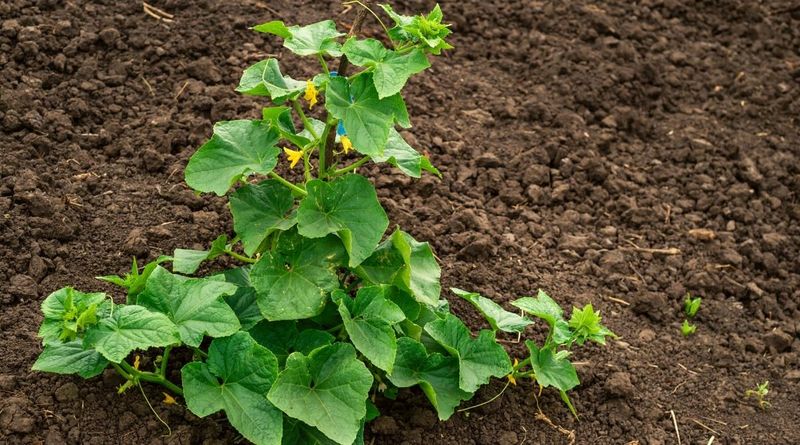
Watering your cucumbers faithfully and still watching them sit there pale, stunted, and miserable is one of the most frustrating things that can happen in a Southern garden. The problem is rarely just how much water you’re giving them – it’s often what’s happening below the surface that water alone can’t fix.
Before you adjust your hose schedule again, the root zone deserves a closer look, because soil texture is just one small piece of a much bigger picture.
Check the root zone before blaming the soil type
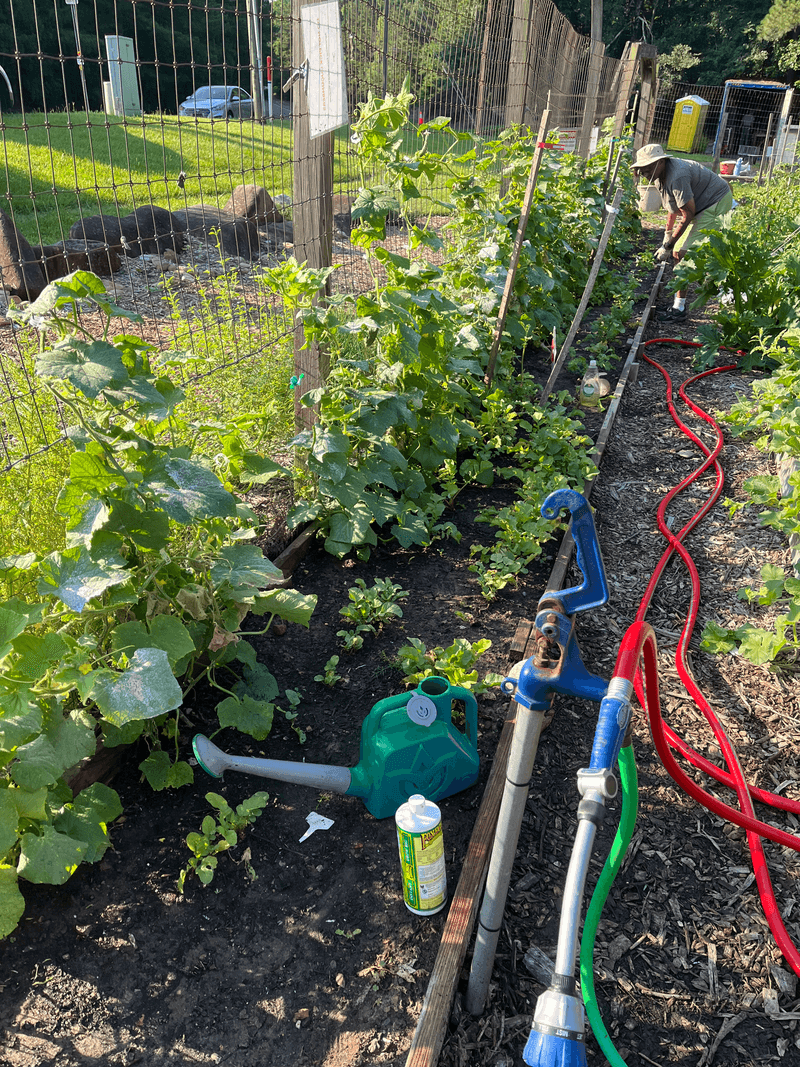
Cucumbers are more adaptable than most gardeners expect. Texas A&M’s cucumber production guidance and similar resources from Penn State and Oklahoma State all emphasize well-drained, fertile soil without singling out a particular texture as universally off-limits.
Sandy, loamy, and even heavier soils can support healthy cucumber plants when the root zone has the right balance of air, moisture, drainage, and nutrients.
Slow growth, yellowing leaves, and limp vines point to an imbalance in that root zone, not necessarily a verdict on soil type. The actual culprits tend to be conditions: persistent saturation, compaction that limits root penetration, poor drainage that restricts oxygen exchange, a nutrient profile that’s off, or soilborne pests working unseen underground.
Penn State Extension notes that cold soil and cool nights can also delay cucumber growth in ways that look nearly identical to a soil problem.
Soil is one reasonable place to look, but temperature, available sunlight, pests, disease, nutrient imbalance, and poor pollination can all produce the same tired, sickly appearance. The most productive first step is watching what the bed does after a good watering or a heavy rain, not judging it by how the surface looks or feels in your hand.
Read what the bed does after rain or irrigation
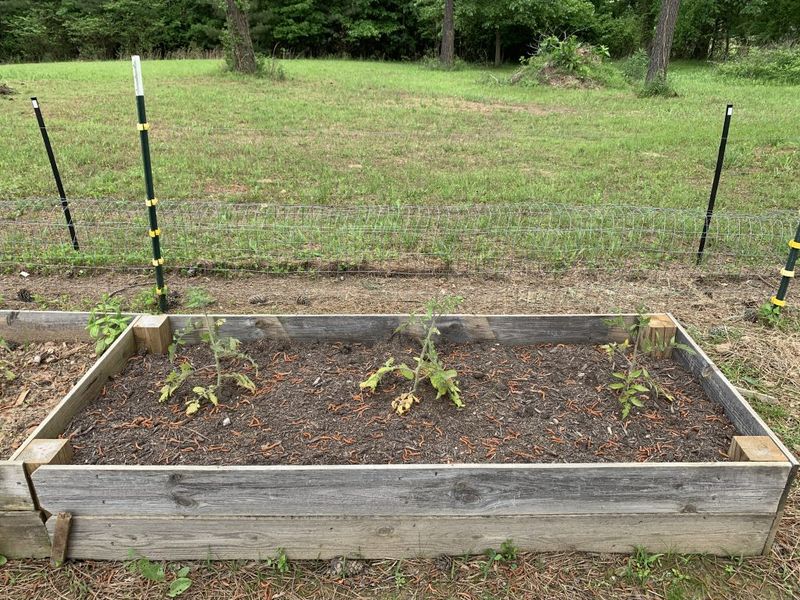
The most revealing test you can run costs nothing and takes about a day. After your next watering session or a decent rain, walk the bed and watch what happens.
Persistent puddles that linger for hours, muddy soil that stays slick to the touch, or a crusty surface that forms once things dry out are all signs that water is not moving through the root zone the way it should.
A more deliberate check involves digging a hole about 12 inches deep, filling it with water, and noting how long it takes to drain. USU Extension guidance on drainage problems notes that ideally water should drain from a planting hole within 24 hours, though this is a general drainage benchmark rather than a cucumber-specific pass-fail rule.
If the hole still holds water well past that window, drainage is worth addressing.
Compare the struggling area to a spot where your cucumbers or other vegetables are doing better. Minnesota Extension’s compaction resources point out that low spots, heavily trafficked paths, and compressed bed edges often show noticeably slower infiltration than undisturbed ground nearby.
Uneven growth that follows those patterns, rather than spreading uniformly, is a strong clue that drainage or compaction is involved rather than a problem affecting the entire garden equally.
Persistent wetness and compaction can restrict cucumber roots
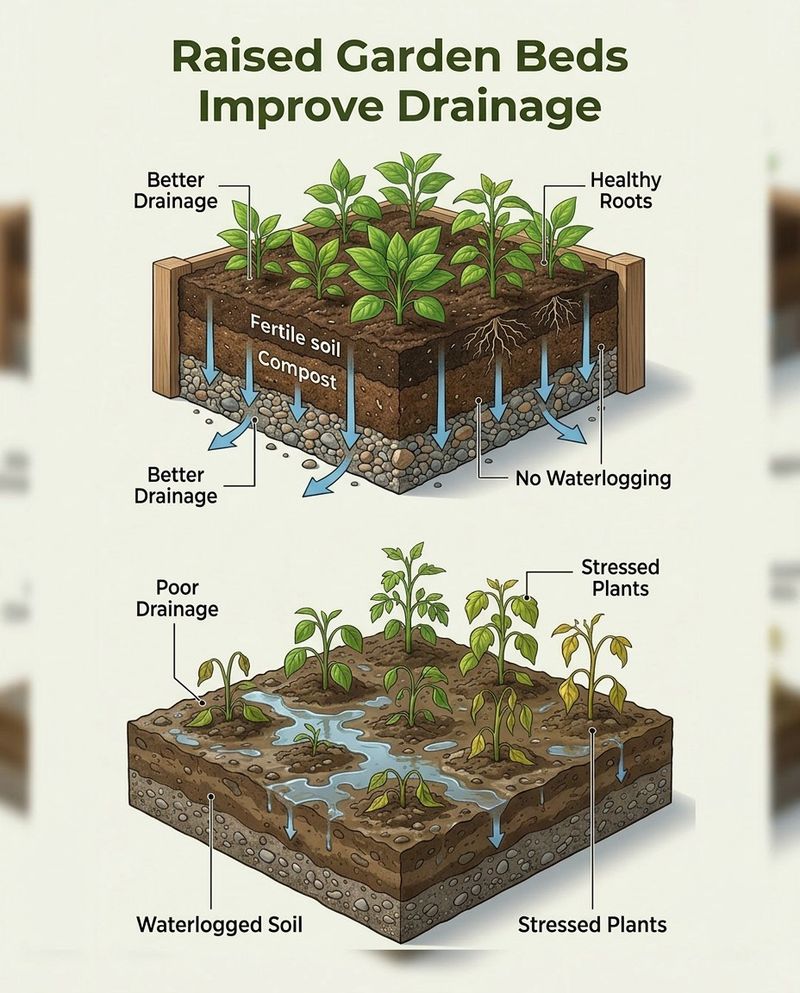
Roots need oxygen just as much as they need water. When soil stays saturated for extended periods, water fills the air pockets between soil particles, leaving roots in an oxygen-limited environment.
Under severe or prolonged saturation, root function can decline, growth slows, and the plant becomes more vulnerable to root and crown diseases. The outcome depends on how long the conditions persist, how poorly the soil drains, and how established the plant is when the problem sets in.
Compaction creates a related but distinct problem. When soil particles are pressed tightly together, whether from foot traffic, heavy equipment, or repeated tilling of wet ground, roots have a harder time penetrating deeper layers.
Minnesota Extension’s research on soil compaction explains that restricted infiltration and reduced pore space limit both root growth and water movement through the profile. Oklahoma State’s cucumber production fact sheet similarly warns against excess moisture and emphasizes the importance of drainage.
Adding more water to a root zone that already drains poorly does not help the plant recover. Repeated saturation can worsen oxygen limitation and increase disease pressure rather than correct the stress.
The goal is consistent, moderate moisture that keeps the root zone evenly damp without staying wet between waterings. Recognizing that distinction matters before reaching for the hose, because more water applied to an already impaired root zone often makes symptoms worse rather than better.
Inspect Southern cucumber roots for nematode damage
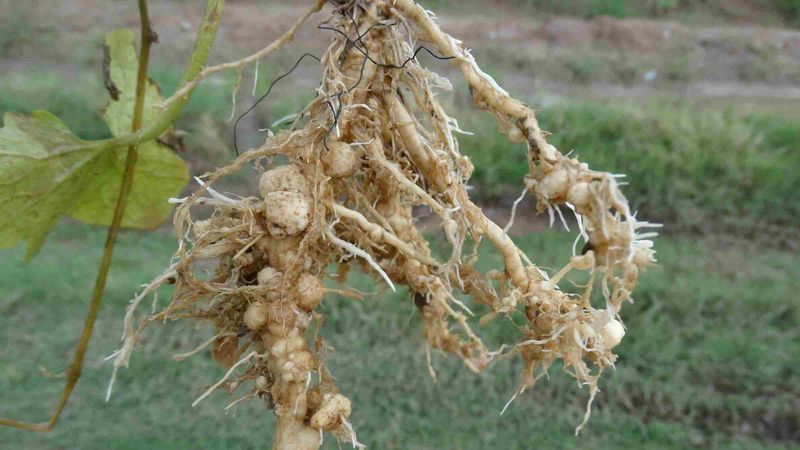
Warm, sandy soils across the Southeast carry a risk that drainage checks and compost applications cannot touch: root-knot nematodes. These microscopic roundworms are especially problematic in parts of Florida, southern Georgia, and other areas with light, fast-draining soils that stay warm for most of the year.
A cucumber plant struggling with nematodes can look nearly identical to one dealing with drought, nutrient deficiency, or a drainage problem, which is exactly why yellowing and stunting alone are not enough to confirm the diagnosis.
UGA Extension’s nematode management guide and UF/IFAS nematode resources for Florida both recommend examining roots directly when a plant remains stunted despite adequate moisture and fertilizer. Pull a struggling plant and look at the roots carefully.
Root-knot damage produces swollen, knobby galls, stubby side roots, or distorted growth that healthy roots simply do not show. That physical evidence is far more reliable than any symptom visible aboveground.
When the inspection raises a genuine question about nematodes, submitting a soil or root sample to a diagnostic laboratory is the most dependable next step, particularly before making rotation or treatment decisions. Oklahoma State’s cucurbit disease guidance notes that overlapping symptoms make laboratory confirmation valuable when the result will guide what you grow next season.
Compost and raised beds can improve growing conditions but will not eliminate nematodes if infested soil remains in the bed.
Use a soil test before changing pH or fertility

Guessing at lime or fertilizer needs is one of the fastest ways to trade one problem for another. A soil test replaces that guesswork with actual numbers, and for Southern gardens, especially in Florida, the investment in a test is almost always worth it.
UF/IFAS soil testing guidance recommends collecting multiple subsamples from the upper 6 inches of the bed, mixing them together into a single representative sample, and keeping distinct problem areas separate rather than blending failing soil with healthy soil from another part of the yard.
A practical pH target for cucumbers falls somewhere around 6.0 to 6.8, though University of Minnesota Extension and other sources acknowledge that cucumbers tolerate a broader range than their optimum. Treat that window as a useful guide, not a hard survival threshold.
Local lab recommendations and regional extension offices often refine that target based on soil type and crop.
UF/IFAS soil fertility guidance for Florida specifically cautions against applying amendments without knowing the actual pH and nutrient status, because Florida’s sandy soils can have low nutrient-holding capacity and lose potassium readily through leaching. Additional UF/IFAS resources also note that some Florida sites have drainage complications or hardpan layers that affect how nutrients and water move through the profile, making a single amendment prescription unreliable without site-specific data.
Improve clay or sandy soil with measured changes
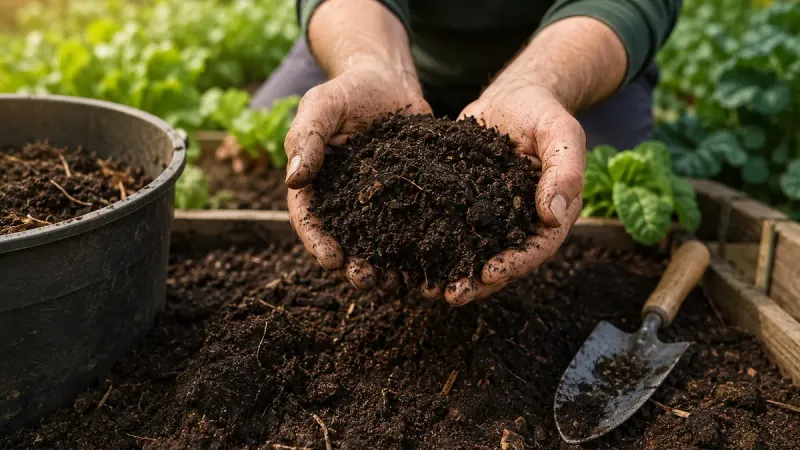
Once you know what the soil is actually doing, physical corrections become much safer to apply. Mature compost or other well-decomposed organic matter is the most broadly recommended starting point for both clay and sandy soils.
Oregon State Extension explains that organic matter can improve aggregation and aeration in clay while increasing water and nutrient retention in sandy soil, addressing opposite problems through the same general approach.
A commonly cited starting point is incorporating about 1 to 2 inches of mature compost into the upper 6 to 8 inches before planting. Penn State’s home garden soil guidance frames this as a conditional recommendation, not a universal prescription, because the right amount depends on existing organic matter levels and what the soil test shows.
Adding too much compost or fresh manure can create nutrient imbalances, excess phosphorus, elevated salts, or herbicide-residue problems that create new headaches.
A few firm rules apply regardless of soil type. Do not work clay soil when it is wet; wet cultivation breaks down soil structure and can create a hard, compacted layer.
Limit foot traffic on damp beds for the same reason. Oregon State’s soil improvement guide and USU Extension both caution against adding small amounts of sand to clay, since insufficient proportions can make the soil denser rather than looser.
USU’s cucurbit soil guidance supports raised beds as a practical option where drainage is marginal, though the quality of the fill, the irrigation setup, and whether the underlying soil is contaminated all still matter once the bed is built.
Adjust irrigation to the corrected root zone
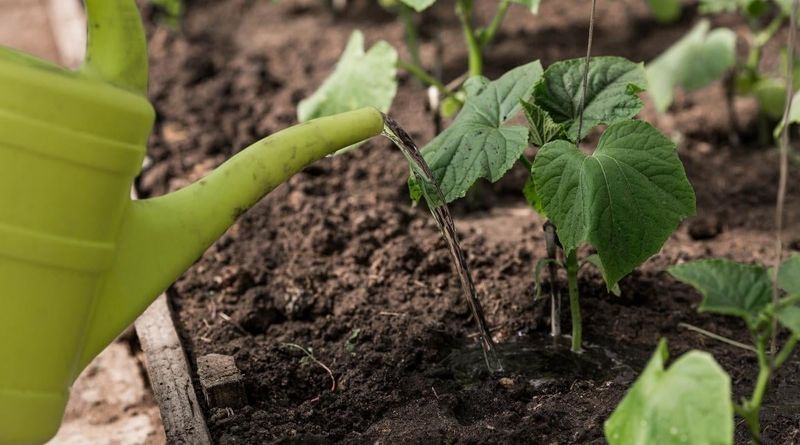
Cucumbers need steady, consistent moisture, but the right amount and frequency depend on your specific soil, the current weather, the size of your plants, and how you are delivering water. Assigning one weekly number to every garden oversimplifies what is actually a site-by-site judgment call.
University of Minnesota Extension and USU Extension’s cucumber guide both frame general moisture recommendations as ranges that shift with conditions rather than fixed weekly targets.
Sandy soil dries out faster and generally benefits from smaller, more frequent applications that keep the root zone consistently moist without saturating it. Heavier soils that have been amended and drain adequately may hold moisture longer and need less frequent watering.
Before turning on the hose, check actual soil moisture a few inches below the surface. Penn State’s cucumber production guide supports checking moisture and drainage conditions rather than watering on a fixed schedule regardless of what the soil is doing.
If cucumber plants remain stunted, pale, or weak after soil corrections and proper irrigation, the cause may not be soil-related at all. Cold soil and cool nights can delay growth significantly in warm-season crops.
Insufficient sunlight, pest feeding, disease pressure, nutrient imbalance, and poor pollination can all produce symptoms that look like a root zone problem. When the soil observations do not match the symptoms, those other factors deserve a careful look before making more changes to the bed.
Follow a diagnosis-first rescue plan
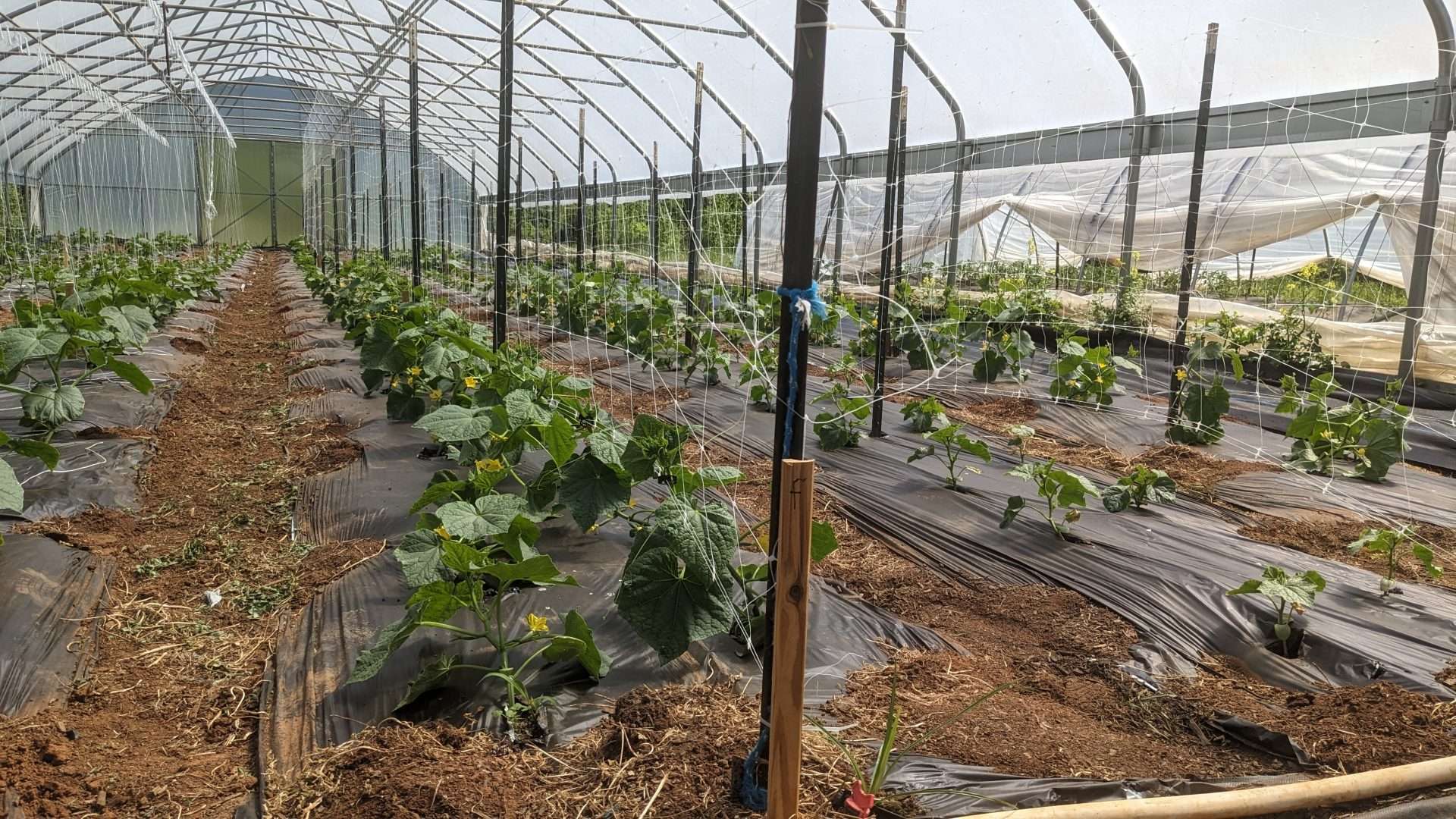
A workable rescue plan follows the evidence rather than jumping straight to amendments. Start by watching drainage after watering, then inspect roots if Southern conditions and persistent symptoms raise the possibility of nematodes.
UGA Extension’s nematode guide and UF/IFAS soil testing resources both recommend getting confirmation before making rotation or amendment decisions that affect the next season.
Test the soil before adding lime or fertilizer, improve structure carefully with mature organic matter, and adjust irrigation to match the corrected root zone rather than the plant’s distress signals. Texas A&M’s cucumber guidance and USU Extension’s cucumber resources both reinforce that the goal is a fertile, well-drained root zone, not the removal of any particular soil texture.
If symptoms persist after reasonable corrections, check temperature, light, pests, disease, and pollination before changing the soil again. The healthiest cucumber beds are built on a diagnosis, not a guess.