
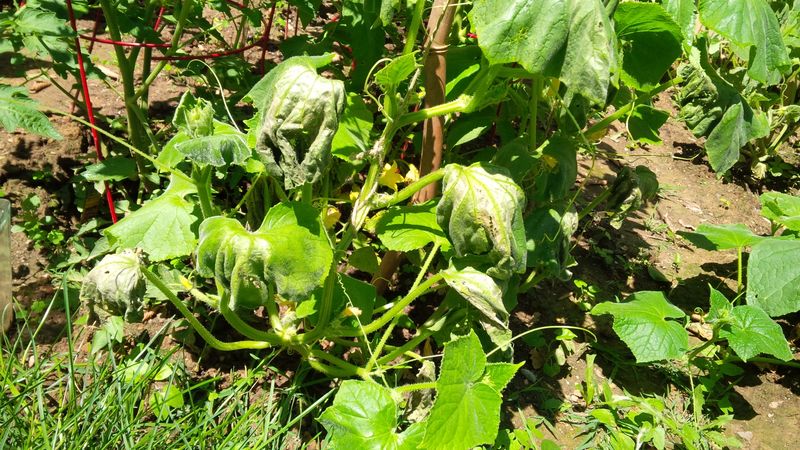
Cucumbers can go from healthy to struggling in just a few days, and most gardeners reach for fertilizer or pesticides before checking what is happening underground. Weak growth, yellow leaves, wilting, and poor fruiting can all trace back to root-zone conditions, but those same symptoms can also come from heat, insects, disease, or poor pollination.
Before spending money on products that may not help, it pays to look at the soil and roots first and figure out what is actually going on.
Is the soil limiting your cucumbers—or is something else?
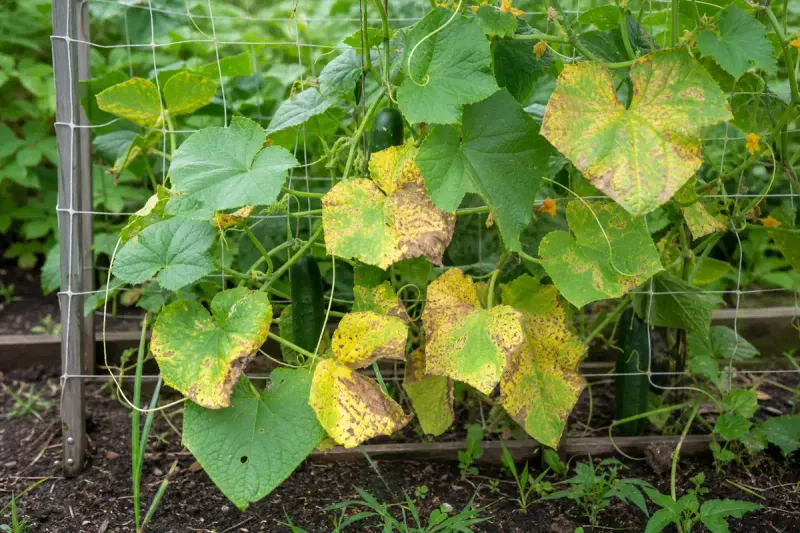
Weak cucumber plants are frustrating, and it is tempting to blame the soil right away. The truth is that yellowing leaves, wilting, stunted growth, and poor fruiting are symptoms shared by several very different problems.
Root-zone issues can certainly cause all of those, but so can cucumber beetles, aphids, bacterial wilt, powdery mildew, heat stress, inconsistent watering, and even a cultivar that simply does not perform well in your region.
When roots are damaged or struggling, the plant loses access to the air, water, and nutrients it needs to grow. Waterlogged soil pushes out oxygen, compacted soil blocks root expansion, and pH or fertility problems can lock up nutrients even when they are physically present.
Oklahoma State Extension guidance on plant care explains how root-zone conditions directly affect a plant’s ability to take up what it needs.
But a look at UC IPM’s cucumber pest and disease guide shows just how many above-ground problems produce nearly identical symptoms. Misshapen fruit, yellowed leaves, and sudden wilt can all come from insects, pathogens, or pollination failure.
The practical first step is to treat the soil as a strong candidate worth investigating, not as the confirmed cause, and to inspect both the root zone and the plant before making any changes.
Test the soil before changing its chemistry
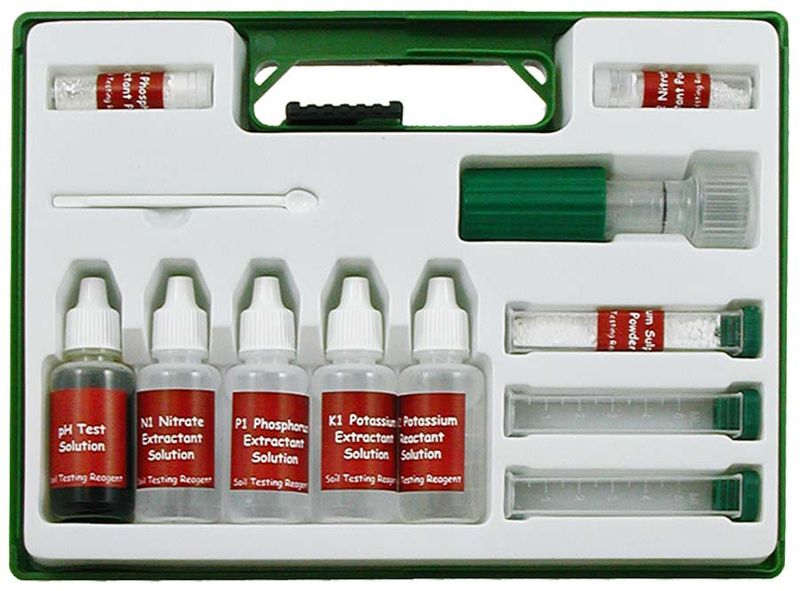
A soil test is the most reliable tool a home gardener has for understanding what is actually happening underground. Standard tests from cooperative extension labs can measure pH and the levels of key nutrients like nitrogen, phosphorus, and potassium.
What they generally cannot tell you is whether the soil is compacted, whether water drains properly, or whether a pathogen or nematode is present. Those problems require physical inspection or separate diagnostic testing.
Cucumbers tend to perform best in mildly acidic soil. Oklahoma State Extension’s cucumber production guide lists a preferred pH range of 6.0 to 6.8, while some regional commercial guides show tolerance across a wider range.
The point is not to chase one magic number, but to get your soil tested and then follow the recommendation that comes back for your specific conditions. University of Minnesota Extension’s soil testing guidance walks through how to collect a sample and what the results actually mean.
Yellow leaves are one of the most misread signals in cucumber growing. They can reflect nitrogen shortage, but they can also come from root damage, high pH locking up iron or manganese, water stress, or disease.
Applying lime or fertilizer without a test result is guesswork, and Oklahoma State’s guidance on soil acidification makes clear that adding lime to already neutral or alkaline soil can reduce the availability of certain nutrients and make symptoms worse. Similarly, UF/IFAS fertilizer management guidance for Florida vegetables notes that nutrient deficiency symptoms require context and testing before treatment.
Get the test first, then correct only what the results support.
Moisture and drainage are major root-zone factors

Feeling the soil a few inches below the surface is one of the most useful things a gardener can do. Push a finger or a trowel into the root zone and notice whether the soil feels dry and powdery, appropriately moist, or wet and sticky.
Pour a bucket of water into a low spot in the bed and watch whether it soaks in within a few minutes or sits on the surface. Those two simple checks reveal more than most gardeners expect.
The goal is a root zone that holds enough moisture for the plant to use while still allowing excess water to drain and air to move through. Utah State Extension’s cucurbit irrigation guide emphasizes that cucumbers need consistent moisture without prolonged saturation.
Sandy soil can drain so fast that roots dry out between waterings, while clay or compacted soil may stay saturated for days after rain, pushing out the oxygen roots need. Compaction, which is common in backyard beds that have been walked on or tilled repeatedly, physically blocks root growth and slows drainage even when the soil type is otherwise suitable.
Raised or free-standing beds can improve drainage and warm the soil faster in spring, which is why Texas A&M AgriLife’s cucumber crop guide and the UF/IFAS Florida Vegetable Gardening Guide both point to them as options where native soil drains poorly. However, a raised bed filled with compacted, salty, or poorly chosen material can still produce struggling plants.
The bed structure helps only when the fill material and management are also appropriate. UC IPM’s root rot guidance for cucurbits notes that saturated conditions are a key driver of root rot regardless of bed type.
Inspect the roots for damage that leaves cannot explain
Leaves can hint at a root problem, but they cannot tell you which root problem you are dealing with. A more reliable approach is to dig carefully beside a declining plant, not pull it up by the stem, and look at the roots directly.
Use a trowel to open a small trench a few inches away from the main stem and lift a section of root for inspection.
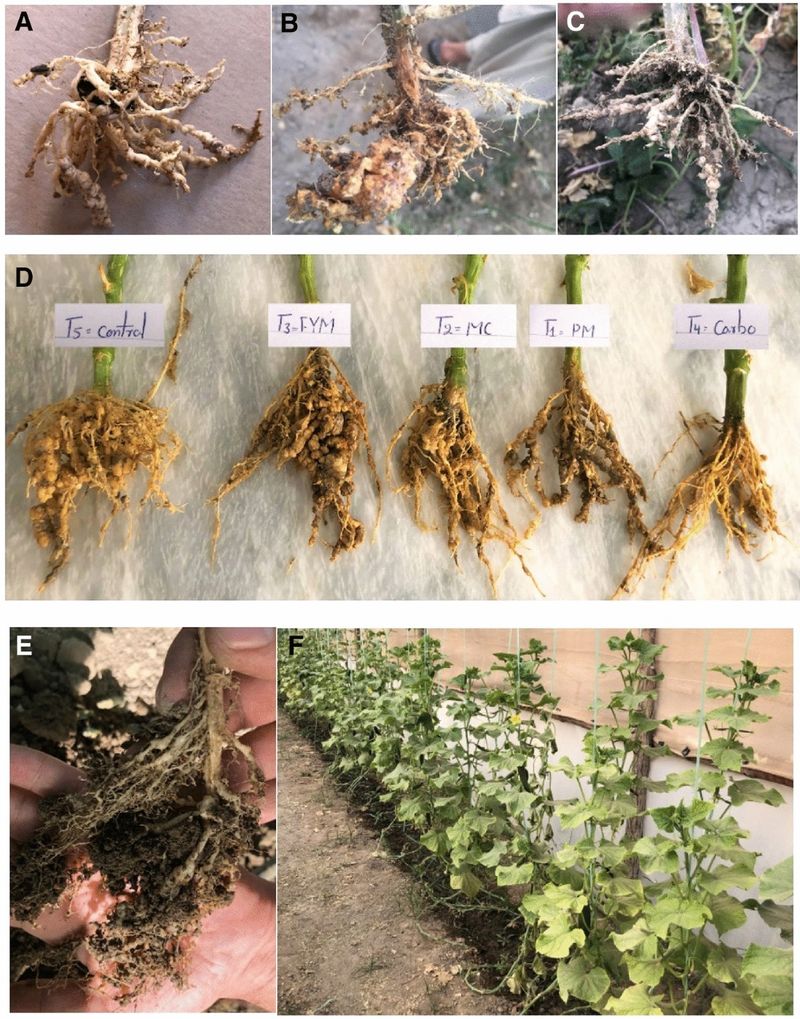
Healthy cucumber roots should be light tan to white and feel firm. Roots that have been sitting in saturated soil for too long often turn brown or gray, feel soft and waterlogged, and may collapse when handled.
UC IPM’s cucurbit root rot resource describes how Pythium and Phytophthora species thrive in cool, wet, or poorly drained conditions and cause exactly this kind of collapse, often starting at the crown and moving outward. If you notice this pattern and the bed has been wet or cool recently, root rot is a reasonable hypothesis worth investigating further.
Galls or swellings on the roots point in a different direction. Root-knot nematodes produce visible, irregular knots along the root system and can cause stunting, chlorosis, and wilt that looks almost identical to drought or nutrient stress.
UC IPM’s cucurbit nematode guide explains that these symptoms overlap with several other causes, and that confirming nematodes in a home garden often requires submitting soil and root samples to a diagnostic lab rather than relying on visual inspection alone. Root appearance narrows the list of possibilities, but a definitive answer may need more than a backyard look.
Match the repair to the confirmed problem
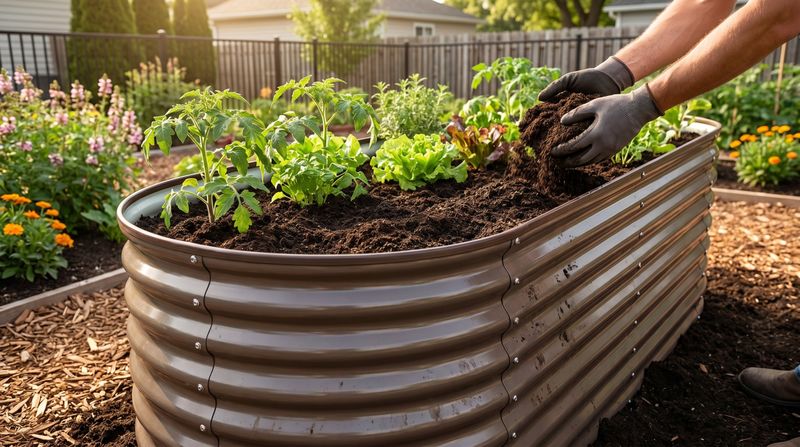
Once you know what the inspection and test results show, you can make a targeted correction instead of guessing. For soil that is dense, low in organic matter, or slow to drain, working in finished compost can improve workability and water movement.
Compost is not a complete fertilizer, though, and more is not always better.
University of Minnesota Extension’s guidance on excessive compost and manure explains that repeated heavy applications can raise soluble salts and phosphorus to levels that actually harm plants. The goal is improving soil structure, not loading the bed with as much organic material as possible.
Follow the test recommendation for how much to add, and resist the urge to pile on extra just to be safe.
For beds with persistently poor drainage, the physical fix matters more than any amendment. Improving the grade, switching to a raised or free-standing bed, or reducing irrigation frequency may do more good than compost alone.
Texas A&M AgriLife’s cucumber guide recommends well-drained sandy to medium-textured soil and raised beds for problem sites. For pH or nutrient corrections, use the specific amendment your soil test recommends in the quantity it specifies.
Several popular home remedies do not hold up as reliable soil fixes. Coffee grounds, eggshells, and banana peels do not provide a predictable, test-based correction for pH or nutrients.
Raw manure can burn plants and carry pathogens. UF/IFAS guidance on organic vegetable gardening in Florida and University of Minnesota Extension’s food-safety guidance on animal-based compost both recommend finished, properly treated compost over raw or merely aged manure.
If untreated manure is ever used, extension guidance calls for at least a 90-day interval before harvesting trellised cucumbers whose edible parts do not touch soil, and 120 days when they do. Finished compost avoids that concern entirely.
Keep the repaired root zone evenly moist
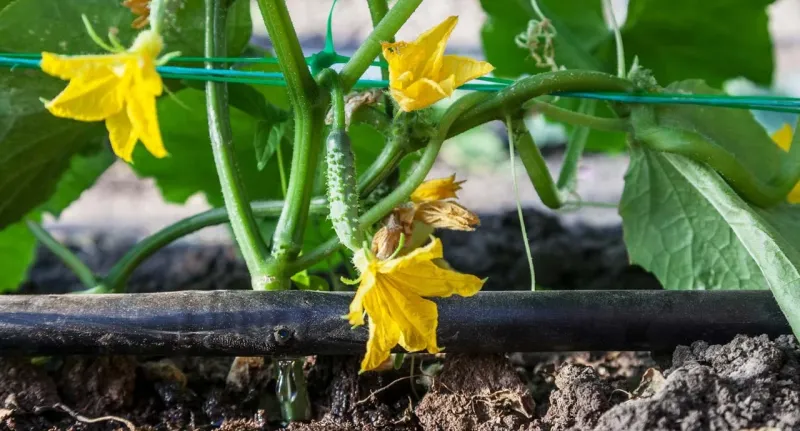
Fixing the soil only helps if the watering approach keeps the root zone in good shape afterward. The target is consistent moisture, not constant wetness and not repeated drying.
Utah State Extension’s vegetable water recommendations commonly cite about 1 to 2 inches per week as a general starting point for cucumbers, but that range shifts based on soil texture, plant size, temperature, rainfall, and whether mulch is covering the bed. Sandy soil may need more frequent watering; clay-heavy or mulched beds may need less.
Drip lines or soaker hoses deliver water directly to the root zone and keep foliage dry. UC IPM’s cultural tips for growing cucumbers note that prolonged overhead watering can increase the risk of foliar diseases, making ground-level irrigation the better routine choice.
A layer of mulch, kept a few inches away from the stem, can slow evaporation and buffer the soil against rapid temperature swings, which helps maintain the even moisture cucumbers prefer.
Inconsistent moisture shows up in the fruit as well as the foliage. University of Minnesota Extension’s cucumber growing guide connects uneven watering to misshapen or bitter fruit, and Oklahoma State Extension’s notes on summer heat and bitter cucumbers point out that heat and drought stress can increase bitterness even in varieties bred to minimize it.
Overwatering after a dry spell can also cause fruit cracking. Steady, appropriate moisture is one of the most practical things you can do once the root zone is in better shape.
Rule out failures that begin above the soil line
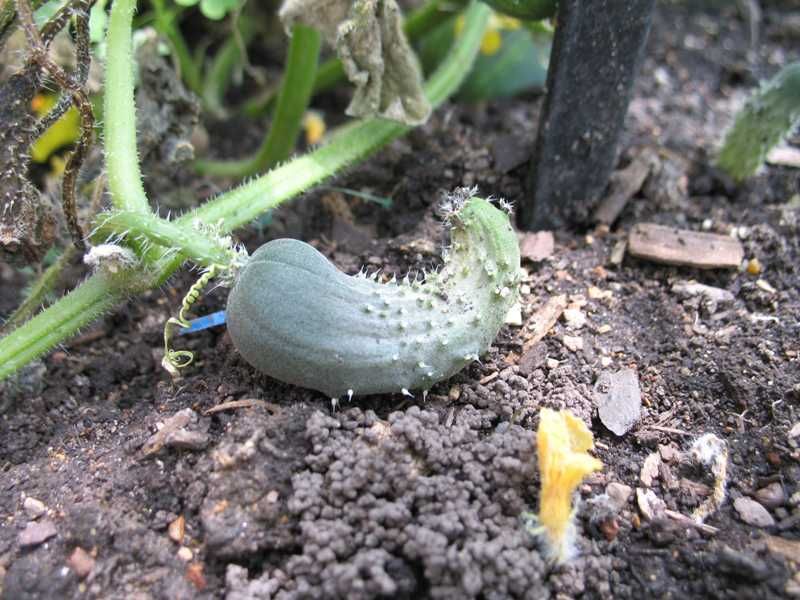
Not every cucumber problem starts underground, and misreading the cause leads to fixes that do not work. Misshapen or stubby cucumbers are a good example.
They are often blamed on soil nutrition, but Oklahoma State Extension’s vegetable FAQ explains that poor pollination and moisture stress are common causes of distorted fruit. If pollinators are scarce or flowers are opening during extreme heat, the fruit may be malformed regardless of what the soil test shows.
Foliar diseases like powdery mildew and downy mildew produce yellowing, spotting, and reduced vigor that can look like a nutrient problem. Cucumber beetles transmit bacterial wilt, which causes rapid collapse that a gardener might easily attribute to root rot.
UC IPM’s full cucumber guide covers the range of pests and diseases that produce these overlapping symptoms and helps separate them by their specific patterns.
Planting timing also matters more than many gardeners realize. Cold, wet soil at planting raises the risk of damping-off and seedling root disease.
UC IPM’s cucurbit damping-off guide recommends waiting until soil is warm enough for reliable germination and establishment. Most guidance targets at least 60 degrees Fahrenheit at planting depth, with 65 to 70 degrees being more reliable.
For Southern gardeners, Texas A&M’s cucumber planting guidance notes spring and fall windows that vary by region, while the UF/IFAS Florida Vegetable Gardening Guide shows how Florida timing shifts by region within the state. Local county Extension planting calendars are more reliable than a single national date for either state.
Prevent recurring root-zone problems with better planning
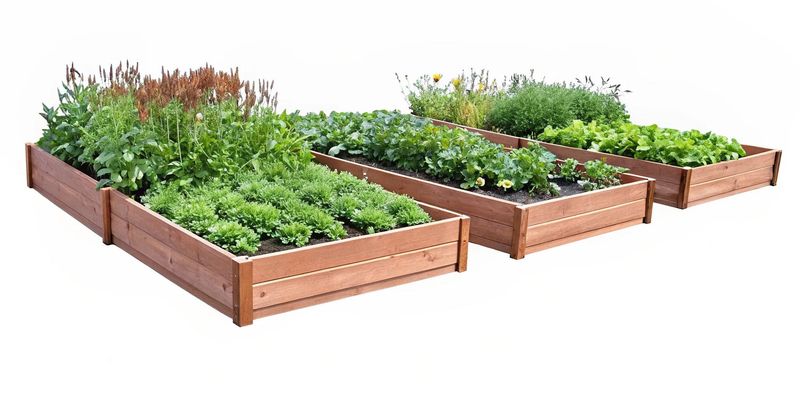
A bed that repeatedly produces weak cucumbers is telling you something worth listening to. Rotation is one of the most effective tools available.
Several soilborne pathogens and nematodes survive in soil and crop debris between seasons, so planting cucumbers, squash, melons, or pumpkins in the same bed year after year gives those problems a reliable host. Texas A&M AgriLife’s cucumber crop guide recommends rotating away from cucurbits as a basic management practice.
Moving cucumber crops to a different spot and removing plant debris at the end of the season reduces the carryover of both pathogens and nematode populations in cucurbit beds.
Before the next planting, check drainage again, especially after a wet winter or heavy rains. A bed that drained well one year may have compacted or settled.
Confirm that the fill material in raised beds has not broken down into a dense, waterlogged layer. UC IPM’s root rot resource notes that pathogens can persist in soil and reinfect new plantings if drainage and sanitation issues are not addressed between seasons.
The repeatable sequence for any struggling cucumber bed is straightforward: observe the visible symptoms, check soil moisture and drainage physically, test the soil chemistry, inspect the roots if the plant is still declining, and then make only the correction the findings support. A soil problem fixed with the right tool tends to stay fixed; a soil problem treated with a guess tends to come back.