
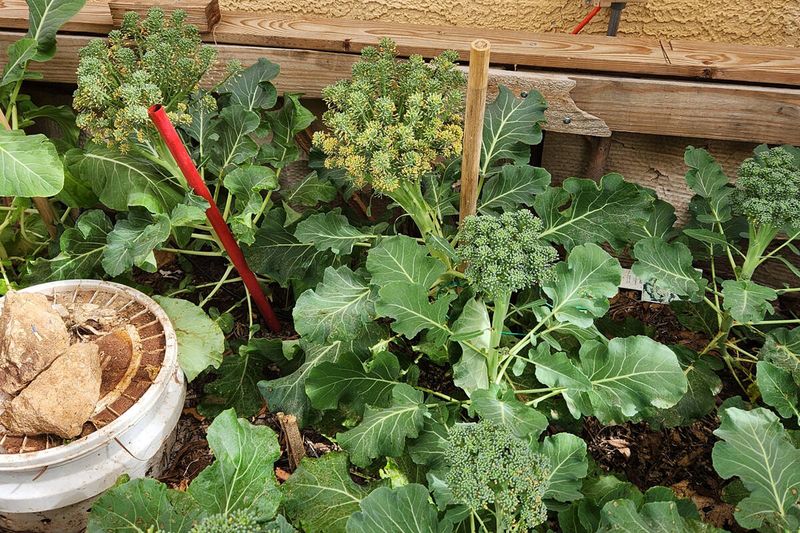
You did everything right – the transplants went in on time, the plants look big and healthy, and then the head shows up looking coarse, spread out, and nothing like the tight green crown you were expecting. That loose, uneven look has a name in most gardeners’ minds: grainy or ricey.
Before you blame your fertilizer or your watering schedule, the real culprit is often the weather your plant experienced right when it started forming that head. Understanding what happened gives you a clear path to a better crop next season.
A loose broccoli head is a quality warning, not proof of a feeding problem
Gardeners often assume a disappointing broccoli head means they underfed the plant. The head looks coarse, spread out, or almost fuzzy, and the first instinct is to reach for more fertilizer.
Before doing that, take a close look at exactly what the head is doing, because the symptom tells a more useful story than a general sense that something went wrong.
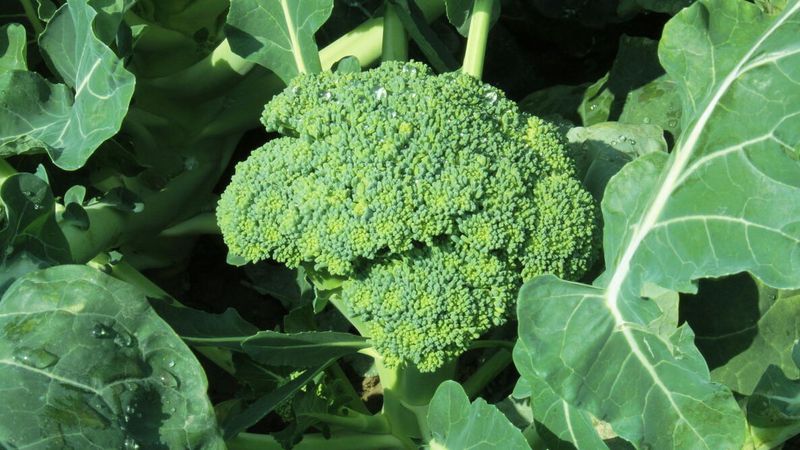
A broccoli head is actually a cluster of immature flower buds held together on a branching stem structure. At a good harvest stage for home gardeners, that head should be firm, compact, and uniformly green, with buds that are tightly closed and sitting close together.
University of Georgia Extension harvest guidance describes the target as outer florets that are just beginning to loosen slightly while the center stays tight and green – any later and quality drops fast. The USDA also defines compact broccoli as closely formed rather than open or spread, though that USDA broccoli inspection document is written for processing-plant inspectors, not backyard gardeners, so use it as a general reference rather than a strict home-garden rule.
When readers describe a head as “grainy” or “ricey,” those are informal ways of saying the buds look coarse, uneven, or individually visible rather than packed together. “Ricing” is actually a more established term for a cauliflower disorder and does not translate directly to broccoli. For broccoli, the real symptoms to identify are loose branching, elongated florets, uneven bud size, or early opening.
Oklahoma State Extension cole crop guidance notes that high temperatures can produce loose and branchy heads – and that is a better starting point for diagnosis than assuming the fertilizer program failed.
Sustained heat can disrupt the head-forming window
Broccoli is a cool-season crop, and its most vulnerable moment is not transplanting or germination – it is the window when the plant first initiates and then enlarges the head. Heat that arrives during that specific period is the leading overlooked explanation for a plant that looks vigorous and green but produces a head that stays loose, uneven, or coarse.
Oklahoma State Extension places broccoli’s best growth around 60 to 68 degrees F and states clearly that high temperatures make heads loose and branchy. Clemson Extension adds that temperature fluctuations can cause uneven heads and loose bud clusters.
These are not minor cosmetic complaints – they describe the same symptom Southern gardeners see when a fall crop reaches head formation too early in the season.
The risk ranges that matter most for home gardeners are practical rather than precise cutoffs. Cool-to-moderate conditions, roughly the 60s to low 70s F, favor tight, uniform heads.
Repeated days above 80 to 85 degrees F raise quality risk. UMass Extension research reports that temperatures above 95 degrees F for more than four days during early head formation can produce uneven, poorly shaped heads, and the Oregon State heat-tolerant broccoli project continues to study how varieties respond differently under those conditions.
These are risk ranges, not universal failure points, because cultivars vary in how well they handle heat. One warm afternoon does not establish heat as the cause – what matters is sustained exposure during that sensitive head-initiation and enlargement stage.
Fall planting does not guarantee cool head-forming weather
Calling a crop a “fall planting” does not mean the head will form during cool weather. In Florida and much of Texas, a plant set out in September or even early October can reach the head-initiation stage while afternoon temperatures are still well above 80 degrees F.
The season name matters less than the actual temperature your plant experiences during that narrow formation window.
UF/IFAS planting guidance lists outdoor broccoli windows from September through February in north Florida, September through February in central Florida, and October through January in south Florida, with roughly 50 to 70 days from transplant to harvest. Those wide windows exist precisely because the state’s regions differ so much – a September transplant in Orlando will form its head in very different conditions than a November transplant in Gainesville.
Florida gardeners also need to keep in mind that broccoli plants handle light frost better than the heads do, so timing the head-forming stage into cooler weather is the goal, not simply getting the plant in the ground before a frost date.
Texas A&M guidance notes that warm temperatures and increasing day length push broccoli toward early flowering, while low moisture and unfavorable temperatures during early growth reduce yield and quality. Texas gardeners in the Gulf Coast and central regions often need to push transplant dates later than they expect to get head development into genuinely cool weather.
Oklahoma State’s fall gardening calendar places transplanted broccoli in a July 15 to August 15 window for that state’s climate – but Southern readers should treat any published date as a starting point and count backward from their expected cool-weather window using a local extension calendar rather than a generic national schedule.
Use the head’s appearance to check for other causes
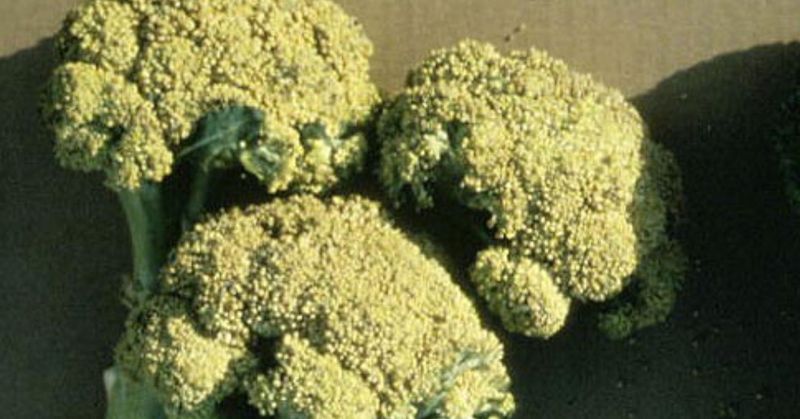
Not every loose or disappointing head comes back to heat. A quick visual check of the head’s color, bud condition, and stem can point you toward the actual problem – and that matters because the right response depends on the right diagnosis.
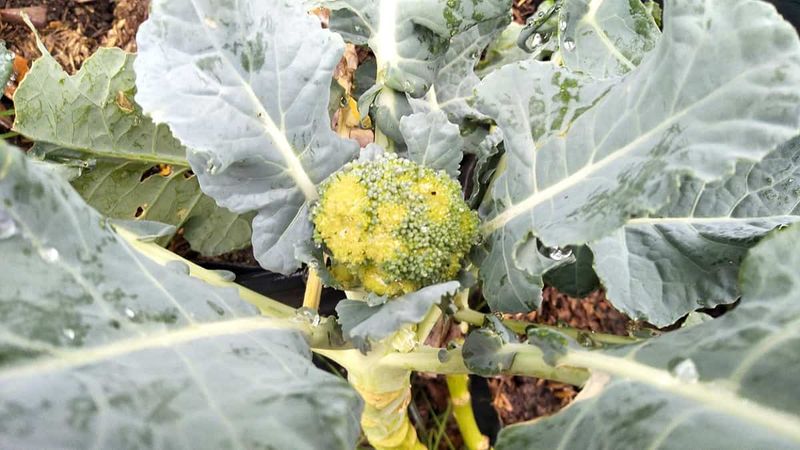
Start with bud color and openness. A head with buds that are still green but sitting loosely or unevenly is a different situation from a head where yellow petals are starting to show.
Yellow flowers mean the buds have opened and the plant is actively flowering – that is overmaturity or rapid bolting, and it calls for immediate harvest rather than any wait-and-see approach. Brown or dead-looking florets are different again: NC State’s small farms broccoli problem guide identifies brown bead as a separate disorder that can involve heat, moisture conditions, nutritional imbalance, or growth rate issues, and brown or dead tissue can also create entry points for pathogens.
UC Davis postharvest guidance also notes that broccoli is sensitive to a range of storage and quality stresses that can compound field problems.
Check the stem as well. A hollow center when you cut the stem is its own disorder, linked to rapid growth, excessive nitrogen, warm weather, irrigation conditions, cultivar, and low soil pH.
Oregon State’s broccoli production guide and Clemson Extension both treat hollow stem as a separate problem from simple head looseness, so do not use it alone as proof that heat caused the quality issue. Moisture stress, excessive or late nitrogen, rapid growth, plant spacing, and cultivar can each contribute to poor head quality, sometimes in combination.
UMass Extension reports that uneven or inadequate soil moisture worsens heat stress, which means two stresses can combine to produce a worse outcome than either alone. Use the head’s appearance as your diagnostic starting point before settling on one cause.
Harvest promptly when the buds begin to open
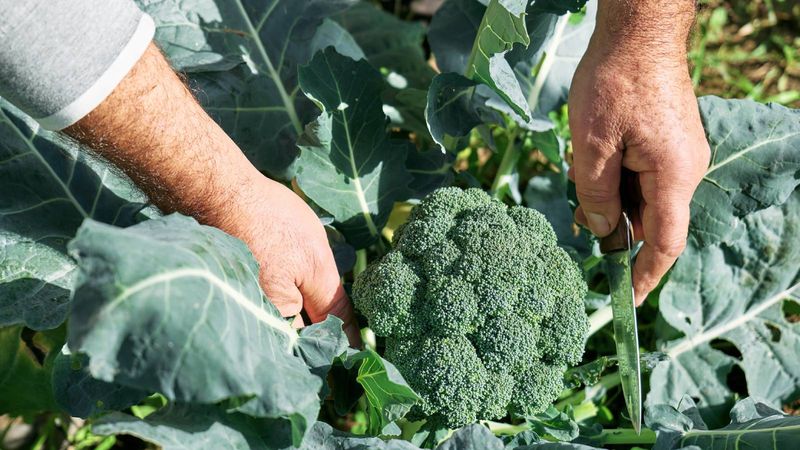
Once a broccoli head has substantially loosened or the buds have started to open, gardeners should not count on it tightening back up. The practical move at that point is to harvest what is still usable, not to wait and hope for improvement.
Cutting early – even if the head is smaller than you hoped – preserves the best remaining quality before the window closes entirely.
University of Georgia Extension recommends harvesting when the outer florets are just starting to loosen but the center remains tight and green. Oklahoma State Extension is more direct: cut before the earliest buds open to show yellow petals.
If you see yellow starting to show, harvest that day. A green head with loose buds still has good eating quality; a head with open yellow flowers has passed its peak and will continue to decline.
After cutting the main head, leave the plant in place if conditions allow. Side shoots often develop from the leaf axils after the central head is removed, and those smaller florets can be harvested over several weeks.
Shade cloth rated at roughly 30 percent can help reduce heat load during an ongoing heat event, as Delaware Extension notes for cooling garden vegetables, but shade does not rebuild buds that have already opened or malformed. Think of shade and steady irrigation as tools that may slow additional deterioration, not as a way to reverse damage that has already happened.
Prevent the next loose head with timing and steady care
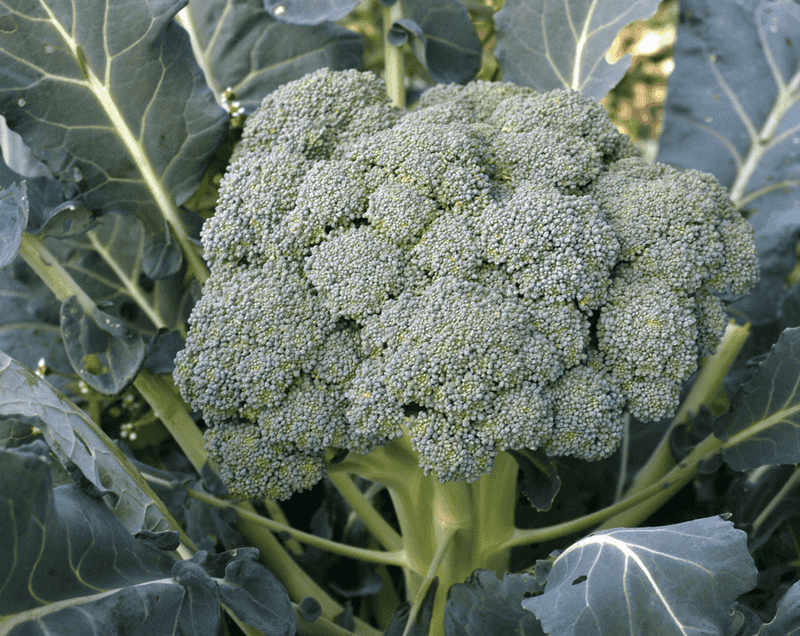
The most reliable fix for a loose head is not applied to the plant that already has one – it is built into the schedule for the next planting. The goal is to position early head formation so it occurs after the worst heat has passed in your specific location, not simply after the calendar flips to fall.
Count backward from your expected cool-weather window using your local extension planting calendar. For most Southern gardeners, that means pushing transplant dates later than feels comfortable – sometimes well into September or October depending on the region.
Oklahoma State’s fall gardening guidance recommends fall broccoli production because cool nights and moderate conditions improve quality, but it also notes that specific timing must fit local climate. A date that works in central Oklahoma may be too early for coastal Texas or central Florida.
Even moisture during establishment and through early head initiation supports quality without creating new problems. UMass Extension reports that uneven or inadequate soil moisture worsens heat stress, so consistent watering matters most when temperatures are already pushing limits.
Avoid overwatering, though – excess water combined with high nitrogen can push rapid, leafy growth.
On the nitrogen question: Cornell’s Eastern Broccoli Project research on nitrogen timing recommends supplying nitrogen earlier in the crop cycle rather than applying a heavy dose close to harvest, because rapid late growth can loosen the head. Oregon State’s broccoli guide specifically connects leafy heads with high temperature combined with excessive water and nitrogen.
Follow your fertilizer label and consider a soil test before adding more. As a secondary layer of risk management, heat-tolerant cultivars may improve your odds – USDA breeding research and NC State cultivar selection guidance both show meaningful genetic variation in how varieties handle heat – but no cultivar makes broccoli immune to sustained high temperatures during head formation.
Judge the next planting by its head-forming weather
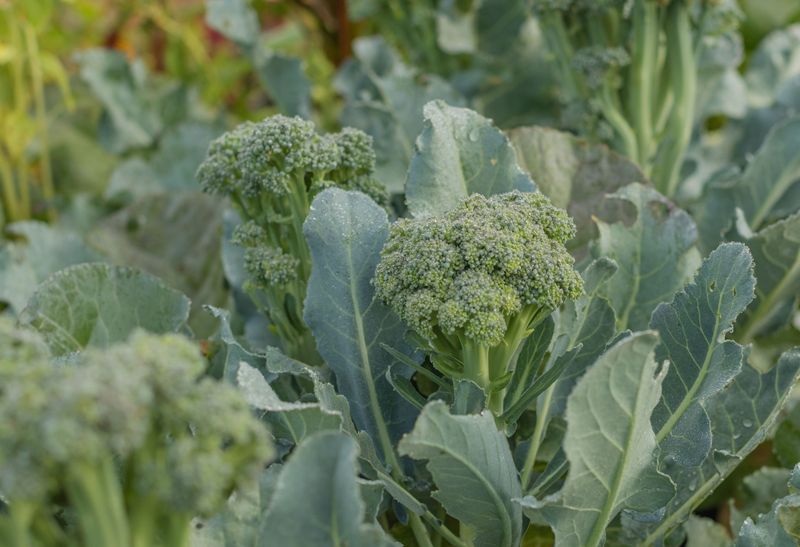
When you pull a loose head and wonder what to do differently, the checklist is short. Inspect the buds: if they are still green and mostly closed, harvest now rather than waiting.
If yellow flowers are showing, harvest immediately for whatever quality remains. Either way, skip the heavy nitrogen application – it will not tighten a head that has already loosened and may push leafy, rapid growth instead.
Keep moisture even through the rest of the season and into the next planting. Then adjust your schedule so the head-forming window lands in genuinely cool weather for your location.
Oklahoma State Extension and UMass Extension both emphasize that cool conditions during head development are what separate a tight, marketable head from a coarse, loose one. UF/IFAS guidance reminds Florida gardeners that broccoli plants handle cold well but heads are more sensitive, so protecting the head-forming stage from heat is the real target.
Fall planting improves the odds for Southern gardeners, but it does not guarantee cool head-forming conditions in Florida, Texas, or similar climates. Better timing, steady moisture, restrained late fertilization, and a well-matched cultivar reduce the risk without eliminating every variable.
A broccoli head that forms in the right weather almost always shows it.