
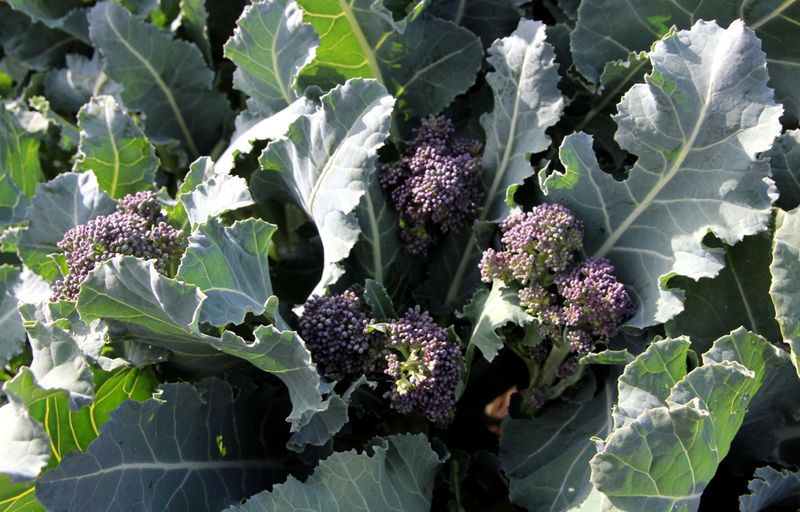
Noticing purple or reddish edges creeping across your broccoli leaves as fall settles in can feel alarming, especially when the heads you have been waiting on are just starting to form. That color shift can point to a phosphorus-uptake problem made worse by cool, wet, or compacted soil, but it can also reflect your plant’s genetics, a cold-triggered pigment response, or even an early disease sign.
Before pulling plants or pouring on fertilizer, a quick look at the whole plant and the root zone can tell you a lot. Working through a short checklist of observations, soil conditions, and disease signs will help you respond with confidence rather than guesswork.
Purple leaves are a clue, not a diagnosis
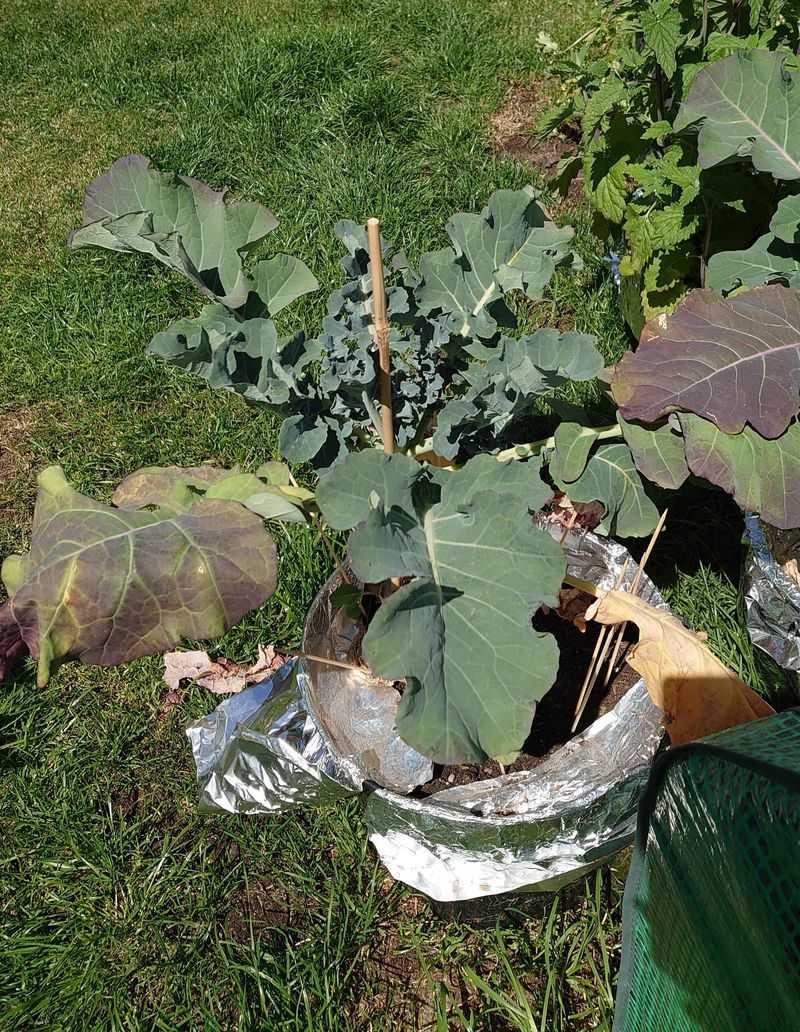
Reddish-purple coloration spreading along broccoli leaf margins in cool fall weather can fit the picture of a phosphorus-uptake problem, but that connection is not as certain as it might first appear. University of Georgia Extension guidance on vegetable nutritional deficiencies links phosphorus stress to darker green foliage and purple coloration, particularly on older or lower leaves.
Even so, the evidence directly connecting purple-edged leaves on ordinary broccoli to a phosphorus shortfall is limited, and color alone cannot confirm that diagnosis.
Broccoli leaves can turn purple for several reasons that have nothing to do with phosphorus. Cultivar genetics, cold-triggered pigment production, light exposure, and general environmental stress can all shift leaf color toward red or purple, sometimes quite dramatically.
A plant that is coloring up because of a brief cold snap may look very similar to one that is struggling to pull phosphorus from the soil.
Alabama Cooperative Extension’s overview of phosphorus basics notes that deficiency symptoms can resemble other stresses, which is exactly why color alone should not drive a fertilizer decision. The most useful approach is to treat purple margins as a starting point rather than a conclusion, and work through a sequence: observe the whole plant, screen for disease, inspect the root zone, and soil-test before reaching for any amendment.
Cool soil can limit phosphorus uptake without proving a deficiency

Phosphorus moves through soil slowly, and plant roots acquire most of it through a narrow zone of contact rather than from water flowing through the profile. When soil temperatures drop in fall, root growth slows and that contact zone shrinks, which can reduce how much phosphorus a plant manages to take up each day.
Alabama Cooperative Extension’s phosphorus basics resource explains that uptake can be restricted even when the soil contains enough phosphorus to meet the plant’s full needs under better conditions.
Several other root-zone problems can produce the same kind of uptake stall. Wet or poorly drained soil limits oxygen around roots and slows their activity.
Compacted soil restricts root exploration. Drought reduces the thin film of soil moisture that helps phosphorus reach root surfaces.
Penn State Extension’s crop phosphorus management guidance identifies unsuitable soil pH as another factor, since phosphorus becomes far less available outside the mildly acidic range that most vegetables prefer. Root injury from transplanting or shallow cultivation can have a similar effect.
Broccoli is a cool-season crop well suited to fall production across the South, and UF/IFAS broccoli guidance for Florida gardeners confirms that fall and winter represent the main growing window in that state. Cool air alone should not harm an established plant, but cool soil combined with wetness, compaction, or damaged roots can create conditions where phosphorus uptake temporarily lags behind what the plant needs.
That lag may show up as purple coloring before any other symptom appears.
The plant pattern shows how strongly to weigh nutrient stress
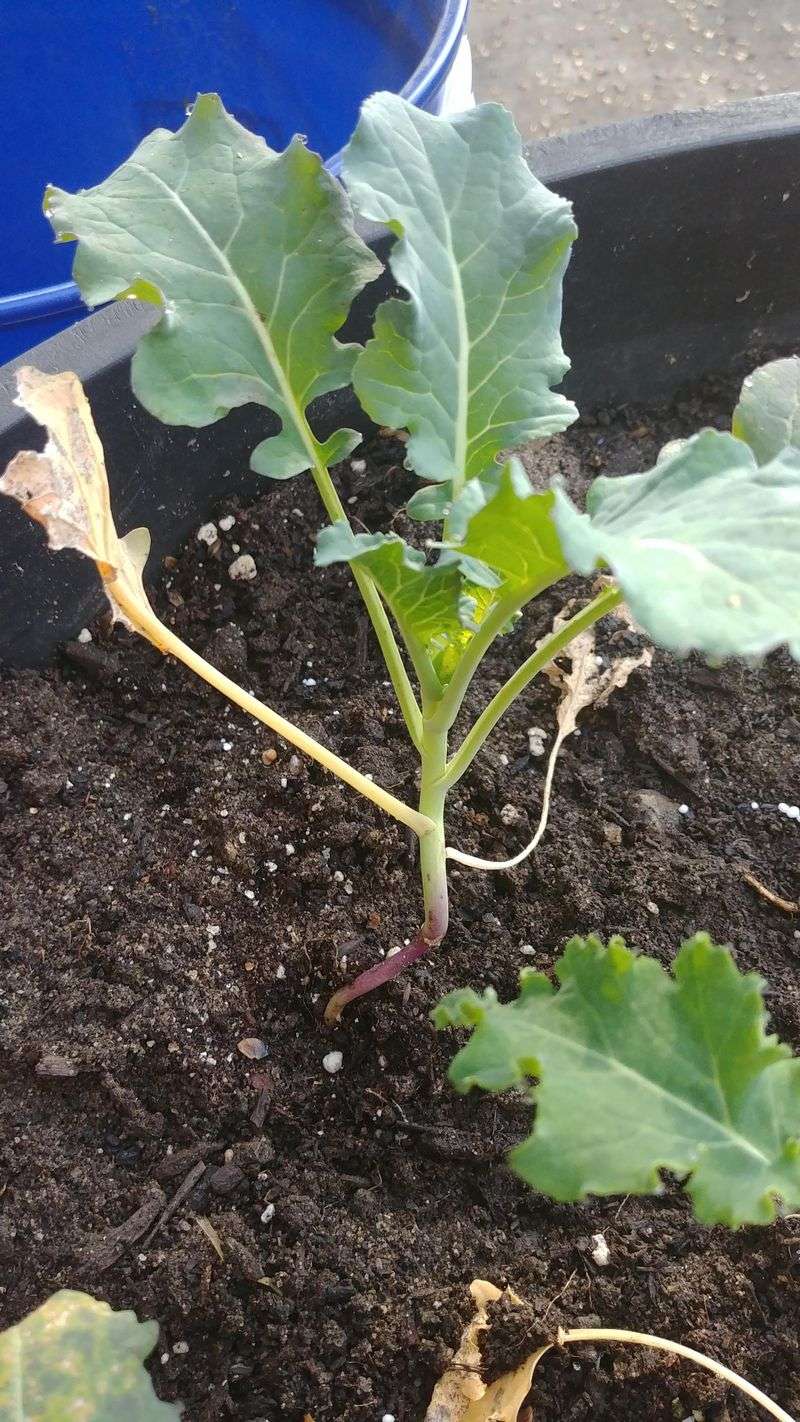
Before adjusting soil or fertilizer, spend a few minutes reading the whole plant. The location and pattern of purple color can shift how seriously to weigh a phosphorus-related explanation.
UGA Extension’s vegetable nutritional deficiency guide and Iowa State University Extension’s phosphorus deficiency identifier both associate phosphorus stress with older or lower leaves first, often alongside noticeably dark green tissue and slow or stunted overall growth.
When those signals line up together, a phosphorus-related uptake problem becomes a more reasonable working hypothesis. A plant that is upright, producing relatively healthy new growth at the center, and shows purple only on the older, outer leaves after a weather change fits that pattern reasonably well.
Still, treat it as a clue, not a diagnosis. None of these patterns are definitive rules, and other causes can produce similar pictures.
Patterns that point away from nutrient stress are worth noting too. Purple or reddish color appearing on new, young leaves at the growing tip is less typical of phosphorus stress and may reflect genetics or environmental pigmentation instead.
Uniform coloration across an entire plant of the same variety, or color concentrated only on leaf surfaces most exposed to sun and wind, also suggests that pigment production is driving the change rather than a nutrient shortage. Research on anthocyanin accumulation in Brassica species confirms that light and environmental conditions can trigger pigment changes independently of nutrition.
Utah State University Extension’s vegetable nutrient management guidance reinforces using overall plant condition, not a single symptom, to guide decisions.
Genetics and cold can color leaves without a phosphorus shortage
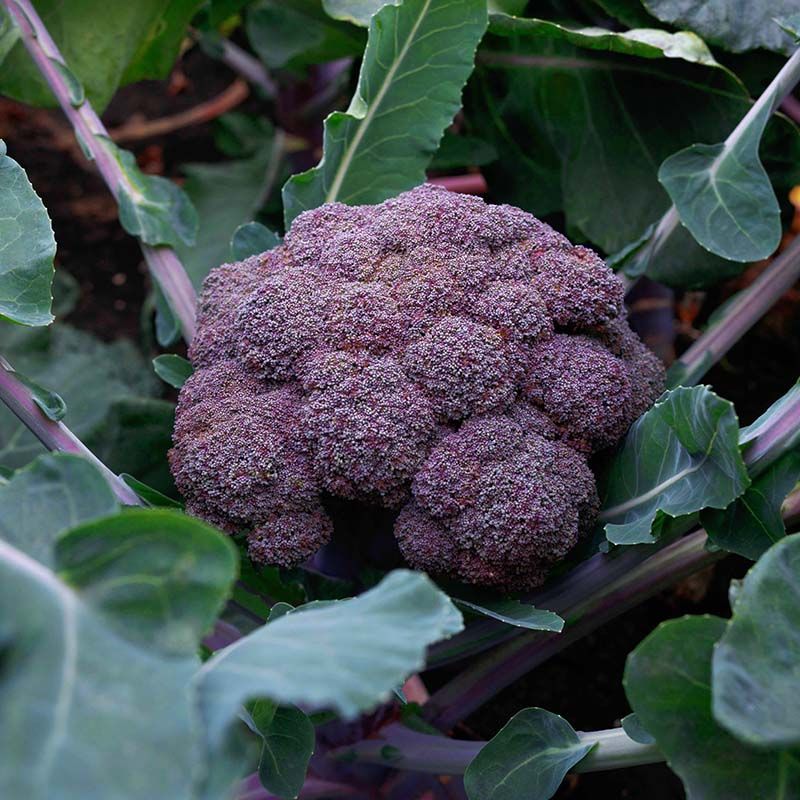
Not every purple broccoli leaf signals a problem in the soil. Brassica crops as a group carry a strong genetic capacity for anthocyanin pigmentation, and some varieties express it heavily under cool or bright conditions.
A Frontiers in Plant Science study on anthocyanin accumulation in Brassica leaves identifies genetics, light, cold, nutrition, and other environmental stresses as factors that can independently trigger purple pigment production. That means a plant can turn noticeably purple without having any shortage of phosphorus in the soil or the root zone.
Transcriptomic research on purple broccoli shows that distinct genetic pathways govern anthocyanin expression in these crops, and research on pigmentation in ornamental cabbage confirms that purple and white inner-leaf coloration can be entirely genetically determined. Varieties sold specifically as purple broccoli, purple cabbage, or ornamental kale are bred to produce that color, and treating their pigmentation as a deficiency symptom would lead to unnecessary fertilizer applications.
A practical check is to compare several plants of the same variety growing under the same conditions. If all of them show similar coloring and the plants are otherwise vigorous, genetics or a shared cold response is a more plausible explanation than a soil problem.
Tracking whether color appeared or deepened after a cold snap, rather than developing gradually over weeks, also points toward environmental pigmentation. These observations remain suggestive rather than conclusive, but they help narrow the field before you reach for a soil test or a fertilizer bag.
Disease usually adds lesions or other warning signs
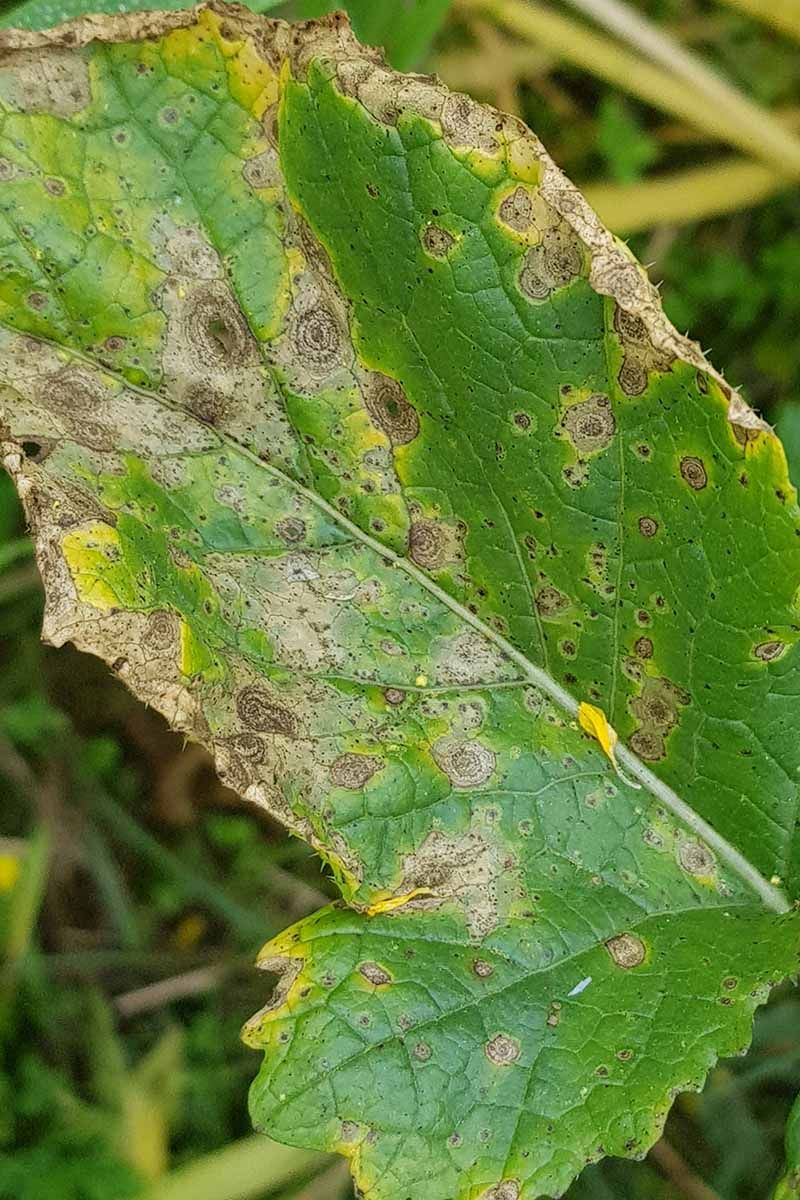
Purple-edged broccoli leaves can look alarming, but the most common fall diseases in brassica crops tend to show up with additional, distinctive symptoms that set them apart from a nutrient or cold-pigment response. Checking for those signs early is worth the few minutes it takes, because a nutritional fix will not slow an active infection.
University of Minnesota Extension’s broccoli disease diagnosis tool describes black rot as producing yellow, V-shaped lesions that start at leaf margins and work inward, often with darkened or blackened veins visible when you hold the leaf to the light. Alternaria leaf blight causes round to irregular brown or tan spots with concentric rings, sometimes surrounded by a yellow halo.
Spots may appear on leaves, stems, or even developing heads. Neither condition presents primarily as a clean purple edge without other markings.
UC IPM’s downy mildew guide for cole crops describes yellow or pale green patches on the upper leaf surface, often matched by white to gray fuzzy growth on the underside when humidity is high. Wilting, slimy roots, or lesions spreading down the stem are additional signals that disease rather than nutrition is at work.
If your plant shows only a clean purple margin with no spots, V-shaped yellowing, vein discoloration, or underside growth, disease is less likely, though still worth revisiting if symptoms change.
Check moisture, drainage, and compaction around the roots
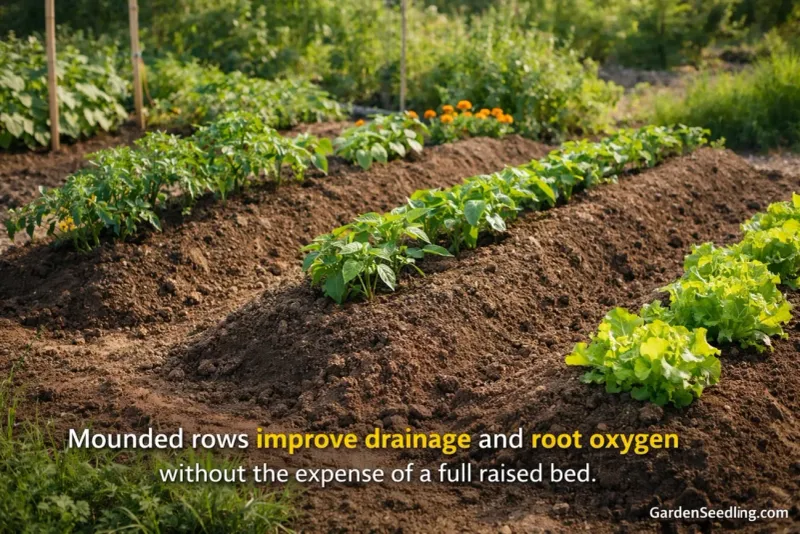
Once you have looked at the plant and ruled out obvious disease signs, the next step is a hands-on check of the root zone. Soil conditions that restrict root activity can limit phosphorus uptake just as effectively as a shortage in the soil itself, and those conditions are often fixable without any fertilizer at all.
Push a finger or a small trowel a few inches into the soil near the base of the plant. UF/IFAS broccoli guidance notes that broccoli needs consistent moisture but performs poorly in saturated or waterlogged soil.
If the root zone stays soggy for days after rain, or if water pools near the planting area, poor drainage may be restricting root oxygen and slowing uptake. Texas A&M AgriLife Extension’s soil preparation guidance recommends working organic matter into beds before planting to improve both drainage and structure, particularly in heavy clay soils common across parts of Texas.
Compaction is a separate but related concern. Mississippi State University Extension’s explanation of purple, stunted young plants points to compacted or damaged roots as a cause of symptoms that closely resemble phosphorus deficiency.
Transplants set into hard or crusted soil may never develop the root spread they need to pull adequate nutrients. Penn State Extension’s phosphorus management resource and University of Minnesota Extension’s broccoli growing guide both caution against deep cultivation near established plants, since shallow, fibrous broccoli roots are easily damaged.
Where persistent wetness is the problem, a raised bed with improved drainage is a practical long-term fix.
Use a soil test to decide whether phosphorus or pH correction is warranted
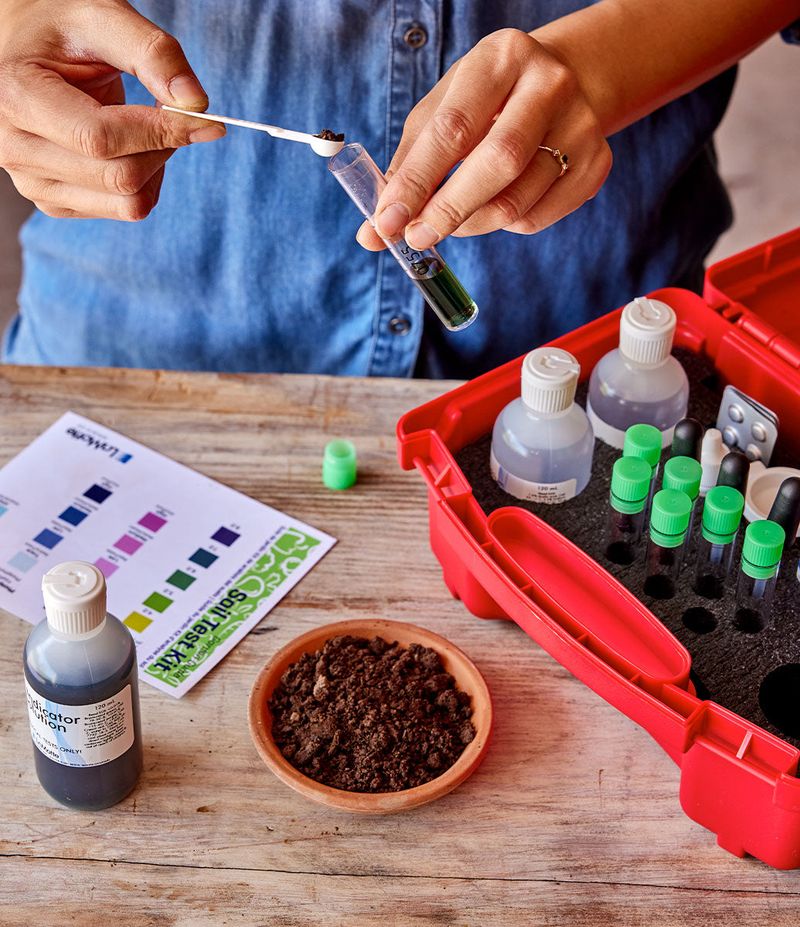
A soil test is one of the most reliable tools available for sorting out whether purple broccoli leaves reflect a real nutrient gap or simply a temporary stress response. Penn State Extension’s soil testing guidance explains that a standard test measures plant-available phosphorus and soil pH, and provides crop-specific fertilizer recommendations based on your actual results.
That is a very different kind of information from what you can gather by looking at leaves alone.
University of Minnesota Extension’s soil testing resource warns that excess phosphorus can accumulate in garden soil and contribute to water-quality problems through runoff, which is one reason to test before adding any phosphorus-containing product, including bone meal, rock phosphate, compost, or manure. Minnesota’s broccoli growing guide specifically recommends using a low- or no-phosphorus fertilizer when the soil already contains adequate phosphorus.
Soil pH matters as much as the phosphorus level itself. University of Georgia Extension’s home garden broccoli guide targets a pH range around 6.0 to 6.8 for broccoli production, and UF/IFAS narrows that slightly to 6.2 to 6.5 for Florida soils.
Outside that range, phosphorus can become chemically locked in the soil even when it is present in sufficient amounts. If a test shows low phosphorus or a pH problem, follow the laboratory’s recommended rate and product rather than guessing at a dose.
Foliar phosphorus sprays have not consistently improved plant response, and UGA’s vegetable nutritional deficiency guide does not list borax as a treatment for purple leaf margins. Boron deficiency in brassicas shows up differently, typically as damaged growing points or hollow stems, and applying it without a confirmed test result risks toxicity.
Correct the growing conditions before adding more fertilizer
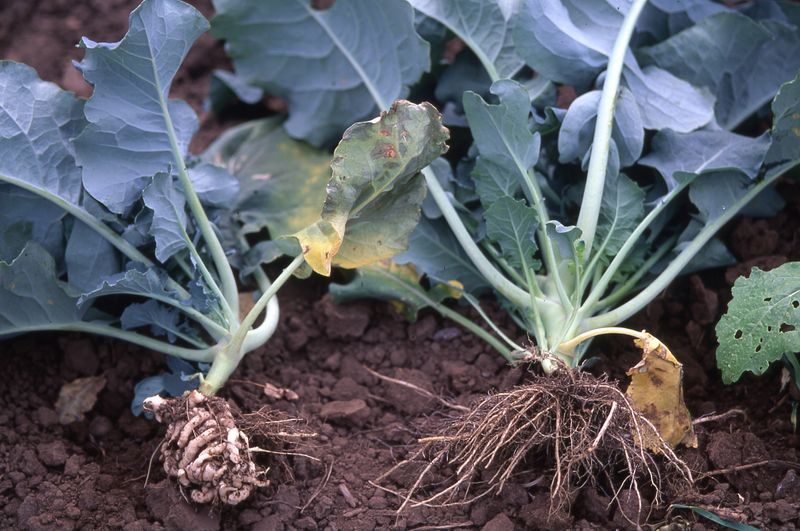
Working through the steps in order gives you the best chance of an accurate response. Start with the color pattern and disease signs, then move to the root zone, and reach for a soil test before applying any amendment.
Alabama Cooperative Extension’s phosphorus basics overview notes that symptoms may lessen as soil conditions and root activity improve, but that outcome is not guaranteed, particularly if compaction, drainage, pH, or a genuine deficiency has not been addressed.
Watch new growth rather than waiting for older purple leaves to change color. Because phosphorus moves slowly through soil, a surface application may take time to reach active roots, and existing leaf color may not revert even if the plant recovers.
Penn State Extension and University of Minnesota Extension both reinforce applying only what a soil test recommends and avoiding repeated high-phosphorus inputs without retesting.
Persistent or worsening purpling after you have improved drainage, addressed compaction, and followed soil-test recommendations calls for renewed diagnosis rather than another round of fertilizer. A plant that continues to struggle may have a disease issue, a root problem that has not fully resolved, or a cultivar characteristic that was never a deficiency in the first place.
The clearest sign of recovery is healthy, green new growth at the center of the plant, which tells you the root system is back to work.