
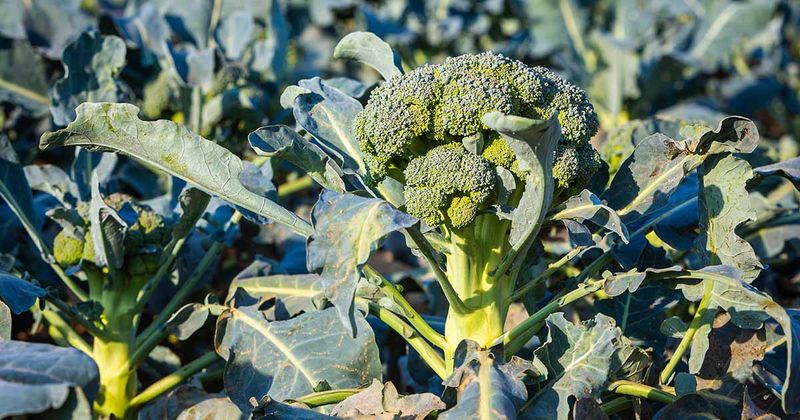
Something looks off with your fall broccoli – the leaves have turned a strange blue-green and the edges are curling upward. Before you grab a fertilizer bag, take a breath, because the real answer depends on more than leaf color alone.
Potassium is often the strongest match for this symptom pattern, but cold weather, a different nutrient shortage, aphids, or disease can look surprisingly similar. A quick inspection of your plant now can save you time, money, and a crop that still has a good chance of recovering.
Potassium Fits the Full Pattern—Not the Color Alone
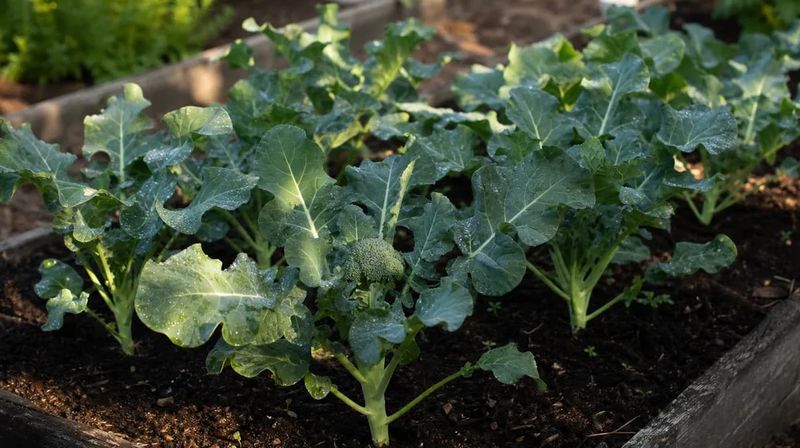
Walking out to your fall garden and finding blue-green broccoli leaves with curled, ragged edges is unsettling – but the color by itself does not point to a single cause. Potassium is the strongest candidate when several specific symptoms show up together: older leaves that have turned dark or blue-green, margins that yellow first and then brown into a dry, scorched appearance, and edges that curl or roll upward.
California’s broccoli fertilization guidelines describe potassium-deficient leaves as dark green with scorched edges, where the margins may curl upward and dry spots can develop between veins.
When blue-green color appears without any of those additional clues – no scorch, no necrosis, no curling limited to older leaves – the potassium explanation weakens considerably. Cold fall temperatures can shift broccoli leaves or heads toward blue or purple tones without causing any damage at all.
Phosphorus deficiency can also produce dull dark green, blue-green, or reddish foliage, making color alone an unreliable single indicator.
A visual diagnosis is always provisional. Leaf color and curling have several causes, and the safest approach is to inspect the plant carefully before reaching for any fertilizer.
The sections below walk you through exactly what to look for and in what order.
Inspect the Oldest Leaves First
Start at the bottom of the plant. Potassium moves freely within a plant – it is a mobile nutrient – so when the supply runs short, the plant pulls it from older tissue to support newer growth.
That means deficiency symptoms almost always show up on the lower, older leaves before they reach the top of the plant.
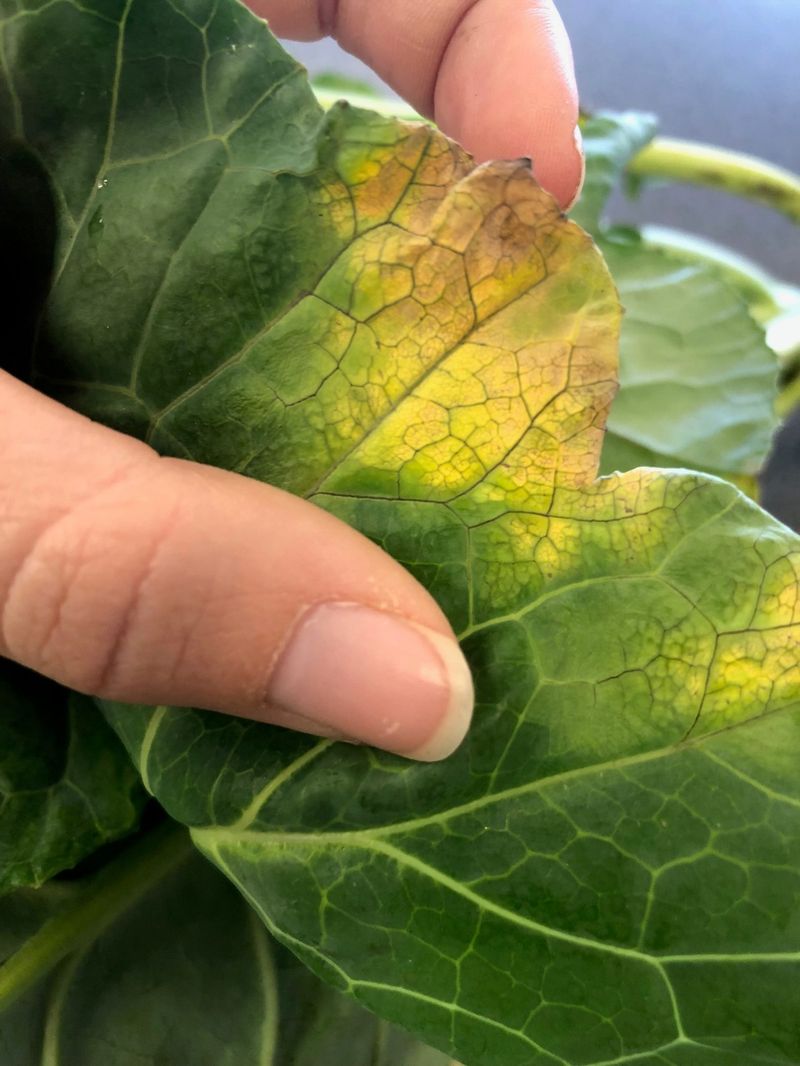
Crouch down and compare the oldest, lowest leaves with the younger ones higher on the stem. On a potassium-stressed plant, the older leaves typically show yellowing at the margins first, which then progresses to brown scorch, dry or papery tissue, and upward-curling edges.
The centers of those leaves may stay greener longer, creating a contrast between the damaged margin and the healthier interior.
If the newest leaves at the top of the plant look healthy while the lower ones are yellowing and scorching at the margins, that progression supports a mobile-nutrient problem like potassium rather than a disease or pest that tends to attack new growth first. If the damage is concentrated in younger leaves or spread evenly across the whole plant, that pattern points away from potassium and toward something else worth investigating.
The location and progression of symptoms matter as much as the symptoms themselves.
Check the Leaf Undersides for Aphids
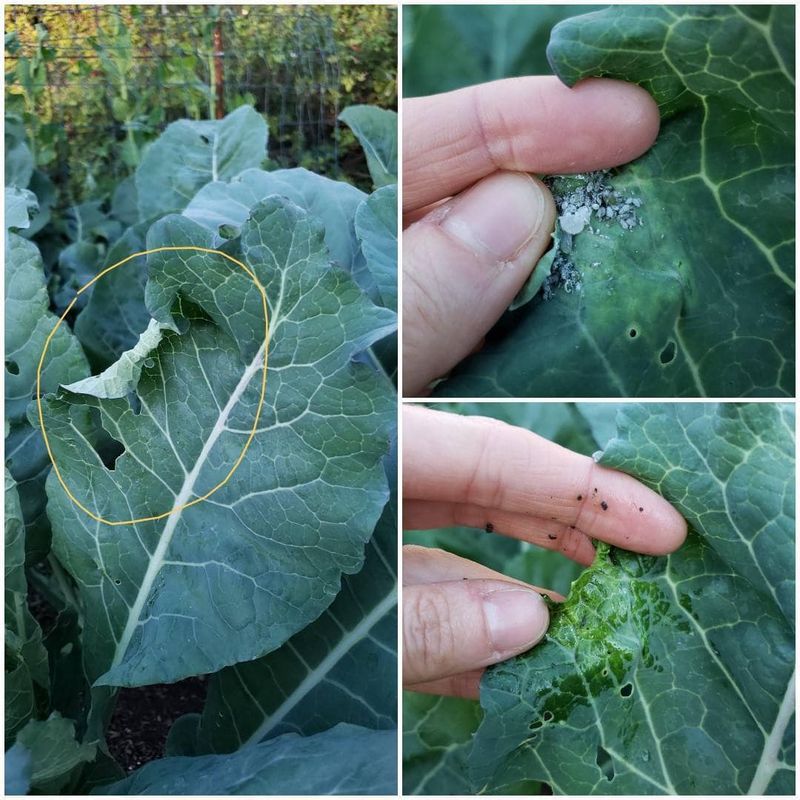
Before you assume a nutrient problem, flip those curled leaves over and look carefully at what is underneath. Aphids – including cabbage aphids, turnip aphids, and green peach aphids – are a very common reason broccoli leaves wrinkle, curl, distort, and stunt during fall brassica season.
University of Minnesota Extension identifies aphid feeding as a leading cause of curling and distortion in broccoli, and cool fall conditions can actually favor aphid population buildup on cool-season crops.
Look for small, soft-bodied insects clustered along veins, in the folds of curled leaves, or tucked into the newest growth at the center of the plant. Other clues include sticky honeydew residue on leaves or the ground below, trails of ants moving up the stem (ants farm aphids for honeydew), and dark sooty mold growing on the honeydew deposits.
If you find aphids, the fix is pest control, not fertilizer.
Insecticidal soap or horticultural oil can be effective when sprayed thoroughly, making sure to cover the undersides of leaves where aphids hide. Utah State University Extension cautions that these products can injure water-stressed plants, and you should not apply them when temperatures are expected to exceed 90 degrees Fahrenheit within four hours.
Always read and follow the product label before spraying, and repeat applications may be needed to break the pest cycle.
Separate Potassium From Cold and Phosphorus Symptoms
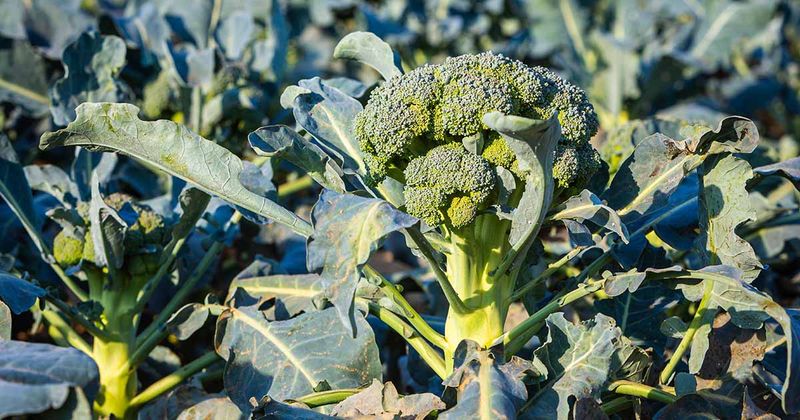
Two non-pest lookalikes trip up even experienced gardeners: cold-weather color change and phosphorus deficiency. Sorting them out keeps you from treating the wrong problem.
Cold fall temperatures are the most common reason broccoli turns blue or purple with no other symptoms. North Carolina Cooperative Extension notes that cool weather can shift broccoli leaves or heads toward blue or purplish tones without causing any damage or reducing quality.
If the plant looks otherwise vigorous – no scorched edges, no dry tissue, no marginal curling on older leaves – and a chilly night recently passed through your area, cold pigmentation is a reasonable explanation that requires no intervention.
Phosphorus deficiency is trickier because it can also produce dark green, blue-green, or reddish-purple foliage. The distinction lies in what else you see.
California’s broccoli guidelines associate phosphorus deficiency more with stunted growth, stiff or erect leaves, and older-leaf discoloration, but not with the scorched, dry, necrotic margins and upward-curling edges that characterize potassium stress. Phosphorus problems do not explain marginal scorch and curling as specifically as potassium does.
A useful rule of thumb: blue-green color with no scorch and a vigorous plant suggests cold or phosphorus. Blue-green color with brown, dry, curling older-leaf margins on an otherwise struggling plant raises potassium higher on the list.
Recognize Disease and Herbicide Injury Patterns
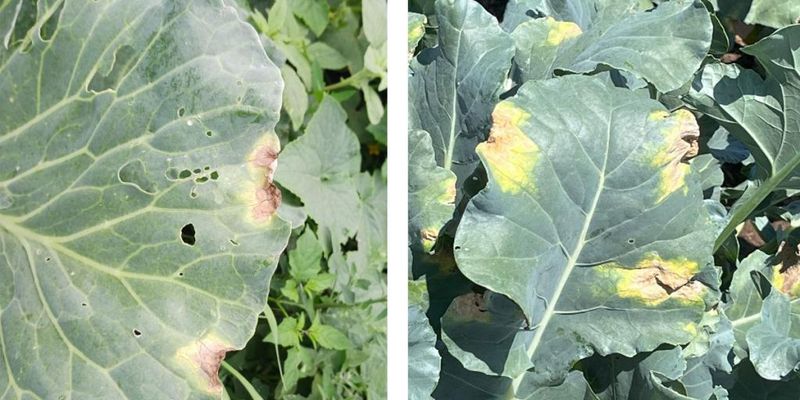
Two more causes can mimic nutrient symptoms closely enough to fool a quick glance: black rot and herbicide injury. Learning their specific patterns helps you rule them in or out before spending money on fertilizer or pest products.
Iowa State University Extension describes black rot as producing yellow, V-shaped lesions that begin at the leaf margin and point inward, with blackened veins running through the infected tissue and progressive browning or dieback spreading from the margin toward the center. Wet foliage and rainy fall weather favor the spread of this bacterial disease.
If you see that V-shaped yellowing combined with dark veins, suspect black rot rather than a nutrient shortage and avoid overhead watering to slow its spread.
Herbicide injury has a different fingerprint. Iowa State Extension guidance on herbicide drift points to widespread cupping, twisting, or distorted new growth – especially when the pattern affects multiple plant species in your garden or follows a line consistent with spray drift from a neighboring yard or road.
A single nutrient deficiency rarely distorts new growth across several unrelated plants at once.
When symptoms remain ambiguous after checking all these patterns, University of Arizona Extension recommends soil or tissue testing rather than guessing from leaf color alone. An expert at your local extension office can also help you work through conflicting clues.
Test the Soil Before Adding Potassium
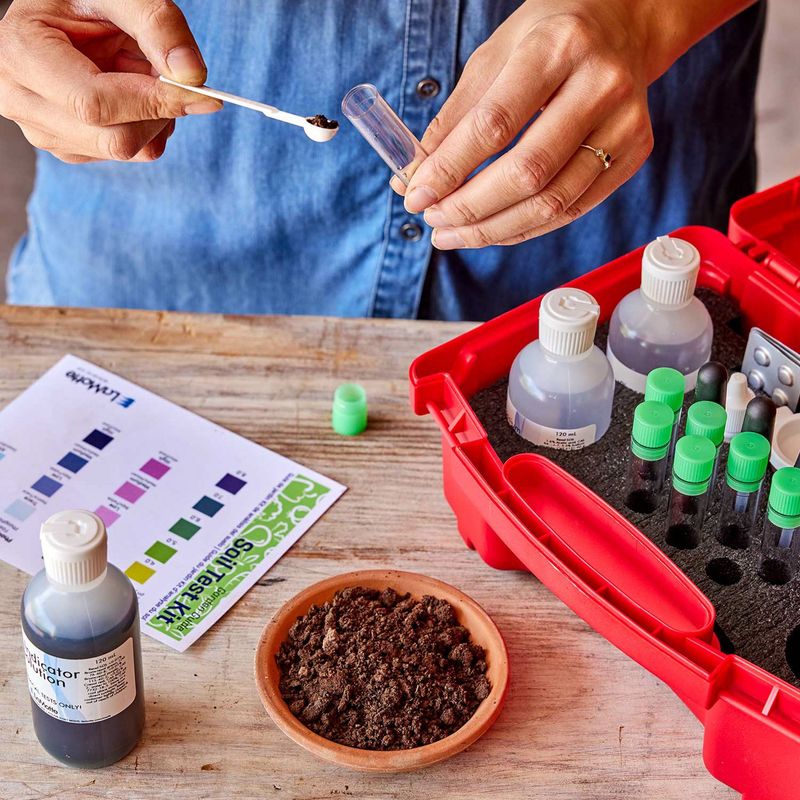
Once you have worked through the visual inspection and ruled out aphids, cold, disease, and herbicide injury, a soil test gives you a much firmer foundation for any fertilizer decision. UF/IFAS identifies soil testing as the most reliable way to assess available nutrient levels and determine whether fertilizer is actually needed.
Collecting a sample is straightforward: gather small amounts of soil from several spots in the bed, mix them together, and send the composite sample to your state extension lab.
A low potassium result from that test supports the idea that a shortage may be contributing to what you are seeing – but it does not prove that potassium caused the symptoms. Nutrient levels and plant symptoms do not always line up perfectly, because other stresses can produce similar-looking damage even when soil levels are adequate.
When your soil result and the visible symptoms point in opposite directions, plant tissue analysis or a consultation with your local extension service can help resolve the conflict. UF/IFAS tissue testing guidance for vegetable crops explains how leaf sampling works and when it adds useful information beyond a soil test alone.
Florida gardeners should use a lab that applies regionally calibrated interpretation, because Florida’s sandy soils have limited nutrient-holding capacity and overapplication carries real environmental risk. Texas A&M AgriLife Extension recommends soil testing every three to four years and cautions that some Texas regions already contain ample potassium – so a shortage should not be assumed from symptoms alone without test confirmation.
Apply Fertilizer Only When the Evidence Supports It
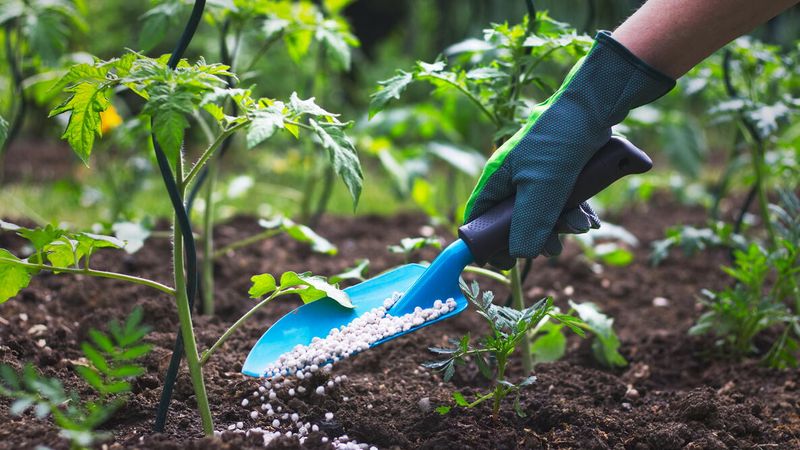
When both the soil test and the symptom pattern point toward low potassium, you have a reasonable basis for acting. Choose a fertilizer that is labeled for use on vegetable gardens and contains potassium – look for the third number in the N-P-K analysis on the bag.
UF/IFAS fertilizer management guidelines for Florida vegetable production base potassium application rates on soil-test category, with no additional potassium recommended when soil levels already test high. Follow the rate your soil test report recommends and the directions on the product label rather than applying a large generic dose.
If the soil test comes back showing adequate or high potassium, adding more is unlikely to help and may create problems. Excess potassium can interfere with the plant’s uptake of other nutrients, and unused fertilizer can move through sandy soils into groundwater – a real concern in Florida in particular.
Soil testing before each growing season prevents this kind of waste.
One product worth avoiding: Epsom salt. It supplies magnesium and sulfur, not potassium, and no evidence supports using it to correct the symptoms described in this article.
If someone suggests it as a quick fix for blue-green, curling broccoli leaves, set it aside and return to the soil test results instead.
Protect Healthy Foliage While You Investigate
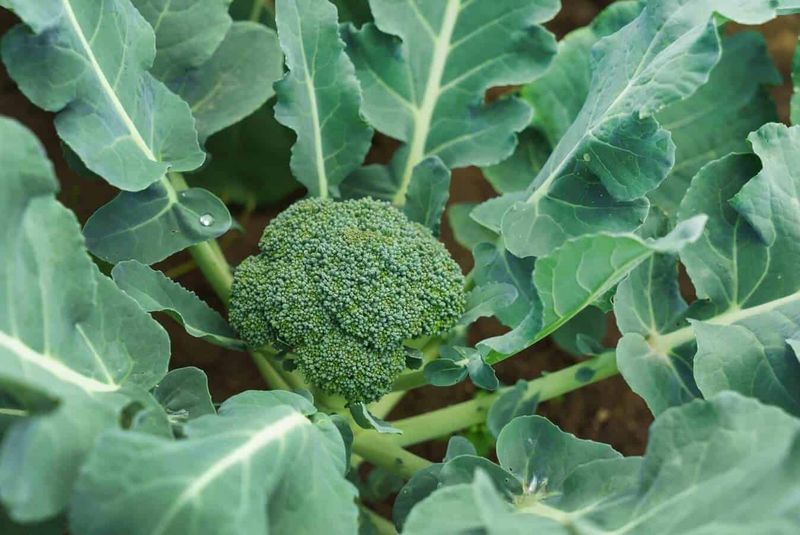
While you work through the inspection and testing process, the most important thing you can do for your broccoli is protect the leaves that are still healthy. Removing too many leaves at once reduces the plant’s ability to photosynthesize, which can slow head development and cut into your eventual harvest.
North Carolina Cooperative Extension advises preserving healthy foliage and removing leaves only when they are dead or badly diseased – not simply because they look a little off.
Limit any removal to leaves that are completely dead, heavily infected with disease, or so damaged they serve no useful function. Leave everything else in place.
The plant needs every working leaf it has right now, especially if it is already under stress from a nutrient shortage or pest pressure.
Use the symptom pattern as your final decision guide. Older-leaf scorch combined with upward-curling, dry margins is the combination that most specifically supports a potassium shortage – that is when a soil test and a targeted fertilizer response make the most sense.
Blue-green color without scorch, visible aphid colonies, V-shaped disease lesions, or distorted new growth across multiple plants each point toward a different explanation. Matching the right fix to the right cause is what gives your fall broccoli the best shot at a full recovery.