
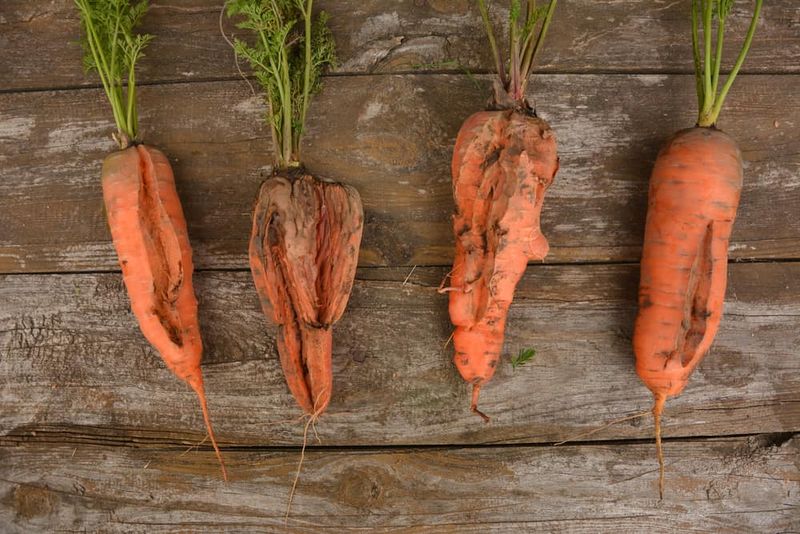
Pulling a carrot out of the ground and watching it split apart is one of those frustrating harvest moments that makes you wonder what went wrong. The crack may have formed while the root was still in the soil, or the act of pulling may have finished off a root that was already weakened.
Either way, a dry-to-wet swing in soil moisture is one of the most common reasons carrot roots crack during the fall growing season. Understanding what happened underground can help you protect the carrots still in the row and adjust your watering before the next batch is ready.
The damage may have started before you pulled the carrot
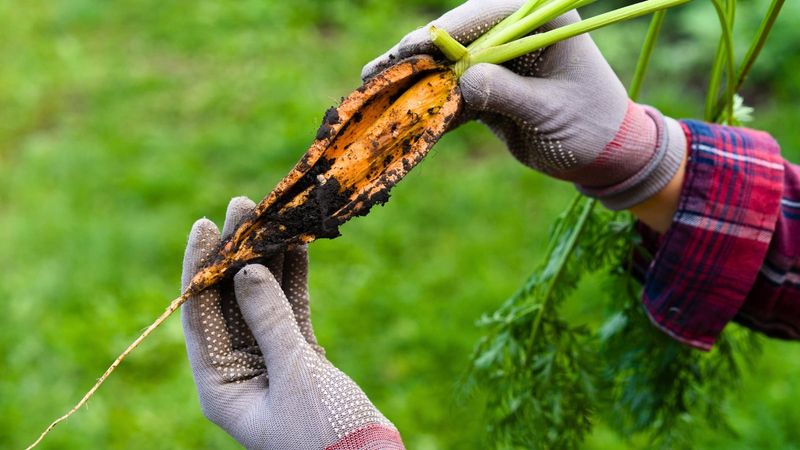
A carrot that splits apart at harvest does not always break because of how you pulled it. The crack may have already been there, hidden underground, waiting to show itself the moment you lifted the root.
Royal Horticultural Society guidance on root vegetable splitting confirms that roots can crack before harvest and that the damage is often discovered only when the carrot is removed from the soil.
Pulling can also play its own role. A root that is already weakened by an internal crack may split further the moment tension is applied.
In other cases, a healthy root snaps cleanly during extraction because the soil is compacted, the angle of pull is awkward, or the root has grown large and rigid enough to be brittle.
The distinction matters practically. If the crack ran lengthwise along the root and the edges look dry or slightly calloused, the damage likely started in the soil before harvest.
If the break is clean, moist, and perpendicular to the root axis, extraction force is the more likely explanation. Published horticultural research on carrot cracking documents both preharvest cracking and harvest breakage as separate events.
Moisture management addresses growth-related cracks; loosening the soil carefully before pulling addresses the other kind.
A dry-to-wet swing can strain an expanding root
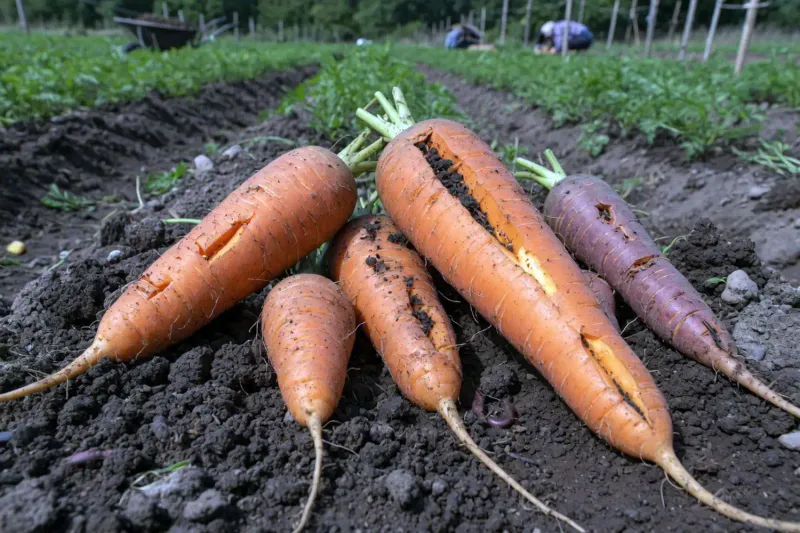
Carrot roots grow steadily underground, and they rely on a consistent supply of soil moisture to do that without stress. When the soil dries out significantly and then receives a sudden heavy irrigation or a hard rain, the root can pull in water faster than its tissue can comfortably expand.
That rapid uptake creates internal pressure, and if the expansion outpaces the root’s ability to stretch, the skin and flesh can split lengthwise.
Utah State University Extension guidance on carrot physiological problems specifically links erratic irrigation to rapid root expansion and cracking. The concern is the swing itself, not water in general.
A carrot that receives steady, moderate moisture throughout its development is less likely to experience the sudden expansion that leads to cracking than one that cycles between dry and saturated conditions.
Fluctuating moisture is one well-supported contributor to cracking, but it is not the only one. Cultivar, root age and size, excess nitrogen, soil conditions, and temperature changes can all affect how susceptible a root is.
RHS root vegetable splitting guidance notes that multiple factors interact, so a single cracked carrot does not automatically prove the whole bed was mismanaged. Think of the watering swing as the most actionable explanation to investigate first, not the guaranteed answer.
Check moisture below the surface before watering again
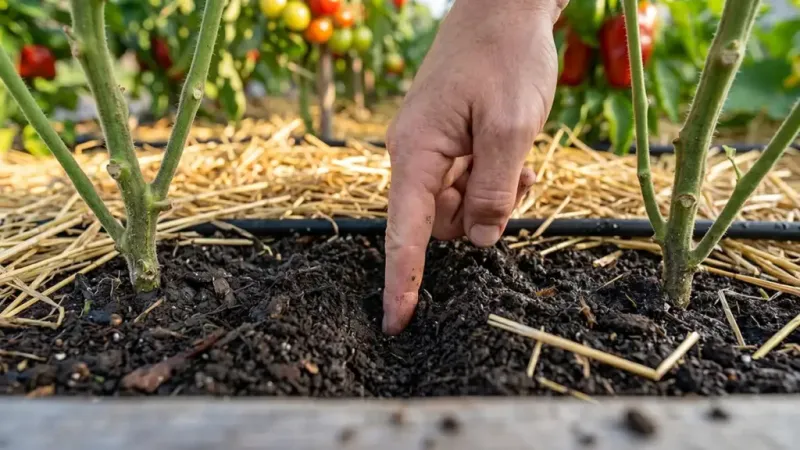
Looking at the surface of a carrot bed tells you very little about what the roots are actually experiencing. The top inch of soil can look and feel dry on a warm afternoon even when adequate moisture remains a few inches down where the roots are actively feeding.
Before reaching for the hose, push a finger or a wooden dowel three to four inches into the soil near the row.
Texas A&M AgriLife Extension carrot guidance recommends keeping soil moist to roughly three inches deep as a practical reference point for irrigation decisions. If the soil at that depth still feels cool and slightly damp, the bed does not need water yet.
Watering before that moisture is gone is exactly how you avoid the sharp dry-to-wet swing that can strain expanding roots.
Utah State University’s carrot growing guidance reinforces the same principle: monitor the root zone and avoid the cycle of severe drying followed by heavy irrigation. Consistent moisture means soil that is neither bone-dry nor waterlogged.
A bed that holds steady somewhere in between gives the roots a stable environment and removes the pressure spike that causes cracking. Checking before watering, rather than watering on a fixed schedule, is the simplest way to stay in that range.
Match the watering rhythm to your soil and weather
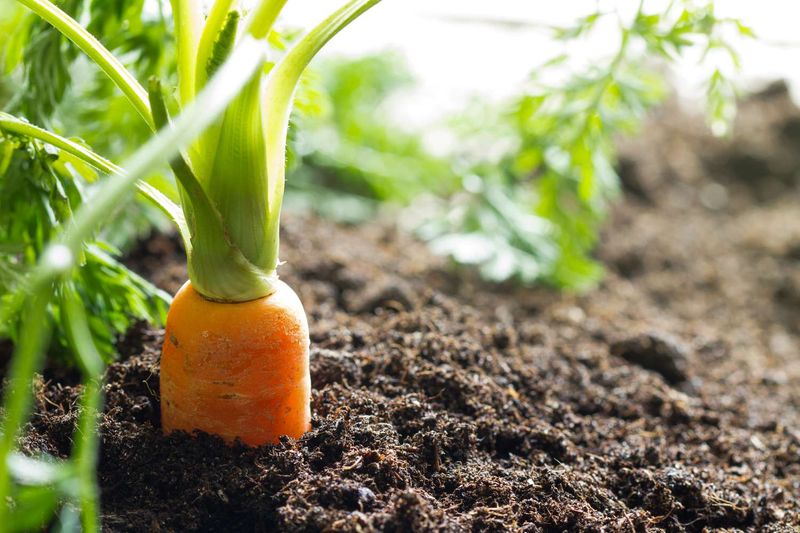
A common starting estimate for vegetable gardens is about one to two inches of water per week, including rainfall. Utah State University water recommendations for vegetables treat this figure as a general baseline, not a fixed rule.
Soil type, air temperature, wind, mulch cover, plant size, and the crop’s stage of development all shift how much water is actually needed and how often it should be applied.
Sandy soils present a specific challenge for Southern gardeners in Florida, Texas, and coastal Georgia. Sand drains quickly and holds very little water between applications, meaning a single deep weekly watering can leave roots dry for days before the next cycle.
University of Georgia Cooperative Extension guidance on commercial carrot production notes that sandy soils have low water-holding capacity and that irrigation is important for consistent quality. Smaller, more frequent applications often serve sandy beds better than one large weekly soak.
Hot, windy fall days in Texas or central Florida can pull moisture from the soil faster than a mild Georgia October would. Texas A&M AgriLife Extension carrot production guidance acknowledges the wide range of planting and harvest windows across different Texas production regions, which illustrates why no single calendar works everywhere in the South.
Adjust watering based on what the root zone actually holds, not on what a chart says a carrot should receive in an average climate.
Use mulch and targeted irrigation to smooth moisture changes
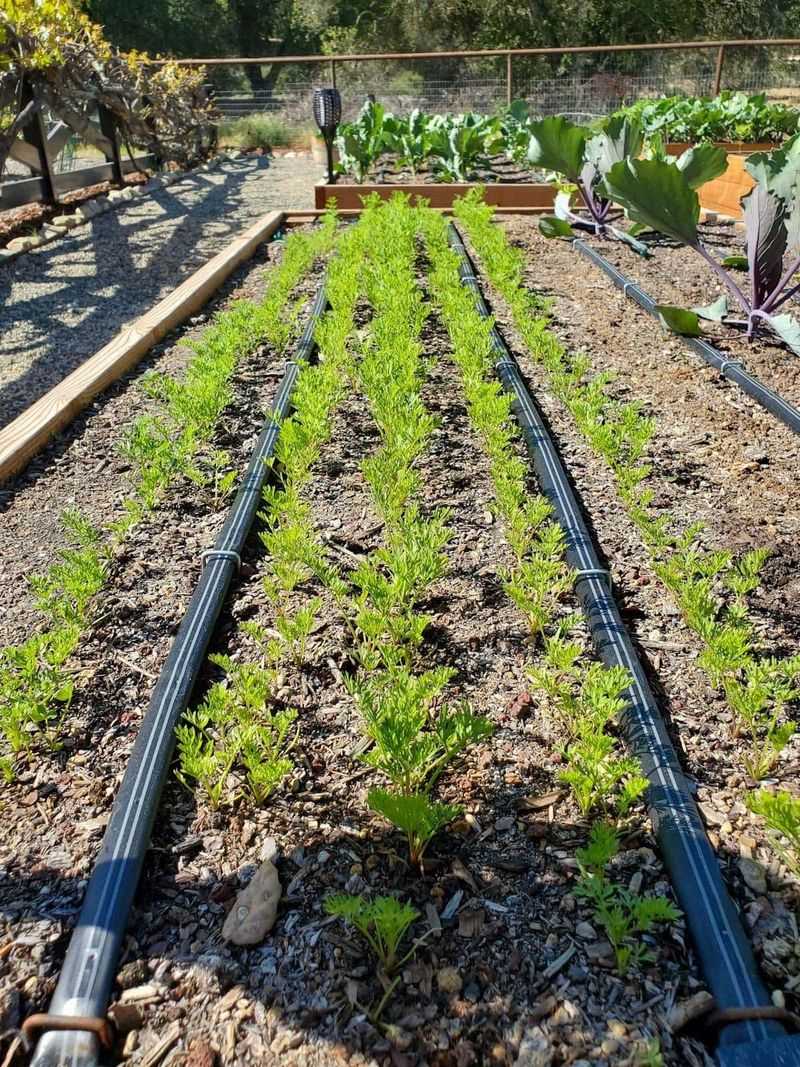
Keeping soil moisture steady is easier when the soil is not exposed directly to sun and wind. A two-to-three inch layer of straw, shredded leaves, or similar organic mulch placed over the carrot bed can slow evaporation noticeably, especially during warm Southern fall afternoons when surface drying happens fast.
Utah State University’s carrot growing guidance recommends mulch as a practical tool for reducing moisture fluctuation and moderating soil temperature.
Drip irrigation lines or soaker hoses placed at soil level apply water directly to the root zone without wetting foliage, which can reduce fungal pressure and allow more precise delivery. Utah State University irrigation management guidance supports surface-level irrigation methods as a way to maintain more uniform soil moisture than overhead watering.
These tools make the job easier, but they do not remove the need for judgment. A drip line running on a fixed timer during a rainy week can still oversaturate a bed.
Mulch helps, but a heavy rain on mulched sandy soil can still swing moisture sharply if the soil drains immediately after. Cultivar, root size, harvest timing, and overall scheduling still matter alongside whatever physical setup you use.
Think of mulch and drip irrigation as supports for a sound watering plan, not substitutes for monitoring the root zone directly.
Moderate water as harvest approaches
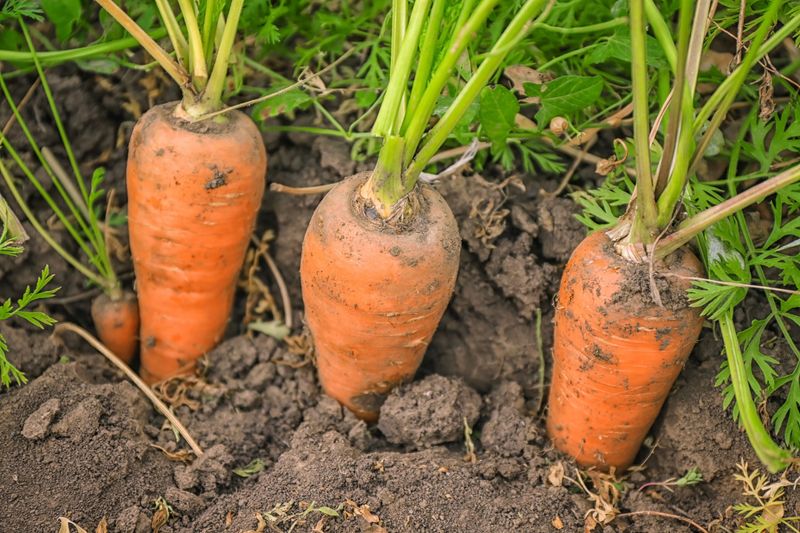
Carrots still need adequate moisture while their roots are finishing the final stage of enlargement. Cutting off irrigation abruptly or letting the bed go dry for an extended period before harvest is not the goal, and it can actually stress the roots in ways that create other problems.
The adjustment needed as harvest gets close is more subtle: avoid applying a heavy, saturating soak in the days just before you plan to pull.
University of Illinois Extension carrot growing guidance advises backing off on watering near harvest because excess moisture at that stage can increase cracking. Oregon State University Extension carrot production guidance similarly recommends allowing soil moisture to decline moderately during the harvest period to reduce cracking and harvest damage.
Both sources point toward the same practical adjustment: a gradual, moderate reduction, not an abrupt stop.
The goal is to keep roots supplied through their final growth without delivering the sudden water surge that can cause rapid expansion and splitting. If the bed has been receiving steady moisture and rainfall is minimal, you can simply reduce irrigation frequency slightly rather than stopping entirely.
Check the root zone, as discussed earlier, and water only when the soil at depth is approaching dryness. That measured approach gives the roots what they need while reducing the risk of the pressure spike that cracks them.
Loosen the soil and harvest before roots become oversized
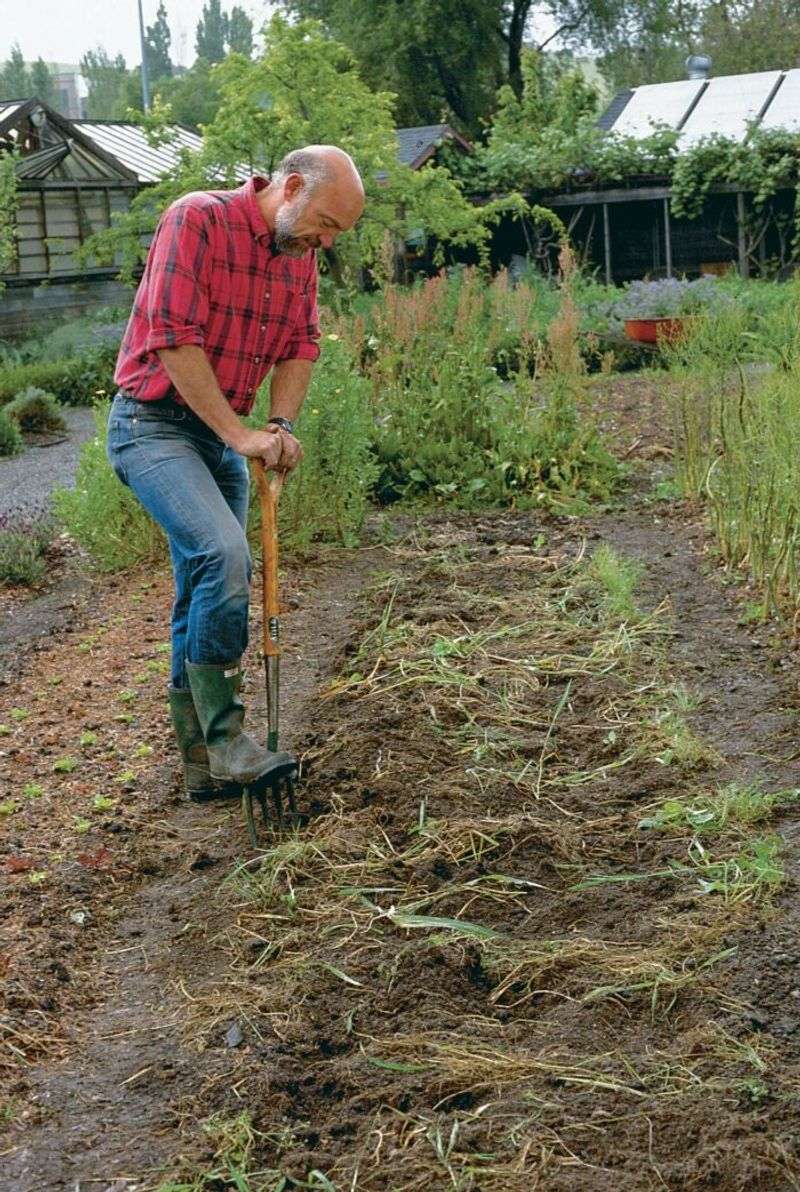
Before pulling any carrot, push a garden fork into the soil several inches away from the root and lever it gently to break up compaction around the root zone. Working the fork in from multiple angles before pulling reduces the force the root has to withstand during extraction.
University of Georgia Extension harvest guidance for carrots recommends loosening the surrounding soil before pulling to minimize root damage and breakage.
This technique also helps you read what happened. A carrot that comes out of loosened soil with a clean longitudinal crack already visible along its length likely split underground before you touched it.
A root that breaks across its width during extraction, after the soil has been loosened, is more likely a harvest-handling issue related to root rigidity, angle of pull, or root size.
Root size matters more than many gardeners expect. Larger-rooted cultivars and older roots that have stayed in the ground past their ideal harvest window tend to be more prone to splitting, both underground and during pulling.
Utah State University Extension physiological problems guidance notes that oversized roots carry greater cracking risk. Harvesting usable carrots before they grow excessively large can reduce that risk, though it will not protect against cracking that is already developing from moisture stress.
Check your cultivar’s expected root size and aim to harvest on the earlier side of the recommended window when fall conditions have been wet or irregular.
Separate cracking from other carrot defects
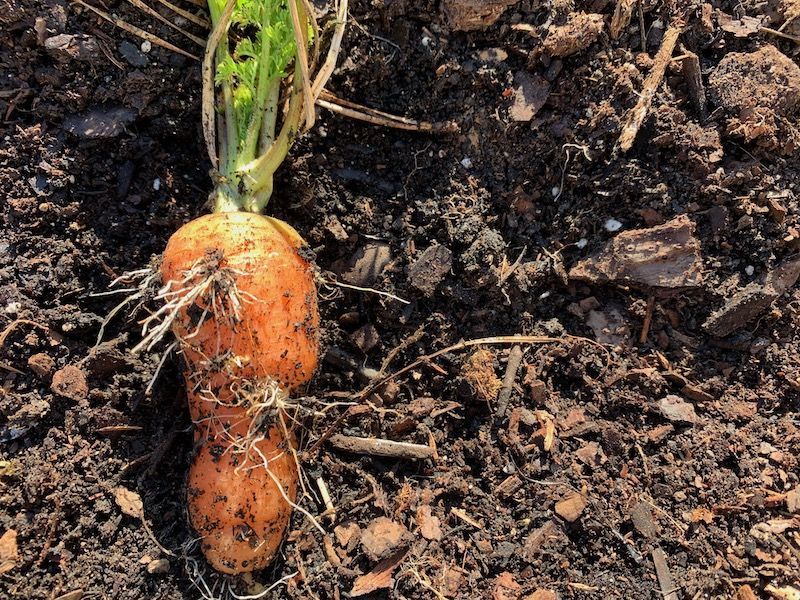
Not every misshapen or damaged carrot at harvest points to a watering problem. Forked roots, for example, look alarming but usually trace back to rocky or compacted soil that forced the taproot to split around an obstruction, or to root injury from fertilizer placed too close to the seed, fresh manure, or insect damage early in development.
Utah State University Extension’s carrot physiological problems page lists compacted soil, stones, and root obstructions as the primary causes of forking, separate from cracking.
Hairy roots, where the carrot develops an unusually dense coating of lateral roots, are often linked to overwatering, inconsistent moisture, or certain soil conditions, but they look quite different from a clean longitudinal split. Stubby or stunted roots usually reflect soil compaction, shallow hardpan, or a bed that was not prepared deeply enough before planting.
Cavity spot, which produces sunken, oval-shaped lesions on the root surface, is associated with Pythium species and has its own distinct appearance and management. Utah State University Extension’s cavity spot guidance describes it as a separate disease problem, not a watering-related crack.
An isolated cracked carrot in an otherwise clean row is also worth treating as a local event rather than evidence of a row-wide irrigation failure. RHS guidance acknowledges that individual roots can crack due to localized differences in soil moisture, compaction, or root size.
Look at the surrounding roots before concluding that the entire bed was mismanaged.
Inspect and handle cracked carrots carefully

Once you have pulled the row, sort the carrots by condition right away. Remove the tops promptly because the leaves continue pulling moisture from the root even after harvest, accelerating deterioration.
Wash each carrot under cool running water to remove soil from any cracks or crevices before inspecting the damage. FoodSafety.gov’s four steps to food safety advises washing produce under running water without soap, bleach, or household disinfectants.
Cut away any cracked or damaged tissue with a clean knife and refrigerate the trimmed roots promptly. Discard any carrot that feels soft, looks slimy, or shows signs of mold or rot.
A crack alone does not make a carrot unsafe to eat, but it does create an entry point for deterioration that can move quickly once the root is exposed. Utah State University Extension notes that cracked carrots remaining in moist soil are particularly vulnerable to secondary rot.
Going forward, check root-zone moisture before each watering, reduce severe dry-to-wet swings, adapt irrigation to your specific soil and weather, avoid a heavy soak in the days before harvest, and loosen soil with a fork before pulling. Steady moisture reduces one important and well-documented risk, but some cracks will trace back to root size, cultivar, soil conditions, or the pull itself rather than irrigation alone.