
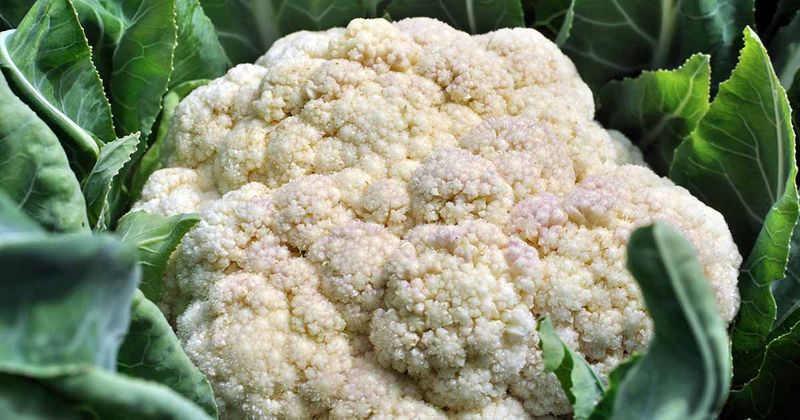
Pulling back a cauliflower leaf to find a grainy, separated head instead of a smooth, dense curd is one of the more frustrating moments in a fall garden. Southern growers in Florida and Texas face a particular challenge because late-summer heat can linger well into the period when heads are forming.
Warmth during curd development is a credible reason for that loose, ricey look, but it is not the only one. Understanding what is actually happening inside the head helps you decide what to do right now and how to plan a better crop next season.
What a ricey cauliflower head is actually showing
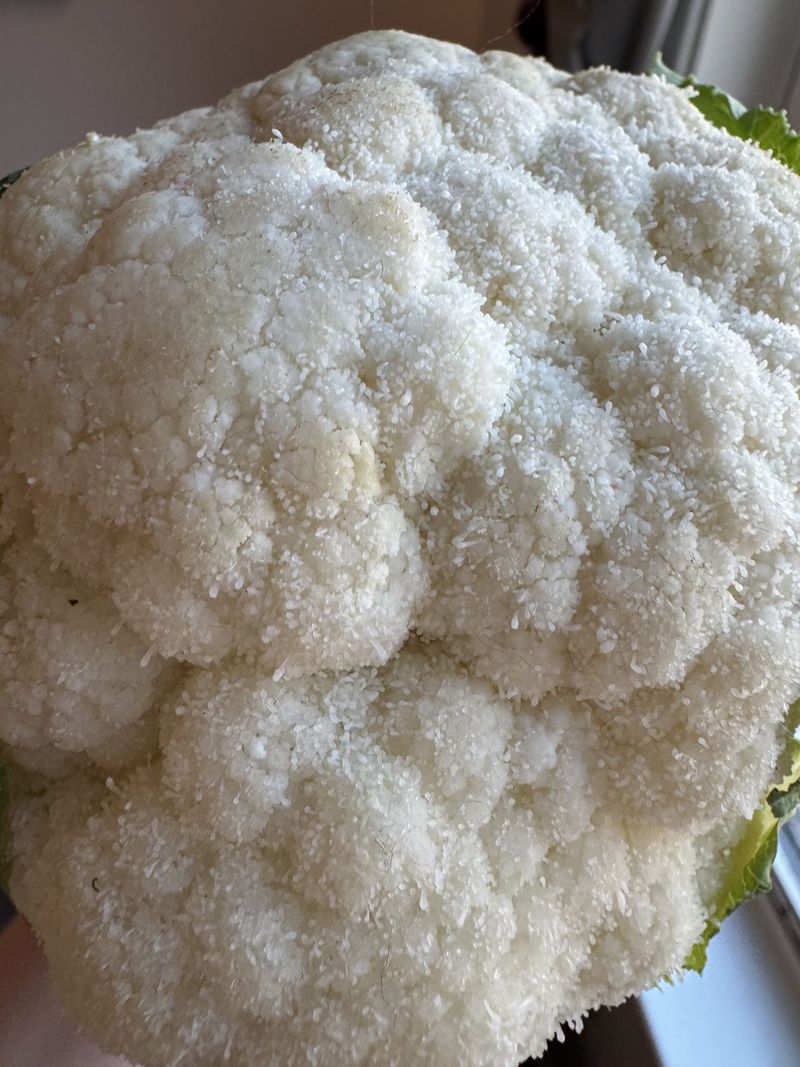
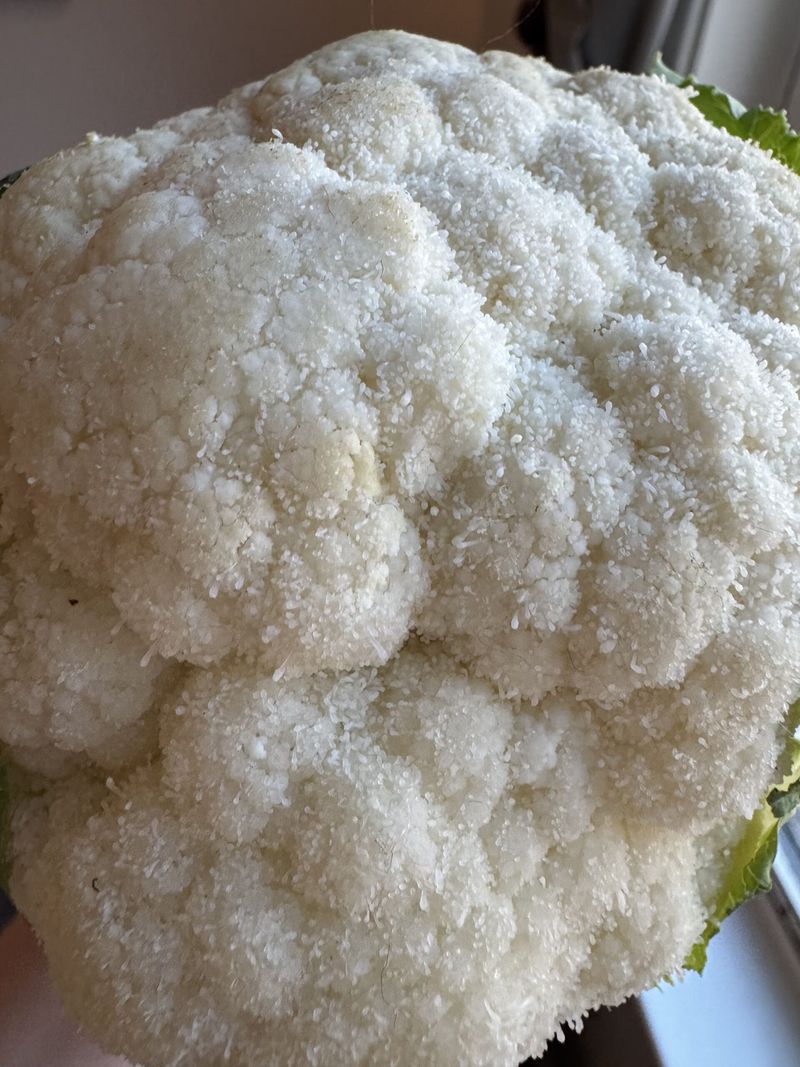
Cauliflower’s edible part is not a flower but a mass of tightly packed immature flower buds called a curd. When those buds begin to separate, elongate, or pull away from each other, the head takes on a rough, grainy, or branchy look that growers commonly describe as ricey.
Oregon State University’s cauliflower guide describes riceyness as the development of small white flower buds during curd formation, a sign that the tightly organized cluster is starting to break down.
Riceyness primarily affects tenderness, texture, and appearance. A head that looks coarse or separated is not automatically diseased or unsafe to eat.
UC Davis postharvest guidance identifies loose or protruding floral parts as a sign of overmaturity, while Iowa State Extension notes that overmature heads open and become ricey rather than remaining compact.
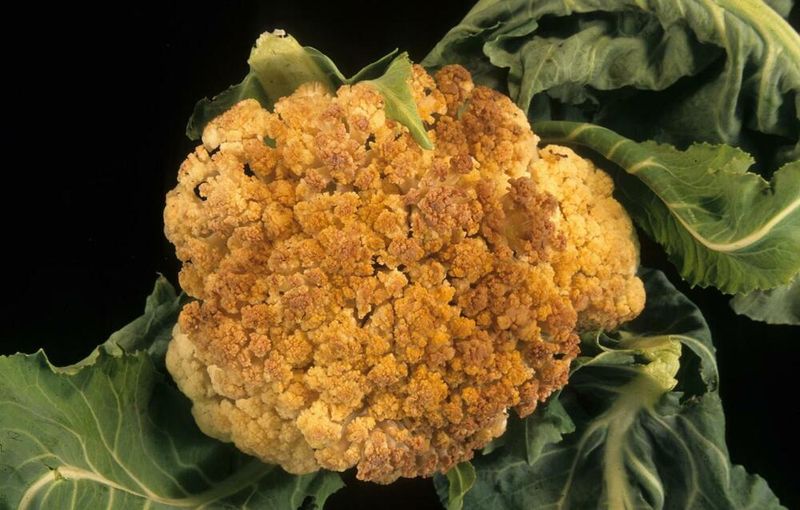
One important distinction worth making early: riceyness and color loss are separate problems. Sun exposure is the more direct cause of yellowing or greening, because light triggers chlorophyll production in the exposed tissue.
A head can remain perfectly white while the curd becomes loose, and a blanched head that is shielded from sunlight can still turn ricey from entirely different causes. The appearance of the curd’s structure alone cannot tell you whether heat, maturity, moisture swings, or something else drove the change.
Warm weather can disrupt curd development during a Southern fall
Cauliflower is a cool-season crop, and the period when the head is forming is its most temperature-sensitive stage. Sustained or repeated warmth during curd development can push the flower buds to separate before the head reaches full size, producing the loose, branchy result that worries so many Southern gardeners in fall.
Oklahoma State Extension’s cole crop guide directly links high temperatures with loose, branchy cauliflower heads, making heat a well-documented explanation for this symptom.
The risk is especially real for Florida and Texas growers because late-summer heat in those states does not politely step aside when fall planting begins. A crop started in August or September may still be forming its head during weeks when afternoon temperatures climb into the upper 80s or higher.
That sustained warmth, not a single hot afternoon, is what tends to disrupt curd organization.
Temperature tolerance varies considerably by cultivar, so there is no single failure point that applies to every variety. Oregon State’s variety research shows that traditional snowball types prefer mean daily temperatures around 58 to 68 degrees Fahrenheit during head formation, while some tropical-adapted types can produce acceptable heads under warmer conditions approaching 85 degrees.
Citing heat as a plausible cause for a ricey Southern fall head is reasonable, but the evidence does not establish a universal failure temperature or confirm that heat caused any specific head to turn loose.
Check maturity, moisture, growth rate, and cultivar before blaming heat
Heat gets a lot of attention, but several other factors can produce the same grainy, separated curd. Overmaturity is one of the most common.
A head left on the plant too long after it reaches full size will naturally begin to open as the buds push outward and start moving toward bloom. Rapid growth is another contributor: when a plant pushes through its vegetative and heading stages faster than usual, often during a warm spell followed by rain, the curd can expand before its structure fully sets.
Heavy nitrogen side-dressing during the heading period can aggravate rapid growth and make riceyness worse. Oregon State identifies heavy nitrogen applications and fast growth as documented triggers for loose curds, which is why adding fertilizer as a rescue for a ricey head is likely to backfire.
Inconsistent moisture, specifically alternating between dry soil and heavy watering, can also produce rough or misshapen heads by disrupting the even, steady growth that quality curd formation requires.
Cultivar sensitivity matters more than many gardeners realize. Some varieties are simply more prone to riceyness under stress than others, and peer-reviewed research on curd riceyness genetics has found that certain cauliflower breeding lines develop the symptom at cool curd-development temperatures below about 53 degrees Fahrenheit, not just warm ones.
Utah State Extension also distinguishes riceyness from buttoning, which is a separate problem where the plant forms a tiny, premature head that never enlarges. Buttoning typically results from cold stress, drought, nutrient shortfalls, or oversized transplants, and it looks quite different from a full-sized curd that has gone coarse.
UF/IFAS notes the same distinction for Florida growers. Disease, nutrient deficiency, and poor pollination should not become default explanations when the symptom pattern fits maturity or environmental stress far better.
Harvest a sound head before the curd separates further
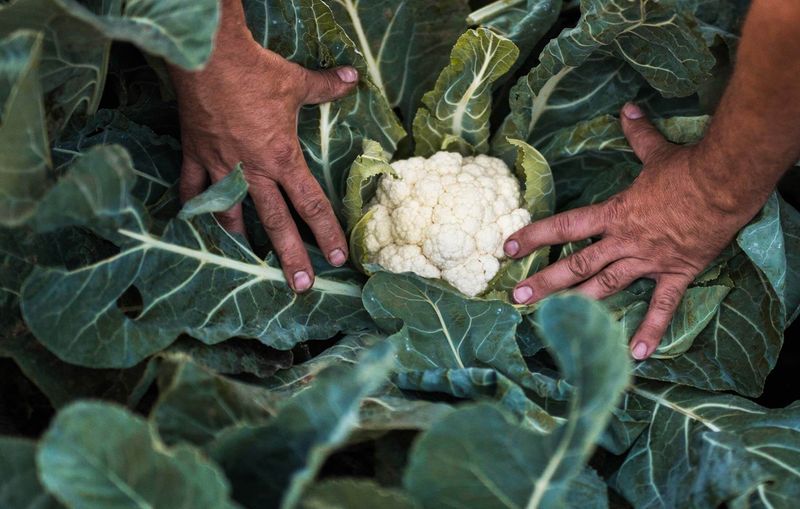
Once a curd starts separating, waiting longer will not bring it back together. The most useful action at that point is getting the head off the plant before the texture deteriorates further.
The right moment to cut is when the curd is full-sized, firm, and as smooth as it is going to get, not when the individual buds are already visibly pulling apart. Iowa State Extension advises harvesting before the head becomes overmature, since waiting too long is a direct path to riceyness.
Home-garden heads are often described as ready at roughly 6 to 8 inches across, but that measurement is only a rough guide. Cultivars vary considerably in their mature size, so the real cues are firmness, compactness, and the overall look of the curd rather than a tape measure.
Oklahoma State Extension and University of Maryland Extension both emphasize harvesting at the peak of compactness rather than holding out for a larger head.
A ricey head that is otherwise sound can still go to the kitchen. The texture will be coarser and the eating quality reduced, but riceyness alone does not make a head dangerous or inedible.
Discard any head that shows soft rot, a foul smell, extensive browning, or other visible decay, as those signs indicate a different problem entirely. UC Davis postharvest research confirms that overmaturity and loose curd are quality issues rather than food-safety emergencies in the absence of decay.
Support developing heads without trying to reverse riceyness
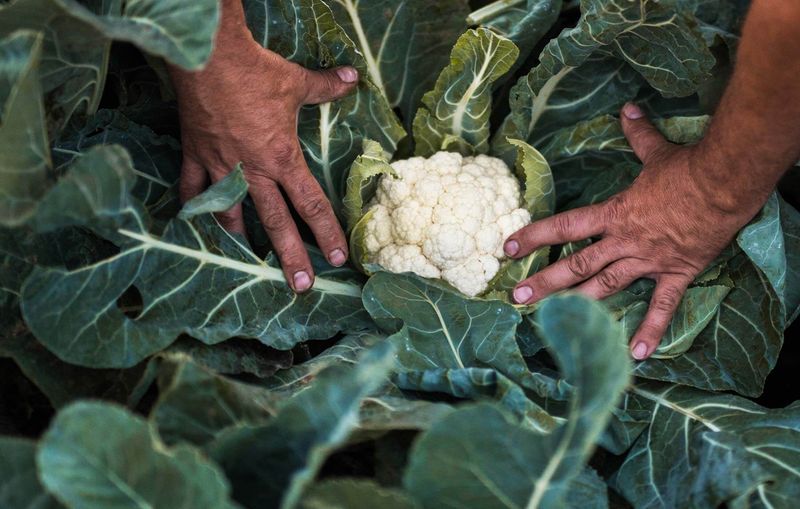
For plants that still have developing heads, the goal shifts from fixing what already happened to preventing further deterioration. Consistent root-zone moisture is one of the most reliable levers available.
Utah State Extension’s brassica irrigation guidance connects inconsistent watering around the heading stage directly to rough, misshapen cauliflower heads, and the fix is straightforward: water deeply enough to wet the root zone, then let the soil guide the next watering rather than sticking to a rigid daily schedule.
Mulching around the base of the plant helps hold moisture between waterings and moderates soil temperature, both of which support steadier growth. Avoid chronically saturated soil as well as drought cycles.
Waterlogged roots invite disease, and swinging between wet and dry conditions is exactly the kind of stress that disrupts even curd development. Utah State’s production-problems guide reinforces that even moisture, not a fixed watering volume, is the practical target.
Skip the extra nitrogen. Adding a heavy side-dressing in hopes of pushing the plant to recover will likely speed up growth and make the curd looser rather than tighter, as Oregon State’s research makes clear.
Base any fertilizer decisions on a soil test or documented crop need, not on the appearance of the curd alone.
Tying outer leaves over a developing white head can protect the curd from sunlight and slow yellowing or greening, which is a worthwhile step for color. UF/IFAS recommends blanching for that reason in Florida gardens.
However, tying leaves will not prevent or reverse riceyness, because riceyness reflects bud separation driven by temperature, maturity, or growth rate rather than light exposure. In humid conditions, Oklahoma State Extension cautions against tying leaves too tightly, since restricting air movement around the curd raises the risk of rot.
Plan the next crop around the cultivar and regional weather
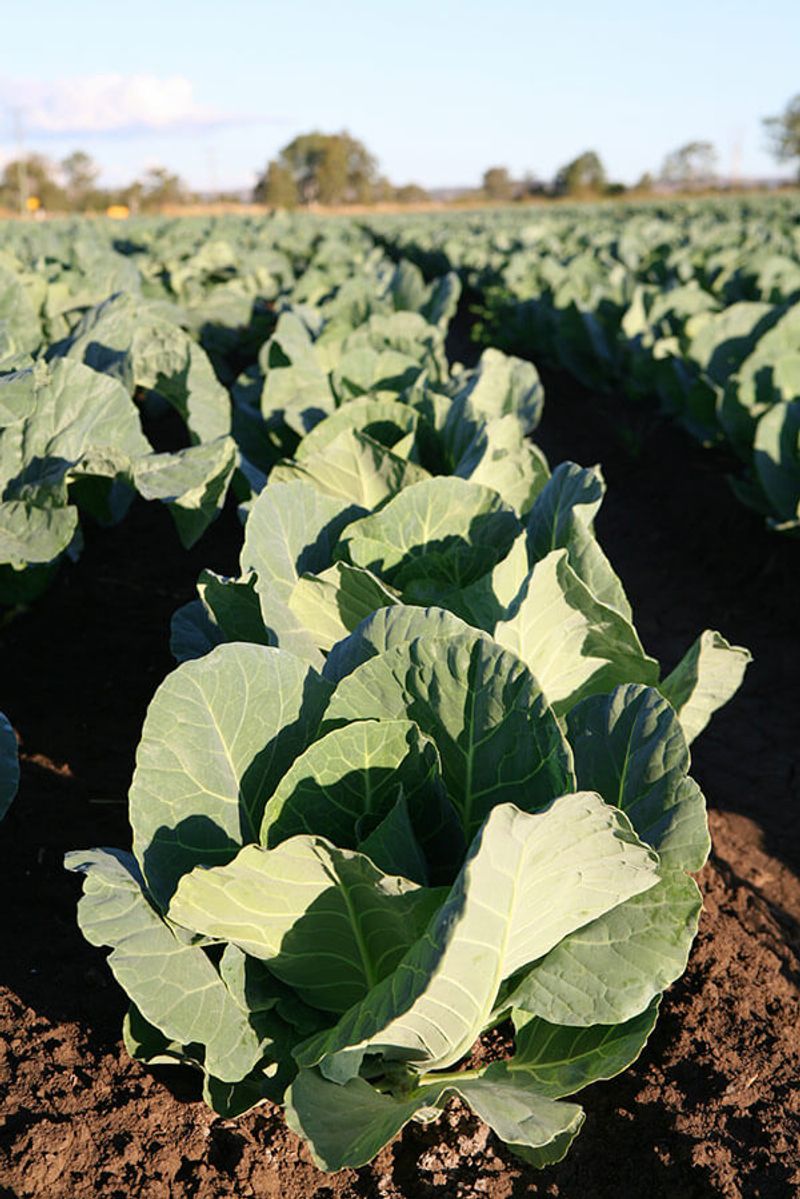
The most effective way to reduce future riceyness is to time the crop so head formation happens after the worst local heat, and to choose a cultivar suited to that window. Selecting a variety with a shorter days-to-maturity rating or one bred for heat tolerance can shift heading into cooler weeks without requiring a later planting date.
Some cultivars are simply better matched to Southern fall conditions than traditional snowball types, which tend to be more sensitive to temperature swings during curd development.
Florida and Texas both require regional planning windows rather than a single statewide fall date. Texas A&M AgriLife Extension’s fall vegetable guide lists cauliflower planting dates ranging from around July 15 in hotter northern regions to as late as November 1 in cooler areas, reflecting how much local climate varies across the state.
Those dates are planning averages, not guarantees, and local heat patterns and early frosts still shape outcomes year to year.
Florida’s variation is equally wide. UF/IFAS cole crop production guidance gives planting windows that run roughly August through February in North Florida, September through February in Central Florida, and September through January in South Florida, with UF/IFAS gardening solutions reinforcing that timing and cultivar choice together determine whether a fall crop forms heads under suitable conditions.
Fall planting does not automatically place head formation in cool weather in either state. A crop started in late summer may still be heading during warm spells, which is exactly the situation that raises the risk covered throughout this article.
Choosing the right cultivar for your specific region, using extension planting windows as a starting framework, and maintaining steady growth from transplant through harvest gives the next crop the best realistic chance of forming the tight, smooth head you were hoping for this season.