
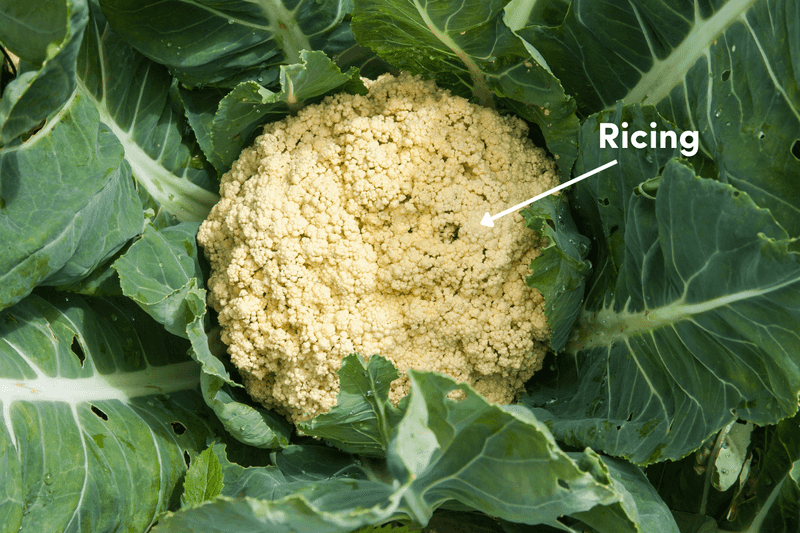
Fall cauliflower can be one of the most rewarding crops in a Southern garden, but opening the leaves to find a yellow, loosely formed head is a real letdown. Two different problems are often happening at once, and blaming them both on one missed step sends gardeners chasing the wrong fix.
Knowing what causes discoloration and what causes poor head formation puts you in a much better position to grow a beautiful, tight, white curd next season.
Yellow color and loose texture need separate diagnoses
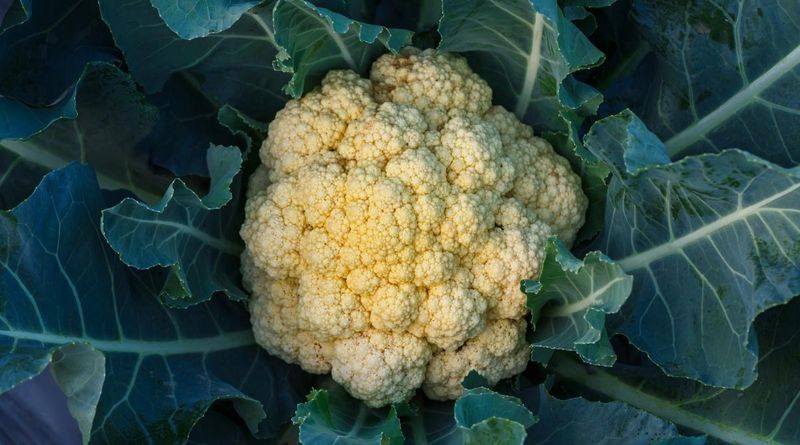
Spotting a yellow or loosely formed cauliflower curd after weeks of careful tending can feel like the whole season went sideways, but the two symptoms rarely share a single cause. Sunlight reaching the developing white curd is the primary driver of yellow or greenish-white discoloration.
When outer leaves fail to cover the head, even a few hours of direct exposure each day can shift the color from bright white to a dull cream, yellow, or pale green.
Loose, branchy, leafy, or ricey heads tell a different story. Oklahoma State University Extension guidance on cole crop production links these problems to high temperatures, drought, interrupted growth, and premature maturity rather than light exposure alone.
A curd can turn yellow and stay firm, or it can stay white and fall apart, depending on which stressors the plant faced.
Cornell Cooperative Extension reports that cauliflower maturing above roughly 80 degrees Fahrenheit is prone to off-color, loose, leafy, or ricey development. Illinois Extension similarly notes that tying leaves over the curd addresses light, not heat.
Treating both symptoms as one blanching problem means the real cause of loose heads goes unaddressed, and the next planting is set up to repeat the same result.
Manual blanching protects a developing white curd
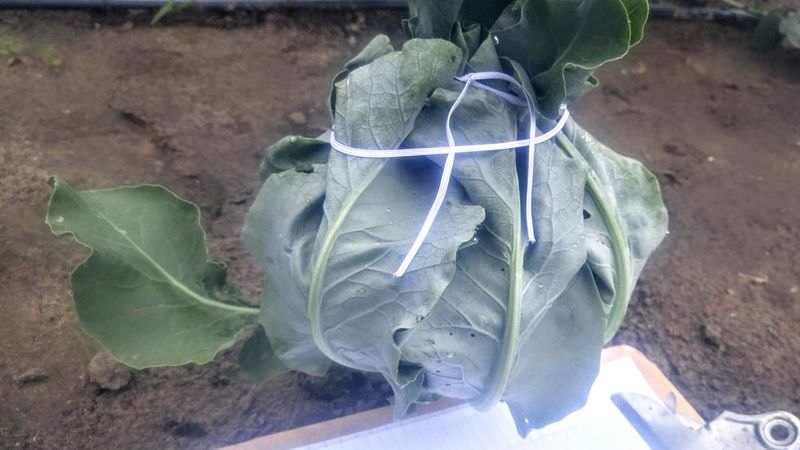
Manual blanching, in the context of cauliflower, means gathering the longest healthy outer leaves and pulling them up over the developing curd, then securing them so direct sunlight cannot reach the white surface. The goal is color preservation: a properly covered curd stays white or cream-white rather than shifting toward yellow or pale green as chlorophyll develops in response to light.
UF/IFAS Gardening Solutions emphasizes that blanching is especially relevant for standard white varieties and that the practice can also reduce sun-related off-flavors in the curd.
Covering the head does not cool the plant. A leaf tie blocks light but has no meaningful effect on soil or air temperature, so a curd developing under sustained heat stress can still become loose or branchy even when properly covered.
Blanching is a quality step for appearance, not a shield against environmental stress.
Colored cultivars, including green, orange, and purple cauliflower, generally are not grown for a pure-white curd and do not need the same whitening treatment. Mississippi State University Extension and University of Georgia Extension both discuss self-blanching or self-wrapping varieties whose leaves fold naturally over the curd, reducing the need for manual intervention, though incomplete coverage can still require a quick tie on some plants.
Knowing which type you planted shapes how much attention the head actually needs.
Cover the curd while it is still forming
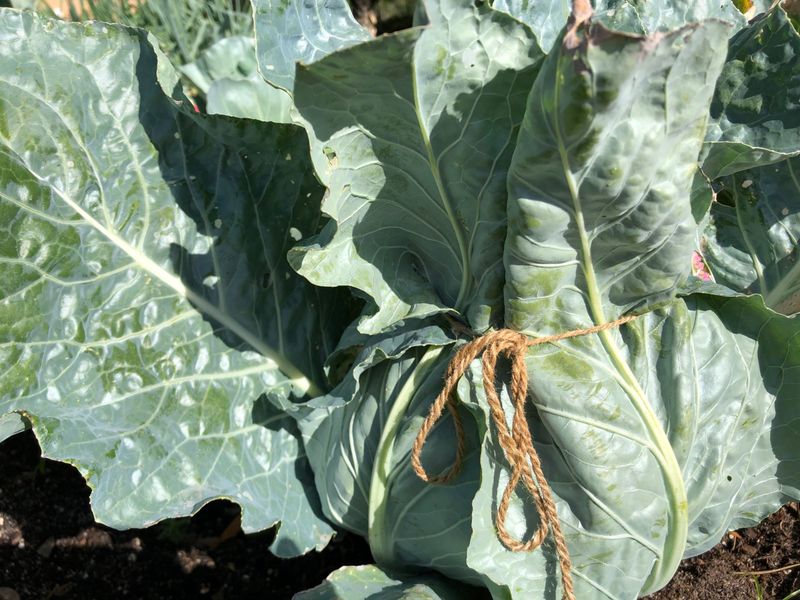
Timing is everything with leaf tying. Once a white curd is visibly forming and measures roughly 2 to 4 inches across, that is the window to act.
Illinois Extension and UF/IFAS both describe this range, with some guidance referencing silver-dollar size as an early marker and baseball size as a later one. Catching the curd at this stage means the leaves can fully enclose it before sustained light exposure has a chance to shift the color.
Use the longest, healthiest green outer leaves the plant offers. eXtension Ask Extension guidance on cauliflower leaf management advises against using foliage that is yellow, brown, diseased, or badly damaged, since compromised leaves do not make an effective light barrier and can introduce disease to the developing head. Secure the leaves with something soft, such as raffia, a cloth strip, a rubber band, or soft twine, looped loosely enough that the bundle does not constrict or tear the foliage.
University of Maryland Extension specifically recommends leaving the tie loose enough to maintain air circulation, which matters especially during warm Southern fall weather when trapped moisture can encourage rot. Tying after the curd has already turned yellow or begun to separate offers limited benefit: it may slow further discoloration, but it cannot restore color that sunlight has already changed or firm up a head that heat has already loosened.
Act early, and the step takes less than a minute per plant.
Cool, uninterrupted growth helps build a compact head
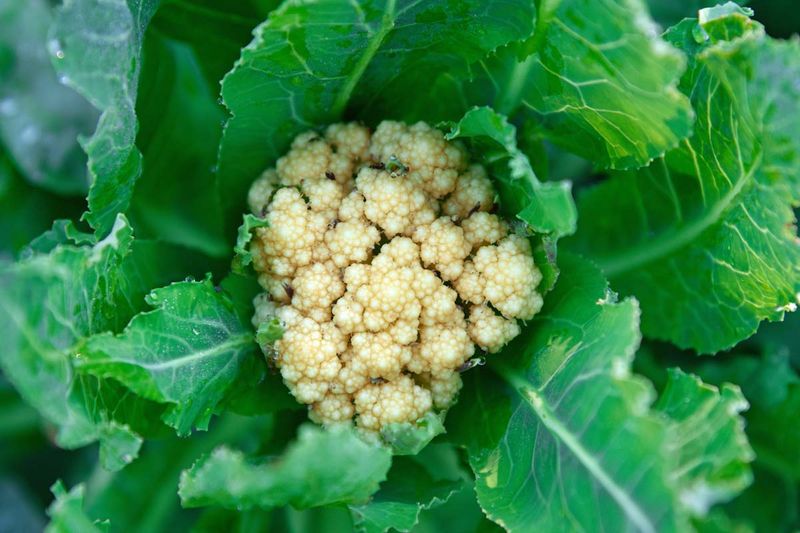
Cauliflower is a cool-season crop, and its preference for moderate temperatures is not just a general guideline. Oklahoma State University Extension places optimal cole-crop growth around 60 to 68 degrees Fahrenheit and notes that quality declines noticeably above roughly 80 degrees.
When a curd develops during a heat spike, the result is often the loose, branchy, or leafy formation that gardeners mistake for a blanching failure.
Drought and interrupted growth add to the problem. A plant that experiences water stress during establishment or curd development may never produce a satisfactory head, regardless of how carefully the leaves are tied.
Oklahoma State recommends at least about 1 inch of water per week as a general baseline, with more needed on light soils during hot, dry periods. Consistent moisture from transplant through harvest gives the plant the best chance to build a dense, compact curd without interruption.
Illinois Extension reinforces that cool conditions and steady moisture work together to support compact head formation, but neither factor alone guarantees a tight curd. Variety, maturity timing, and uninterrupted development all play roles.
A leaf tie cannot compensate for sustained heat or a prolonged dry spell, so the conditions surrounding the plant matter at least as much as what happens above it.
Choose fall planting dates for your local climate
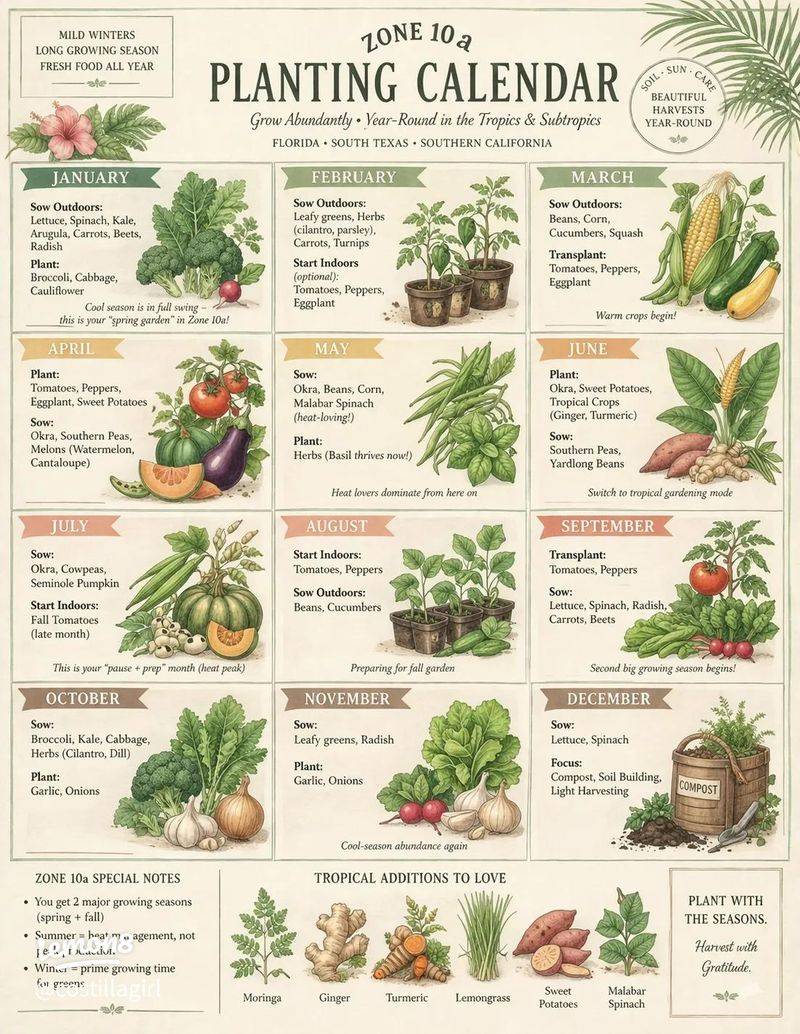
Planting in fall does not automatically move curd development into cool weather, particularly across the South. Florida and Texas both see warm conditions well into autumn, and a plant set out too early can form its head during a stretch of 85-degree afternoons that no amount of leaf tying will fix.
The goal of fall timing is to work backward from the expected cool period so the curd develops when temperatures are reliably moderate.
UF/IFAS Cole Crop Production guidance lists cauliflower planting windows of August through February in north Florida, September through February in central Florida, and September through January in south Florida. Those ranges reflect the real variation in when cooler weather arrives across the state and underscore why a single national planting date does not serve Florida gardeners well.
In central Texas, Texas A&M AgriLife points to September and October as the recommended planting window, with harvest generally expected in November and December. The Texas A&M AgriLife Fall Vegetable Gardening Guide provides region-specific timing that accounts for the state’s geographic spread.
Checking your county extension office for local recommendations is the most reliable way to match your transplant date to the window when your area’s fall temperatures actually support compact curd development.
Inspect the tied plant and harvest before the curd turns ricey
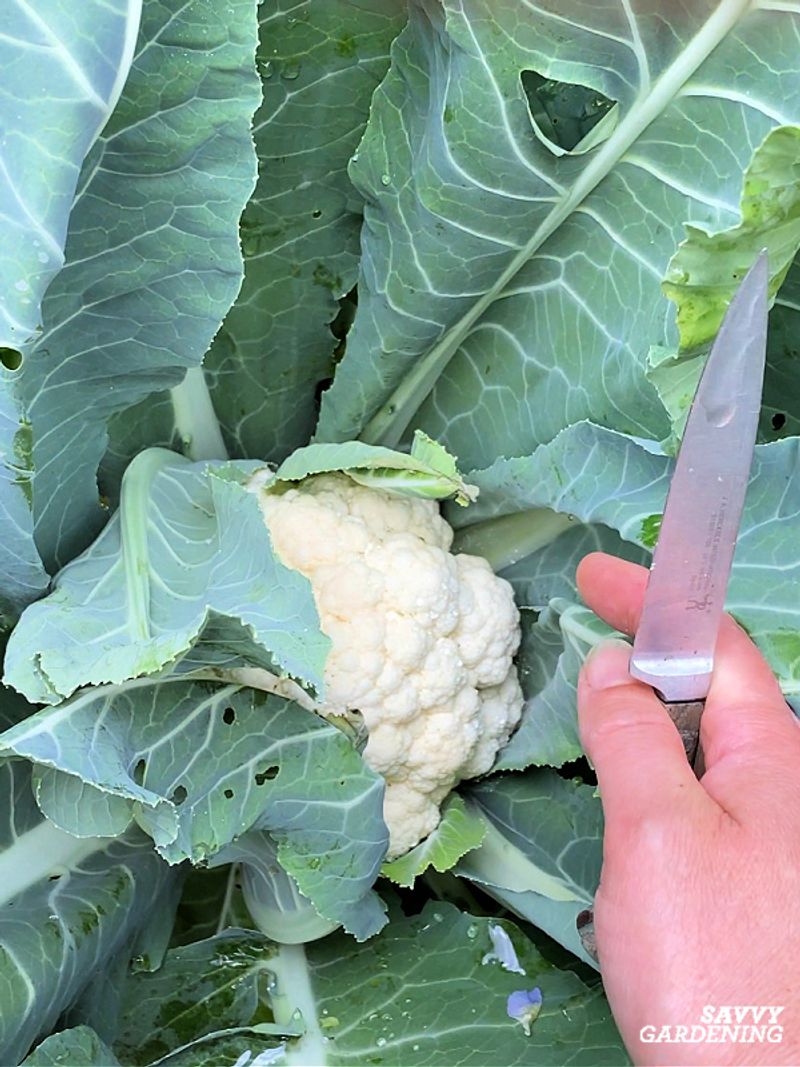
After tying, the work shifts from covering to watching. Temperature and variety both affect how quickly a curd reaches harvest size, so a schedule of every two to three days is safer than checking once a week.
Illinois Extension and Iowa State University Extension place the general harvest window at roughly 7 to 14 days after tying, though warm spells can compress that timeline considerably.
The harvest target is a curd that feels firm and dense, looks smooth across its surface, and shows no visible separation between individual flower buds. Utah State University Extension describes the ideal stage as compact and tight, before the head develops a coarse, grainy appearance.
Once individual buds begin to separate and the surface looks bumpy or rice-like, the curd is past its peak and will not recover texture on the plant.
UC Davis Postharvest Research notes that warm temperatures accelerate development and reduce postharvest shelf life, which is another reason frequent inspection matters during warm Southern fall periods. If a head is already showing heat-related looseness or early separation, University of Minnesota Extension vegetable update guidance suggests that harvesting promptly may preserve some usable quality, though the head will likely be smaller and less firm than ideal.
Prompt harvest in that situation is a cautious way to salvage what remains, not a way to make a loose curd tight again.
Yellow leaves can signal a problem beyond sun exposure
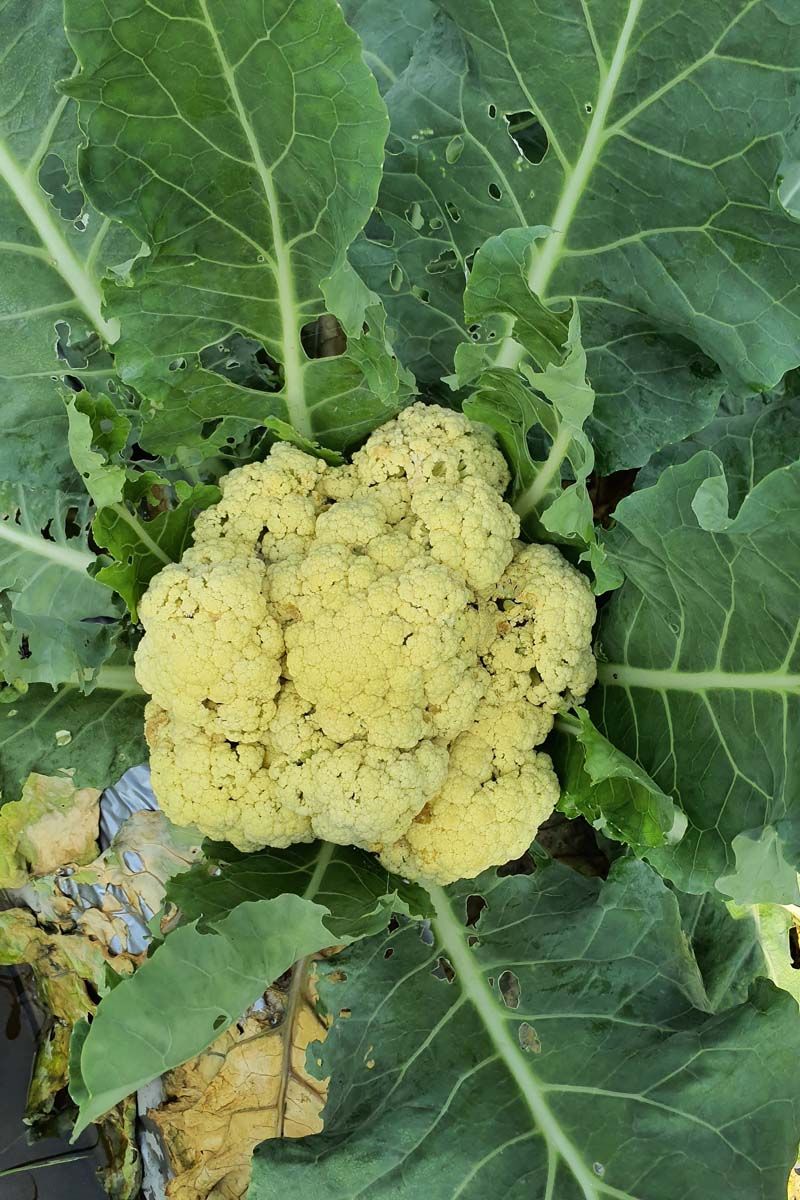
Yellow leaves on a cauliflower plant and a yellow curd are two separate observations that point toward different causes. A developing white curd turns yellow or greenish when sunlight reaches it directly.
Outer leaves turning yellow, however, can indicate nitrogen deficiency, water stress, root disorders, fungal disease, pest feeding, or other problems that have nothing to do with whether the head was covered. University of Minnesota Extension’s cauliflower leaf yellowing diagnostic tool walks through the range of possible causes and helps gardeners match the symptom pattern to the likely problem.
Lesions, V-shaped yellow areas along leaf margins, wilting that does not recover after watering, root galls, or widespread leaf collapse can point toward black rot, Alternaria, downy mildew, clubroot, or aphid pressure. UConn Extension’s guide to Alternaria leaf blight and head rot in brassicas and Texas A&M AgriLife vegetable disease management guidance both describe how these disorders present and spread.
Attributing all leaf yellowing to missed blanching delays the right response.
On the question of edibility, an off-color but otherwise sound curd may still be usable. eXtension Ask Extension guidance on discolored cauliflower indicates that off-colored heads can remain edible, though flavor and texture may be affected. The signs that warrant discarding a head are decay, foul odor, softness, severe browning, or extensive disease, not color alone.
Self-blanching varieties and colored cultivars also set different expectations: UF/IFAS notes that even self-wrapping types can leave the curd partially exposed if growth is abnormal or leaves are damaged, so a quick inspection under the leaves is always worthwhile.
Protect the color early and manage the conditions that shape the head
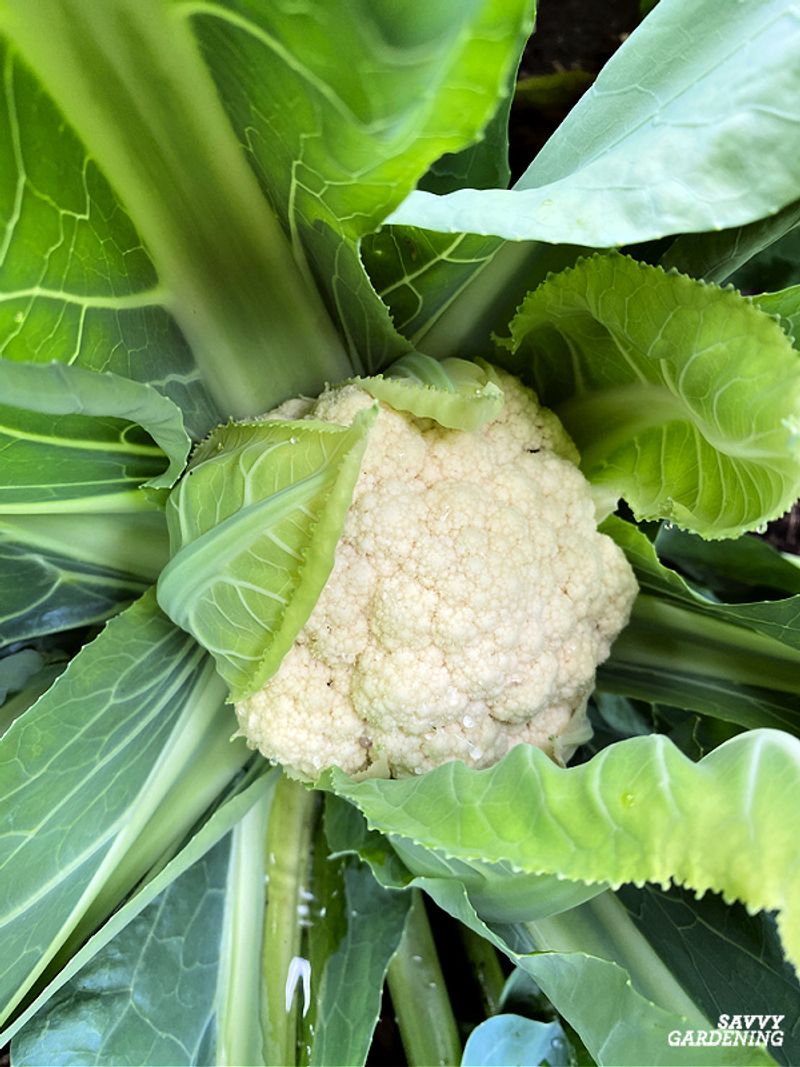
A white cauliflower curd stays white when healthy outer leaves cover it before sustained light exposure begins. Tie them when the curd reaches about 2 to 4 inches across, use a soft material, and keep the bundle loose enough that air can still move through the foliage, especially during warm fall weather.
Illinois Extension and UF/IFAS both recommend this approach as a preventive quality step rather than a remedy for problems that have already developed.
Head formation depends on more than the tie. Steady soil moisture, temperatures that stay below roughly 80 degrees Fahrenheit during curd development, uninterrupted growth, and a planting date matched to your local fall climate all contribute to a compact, firm result.
Oklahoma State University Extension connects heat and drought directly to loose, branchy heads, which is why managing conditions from transplant onward matters as much as what happens once the curd appears.
Check tied plants every few days, harvest while the surface is smooth and the head feels dense, and do not wait for a loose or separating curd to firm back up on its own. Blanching can protect the color a developing white curd has earned through good growing conditions, but the conditions themselves are what build the head worth protecting.