
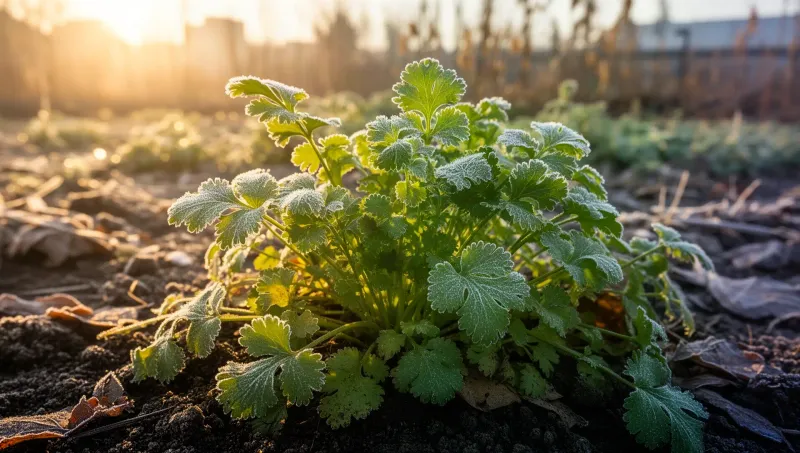
Fall cilantro is one of the most rewarding cool-season herbs a Southern gardener can grow, right up until the moment it shoots up a flower stalk and the leaves start tasting off. That shift can feel sudden, but the real cause has been building in the soil and air long before you spotted the first bud.
Understanding what pushes cilantro from leafy growth into flowering gives you a real shot at a longer, better harvest this season and every one after it.
When cilantro flowers, leaf quality may start to decline
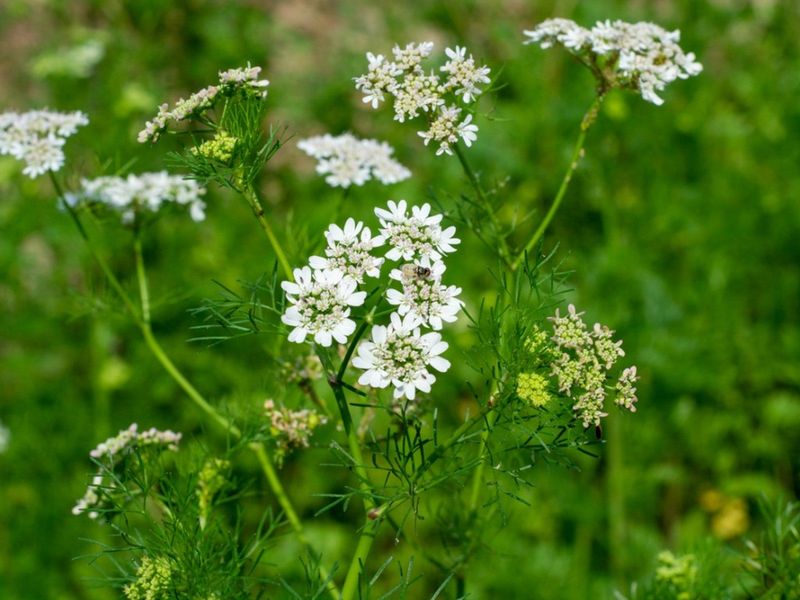
A cilantro plant that has started bolting gives you clear signals before the flavor fully changes. The central stem stretches taller than the surrounding foliage, the upper leaves become smaller and more finely divided, and you may see clusters of tiny white flower buds forming at the top.
UF/IFAS Extension guidance on cilantro as a cool-season herb describes bolting as the plant’s shift from vegetative leaf production into flowering and seed production, a natural stage in its annual life cycle.
Seeing a flower stalk does not mean every remaining leaf is ruined or that something went wrong with your soil. Leaves lower on the plant may still be tender and flavorful enough to harvest, especially early in the bolting process.
The change in taste, which can range from more pungent to less appealing to noticeably disagreeable, tends to advance as flowering progresses rather than arriving all at once in every plant.
Wisconsin Extension’s cilantro guide notes that leaves become less palatable as the plant bolts. Your best move right now is to harvest whatever usable foliage remains while you work through what caused the early flowering.
Lingering warmth and long days push cilantro toward seed
Cilantro is a cool-season annual, and its internal clock responds to more than just one signal. Rising air temperatures, longer days, the plant’s own age, cultivar genetics, and moisture stress can all work together to trigger the shift from leafy growth to flowering.
When a fall crop bolts before you expected it, lingering late-summer heat is usually the biggest contributor.
Oregon State University Extension reports that cilantro can flower and produce seed within four to six weeks under warm summer conditions, while cooler spring or fall weather extends the leafy-growth window considerably. OSU also identifies both temperature and day length as influences on flowering, which means a plant dealing with warm nights and still-long September days is responding to two signals at once.
The temperature numbers you may have seen cited are practical warning points, not hard biological cutoffs. One OSU publication describes rapid bolting above roughly 80 degrees F, while Texas A&M puts the warning closer to 85 degrees F.
Those differences likely reflect cultivar variation, how long the heat lasts, day length, and local growing conditions rather than a single universal number.
Wisconsin Horticulture Extension adds that even cultivars described as less prone to bolting do not hold well under sustained high temperatures combined with long days. Heat alone does not always explain early bolting, but heat plus photoperiod plus a plant that has reached a certain age can move things along faster than most gardeners expect.
Cool the planting to delay bolting, not to guarantee prevention
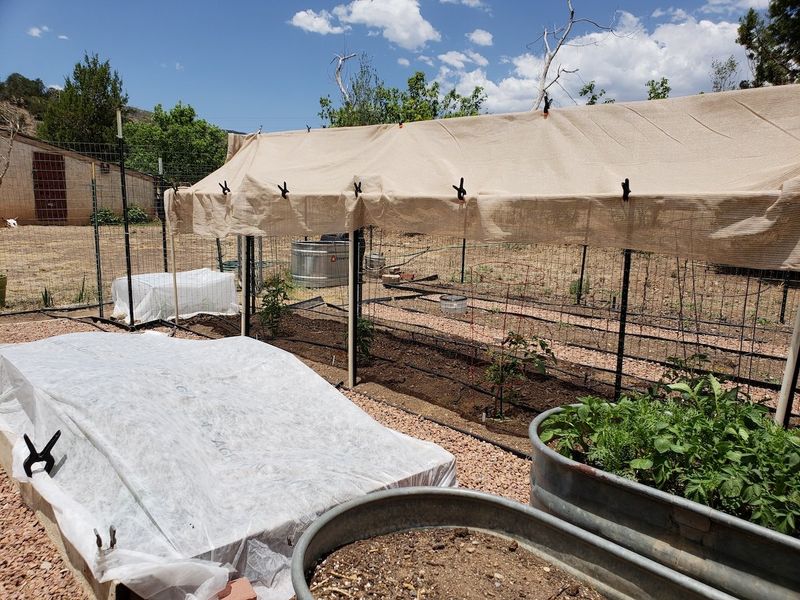
Managing heat and moisture around your cilantro planting can buy you more leafy harvest time, even if it cannot stop bolting permanently. Mulching the bed is a practical first step.
Penn State Extension’s cilantro guide recommends mulch as a tool for moderating soil temperature and conserving moisture, both of which reduce stress on the root zone during warm weather.
Utah State University Extension suggests keeping the soil below 75 degrees F when possible and recommends regular watering to help delay bolting. Keeping the soil evenly moist, without making the bed soggy, addresses both temperature and drought stress at once.
Uneven moisture adds another layer of stress that can accelerate the plant’s move toward seed production.
Placement matters too. Oregon State University Extension supports growing cilantro in a cooler or partly shaded location when heat is a concern, and multiple extension sources recommend morning sun with afternoon shade during hot weather.
Deep shade can reduce growth rather than help it, so partial shade is the target, not full cover.
A soil thermometer can help you track conditions and guide decisions about mulch depth and watering frequency. What it cannot do is tell you that your plant will stay vegetative once air temperatures, day length, plant age, and cultivar genetics are all pushing toward flowering.
These measures delay the process; they do not override it.
Harvest usable leaves before flowering advances
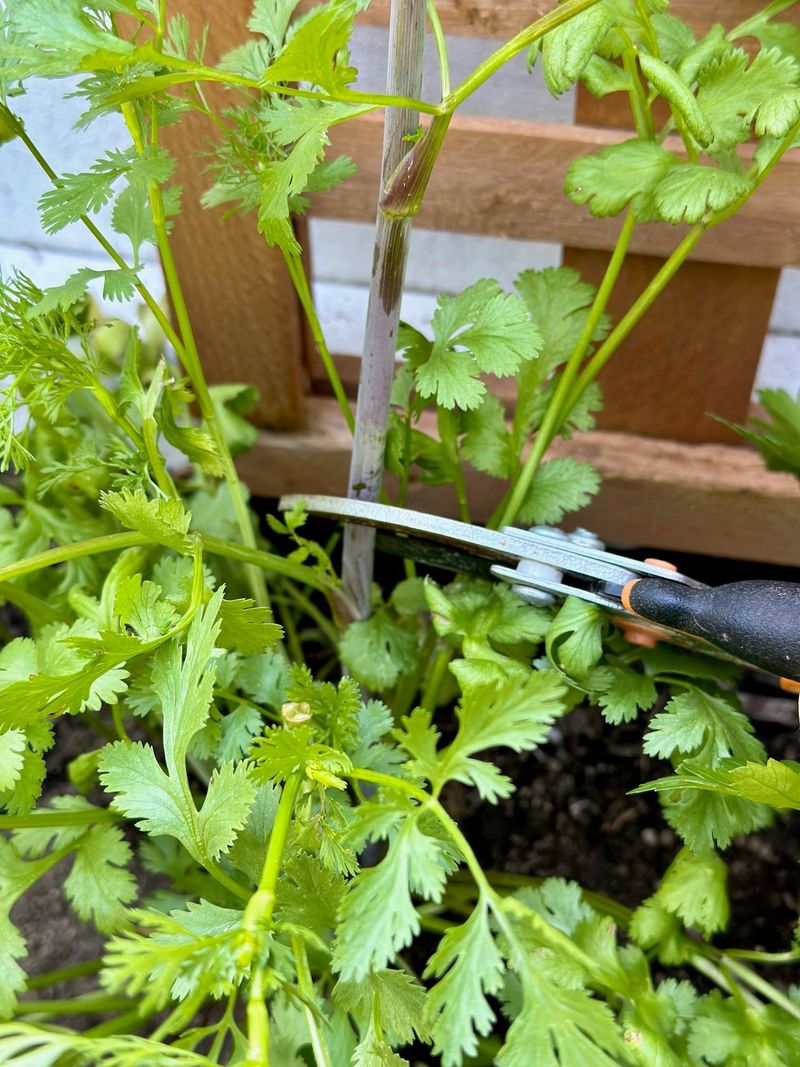
Once you spot a flower stalk forming, the most useful thing you can do is start harvesting. Outer leaves taken regularly while the plant is still mostly vegetative will be your best quality foliage.
Waiting for a full bunch while the plant is actively bolting means watching the window close without getting much out of it.
NC State’s cilantro crop guide explains that removing a young flower stalk or buds may briefly extend the leafy harvest, but it will not reliably reset the plant’s annual life cycle. The plant remains committed to seed production, and under persistent heat or still-long days it will keep attempting to flower.
Pinching buds is worth trying once or twice for a small extension, but it is not a substitute for getting the remaining usable leaves off the plant promptly.
Wisconsin Horticulture Extension recommends harvesting before flowering, when leaves are young and tender, and notes that foliage becomes smaller, tougher, more pungent, or disagreeable as bolting advances. Treat the appearance of flower buds as your signal to gather what is good now and start preparing a fresh sowing.
Repeated pinching without a replacement crop in the ground is a plan that ends with no cilantro at all.
Match fall sowing to your local heat pattern
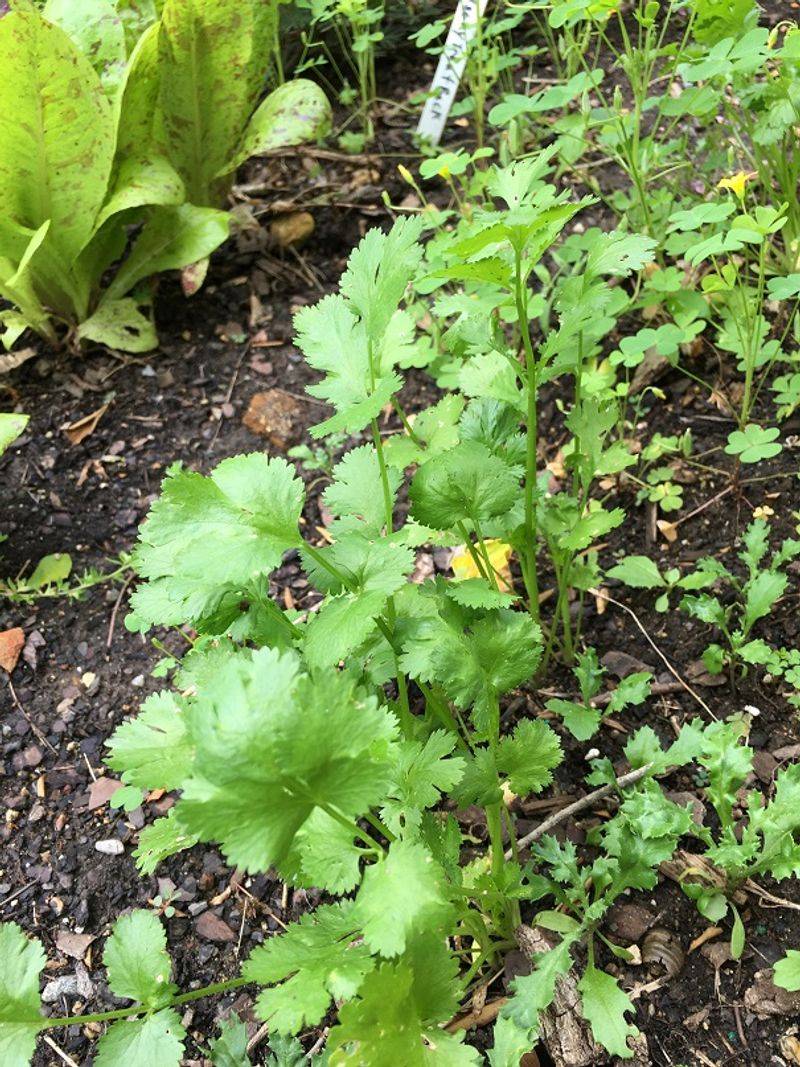
Sowing at the right time for your specific location does more to prevent premature bolting than almost any other single step. Treating September as a universally safe fall planting month across the entire South is a mistake that many gardeners make once and then adjust after a disappointing result.
Texas A&M AgriLife Extension recommends February planting for an April harvest and September planting for a November harvest, with weekly successions for continuity. That calendar works well for much of Texas, but even within the state, a September sowing in South Texas may face temperatures that are still too warm for a good start.
UGA Cooperative Extension’s herb guide treats cilantro as a cool-season crop for the Southeast, with spring and late-summer plantings as the typical windows. Florida complicates the picture further because the northern, central, and southern parts of the state have substantially different fall arrival dates.
UF/IFAS guidance for parts of Florida advises waiting until the worst late-summer heat has passed before sowing fall cilantro, because a seedling that germinates into lingering 90-degree days is already under stress before it has produced a single leaf worth cutting.
Oregon State University Extension notes that cooler fall conditions allow a longer leafy-growth window, which reinforces the value of waiting for your regional heat to ease rather than sowing on a fixed calendar date. Check your local extension service for the timing that fits your county.
Sow small batches to keep leaves coming
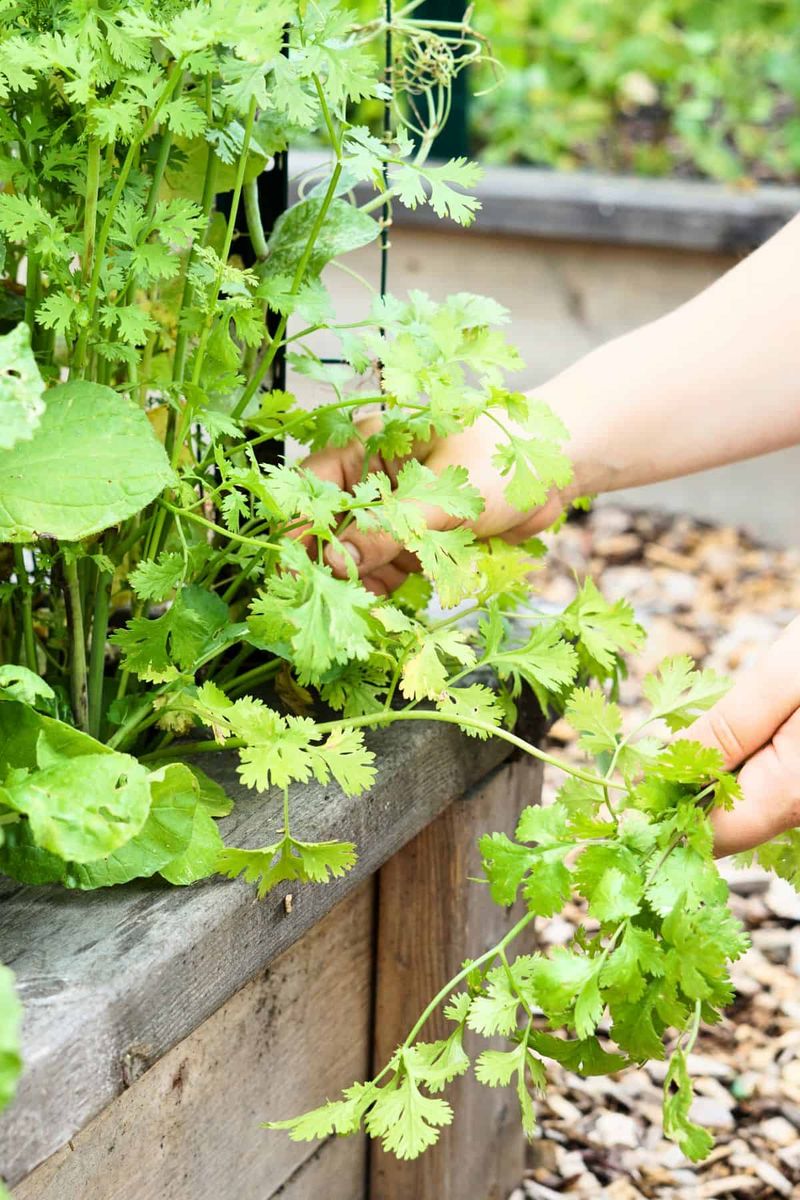
No single cilantro planting will stay leafy for the whole season, and that is not a failure of skill or soil. Cilantro is a short-lived annual with a naturally brief harvest window, and the most dependable way to work around that limit is to keep new plants coming in behind the ones that are finishing.
Oregon State University Extension recommends sowing small batches every two to three weeks when local conditions support growth, so that one crop can replace another as heat or maturity ends the previous planting’s useful life. Staggered sowings reduce your dependence on any single plant surviving a warm spell or a stretch of long days.
If one batch bolts early, the next one is already on its way.
Texas A&M AgriLife Extension specifically recommends weekly plantings for continuity, which shows how seriously experienced growers take the short harvest window. You do not need to plant that frequently to see a real benefit; even two-week intervals make a noticeable difference in how consistently you have fresh leaves available.
Keep each batch small enough to use without waste, and time the next sowing to go in before the current planting has fully committed to flowering. That overlap is what keeps your kitchen supplied through the cooler months without relying on one planting to carry the whole season.
Choose slower-bolting cultivars and use the flowers
Cultivar choice gives you one more layer of protection without changing anything else about how you garden. Varieties such as Slow Bolt, Leisure, Santo, Calypso, Cruiser, and Long Standing are bred to delay the transition to flowering.
Penn State Extension lists several of these slower-bolting types as good choices for gardeners who want more time in the leafy stage.
Wisconsin Horticulture Extension is direct on the limits: even less-bolting cultivars do not hold well under sustained high temperatures and long days. Think of these varieties as buying you extra days or weeks, not as heat-proof options.
Pair a slower-bolting cultivar with good timing, partial afternoon shade, and even moisture, and you will get noticeably more out of each planting than you would with a standard variety under the same conditions.
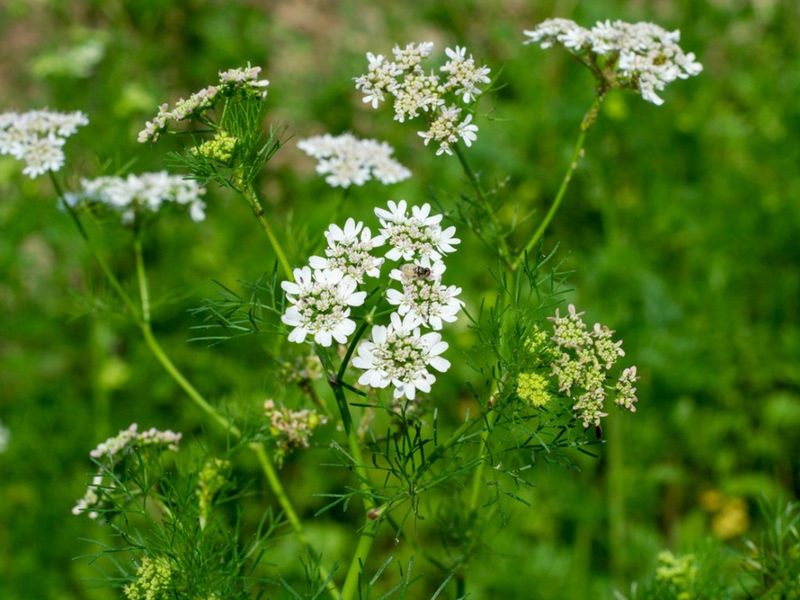
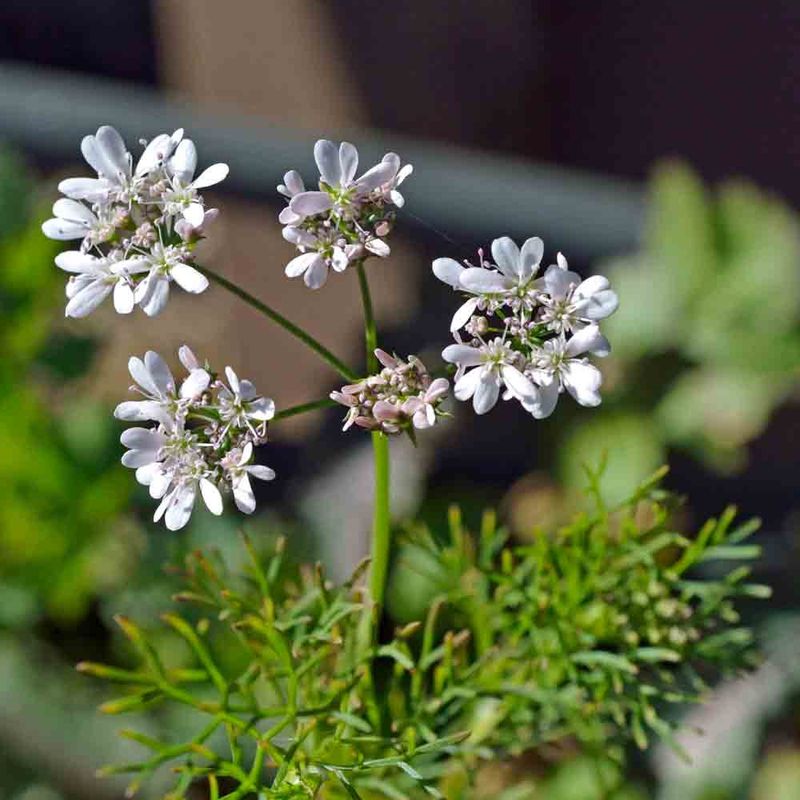
A bolted plant is not a lost cause. Oregon State University Extension points out that cilantro flowers attract beneficial insects, and the seeds that follow can be harvested as coriander, a separate spice with its own culinary uses.
The practical sequence that works best is straightforward: harvest early and often, moderate heat and moisture stress as much as your site allows, choose a slower-bolting cultivar, and sow again. Cilantro rewards the gardener who plans for its short window rather than fighting it.