
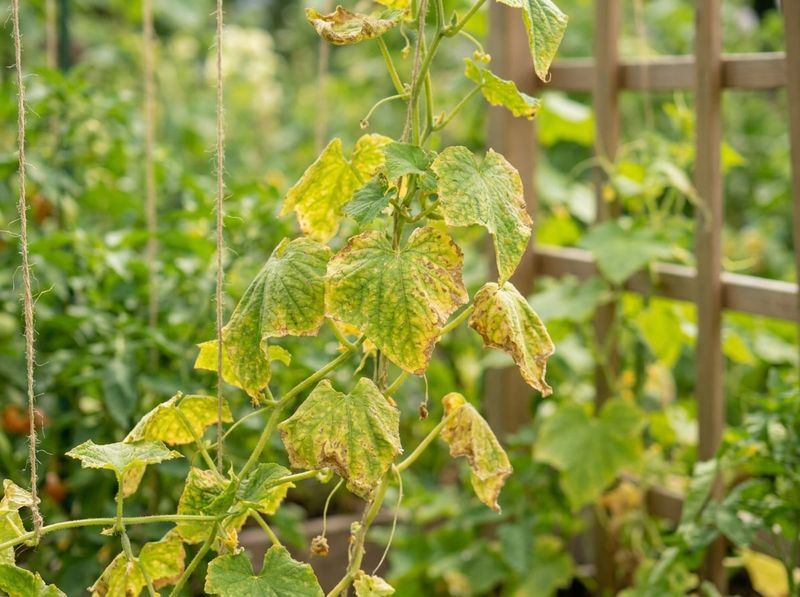
Walking out to your garden and finding the lower leaves of your cucumber vines turning yellow can feel alarming, especially as fall temperatures begin to drop. That bottom-up yellowing pattern is worth paying attention to, but it does not automatically mean your plants are starving for nitrogen or that cooler nights drained the soil.
Several things can cause older leaves to fade first, and knowing which one is actually happening will save you from treating the wrong problem.
Bottom-up yellowing is a nitrogen clue, not a verdict
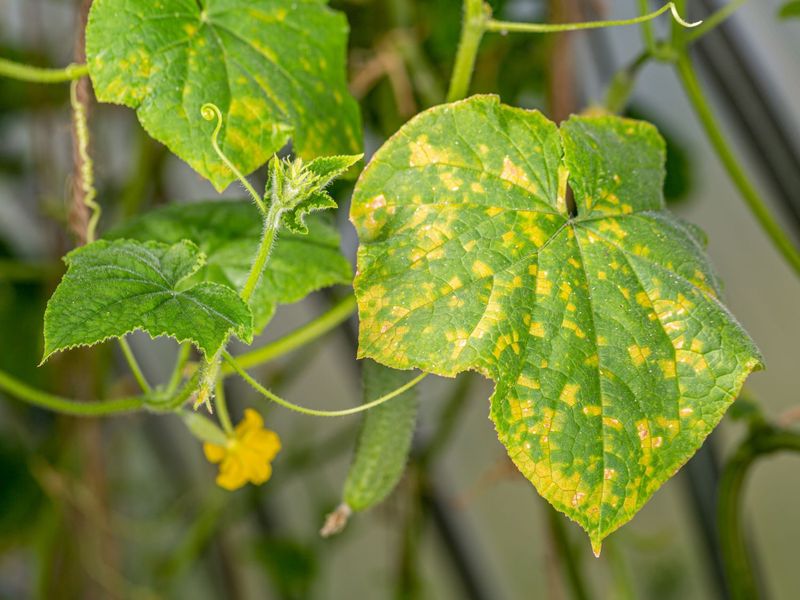
Older, lower cucumber leaves turning a fairly even, washed-out yellow while newer growth at the top stays comparatively green is a pattern worth taking seriously. Nitrogen is what plant scientists call a mobile nutrient, meaning the vine can pull it out of older tissue and ship it upward to support new leaves and developing fruit when the overall supply runs short.
UF/IFAS cucumber production guidance describes nitrogen deficiency as general pale-green or yellow foliage combined with slow growth, with older and lower leaves affected first.
Slow overall growth alongside that bottom-up color change strengthens the case for nitrogen as a possible cause. If the plant is pushing out new leaves at a normal rate and those leaves look healthy, the lower yellowing is less alarming and may reflect something else entirely.
Here is the part that matters most before you do anything: the same lower-leaf yellowing pattern can result from cold stress, saturated or damaged roots, foliar disease, potassium or magnesium problems, or simply the natural aging that comes at the end of a crop cycle. Penn State Extension’s plant health diagnostic guidance makes clear that a symptom pattern points toward a cause without proving it.
Treat the yellowing as a clue worth investigating, not a confirmed diagnosis that requires immediate fertilizer.
Cool nights can slow uptake without removing nitrogen
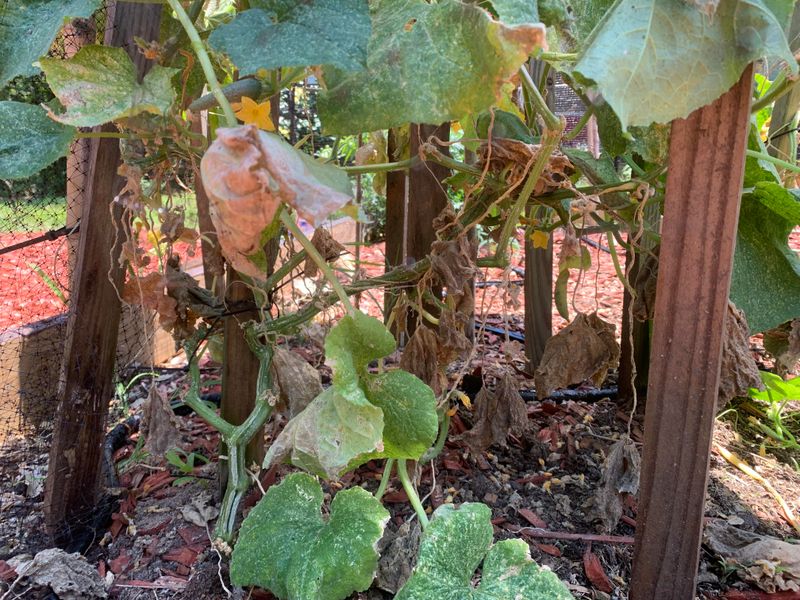
Cucumbers are warm-season crops, and they do not handle cold well even when the temperatures do not drop far enough to cause visible frost damage. Oklahoma State Extension cucumber production guidance identifies temperatures below 50 degrees Fahrenheit as capable of causing chilling injury and recommends soil of at least 60 degrees Fahrenheit for establishment.
When roots sit in cold soil, the vine’s ability to take up water and dissolved nutrients slows down even if those nutrients are physically present in the ground.
A Florida or Texas gardener in early fall may still have soil temperatures well above 60 degrees, so the word “fall” alone does not mean your cucumber is experiencing cold stress. Check an actual soil thermometer reading and note what your overnight lows have been doing before assuming temperature is the culprit.
UF/IFAS production research on cucumbers confirms that cool root-zone temperatures reduce water and nutrient uptake, which can produce discoloration and wilting even when fertilizer is present.
The practical takeaway is that cold does not pull nitrogen out of the soil, but it can make the plant act as though it is not getting enough. Adding more fertilizer to a root system that is already struggling with cold, wet conditions is unlikely to help and may cause additional harm.
Confirm your actual soil and nighttime temperatures before drawing any conclusions about what the vine needs.
What do the leaves’ pattern and edges reveal?
Paying close attention to exactly where and how the color change appears can narrow the list of possible causes considerably. Fairly uniform yellowing that spreads across the whole leaf surface, concentrated on the older lower leaves, fits the nitrogen-shortage picture better than most alternatives.
Utah State Extension nutrient management guidance notes that potassium deficiency more often starts along leaf margins, producing yellowing or browning at the edges, while magnesium deficiency tends to create interveinal yellowing where the tissue between the leaf veins fades but the veins themselves stay green.
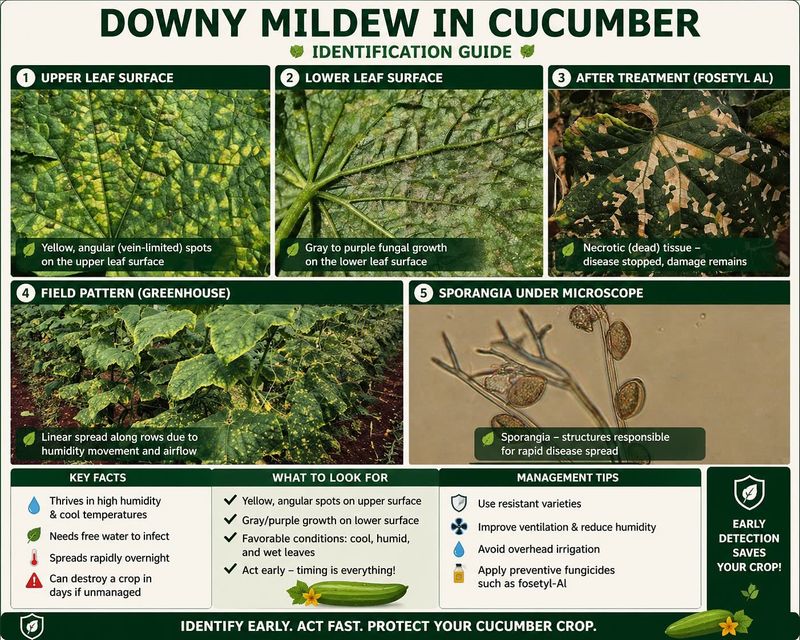
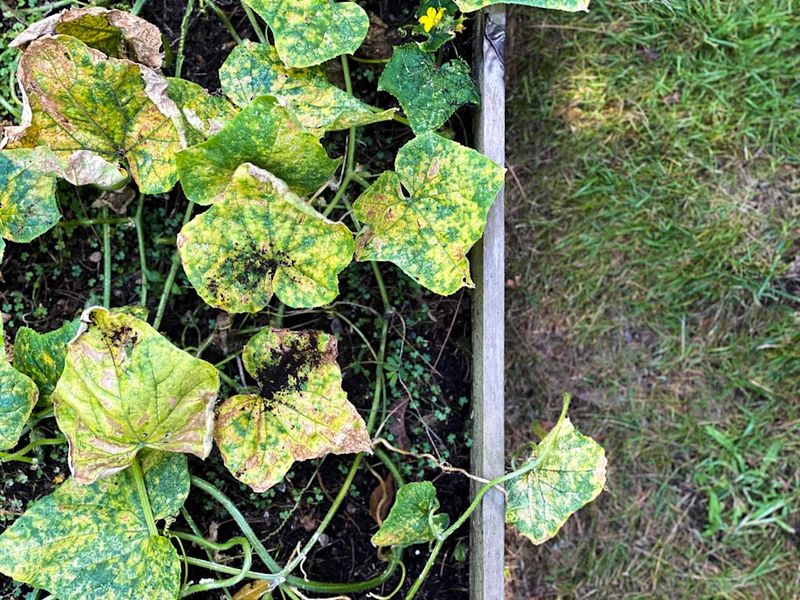
Disease produces a different set of visual signals. Angular lesions that are bounded by the leaf veins, spots with halos, rapid browning during humid weather, or a gray-purple fuzz on the underside of the leaf all point toward a foliar disease rather than a simple feeding shortage.
University of Minnesota Extension guidance on downy mildew describes those angular, vein-bounded lesions and the gray-purple sporulation underneath as key identifiers for that particular disease. White powdery growth on the leaf surface suggests powdery mildew instead.
Holes in the leaves deserve separate consideration. A hole on its own is not evidence of disease; it more often reflects insect feeding or physical damage from wind, rain, or handling.
University of Minnesota’s cucumber leaf diagnostic tool separates hole damage from disease symptoms, so look at the full picture rather than treating any single feature as definitive proof of one cause.
Check the root zone before reaching for fertilizer
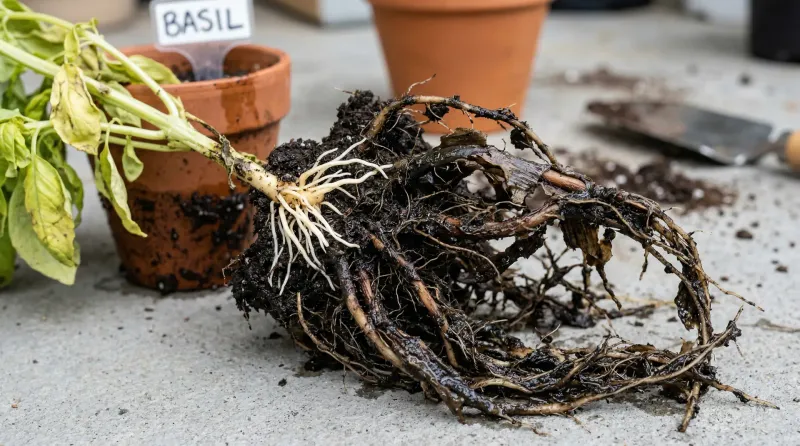
Before opening a bag of fertilizer, spend a few minutes at the base of the plant. Push a finger or a trowel a few inches into the soil and notice whether the ground stays soggy long after watering or recent rain.
Cucumbers need steady, consistent moisture to grow well, but soil that stays saturated for extended periods creates exactly the conditions that encourage root rot fungi and deprive roots of the oxygen they need to function.
Utah State Extension’s overwatering guidance explains that yellowing and wilting from waterlogged roots can look nearly identical to a nutrient shortage from above ground. If the roots are damaged or rotting, the plant cannot move water or dissolved nutrients upward regardless of what is in the soil.
Adding nitrogen fertilizer to a plant with compromised roots will not fix the problem and may make conditions worse by increasing the salt load in already stressed soil.
Utah State Extension cucumber irrigation guidance recommends consistent moisture without waterlogging, with enough time between waterings for the upper soil layer to partially dry. If your bed is draining poorly, correcting the drainage or adjusting your irrigation schedule is the first intervention, not fertilizer.
A plant with cold, wet, or rotting roots simply cannot reliably use the nutrients you apply.
Sometimes the vine is simply finishing its season
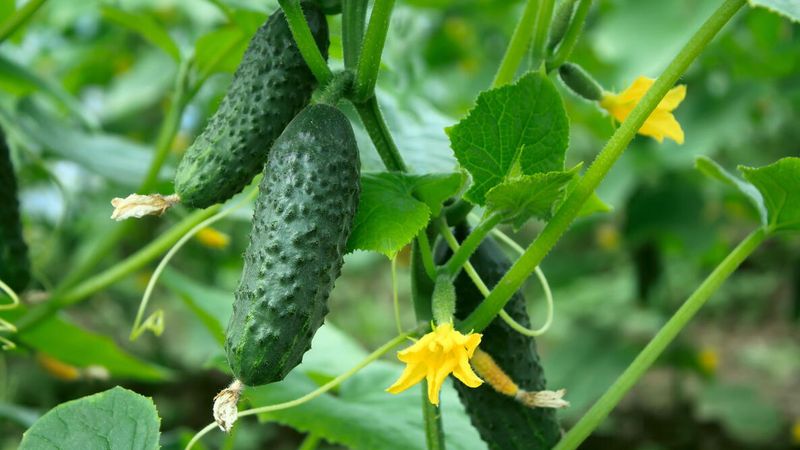
Not every case of bottom-up yellowing signals a correctable problem. Cucumber plants have a natural lifespan, and as they near the end of it, older leaves yellow and drop off while fruit production slows or stops.
Ask yourself honestly whether the vine is still setting and sizing cucumbers at a reasonable rate, or whether productivity has already dropped off and the yellowing is traveling steadily upward through most of the canopy.
UGA Extension’s fall garden planning guidance describes a cucumber that is declining late in the season as an end-of-season plant rather than one that necessarily needs more fertilizer. For Southern gardeners, that moment can arrive at different times depending on location.
A gardener in central Florida may still have warm, productive conditions well into October, while a gardener in northern Texas may see the vine wind down earlier as nights lengthen.
The calendar label “fall” does not prove cold stress or nutrient exhaustion on its own. What matters is whether actual nighttime temperatures are dropping below 50 degrees Fahrenheit, whether the soil has cooled below 60 degrees, and whether the plant is genuinely struggling or simply finishing a productive run.
If the vine has already given you a good harvest and conditions are shifting, replacing it with a suitable cool-season crop is often a smarter move than trying to force new growth out of a plant that is winding down naturally.
If nitrogen still fits, use a measured rescue
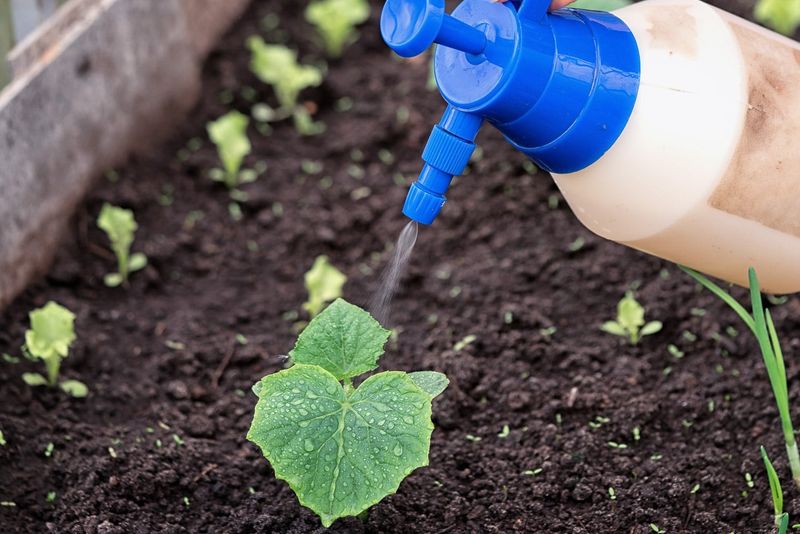
After working through the checklist, if you have confirmed that temperatures are still warm enough for root activity, the soil drains well, the leaves show fairly uniform yellowing without disease signs, growth has slowed, and the vine is still producing, then a nitrogen shortage remains a reasonable possibility. The responsible next step is a soil test rather than a guess.
University of Georgia Extension soil testing guidance explains that a soil test identifies pH and major nutrient conditions that can affect how well plants use whatever you apply.
Florida gardeners should note that UF/IFAS soil testing guidance specifically warns that home vegetable gardens should use the appropriate vegetable-garden test code rather than commercial crop codes, since recommendations differ. Texas gardeners can use Texas A&M AgriLife soil testing services for region-specific nutrient recommendations that account for local soil types and irrigation practices.
If a soil test is not practical before the vine declines further and nitrogen deficiency still seems likely based on the pattern, choose a labeled vegetable fertilizer and follow the product directions exactly. Illinois Extension fertilization guidance warns that fertilizer touching plant tissue can burn it, so apply it beside the plant rather than directly on the stem or leaves, and water it in afterward.
Fertilizer rates also depend on your soil type, any previous amendments you have added, your irrigation method, and whether the vine is still actively producing fruit. Treat this as a cautious intervention, not a guaranteed fix.
Why stronger fertilizer and quick fixes can make the diagnosis worse
Reaching for a heavy nitrogen product when you are not sure of the cause can create new problems on top of the original one. Excess nitrogen late in the season tends to push the plant toward producing more foliage rather than more fruit, which increases the plant’s water demand at a time when conditions may already be limiting root uptake.
UGA Extension’s vegetable nutrient deficiency publication connects overfertilization with increased susceptibility to certain pest and disease problems, and UGA’s home vegetable garden disease management guide reinforces that excess nitrogen can contribute to conditions that favor some foliar diseases.
Phosphorus is not a reasonable response to this symptom either. Phosphorus deficiency shows up more as stunting and sometimes purple or reddish coloration, not general lower-leaf yellowing, and cold wet soil can restrict phosphorus availability regardless of what you add.
Epsom salt is similarly unhelpful unless you have evidence of a magnesium deficiency, which produces a specific interveinal yellowing pattern rather than uniform fading. UGA Extension soil testing FAQ guidance recommends basing any amendment on test results rather than habit.
Foliar feeding is sometimes suggested as a fast fix, but it is not a reliable solution for macronutrient shortages; plants absorb only limited amounts through leaf surfaces. Most critically, no fertilizer product can reverse chilling injury, active root rot, a downy mildew infection, or the natural end of a plant’s productive life.
Applying fertilizer to a vine in any of those conditions wastes product and may delay you from making the right call about pulling the plant.
Let the whole pattern decide whether you feed
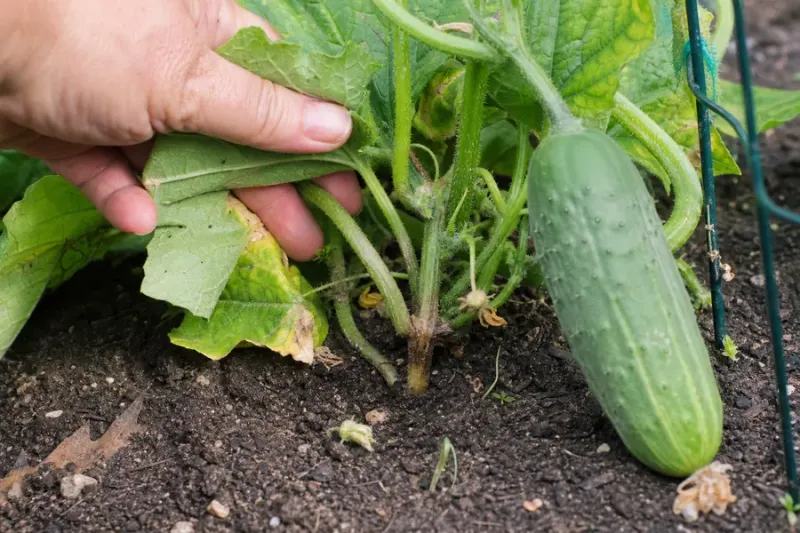
Fairly uniform lower-leaf yellowing combined with slow overall growth gives you a reasonable reason to think about nitrogen availability, but only after you have accounted for everything else. Work through the actual conditions: check your nighttime and soil temperatures against the 50-degree and 60-degree thresholds, inspect the root zone for saturation or rot, look carefully at leaf shape and edges for disease signs, and consider whether the vine is still producing or already winding down.
Penn State Extension’s plant health diagnostic guidance frames this kind of systematic inspection as the foundation of any sound treatment decision.
Southern gardeners should rely on actual temperatures and soil conditions rather than the season’s name. “Fall” in the Florida Panhandle and “fall” in Houston can mean very different things for a cucumber root zone. If the evidence points toward nitrogen shortage after ruling out cold, wet roots, disease, and end-of-season decline, use a soil-test-guided or carefully labeled fertilizer application applied beside the plant and watered in.
If the vine is finished, accept it and plan your next planting. The most useful thing a gardener can do is read the whole picture before acting, because a healthy fall garden starts with an honest assessment of what is actually in front of you.