
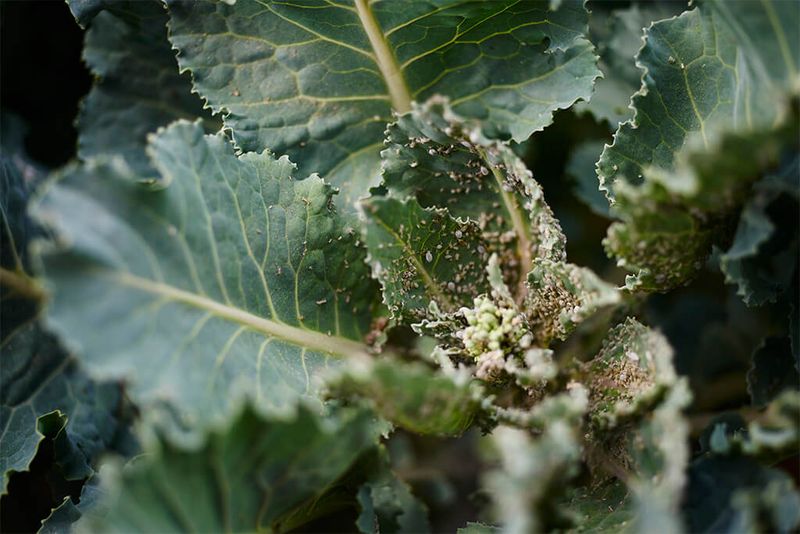
Fall kale is one of the most rewarding crops a Southern gardener can grow, but it can turn puzzling fast when leaves start curling, feel sticky to the touch, and show a strange gray coating. Those symptoms together point toward a possible aphid colony, though they are not proof of one on their own.
A careful look at the plant, not just a glance from above, is the only way to find out what is really going on and decide what, if anything, needs to be done.
Sticky, curled kale leaves may signal an aphid colony
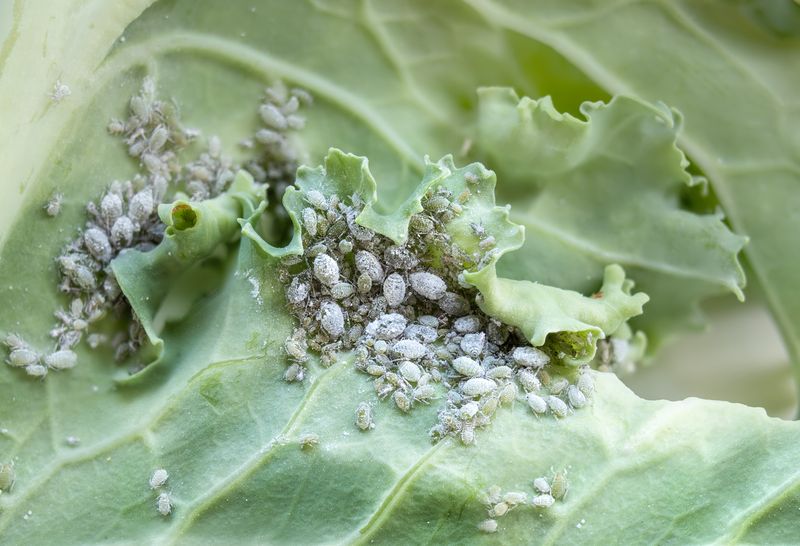
When kale leaves start curling inward, feel tacky when you brush them, and show a grayish cast, the natural first guess is that something is feeding on the plant. Aphids, especially cabbage aphids, are a strong candidate for this symptom combination, but the appearance alone does not confirm the diagnosis.
Other problems, including viruses, herbicide drift, heat stress, and unrelated pests, can produce similar-looking leaves.
Cabbage aphids (Brevicoryne brassicae) are known to cluster on kale and other brassicas, preferring protected spots like leaf undersides, folded tissue, stems, and the tender central growth. UF/IFAS research on cabbage aphids notes that heavy feeding can distort, curl, yellow, stunt, reduce the quality of, or eventually kill badly affected leaves, though established kale plants often tolerate moderate pressure without dramatic collapse.
Fall timing matters for Southern gardeners, but the relationship between cool weather and aphid pressure is not the same everywhere. In parts of Texas, the Gulf Coast, and the Southeast, fall kale planting windows and aphid-friendly conditions can overlap.
Florida’s warm climate allows aphids to reproduce year-round without the overwintering pause common in colder states. Texas A&M AgriLife’s fall vegetable guide lists kale as a frost-tolerant cool-season crop, making the pairing of this crop with fall aphid activity regionally relevant, even if pest pressure varies considerably by location and year.
Inspect the hiding places before you spray
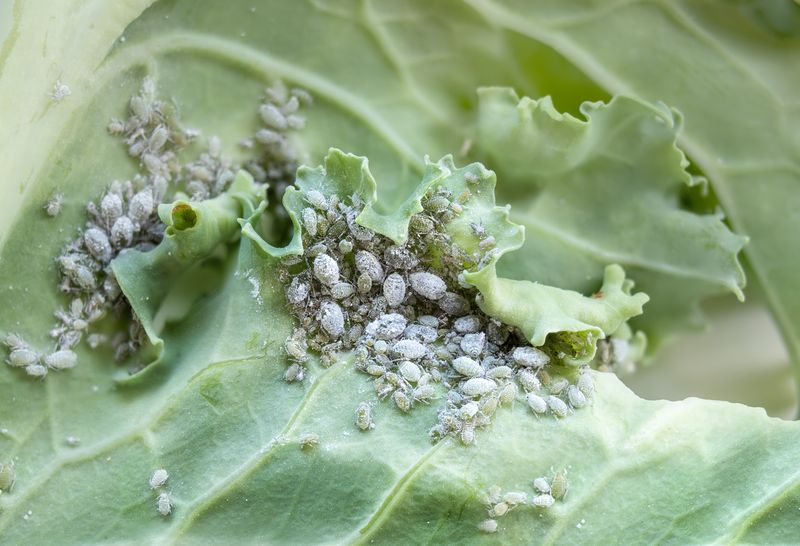
Before reaching for any product, spend a few minutes actually looking at the plant up close. Flip individual leaves and check their undersides carefully, since aphids on kale rarely sit out in the open where they are easy to spot from above.
Work through the folded or curled tissue, along the petioles, inside the leaf axils, and around the youngest central growth, because those sheltered spots are where colonies tend to concentrate.
Cabbage aphids are small, soft-bodied, and pear-shaped, with a distinctive gray-green or gray-white color that comes from a waxy coating they produce. UF/IFAS describes cabbage aphids as having this waxy, mealy appearance that sets them apart from other aphid species you might find on brassicas.
If you have a hand lens, look for a pair of small tube-like projections at the rear of the insect, called cornicles, which are a useful confirming detail but not required for a working identification.
While you are inspecting, look beyond the aphids themselves. UC IPM’s aphid guidance points out that ants moving up and down the stems are a sign worth noting, because ants often tend aphid colonies to harvest honeydew and can actively drive away the beneficial insects that would otherwise help control the population.
Also look for lady beetles, lacewing adults or larvae, and small brown, hardened aphid mummies, which indicate that parasitic wasps have already found the colony. What you see during this inspection should shape every decision that follows.
Separate aphid wax, honeydew, and dark sooty mold
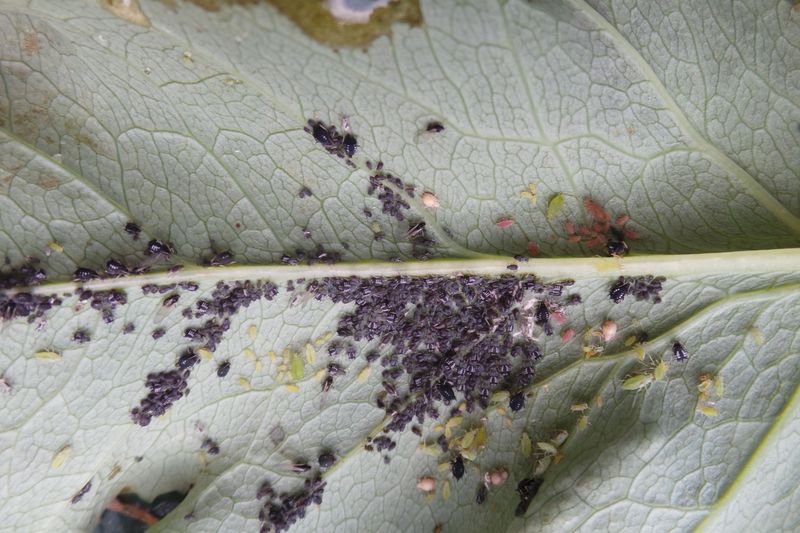
The gray and sticky appearance on kale can come from more than one source, and sorting them out changes how you respond. Honeydew is a sugary liquid waste that aphids excrete as they feed, and it is responsible for the shiny or tacky feel on the leaf surface.
University of Minnesota Extension explains that honeydew can build up on leaves below an active colony, making them sticky and giving them a shiny look that is easy to mistake for a spray residue or disease symptom.
The gray-white material you see directly on the insects is different. Utah State University Extension notes that cabbage aphids produce a waxy secretion that gives the colony a powdery or mealy appearance, which is distinct from anything growing on the leaf itself.
A dark gray to black, soot-like coating on the leaf surface is something else again: that is more consistent with sooty mold, a fungus that colonizes honeydew deposits. UC IPM’s sooty mold page explains that sooty mold does not usually infect the plant tissue directly, but a heavy coating can block light from reaching the leaf.
A gray film on kale does not by itself identify aphids, sooty mold, powdery mildew, or any other specific problem. Curling can also result from plant viruses, herbicide drift, heat or drought stress, or other pests feeding on the tissue.
Aphids can transmit certain plant viruses, but curled leaves alone do not prove a virus is present, and controlling aphids will not reverse damage that a virus has already caused.
Begin the rescue with water and selective removal
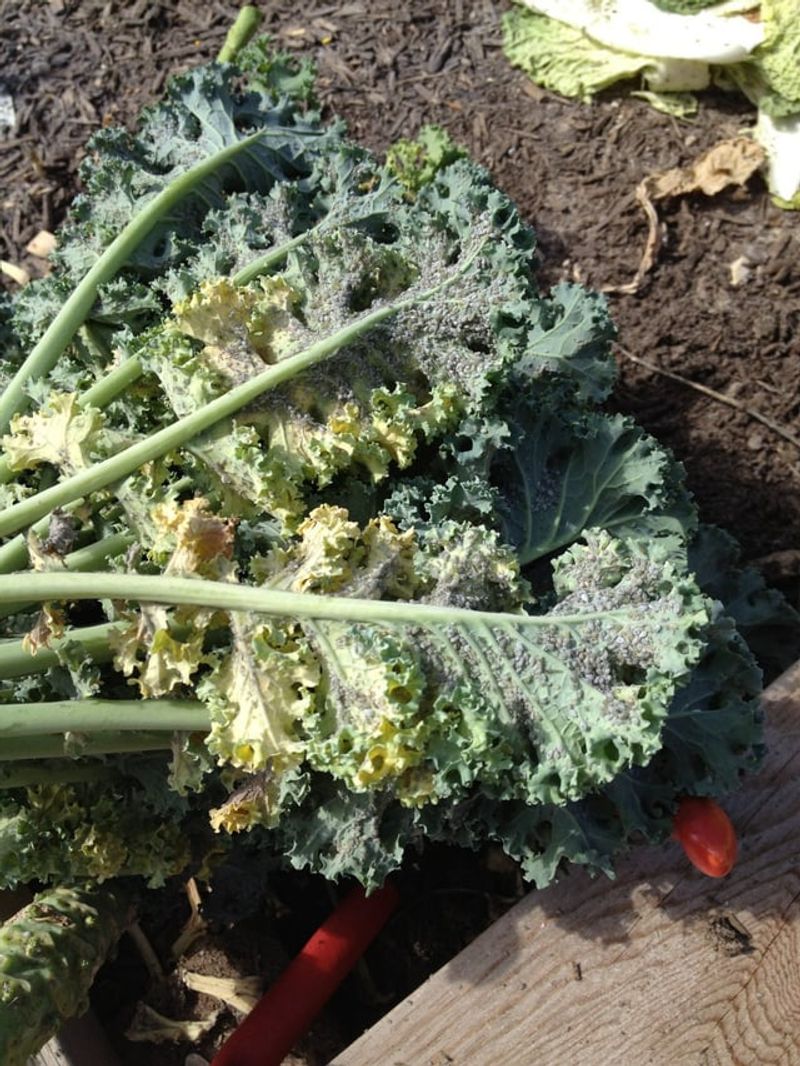
Once your inspection confirms aphids are present, the most sensible first move is also the simplest: water. A firm stream from a garden hose directed at leaf undersides and the folds of curled tissue can dislodge exposed aphids and rinse away the honeydew they leave behind.
UC IPM recommends this approach as an effective early-response measure, with the understanding that it may need to be repeated because aphids reproduce quickly and a single session rarely reaches every hidden insect.
Water has real limits here. Aphids sheltered inside tightly curled leaves or packed into leaf axils may not be reached no matter how carefully you aim.
When a leaf is so heavily curled, densely infested, or badly distorted that thorough wetting seems impossible, removing that leaf is a reasonable next step. Cut or pinch it off cleanly and place it directly into the trash rather than leaving it on the ground beside the bed, where the colony can simply walk back onto the plant.
Colorado State University Extension notes that contact treatments, including insecticidal soap, cannot reliably reach aphids protected inside curled foliage, which makes physical removal of the worst leaves a genuinely useful step rather than just a stopgap. After water and leaf removal, take stock of what you see.
Consider the size of the remaining population, how stressed the plant looks, whether new growth is distorted, and whether beneficial insects are present before deciding if further treatment is warranted.
Choose a labeled contact treatment only when needed
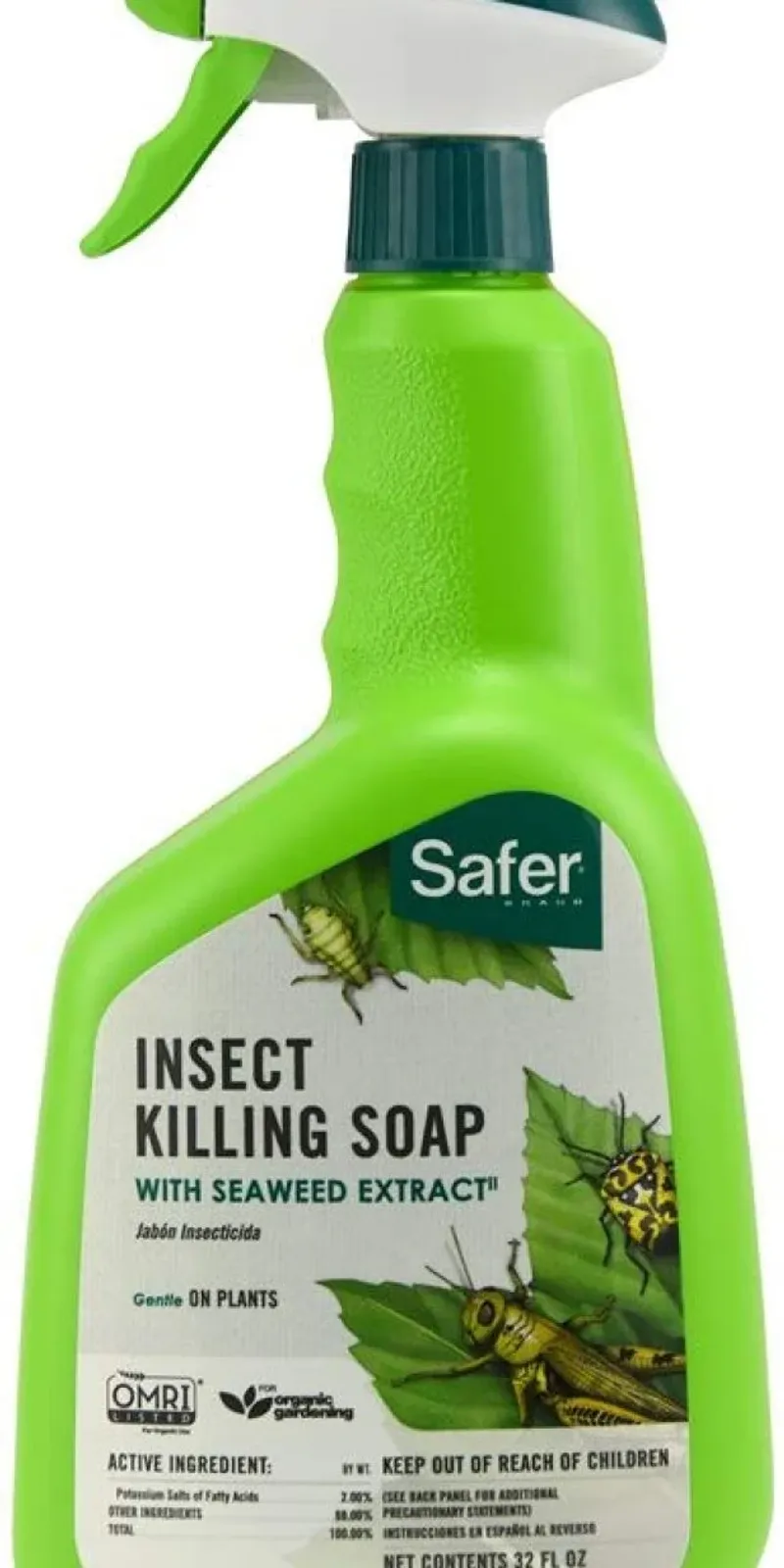
After water and leaf removal, some infestations will still look active enough to justify a product. If the colony is large, the plant is showing real stress, or harvested leaves are contaminated with aphids and honeydew, a labeled contact insecticide may be appropriate.
The key word is labeled: use only a product that specifically lists aphids on kale or leafy vegetables on its label. University of Minnesota Extension and other extension sources consistently recommend commercial insecticidal soaps and horticultural oils as reasonable options for home gardeners dealing with aphids on edibles.
These products work by direct contact with the insect, not by leaving a lasting residue on the plant. That means thorough coverage of leaf undersides, folds, petioles, and any other sheltered area is essential.
Colorado State University Extension explains that insecticidal soaps have little or no residual activity after drying, so repeat applications may be needed, but only as the label directs. Test the product on a small section of the plant first and wait a day or two to check for leaf damage before treating the whole plant.
Do not substitute household dish detergent. UGA Extension warns that dish soaps are inconsistently formulated, can injure foliage, and are not recommended as homemade pesticides.
Avoid treating plants that are heat-stressed or drought-stressed, as phytotoxicity risk increases under those conditions. Broad-spectrum insecticides should not be the default choice: UC IPM notes they can kill the predators and parasitoids that naturally suppress aphid populations, potentially making future outbreaks worse.
And if you have heard that Bt might help, UF/IFAS confirms that Bt products target susceptible caterpillars, not aphids, so they have no place in this particular rescue plan.
Preserve beneficial insects and manage ants
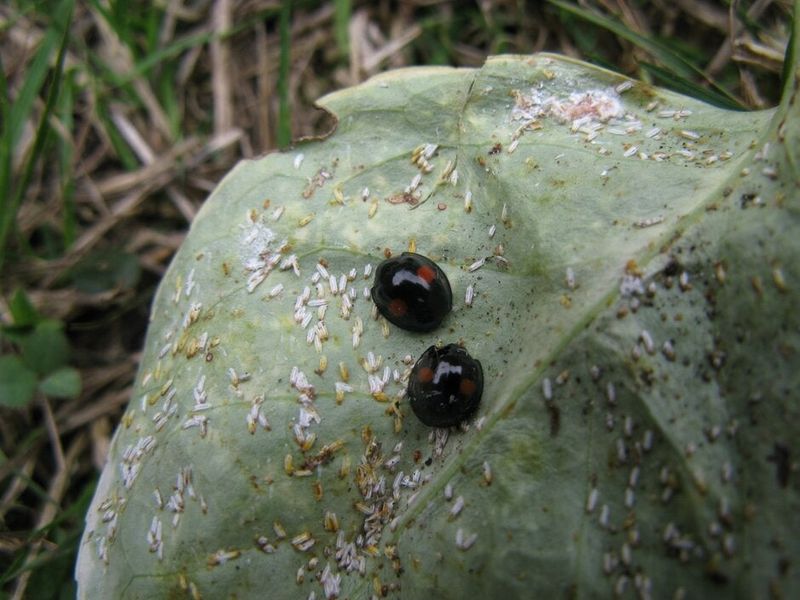
Biological control is not a guaranteed rescue, but it is a real factor worth watching before you treat. Lady beetles, lacewing larvae, syrphid fly larvae, and parasitic wasps all feed on or parasitize aphids, and a garden with a visible population of these insects is already working toward balance on its own.
UC IPM’s aphid resource describes how these natural enemies can reduce aphid pressure meaningfully when present, though they rarely eliminate a large colony overnight.
Brown, hardened, slightly swollen aphids mixed into a colony are a specific sign worth recognizing. Those are aphid mummies, the remains of insects that have been parasitized by tiny wasps.
Seeing mummies means the wasps have already found your kale and are actively working through the colony. Spraying a contact product at that point would likely kill the wasps along with the aphids, undercutting a natural control that was already in progress.
Ants complicate the picture. UF/IFAS notes that ants tend aphid colonies to collect honeydew and will actively chase away lady beetles and other predators.
If you see a steady trail of ants on the plant, managing them, by using a sticky barrier on the stem or addressing the ant colony, can give beneficial insects a better chance. The presence of natural enemies does not mean you should never treat, but it does mean the decision deserves more than a quick spray reflex.
Prevent new colonies in the next Southern fall crop
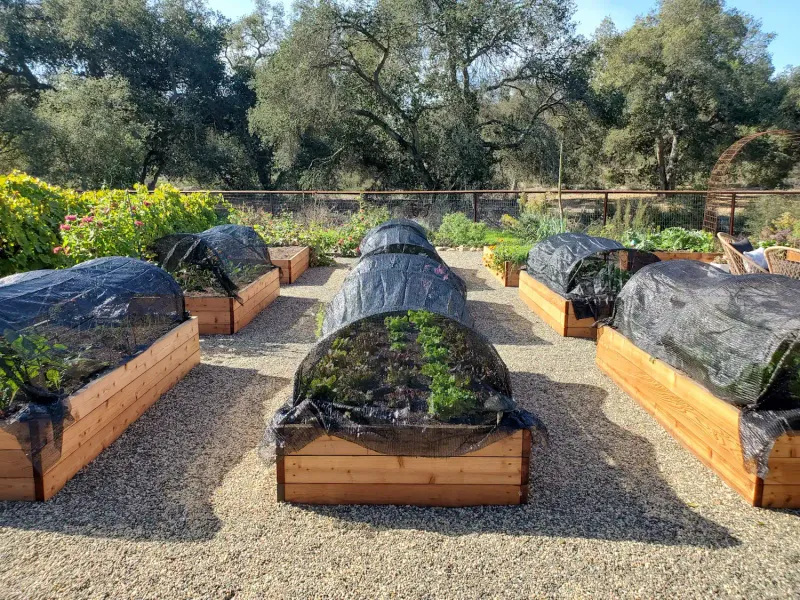
Closing out one aphid problem is a good moment to think about the next planting. The most reliable prevention starts before transplants ever go into the ground.
Check every transplant carefully before you plant it, looking at the undersides of leaves and the base of stems for aphids or eggs that could seed a new colony in your bed. Starting with clean plants is far easier than managing an infestation that arrived with the transplant.
Remove old brassica debris and any brassica-family weeds near the garden after harvest, since these can harbor overwintering aphid populations or serve as a nearby source of reinfestation. Texas A&M AgriLife’s fall gardening guide emphasizes clean bed preparation as part of a productive fall vegetable season.
Row covers and reflective mulch can reduce aphid colonization when applied before the insects arrive, but neither will solve a problem already developing under the cover or beneath the mulch. UF/IFAS confirms that these tools are preventive barriers, not remedies for existing infestations.
Fertilizer management also plays a quiet role. Utah State University Extension notes that excess nitrogen encourages the lush, succulent growth that aphids tend to prefer, so avoiding heavy nitrogen applications near transplanting time is a reasonable precaution.
Timing matters regionally: North Texas, the Gulf Coast, Central Texas, North Florida, and South Florida all have different fall planting windows and pest pressure patterns, so check local extension resources for the planting dates and conditions that apply to your specific area.
Check and wash the harvest carefully
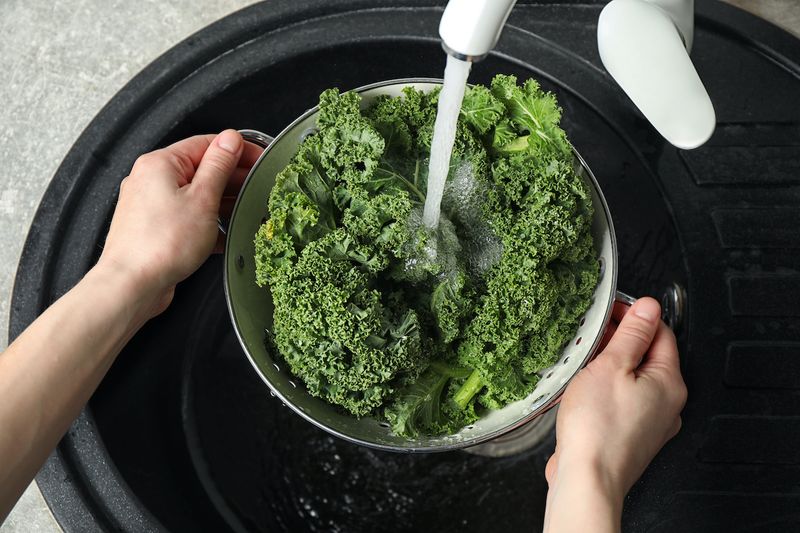
Before pulling leaves for a meal, look them over first. A quick inspection at harvest lets you spot any remaining aphid activity, assess whether the plant is recovering, and decide whether the kale is in good enough shape to eat.
Leaves with heavy contamination or severe distortion can be composted or discarded rather than brought inside.
For leaves that look good, University of Minnesota Extension recommends washing fresh produce thoroughly under cool running water, working through each leaf to rinse away any residue. Do not add soap, dish detergent, or bleach to the wash water; those are not safe for produce and are not needed for an effective rinse.
If you applied a pesticide during the rescue process, the product label controls when the kale may be harvested. Every registered pesticide label includes a preharvest interval, and that interval is a legal requirement, not a suggestion.
Follow it exactly. The broader lesson from this whole process is that symptoms deserve investigation before treatment, water and selective removal are worth trying first, and natural enemies are worth protecting throughout.
Kale is a resilient crop, and a measured response usually gives it the best chance to recover on its own terms.