
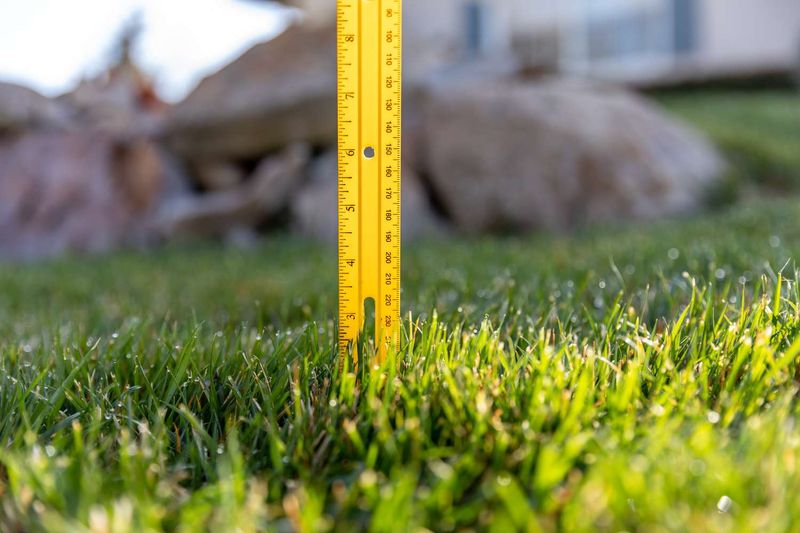
Noticing bare spots and thin patches showing up in your lawn as summer winds down is frustrating, especially when the grass looked decent just weeks ago. One common culprit is mowing too short, which can strip away the leaf area warm-season grasses need to stay dense and healthy.
But short mowing is not the only cause, and there is no single magic height that fixes every Southern lawn. Knowing your grass type and adjusting your mower to match it is what actually makes a difference.
Short mowing can contribute to a thin, stressed lawn
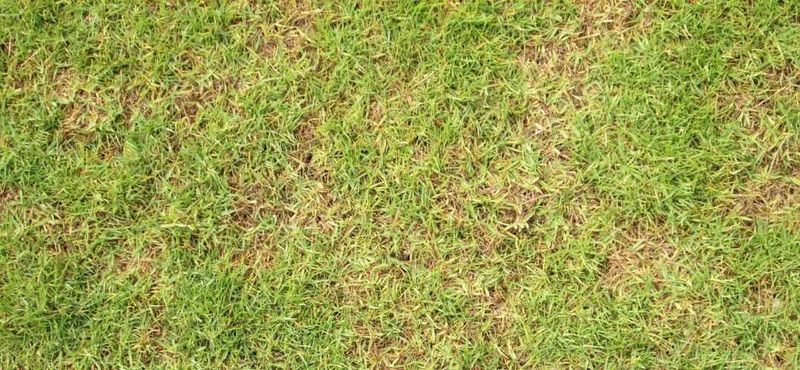
Every time a mower removes too much leaf tissue, the grass loses some of its ability to capture sunlight and produce the energy it needs to stay thick and healthy. Warm-season grasses rely on their green leaf blades for photosynthesis, and when those blades are repeatedly cut back too far, the plant pulls from stored carbohydrate reserves just to recover.
Over time, that drain can weaken root development and leave the turf less capable of handling heat, drought, or pest pressure.
This connection between cutting height and plant health is well established. UC IPM turfgrass guidance notes that removing too much leaf area at once stresses the plant and can slow recovery, particularly when the grass is already dealing with environmental pressure.
The effect is especially relevant in fall, when warm-season grasses like St. Augustinegrass, bermudagrass, and zoysiagrass naturally begin to slow their growth as temperatures drop.
As growth slows, the grass has less capacity to bounce back from a severe cut. Keeping adequate leaf area during that transition helps the plant maintain energy reserves heading into cooler weather.
That said, short mowing is one possible contributing factor among many, not a guaranteed explanation for every thin or patchy lawn. Shade, irrigation habits, soil conditions, pests, and disease can all produce similar symptoms, so mowing height is a useful starting point, not an automatic diagnosis.
Match the mower height to the grass under it
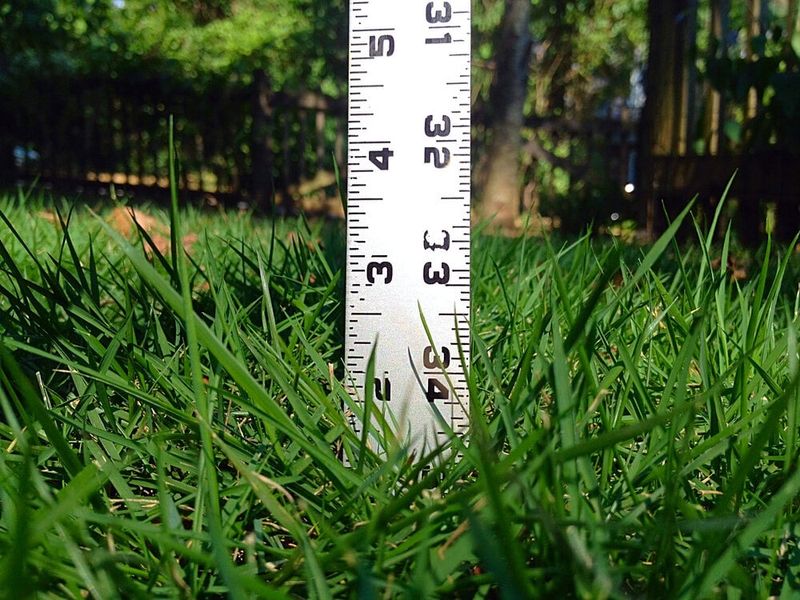
The single most important step in choosing a fall mowing height is knowing which grass is growing in your yard. Southern lawns are not all the same, and the recommended cutting range for one species can be completely wrong for another.
Setting a bermudagrass lawn to four inches, for example, would produce a thick mat of thatch and uneven growth rather than healthy turf.
For standard St. Augustinegrass cultivars, University of Florida IFAS guidance generally recommends a range of about 3.5 to 4 inches. Dwarf cultivars such as Seville or Captiva are typically maintained closer to 2 to 2.5 inches.
Bermudagrass home lawns managed with a standard rotary mower generally do well at 1 to 2 inches, though highly maintained turf cut with a reel mower can go shorter. Zoysiagrass typically falls around 2 to 2.5 inches, though the right target can shift with cultivar.
Bahiagrass is most often maintained at 3 to 4 inches, and centipedegrass generally performs best at about 1.5 to 2 inches.
Cultivar differences, mower type, and local conditions all affect where within that range you should land. A taller fall setting does not mean raising the deck as high as it will go.
Texas A&M AgriLife Extension recommends targeting the upper portion of the established range for your specific grass as growth slows, not a universal number that applies to every lawn on the block.
Use local fall conditions to choose the taller end
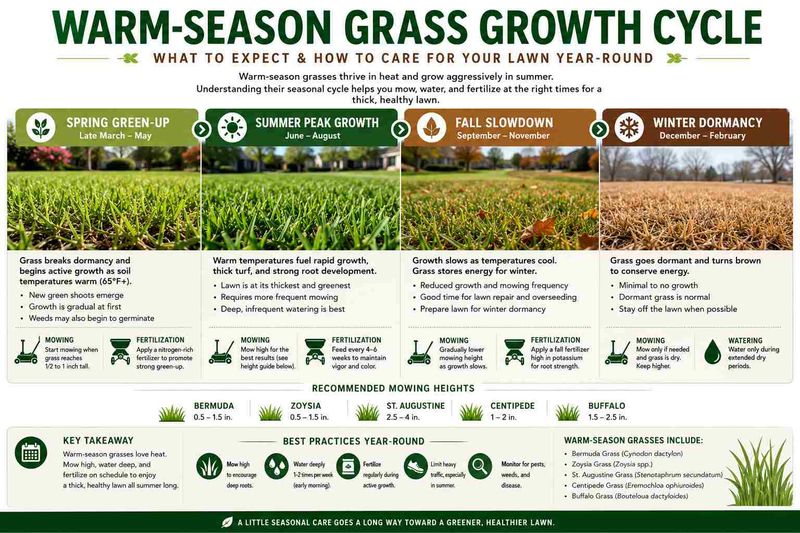
Cooler fall temperatures generally slow warm-season grass growth and can push turf toward dormancy, which is exactly why retaining more leaf area during that transition matters. A grass plant heading into a slower growth period benefits from having enough blade surface to support photosynthesis and maintain energy reserves, rather than being cut short just before conditions become less forgiving.
That said, fall does not mean the same thing across the Southern states. University of Florida IFAS notes that North and Central Florida lawns may experience a more pronounced slowdown or even some dormancy as temperatures drop, while South Florida lawns often continue growing through what the rest of the country calls fall, though typically at a reduced pace.
The timing and depth of any slowdown depends on the grass species, the local weather pattern, and how far south you are.
Texas presents similar regional variation. Texas A&M AgriLife’s bermudagrass calendar reflects that dormancy timing differs by location and species, so homeowners in the southern part of the state should not assume their lawn follows the same schedule as one in the Dallas area.
Rather than guessing at a universal fall transition date, check with your local cooperative extension office for guidance matched to your county, grass type, and typical fall weather pattern.
Follow the one-third rule instead of scalping
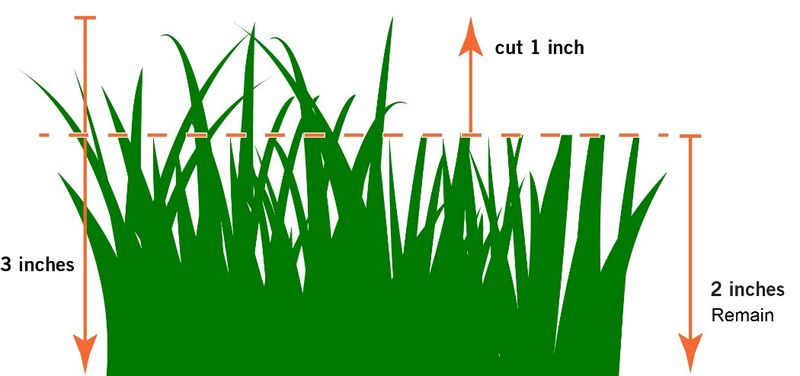
Knowing the right target height is only half the job. The other half is understanding when to mow and how much to remove at each pass.
The one-third rule is the practical guide that connects those two things: remove no more than one-third of the leaf blade at any single mowing. If your target is three inches, that means cutting when the grass reaches about four and a half inches, not waiting until it is six or seven inches tall and then shearing it back in one pass.
UC IPM’s turfgrass mowing guidance explains that removing more than one-third of the blade at once forces the plant to redirect energy from root maintenance to leaf recovery, which compounds the stress of an already short cut. Scalping an overgrown lawn in a single session can set the turf back considerably, especially going into fall when recovery is slower.
One misconception worth clearing up: cutting short does not automatically mean mowing less often. Iowa State University Extension points out that lower mowing heights leave less room for growth before the next safe cut, which can actually require more frequent mowing to stay within the one-third limit.
If your lawn has gotten away from you and grown well above its target, raise the mower deck and bring the height down gradually across two or three sessions rather than trying to fix it all at once.
Protect the cut in shade and stressful weather
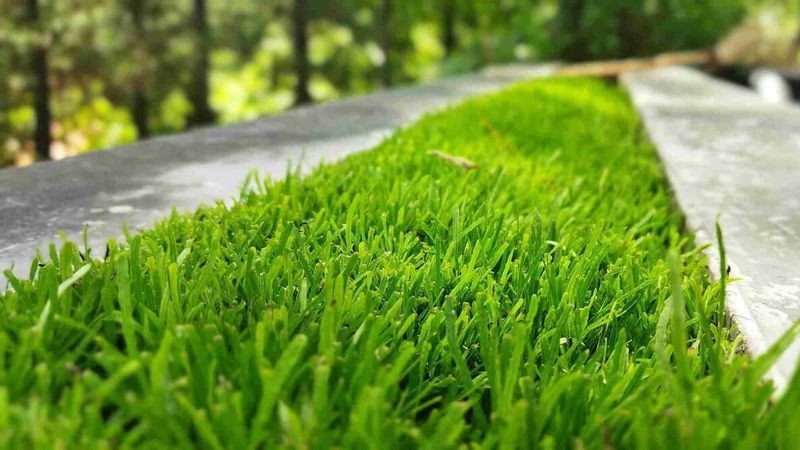
Shaded turf consistently benefits from being kept at the tallest end of the recommended range for its species. Under a tree canopy or along a fence line where sunlight is limited, every square inch of leaf surface matters for capturing enough light to keep the plant alive and reasonably dense.
Penn State Extension’s guidance on shaded turf reinforces that taller mowing in low-light areas helps compensate for reduced photosynthetic opportunity, though it cannot make up for truly inadequate light.
St. Augustinegrass is generally the most shade-tolerant warm-season option for Southern lawns, but even it has limits. IFAS guidance on St. Augustinegrass recommends keeping shaded areas at the higher end of the mowing range and notes that heavily shaded turf may thin regardless of mowing height if the light level drops below what the grass can sustain.
Raising the mower is a useful adjustment; it is not a substitute for adequate sunlight.
Cut quality also matters more than many homeowners realize. A dull mower blade tears rather than slices the grass, leaving ragged edges that lose moisture and invite stress.
Texas A&M’s St. Augustinegrass management guide recommends keeping blades sharp and avoiding mowing wet grass when possible, since wet conditions can cause clumping, interfere with even cutting, and may contribute to the spread of some lawn diseases. When drought stress is visible – look for a dull bluish-gray cast or footprints that stay visible – postpone mowing until the turf has had a chance to recover rather than following a fixed cosmetic schedule.
Check other causes before blaming the mower
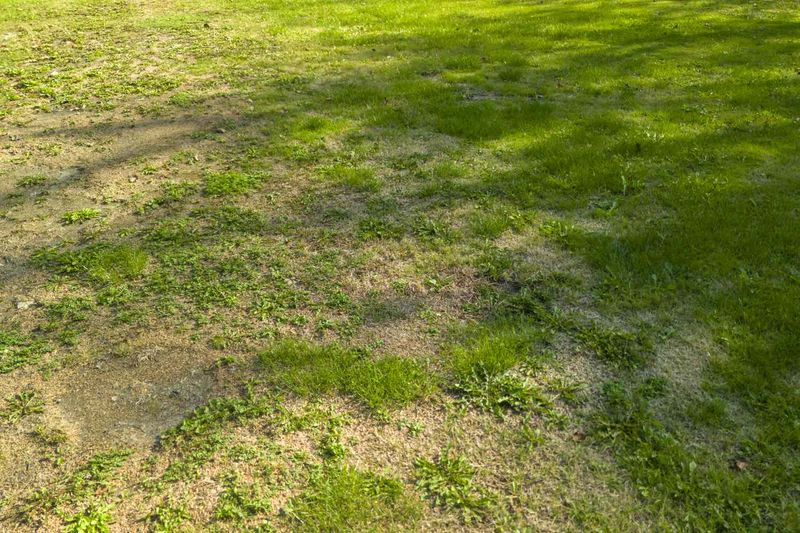
Mowing height is a reasonable place to start when a lawn looks thin or patchy, but a mower adjustment will not fix every problem. Many conditions produce bare or sparse areas that look similar to mowing stress but have completely different causes.
University of Maryland Extension’s lawn diagnostic guide lists shade, drought, overwatering, poor drainage, soil compaction, insect damage, disease, dog urine, traffic wear, chemical injury, and simply the wrong grass species for the site as common explanations for thin or patchy turf.
Disease is one area where the relationship with mowing height is real but limited. Low mowing can increase a lawn’s vulnerability to certain fungal problems, including large patch, which affects warm-season grasses and is favored by a combination of low cutting heights, excessive moisture, and heavy nitrogen.
NC State Extension’s large patch resource makes clear that raising the mower height is a useful preventive step, but it will not eliminate an established infection. Correcting the underlying drainage or irrigation problem is what actually addresses the disease environment.
Florida lawns can also develop damage from chinch bugs, tropical sod webworms, and fungal diseases that produce thinning and ragged patches resembling mowing stress. Inspect suspicious areas closely before assuming the mower is responsible.
Pull back the grass at the edge of a patch and look for insects, fungal growth, or soil problems. IFAS fall lawn care guidance also reminds homeowners that warm-season grasses can lose color and slow visibly as temperatures drop without being dead or permanently damaged.
Brown fall turf is not automatically a lawn in crisis, and UMD’s non-pest lawn problem resource is a useful starting point for ruling out environmental and cultural causes before reaching for a treatment.
Make a species-matched fall adjustment
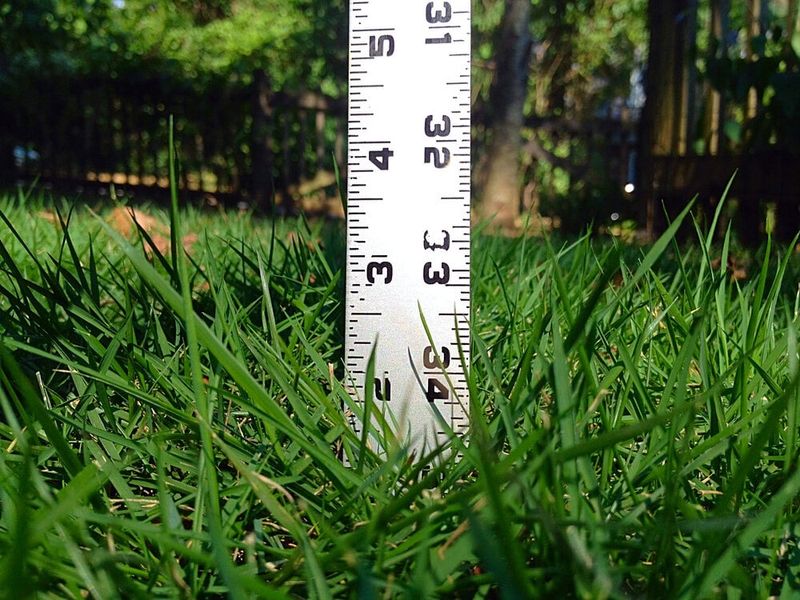
Putting this into practice starts with a simple identification step: know which grass is in your yard, then find its recommended mowing range from a university extension source for your state. From there, move the mower deck toward the upper portion of that range as local growth slows in fall.
For standard St. Augustinegrass, that means targeting around 3.5 to 4 inches. Bermudagrass home lawns generally land between 1 and 2 inches.
Zoysiagrass typically sits around 2 to 2.5 inches, bahiagrass at 3 to 4 inches, and centipedegrass at about 1.5 to 2 inches. Texas A&M AgriLife mowing recommendations and UF IFAS turfgrass guidance both support using the taller end of the species range as a fall target rather than a single universal setting.
Each time you mow, stay within the one-third removal limit. If a patch stays thin or bare despite the height adjustment, investigate it separately for shade, drainage, pests, or disease rather than continuing to raise the deck.
After mowing, clear clippings from driveways, sidewalks, and streets to reduce runoff. Keep blades sharp, wear sturdy shoes, clear debris before starting, and keep children away from the mowing area – CPSC walk-behind mower safety guidance covers the basics worth reviewing each season.
A well-matched mowing height does not transform a lawn overnight, but it removes one common source of stress at exactly the time of year when warm-season turf can least afford it.