
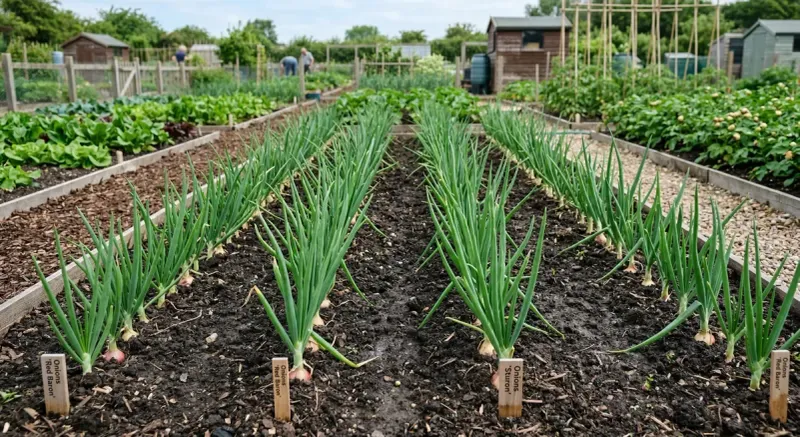
Planting fall onion sets and watching those green tops shoot up feels like a win, but digging underneath can reveal a frustrating surprise: tiny bulbs that never sized up. Crowding is one real reason this happens, though it is rarely the only one.
Spacing, cultivar choice, day length, moisture, and timing all play a part, and understanding which factor is holding your crop back is the first step to fixing it.
Crowding may explain green tops and undersized bulbs
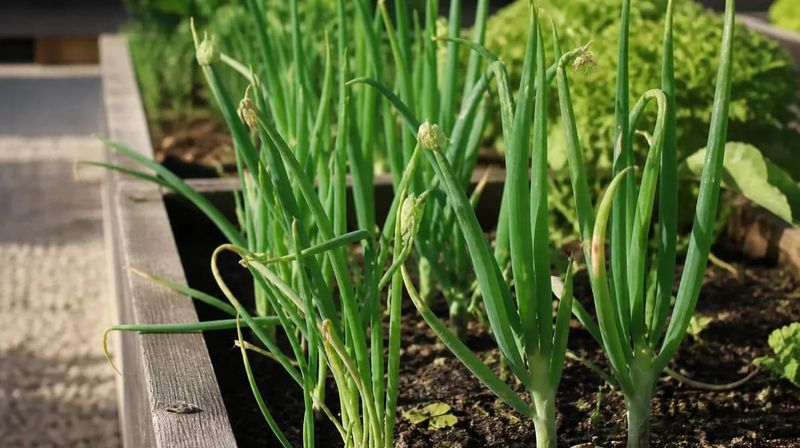
Vigorous green tops and disappointing bulbs can exist on the same plant at the same time. When onion sets are planted close together, the foliage above ground may look perfectly healthy while the bulbs below compete for the same patch of soil, moisture, and nutrients.
That competition can limit how large each individual bulb grows, even when the plant appears to be thriving.
Bulb onions generally need more room than onions grown purely for their greens. NC State Extension’s bulb onion guidance confirms that both crowding and water stress can reduce bulb size, while University of Maryland Extension recommends thinning to about 4 inches apart for moderate-size bulbs and up to 8 inches for large bulbs.
Those numbers make clear that bulb onions ask for considerably more elbow room than a standard green-onion planting.
That said, crowding is the first condition worth inspecting, not a guaranteed verdict. UGA’s onion production guide points out that day length, cultivar suitability, water management, and overall crop care each shape bulb development independently.
Small bulbs beneath healthy tops can also result from a mismatched cultivar, insufficient early leaf growth, drought stress, weed competition, nutrient imbalance, disease pressure, or premature bolting. Spacing is worth correcting, but a full diagnosis means checking all these factors before drawing conclusions.
Match the spacing to the harvest you want
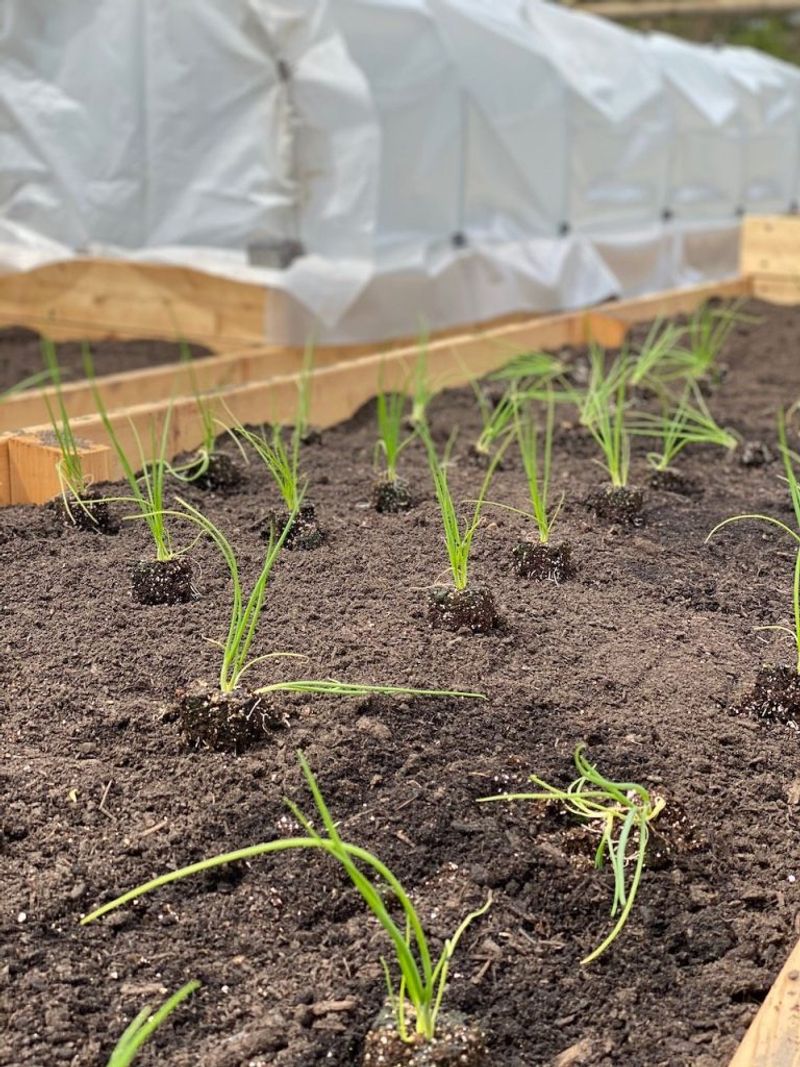
How you space your onion sets should depend entirely on what you plan to pull out of the ground. Sets planted roughly 1 to 2 inches apart work fine if green onions are the goal, because you are harvesting the whole plant before the bulb ever needs to enlarge.
Shift that goal to a full-size dry bulb, and the math changes completely.
For small to moderate bulbs, a practical working range is about 3 to 4 inches between plants in the row. When larger bulbs are the target, stretching that spacing to 4 to 6 inches gives each plant enough room to develop.
Mississippi State Extension recommends 4 to 6 inches between sets or transplants for bulb onions, while Texas A&M AgriLife Extension uses 3 inches as its standard for home-garden sets or transplants. The 3-to-6-inch range presented here is a synthesis across multiple Southern Extension sources, not a single universal rule.
Tighter spacing is not always wrong. A University of Georgia spacing study found that closer spacing can increase the total number of onions harvested per area, though individual bulbs tend to be smaller.
UGA’s home-gardening guide also distinguishes between plantings managed for green harvest and those intended to run through to mature bulbs. The key is deciding before you plant which harvest you are working toward, then choosing the spacing that matches that goal.
Treat an established crowded row as a judgment call
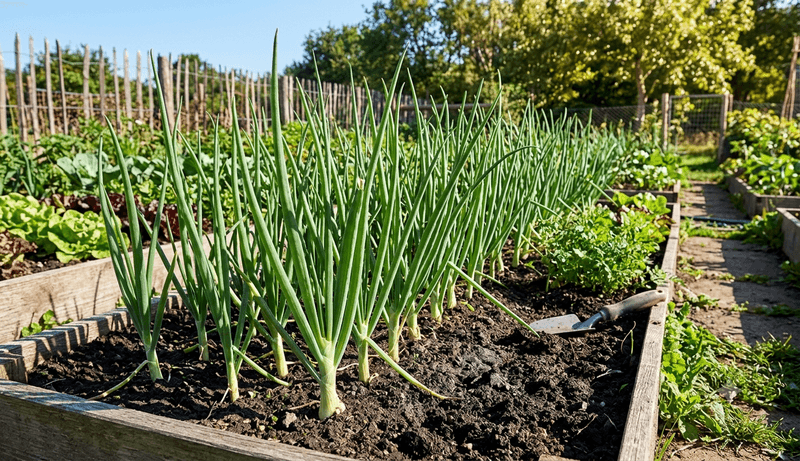
Standing over a crowded row of onions that are already in the ground calls for a realistic assessment, not an automatic fix. Start by measuring the actual space between plants.
If sets are packed closer than an inch or two and the goal was always full-size bulbs, the competition is real and worth addressing. If the plants already have visible bulb swelling at the base, the window for a meaningful spacing correction may have already narrowed.
Thinning an established crowded row is an option when competition is severe, but pulling plants or transplanting them once they have rooted in carries its own risks. Texas A&M AgriLife Extension notes that onions have shallow roots, which makes them sensitive to soil disturbance.
Root damage during thinning can add stress to plants that are already working to build a bulb. NC State’s bulb onion guidance also makes clear that multiple factors, not just spacing, determine final bulb size, so thinning alone is not a guaranteed rescue.
Mississippi State Extension and University of Maryland Extension both treat proper in-row spacing as a planting-time decision rather than a mid-season repair. If the row is already established and bulbing has begun, the most dependable takeaway is to harvest what you have, eat the thinnings as green onions, and apply the correct spacing to the next planting.
Getting the spacing right before the set goes in the ground is far more reliable than trying to fix it afterward.
Confirm the set type, depth, and regional timing
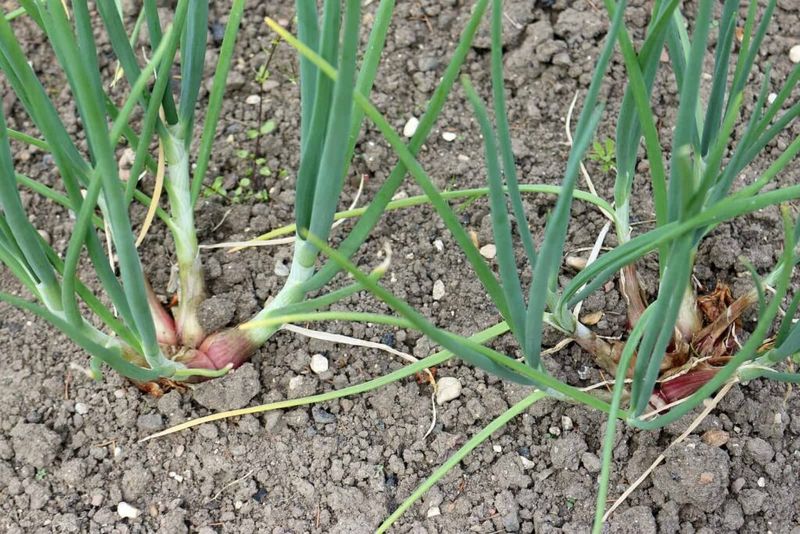
Not everything sold as a fall onion set is a standard bulb onion. Multiplier onions, shallots, Egyptian walking onions, and green-onion sets are all commonly planted in fall across the South, and they behave very differently from ordinary dry-bulb onion sets.
University of Maryland Extension gives separate fall-planting guidance for multiplier onions and shallots, treating them as distinct from standard bulb-onion sets. Applying bulb-onion spacing advice to a multiplier or shallot planting may not produce the expected result.
Planting depth is another area where guidance varies more than gardeners often realize. Texas A&M AgriLife Extension recommends planting sets or transplants about three-quarters of an inch deep and cautions against placing transplants deeper than 1 inch.
Florida’s vegetable production handbook and the Southeast vegetable guide list different depth ranges for sets depending on the production system. Burying sets deeply by default is not advisable; follow the recommendation that matches your specific planting material.
Fall planting windows also vary considerably across the South. Florida’s handbook lists seeded onions for roughly mid-September through mid-November in North Florida and October in Central and South Florida, with transplanted onions running mainly from November through January in the north and December through January farther south.
Texas, Mississippi, Georgia, and the Carolinas each have their own windows shaped by local winters, cultivar, and whether the crop starts from seed, sets, or transplants. Utah State Extension also notes that large sets are more prone to bolting, particularly when planted early, which is a relevant caution for Southern gardeners shopping for fall sets of any size.
Day length helps determine when bulbing begins
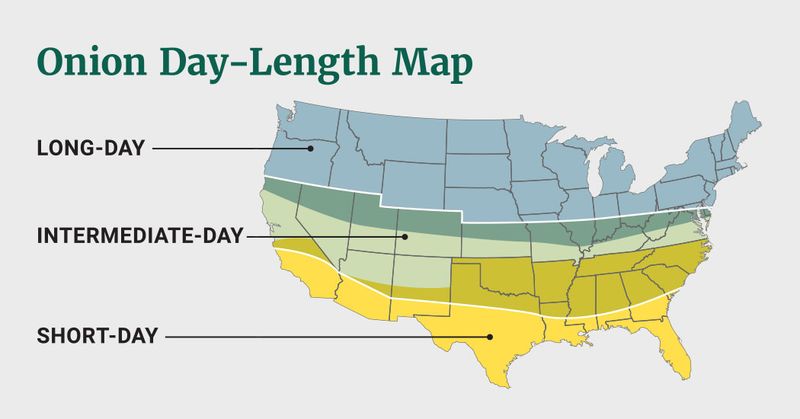
Onions do not bulb on a fixed schedule after planting. Instead, each variety responds to the number of daylight hours it receives, and bulbing begins once that threshold is reached.
Short-day varieties start forming bulbs when days reach roughly 11 to 12 hours; intermediate-day types need around 12 to 13 hours; long-day varieties require 14 to 16 hours. Texas A&M AgriLife Extension lays out these three classes clearly, and UGA’s onion production guide identifies all three day-length classes as relevant to Southeast production decisions.
Southern gardeners generally need short-day or suitable intermediate-day varieties, depending on their specific location and planting window. A long-day variety planted in Florida or Texas in fall may push out perfectly healthy foliage all winter and still fail to bulb properly because the days never get long enough to trigger that transition.
The green tops are real and healthy, but they are not proof that the cultivar is a good fit for the season.
NC State’s bulb onion publication reinforces that day length helps determine when bulbing begins, but day length is not the only variable. A correctly matched cultivar still needs adequate leaf development, moisture, nutrition, and freedom from stress to convert that bulbing signal into a full-size onion.
Gardeners who are unsure whether their variety suits their fall planting window should check with local Extension offices or seed suppliers who specialize in Southern-adapted cultivars before buying sets for the next season.
Check moisture, weeds, and early leaf growth
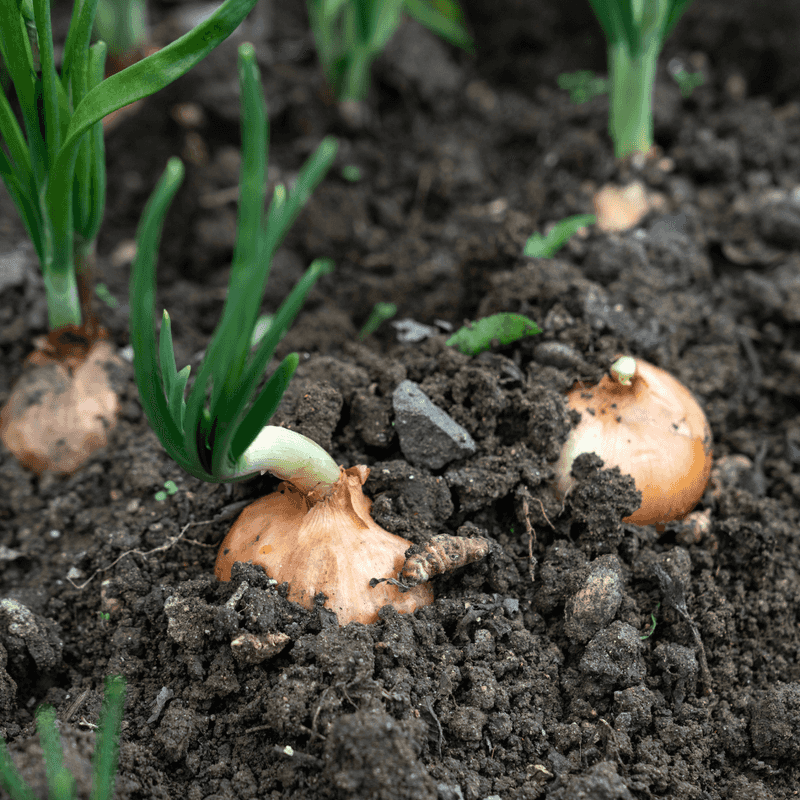
Beyond spacing and cultivar, three practical conditions shape how well a bulb develops: soil moisture, weed pressure, and the number of leaves a plant builds before bulbing begins. Each one is worth checking if the tops look fine but the bulbs are staying small.
Onions have shallow root systems, which makes them more vulnerable to uneven watering than many other vegetables. NC State Extension’s bulb onion guidance states that both under-irrigation and over-irrigation can reduce bulb size, and University of Maryland Extension connects bulb size directly to water supplied during the growing season.
Consistent moisture without saturation is the target. Letting the soil dry out repeatedly during the bulbing period, or keeping it waterlogged, can each limit what the plant produces.
Weed competition is a quieter problem but a real one. NC State’s weed management guidance for onions describes onions as poor competitors because of their slow growth, shallow roots, and sparse canopy.
The first several weeks after emergence or transplanting are especially critical for keeping weeds out. A green onion top can look healthy even while nearby weeds are quietly pulling water and nutrients away from developing bulbs.
Leaf count matters more than most gardeners realize. Texas A&M AgriLife Extension explains that each leaf a plant produces contributes one ring to the developing bulb, so a plant that begins bulbing before it has built enough foliage will simply run out of material for a large onion.
On fertilization, NC State recommends reducing or stopping nitrogen applications once bulbing begins. Late or heavy nitrogen can push excessive leafy growth, delay maturity, or complicate curing without reliably enlarging the bulb.
Soil testing and local Extension fertilization recommendations are a safer guide than adding nutrients based on appearance alone.
Use bolting and bulb symptoms to refine the diagnosis
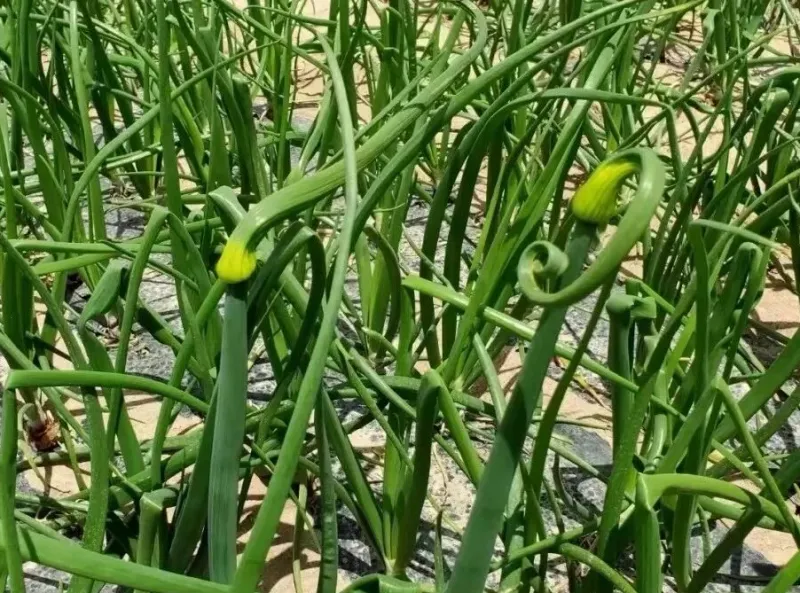
A green top tells you the plant is alive and growing. It does not tell you whether the bulb beneath is developing normally, whether the crop has bolted, or whether some other problem is quietly limiting the harvest.
Sorting out which issue is actually present requires looking at the whole plant, not just what is visible above ground.
Bolting is one of the more common reasons onions end up with small bulbs and thick, tough necks. NC State Extension specifically warns that premature bolting produces small bulbs with thick necks that do not cure well.
A flower stalk emerging from the center of the plant is the clearest sign. Utah State Extension notes that large sets are particularly prone to bolting, especially when planted early, which is worth keeping in mind when selecting fall sets.
Disease, nutrient imbalance, unsuitable timing, and cultivar mismatch can all produce symptoms that look similar to crowding at a glance. Mississippi State Extension specifically warns against bending onion tops down as a routine way to hurry maturity, noting that doing so can reduce bulb size and raise the risk of neck rot.
Let tops fall naturally. The Southeast vegetable production guide reinforces that timing, cultivar selection, and management all work together to determine whether a fall onion planting reaches its potential.
A practical action plan for the next season: confirm that your onion type and day-length class match your region, use harvest-appropriate spacing from the moment you plant, maintain consistent moisture and early weed control, and follow local Extension guidance on timing and fertilization. The gardener who gets those fundamentals right before the set goes in the ground will have far less diagnosing to do come spring.