
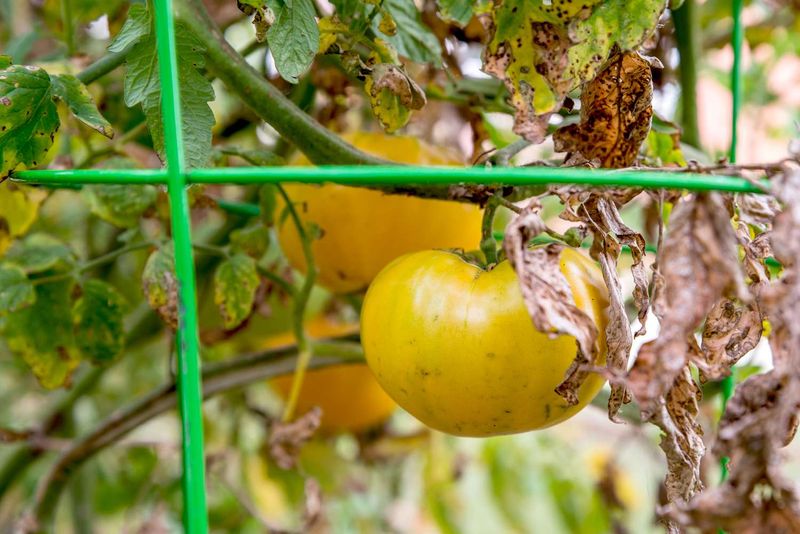
Something feels off when your tomato plant looks absolutely thriving but hands you a handful of small, soft, disappointing fruit. That lush, dark-green growth is not a sign that everything is working – it can actually be a clue that something is out of balance.
Before you reach for another bag of fertilizer, a quick inspection of what your plant has already received, plus a look at recent temperatures and soil moisture, can save you from making the problem worse.
Lush foliage points to a question, not a diagnosis
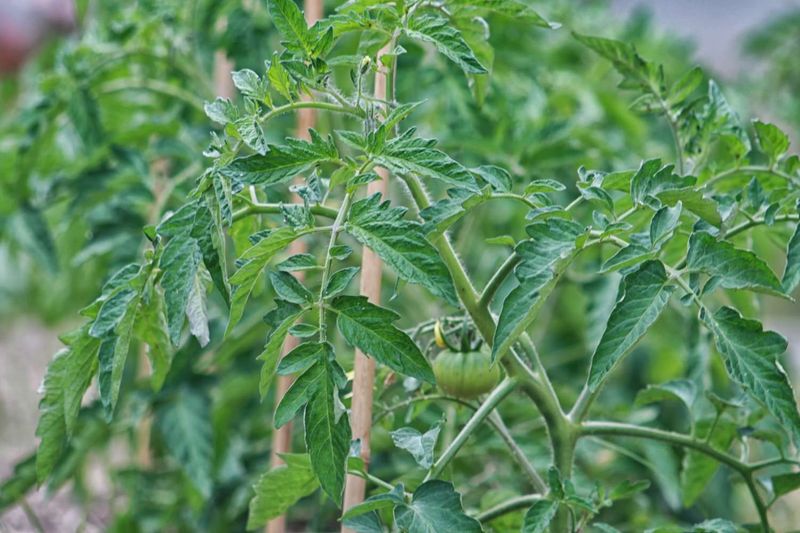
A tomato plant that pushes out thick, dark-green leaves while producing few flowers or undersized fruit is sending a signal worth reading carefully. The pattern is recognizable: vigorous stems, abundant foliage, and a frustrating shortage of fruit.
Repeated or excessive nitrogen applications can drive exactly this kind of vegetative surge, and University of Minnesota Extension guidance on home tomato growing specifically warns that too much nitrogen promotes lush growth at the expense of flowering and fruiting.
That said, foliage alone cannot tell you the whole story. Utah State University Extension notes that poor fruit set has multiple possible causes, and nitrogen is only one of them.
Daytime heat above the upper 80s, nights that are too warm or too cool, drought stress, uneven irrigation, low light, inadequate pollination, disease pressure, pest damage, and cultivar characteristics can all produce overlapping symptoms.
Rushing to add more fertilizer without checking those other factors can deepen an existing imbalance rather than correct it. Penn State Extension and Oregon State University Extension research on common tomato problems both reinforce that diagnosis should come before any new feeding decision.
The sections below walk through the most likely causes one by one so you can identify what is actually limiting your crop before opening another fertilizer bag.
Excess nitrogen can delay flowers and fruit
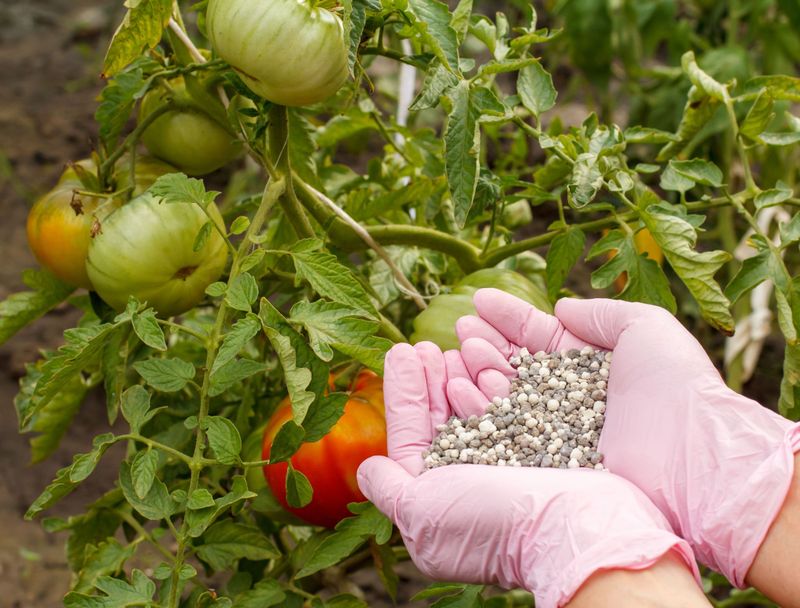
Nitrogen is the nutrient most responsible for green, leafy growth, and tomatoes genuinely need it – but there is a point where more becomes counterproductive. When a plant receives repeated high-nitrogen applications, it can redirect energy into building stems and leaves rather than forming flowers and setting fruit.
Utah State University Extension cautions that excess nitrogen can delay maturity and reduce fruit yield, while Penn State Extension tomato production guidance connects nitrogen overload to poor fruit set and reduced productivity.
Before assuming the plant needs something different, pull out every fertilizer bag or bottle you have used this season and read the analysis on the label. The first number in the N-P-K ratio represents nitrogen.
Add up what you have applied over recent weeks and compare that total to what the label actually recommends per application cycle. Many gardeners apply at full strength more frequently than the label intends, which compounds quickly in warm Southern soils where plants are actively growing.
The practical response is not to stop all feeding permanently. A plant that is genuinely running low on nutrients still needs support, especially if it is actively flowering and setting fruit.
The safer move is to pause additional high-nitrogen applications temporarily while you review what has already gone into the soil. Adding more fertilizer on top of an existing excess rarely helps and can worsen the imbalance.
Texas A&M AgriLife Extension’s fall vegetable gardening guide warns specifically against overapplying nitrogen-heavy fertilizers and recommends keeping applications away from plant stems.
Fall temperatures can stop fruit set before fertilizer helps
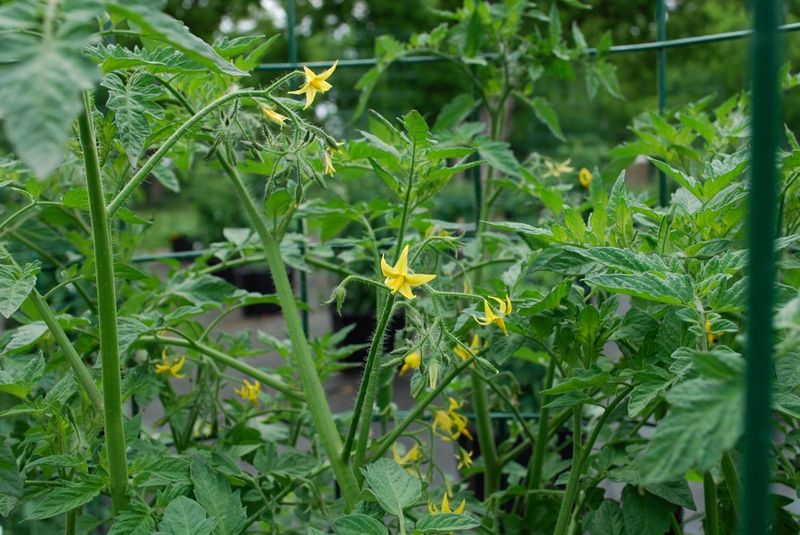
Southern fall gardens operate in a narrow window where temperatures can swing from daytime heat well above 90 degrees to nights that cool faster than expected. Both extremes interfere with tomato reproduction in ways that fertilizer simply cannot fix.
Penn State Extension’s overview of heat stress and tomatoes reports that blossom drop can occur when night temperatures fall below around 55 degrees Fahrenheit or climb above roughly 75 degrees, and that fruit quality problems linked to heat can appear at daytime highs around 84 degrees and above.
The UGA Cooperative Extension Commercial Tomato Production Handbook identifies temperatures below 55 degrees F or above 90 degrees F as conditions that can interrupt normal seed set. These figures vary somewhat by cultivar and source, so treat them as useful warning ranges rather than hard cutoffs.
The takeaway is that flowers forming during a stretch of unfavorable temperatures may fail even after the weather stabilizes, because the damage to pollen viability or ovule development has already occurred.
Checking your recent daytime highs and overnight lows before reaching for fertilizer is a practical first step. Texas A&M AgriLife’s fall gardening resources note that tomatoes are frost-sensitive and that fall planting timing matters for getting fruit before conditions deteriorate.
If temperatures have been outside the productive range during recent weeks, the missing fruit may reflect that stress rather than a nutrient gap, and adding fertilizer during that period will not restore flowers that already dropped.
Watery fruit describes a symptom, not its cause
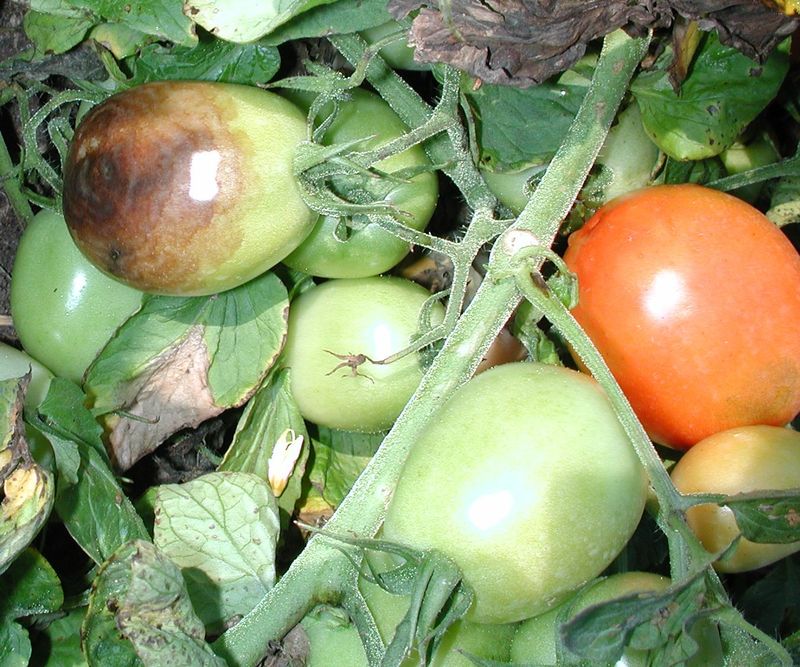
Soft or watery-tasting tomatoes are easy to blame on fertilizer, but the symptom points in too many directions to treat as a nutrient diagnosis on its own. Heat stress can produce fruit with lower sugar concentration and softer cell walls.
Penn State Extension connects high temperatures to uneven ripening and reduced fruit quality that can make tomatoes taste flat or feel mushy even when plant nutrition is adequate.
Irrigation patterns matter just as much. Fluctuating soil moisture – wet, then dry, then wet again – stresses fruit development and can cause cracking, which exposes flesh to further softening.
Oregon State University Extension’s guidance on blossom-end rot explains that inconsistent water uptake disrupts calcium movement in the fruit and contributes to the darkened, leathery blossom ends that some gardeners mistake for a fertilizer problem. University of Minnesota’s tomato fruit diagnosis tool also identifies overripe harvest, sunscald, and disease as separate causes of soft or deteriorated fruit.
Before attributing watery texture to a feeding issue, inspect the fruit closely. Look for cracks, darkened blossom ends, sunken lesions, pale or bleached patches from sun injury, and any signs of fungal or bacterial disease.
Oregon State University Extension research on tomato fruit quality notes that cultivar and harvest stage also shape texture and flavor significantly. A tomato left on the vine a few days too long in summer heat will taste watery regardless of how well the plant was fed.
Start with a pause and a root-zone inspection
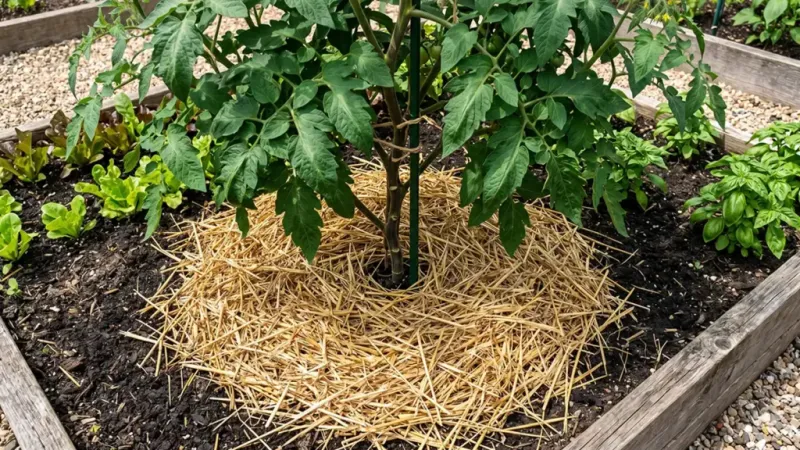
When a fall tomato looks lush but underperforms, the most productive first move costs nothing: stop adding high-nitrogen fertilizer temporarily and spend ten minutes with the plant before buying anything new. Pull out the fertilizer labels from recent applications and calculate how much nitrogen has gone into the bed over the past four to six weeks.
If the total already meets or exceeds the label’s recommended amount for the season, adding more is unlikely to help and may deepen an existing imbalance.
Next, check the soil moisture a few inches below the surface – not just the top layer, which can dry out quickly in Southern heat while the root zone stays wet, or vice versa. Both drought and waterlogged soil can stress a plant enough to drop flowers and reduce fruit quality.
Penn State Extension’s tomato production guidance recommends consistent root-zone moisture supported by mulch and deep, thorough irrigation rather than frequent shallow watering. A two- to three-inch layer of mulch around the base of the plant helps buffer temperature swings and slows surface evaporation.
After checking moisture, confirm the plant receives at least six hours of direct sunlight daily. Then scan for specific problems: dropped or shriveled blossoms, heat-bleached leaves, darkened blossom ends on fruit, pest damage, or yellowing patterns that suggest disease.
Oregon State University Extension and University of Minnesota’s fruit diagnosis resource both emphasize that identifying the specific symptom pattern guides the response far better than a general fertilizer application. University of Minnesota Extension also notes that Penn State’s seedling-to-fruit guide supports a diagnosis-first approach before any corrective feeding.
Feed only when evidence supports the need
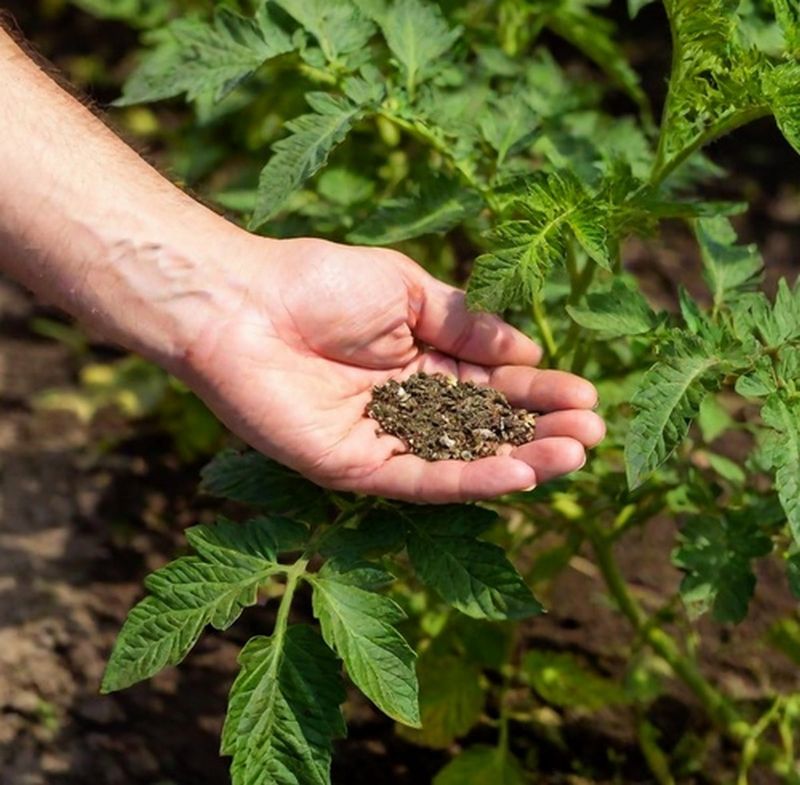
Feeding a tomato plant that does not actually need nutrients is not a neutral act. Excess fertilizer can create nutrient imbalances, push more unwanted vegetative growth, and in sandy Southern soils, leach into groundwater before the plant can use it.
The more defensible approach is to feed only when a soil test, tissue test, or clear deficiency pattern supports it. UF/IFAS research summarizing nitrogen, phosphorus, and potassium responses in Florida tomatoes found that potassium responses were variable and that rates above recommendations generally did not improve yields – in some cases, excess potassium reduced them.
If the plant is still actively flowering and a test or visible deficiency pattern indicates that feeding is warranted, choose a tomato or vegetable fertilizer with modest nitrogen rather than a product heavy in the first number on the label. Apply only the rate printed on the label as a soil side-dress, placing the material several inches away from the stem.
Water it into the root zone immediately after application and avoid getting fertilizer on leaves or stems, where it can cause burning. UF/IFAS fertigation research supports the value of smaller, split applications for improving nutrient-use efficiency, particularly in Florida’s sandy soils – though commercial acre-scale rates from that research do not translate directly into a backyard prescription.
Potassium can support fruit yield and certain quality traits when soil levels are genuinely low, as research published in Agronomy Journal on tomato responses to phosphorus and potassium confirms. However, adding potassium without evidence of a deficiency is not a reliable fix for small or watery fruit.
Texas A&M AgriLife Extension and University of Minnesota Extension both recommend applying phosphorus and potassium according to soil-test results rather than as automatic additions.
Avoid quick fixes that add new risks
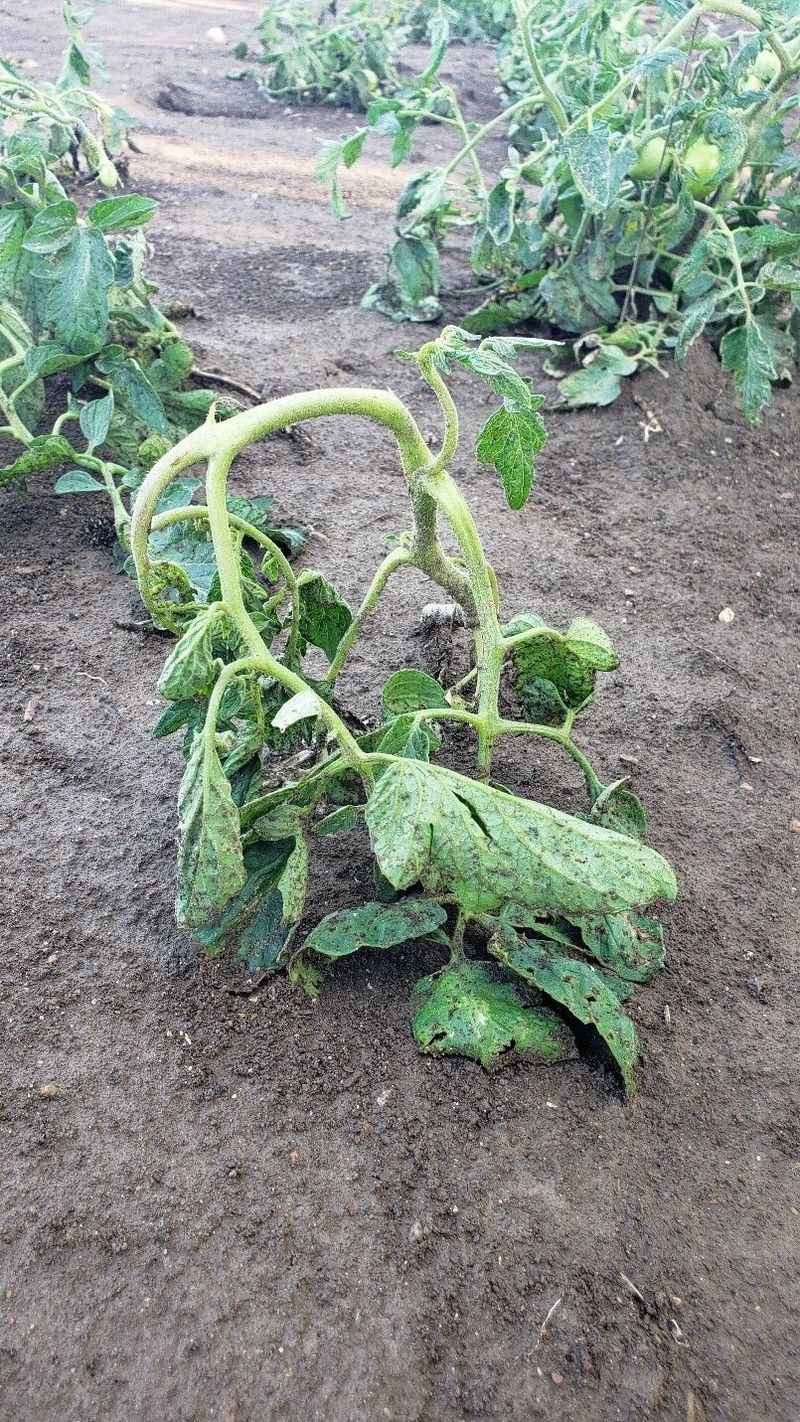
Concern about a struggling crop can make any remedy look appealing, but several popular fixes carry real risks for tomatoes. University of Minnesota Extension specifically warns that weed-and-feed lawn fertilizers contain herbicides that can injure or kill vegetable plants.
Never use those products around tomatoes, even if the nitrogen content looks attractive on the label.
Epsom salt, banana peels, and homemade potassium treatments are frequently suggested online, but none of the university extension sources reviewed here support them as reliable responses to the symptoms described in this article. Calcium sprays are sometimes recommended for blossom-end rot, but Oregon State University Extension’s blossom-end rot guidance makes clear that the underlying problem is disrupted water uptake – consistent root-zone moisture addresses the cause more reliably than a foliar spray treats the symptom.
Foliar feeding carries its own hazards. Products applied to leaves can burn foliage if concentrations are off or if applied during heat, and foliar applications should never substitute for correcting root-zone moisture or soil fertility.
Penn State Extension and UF/IFAS fertigation research both ground their recommendations in soil-applied nutrients managed at labeled rates. More water, more fertilizer, or an automatic potassium application can each worsen root problems, cracking, or nutrient imbalances when applied without a clear diagnosis.
Use only products labeled for the crop and the application method, and apply them at the rate the label specifies.
Weather and the calendar may limit the fall crop
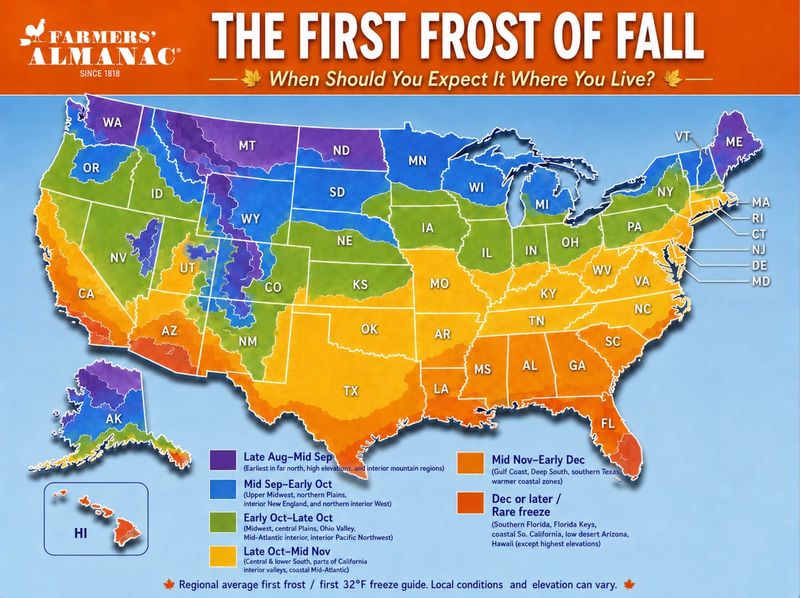
Fertilizer cannot extend a tomato season past the point where temperatures or frost make fruit set impossible. In Texas, fall planting dates and frost risk vary by region, and Texas A&M AgriLife Extension’s tomato growing guide notes that tomatoes are frost-sensitive and that timing the crop correctly is essential for a productive fall harvest.
Texas A&M’s fall vegetable gardening guide provides regional planting windows that differ across the state.
Florida adds another layer of variation. UF/IFAS tomato production guidance outlines different planting windows for north, central, and south Florida, reflecting the state’s wide range of frost dates and growing conditions.
A gardener in Gainesville and one in Miami are working on different calendars. Before investing more time or money in a struggling fall crop, assess honestly how much favorable weather remains in your area.
If temperatures are already pushing outside the productive range most days, the most useful action is to harvest any fruit that has begun to color up and let it ripen indoors rather than waiting on the vine. Penn State Extension confirms that heat stress effects on fruit quality are not corrected by feeding.
The most durable lesson from a lush but underperforming fall tomato is that pausing excess nitrogen, steadying moisture, and reading the conditions honestly will serve you better than any single fertilizer move.