
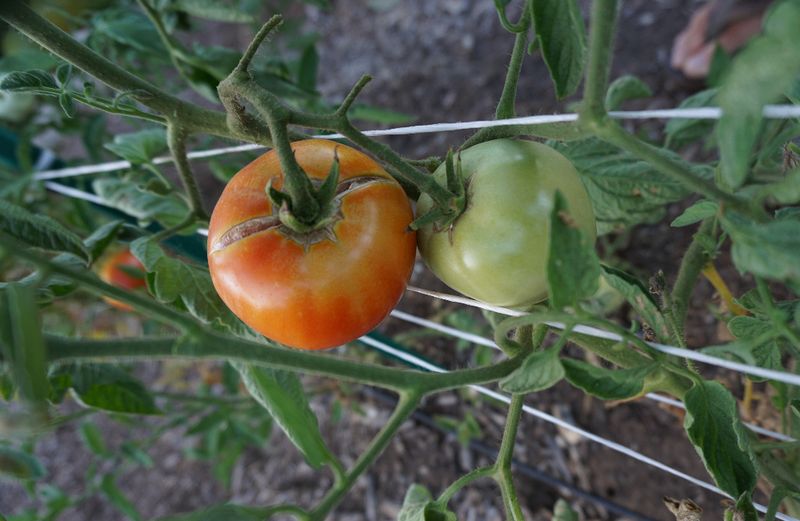
You walk out to pick a tomato that was almost perfect, and there it is, split wide open. It stings, especially after months of care.
Uneven soil moisture is a common reason fruit splits, and it is one you can often do something about. Here is how to spot the problem, steady your watering, and protect the fruit still on the vine.
Why tomatoes crack near harvest
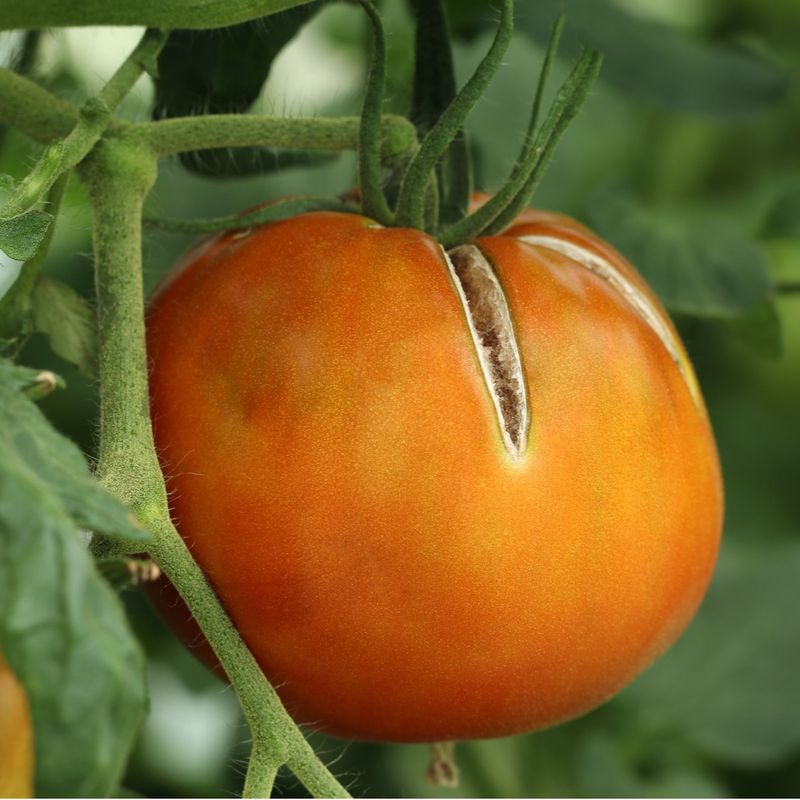
Picture a tomato skin like a balloon that has already stretched about as far as it can. When soil dries out and then a heavy rain or a long soak follows, the fruit can pull in water and swell faster than the skin can keep up.
The skin gives way, and you get a split. University of Minnesota Extension links growth cracks to fluctuating water, and Texas A&M AgriLife Extension describes the same dry-then-wet pattern.
That makes watering a strong suspect, but not a sure verdict for any single tomato. Penn State Extension discusses temperature and sunlight alongside water, and ripeness and variety can play a part too.
Fall weather alone does not prove what caused a crack, and cool nights should not automatically take the blame.
One more thing may ease your mind. Cracking is a physiological problem, meaning the fruit’s growth got out of step, not an infection.
The open split can still let decay organisms in later, which is why quick attention matters.
Identify the kind of crack
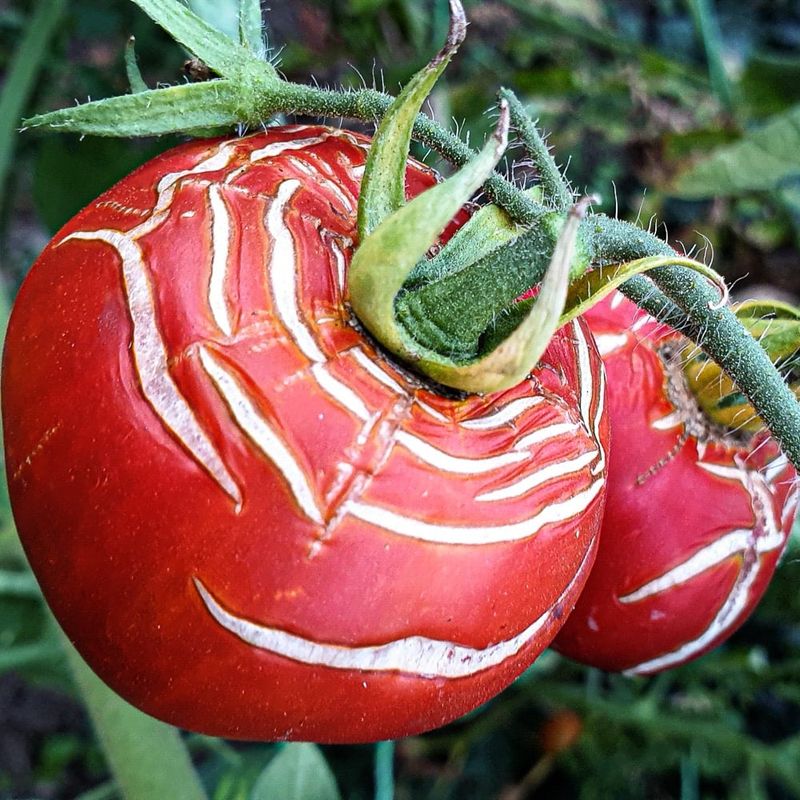
Take a close look at the pattern before you decide what you are fighting. Radial cracks run outward from the stem like spokes on a wheel, while concentric cracks form rings around the stem.
Fine, shallow lines across the skin are often called rain checking. University of Minnesota Extension describes these growth crack forms.
Variety matters here. Large-fruited and heirloom tomatoes are often more prone to splitting, though varieties differ, according to University of Connecticut Extension.
If one plant cracks far more than its neighbors, genetics may be part of the story.
Now rule out look-alikes. Catfacing shows up as a misshapen, scarred blossom end, and blossom-end rot is a dark, sunken patch on the bottom of the fruit.
Texas A&M AgriLife Extension covers blossom-end rot separately. These have different causes, so a fix for splits will not necessarily solve them.
Keep soil moisture more even
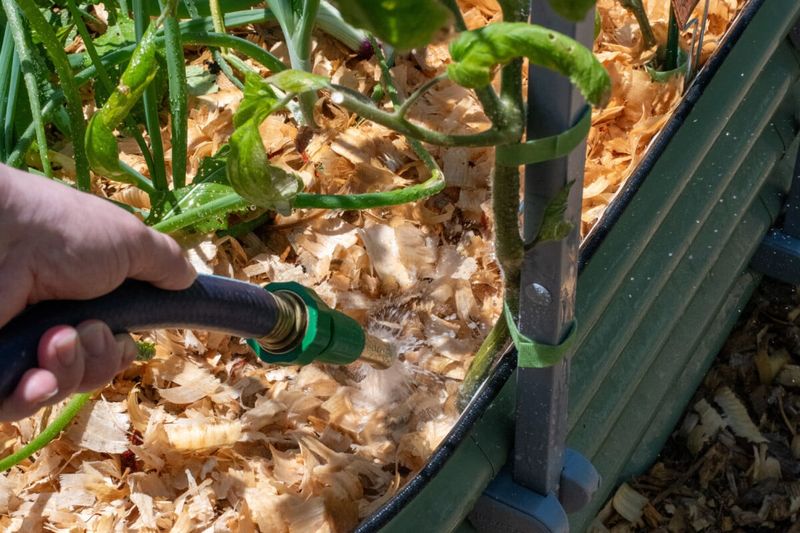
The goal is steadier moisture, not simply less water and not soggy soil. Try not to let the root zone get very dry and then flood it.
Sharp swings are the pattern linked to splitting, as Texas A&M AgriLife Extension explains.
Even moisture also does not mean saturated. University of Minnesota Extension notes that excess water can harm plants and lower fruit quality.
Push a finger a couple of inches into the soil and let that feel guide you.
When the soil does need water, apply it at the base of the plant. Drip irrigation or a soaker hose can deliver it to the roots, and mulch such as straw or shredded leaves helps hold moisture in, as UGA Cooperative Extension suggests.
Each of these may lower your risk, but none is a cure, and a stretch of heavy rain can still split fruit.
Also, do not cut off water to mature-green fruit hoping to prevent splits. Reduced water followed by restored water is exactly the swing you want to avoid.
Adjust watering as fall conditions change
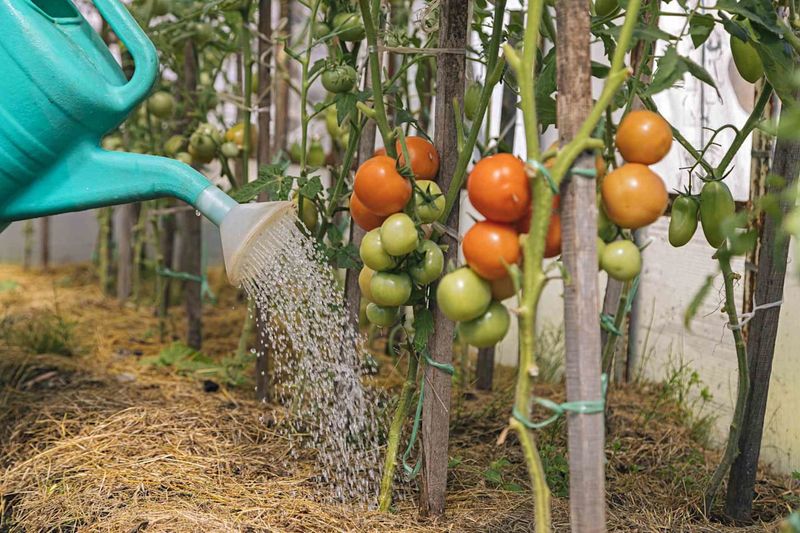
A fixed schedule will eventually fight the weather, so let conditions steer you. Before you turn on the water, check the rain gauge or recent forecast, then test the soil a few inches down.
If it is still damp, wait. If it is drying out, give a slow, steady drink at the roots.
As fall cools off and rain shows up more often, plants use less water. Texas A&M AgriLife Extension advises allowing more time between irrigations in fall.
That can mean less supplemental watering than in midsummer.
You may see a general tomato guideline of about 1 to 2 inches of water per week from UGA Cooperative Extension. Treat that as a starting point that includes rainfall and shifts with your soil.
Sandy soils dry fast, while heavier soils hold water longer, so a Florida sand bed and a Texas clay bed will not follow the same plan.
Keep notes for a couple of weeks on what you watered and what the soil felt like. That simple log often shows where your swings are happening, as UGA troubleshooting guidance on cultural problems also hints.
Pick nearly ripe tomatoes before forecast rain
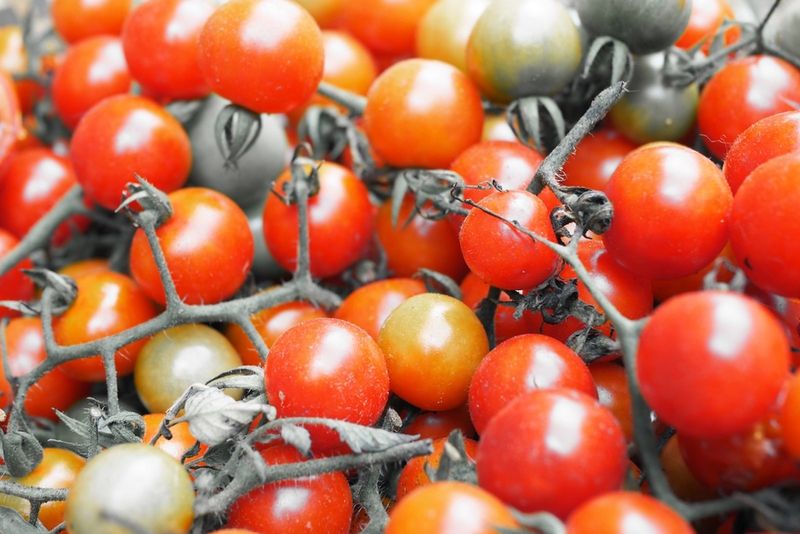
Rain headed your way and a few tomatoes just starting to blush? Picking them early may help.
Penn State Extension says harvesting fruit at the breaker-to-pink stage before a forecast rain may reduce cracking late in development.
Breaker stage means the first hint of pink or red shows at the bottom of the fruit. Bring those inside and let them finish ripening on the counter, out of direct sun.
Flavor is usually good when the fruit is this close to ready.
Keep this step limited to fruit that is nearly ripe. Small, dark green tomatoes are far from ready, so there is no reason to strip the plant.
Think of early picking as a backup plan, not a replacement for steady soil moisture. It lowers the chance of a split, but it cannot promise perfect fruit, since heavy rain and other factors can still cause trouble on the tomatoes left behind.
Check cracked fruit before eating it
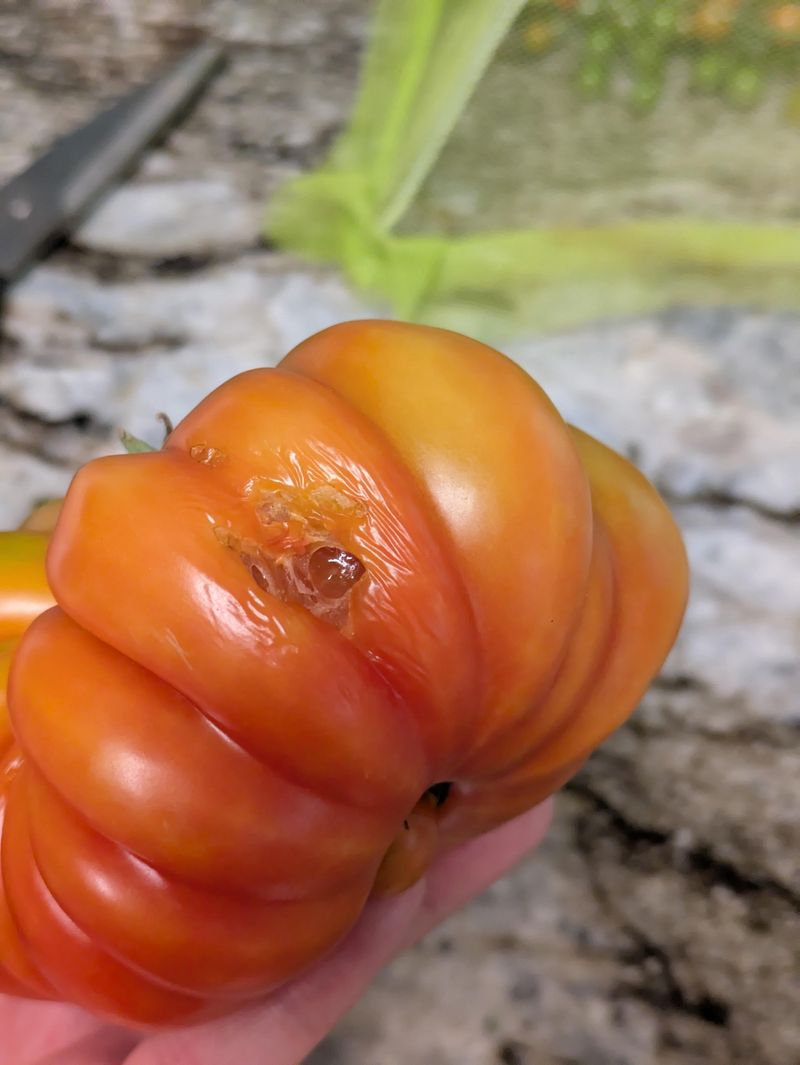
A split tomato is not automatically trash, but it deserves a careful look. Cracks open the skin, which makes the fruit more vulnerable to decay.
Fresh, shallow splits are very different from ones that are leaking, moldy, or sour-smelling.
The FDA recommends washing produce under running water, cutting away any damaged areas, and discarding produce that looks rotten. Do those steps together, because washing alone does not remove every risk.
In practice, that means inspecting the crack closely, trimming around it with a clean knife, and tossing the fruit if you see mold, oozing, or soft, rotten patches. When in doubt, throw it out.
Plan to use cracked tomatoes soon rather than leaving them on the counter for days.
You cannot always stop every split, but you can control what ends up on your plate.