
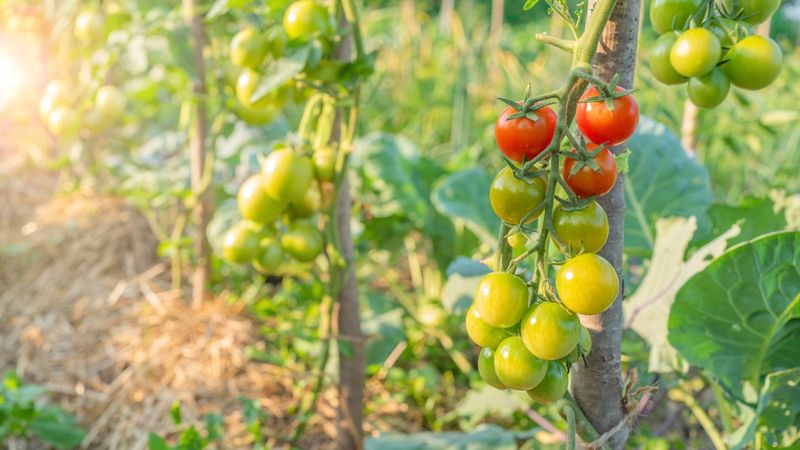
Fall tomatoes that stubbornly stay green can test any gardener’s patience, especially when the calendar is working against you. Before reaching for a fertilizer bag, though, it pays to figure out why the fruit isn’t coloring – because the answer is usually not what people expect.
Temperature and fruit maturity matter far more than fertilizer in most cases, and the right move depends entirely on what’s actually happening in your garden.
Start with fruit maturity, not fertilizer
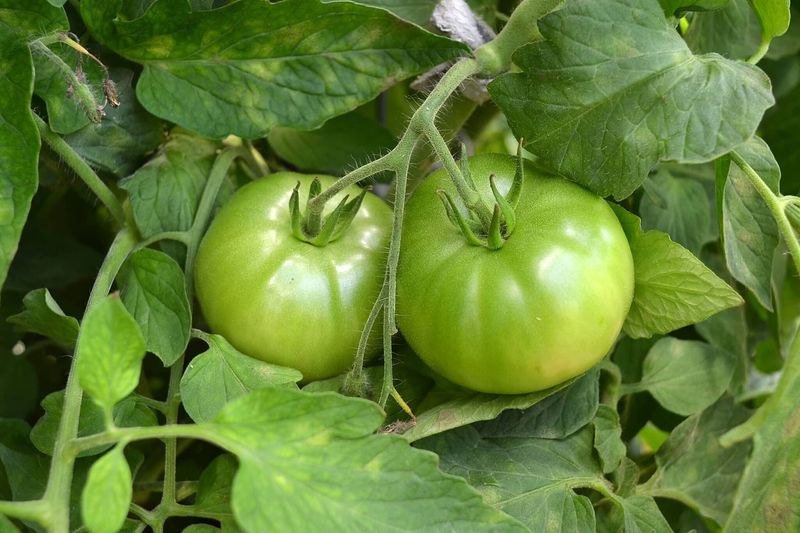
A tomato that has recently set fruit is not the same as one that is ready to redden. From the moment a flower drops and a tiny green fruit begins to swell, the tomato spends the next several weeks simply growing – building cell structure, accumulating sugars, and completing internal development before it ever signals its body to begin producing color.
Extension tomato ripening guidance notes that fruit can spend roughly 40 to 50 days enlarging before the color phase even begins, which means a recently set tomato has a long way to go before any ripening intervention makes sense.
Mature-green fruit looks different from immature green fruit, even if both appear the same color at a glance. A mature-green tomato has reached its full size, the blossom-end skin has lost its glossy sheen, the flesh inside has turned gelatinous around the seed cavities, and the fruit separates cleanly from the vine with a gentle tug.
Immature green fruit is still firm throughout, smaller, and tightly attached.
This distinction matters because feeding a tomato that has not yet reached the mature-green stage will not accelerate its color development. The fruit simply is not physiologically ready.
This guide works through temperature, soil fertility, and harvesting decisions in sequence – but maturity is always the first check.
Temperature usually explains stalled fall color
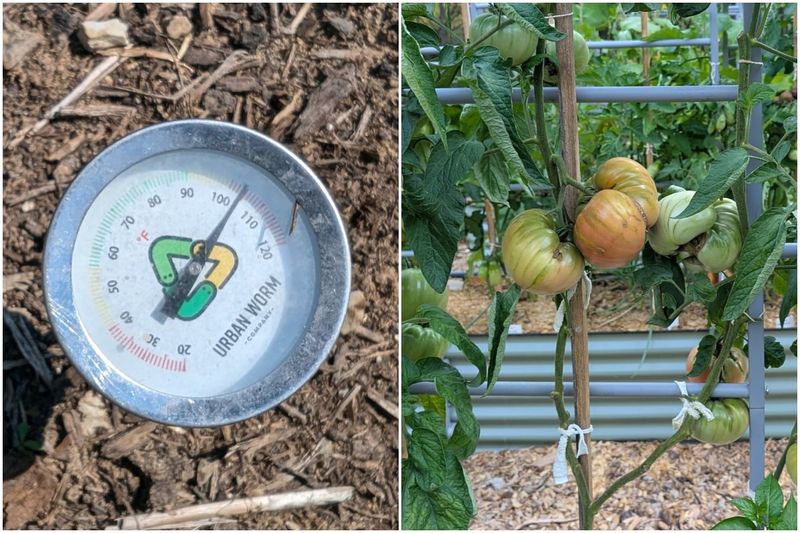
Southern fall gardens carry a temperature complication that gardeners further north rarely face: the heat often lingers well past when the calendar says summer is over. Tomatoes color best when daytime and nighttime temperatures stay in the range of roughly 68 to 77 degrees Fahrenheit.
Outside that window, the process slows or stalls. UC Davis postharvest tomato guidance confirms that sustained temperatures above about 85 degrees Fahrenheit can suppress lycopene and carotene synthesis – the pigment-building reactions that turn tomatoes red – even in fruit that is otherwise mature and healthy.
The flip side matters too. Once fall temperatures drop sharply, cool nights can slow ripening just as effectively as summer heat does.
A tomato that has been waiting through a hot September may suddenly face a cold October night, and the color process crawls in either direction away from that sweet spot. Texas A&M AgriLife tomato production guidance reinforces that both high daytime heat and high nighttime temperatures affect fruit set and ripening across the region.
No fertilizer corrects a temperature-driven pause. Applying potassium or any other nutrient when heat or cool weather is the real obstacle will not move the ripening process forward.
The practical response is to check recent overnight lows and daytime highs, compare them to that 68-to-77-degree target range, and decide whether the fruit needs more time on the vine or whether harvesting it now and finishing it indoors makes more sense.
Use potassium only after a supported diagnosis
Potassium plays a real role in tomato yield and fruit quality, but that role comes with an important condition: the benefit shows up most clearly when soil potassium is actually low. UF/IFAS tomato production research found that responses to potassium were strongest where soil potassium was deficient and often produced little or no measurable benefit where soil potassium was already medium or high.
Adding more of a nutrient the soil already has in adequate supply does not improve the crop.
Before considering any potassium application, stop adding nitrogen. Excess nitrogen at this stage of the season encourages the plant to push new foliage instead of finishing its fruit, which can delay maturity and reduce yield.
University of Minnesota Extension tomato guidance warns that high nitrogen can produce lush, overgrown plants with delayed maturity and reduced fruit production – the opposite of what a fall gardener needs.
If a soil test or a qualified diagnosis from your local extension office confirms that potassium is genuinely low, a fertilizer with relatively low nitrogen and an adequate potassium level becomes a reasonable option. University of Georgia Extension tomato production guidelines recommend basing fertilizer decisions on soil-test results rather than assumptions, because rates and nutrient needs vary significantly by soil type and existing fertility.
Testing first is not a formality – it is the step that tells you whether feeding will actually help.
Do not diagnose potassium deficiency from appearance alone
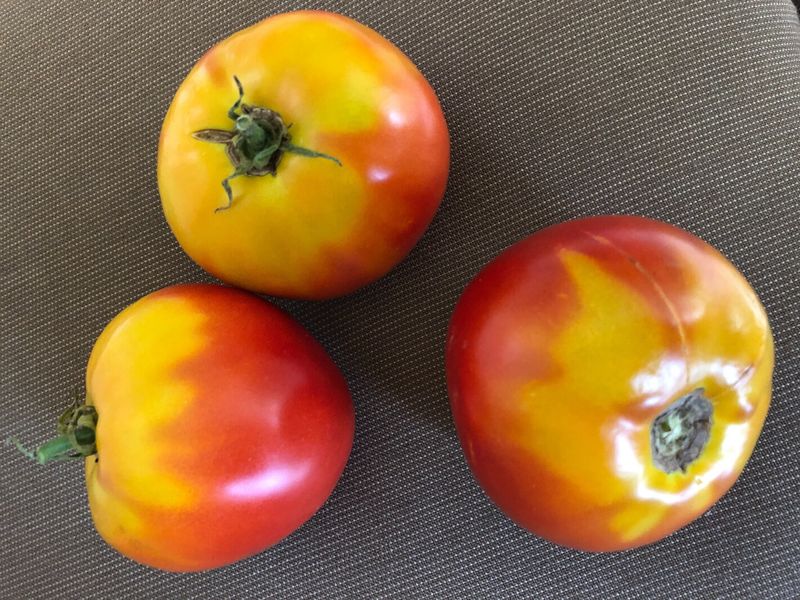
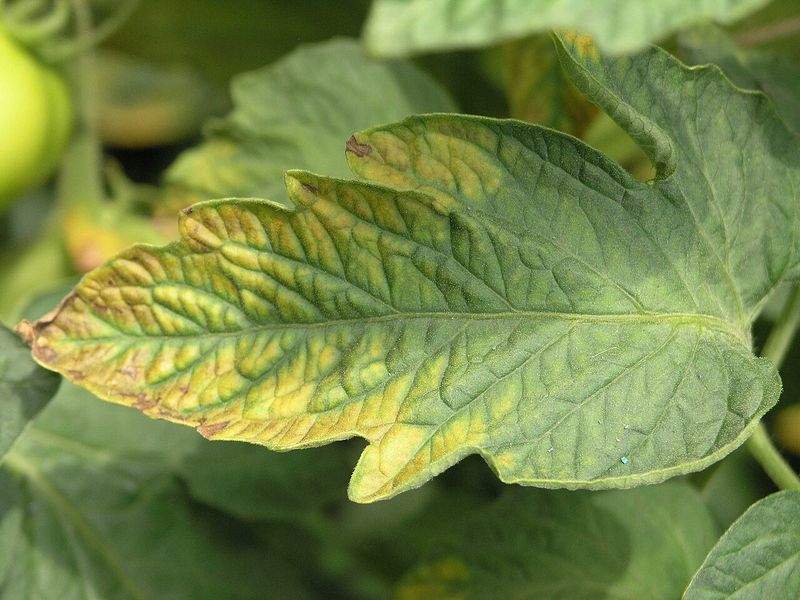
Yellow shoulder, blotchy ripening, graywall, and sunscald all look alarming on a tomato, and many gardeners immediately reach for a high-potash fertilizer when they see uneven color or pale patches near the stem. The problem is that none of these symptoms independently prove potassium deficiency.
University of Maryland Extension’s review of tomato ripening problems explains that yellow shoulder and related disorders have multiple possible causes and that potassium may be only one contributing factor among several.
Heat stress, the specific cultivar, canopy density, root health, irregular watering, and disease can all produce ripening disorders that look similar to potassium-related symptoms. UF/IFAS research on tomato production notes that graywall and blotchy ripening have been linked to multiple environmental and physiological causes, not a single nutrient gap.
A tomato plant with damaged roots from flooding or compaction, for example, may show uneven fruit color even when soil potassium is perfectly adequate.
Applying high-potassium fertilizer based on appearance alone carries its own risks. Excess potassium competes with calcium and magnesium uptake, and research published in peer-reviewed plant science literature – including work on potassium interactions in vegetable crops – confirms that over-application can create secondary nutrient imbalances.
Homemade foliar potassium sprays are not an established fix either; their effectiveness in home-garden settings remains uncertain. The reliable path is to collect a soil sample, send it to a lab, and act on the results.
Apply any justified fertilizer by the label
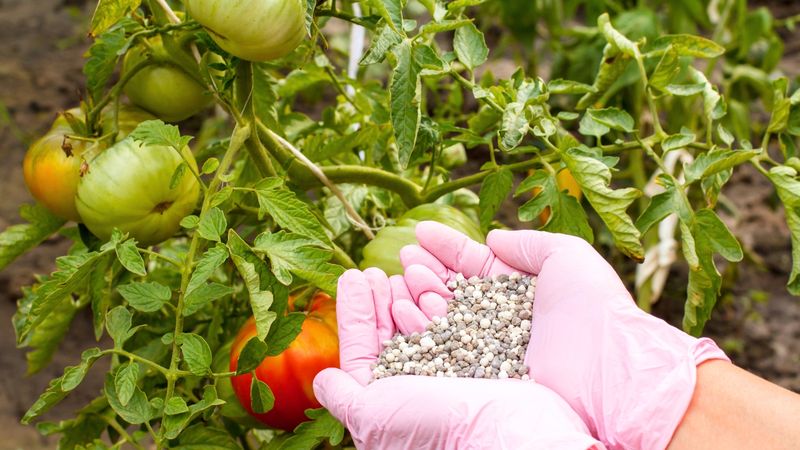
Once a soil test or qualified diagnosis confirms that a potassium application is warranted, the next step is reading the product label carefully – not guessing at a rate. Fertilizer rates are not universal.
They depend on your soil type, the existing fertility level the test revealed, the size and age of your plants, and the guaranteed analysis printed on the bag. UF/IFAS guidance on vegetable fertilization and Utah State University Extension soil fertility guidance for tomatoes both emphasize matching fertilizer rates to soil-test results rather than applying a standard amount across all conditions.
For granular products, place the fertilizer beside the plant rather than directly against the stem. Direct contact can burn the stem and roots.
Scratch the granules into the top inch of soil only when the product label specifically permits it, then water according to the label directions so the nutrients move into the root zone. University of Georgia Extension tomato guidelines reinforce that proper incorporation and irrigation are necessary for the fertilizer to reach plant roots effectively.
Several products and practices are worth avoiding around edible crops. Weed-and-feed formulations contain herbicides that can damage tomato plants and should never be used in the vegetable bed.
Fresh manure carries pathogen risks and should not be applied to crops close to harvest. Exceeding the label rate does not accelerate results – it wastes money and can contribute to runoff or leaching that affects nearby soil and water.
Stay within the label rate and let the soil do its job.
Harvest mature-green fruit when weather closes in
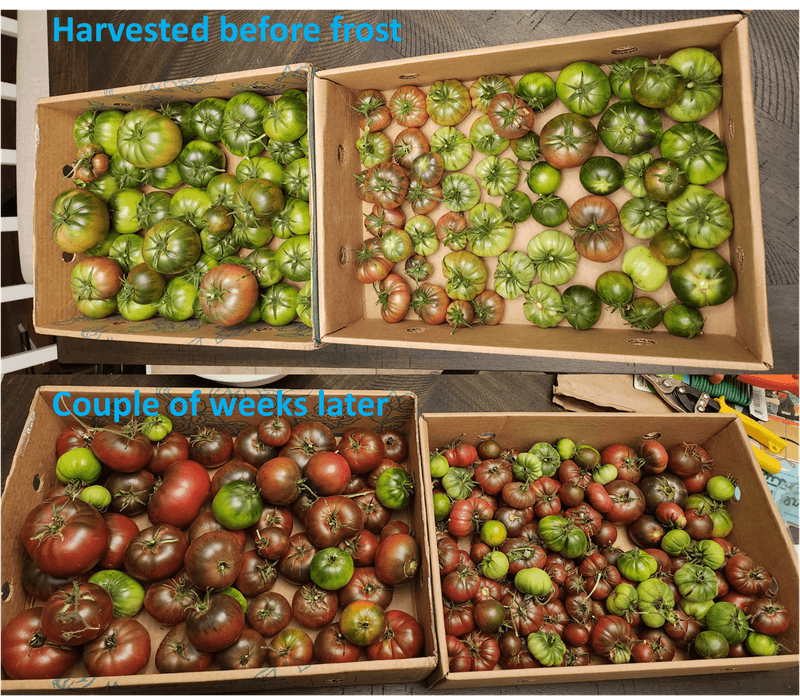
When temperatures are no longer cooperating and frost or prolonged cool weather is approaching, the most dependable move is often to bring the fruit inside. Mature-green tomatoes – those that have reached full size and completed their internal development – can finish ripening off the vine at room temperature without losing meaningful quality.
UC Davis postharvest tomato science confirms that mature-green fruit continues to ripen normally after harvest when held at appropriate temperatures, because the ripening process is already underway internally.
The setup is simple. Lay the harvested fruit in a single layer on a countertop or tray, stem side down, away from direct sunlight.
Check them daily. Room temperature – roughly 65 to 70 degrees Fahrenheit – keeps the process moving at a steady pace.
UF/IFAS guidance on harvesting and handling tomatoes warns against refrigerating tomatoes before they are fully ripe, because low temperatures damage the fruit’s texture and interfere with the normal ripening chemistry, resulting in mealy, flavorless flesh.
Immature green fruit, by contrast, will not ripen normally indoors regardless of how it is handled. A tomato that was set recently and has not yet completed its development phase lacks the internal signals needed to trigger color change.
Texas A&M AgriLife’s fall vegetable gardening guide notes that timing matters: when a killing frost is approaching, prioritize harvesting fruit that has already reached the mature-green or breaker stage rather than waiting for an additional fertilizer application to work.
Adjust the plan to your Southern growing region
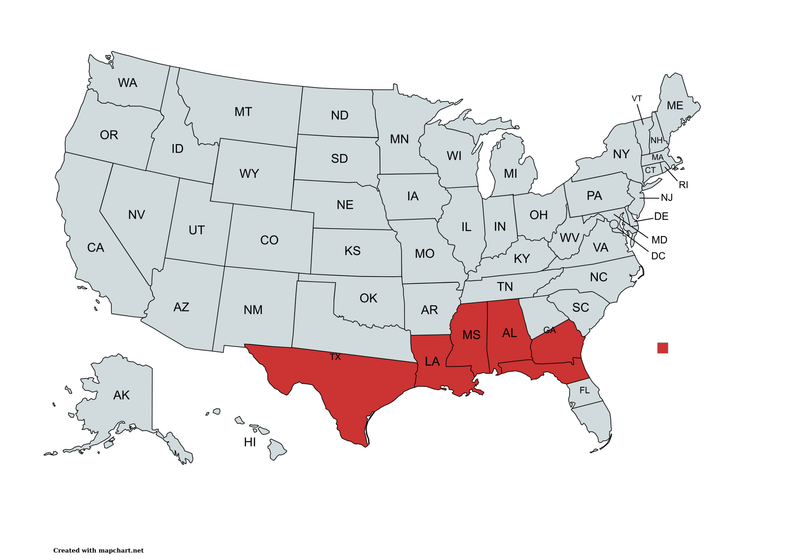
Fall tomato production is a normal part of the Southern gardening calendar, but the timing looks very different depending on where you garden. Florida growers face a wide range of conditions across the state.
UF/IFAS county-level vegetable gardening calendars show that North Florida and west-central Florida gardeners work within late-summer-to-fall planting windows, while South Florida gardeners enjoy a broader August-through-February window that gives them considerably more flexibility for fall and even winter tomato crops.
Texas growers face a different constraint. Texas A&M AgriLife’s fall vegetable gardening guide for Texas makes clear that fall tomatoes must be planted early enough to allow the fruit to mature before the first killing frost, and that window varies significantly from the Panhandle to the Gulf Coast.
A gardener in Amarillo and one in Corpus Christi are working on completely different timelines.
These regional differences directly shape the decision between waiting for color, correcting a confirmed nutrient deficiency, or harvesting now. UF/IFAS tomato production guidance for Florida reinforces that local planting calendars and frost dates should drive your decisions rather than a single national schedule.
Check your county extension office for your specific frost window, compare it to the maturity stage of your fruit, and use that information to decide whether there is still time to wait or whether harvesting mature-green fruit is the smarter call for your garden this season.
Follow a diagnosis-first decision rule
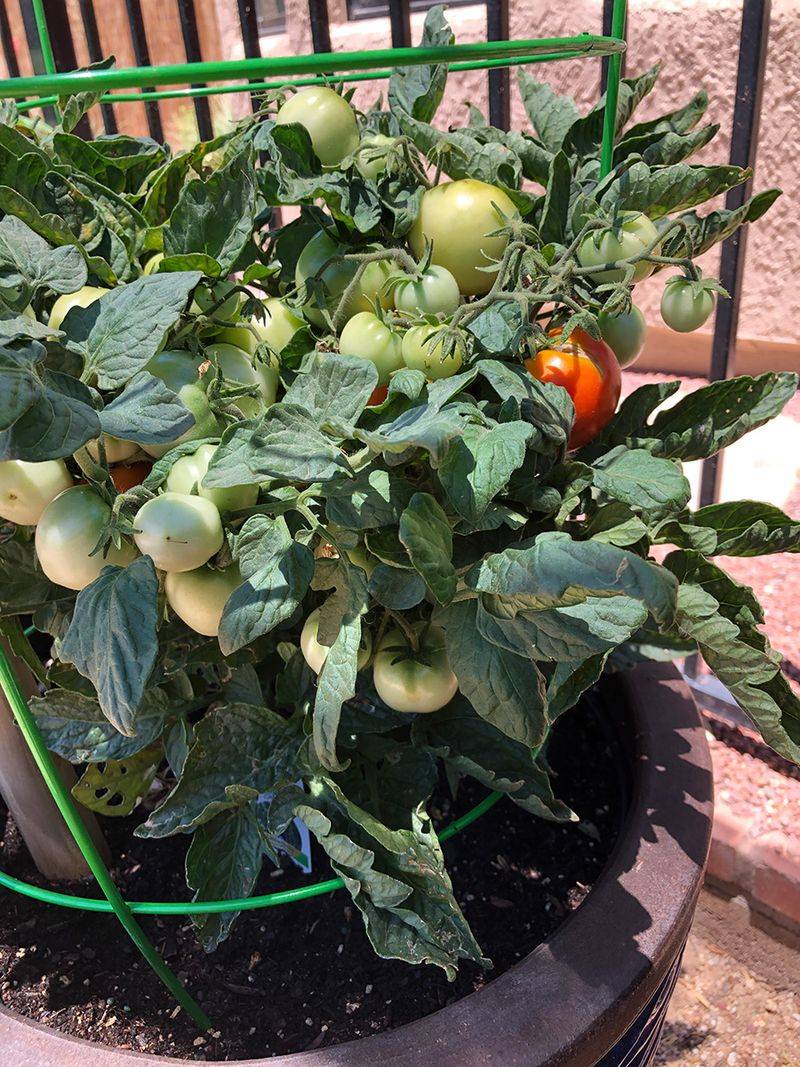
Working through a short sequence before doing anything else will save time, money, and a crop. First, check whether the fruit has actually reached the mature-green stage.
If it is still small and tightly attached, it needs more time on the vine regardless of what the weather or the soil is doing. Second, look at recent and forecast temperatures.
If daytime highs have been running above 85 degrees or nighttime lows have dropped sharply, the ripening pause is likely temperature-driven, and no fertilizer will fix that.
Third, inspect the plant carefully before assuming a nutrient problem. UF/IFAS tomato production research and University of Georgia Extension guidelines both recommend basing any fertilizer decision on soil-test results rather than visual symptoms alone.
Symptoms like yellow shoulder or blotchy color can come from heat, cultivar, water stress, or disease – not just potassium. Send a soil sample to your county extension lab before buying anything.
If the test confirms low potassium and feeding is appropriate, choose a product with low nitrogen and adequate potassium, follow the label rate, and apply it beside the stem rather than against it. Postharvest science is clear that mature-green or breaker-stage fruit ripens well indoors at room temperature – so when the season is closing and frost is near, harvesting is often the most reliable finish.
The useful feeding move is conditional; maturity, temperature, and a ripe countertop often do more than a bag of fertilizer.