
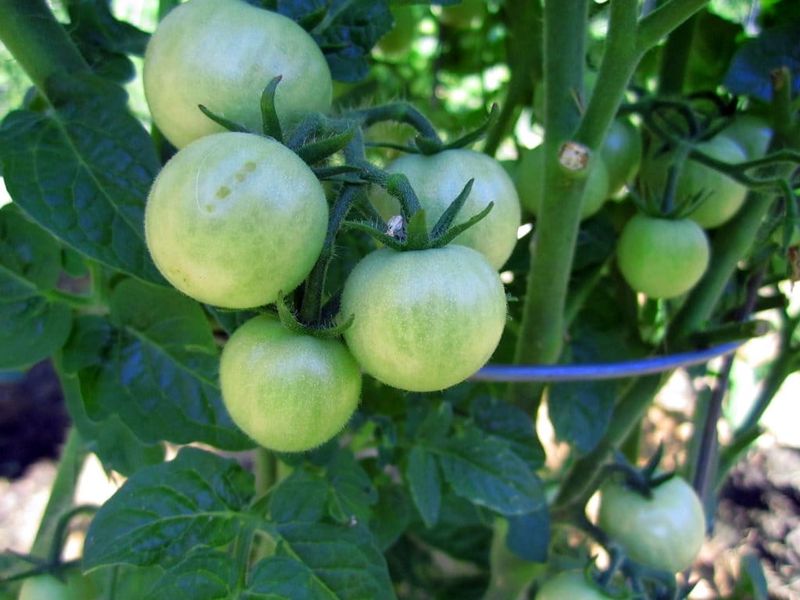
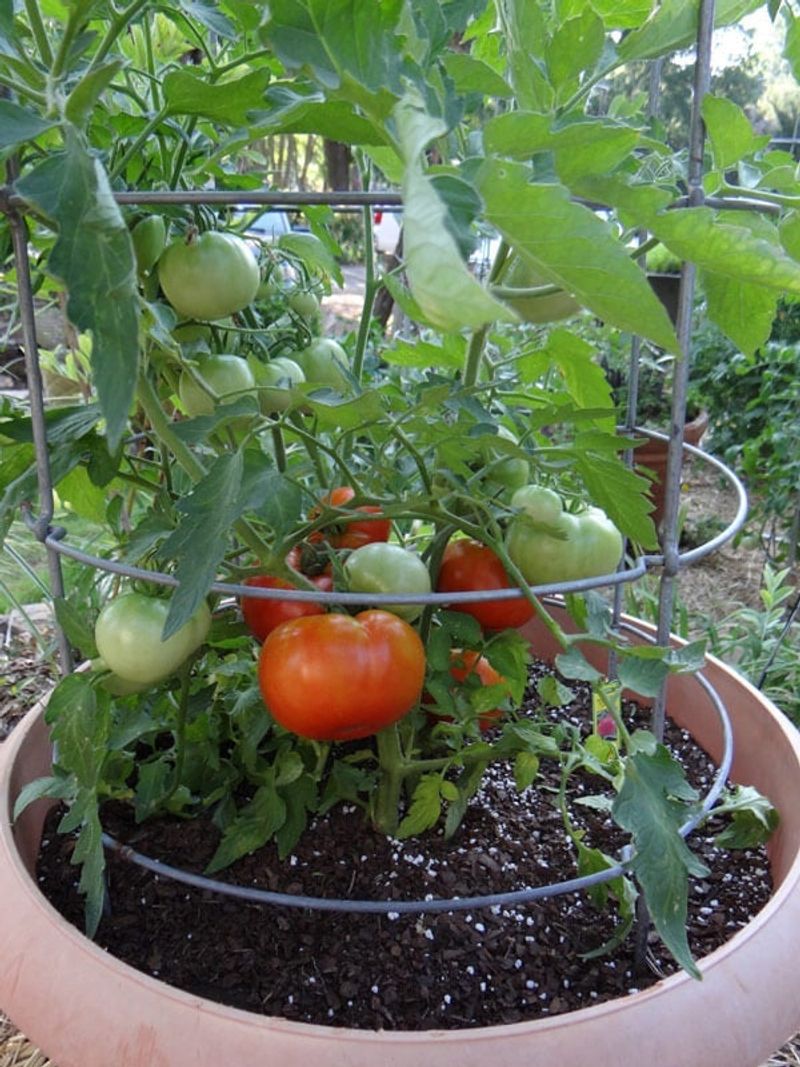
Your tomato plants are loaded with big, full-size fruit, and every one of them is still green. It is easy to blame the first cool nights and give up hope.
But fruit age, heat, and a few common garden habits all play a part too. Knowing which ones you can change will help you save more of your crop.
Check how long the fruit has been growing
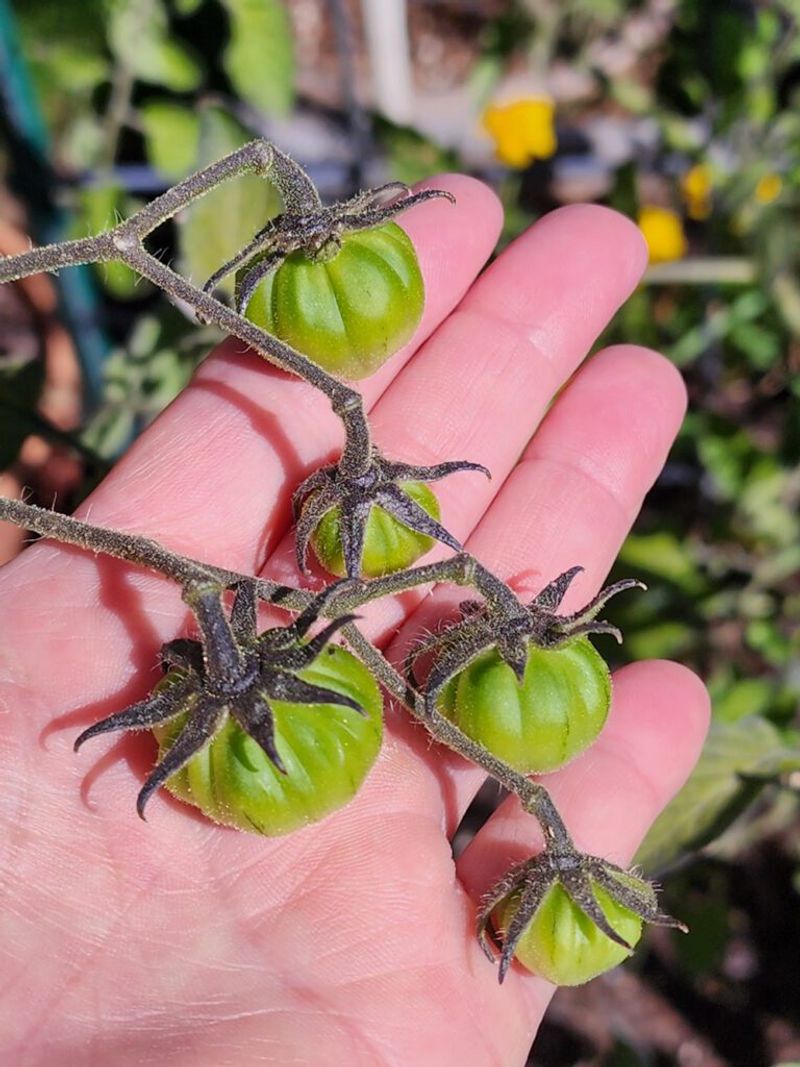
Before you worry about the weather, count back to when the fruit first set. Iowa State Extension says tomatoes usually need about 45 to 55 days from fruit set to full development, and cool temperatures can stretch that out.
Cornell’s guidance gives a wider window of roughly six to eight weeks, depending on variety and weather, as Cornell Cooperative Extension explains. Treat both numbers as typical ranges, not deadlines.
A big beefsteak type may take longer than a cherry tomato.
A simple trick helps here. Tie a bit of colored yarn or a plant tag near a cluster when you see tiny fruit, and jot down the date.
Later you can tell whether a green tomato is truly stuck or just still on its normal schedule. Many fruits that look stalled simply need more time.
Temperature can slow color in either direction
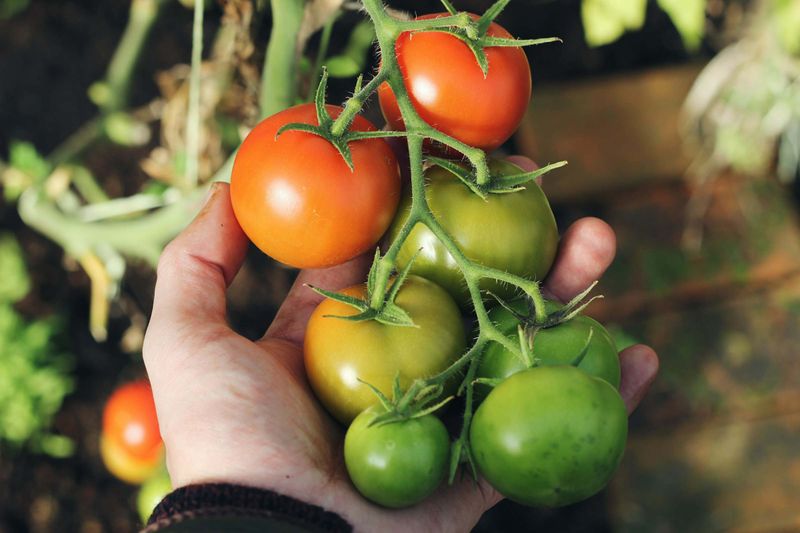
Tomatoes are picky about temperature, and both extremes can slow them down. According to UF/IFAS postharvest guidance, tomatoes ripen best at roughly 55 to 77 degrees F, and temperatures below 55 degrees can hold back color and flavor development.
Heat matters too. Red color tends to develop best around 68 to 72 degrees F, and sustained temperatures above about 85 to 90 degrees F can inhibit the red and orange pigments, as Cornell notes.
A warm Florida or Texas October can stall color just as a chilly week can.
These numbers are not a single rule for every tomato at every stage. Maturity and color are separate steps, and Iowa State points out that cool weather lengthens the maturing period.
Blaming cool nights alone misses the picture, so look at recent daytime highs as well.
Should you uncover the fruit?
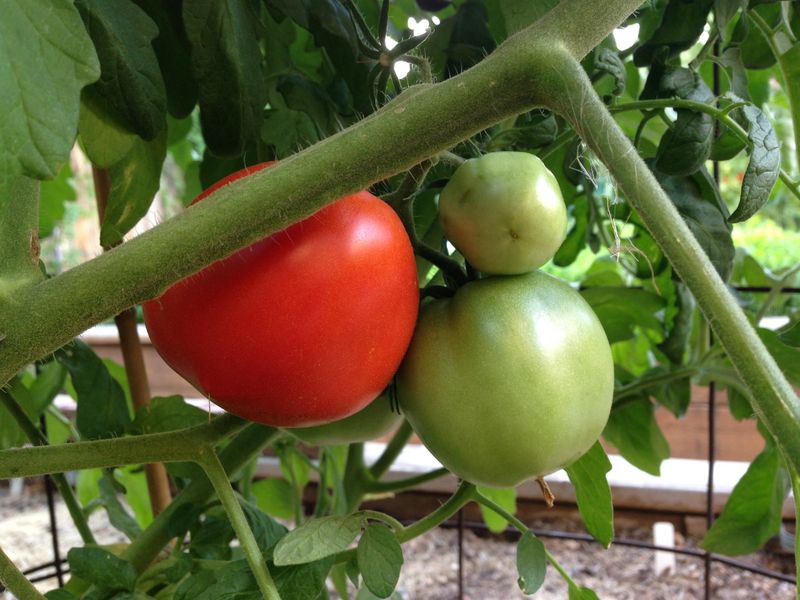
Leaves covering your tomatoes are usually doing you a favor. Fruit does not need direct sun to ripen, and Cornell specifically advises against removing leaves to speed things up.
Stripping the canopy can backfire. Iowa State’s pruning guide notes that overly open foliage exposes fruit to sunscald, and hot direct sun can also interfere with pigment.
There is one kind of shade worth checking. If the whole plant sits in a spot with too little light, it cannot feed its fruit well.
That is different from healthy leaves shading a tomato.
Keep the healthy canopy in place. Remove only leaves that are dead or diseased.
A heavy crop is not a proven explanation
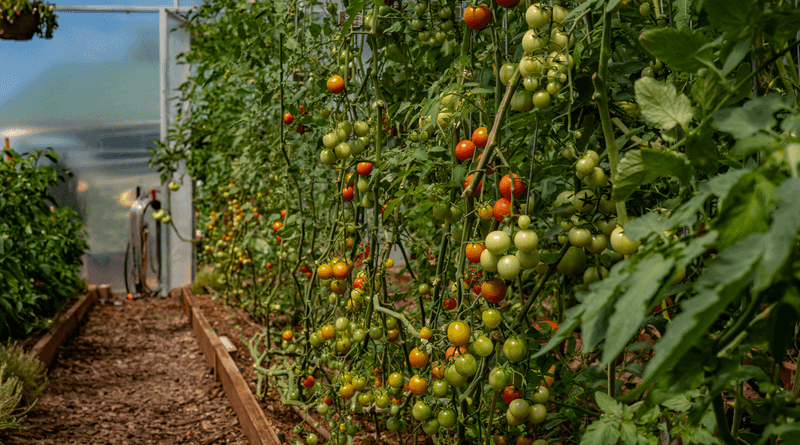
A plant bending under dozens of green tomatoes looks like it must be overworked. It is a tempting explanation, but it is not one you can count on for a backyard garden.
In one greenhouse study, thinning fruit changed plant growth and fruit size, but flowering and harvest rates depended mainly on temperature rather than fruit load.
Thinning advice from commercial growers, such as the practices described in Alabama Extension’s greenhouse tomato guide, is built for controlled greenhouse systems. Those methods do not automatically carry over to a yard.
So there is no need to pull off healthy, sizable fruit just because the plant looks full. Save your pruning for the very small fruit that has no time left to mature.
Extra fertilizer is not a reliable ripening fix
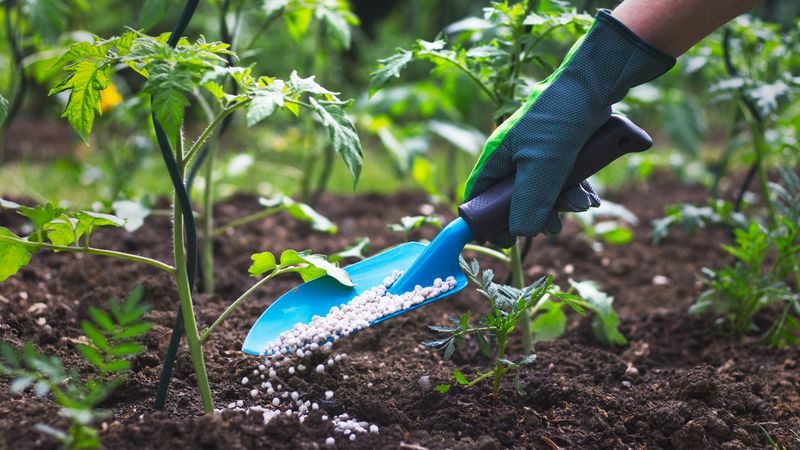
Reaching for the fertilizer bag when tomatoes stay green feels productive, but it rarely helps. Cornell says soil fertility is generally not a major reason for slow ripening, and extra feeding will not speed it up.
Too much nitrogen can even work against you. Purdue Extension notes that it can push leafy growth and delay flowering and fruiting.
Skip late nitrogen unless a test says you need it.
Slow ripening is different from blotchy or uneven color. Green shoulders and patchy fruit can involve variety traits, temperature, or nutrient imbalance, as UF/IFAS describes.
If you suspect a nutrient problem, let soil-test results guide any correction instead of guessing.
Help the plant focus on the crop that can still mature
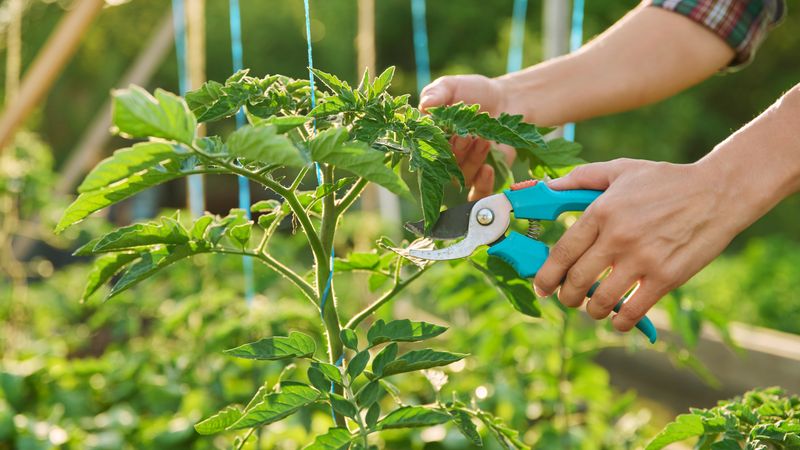
Late in the season, the plant is still trying to make more tomatoes that will never have time to finish. Pinching off new blossoms and very tiny fruit is a sensible way to prioritize.
Washington State University Extension suggests this as an end-of-season step to encourage the remaining fruit to ripen.
Think of it as a helpful nudge, not a promise. It may help, but it will not guarantee every full-size tomato colors up faster.
Keep water steady as well. Mulch helps hold even soil moisture, according to Iowa State, and swings between dry and soaked soil can contribute to splitting, as the University of Delaware explains.
Do not withhold water to force color.
Harvest mature-green tomatoes before frost
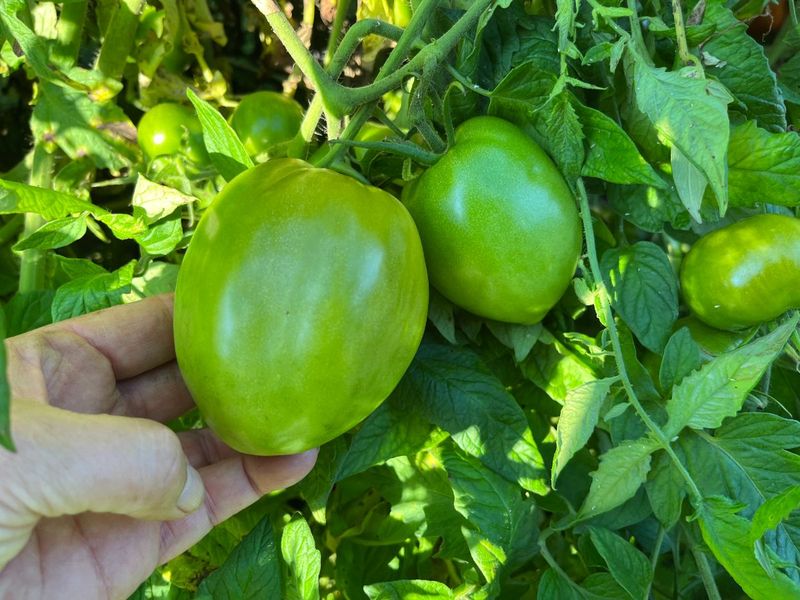
When a frost warning shows up, pick the fruit that has started to color and the green ones that are full size. Mature-green tomatoes are glossy, and a pale star at the blossom end is a useful clue, according to Colorado State Extension.
Matte green fruit may not be mature enough to ripen well off the vine. Small, hard, dull tomatoes are better left for the compost pile or fried green recipes.
Bring your harvest inside, as Iowa State describes, and store the fruit in a single layer in a cool spot out of direct sun.
Check them every few days. Remove any that are soft or decaying so they do not spoil their neighbors.
Use local fall timing, not a single October deadline
October is not the end of tomato season everywhere. UF/IFAS gives different planting windows for North, West-Central, and South Florida, and Texas A&M AgriLife stresses local timing too.
Check fruit age, keep healthy leaves, skip needless fertilizer, and pick mature-green fruit when your local frost forecast calls for it.
Green tomatoes often just need patience and a watchful eye on the forecast.