
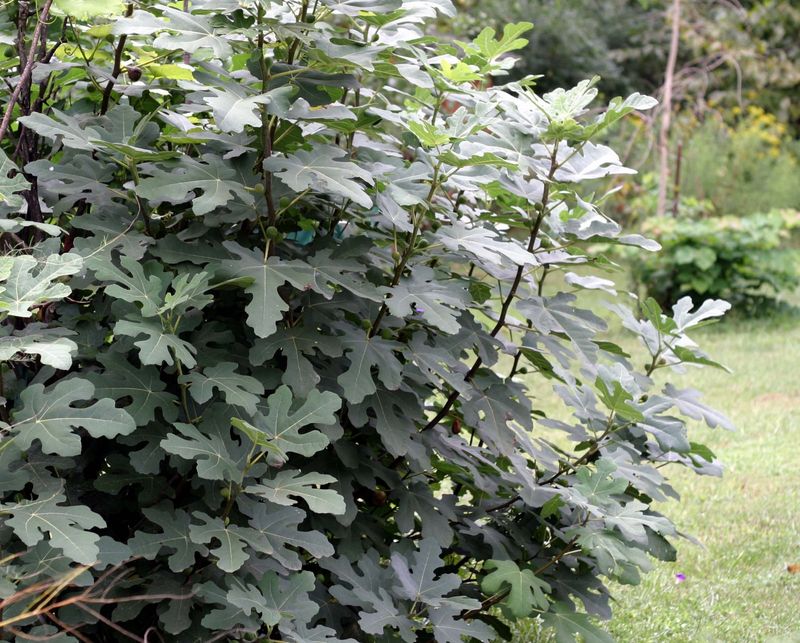
Staring at a fig tree packed with leaves and hard green fruit as the season winds down is one of the more frustrating sights in a Southern garden. The good news is that a leafy, vigorous tree is not automatically a lost cause, but there is no single fall trick that guarantees every green fig will ripen before cold weather arrives.
What you can do is remove the conditions that slow ripening, protect what the tree has already set, and make an honest call about what the remaining season can actually deliver.
A leafy fig tree can have several different problems
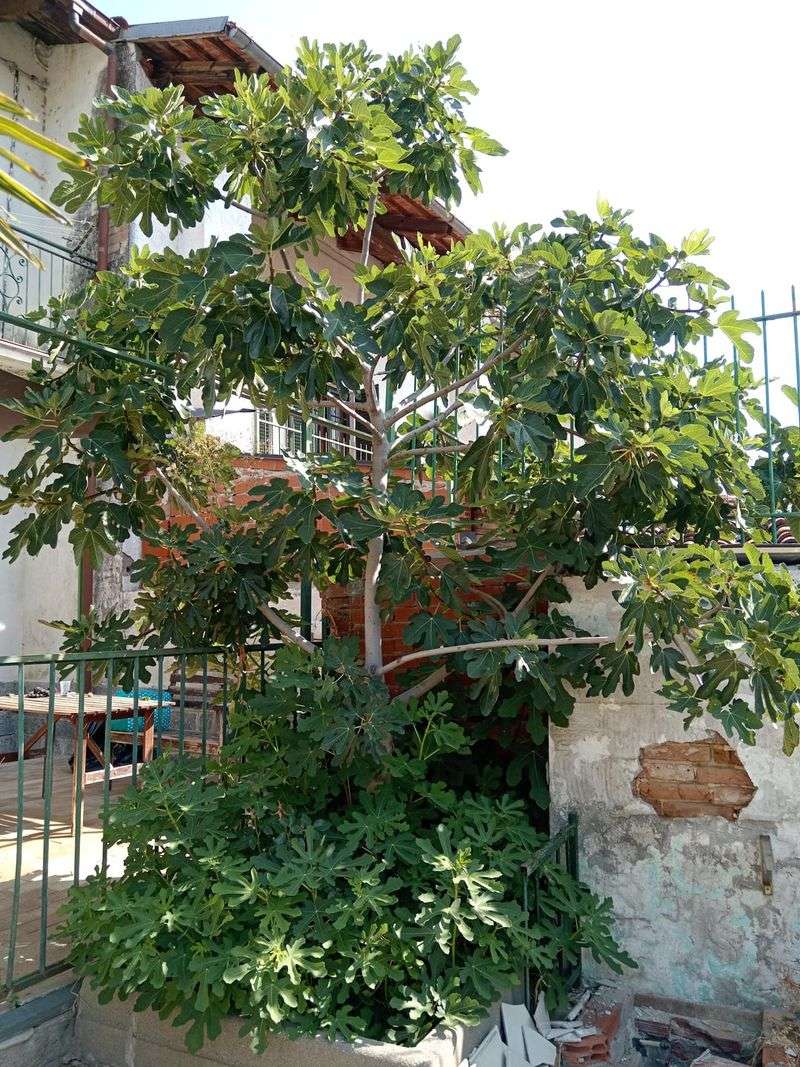
Hard green figs hanging on a leafy tree at the end of the season can mean several very different things, and the fix for one situation can make another worse. UC IPM’s fig drop and no-fruit guide identifies multiple distinct causes for poor fruit production, including inadequate pollination, environmental stress, and excessive vegetative growth, each of which points toward a different response.
The most common scenario for Southern gardeners in late season is a tree carrying many immature main-crop figs that simply have not had enough time or warmth to finish. But the tree could also be producing figlets that drop before sizing up, carrying a breba crop on older wood at a different seasonal stage, or growing a cultivar that requires a specific fig wasp for pollination that is not present locally.
Distinguishing between these situations matters before taking any action. UF/IFAS fig guidance for Florida and Alabama Extension’s fig production guide both note that excess vegetative growth can suppress fruiting, but healthy foliage is not the enemy.
A tree covered in normal, functional leaves is still feeding its fruit through photosynthesis. The problem, when it exists, is usually excessive vigor driven by high nitrogen, poor drainage, or insufficient sun, not the presence of leaves themselves.
Why healthy leaves still matter
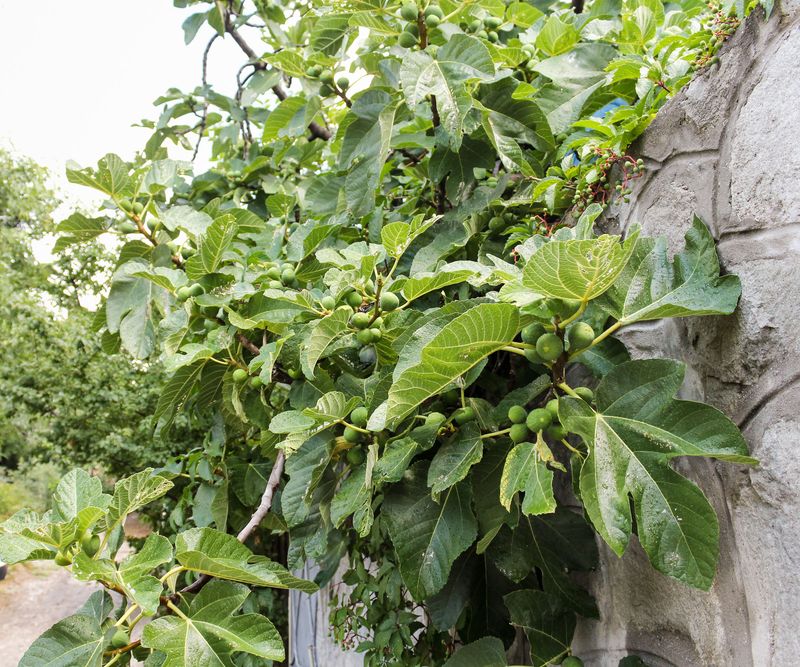
Pulling leaves off a fig tree to expose the fruit and force ripening sounds logical, but the biology does not support it as a general practice. Leaves convert sunlight into the sugars and energy that developing figs depend on, so removing most of the canopy can actually slow fruit development rather than speed it up.
UC Master Gardeners of San Luis Obispo County emphasize maintaining an open, manageable canopy rather than stripping the tree bare.
Full sun does help figs produce and ripen well, and a very dense, crowded canopy can limit light penetration to the interior of the tree. The practical answer is selective canopy management – thinning crossing or crowded branches over time to let light in – not wholesale defoliation.
Removing most leaves at once can expose bark and branches to sunburn and remove the photosynthetic capacity the remaining figs still need.
Excessive nitrogen fertilizer is a real contributor to the “all leaves, no fruit” problem. University of Maryland Extension notes that overly vigorous growth can delay or suppress fruiting, and Penn State Extension similarly connects excessive vegetative growth with poor fruit set.
The distinction matters: healthy, functional leaves support the crop, while runaway shoot growth driven by excess nitrogen is the actual problem to address.
Treat late shoot growth as an optional question, not a rescue button
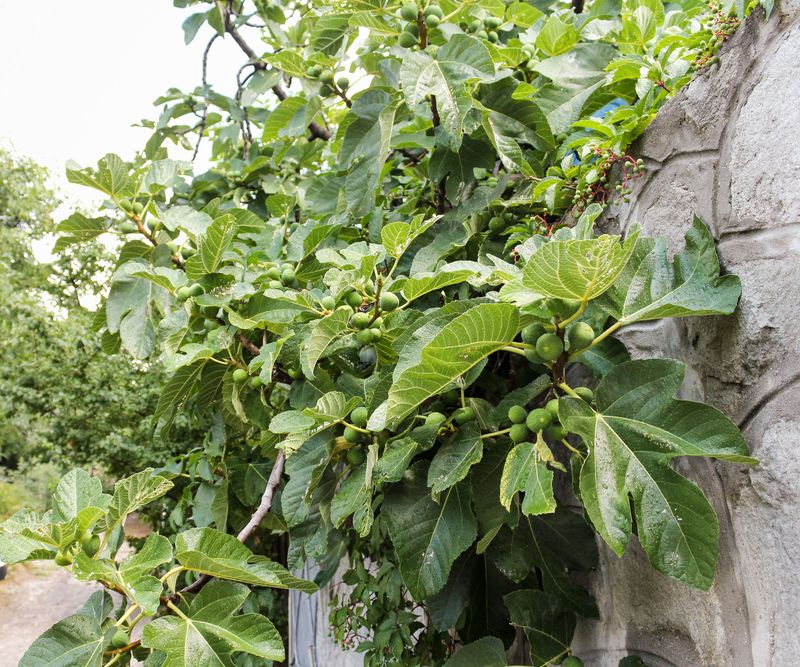
Some gardeners have heard that pinching or removing shoot tips in fall will redirect the tree’s energy into ripening existing figs. The practice has a real basis, but the timing and scope matter more than most advice acknowledges.
UC Cooperative Extension fig production guidance places shoot tip pinching earlier in the season, generally after a shoot has produced about five or six leaves, as a way to limit excessive vegetative growth and improve the odds that established fruit has time to mature.
Using this as a broad late-fall treatment is a different matter. Extension specialists responding to home gardener questions have noted that shoot tip removal can help manage vegetative growth but do not present it as a reliable way to push hard green figs across the finish line in late season.
The published evidence for beginning this practice in fall as a ripening technique is limited.
If the tree is still actively pushing soft, clearly unproductive shoot tips very late in the season, selectively removing those specific tips is a reasonable, low-risk option. The key word is selective.
Cutting into shoots that carry developing fruit, or removing growing points throughout the canopy indiscriminately, can eliminate useful tissue and set back the crop. UC IPM’s fig resource consistently places moisture management and stress reduction ahead of canopy manipulation as the primary tools for supporting fruit development.
Keep moisture steady and avoid forcing new growth
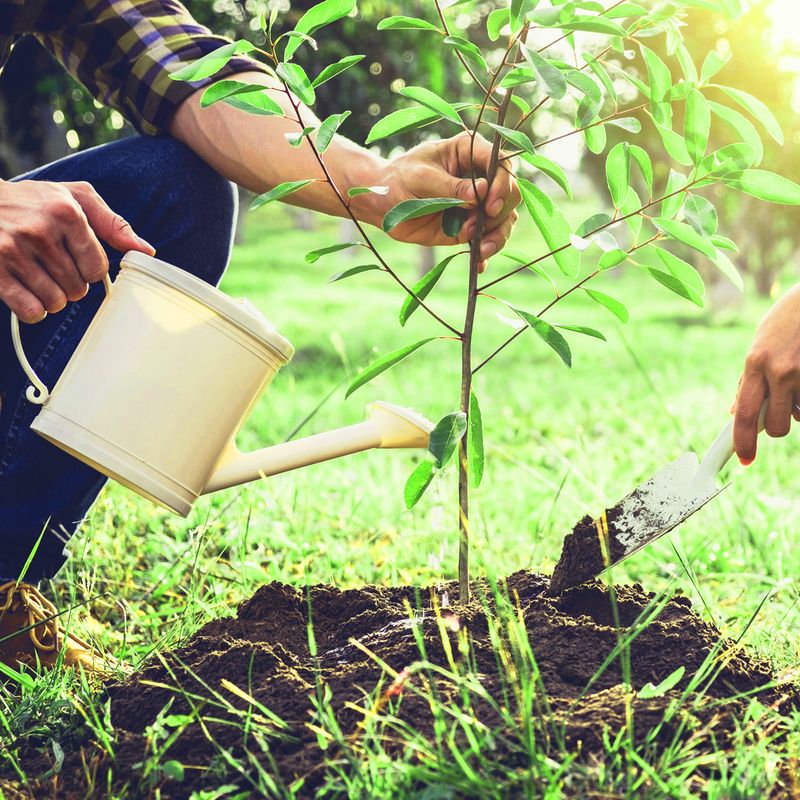
Consistent soil moisture during fruit development is one of the most straightforward and well-supported things a gardener can do late in the season. Both drought stress and waterlogged soil can reduce fruit production or contribute to fruit problems, so the goal is moist but well-drained soil rather than either extreme.
UC IPM’s fig drop resource and UF/IFAS Gardening Solutions both identify irregular watering as a contributor to poor fruit outcomes.
Withholding water to stress the tree into ripening is not a sound strategy. Deliberate drought stress can cause fruit drop, reduce fruit quality, and harm the tree going into winter.
Maintain regular irrigation based on rainfall and soil conditions, and check that drainage is adequate so roots are not sitting in saturated soil after heavy rain.
On the fertilizer side, do not apply additional high-nitrogen fertilizer or use any late fertilizer specifically to force ripening. Alabama Cooperative Extension’s fig production guide warns that late fertilizer encourages tender new growth that may not harden before winter arrives, leaving the tree more vulnerable to cold damage.
This advice targets high-nitrogen and late-season applications specifically. Whether any fertilizer at all is appropriate depends on your soil, tree condition, and timing, so follow a soil test rather than a blanket stop-everything rule.
Heavy fall pruning can sacrifice present and future figs
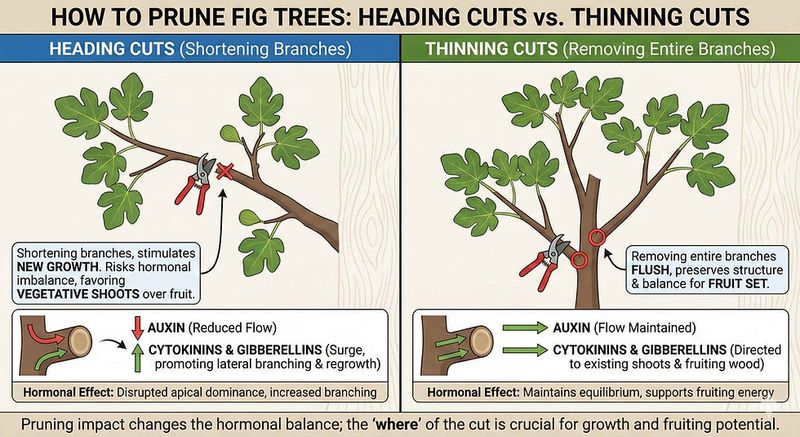
Reaching for the pruning saw when a fig tree looks unruly but unproductive is a natural impulse, but making a heavy cut while the current crop is still developing can do real damage to both this year’s harvest and next year’s. Main-crop figs form on current-season shoots, so pruning those shoots removes the fruit still attached to them.
UF/IFAS fig guidance recommends pruning after fruit harvest rather than during the active crop-ripening period.
The breba crop adds another layer of complexity. Breba figs form on older wood from the previous season, so a fall cut that removes mature wood can eliminate next year’s early crop before it ever has a chance to develop.
New Mexico State University Extension’s fig publication distinguishes clearly between breba and main-crop development, noting that the two crops depend on different wood and require different pruning considerations.
Selective removal of a clearly unproductive soft shoot tip is a different action from cutting back fruiting branches or removing significant portions of the canopy. UC Master Gardeners of San Luis Obispo County and UF/IFAS Gardening Solutions both support placing major structural pruning in the appropriate dormant-season window after harvest.
Resist the urge to make a dramatic cut now. The tree is finishing its work, and a heavy pruning during that process interrupts it.
Judge whether the crop has enough season left
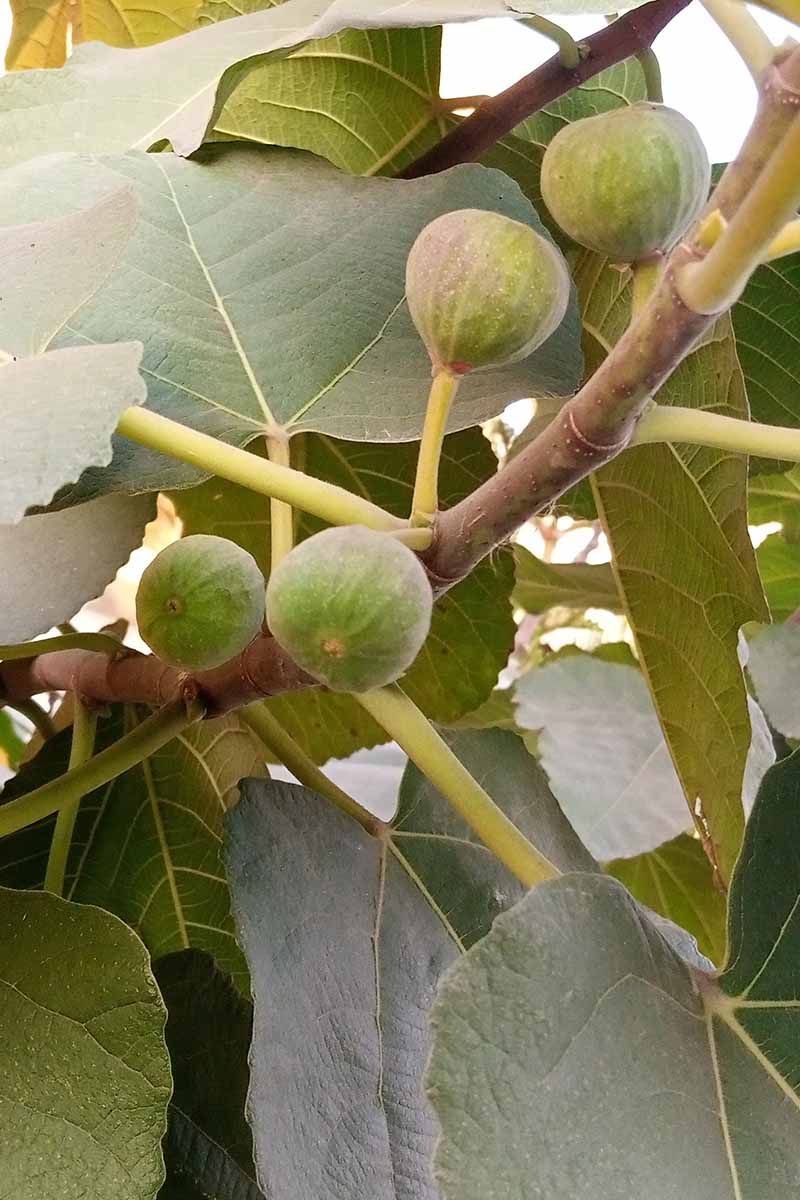
Before deciding what to do with a tree full of hard green figs, make an honest assessment of how much warm weather remains. Main-crop figs can take roughly two months from initial formation to full ripeness, so fruit that set recently may simply not have enough season left to finish, regardless of what care is provided.
University of Maryland Extension and New Mexico State University Extension both note that timing, cultivar, and the tree’s start date determine whether a late crop can realistically finish.
Penn State Extension reinforces that weather and sunlight availability across the remaining season are major factors, not just the actions taken in the final weeks. A Florida gardener with a late cultivar still has more runway than a Virginia gardener facing the same situation in October.
Do not assume that what applies in one Southern state transfers directly to another.
For fruit that formed very recently and is still tiny, some short-season gardeners consider removing those smallest, latest figs so the tree can concentrate resources on more developed fruit already closer to ripeness. Extension specialists have noted that fruit removal is not a proven universal fix and is generally unnecessary, but it is a limited option worth considering when the season is clearly closing fast.
UF/IFAS lists Florida cultivar ripening periods ranging from early July through late summer or fall, a reminder that no single fall timeline applies to every tree or every state.
Cultivar, pollination, and freeze damage can decide the outcome
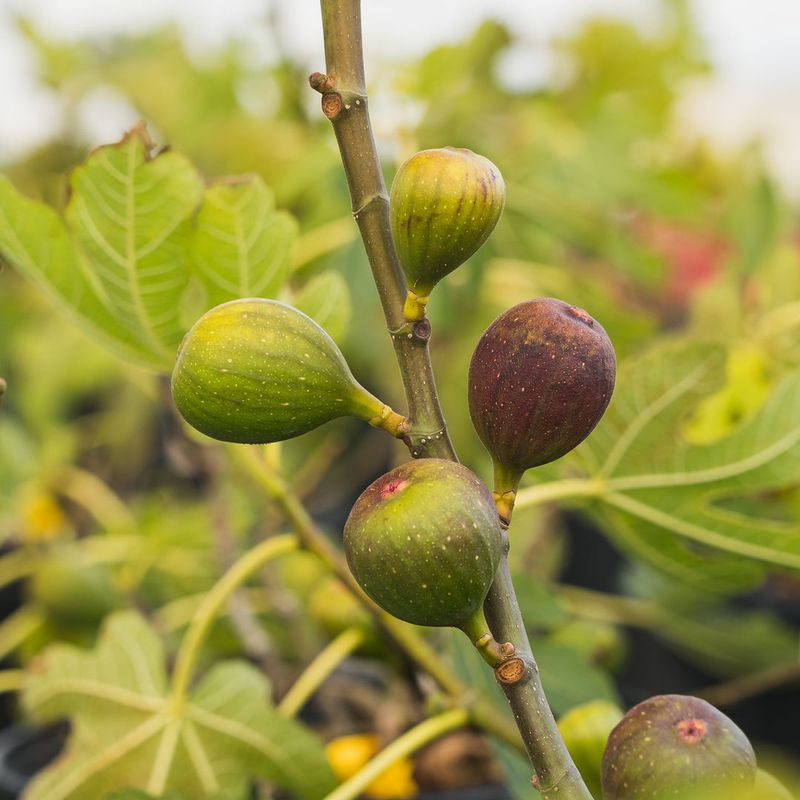
Sometimes the reason a fig tree carries hard green fruit late in the season has nothing to do with leaves, moisture, or pruning. The cultivar itself, whether it can pollinate without a fig wasp, and whether the main framework survived winter intact can all determine whether the crop finishes at all.
Common fig cultivars such as Brown Turkey and Celeste do not require pollination by a fig wasp and are widely recommended for Southern home gardens. UF/IFAS and Alabama Extension both recommend these self-fertile types for the Southeast.
Smyrna-type figs, by contrast, require pollination by a specific fig wasp – Blastophaga psenes – and will not mature fruit where that wasp is absent. Mississippi State Extension confirms this distinction, noting that most figs grown successfully in the South are common figs that set fruit without a pollinator.
Freeze damage is a separate and often overlooked factor, particularly in Texas and in the upper South. When a hard freeze kills the main framework and the tree regrows from the base or from low shoots, those new shoots may not produce a crop until later in the season than a tree with an established framework would.
University of Maryland Extension explains that trees regrowing after freeze dieback may push fruit too late in the year for it to mature before the next cold spell arrives. In that situation, no fall technique changes the outcome for that year’s crop.
Harvest ripe fruit and clean up after frost
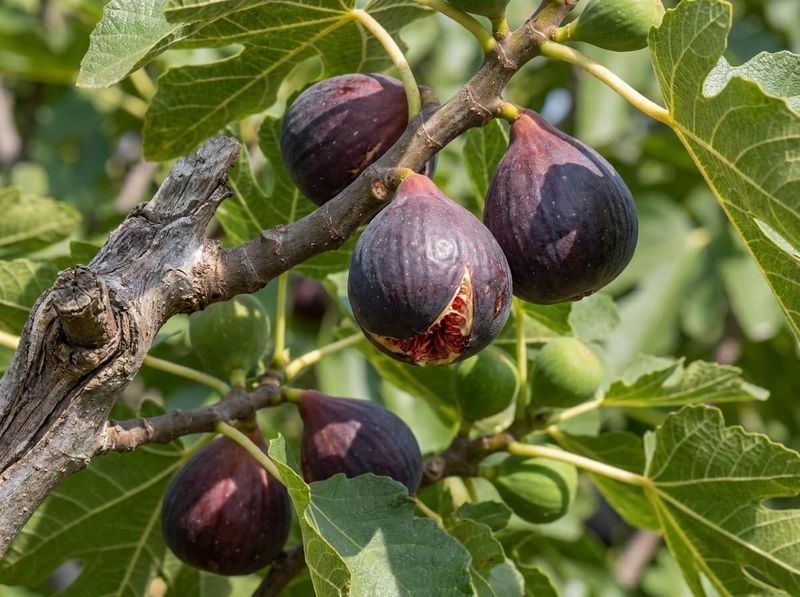
Knowing when to pick is as practical as any other advice in this article. Figs do not ripen on the counter the way some other fruit does.
UC IPM’s fig harvest and storage guide is clear that fully immature green figs generally will not ripen after picking.
Fruit that has already begun to color and soften may continue to soften indoors, but pulling a rock-hard green fig and leaving it on the windowsill will not produce a ripe fig.
Pick by reading the fruit, not the calendar. Look for the cultivar-appropriate color change – brown, purple, or yellow depending on the variety – combined with softening, a slight drooping of the fruit on its stem, and easy separation when you gently lift it.
University of Maryland Extension and UC Master Gardeners of San Luis Obispo County both describe these same harvest indicators. A fig that resists separation or shows no softening is not ready.
After a hard frost arrives and ends the season, remove any remaining unripe figs, dead leaves, and frost-damaged growth as part of normal cleanup. Virginia Cooperative Extension’s fig guidance supports this post-frost cleanup approach.
Doing this cleanup before frost will not cause the remaining figs to ripen, so there is no reason to rush it. The tree has done what it can do for the year, and clearing away the spent fruit and damaged wood is simply good preparation for next season.