
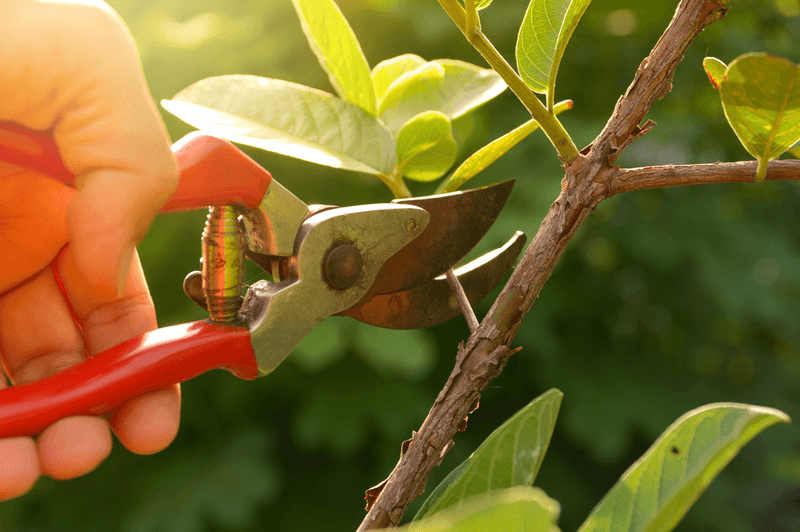
A fig tree covered in lush leaves but producing almost no fruit is one of the more frustrating sights in a Southern garden. The problem rarely has one cause, and no single pruning cut reliably fixes it for every tree in every region.
What does help is a clear diagnosis, the right pruning window for your climate, and a careful hand with the saw. This guide walks through the real reasons figs go leafy and fruitless, and what selective pruning can and cannot do about it.
A leafy fig needs diagnosis before it needs a hard cut
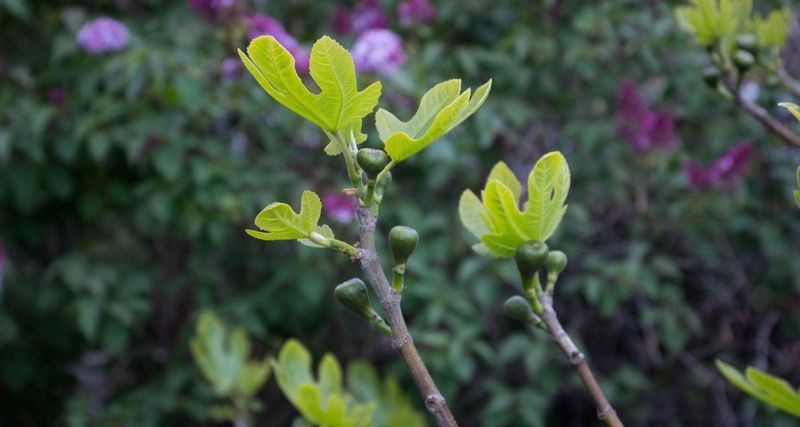
The title’s promise is appealing, but it overstates what pruning can deliver. UC IPM’s guidance on fig drop and poor fruiting identifies a long list of possible causes for a leafy, fruitless tree: excess nitrogen, inconsistent moisture, inadequate sunlight, freeze injury, unsuitable variety, young age, disease, nematodes, and pollination requirements.
Pruning addresses none of those problems directly, so cutting first and asking questions later can leave you with a shorter tree that still produces no figs.
Mature figs commonly produce their main crop on current-season growth, which means dormant-season pruning is not the critical step it is for many other fruit trees. UC IPM’s fig pruning page notes that mature trees generally set fruit without annual pruning, and UF/IFAS echoes that figs do not require pruning to be productive.
Selective canopy management can still help when crowding, dense shade, or excessive vigor limits light penetration or makes fruiting wood hard to reach, but the starting point should always be observation, not a reflexive hard cut.
Think of this article as a decision process rather than a guaranteed cure. Work through the likely causes of your tree’s behavior first, then decide whether a pruning cut is actually the tool that addresses what you found.
Choose the pruning window for your climate and cultivar
Timing a pruning cut is not a one-size-fits-all decision, and “fall pruning” is not interchangeable with the late-winter approach that works better in freeze-prone parts of the South. The right window depends heavily on where you garden and which cultivar you grow.
For Florida gardeners, UF/IFAS guidance on the fig recommends pruning after fruit harvest, generally in late summer, so the tree has enough time for flower-bud initiation before the next season. The same guidance warns that late-maturing cultivars may lose a substantial portion of their yield after pruning, so knowing your variety matters before you reach for the loppers.
Gardeners in Texas, Mississippi, and other areas with meaningful frost risk face a different calculation. Mississippi State Extension’s fig publication points to late winter as the practical window for structural work, after the worst frost danger has passed and before new growth begins.
Pruning too early in those climates can trigger tender regrowth that a late freeze then kills, or it can remove wood that might otherwise have survived winter and contributed to the following season’s crop. Check your local frost dates, consider your cultivar’s cold hardiness, and let that combination guide your timing rather than a generic fall calendar date.
Remove problem wood before shaping the canopy
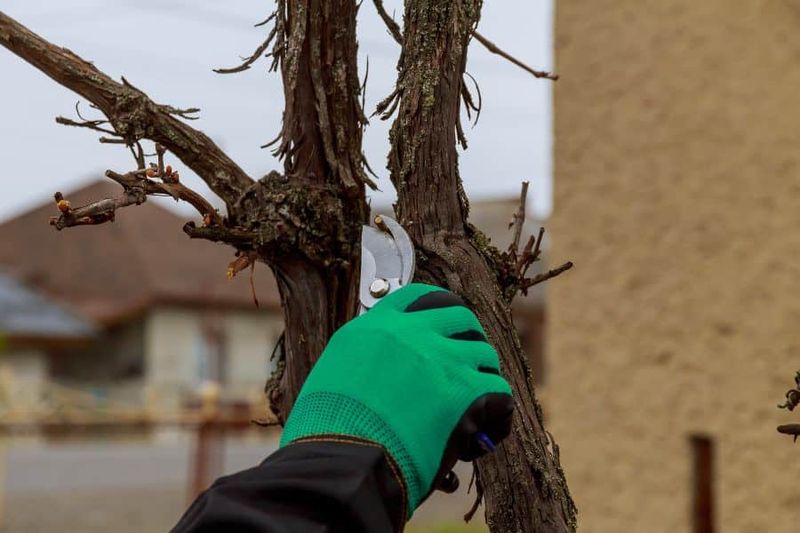
A logical sequence keeps the work manageable and protects the tree from unnecessary removal. Start with the obvious problems: dead, diseased, and broken wood comes out first, regardless of season, because leaving it serves no purpose and can harbor disease.
Follow that by removing branches that cross and rub against each other, any growth pointing sharply inward toward the center of the canopy, stems hanging so low they drag on the ground, and basal suckers competing with the main structure.
Once the problem wood is gone, step back and look at the canopy. UC IPM’s fig pruning guidance emphasizes removing interfering and broken branches without triggering excessive shoot regrowth, so thin only where you can see genuine crowding that limits light or air movement.
OSU Extension’s fig guide recommends retaining roughly one-third to one-half of the previous season’s growth because that wood carries fruit. Reduce a branch only when its length, position, or vigor creates a real structural or shading problem, and cut back to a suitable outward-growing lateral rather than leveling everything to the same height.
Cut placement and tool hygiene matter as much as which branches you choose. Make removal cuts just outside the branch collar without leaving stubs or cutting flush against the trunk.
University of Minnesota Extension’s pruning guidance recommends disinfecting tools between plants and, when disease is present, between individual cuts to avoid spreading pathogens through the canopy.
Match the amount you remove to the crop you want
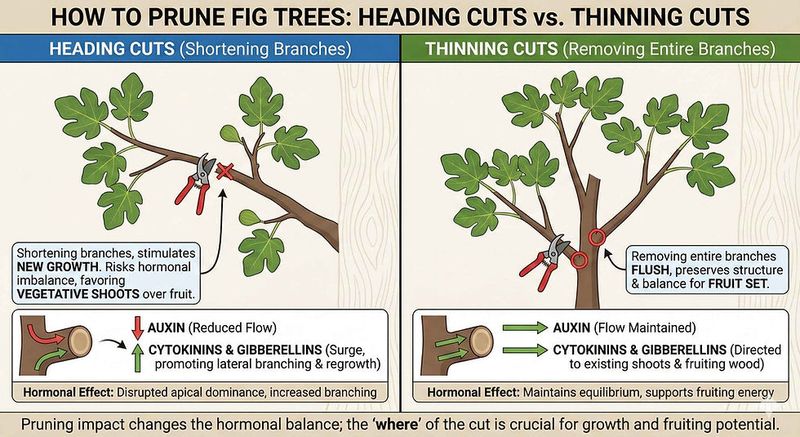
Figs can produce two distinct crops in a season, and the distinction matters when you decide how much older wood to keep. Breba fruit forms on overwintered previous-season wood, appearing early in the year before the main flush of growth.
The main crop develops later on current-season shoots. Heavy pruning that removes most of the previous season’s wood can wipe out the breba crop entirely, and in some cultivars it may also reduce the main crop that follows.
UC Master Gardeners of San Luis Obispo County’s fig resource notes that removing too much older wood cuts into breba production, while UC IPM’s pruning guidance cautions that heavy winter pruning can reduce the following year’s crop in some cultivars. That said, not every fig gardener values the breba crop equally, and not every cultivar produces a reliable or flavorful early crop worth preserving at the cost of a more open canopy structure.
The practical rule is to retain healthy, well-placed previous-season wood in proportion to how much you want an early crop and how much your cultivar depends on it. OSU Extension’s fig advice supports keeping a meaningful share of one-year-old wood for fruiting.
Stop thinning once the canopy feels less congested and light can reach interior branches. The goal is a manageable, open structure, not a bare framework that forces the tree to spend the next season rebuilding leaves before it can fruit again.
Avoid topping, stub cuts, and wholesale leaf removal
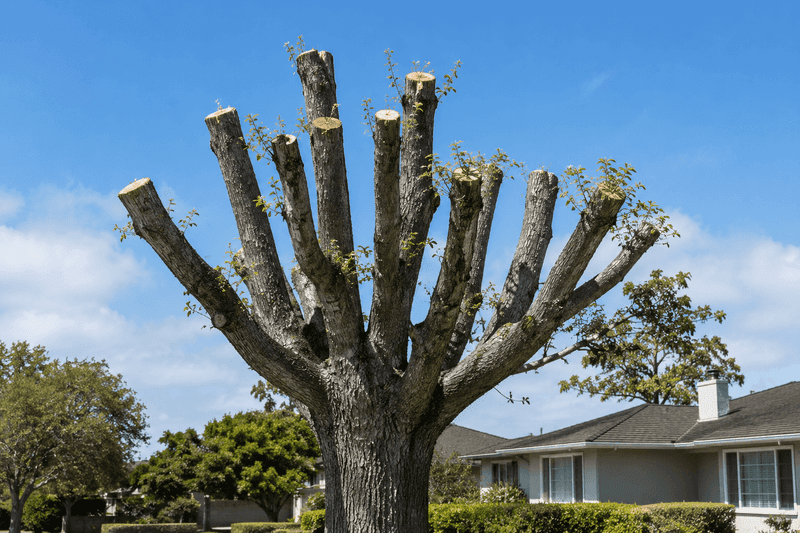
Topping a fig tree, meaning cutting the main scaffold branches back to blunt stubs without regard for lateral growth, tends to create exactly the outcome you are trying to avoid: a dense flush of vigorous, upright shoots that shade the interior and push energy into leaves rather than fruit. OSU Extension’s fig pruning guidance favors reduction cuts to suitable laterals and selective thinning over topping as a general approach to canopy management.
Cutting every leafy shoot back to two or three short stubs has a similar problem. Leaves are the tree’s primary food-making surface, and stripping that surface forces the tree to rebuild its photosynthetic capacity before it can channel resources toward fruit.
Oklahoma State Extension’s fruit tree pruning fact sheet explains that excessive removal reduces photosynthesis and can trigger vigorous replacement growth rather than the productive, well-spaced shoots you want.
Pruning does not simply redirect energy from leaves into figs in a neat one-to-one trade. Selective removal can improve light distribution and make fruiting wood more accessible, but the mechanism is structural, not metabolic in the simple way the idea implies.
UC IPM’s fig pruning page reinforces the point by warning against excessive shoot stimulation. Apply a firm stopping rule: make the fewest cuts that solve a documented crowding or structural problem, then set the saw down.
Check sun, water, and nitrogen before adding fertilizer
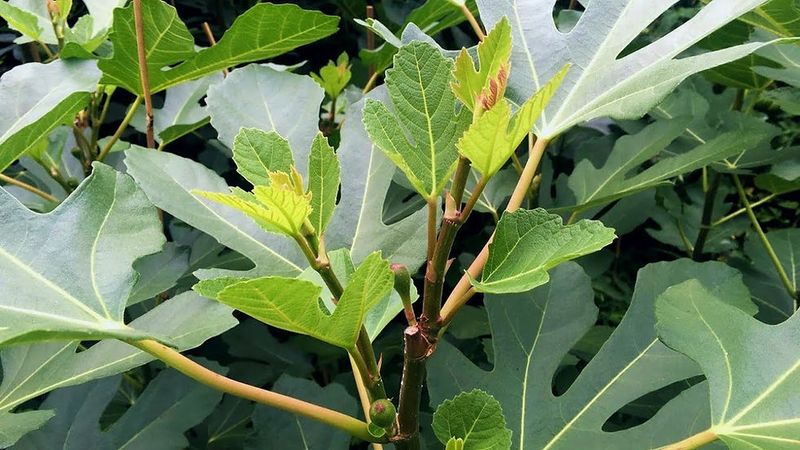
Before crediting poor fruit production to pruning needs, run through the non-pruning factors that most commonly explain a leafy, low-yielding fig. Start with sunlight: figs generally need six or more hours of direct sun daily, and a tree planted in a spot that has gradually become shadier as surrounding trees matured may simply not have enough light to set a reliable crop, regardless of how well it is pruned.
Next, look at fertilizer history and recent shoot growth. Mississippi State Extension’s fig review warns that excess nitrogen commonly produces lush vegetative growth and can delay fruit production.
A fig tree already pushing more than about 18 inches of new growth per season is probably not nitrogen-deficient, and adding more fertilizer at that point is likely to make the leafy problem worse, not better. Soil testing is the safer move when you are unsure.
Water consistency during fruit development also matters more than many gardeners expect. UC IPM’s fig drop resource notes that drought or uneven moisture can cause immature figs to drop before they ripen.
Mississippi State offers roughly one inch of water per week during the growing season as a general benchmark, though local conditions, soil type, and tree size all affect actual needs. Think of that figure as a starting point for observation rather than a fixed prescription, and adjust based on how your soil drains and how quickly the top few inches dry out between waterings.
Separate pruning problems from variety, age, and winter damage
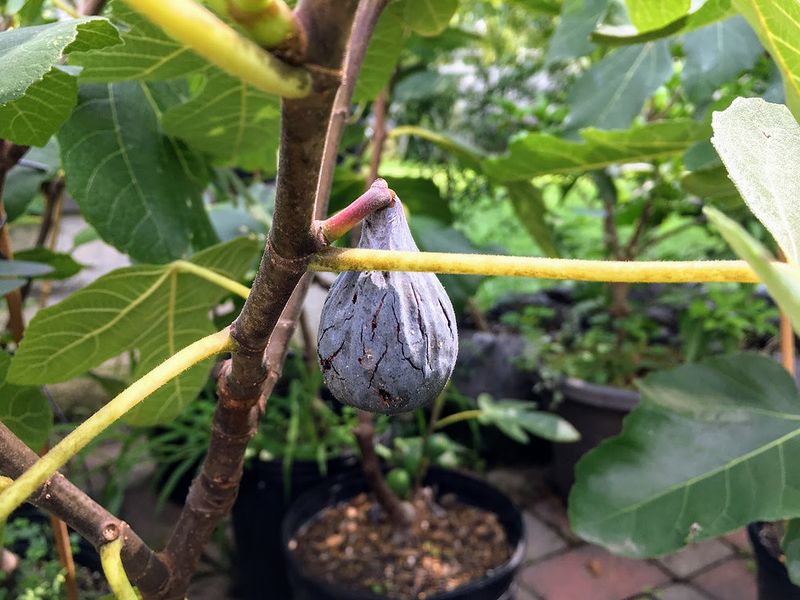
Not every nonfruiting fig has a pruning problem, and lumping all leafy-but-fruitless trees into one diagnosis leads to unnecessary cutting. The symptom itself deserves closer attention: a tree that produces no visible figs at all, one that sets small fruit and drops it early, and one that carries fruit to near-maturity but never ripens it are three different situations with potentially different causes.
UC IPM’s fig drop resource keeps these as distinct problems with distinct remedies, and treating them as interchangeable can lead to the wrong fix.
Young trees are a common source of frustration that pruning cannot resolve. University of Arizona Cooperative Extension’s fig guide notes that it may take three to four years before a newly planted tree produces a worthwhile crop, and some cultivars take longer under less-than-ideal conditions.
Freeze damage creates a similar pattern in Texas, Mississippi, and inland Southern locations: a tree that dies back to the ground and regrows vigorously from the base may push several seasons of lush leafy growth before it rebuilds enough productive wood to fruit reliably.
Variety and pollination requirements are worth checking early. UC Master Gardeners of San Luis Obispo County’s fig resource explains that common figs, the type most widely grown in home gardens, generally do not require pollination to set fruit.
Smyrna figs and the main crop of some San Pedro cultivars do require pollination, so a tree of that type without access to a pollinator will not fruit regardless of how well it is pruned. Mississippi State Extension also points to fig rust, nematodes, and wrong variety selection as causes of persistent poor production that pruning alone cannot address.
Make the lightest region-appropriate cut
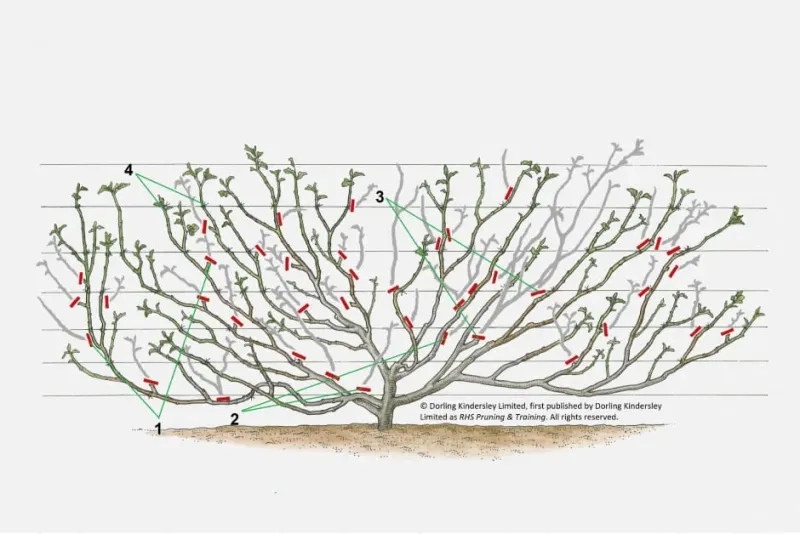
When you have worked through the diagnosis and confirmed that crowding or excessive vigor is genuinely limiting your tree, the action plan is straightforward. Choose the pruning window that fits your region: late summer after harvest for Florida, late winter after frost danger for Texas, Mississippi, and similar climates.
Remove dead, diseased, broken, crossing, and sucker growth first, then thin only the branches that create real congestion.
Reduce selected branches only when their length, position, or vigor shades interior wood or interferes with the canopy structure, and cut back to suitable outward-growing laterals rather than leaving stubs or leveling the canopy flat. Account for your breba goals before removing older wood, factor in cultivar, nitrogen history, moisture, sunlight, tree age, and any freeze damage before deciding how much to take.
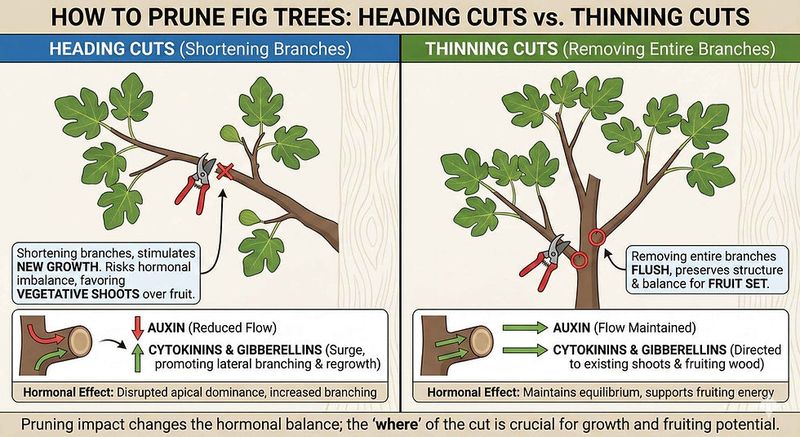
UC IPM’s fig pruning guidance and UF/IFAS’s fig publication both support selective thinning and reduction over aggressive heading as the safer approach to canopy management.
Selective pruning may improve structure and make fruiting wood more accessible, but it is not a fruit-setting switch. A well-timed, light-handed cut is a useful tool in a broader strategy that also addresses sun, water, soil nutrition, and variety fit.
The lightest cut that solves the documented problem is almost always the right one.